

Endotracheal Tube Market Size and Trends Forecast: 2026 - 2033
The endotracheal tube market size is expected to reach USD 1,207.3 Mn by 2033, from USD 2,042.3 Mn in 2026, exhibiting a CAGR of 7.8% during the forecast period.
Key Takeaways of the Endotracheal Tube Market
- Based on product type, the cuffed segment is projected to dominate holding a share of 43.2% in 2026.
- Based on route of administration, the orotracheal segment is projected to dominate holding a share of 66.6% in 2026.
- Based on end user, the hospitals segment is projected to dominate holding a share of 51.2% in 2026.
- North America is expected to dominate the endotracheal tube market with 40.2% market share in 2026.
Market Overview
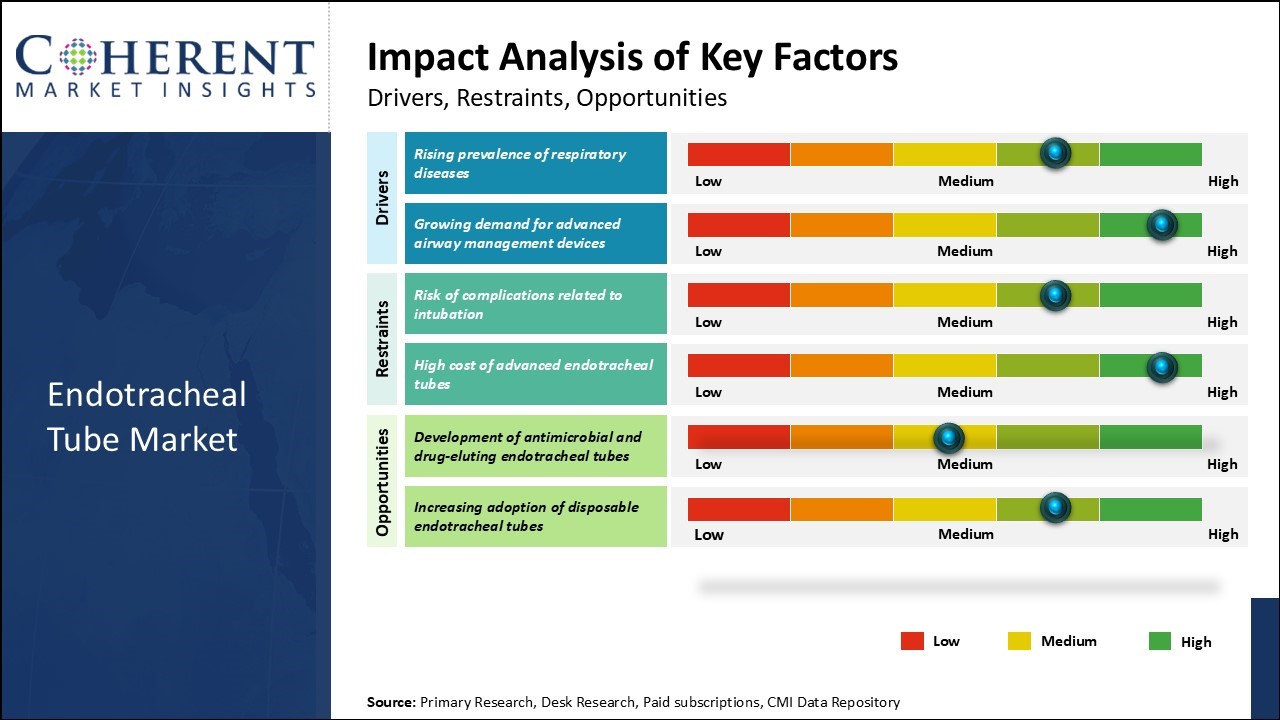
Factors such as the increasing number of surgical procedures performed worldwide and rising prevalence of respiratory diseases are fueling the demand for endotracheal tubes. Additionally, technological advancements in endotracheal tubes bringing in features such as heat and moisture exchange and low-pressure cuffs are seeing greater uptake. New product launches catering to the needs of pediatric patients especially preterm neonates are further supporting the endotracheal tube market expansion.
However, the availability of alternative airway management devices may hamper the endotracheal tube industry growth to a certain extent.
Market Concentration and Competitive Landscape
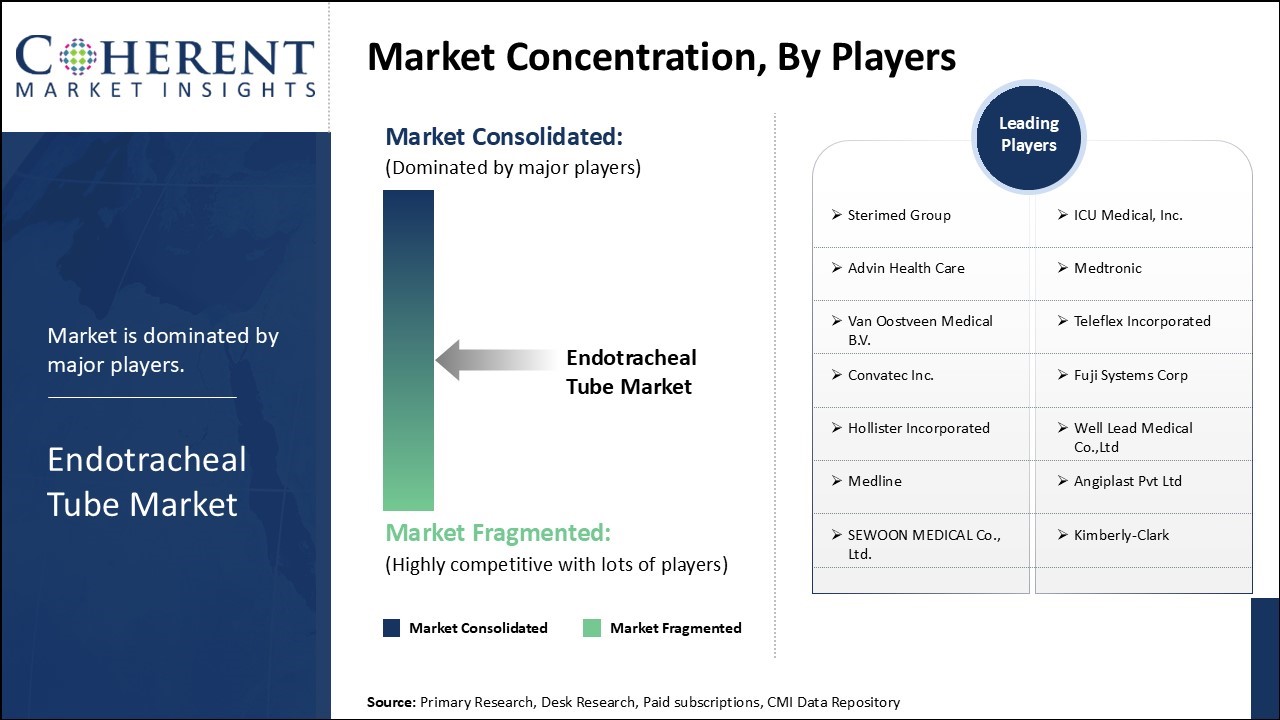
Current Events and Their Impact on the Endotracheal Tube Market
Current Events | Description and its impact |
Global Supply Chain Disruptions and Raw Material Shortages |
|
Regulatory Landscape Evolution in Key Markets |
|
- Current Industry Events of 2026
- Market Size Estimation
- Regional Breakdown
- Competitive Landscape
- Customer Intelligence
- Segmental Analysis
- Pricing Analysis
- Key Market Drivers, Challenges & Future Trends
- Customized Insights Section
Market Trends
Rising Prevalence of Respiratory Diseases and Chronic Obstructive Pulmonary Disease (COPD)
The escalating prevalence of respiratory diseases, particularly chronic obstructive pulmonary disease (COPD), has emerged as a primary catalyst driving demand for endotracheal tubes across global healthcare systems. COPD patients frequently experience acute exacerbations requiring immediate respiratory intervention, necessitating intubation procedures that directly depend on endotracheal tubes. Additionally, the aging global population contributes significantly to this trend, as elderly individuals demonstrate higher susceptibility to respiratory complications and require more frequent medical interventions involving airway management.
For instance, according to the World Health Organization, in 2024, COPD was the fourth leading cause of death globally, causing around 3.65 million deaths in 2021—approximately 5% of all global deaths. Nearly 90% of COPD deaths in individuals under 70 occur in low‑ and middle‑income countries (LMICs), where access to prevention and care is limited.
Segmental Insights
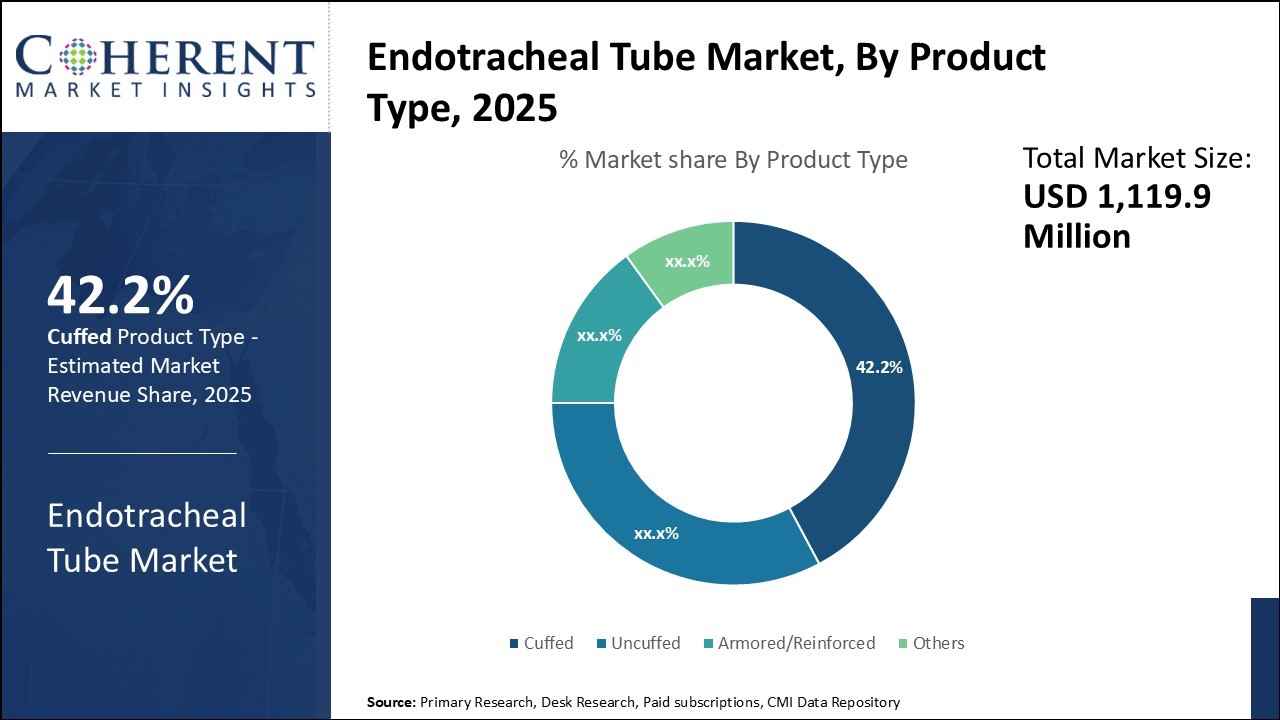
Endotracheal Tube Market Insights, By Product Type: Superior Features Drives Cuffed Demand
In terms of product type, cuffed segment is estimated to contribute the highest market share of 43.2% in 2026.
The cuffed segment is primarily propelled by rising respiratory disease prevalence, increasing surgical volumes requiring safe airway management, and ongoing technological innovations—such as advanced cuff designs and smart safety features—that enhance ventilation control and minimize aspiration risks.
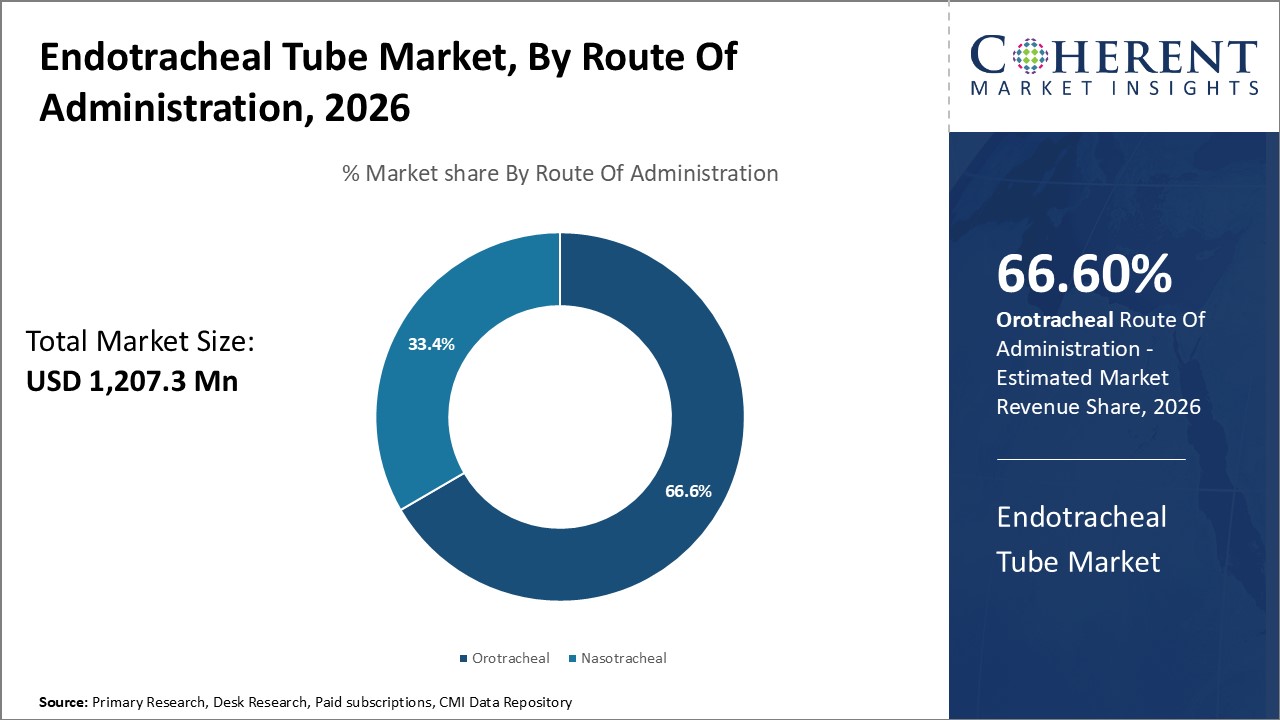
Endotracheal Tube Market Insights, by Route of Administration: Orotracheal Intubation's Advantages Maximize Its Market Dominance
In terms of route of administration, orotracheal segment is estimated to contribute the highest market share of 66.6% in 2026 in endotracheal tube sector.
The segment is propelling due to various advantages over nasotracheal intubation. Orotracheal intubation is the preferred method for critically ill patients requiring long-term mechanical ventilation as it avoids trauma to the nasal passages.
Endotracheal Tube Market Insights, By End User: Hospitals Emerge as Key End Users Due to Comprehensive Care Needs
In terms of end user, hospitals segment is estimated to contribute the highest market share of 51.2% in 2026, as they cater to the vast majority of patients requiring endotracheal intubation.
Primarily due to their capacity to serve patients requiring intubation. These patients often suffer from complex conditions such as respiratory failure or cardiac issues, necessitating specialized infrastructure and skilled staff for effective long-term respiratory support and monitoring.
Emerging Innovations in the Endotracheal Tube Market
- The Shift Toward Materials That Enhance Biocompatibility
- Traditional tubes made from polyvinyl chloride (PVC) are increasingly supplemented or replaced by tubes utilizing silicone-based or polyurethane materials. These materials offer greater flexibility, reduce irritation, and allow for improved seal formation with the trachea. This advancement is critical because the seal’s effectiveness directly impacts the risk of microaspiration, a leading cause of pulmonary infections.
- The Advent of Subglottic Suction Endotracheal Tubes
- These tubes incorporate an additional lumen for continuous suction above the cuff, enabling the removal of secretions pooling above the cuff in intubated patients. This prevents secretions from leaking into the lower respiratory tract, significantly reducing pneumonia risks during prolonged mechanical ventilation. The integration of subglottic suction technology reflects a broader demand in critical care to reduce infection rates and improve outcomes, which directly influences purchasing decisions in hospital settings.
Impacts of Artificial Intelligence (AI) on the Endotracheal Tube Market
By integrating AI technologies, companies in this domain are enhancing product design, improving clinical applications, and ultimately delivering better patient outcomes.
- Medtronic, a leader in medical technologies, has integrated AI algorithms within its respiratory care solutions. Its AI-driven analytics platform helps monitor ventilation parameters in real-time, enabling smarter adjustments during intubation procedures. This integration demonstrates how AI can be embedded not only in the product but also in supporting clinical decision-making tools, aligning with strategic initiatives to enhance patient safety and operational efficiency.
- Smiths Medical has launched the AI-enhanced Portex Blue Line Ultra Suction-Assisted Laryngoscopy Airway Deployer (SALAD) system. This product incorporates AI algorithms to analyze patient anatomy and provide real-time feedback during intubation, adapting suction and tube positioning to patient-specific needs. The AI solution improves intubation success, particularly in challenging airway cases, enhancing patient safety and clinician confidence. Early clinical feedback reports measurable reductions in procedure duration and complications, making this AI implementation a significant advancement in airway management.
Unmet Needs in the Endotracheal Tube Market
- Reducing Risks of Ventilator-Associated Pneumonia (VAP)
- Example: Smiths Medical’s antimicrobial-coated tracheal tubes aim to minimize infection risks: While antimicrobial coatings reduce biofilm formation, gaps remain in efficacy against multidrug-resistant pathogens. Current solutions often require compromises on tube flexibility or coating durability.
- Impact: VAP causes increased patient morbidity, longer ICU stays, and higher healthcare costs.
- Solution: Develop nano-enabled coatings (e.g., silver nanoparticles) with prolonged antimicrobial activity or combine tubes with real-time pathogen-detection sensors.
- Enhancing Intubation Success Rates in Challenging Airways
- Example: Video-assisted intubation systems were emphasized during the COVID-19 pandemic for safer airway management.
- Explanation: Existing tools lack portability or user-friendly interfaces, particularly in emergency settings.
- Impact: Failed intubations risk hypoxia, aspiration, or airway trauma, delaying critical care.
- Solution: Integrate AI-guided visualization systems into disposable, cost-effective devices for low-resource settings.
Regional Insights
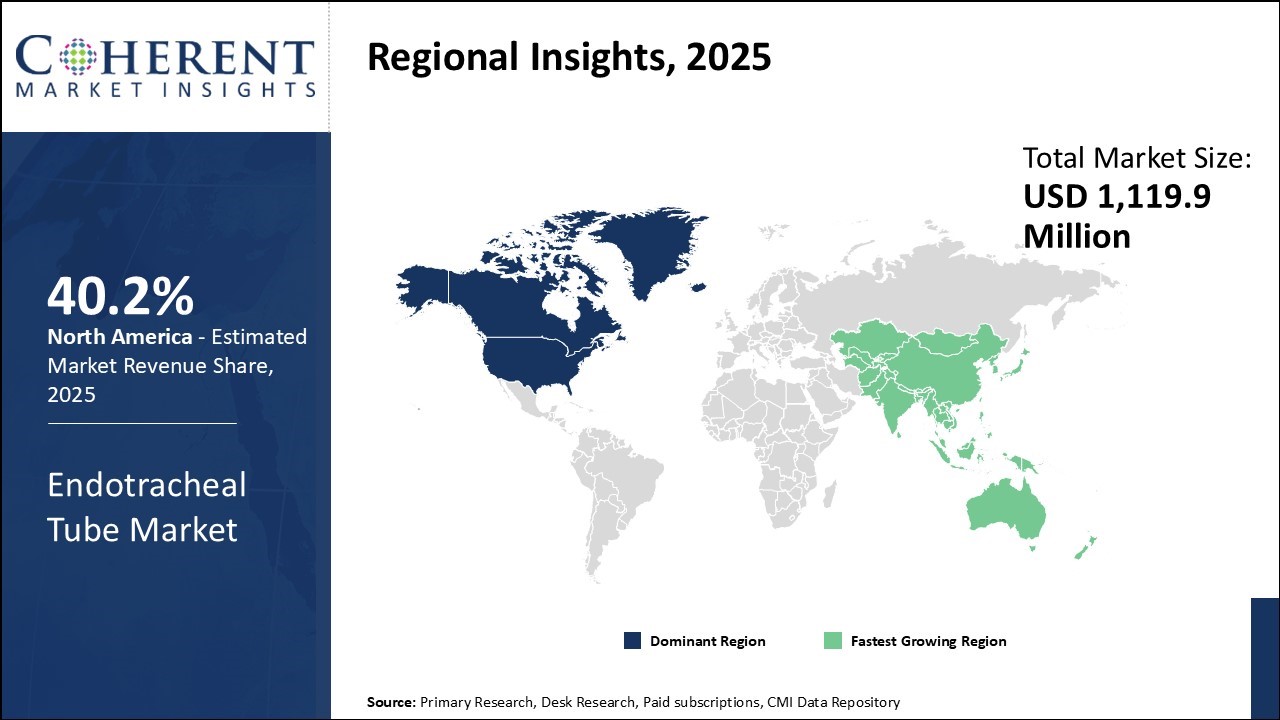
North America Endotracheal Tube Market Analysis and Trends
North America is expected to dominate the endotracheal tube industry with the highest market share of 40.2% in 2026. This is due to a well-established healthcare infrastructure and widespread adoption of advanced medical technologies. The American Society of Anesthesiologists reports significant advancement in endotracheal tube design, including antimicrobial coatings, improved cuff technologies, and enhanced visualization features that reduce complications associated with intubation procedures.
For instance, according to fast facts from the American Hospital Association, 2026 edition, there are 6,093 hospitals in the U.S., underlining the extensive clinical base driving demand for endotracheal tubes.
Endotracheal Tube Market Outlook for Key Countries
U.S. Endotracheal Tube Market Analysis and Trends
The U.S. holds a dominant position in the endotracheal tube market, attributed to its advanced healthcare infrastructure, high surgical volumes, and a significant prevalence of respiratory diseases such as chronic obstructive pulmonary disease (COPD), asthma, and lung cancer. The increasing number of intensive care unit admissions and surgical procedures further drives the demand for endotracheal tubes. Additionally, the growing geriatric population and the adoption of innovative airway management devices contribute to market growth.
China Endotracheal Tube Market Analysis and Trends
China's endotracheal tube market is experiencing significant growth, driven by several key factors. The nation's expanding healthcare infrastructure and government initiatives, such as the "Healthy China 2030" plan, are enhancing access to medical services and increasing the number of surgical procedures. This surge in healthcare activities has led to a higher demand for airway management devices, including endotracheal tubes.
Germany Endotracheal Tube Market Analysis and Trends
Germany's endotracheal tube market is experiencing significant growth due to several key factors. The country's aging population has led to an increased incidence of chronic respiratory diseases, necessitating more frequent surgical interventions and mechanical ventilation. This demographic shift has heightened the demand for reliable airway management solutions.
India Endotracheal Tube Market Analysis and Trends
In India, rising health consciousness and dietary shifts are driving the demand for protein ingredients. The growing middle class and urbanization contribute to increased consumption of protein-rich foods and dietary supplements. The adoption of plant-based diets is also on the rise, further boosting the market for alternative protein sources.
Pricing Analysis of the Endotracheal Tube Market
Basic Single-Use PVC Tubes | Price Range |
Medtronic/Covidien Mallinckrodt | USD 3.50-USD 8.20 per unit |
Teleflex Medical | USD 3.20-USD7.80 per unit |
Smiths Medical Portex | USD 3.00-USD 7.50 per unit |
Halyard Health (O&M) | USD 2.80-USD 7.20 per unit |
Generic/Private Label | USD 2.20-USD 5.80 per unit |
Market Report Scope
Endotracheal Tube Market Report Coverage
| Report Coverage | Details | ||
|---|---|---|---|
| Base Year: | 2025 | Market Size in 2026: | USD 1,207.3 Mn |
| Historical Data for: | 2020 To 2024 | Forecast Period: | 2026 To 2033 |
| Forecast Period 2026 to 2033 CAGR: | 7.8% | 2033 Value Projection: | USD 2,042.3 Mn |
| Geographies covered: |
| ||
| Segments covered: |
| ||
| Companies covered: | Sterimed Group, ICU Medical, Inc., Advin Health Care, Medtronic, Van Oostveen Medical B.V., Teleflex Incorporated, Convatec Inc., Fuji Systems Corp, Hollister Incorporated, Well Lead Medical Co.,Ltd, Medline, Angiplast Pvt Ltd, SEWOON MEDICAL Co., Ltd., and Kimberly-Clark | ||
| Growth Drivers: |
| ||
| Restraints & Challenges: |
| ||
Endotracheal Tube Industry News
- In June 2025, Dale Medical Products, Inc. (Dale) expanded its offering with its new BreezeLock Endotracheal Tube Holder. Dale, the employee-owned company, is known for its high quality, patient-friendly medical device securement solutions.
- In March 2025, ICU Medical issued an urgent medical device correction for certain Smiths Medical endotracheal tubes which may be smaller than expected, potentially leading to inadequate ventilation.
- In March 2025, Australia’s TGA and Health New Zealand issued an urgent recall of selected Smiths Medical un‑cuffed oral/nasal endotracheal tubes (sizes 2.0–5 mm).
- In January 2025, 42 Technology (42T) launched an innovative, video-capable medical device at CES 2025 designed to improve the speed and safety of patient intubation during surgery and emergency care.
- In January 2025, Ambu launched the Ambu SureSight Connect solution that offers clinicians the only airway visualisation and pulmonology offering that features a one-lung ventilation solution and includes all the devices recommended for intubation and airway assessment.
Analyst View
- The global endotracheal tube market demonstrates robust fundamentals driven by escalating demand for critical care procedures and emergency medical interventions. The aging global population, coupled with rising prevalence of respiratory disorders and chronic obstructive pulmonary diseases, serves as a primary growth catalyst for the market expansion.
- Additionally, the increasing frequency of surgical procedures requiring general anesthesia and mechanical ventilation significantly bolsters demand across healthcare facilities globally.
- Technological advancements in tube design, including antimicrobial coatings and enhanced biocompatibility materials, present substantial opportunities for market players to differentiate their offerings. The integration of visualization technologies and improved cuff designs addresses clinical challenges related to proper tube placement and patient safety, creating premium product segments.
- However, the market faces notable restraints including stringent regulatory frameworks governing medical device approvals and potential complications associated with intubation procedures. Cost pressures within healthcare systems, particularly in emerging economies, limit adoption of advanced endotracheal tube variants.
- North America currently dominates the market landscape, attributed to sophisticated healthcare infrastructure, high surgical volumes, and rapid adoption of innovative medical technologies. The region benefits from established reimbursement mechanisms and strong presence of leading manufacturers.
Market Segmentation
- Product Type Insights (Revenue, USD Mn, 2021 - 2033)
- Cuffed
- Uncuffed
- Armored/Reinforced
- Others
- Route of Administration Insights (Revenue, USD Mn, 2021 - 2033)
- Orotracheal
- Nasotracheal
- End User Insights (Revenue, USD Mn, 2021 - 2033)
- Hospitals
- Ambulatory Surgical Centers
- Others
- Regional Insights (Revenue, USD Mn, 2021 - 2033)
- North America
- U.S.
- Canada
- Latin America
- Brazil
- Argentina
- Mexico
- Rest of Latin America
- Europe
- Germany
- U.K.
- Spain
- France
- Italy
- Russia
- Rest of Europe
- Asia Pacific
- China
- India
- Japan
- Australia
- South Korea
- ASEAN
- Rest of Asia Pacific
- Middle East
- GCC Countries
- Israel
- Rest of Middle East
- Africa
- South Africa
- North Africa
- Central Africa
- Key Players Insights
- Sterimed Group
- ICU Medical, Inc.
- Advin Health Care
- Medtronic
- Van Oostveen Medical B.V.
- Teleflex Incorporated
- Convatec Inc.
- Fuji Systems Corp.
- Hollister Incorporated
- Well Lead Medical Co.,Ltd
- Medline
- Angiplast Pvt Ltd
- SEWOON MEDICAL Co., Ltd.
- Kimberly-Clark
Sources
Primary Research Interviews
- Medical Device Manufacturers
- Healthcare Professionals and Anesthesiologists
- Hospital Procurement Managers
- Distributors and Supply Chain Partners
- Others
Magazines
- Medical Device & Diagnostic Industry (MD+DI)
- Anesthesiology News
- Healthcare Finance Magazine
- Medical Economics
- Others
Journals
- Journal of Clinical Anesthesia
- Anesthesia & Analgesia
- British Journal of Anaesthesia
- Others
Newspapers
- Financial Times
- The Wall Street Journal
- Reuters Health News
- Bloomberg Healthcare
- Others
Associations
- American Society of Anesthesiologists (ASA)
- Association for the Advancement of Medical Instrumentation (AAMI)
- European Society of Anaesthesiology and Intensive Care (ESAIC)
- International Anesthesia Research Society (IARS)
- Others
Public Domain Sources
- U.S. Centers for Disease Control and Prevention (CDC)
- World Health Organization (WHO) Publications
- European Medicines Agency (EMA) Reports
- National Institutes of Health (NIH) Database
- Others
Proprietary Elements
- CMI Data Analytics Tool – Endotracheal Tube Market
- CMI Existing Repository of Information for the Last 8 Years
*Definition: The endotracheal tube market encompasses the global industry dedicated to the production, distribution, and application of medical devices designed to secure and maintain an open airway during surgical procedures, critical care, and emergency interventions. These tubes are essential for patients requiring mechanical ventilation due to conditions such as chronic respiratory diseases, trauma, or anesthesia.
Get access to 250+ pages report
Every segment, forecast, competitor profile and data table behind the analysis above — available for instant download.
- ESOMAR Member
- ISO 9001:2015 Certified
- D-U-N-S Registered
- GDPR & CCPA Compliant
Missing comfort of reading report in your local language? Find your preferred language:
Transform your Strategy with Exclusive Trending Reports
Frequently Asked Questions
The endotracheal tube market is estimated to be valued at USD 1,207.3 Mn in 2026 and is expected to reach USD 2,042.3 Mn by 2033.
The CAGR of the endotracheal tube market is projected to be 7.8% from 2026 to 2033.
Increasing product approvals and launches and increasing prevalence of respiratory diseases are the major factors driving the growth of the endotracheal tube market.
Risk of complications associated with endotracheal intubation and lack of skilled professionals are the major factors hampering the growth of the endotracheal tube market.
In terms of product type, the cuffed segment is estimated to dominate the market revenue share in 2026.
Sterimed Group, ICU Medical, Inc., Advin Health Care, Medtronic, Van Oostveen Medical B.V., Teleflex Incorporated, Convatec Inc., Fuji Systems Corp, Hollister Incorporated, Well Lead Medical Co.,Ltd, Medline, Angiplast Pvt Ltd, SEWOON MEDICAL Co., Ltd., and Kimberly-Clark are the major players operating in the market.
North America is expected to lead the endotracheal tube market in 2026.