

Europe And Asia Pacific Herbal Beauty Products Market Size and Forecast — 2026-2033
Europe And Asia Pacific Herbal Beauty Products Market is estimated to be valued at USD 2,688.9 Mn in 2026 and is expected to reach USD 3,834.3 Mn in 2033, exhibiting a compound annual growth rate (CAGR) of 5.2% from 2026 to 2033. Herbal cosmetic provide excellent soothing effects on the skin along with the essential nutrition required for healthy skin. They are also beneficial for the skin repairing and facilitating the growth of smooth and glowing skin.
Europe & Asia Pacific Herbal Beauty Products Market: Growth Driver
Increasing consumer demand for organic and natural products
The market for herbal beauty products is experiencing unprecedented growth due to a number of factors that have had a positive impact on this burgeoning industry. As people become more conscious of what they place on their skin, the rising demand for natural and organic professional skincare products is one of the primary drivers of this growth. Consumers actively search out products that are free of harmful chemicals and made with skin-friendly herbal ingredients.
Increasing Herbal Beauty Product Availability Through Online and Offline Channels
The increasing availability of herbal beauty products through online and offline channels is another significant factor contributing to the market's growth. With an increasing number of consumers turning to retail e-commerce platforms for their beauty requirements, companies in this industry have been quick to launch their products on online marketplaces to capitalize on this trend. Traditional brick-and-mortar retailers have also stocked their shelves with herbal beauty products to meet the rising demand. In June 2021, Lotus Herbal announced its plan to acquire natural and herbal beauty product manufacturing company as a part of its expansion strategy. The company is in talk with investment bankers to identify national or international potential targets for the same.
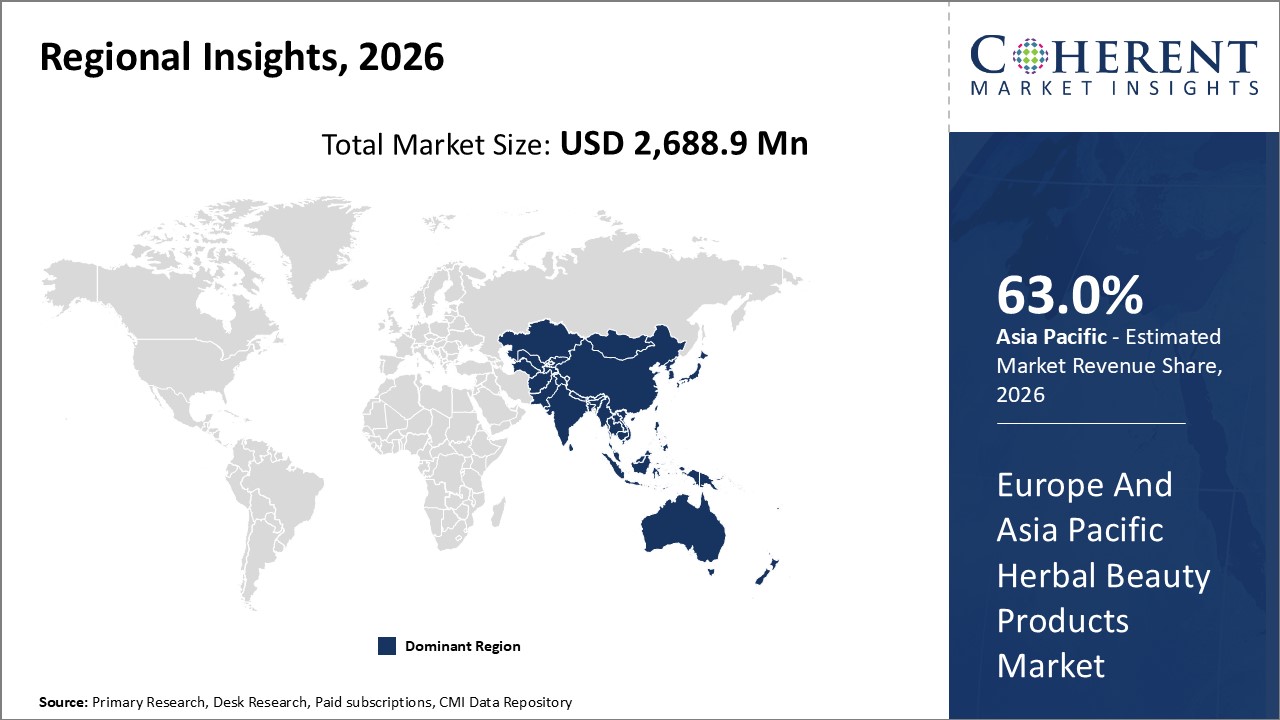
Figure 1. Europe & Asia Pacific Herbal Beauty Products Market, Revenue Share (%), By Region, 2026
Europe & Asia Pacific Herbal Beauty Products Market: Restraints
Dilemma of Herbal Beauty Product Prices versus Synthetic Substitutes
The domain of herbal beauty products presents a perplexing obstacle to users, who seek a flawless, radiant complexion. The high price of herbal beauty products relative to synthetic alternatives is a major barrier to their widespread use. This is due to the high cost of the raw materials used in herbal beauty products and the labor-intensive. In addition, herbal beauty products are typically sold in lesser quantities, resulting in a higher unit cost.
A notable emerging trend is a shift in consumer behavior towards natural products. Consumers are more concerned than ever before with their health and well-being, selecting for natural and organic products free of harmful chemicals.
Currently, consumers are searching for beauty and skincare products that can be used at home without the need to visit salons or resorts.
Europe & Asia Pacific Herbal Beauty Products Market: Market Segmentation
On the basis of the region, Asia Pacific dominated the Europe & Asia Pacific Herbal Beauty Products Market in 2026, accounting for 63.0% share in terms of value, followed by Europe.
Europe & Asia Pacific Herbal Beauty Products Market: By Product Type
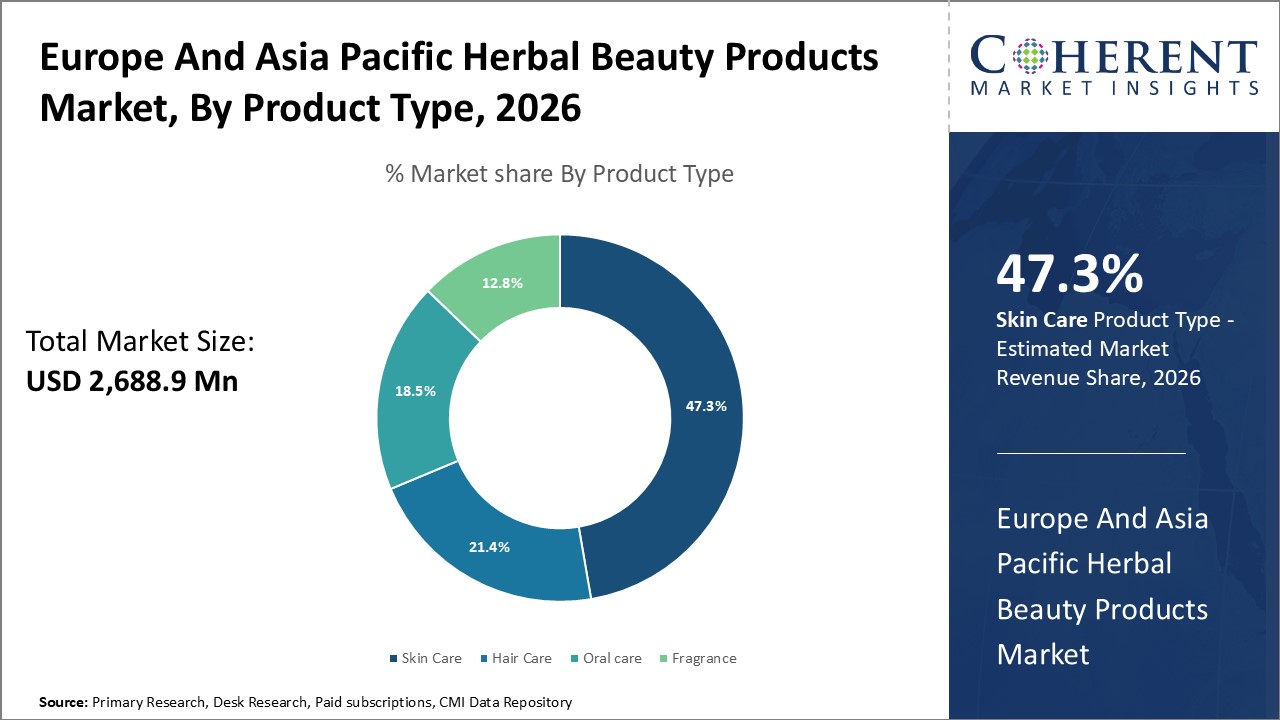
On the basis of product type in 2026, skin care segment has accounted the largest market share of 47.3% in terms of value, followed by hair care and oral care.
- Current Industry Events of 2026
- Market Size Estimation
- Regional Breakdown
- Competitive Landscape
- Customer Intelligence
- Segmental Analysis
- Pricing Analysis
- Key Market Drivers, Challenges & Future Trends
- Customized Insights Section
Europe & Asia Pacific Herbal Beauty Products Market Report Coverage
| Report Coverage | Details | ||
|---|---|---|---|
| Base Year: | 2025 | Market Size in 2026: | USD 2,688.9 Mn |
| Historical Data for: | 2020 To 2024 | Forecast Period: | 2026 To 2033 |
| Forecast Period 2026 to 2033 CAGR: | 5.2% | 2033 Value Projection: | USD 3,834.3 Mn |
| Geographies covered: |
| ||
| Segments covered: |
| ||
| Companies covered: | Bio Veda Action Research Co., VLCC Personal Care Ltd., Surya Brasil, Dabur India Ltd, Himalaya Global Holdings Ltd, Lotus Herbals, Hemas Holdings Plc, Herbals Inc., and Herbalife International of America Inc. | ||
| Growth Drivers: |
| ||
| Restraints & Challenges: |
| ||
Europe & Asia Pacific Herbal Beauty Products Market: Recent Developments
- June 2022: Himalaya launched a new equity campaign that encourages customers of all ages to prioritize health and wellness. The campaign brings to life Himalaya's vision of 'Wellness in Every Home, Happiness in Every Heart'.
- November 2021: In association with the India-based AIMIL Pharma, the Fragrance and Flavor Development Centre in Kannauj came up with beauty products in line with the Union government's push to apply Ayurveda in food and beauty products. The product, Ayouthveda, has been prepared by adding time-tested herbs, also used in medicines.
- March 2021: Lotus Herbals entered the clean beauty category with Lotus Botanicals, which has a range of chemical-free skin and hair care products. The brand is also positioned in the D2C category to tap into India's growing e-commerce industry.
- In 2021, Herbivore, a brand based in the U.S., introduced a line of hygiene products containing CBD-infused natural ingredients such as hemp seed oil and chamomile.
Europe & Asia Pacific Herbal Beauty Products Market: Key Companies
Key players operating in the Europe & Asia Pacific herbal beauty products market are Bio Veda Action Research Co., VLCC Personal Care Ltd., Surya Brasil, Dabur India Ltd, Himalaya Global Holdings Ltd, Lotus Herbals, Hemas Holdings Plc, Herbals Inc., and Herbalife International of America Inc.
Sources
Primary Research Interviews
- Herbal beauty brands in Europe and APAC (e.g., Himalaya Herbals, Forest Essentials, Lotus Herbals, The Body Shop, Weleda, Dabur)
- Ayurvedic and Traditional Chinese Medicine cosmetic formulators
- Prestige and mass retailer buyers of natural beauty
Databases
- EU CosIng database
- AYUSH Ministry India data
- Japan MHLW cosmetics data
Magazines
- Cosmetics Business
- Happi
Journals
- International Journal of Cosmetic Science (SCC/Wiley)
- Journal of Ethnopharmacology (Elsevier)
Newspapers
- Reuters Consumer
- Financial Times – Consumer
Associations
- Cosmetics Europe
- Personal Care Products Council (PCPC)
- NATRUE (Natural Cosmetics Association)
Public Domain Sources
- EU Cosmetics Regulation (EC) 1223/2009
- COSMOS-standard for natural/organic cosmetics
- ResearchGate publications on herbal cosmetics
Proprietary Elements
- CMI Data Analytics Tool, Proprietary CMI Existing Repository of information for last 10 years.
*Definition: Herbal beauty products are produced from active bio ingredient and enhance the skin of the human. They improve the biological function of skin while providing various beneficial nutrition essential for the skin. Herbal beauty product composed of hair, skin, body care, and color cosmetics that are free from chemicals and other harmful ingredients.
Get access to 250+ pages report
Every segment, forecast, competitor profile and data table behind the analysis above — available for instant download.
- ESOMAR Member
- ISO 9001:2015 Certified
- D-U-N-S Registered
- GDPR & CCPA Compliant
Missing comfort of reading report in your local language? Find your preferred language:
Transform your Strategy with Exclusive Trending Reports
Frequently Asked Questions
The Europe And Asia Pacific Herbal Beauty Products Market is estimated to be valued at USD 2,688.9 Mn in 2026, and is expected to reach USD 3,834.3 Mn by 2033.
The CAGR of the Europe And Asia Pacific Herbal Beauty Products Market is projected to be 5.2% from 2026 to 2033.
Skin care segment dominates the market.
The market has been segmented by product type, by distribution channel, and by end-user across 6 major regions.
Bio Veda Action Research Co., VLCC Personal Care Ltd., Surya Brasil, Dabur India Ltd, Himalaya Global Holdings Ltd, Lotus Herbals, Hemas Holdings Plc, Herbals Inc., and Herbalife International of America Inc.
Asia Pacific is the largest market of herbal beauty products among the regions.