Food Flavor Market Analysis & Forecast: 2025-2032

Food Flavor Market is estimated to be valued at USD 19.34 Bn in 2025 and is expected to reach USD 26.5 Bn in 2032, exhibiting a compound annual growth rate (CAGR) of 4.6% from 2025 to 2032.
The food flavor market continues to expand as consumers actively look for diverse, authentic, and innovative taste experiences across food and beverage products. Growing interest in processed, convenient, and functional foods is boosting the use of natural and synthetic flavor formulations. Clean-label demands, the rise of plant-based options, and global culinary trends are directly shaping new product development. Manufacturers are prioritizing natural ingredients, advanced flavor technologies, and tailored solutions to meet evolving consumer needs, positioning flavor innovation as a key competitive driver.
|
Current Events |
Description and its impact |
|
Geopolitical Tensions in Key Agricultural Regions |
|
|
Economic Inflation and Raw Material Price Volatility |
|
|
Technological Advances in Flavor Development |
|
Uncover macros and micros vetted on 75+ parameters: Get instant access to report
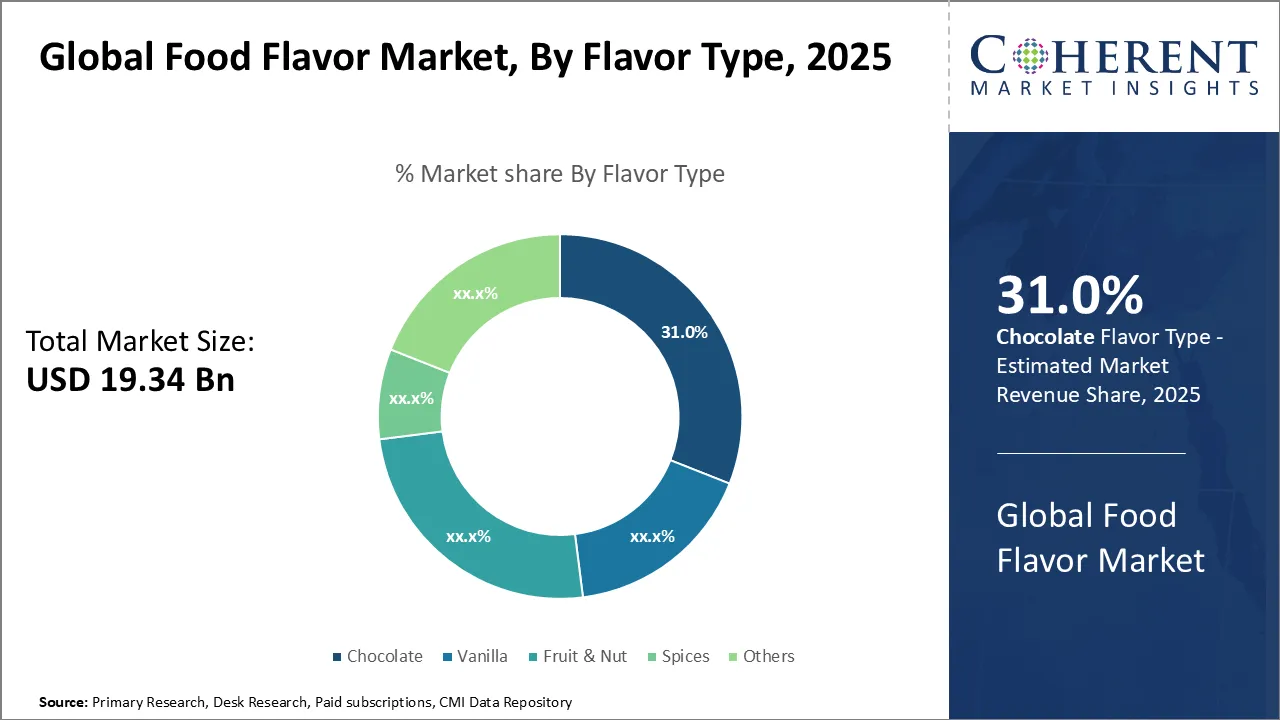
Chocolate expected to hod largest market share of 31% in 2025. Chocolate flavors continue to gain momentum in the food flavor market as consumers actively seek indulgent, comforting, and recognizable taste experiences across various food and beverage products. Manufacturers increasingly incorporate chocolate notes into bakery, dairy, dessert, and beverage items due to their broad appeal. Ongoing innovation in premium, dark, and fusion chocolate profiles fuels interest in richer and more distinctive flavors. Growing snacking habits, festive consumption, and demand for artisanal offerings further reinforce chocolate’s position as a versatile and highly favored flavor option. For instance, in July 2025, OSF Flavors, a maker of natural and organic custom flavors, unveiled Angel Hair Chocolate Flavor, allowing non-chocolate foods and beverages to join the confectionery social media trend.
Synthetic flavors continue to gain traction in the food flavor market because they offer cost-efficient production, steady quality, and dependable availability compared to natural alternatives. Food manufacturers use them to maintain consistent taste in large-scale processed and packaged products. Their ability to work across beverages, snacks, bakery, and dairy items broadens their usefulness. Ongoing progress in flavor chemistry allows producers to create realistic and customizable flavor profiles. These advantages position synthetic flavors as a practical choice for many mass-market food brands.
Beverage flavors are gaining momentum in the food flavor market as consumers actively seek refreshing, flavorful, and functional drinks. Manufacturers respond to the growing popularity of ready-to-drink, health-focused, and plant-based beverages by creating innovative flavors that mask bitterness and enhance taste. Consumers’ curiosity for exotic, natural, and unique flavor combinations drives experimentation in juices, teas, energy drinks, and dairy-based beverages. Advances in flavor technology enable producers to deliver consistent and stable taste, making beverage flavors essential for crafting appealing and distinctive drinks. For instance, in August 2025, Ingredients supplier T. Hasegawa introduced a new technology that helps beverage makers create clean-label citrus drinks with longer shelf life.
To learn more about this report, Download Free Sample
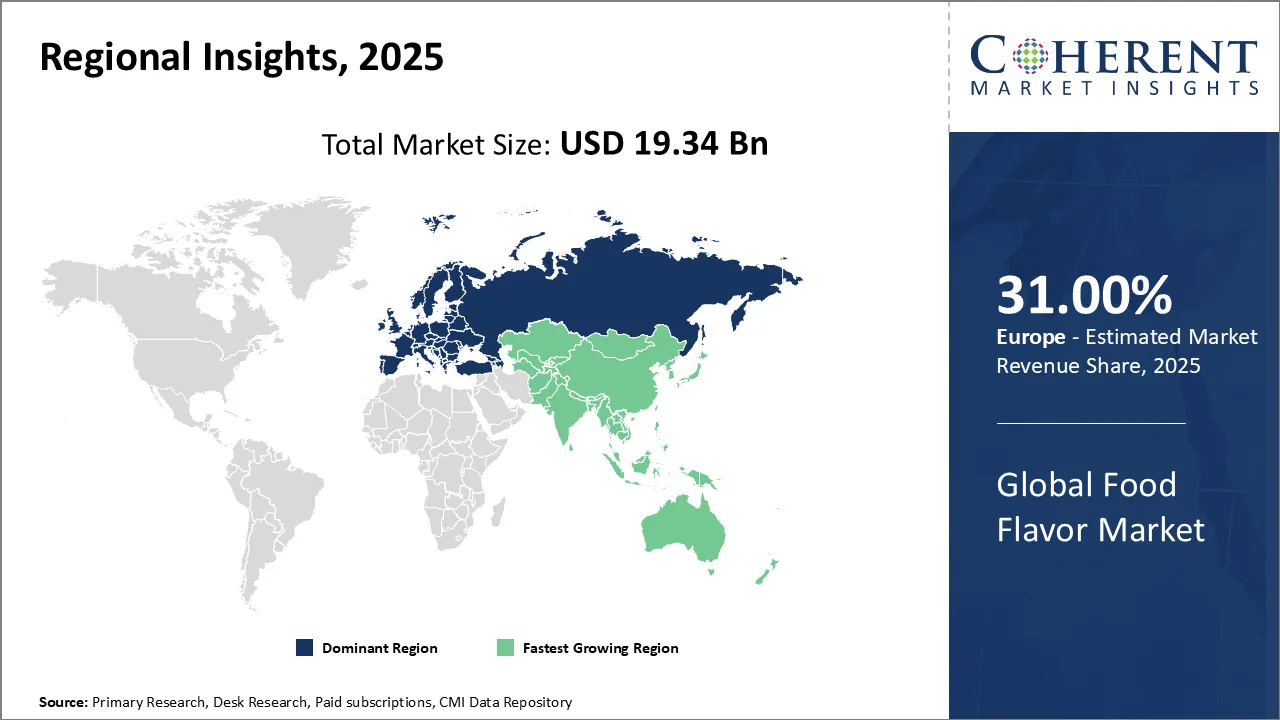
Europe dominates the overall market with an estimated share of 31% in 2025. Manufacturers in Europe are driving the food flavor market with bold, authentic taste profiles and clean‑label formulations. Consumers are seeking globally inspired spice blends and natural extracts that bring the comfort of home cooking or the excitement of exotic cuisines. The demand for plant‑based, low‑sugar, and reduced‑salt flavor solutions is rising as health-conscious choices gain importance. Companies are focusing on layering subtle taste nuances, such as umami richness or citrus brightness, to enhance dishes without overwhelming them, delivering versatility and culinary sophistication. For instance, in September 2025, Kemin Food Technologies expanded its Olessence natural flavorings with Olessence P Dry for meat and poultry and Olessence G Liquid for sauces and dips, responding to rising demand for fresh, clean-label foods in Europe.
Asia Pacific manufacturers are actively shaping the food flavor industry by creating vibrant, culturally rich taste profiles and emphasizing clean‑label ingredients. Consumers are seeking traditional spice blends and aromatic natural extracts that highlight regional heritage or introduce exciting global flavors. Rising health and wellness awareness is driving demand for plant‑based, reduced‑sugar, and lower‑salt flavor options. Producers are innovating with layered taste experiences — from gentle sweetness to smoky depth or citrus zing — to enhance dishes subtly while adding versatility and culinary appeal across various cuisines. For instance, U.S. grain merchant Archer-Daniels-Midland Co. (ADM) opened a new flavor production facility in China to meet rising demand for beverages and healthy foods.
United Kingdom food flavor developers are actively meeting the rising demand for locally inspired, nostalgic tastes infused with global influences. Consumers are seeking blends that combine comforting British classics with vibrant international spices. Interest in natural, clean‑label seasonings is growing. Producers are creating layered taste experiences — from rich umami to gentle sweetness — enabling home cooks to elevate everyday dishes into subtly flavorful creations. This trend highlights increasing culinary curiosity and a desire for versatile, innovative flavor options. For instance, in May 2025, Coca-Cola Europacific Partners (CCEP) launched Relentless Guava to boost the energy drink category and tap into strong demand for guava-flavored drinks, especially among Gen Z in the UK.
Indian food flavor makers are actively transforming the market by combining traditional, spice-rich heritage with modern, health-conscious preferences. Consumers are increasingly choosing clean‑label, plant-based, and natural flavorings, often derived from native herbs, fruits, and botanicals instead of synthetic additives. Producers are reviving regional and ethnic flavor profiles, celebrating cultural diversity and nostalgia. At the same time, urban and younger consumers are embracing fusion and globally inspired tastes, frequently featuring spicy or savory twists that bring excitement to everyday dishes. For instance, in January 2025, PepsiCo India partnered with Tata Consumer Products’ Ching’s Secret to introduce a new flavor of the popular crunchy snack Kurkure.
Consumers are increasingly favoring flavors made from natural ingredients, free from artificial additives or preservatives. This trend reflects a broader health-conscious mindset, where end-users associate transparency with trust and quality. Manufacturers are responding by developing extracts, essential oils, and botanical-derived flavorings. Clean-label demand is driving innovation in sourcing, processing, and labeling, ensuring that products not only taste authentic but also align with growing consumer expectations for safety, simplicity, and sustainable practices in the food sector.
The shift toward plant-based diets and functional foods is shaping flavor development. Consumers seek taste experiences that support wellness, including low-sugar, low-salt, and nutrient-enriched options. Manufacturers are blending health-conscious formulations with bold, satisfying flavors to maintain indulgence without compromising dietary goals. This trend fuels creative experimentation with natural extracts, protein-based enhancers, and alternative seasonings, enabling products that meet nutritional needs while appealing to taste preferences, particularly among urban, younger, and fitness-oriented populations.
The growing consumer preference for clean-label, natural, and organic products presents a significant opportunity for flavor manufacturers. Brands can capitalize by creating flavors derived from herbs, fruits, and botanicals, avoiding synthetic additives. This trend allows companies to differentiate through transparency, sustainability, and ingredient quality. Opportunities also exist in developing certifications and traceable sourcing, building consumer trust while meeting demand for healthier, environmentally conscious food options that deliver authentic, high-quality taste experiences across snacks, beverages, and processed foods.
| Report Coverage | Details | ||
|---|---|---|---|
| Base Year: | 2024 | Market Size in 2025: | USD 19.34 Bn |
| Historical Data for: | 2020 To 2024 | Forecast Period: | 2025 To 2032 |
| Forecast Period 2025 to 2032 CAGR: | 4.6% | 2032 Value Projection: | USD 26.5 Bn |
| Geographies covered: |
|
||
| Segments covered: |
|
||
| Companies covered: |
Givaudan SA, International Flavors & Fragrances Inc., Firmenich SA, Symrise AG, Takasago International Corporation, Sensient Technologies Corporation, T. Hasegawa Co., Ltd., Kerry Group, Mane SA, and Huabao International Holdings Limited |
||
| Growth Drivers: |
|
||
| Restraints & Challenges: |
|
||
Uncover macros and micros vetted on 75+ parameters: Get instant access to report
Share
Share
About Author
Pankaj Poddar is a seasoned market research consultant with over 12 years of extensive experience in the fast-moving consumer goods (FMCG) and plastics material industries. He holds a Master’s degree in Business Administration with specialization in Marketing from Nirma University, one of India’s reputed institutions, which has equipped him with a solid foundation in strategic marketing and consumer behavior.
As a Senior Consultant at CMI for the past three years, he has been instrumental in harnessing his comprehensive understanding of market dynamics to provide our clients with actionable insights and strategic guidance. Throughout his career, He has developed a robust expertise in several key areas, including market estimation, competitive analysis, and the identification of emerging industry trends. His approach is grounded in a commitment to understanding client needs thoroughly and fostering collaborative relationships. His dedication to excellence and innovation solidifies his role as a trusted advisor in the ever-evolving landscape of not only FMCG but also chemicals and materials markets.
Missing comfort of reading report in your local language? Find your preferred language :
Transform your Strategy with Exclusive Trending Reports :
Frequently Asked Questions
Joining thousands of companies around the world committed to making the Excellent Business Solutions.
View All Our Clients
 Schedule a meeting with report Author