

Global High Intensity Focused Ultrasound (HIFU) Market Size and Forecast – 2026 To 2033
The global high intensity focused ultrasound (HIFU) market is expected to grow from USD 138.7 Mn in 2026 to USD 229.1 Mn by 2033, registering a compound annual growth rate (CAGR) of 7.4% from 2026 to 2033. The market for high intensity focused ultrasound (HIFU) is poised for significant expansion, fueled by the rapidly ageing global population, which is increasing the demand for minimally invasive therapies that offer lower procedural risks, faster recovery, and improved clinical outcomes.
According to the World Health Organization (WHO), 1 in 6 people globally will be aged 60 years or older by 2030, with the number of people in this age group expected to increase from 1 billion in 2020 to 1.4 billion by 2030. This demographic shift is expected to accelerate the adoption of non-invasive treatment technologies such as HIFU for age-related chronic conditions.
Key Takeaways of the Global High Intensity Focused Ultrasound (HIFU) Market
- Magnetic resonance imaging-HIFU technology is projected to hold 57.5 % of the global high intensity focused ultrasound (HIFU) market share in 2026, making it the dominant imaging technology segment, across North America due to favorable reimbursement policies and wider adoption of image-guided non-invasive therapies. For instance, the U.S. Centers for Medicare & Medicaid Services (CMS) provides Medicare payment for MR-guided focused ultrasound procedures performed in hospital outpatient settings under the Hospital Outpatient Prospective Payment System (OPPS), supporting broader clinical adoption of MRI-guided HIFU.
- Oncology is projected to hold 53.0 % of the global high intensity focused ultrasound (HIFU) market share in 2026, making it the dominant indication segment across Europe due to increasing clinical acceptance of focal therapies for localized prostate cancer. For instance, the National Institute for Health and Care Excellence (NICE), UK, recommends high-intensity focused ultrasound for localized prostate cancer under standard arrangements for clinical governance, consent, and audit, supporting its use across specialist centers.
- Hospitals are projected to hold 54.2 % of the global high intensity focused ultrasound (HIFU) market share in 2026, making it the dominant end user segment across Asia Pacific due to the concentration of advanced tertiary care centers and government-led standardization of cancer treatment. For instance, the National Health Commission (NHC) of China has issued national diagnosis and treatment guidelines for multiple cancers, recommending that complex oncology interventions be delivered through qualified tertiary hospitals. These guidelines reinforce hospitals as the primary setting for advanced therapeutic technologies, including HIFU.
- North America maintains its dominance with an estimated share of 36.6 % in 2026, bolstered by the strong adoption of minimally invasive therapeutic technologies and a supportive reimbursement environment. For instance, Health Canada regulates therapeutic ultrasound systems under the Medical Devices Regulations, ensuring rigorous safety and performance standards that facilitate the adoption of advanced HIFU technologies across Canadian healthcare institutions.
- Asia Pacific is expected to exhibit the fastest growth with an estimated contribution of 23.5 % share in 2026, driven by increasing government support for innovative medical technologies and expanding healthcare infrastructure. For instance, Japan's Ministry of Health, Labour and Welfare (MHLW) promotes the adoption of innovative medical devices through its SAKIGAKE Designation System, accelerating the review of breakthrough technologies and strengthening the country's advanced therapeutic ecosystem.
- Integration of HIFU with Immunotherapy and Targeted Drug Delivery: The integration of HIFU with immunotherapy and targeted drug delivery presents a significant growth opportunity for market players. HIFU-induced thermal and mechanical effects can enhance tumor permeability, improve drug penetration, and stimulate anti-tumor immune responses, making it a promising adjunct to next-generation cancer therapies. Ongoing research into image-guided combination therapies is expected to expand HIFU's clinical applications and create new commercial opportunities over the forecast period.
- Growing Integration of Artificial Intelligence in Ultrasound Imaging: The increasing integration of artificial intelligence (AI) in ultrasound imaging is enhancing the precision, treatment planning, and real-time monitoring capabilities of High Intensity Focused Ultrasound (HIFU) systems. AI-assisted image analysis and workflow optimization enable accurate targeting of lesions, reduce operator dependency, and improve procedural outcomes, driving greater clinical adoption of HIFU across oncology and neurology applications.
Segmental Insights
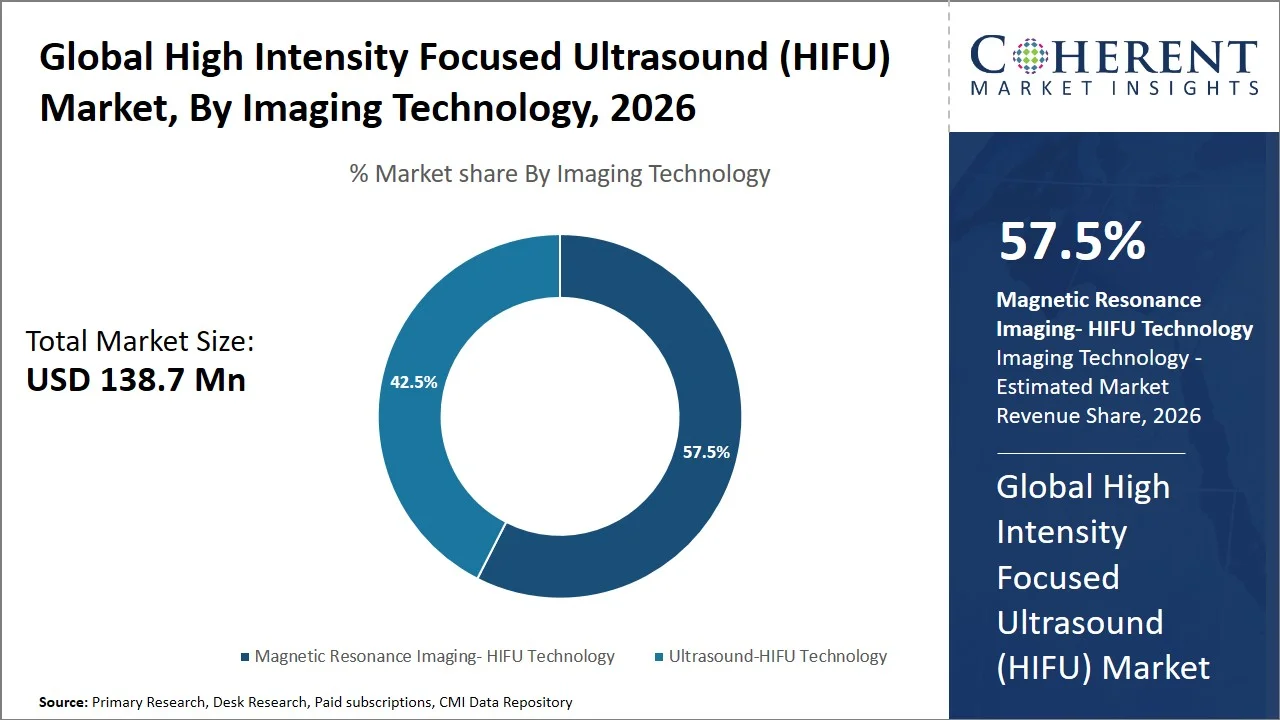
Why Does the Magnetic Resonance Imaging-HIFU Technology Dominate the Global High Intensity Focused Ultrasound (HIFU) Market?
Magnetic resonance imaging-HIFU technology is projected to hold a market share of 57.5% in 2026, due to its effective soft tissue depiction, and integrated thermometry which allows real-time measurement of tissue temperature during HIFU. This allows accurate and controlled destruction of tissues and simultaneous protection of adjacent healthy tissues. With the capability for online monitoring of accumulated dose, it enhances precision and improves outcome of treatments, thus making it a suitable modality when dealing with complicated HIFU procedures. For instance, in August 2024, five-year follow-up results published by Springer Nature Limited, confirmed that long-term stability and efficacy of image guided HIFU therapy in the treatment of breast fibroadenoma, further validating the durability and clinical utility of image-guided HIFU technologies.
- Current Industry Events of 2026
- Market Size Estimation
- Regional Breakdown
- Competitive Landscape
- Customer Intelligence
- Segmental Analysis
- Pricing Analysis
- Key Market Drivers, Challenges & Future Trends
- Customized Insights Section
Why Does Oncology Represent the Largest Indication Segment in the High Intensity Focused Ultrasound (HIFU) Market?
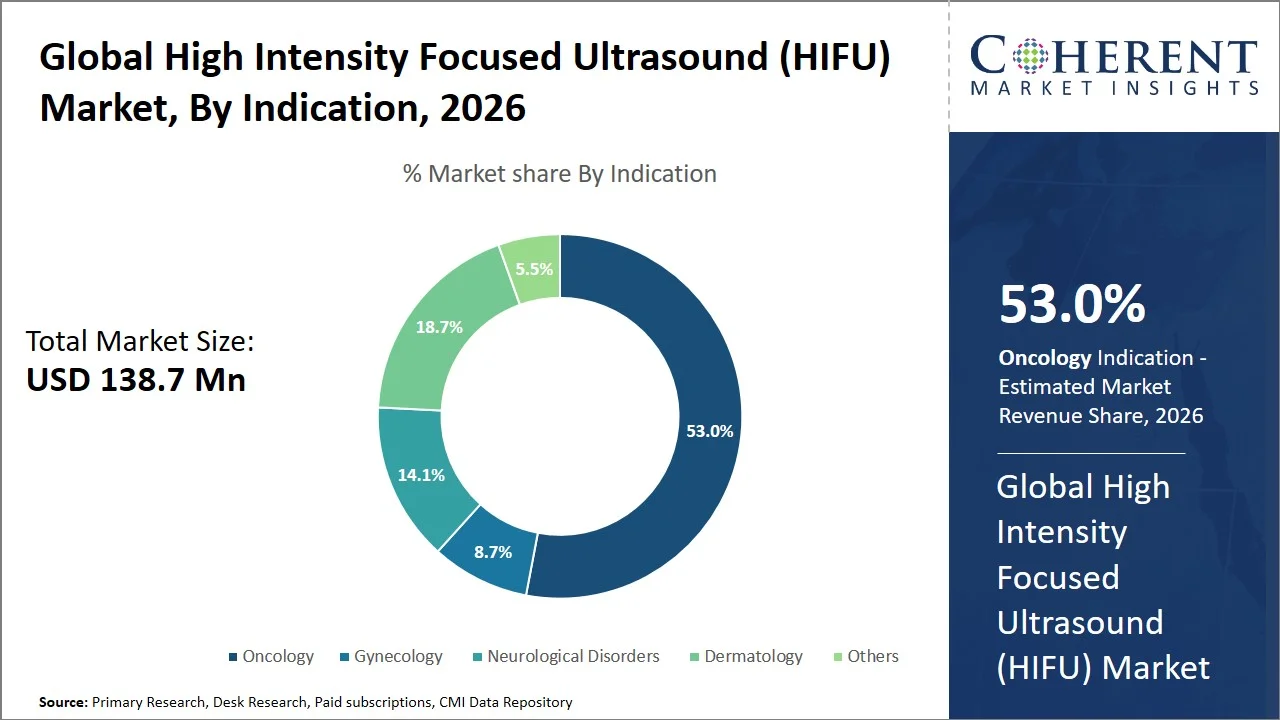
Oncology is projected to hold a market share of 53.0% in 2026, due to rising preference for precise and minimally invasive cancer ablation and the widening applications of HIFU in the treatment of various solid tumors. The method targets harmful tumors while retaining surrounding cells, thus enhances patient prognosis and results. It is used to selectively target cancerous tissue while sparing nearby normal structures thus enhancing results and minimizing side effects of cancer therapy. For instance, in November 2024, SONIRE Therapeutics received U.S. Food and Drug Administration (FDA) breakthrough device designation for pancreatic cancer treatment, recognizing its potential to address an unmet clinical need and accelerate the development of HIFU-based oncology therapies.
Hospitals Segment Dominates the Global High Intensity Focused Ultrasound (HIFU) Market
The hospitals segment is projected to hold a market share of 54.2% in 2026, as they possess access to modern imaging equipment, comprise multidisciplinary teams, and can conduct a wide range of image-guided, as well as complex, image-guided procedures in oncology, neurology and women's health domains. The continued investment in their highly specific HIFU programs as well as technology research and development programs facilitate both technology adoption and increased use within the medical profession. For instance, in December 2025, the Focused Ultrasound Foundation designated Turku University Hospital in Finland as a focused ultrasound center of excellence, acknowledging its leadership in advancing focused ultrasound research, clinical implementation, and patient care.
Current Events and their Impact
Current Events | Description and its Impact |
U.K. NICE Updates Guidance on High-Intensity Focused Ultrasound for Localized Prostate Cancer (January 2025) |
|
Japan PMDA Expands Regulatory Support for Innovative Medical Devices (July 2025) |
|
Global High Intensity Focused Ultrasound (HIFU) Market Dynamics
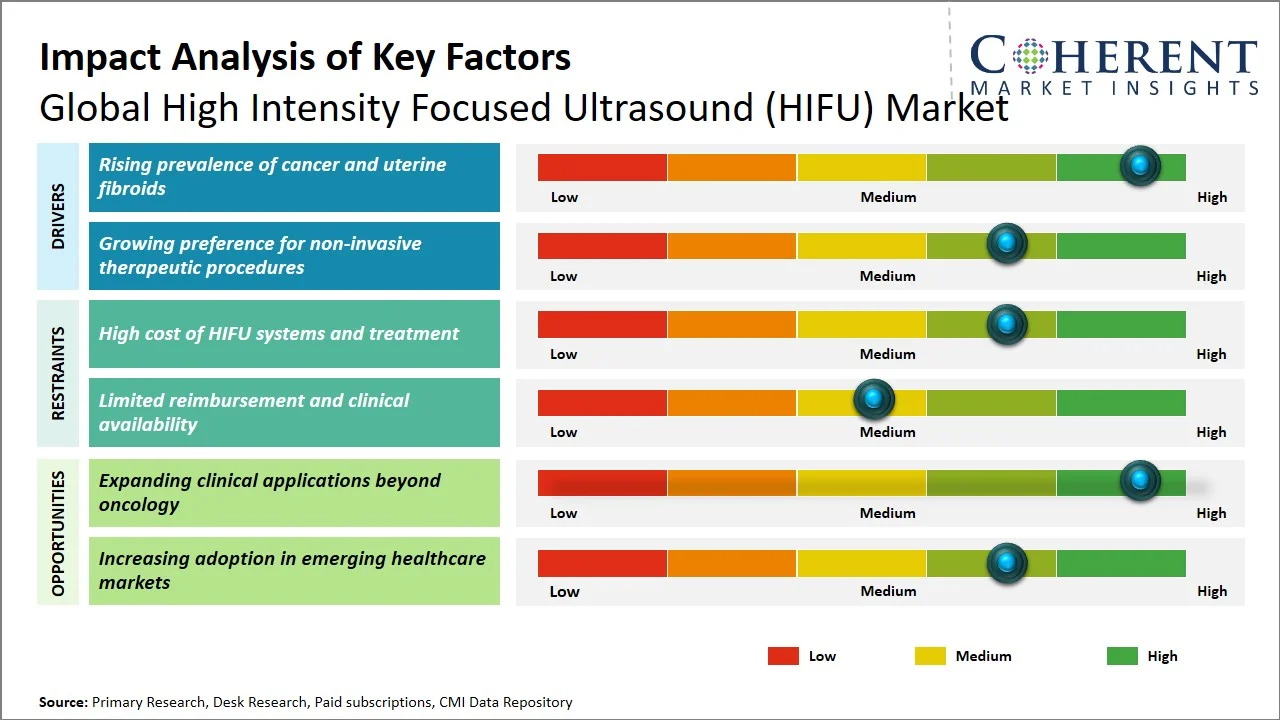
Market Drivers
- Rising prevalence of cancer and uterine fibroids: The increasing prevalence of uterine fibroids and other localized tumors is driving the adoption of High Intensity Focused Ultrasound (HIFU) as a non-invasive, organ-preserving treatment option. HIFU enables precise tissue ablation while minimizing surgical risks, shortening recovery time, and preserving fertility in eligible patients, making it an attractive alternative to conventional procedures. According to the Eunice Kennedy Shriver National Institute of Child Health and Human Development (NICHD), uterine fibroids are the most common non-cancerous tumors in women of reproductive age, highlighting the sustained need for minimally invasive treatment approaches such as HIFU.
- Growing preference for non-invasive therapeutic procedures: The growing preference for non-invasive therapeutic procedures is accelerating the adoption of High Intensity Focused Ultrasound (HIFU), as it offers precise tissue ablation with reduced procedural risks, shorter hospital stays, and faster recovery compared with conventional surgery. Increasing emphasis on patient-centered care and organ-preserving treatments is further strengthening the demand for HIFU across oncology, gynecology, and neurology. For instance, the World Health Organization (WHO) advocates the adoption of safe, effective, and less invasive surgical care to improve patient outcomes and reduce healthcare burden, supporting the broader shift towards minimally invasive treatment technologies.
Emerging Trends
- Expansion of HIFU into Benign Disease Management: HIFU is increasingly being adopted for the treatment of benign conditions such as uterine fibroids, benign thyroid nodules, adenomyosis, and benign prostatic hyperplasia (BPH). The expanding clinical evidence supporting non-invasive management of these disorders is broadening HIFU's application beyond oncology and creating new avenues for market growth.
- Increasing Adoption of Robotic and Image-Guided HIFU Systems: The integration of robotic assistance with advanced real-time imaging technologies is transforming HIFU procedures by improving treatment accuracy, workflow efficiency, and procedural reproducibility. The growing preference for automated, image-guided therapeutic platforms is driving the next generation of HIFU systems across hospitals and specialty clinics.
Regional Insights
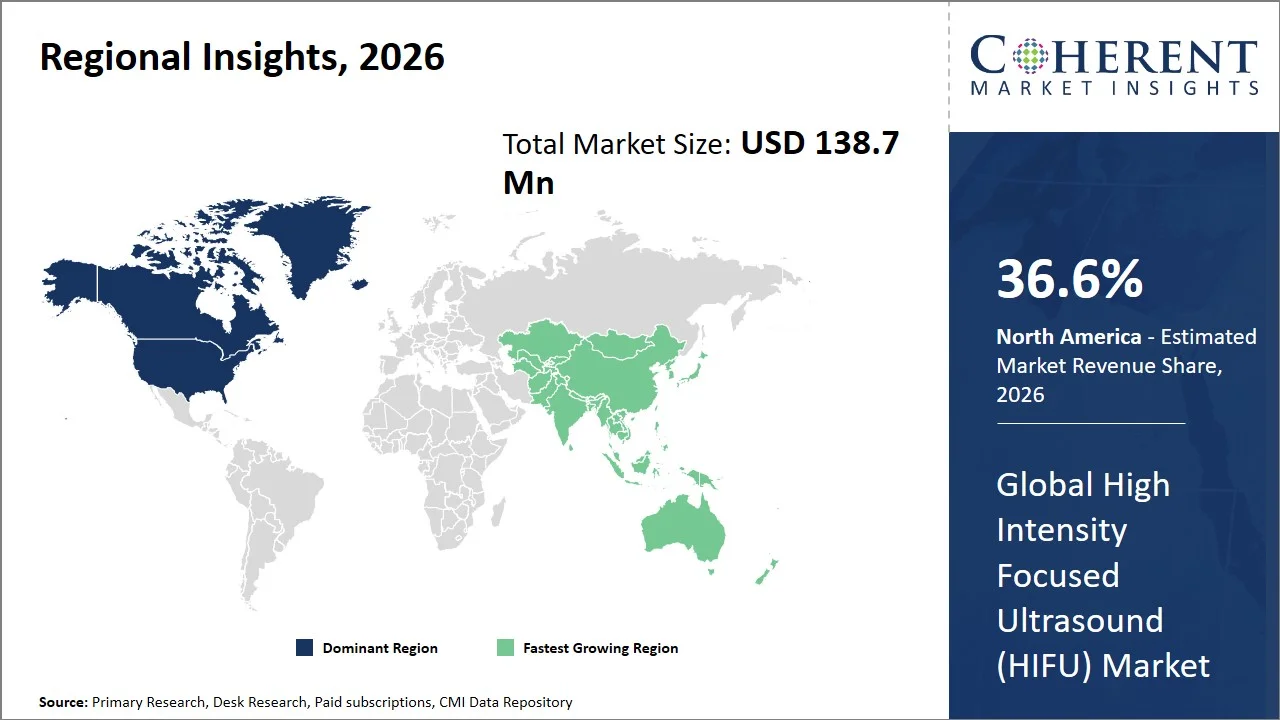
Why is North America a Strong Market for High Intensity Focused Ultrasound (HIFU)?
North America leads the global high intensity focused ultrasound (HIFU) market, accounting for an estimated 36.6% share in 2026, due to well-developed healthcare system, strong investment in R&D and initial uptake of promising treatments technologies. Moreover, the strong regulatory support, specifically the U.S FDA approach toward the innovative medical devices keeps on expanding application pipeline in the market with significant regulatory product approval. For instance, the U.S. FDA's Breakthrough Devices Program facilitates and prioritizes regulatory interactions and the expediting of review, for technologies that provide for more effective treatment for life-threatening or irreversibly debilitating diseases or conditions and have the potential for more rapid clinical translation, while meeting the established criteria of safety and effectiveness. Furthermore, the region’s leading status is reinforced by high awareness in terms of prognosis, emergence of research data and availability of specialized non-invasive treatments at specialized centers-especially in the spheres of oncology, urology and neurology.
Why Does the Asia Pacific High Intensity Focused Ultrasound (HIFU) Market Exhibit High Growth?
The Asia Pacific high intensity focused ultrasound (HIFU) market is expected to exhibit the fastest growth with an estimated contribution of 23.5% share to the global market in 2026, owing to increasing healthcare expenditure, expanding access to new age healthcare facilities, and rising prevalence of lifestyle associated or chronic diseases. Proactive government support for advancement in health infrastructure in countries such as China, Japan, South Korea, and India is driving the rapid adoption of progressive therapies.
For instance, in June 2026, the Department of Pharmaceuticals of India invited proposals under the Scheme for Strengthening of Medical Device Industry (SMDI) to promote the development of domestic innovation, clinical research and manufacturing capabilities in the medical technology sector. The scheme focuses on building a conducive ecosystem for advanced technologies such as HIFU through the medical device clinical studies support scheme and the marginal investment scheme for reducing import dependence. Furthermore, domestic manufacturing capabilities are scaling up in medical devices, with increased clinical knowledge and the sizable patient base helping accelerate clinical penetration and adoption throughout the region.
Global High Intensity Focused Ultrasound (HIFU) Market Outlook for Key Countries
Why is the U.S. Leading Innovation and Adoption in the High Intensity Focused Ultrasound (HIFU) Market?
The U.S. dominates the high intensity focused ultrasound (HIFU) market primarily as a result of its extensive, specialized focused ultrasound centers (such as the University of Virginia Health System, Mayo Clinic, and Cleveland Clinic) and leading academic medical institutions (such as Harvard Medical School, Johns Hopkins University School of Medicine, and Stanford Medicine) and strong collaboration between health systems, manufacturers, and medical societies. The U.S. has successfully brought the clinical adoption of HIFU treatments to numerous indications, primarily in neurology and urology, while increasing its commercial treatment and center of excellence footprint for the widespread use and adoption of technology and physician training for these procedures.
Is Japan a Favorable Market for High Intensity Focused Ultrasound (HIFU)?
Japan is one of the most promising markets for the high intensity focused ultrasound (HIFU) market, owing to an unparalleled proficiency in the field of ultrasound therapies, premature clinical adoption of HIFU into normal practices and its organ sparing treatment methodologies along with precision-oriented procedures. The country has established dedicated HIFU treatment centers (such as Tokyo Women's Medical University, University of Tsukuba Hospital, Kyoto University Hospital, and the National Cancer Center Hospital East), with profound physicians for prostate disorders, uterine fibroids, as well as neurology, thereby improving existing protocols to promote growth of this technique amongst different medical specialties.
Is China Emerging as a Key Growth Hub for the High Intensity Focused Ultrasound (HIFU) Market?
China is positioned as a key growth hub in the global high intensity focused ultrasound (HIFU) market due to widespread clinical use for ultrasound-guided HIFU procedures and their incorporation in clinical guidelines within tertiary hospitals. The country has a robust physician user base with broad knowledge of minimally invasive ablation modalities and has extended the clinical indications for HIFU to the treatment of non-oncologic areas such as gynecology and pain management, as well as the management of other benign disease indications, strengthening its status as a hub of clinical innovation and commercialization.
Why Does Germany Top the Europe High Intensity Focused Ultrasound (HIFU) Market?
Germany leads the Europe high intensity focused ultrasound (HIFU) market as it has a better integration of image-guided therapeutic devices in clinics, as well as extensive knowledge of minimal invasive urology and oncology surgeries. An established set-up for clinical research, physician training, multidisciplinary decision making, and a quicker pace of incorporation of advanced HIFU equipment facilitate and support growing applications for oncological, neurological and women health fields within the country.
Is the High Intensity Focused Ultrasound (HIFU) Market Developing in India?
India is a high-potential market for high intensity focused ultrasound (HIFU) attributed to the growing preference for minimally invasive procedure technologies and availability of high-end image-guided HIFU treatments in the tertiary hospital settings. Increasing availability of the clinical experience in handling prostate diseases, uterine fibroids, and movement disorders along with increase in investment in the sophisticated hospital infrastructure and medical technology will pave for its slower adoption across several specialties.
Product Innovation Landscape in the Global High Intensity Focused Ultrasound (HIFU) Market
Innovation Area | Technology Advancement | Clinical Value | Market Significance |
AI-assisted treatment planning | Automated lesion segmentation and therapy planning | Improves targeting accuracy | Enhances physician adoption |
Robotic-assisted HIFU | Automated probe positioning | Reduces operator dependency | Supports procedural standardization |
MRI-guided HIFU | Real-time temperature mapping | Improves treatment precision | Expands neurological & oncology applications |
Ultrasound-guided HIFU | Real-time ultrasound visualization | Faster and cost-effective procedures | Increases accessibility in hospitals |
Portable/Compact HIFU Systems | Smaller system footprint | Greater flexibility in treatment settings | Expands adoption in ambulatory centers |
How are expanding clinical applications beyond oncology creating new growth opportunities in the high intensity focused ultrasound (HIFU) market?
The increasing application of high intensity focused ultrasound (HIFU) beyond oncology is driving significant growth opportunities, particularly in the areas of neurology, movement disorders, pain management and benign conditions. HIFU is currently the subject of ongoing clinical research which is broadening its therapeutic indications, allowing its incorporation into different treatment protocols and consequently increasing the number of patients eligible for treatment. For instance, according to Focused Ultrasound Foundation, focused ultrasound is being studied in more than 180 diseases worldwide and is approved for nearly 40 diseases globally, demonstrating the technology’s growing therapeutic potential.
Market Players, Key Development, and Competitive Landscape
Key Developments
- In June 2026, FocalTherics entered into an agreement with MellingMedical to expand access to the Focal One robotic High-Intensity Focused Ultrasound (HIFU) system for U.S. veterans with prostate cancer. The collaboration will facilitate the availability of minimally invasive HIFU therapy across Veterans Health Administration facilities, supporting broader adoption of robotic HIFU treatment.
- In May 2026, Sonire Therapeutics initiated the first U.S. clinical study evaluating its ultrasound-guided High-Intensity Focused Ultrasound (HIFU) therapy for pancreatic cancer. The study is designed to assess the safety and feasibility of non-invasive HIFU treatment for patients with locally advanced pancreatic cancer, reinforcing the growing clinical adoption of HIFU in oncology.
- In September 2024, EDAP TMS SA and Avenda Health launched the world's first AI-assisted Focal One robotic High-Intensity Focused Ultrasound (HIFU) procedures for prostate cancer treatment. The integration combines AI-driven treatment planning with robotic precision to enhance targeting accuracy, streamline workflows, and improve patient outcomes. The launch represents a significant advancement in image-guided, minimally invasive HIFU therapies.
Competitive Landscape
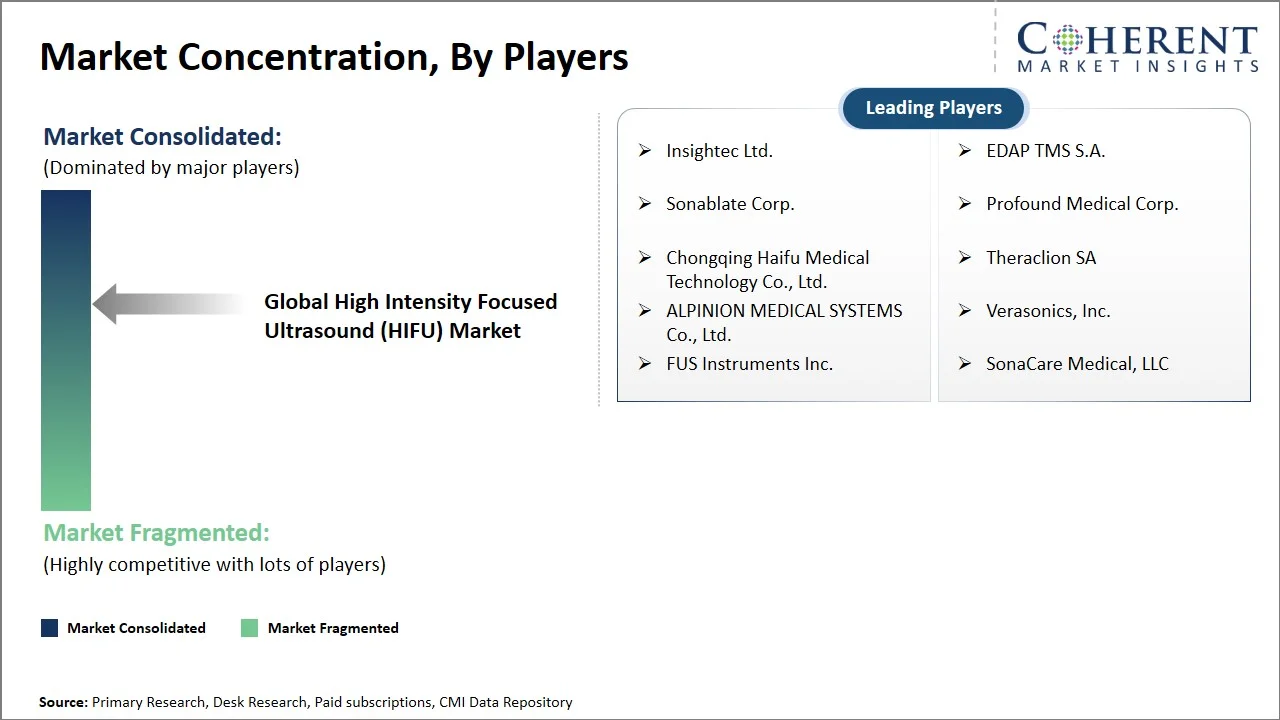
The global high intensity focused ultrasound (HIFU) market is moderately consolidated, with competition centered on technological innovation, clinical evidence generation, regulatory approvals, and the expansion of therapeutic indications. Leading companies are focusing on improving treatment precision through AI-enabled planning, robotic-assisted systems, and advanced MRI- and ultrasound-guided platforms while strengthening their global commercial footprint through strategic collaborations with hospitals and research institutions. Key focus areas include:
- Development of AI-enabled and robotic-assisted HIFU platforms to improve treatment precision and workflow efficiency.
- Expansion of clinical indications beyond oncology into neurology, pain management, women's health, and urology.
- Securing regulatory approvals and reimbursement coverage to accelerate commercialization across key healthcare markets.
- Strategic hospital partnerships, clinical trials, and geographic expansion to strengthen market presence and increase technology adoption.
Market Report Scope
High Intensity Focused Ultrasound (HIFU) Market Report Coverage
| Report Coverage | Details | ||
|---|---|---|---|
| Base Year: | 2025 | Market Size in 2026: | USD 138.7 Mn |
| Historical Data for: | 2020 To 2024 | Forecast Period: | 2026 To 2033 |
| Forecast Period 2026 to 2033 CAGR: | 7.4% | 2033 Value Projection: | USD 229.1 Mn |
| Geographies covered: |
| ||
| Segments covered: |
| ||
| Companies covered: | Insightec Ltd., EDAP TMS S.A., Sonablate Corp., Profound Medical Corp., Chongqing Haifu Medical Technology Co., Ltd., Theraclion SA, ALPINION MEDICAL SYSTEMS Co., Ltd., Verasonics, Inc., FUS Instruments Inc., and SonaCare Medical, LLC | ||
| Growth Drivers: |
| ||
| Restraints & Challenges: |
| ||
Analyst Opinion (Expert Opinion)
- In the coming years, the high intensity focused ultrasound (HIFU) market will be shaped by the transition from niche oncology applications to multi-specialty therapeutic platforms. Advancements in AI-assisted treatment planning, robotic guidance, and image-guided precision therapy are expected to improve clinical outcomes and expand HIFU's adoption across neurology, women's health, pain management, and urology. As clinical evidence and regulatory approvals continue to broaden, HIFU is likely to become an integral component of precision, non-invasive treatment pathways.
- The maximum opportunities will probably exist within oncology applications across Asia Pacific, particularly China and Japan, where supportive government initiatives, increasing investments in advanced medical technologies, expanding tertiary healthcare infrastructure, and a high burden of cancer are driving the adoption of image-guided therapeutic technologies. Additionally, neurology applications in North America present strong long-term potential, supported by increasing acceptance of incision-free treatments for movement disorders.
- In order to obtain a competitive advantage, market participants should prioritize expanding clinical indications through robust multicenter clinical trials, integrate AI and robotic technologies to enhance treatment accuracy and workflow efficiency, and strengthen collaborations with hospitals, academic institutions, and research organizations. Companies should also focus on securing timely regulatory approvals and reimbursement coverage, while developing cost-effective and scalable HIFU platforms to accelerate adoption across both developed and emerging healthcare markets.
Speak to the analyst
Want personalized insights?
Take the findings above to one of our principal consultants, or have the report rebuilt around the segments, geographies and competitors you actually track.
Market Segmentation
- Imaging Technology Insights (Revenue, USD Mn, 2021 - 2033)
- Magnetic Resonance Imaging-HIFU Technology
- Ultrasound-HIFU Technology
- Indication Insights (Revenue, USD Mn, 2021 - 2033)
- Oncology
- Gynecology
- Neurological Disorders
- Dermatology
- Others
- End User Insights (Revenue, USD Mn, 2021 - 2033)
- Hospitals
- Ambulatory Surgical Centers (ASCs)
- Dermatology and Aesthetic Clinics
- Others
- Regional Insights (Revenue, USD Mn, 2021 - 2033)
- North America
- U.S.
- Canada
- Latin America
- Brazil
- Argentina
- Mexico
- Rest of Latin America
- Europe
- Germany
- U.K.
- Spain
- France
- Italy
- Russia
- Rest of Europe
- Asia Pacific
- China
- India
- Japan
- Australia
- South Korea
- ASEAN
- Rest of Asia Pacific
- Middle East
- GCC Countries
- Israel
- Rest of Middle East
- Africa
- South Africa
- North Africa
- Central Africa
- North America
- Key Players Insights
- Insightec Ltd.
- EDAP TMS S.A.
- Sonablate Corp.
- Profound Medical Corp.
- Chongqing Haifu Medical Technology Co., Ltd.
- Theraclion SA
- ALPINION MEDICAL SYSTEMS Co., Ltd.
- Verasonics, Inc.
- FUS Instruments Inc.
- SonaCare Medical, LLC
Sources
Primary Research Interviews
- Medical oncologists utilizing HIFU for solid tumor ablation
- Urologists specializing in focal therapy for prostate cancer
- Interventional radiologists and image-guided therapy specialists
- Neurosurgeons treating movement disorders using MR-guided focused ultrasound
- Hospital procurement managers from tertiary and specialty hospitals
- Product managers and R&D executives from HIFU device manufacturers
Stakeholders
- High Intensity Focused Ultrasound (HIFU) system manufacturers
- MRI and ultrasound imaging technology providers
- Hospitals and multispecialty healthcare institutions
- Ambulatory surgery centers (ASCs)
- Cancer treatment and neurology specialty centers
- Medical device distributors and channel partners
- Academic research institutes and clinical trial organizations
- End-use Sectors
- Hospitals
- Ambulatory Surgery Centers (ASCs)
- Specialty Oncology Centers
- Urology Clinics
- Neurology and Neurosurgery Centers
- Women's Health & Gynecology Clinics
- Academic Medical Centers and Research Hospitals
- Cosmetic and Aesthetic Clinics
- Regulatory & Health Bodies
- U.S. Food and Drug Administration (FDA)
- Centers for Medicare & Medicaid Services (CMS)
- National Institute for Health and Care Excellence (NICE), U.K.
- Pharmaceuticals and Medical Devices Agency (PMDA), Japan
- National Medical Products Administration (NMPA), China
- European Medicines Agency (EMA)
- Health Canada
- Therapeutic Goods Administration (TGA), Australia
Databases
- FDA 510(k) Premarket Notification Database
- FDA Premarket Approval (PMA) Database
- CMS Medicare Coverage Database
- OECD Health Statistics
- WHO Global Health Observatory (GHO)
- ClinicalTrials.gov
- World Bank Health Nutrition and Population Statistics
Magazines
- Imaging Technology News (ITN)
- AuntMinnie
- Medical Device Network
- Medical Design & Outsourcing
- DOTmed HealthCare Business News
- MedTech Dive
Journals
- Journal of Therapeutic Ultrasound
- Ultrasound in Medicine & Biology
- International Journal of Hyperthermia
- Journal of Medical Imaging and Radiation Oncology
- European Urology
- Journal of Neurosurgery
Newspapers
- The Wall Street Journal
- Financial Times
- USA Today
Associations
- Focused Ultrasound Foundation
- Radiological Society of North America (RSNA)
- American Institute of Ultrasound in Medicine (AIUM)
- European Society of Radiology (ESR)
- European Association of Urology (EAU)
- American Urological Association (AUA)
- International Society for Therapeutic Ultrasound (ISTU)
Public Domain Sources
- World Health Organization (WHO)
- International Agency for Research on Cancer (IARC)
- National Cancer Institute (NCI), U.S.
- U.S. Food and Drug Administration (FDA)
- National Institute for Health and Care Excellence (NICE), U.K.
- Centers for Medicare & Medicaid Services (CMS)
- National Health Commission (NHC), China
- Pharmaceuticals and Medical Devices Agency (PMDA), Japan
Proprietary Elements
- CMI Data Analytics Tool, Proprietary CMI Existing Repository of information for last 10 years.
Get access to 250+ pages report
Every segment, forecast, competitor profile and data table behind the analysis above — available for instant download.
- ESOMAR Member
- ISO 9001:2015 Certified
- D-U-N-S Registered
- GDPR & CCPA Compliant
Missing comfort of reading report in your local language? Find your preferred language:
Transform your Strategy with Exclusive Trending Reports
Frequently Asked Questions
The global high intensity focused ultrasound (HIFU) market is estimated to be valued at USD 138.7 Mn in 2026 and is expected to reach USD 229.1 Mn by 2033.
Magnetic resonance imaging- HIFU technology dominate due to its real-time temperature monitoring, superior soft-tissue visualization, and precise treatment planning, enabling accurate tissue ablation while minimizing damage to surrounding healthy tissues.
High Intensity Focused Ultrasound (HIFU) is a non-invasive therapeutic technology that uses focused ultrasound waves to thermally ablate targeted tissues without surgical incisions.
The CAGR of the global high intensity focused ultrasound (HIFU) market is projected to be 7.4% from 2026 to 2033.
MRI-guided HIFU provides superior soft-tissue imaging and real-time temperature mapping for enhanced treatment precision, whereas ultrasound-guided HIFU offers real-time visualization with lower procedural cost and faster treatment workflows.
HIFU concentrates high-energy ultrasound waves at a focal point, generating localized temperatures of 60–85°C that induce coagulative necrosis while sparing surrounding healthy tissue.
Rising prevalence of cancer and uterine fibroids, and growing preference for non-invasive therapeutic procedures are the major factors driving the growth of the global high intensity focused ultrasound (HIFU) market.