

Lateral Flow Assay Market Size and Trends
Global lateral flow assay market is estimated to be valued at USD 11.62 Bn in 2026 and is expected to reach USD 16.58 Bn by 2033, exhibiting a compound annual growth rate (CAGR) of 5.2% from 2026 to 2033.
Key Takeaways
- Based on Product Type, the Kits and Reagents segment is expected to lead the global lateral flow assay market, commanding a 56.5% share in 2026 owing to the growing demand for standardized results.
- Based on Technique, the Multiplex Detection Assay segment is expected for 31.5% of the global lateral flow assay market in 2026, owing to its ability to detect multiple analytes simultaneously.
- Based on Application, the Clinical Testing segment wis accounting for an estimated 34.5% of the market share in 2026, owing to the widespread use of lateral flow technology across various medical diagnostic applications.
- Based on End User, the Hospitals and Clinics segment is expected to contribute the largest share of the market in 2026, due to their central role in primary diagnostics and immediate patient care.
- Based on Region, North America is expected to lead the market, holding a share 38. 3% in 2026. While, Asia Pacific is anticipated to be the fastest-growing region during the forecast period.
Market Overview
The lateral flow assay market is witnessing robust expansion globally, driven by the growing demand for rapid, point-of-care diagnostic solutions across healthcare, veterinary, food safety, and environmental testing. The versatility and ease of use of LFA devices, requiring minimal training or equipment—make them especially valuable in remote and resource-limited settings. Increasing prevalence of infectious diseases, rising awareness of early disease detection, and growing investments in decentralized testing infrastructure are key factors driving lateral flow assay market demand. Additionally, the demand is further reinforced by the surge in home-based testing kits for conditions like pregnancy, and influenza.
Current Events and its Impacts
Current Event | Description and Its Impact |
Global Infectious Disease Outbreaks |
|
Regulatory Framework Shifts |
|
End-User Feedback and Unmet Needs of the Lateral Flow Assay (LFA) Market
End-User Feedback
- Ease of Use Hospitals, clinics, and home users value LFAs for their simplicity, speed, and minimal training requirement. This makes them particularly useful in decentralized settings and low-resource areas.
- Rapid Turnaround Time Clinicians appreciate the ability to get results within minutes, which is crucial for time-sensitive conditions like infectious diseases.
- Portability Healthcare providers in rural and remote areas note that LFAs are highly portable and do not require complex lab infrastructure, enabling broader access to diagnostic services.
Unmet Needs
- Sensitivity and Specificity Gaps A common concern across diagnostic labs and clinicians is that LFAs, while fast, often have lower sensitivity and specificity compared to molecular tests like PCR. This can result in false negatives or positives, particularly for early-stage or asymptomatic cases.
- Multiplexing Capabilities There is a growing need for multiplexed LFAs that can detect multiple pathogens or biomarkers in a single test, especially in emergency and pandemic settings.
- Digital Integration End users are increasingly demanding digital readouts and data connectivity (e.g., app-based interpretation, cloud sync) for better documentation, traceability, and integration into electronic medical records.
- Shelf Life and Storage Conditions Some users, especially in hot or humid climates, face challenges with the stability of test kits and demand products with longer shelf lives and higher thermal tolerance.
- Current Industry Events of 2026
- Market Size Estimation
- Regional Breakdown
- Competitive Landscape
- Customer Intelligence
- Segmental Analysis
- Pricing Analysis
- Key Market Drivers, Challenges & Future Trends
- Customized Insights Section
Segmental Insights
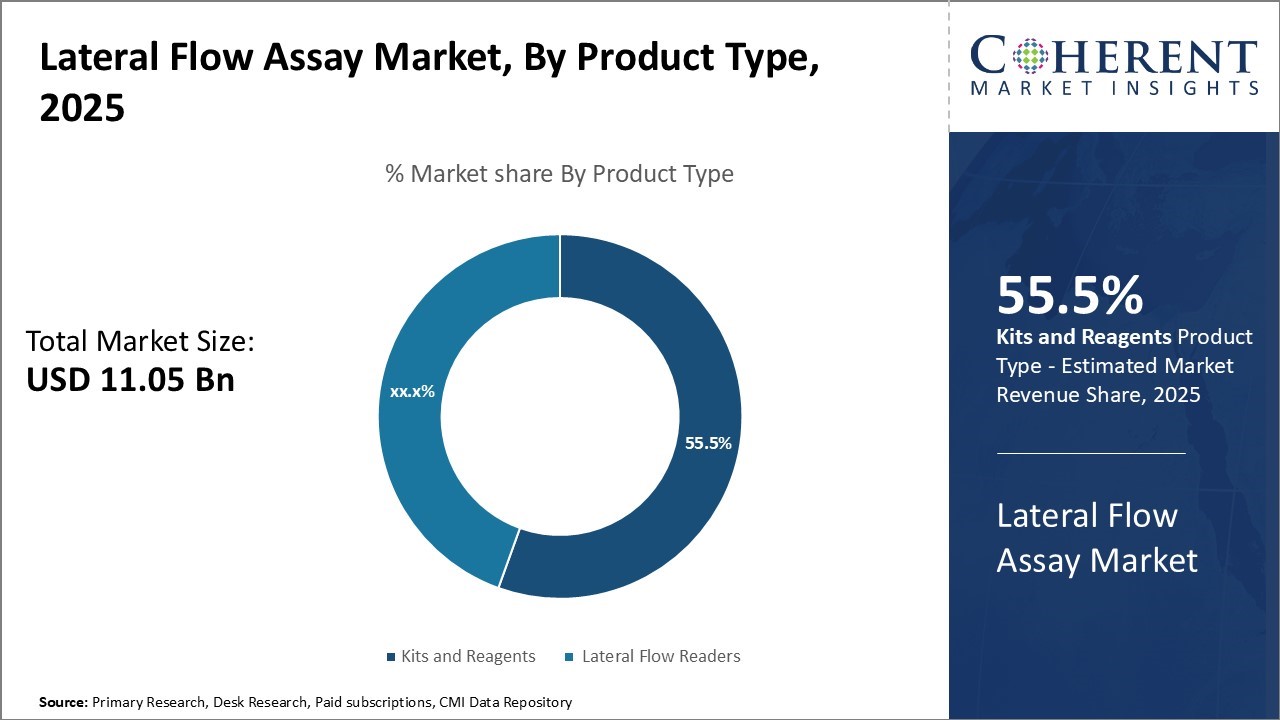
Lateral Flow Assay Market Insights, By Product Type - Reliability and ease of use can drive kits and reagents segment growth
In terms of product type, kits and reagents segment is estimated to contribute the highest market share of 56.5% in 2026, owing to their reliability and ease of use. Lateral flow assays based on kits and reagents provide consistent and standardized results without requiring specialized equipment or training to perform. The disposable nature of test strips and cassettes included in kits eliminates risks of contamination between tests. This reliability and convenience make kits and reagents well suited for point-of-care testing applications. Kits contain pre-measured and pre-packaged reagents along with all materials needed to complete the assay, simplifying the testing process. This simplification expands the range of settings where lateral flow tests can be administered. Kits empower healthcare workers and patients themselves to conduct tests in community healthcare centers, hospitals, homes, and even in field conditions. Their user-friendly design promotes adherence to testing protocols. Reagents form the key components of lateral flow strips and devices. Stable and optimized reagents maximize test sensitivity and specificity.
Moreover, leading manufacturers leverage extensive research and development to formulate high performing reagents. Continuous refinement of reagents assists kit makers in enhancing lateral flow technologies. New innovations in labeling, detection, and stabilization of reagents further boosts reliability. The product lifecycle of kits also depends on the stability of constituent reagents during storage and use. Kits provide a standardized and simplified solution for lateral flow testing. Their user-friendliness and ease of access drives the segment growth.
In June 2025, Abingdon Health plc has entered a strategic co-development and commercialization agreement with Netherlands-based Okos Diagnostics to launch a rapid avian flu (H5N1) lateral flow assay (LFA) Kit in New Okos Partnership, targeting both bovine and human applications. Such product developments are accelerating the lateral flow assay market growth.
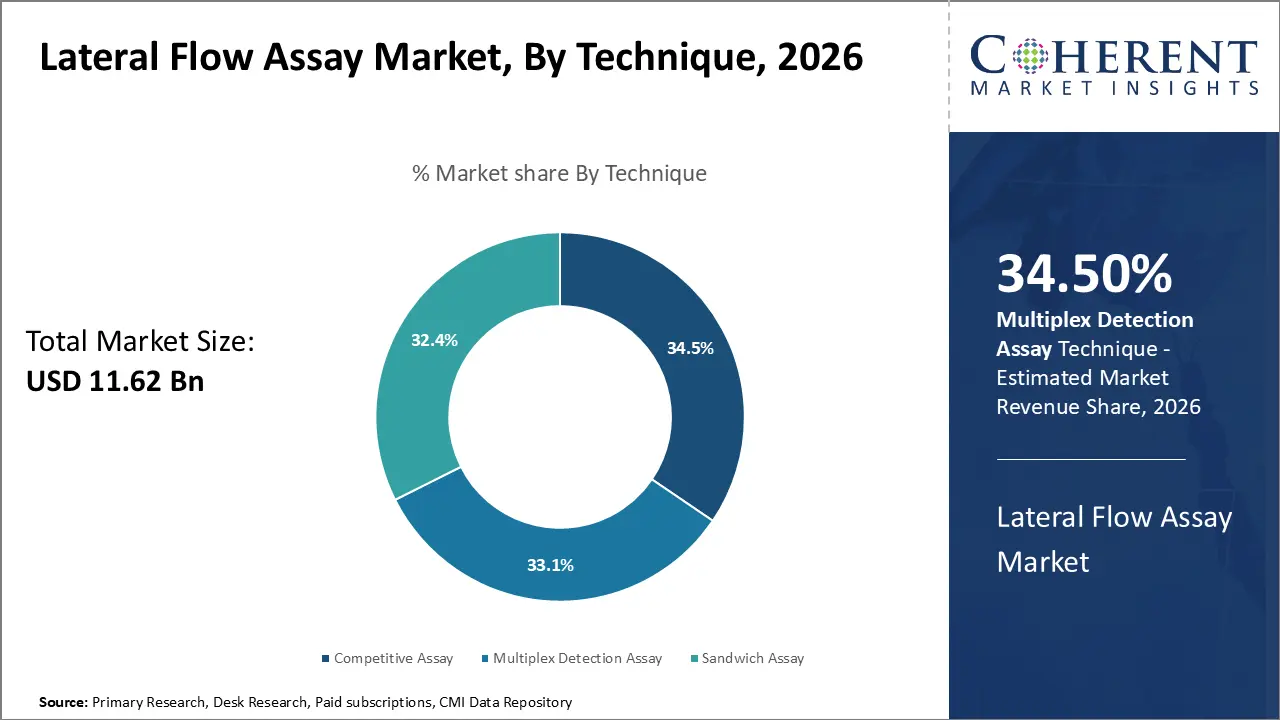
Lateral Flow Assay Market Insights, By Technique: Multiplexing drives growth within detection assay segment
In terms of technique, multiplex detection assay segment is estimated to contribute the highest market share of 34.5% in 2026, owing to its ability to detect multiple analytes simultaneously. Unlike qualitative assays indicating only presence or absence, multiplex detection allows quantitative analysis of several targets in one reaction well. This multiplexing capability addresses a key limitation of conventional lateral flow tests, which typically only detect a single analyte. It empowers developers to design compact multi-parameter tests. This has applications in screening for co-infections like respiratory panels, cardiac marker panels, allergy tests, as well as research use. The possibility to detect a panel of biomarkers correlated to a disease enhances accuracy of diagnosis. It enables risk stratification, monitoring of disease progression, and guiding treatment decisions. Monitoring response to therapies requires analysis of multiple parameters. Furthermore, multiplexing conserves sample volume requirements and produces results faster than running individual single-plex tests serially.
In May 2025, a research team launched Cas12a cis-cleavage mediated lateral flow assay (cc‑LFA) that enables highly specific and multiplexed nucleic acid detection. By integrating a novel “double‑key” mechanism—CRISPR‑Cas12a cis-cleavage plus invasive hybridization—the test achieves single‑base resolution with >90% sensitivity and 100% specificity across multiple respiratory pathogens and nine high‑risk HPV subtypes.
Lateral Flow Assay Market Insights, By Application: Wide Applicability Drives Clinical Testing Segment
In terms of application, clinical testing segment is estimated to contribute the highest market share of 36.5% in 2026, owing to the widespread use of lateral flow technology across various medical diagnostic applications. Currently, clinical testing constitutes more than half of the total lateral flow assay market. Lateral flow assays find diverse applications across various specialties like infectious disease testing, cardiac markers, toxicology, fertility, and others. Their ease of use and rapid results makes them suitable for point-of-care testing in physician offices and hospital settings. Furthermore, self-testing is growing for applications like pregnancy, and fertility, using home-use lateral flow kits. The ability to rapidly diagnose conditions influences patient management decisions. It allows proper isolation of infectious patients. Rapid results in emergency rooms facilitate quick triaging of patients. Bedside testing sustains continuous monitoring of patients. Lateral flow assays prove especially valuable in resource-limited primary healthcare centers in developing countries for basic screening and diagnosis.
In March 2025, Retailers like Boots UK began selling finger‑prick kits to measure iron, cholesterol, vitamin D, and influenza. Clinical trials are underway for stroke and sepsis detection in emergency and home settings, using blood and novel samples such as sweat, water, and even pet vomit. Such developments are contributing to the lateral flow assay market share.
Lateral Flow Assay Market Insights, By End User: Primary Diagnostics Drives the Hospital & Clinics Segment
In terms of end user, the hospitals & Clinics segment dominate the lateral flow assay market in 2026 with largest share, due to their central role in primary diagnostics and immediate patient care. Hospitals and clinics have higher testing volumes, faster turnaround requirements, and more access to point-of-care testing kits. With rising demand for rapid diagnostics in emergency settings and outpatient care, lateral flow assays have become a preferred choice in these facilities for quick, on-the-spot results, particularly for infectious diseases, cardiac markers, and pregnancy testing.
Regional Insights
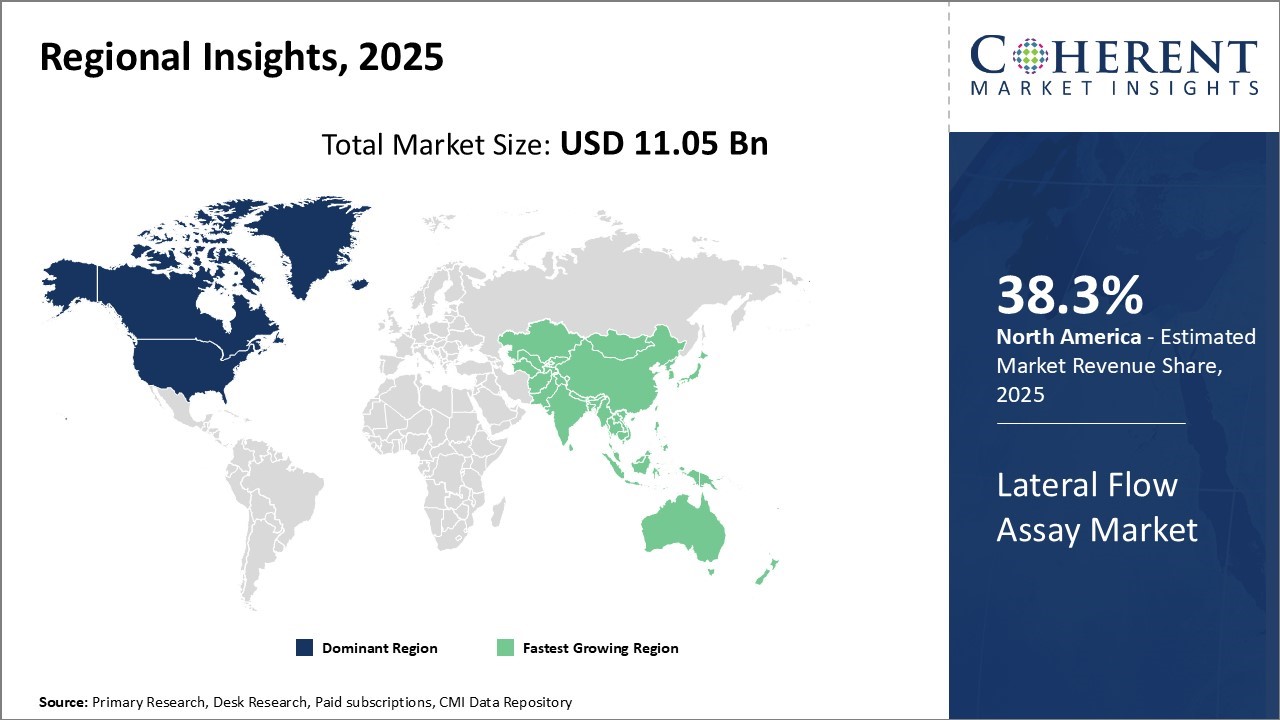
North America Lateral Flow Assay Market Analysis & Trends
North America currently dominates the global lateral flow assay market with an estimated market share of 38.3% in 2026, led primarily by the U.S. With huge presence of leading diagnostics companies and robust healthcare infrastructure, the U.S. lateral flow assay market has grown steadily over the years. The region has established distribution channels and reimbursement structures in place, allowing for smooth adoption of new lateral flow technologies. High per capita healthcare spending provides lucrative growth opportunities for manufacturers. However, industry experts note pricing pressures due to payor initiatives like reference pricing can impact profits.
In July 2026, VolitionRx, a multi-national epigenetics company, engages in the development of blood tests to help diagnose and monitor a range of cancers, has unveiled a lateral flow device capable of quantifying nucleosomes in whole venous blood within minutes, validated in a blinded SUMMIT study involving 25 ICU and emergency department patients.
Asia Pacific Lateral Flow Assay Market Analysis & Trends
Asia Pacific region has emerged as the fastest-growing market for lateral flow assays globally. Rapid economic development and rising affluence have boosted healthcare investments across developing nations like India and China. This has increased accessibility to diagnostic testing. Furthermore, a burgeoning geriatric population base that is more prone to chronic diseases boosts demand. With growing health awareness, preventive care has gained prominence, boding well for products detecting diseases early. Favorable regulations by regulatory bodies to fast-track new products are encouraging Western companies to tap into untapped markets. However, manufacturers will need to optimize supply chains and pricing strategies to succeed, given regional cost differences.
Lateral Flow Assay Market Outlook Country-Wise
The U.S. Lateral Flow Assay Market Trends
The United States is a leading market in the Lateral Flow Assay Market demand due to its high burden of infectious and chronic diseases, strong point-of-care testing adoption, and robust diagnostic industry. The FDA has approved multiple lateral flow-based kits for flu, and RSV, including over-the-counter tests, boosting home diagnostics. Companies like Abbott and QuidelOrtho continue to launch combo test kits, supporting widespread use. Also, MIT chemists from the Swager Lab have developed a wireless electronic lateral flow assay that uses electronic polymers instead of colored lines, allowing for quantitative detection of biomarkers. Apart from this, government support and insurance coverage further encourage adoption, making the U.S. a key driver of lateral flow assay growth.
India Lateral Flow Assay Market Trends
India’s demand for lateral flow assays is rising due to its large population, rural healthcare expansion, and government health programs. Under the National Health Mission, rapid tests for malaria, tuberculosis, HIV, and pregnancy are widely used in rural clinics. These tests are ideal for low-resource settings due to their speed and simplicity. For example, malaria RDTs and pregnancy kits are commonly used by ASHA workers for early detection. Local manufacturing and government efforts to expand diagnostic access continue to support lateral flow assay market demand across the country.
China Lateral Flow Assay Market Trends
China is witnessing strong lateral flow assay market due to rapid healthcare expansion and focus on early disease detection. The Chinese CDC has adopted LFAs in large-scale community screening programs for infections like hepatitis and HIV, enabling faster diagnosis in rural areas. Local manufacturers such as Wondfo and Innovita are scaling production to meet both domestic and export needs. These initiatives, supported by growing public health awareness and infrastructure investment, are driving market growth.
Market Concentration and Competitive Landscape
Lateral Flow Assay Industry News
- In January 2025, Abingdon Health plc, a leading lateral flow assay CDMO and CRO provider, announced that its subsidiary, CS (Lifesciences) Ltd, has secured a contract exceeding £500,000 with a major global diagnostics firm. The 12‑month engagement, beginning March 2025, will focus on enhancing quality management systems and securing regulatory approvals for diagnostic devices.
- In December 2024, InBios International Inc. secured a $16.5 million award from the Biomedical Advanced Research and Development Authority (BARDA) under its Diagnostics Rapid Response Initiative. The funding supports optimization, validation and FDA clearance of InBios’ lateral flow assay, Active Melioidosis Detect™ Plus (AMD Plus), for detecting Burkholderia pseudomallei, the bacterium causing melioidosis and a potential biothreat.
- In February 2024, Ascential Medical & Life Sciences (M&LS) was honored with the 2024 Advanced Lateral Flow Conference (ALFC) award for Leadership in Diagnostics. This recognition celebrates Ted Meigs, executive advisor and former CEO of Kinematic Automation, for his significant contributions.
Market Report Scope
Lateral Flow Assay Market Report Coverage
| Report Coverage | Details | ||
|---|---|---|---|
| Base Year: | 2025 | Market Size in 2026: | USD 11.62 Bn |
| Historical Data for: | 2020 To 2024 | Forecast Period: | 2026 To 2033 |
| Forecast Period 2026 to 2033 CAGR: | 5.2% | 2033 Value Projection: | USD 16.58 Bn |
| Geographies covered: |
| ||
| Segments covered: |
| ||
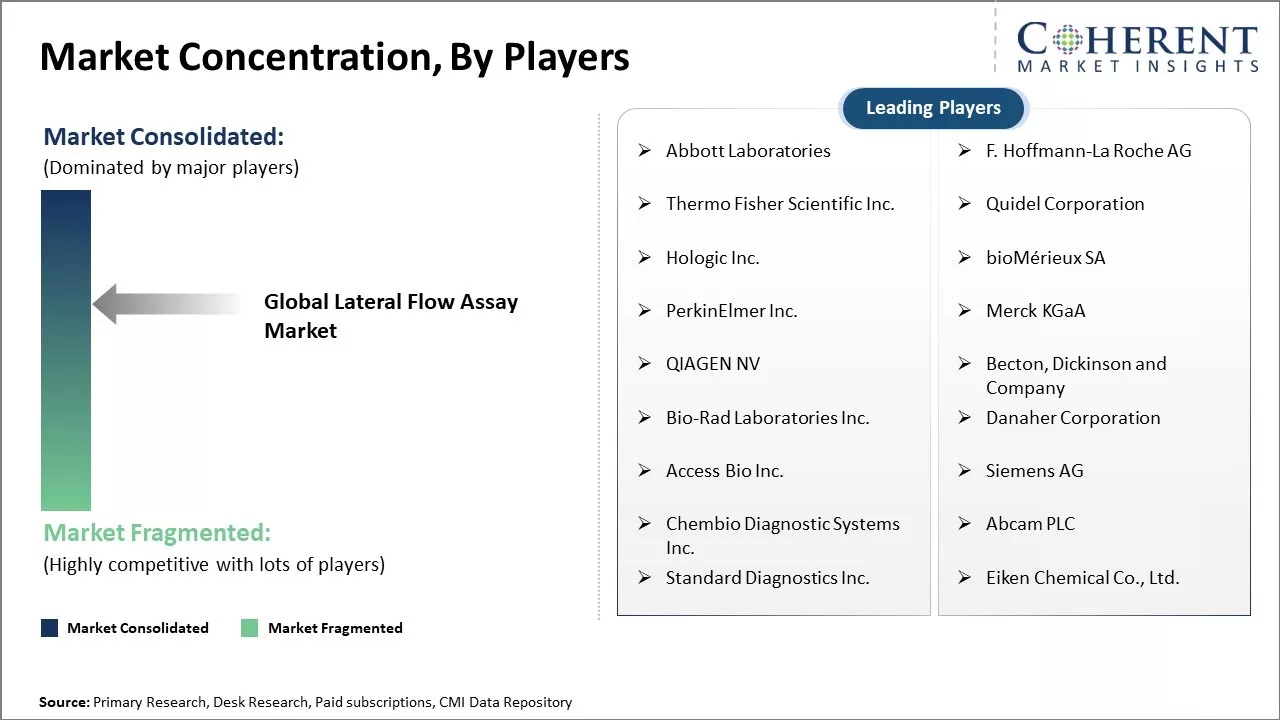
| Companies covered: | Abbott Laboratories, F. Hoffmann-La Roche AG, Thermo Fisher Scientific Inc., Quidel Corporation, Hologic Inc., bioMérieux SA, PerkinElmer Inc., Merck KGaA, QIAGEN NV, Becton, Dickinson and Company, Bio-Rad Laboratories Inc., Danaher Corporation, Access Bio Inc., Siemens AG, Chembio Diagnostic Systems Inc., Abcam PLC, Standard Diagnostics Inc., Eiken Chemical Co., Ltd. | ||
| Growth Drivers: |
| ||
| Restraints & Challenges: |
| ||
Lateral Flow Assay Market Driver
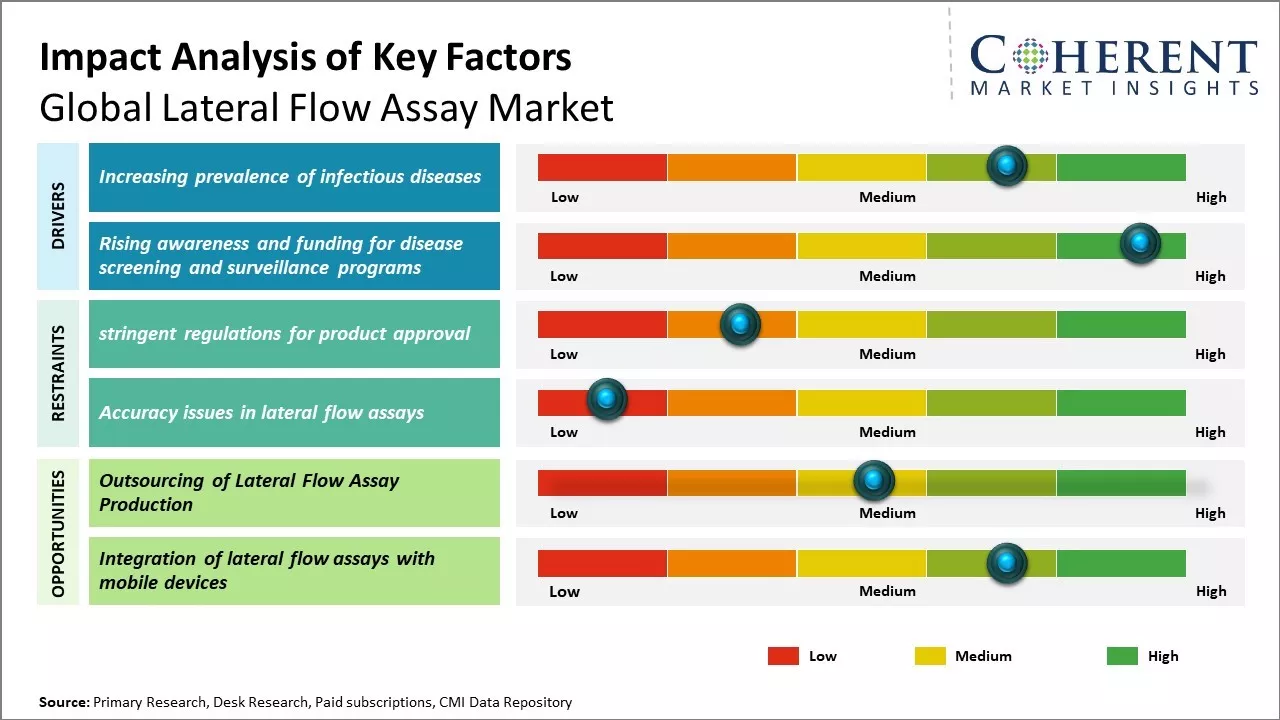
Increasing prevalence of infectious diseases
Rising prevalence of infectious diseases across the globe can drive the global lateral flow assay market growth. There has been increase in infectious diseases due to various factors like climate change, increased globalization, higher antimicrobial resistance, and evolving epidemiology of existing and new pathogens. As per the World Health Organization (WHO), infectious diseases account for around 17 million deaths globally every year, which is approximately one-third of all deaths worldwide. The occurrence of new strains of existing diseases like, viral hemorrhagic fevers, and vector-borne illnesses due to factors like climate change, can exacerbate the situation. Growing threat posed by infectious diseases has boosted demand for rapid, cost-effective, and easy-to-use screening and diagnostic tests. Lateral flow assay tests meet all these requirements, and this leads to their increased adoption rate. Their ability to provide quick results without the need for laboratory infrastructure or specialized technicians has fueled their popularity in point-of-care testing, further contributing to the lateral flow assay market share.
Rising awareness and funding for disease screening and surveillance programs
Rising awareness about the importance of disease screening and surveillance globally can drive the market growth. Both developing and developed countries focuses on implementation of national screening programs for priority health issues to achieve early detection and treatment. This boosts demand for point-of-care testing devices. Moreover, there has been increase in government and private sector funding for infectious disease control, maternal and child healthcare programs. All these screening initiatives rely heavily on rapid, portable assays to decentralize testing and reach remote populations. Lateral flow assays are used in large surveillance programs due to their applicability in resource-limited field conditions and ability to provide timely results. These assays have been widely used in HIV, malaria and tuberculosis prevalence studies across Africa and Asia. Their usage grows further with more funding directed at expanding testing and vaccination coverage for communicable and non-communicable diseases. The portability and ease of use of lateral flow assays makes them a preferred technology for field healthcare camps, refugee camps and other temporary testing sites.
Analyst Opinion (Expert Opinion)
The lateral flow assay market value is undergoing a meaningful evolution, driven by a systemic realignment of diagnostic priorities across global healthcare ecosystems.
One of the most compelling signals is the growing investment in multiplexed LFA platforms, particularly in oncology and cardiology diagnostics. Companies like QuidelOrtho and Abingdon Health are advancing beyond traditional single-analyte strips to enable simultaneous detection of multiple biomarkers with sub-nanogram sensitivity. This reflects a market maturity that sees LFAs not just as basic screening tools, but as integrated diagnostic systems capable of replacing or augmenting laboratory-based assays in decentralized settings.
Furthermore, the demand landscape is becoming more stratified. High-income countries are no longer driving growth solely through scale, but through innovation in lateral flow formats such as smartphone-integrated readers and AI-enhanced interpretation algorithms. For example, firms in Western Europe are collaborating with digital health platforms to offer real-time clinical decision support based on LFA outcomes, targeting chronic disease management and remote patient monitoring.
Meanwhile, in low- and middle-income countries (LMICs), organizations like FIND and the Bill & Melinda Gates Foundation are channeling resources into LFAs for tuberculosis and antimicrobial resistance (AMR) detection. The World Health Organization estimates that up to 70% of diagnostics in LMICs are delivered through rapid tests, making the LFA the de facto infrastructure for early-stage intervention. Yet, despite significant advancements, the issue of diagnostic accuracy in high-temperature and high-humidity environments remains unresolved in many tropical regions.
Speak to the analyst
Want personalized insights?
Take the findings above to one of our principal consultants, or have the report rebuilt around the segments, geographies and competitors you actually track.
Market Segmentation
- Product Type Insights (Revenue, USD Bn, 2026 - 2033)
- Kits and Reagents
- Lateral Flow Readers
- Technique Insights (Revenue, USD Bn, 2026 - 2033)
- Competitive Assay
- Multiplex Detection Assay
- Sandwich Assay
- Application Insights (Revenue, USD Bn, 2026 - 2033)
- Clinical Testing
- Cardiac Marker Testing
- Pregnancy & Fertility Testing
- Cholesterol Testing/Lipid Profile
- Drugs of Abuse Testing
- Drug Development & Quality Testing
- Other Clinical Tests
- End User Insights (Revenue, USD Bn, 2026 - 2033)
- Hospitals & Clinics
- Diagnostic Laboratories
- Pharmaceutical and Biotechnology Companies
- Home Care Settings
- Others
- Regional Insights (Revenue, USD Bn, 2026 - 2033)
- North America
- U.S.
- Canada
- Latin America
- Brazil
- Argentina
- Mexico
- Rest of Latin America
- Europe
- Germany
- U.K.
- Spain
- France
- Italy
- Russia
- Rest of Europe
- Asia Pacific
- China
- India
- Japan
- Australia
- South Korea
- ASEAN
- Rest of Asia Pacific
- Middle East
- GCC Countries
- Israel
- Rest of Middle East
- Africa
- South Africa
- North Africa
- Central Africa
- North America
- Key Players Insights (Revenue, USD Bn, 2021 - 2033)
- Abbott Laboratories
- F. Hoffmann-La Roche AG
- Thermo Fisher Scientific Inc.
- Quidel Corporation
- Hologic Inc.
- bioMérieux SA
- PerkinElmer Inc.
- Merck KGaA
- QIAGEN NV
- Becton, Dickinson and Company
- Bio-Rad Laboratories Inc.
- Danaher Corporation
- Access Bio Inc.
- Siemens AG
- Chembio Diagnostic Systems Inc.
- Abcam PLC
- Standard Diagnostics Inc.
- Eiken Chemical Co., Ltd.
Sources
Primary Research Interviews from the following Stakeholders
Stakeholders
- Interviews with diagnostic product manufacturers, point-of-care (POC) solution providers, healthcare procurement officials, pathology labs, regulatory specialists, and R&D scientists across key global markets.
Specific stakeholders
- Product managers and innovation leads at diagnostic firms (e.g., Abbott Diagnostics, Bio-Rad, SD Biosensor)
- Heads of pathology and clinical testing at multispecialty hospitals and diagnostic labs (e.g., Apollo Diagnostics, Labcorp, SRL Diagnostics)
- Procurement officers at public health departments and primary healthcare centers (e.g., NHS, Indian Ministry of Health)
- Pharmacists and diagnostics coordinators at retail chains and pharmacy networks (e.g., CVS Health, 1mg, Boots)
- Laboratory automation and device integration experts at academic medical centers
- Quality assurance and compliance officers at IVD (in-vitro diagnostics) manufacturing facilities
- Biotech researchers and clinical trial coordinators in infectious disease and chronic illness studies
Databases
- U.S. Food and Drug Administration (FDA) 510(k) Clearances & Emergency Use Authorizations (EUA)
- World Health Organization (WHO) Prequalification Diagnostic Assessment Database
- European Commission CE Mark Database (NANDO)
- ClinicalTrials.gov – Diagnostic and POC Trials
- Indian Council of Medical Research (ICMR) Diagnostic Kits List
- World Bank – Global Health Expenditure Database
- Eurostat – Health Technology & Diagnostic Equipment Trade
- Ministry of Health, Labour and Welfare (Japan) – Medical Device Import/Export Data
- Korea Biomedical Review – Product Registrations
- Directorate General of Health Services (DGHS), India
Magazines
- Medical Device and Diagnostic Industry (MD+DI)
- The Pathologist
- Rapid Microbiology
- Diagnostics World
- European Pharmaceutical Manufacturer
- Pharma Times
- Point of Care The Journal of Near-Patient Testing & Technology
- Express Healthcare (India)
- Clinical Lab Manager
Journals
- Journal of Clinical Microbiology
- Analytical and Bioanalytical Chemistry
- Biosensors and Bioelectronics
- Nature Biomedical Engineering
- Journal of Immunological Methods
- The Lancet – Diagnostic Medicine Section
- International Journal of Infectious Diseases
- Microchimica Acta
- Clinical Chemistry and Laboratory Medicine (CCLM)
Newspapers
- The Hindu Business Line – Diagnostics & Life Sciences
- Financial Times – Biotech & Healthcare Features
- The Economic Times – Health & Pharma
- The Wall Street Journal – HealthTech and Innovation
- Nikkei Asia – Medical Devices and Life Sciences
- Mint – Diagnostics and POC Coverage
Associations
- International Federation of Clinical Chemistry and Laboratory Medicine (IFCC)
- Foundation for Innovative New Diagnostics (FIND)
- Global Health Council (Diagnostics Working Group)
- Association of Medical Diagnostics Manufacturers (India)
- Diagnostics Industry Association of Europe (MedTech Europe – Diagnostics)
- American Association for Clinical Chemistry (AACC)
- Asia Pacific Medical Technology Association (APACMed)
- Indian Medical Device Industry Association (IMEDA)
Public Domain Sources
- World Health Organization (WHO) – Diagnostics Reports
- Ministry of Health and Family Welfare (India) – Diagnostic Programmes
- National Institute for Health and Care Excellence (NICE), UK
- Centers for Disease Control and Prevention (CDC) – Point-of-Care Guidelines
- Department of Biotechnology (India) – Diagnostics Research Funding
- U.S. National Institutes of Health (NIH) – Lateral Flow Research Projects
- Ministry of Science and ICT (South Korea) – Diagnostic Innovation Initiatives
- European Centre for Disease Prevention and Control (ECDC) – Diagnostics Surveillance
- Global Fund – Procurement & Supply Reports
Proprietary Elements
- CMI Data Analytics Tool, and Proprietary CMI Existing Repository of information for last 8 years
*Definition: Global Lateral Flow Assay Market involves testing techniques used to detect the presence and concentration of analytes in samples without the need for specialized and expensive equipment. Lateral flow assays use commercial chromatography principles to separate analytes based on size and affinity to determine results either visually or with a meter. They offer rapid, low-cost testing solutions for various applications such as clinical diagnostics, food safety testing, and environmental monitoring on a global scale.
Get access to 250+ pages report
Every segment, forecast, competitor profile and data table behind the analysis above — available for instant download.
- ESOMAR Member
- ISO 9001:2015 Certified
- D-U-N-S Registered
- GDPR & CCPA Compliant
Missing comfort of reading report in your local language? Find your preferred language:
Transform your Strategy with Exclusive Trending Reports
Frequently Asked Questions
The Lateral Flow Assay Market is estimated to be valued at USD 11.62 Bn in 2026, and is expected to reach USD 16.58 Bn by 2033.
The CAGR of the Lateral Flow Assay Market is projected to be 5.2% from 2026 to 2033.
Increasing prevalence of infectious diseases and rising awareness and funding for disease screening and surveillance programs are the major factors driving the growth of global lateral flow assay market.
Stringent regulations for product approval and accuracy issues in lateral flow assays are the major factors hampering the growth of global lateral flow assay market.
In terms of product type, kits and reagents segment is estimated to dominate the market in 2026.
Abbott Laboratories, F. Hoffmann-La Roche AG, Thermo Fisher Scientific Inc., Quidel Corporation, Hologic Inc., bioMérieux SA, PerkinElmer Inc., Merck KGaA, QIAGEN NV, Becton, Dickinson and Company, Bio-Rad Laboratories Inc., Danaher Corporation, Access Bio Inc., Siemens AG, Chembio Diagnostic Systems Inc., Abcam PLC, Standard Diagnostics Inc., Eiken Chemical Co., Ltd. are the major players.
North America is expected to lead the global lateral flow assay market.