

Laundry Care Products Market Size and Forecast — 2026-2033
The Global Laundry Care Products Market size is estimated to be valued at USD 45.18 billion in 2026 and is expected to reach USD 67.04 billion by 2033, exhibiting a compound annual growth rate (CAGR) of 5.8% from 2026 to 2033.
Overview
Laundry care products include detergents, fabric softeners, stain removers, and conditioners formulated to clean, protect, and refresh fabrics. Available in liquid, powder, pod, and bar forms, these products combine surfactants, enzymes, and fragrance agents to deliver superior cleaning performance. Manufacturers are focusing on eco-friendly, biodegradable, and concentrated formulations that cater to sustainability-conscious consumers. The market serves both household and commercial laundry applications across diverse global regions.
Key Takeaways
The Liquid Detergents segment dominates the Laundry Care Products market, driven by enhanced stain removal technology and consumer convenience, accounting for 49% of the overall industry share.
Within distribution channels, supermarkets and hypermarkets maintain leadership due to extensive reach and promotional capabilities, comprising 46% of the market revenue share.
Regionally, North America leads the market in size with a strong industry presence and robust regulatory frameworks supporting premium product adoption.
Asia Pacific, with its urbanizing population and rising disposable incomes, is the fastest-growing region, registering a CAGR exceeding 7% driven by expanding e-commerce and local manufacturing initiatives.
Laundry Care Products Market Segmentation Analysis
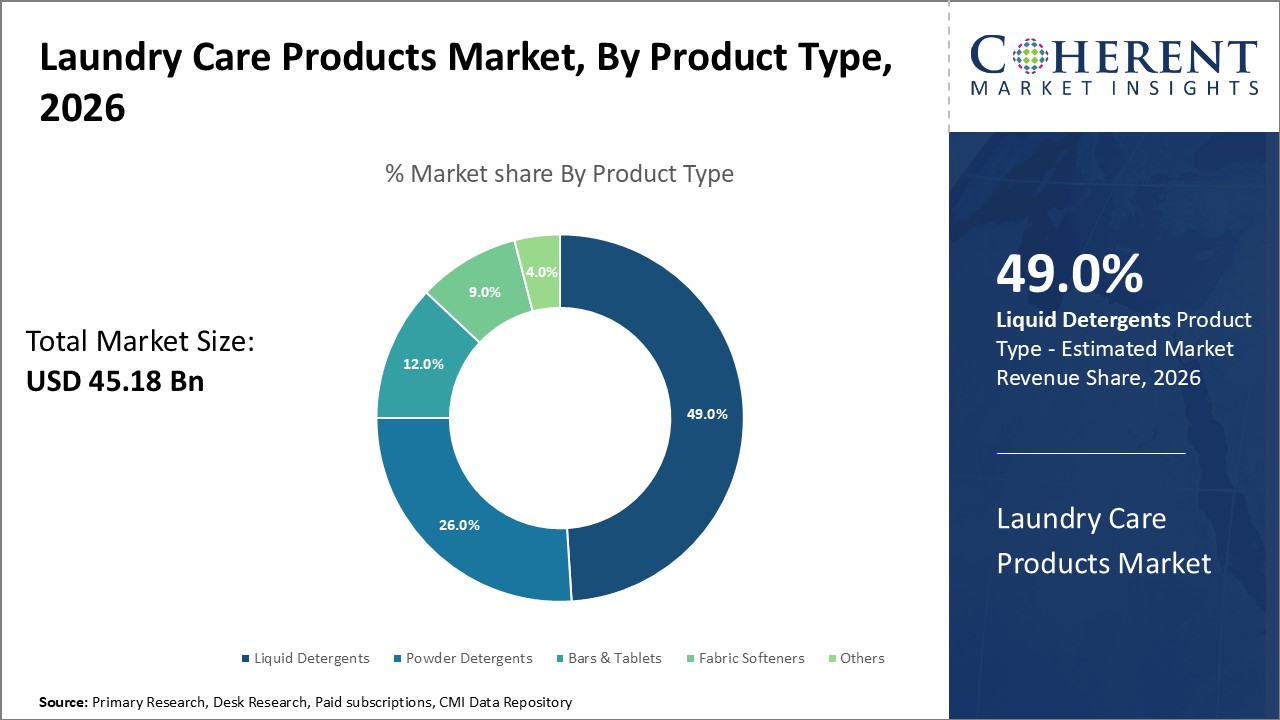
Laundry Care Products Market Insights, By Product Type
Liquid Detergents dominate the market share with 49%, owing to their ease of use, superior dissolvability, and enhanced stain removal technology. Liquid detergents also benefit from consumer preferences shifting toward concentrated formulas that reduce environmental impact. Powder Detergents remain a significant segment favored in price-sensitive markets due to cost-effectiveness and long shelf life.
Laundry Care Products Market Insights, By Application
Household Laundry accounts for the dominant market share at 68%, driven by increasing hygiene awareness, urbanization, and expanding middle-class households globally. This segment is propelled by product innovations catering to diverse fabric types, water hardness levels, and consumer preferences for fragrance and skin sensitivity. Commercial Laundry holds a steady presence, primarily supported by the hospitality and healthcare industries demanding bulk, effective solutions.
Laundry Care Products Market Insights, By Distribution Channel
Supermarkets/Hypermarkets dominate with 45% market share, as these formats offer extensive product variety and promotional campaigns that attract brand visibility. Online Retailers are the fastest-growing channel due to changing consumer shopping patterns; online sales grew by over 14% in 2026, driven by quick delivery, subscription models, and access to premium and eco-conscious products.
Laundry Care Products Market Trends
The Laundry Care Products market is heavily driven by sustainability as a core market trend. For example, the rise of biodegradable powders and refillable liquid detergents in 2025 illustrates a decisive shift in consumer expectations supported by stricter environmental regulations worldwide.
Another significant trend involves the integration of advanced enzymes and multifunctional capabilities in products, boosting product efficacy and consumer interest, as demonstrated by the 20% sales increase in enzyme-based products in North America in 2026.
Furthermore, the surge in online sales of laundry care products, contributing up to 15% of total revenue globally in 2026, marks a digital transformation influencing industry dynamics and customer purchase habits.
Laundry Care Products Market Insights, By Geography
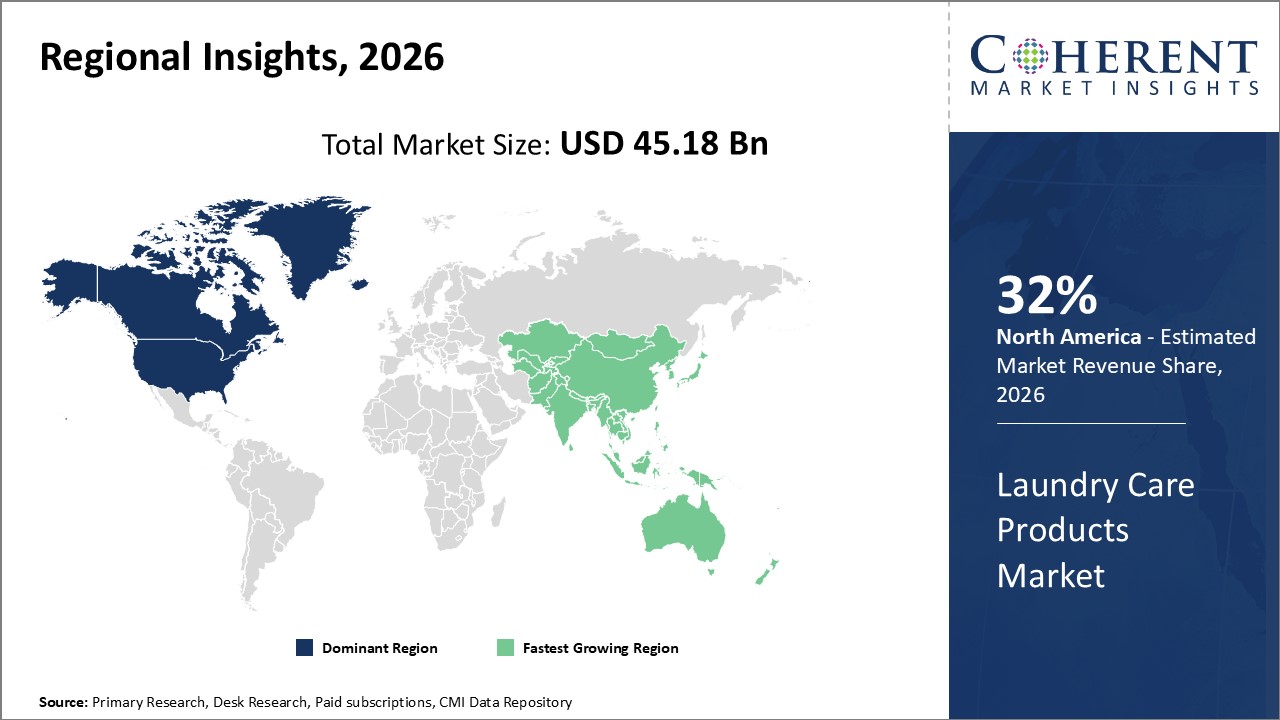
North America Laundry Care Products Market Analysis and Trends
In North America, the dominance in the Laundry Care Products market stems from a mature and innovation-driven industry ecosystem, supported by stringent environmental standards and high consumer spending capability. The market share here stands at approximately 32% as of 2026. Key players actively engage in sustainable product development and premiumization strategies, maintaining leadership through product diversification and strong retail networks.
Asia Pacific Laundry Care Products Market Analysis and Trends
The Asia Pacific experiences the fastest growth with a CAGR exceeding 7% owing to expanding urban households, rising disposable incomes, and increasing access to e-commerce. Government initiatives promoting local manufacturing and environmental safety further bolster growth, alongside rising consumer adoption of liquid and concentrated detergents.
Laundry Care Products Market Outlook for Key Countries
USA Laundry Care Products Market Analysis and Trends
The USA leads the Laundry Care Products market in North America through strong demand for eco-friendly detergents and technological advancement. Premium liquid detergents and biodegradable products accounted for more than 40% of market revenue in 2026, driven by consumer trends valuing sustainability and fabric care. Key market players continually invest in R&D to launch innovative variants, contributing to the market's steady revenue growth despite raw material cost fluctuations.
India Laundry Care Products Market Analysis and Trends
India's market is rapidly expanding due to rising middle-class income, urban population growth, and increasing penetration of both premium and mid-tier products. The strong growth of e-commerce platforms has accelerated access to a broad product portfolio. Local manufacturers leveraging cost-efficient production and distribution hold a competitive edge, while multinational companies focus on premium product launches and sustainability initiatives, driving a diverse market landscape.
Analyst Opinion
One notable insight is the significant uplift in market revenue linked to concentrated detergent formulas driven by sustainability trends. Concentrated detergents, accounting for approximately 37% of the total laundry care market share in 2025, reduce packaging waste and transportation costs. Brands incorporating these formulations reported a 12% increase in sales in North America during 2025, signaling strong consumer preference for eco-conscious alternatives.
Pricing strategies remain a pivotal market driver, especially in emerging economies. For instance, in India and Brazil, mid-tier laundry care products with competitive pricing captured over 45% of market revenue in 2026, reflecting affordability's critical role amid growing disposable incomes. Meanwhile, premium segments in developed regions like Europe expanded by nearly 8% CAGR from 2023 to 2026, fueled by innovation and brand loyalty.
Market dynamics reveal an increasing penetration of liquid laundry detergents, which held a 48% market share in 2025 globally. This segment's growth correlates with enhanced detergent formulations offering better stain removal and fabric care, exemplified by a 10% sales surge in the Asia Pacific region in 2026, driven by rising urban households adopting liquid over powder detergents.
The sector's exports have intensified, notably from China and Germany, accounting together for 31% of global laundry care product exports in 2025. This supply-side strength supports price stability even amid volatile raw material costs and is expected to underpin market growth momentum through 2033.
- Current Industry Events of 2026
- Market Size Estimation
- Regional Breakdown
- Competitive Landscape
- Customer Intelligence
- Segmental Analysis
- Pricing Analysis
- Key Market Drivers, Challenges & Future Trends
- Customized Insights Section
Market Scope
| Report Coverage | Details | ||
|---|---|---|---|
| Base Year: | 2025 | Market Size in 2026: | USD 45.18 billion |
| Historical Data for: | 2020 To 2024 | Forecast Period: | 2026 To 2033 |
| Forecast Period 2026 to 2033 CAGR: | 5.8% | 2033 Value Projection: | USD 67.04 billion |
| Geographies covered: |
| ||
| Segments covered: |
| ||
| Companies covered: | Procter & Gamble, Henkel AG & Co. KGaA, Unilever, Church & Dwight Co., Colgate-Palmolive, Kao Corporation, Reckitt Benckiser Group PLC, Lion Corporation, SC Johnson & Son, Inc., The Clorox Company, Whirlpool Corporation, and LG Household & Health Care. | ||
| Growth Drivers: |
| ||
Laundry Care Products Market Growth Factors
Increasing environmental regulations are compelling manufacturers to innovate eco-friendly formulations, boosting market growth. In 2025, biodegradable detergent sales grew by over 16% worldwide, reflecting regulatory compliance as a growth impetus. Rising consumer inclination towards premium and multifunctional laundry care products, such as stain removers with fabric protection, significantly enhanced product demand, with premium segment revenue growing 8% year-on-year in 2026. Additionally, technological advancements in enzyme-based detergents have improved efficacy and reduced water usage, supporting sustainability objectives and capturing a higher industry share. Expansion of modern retail channels, including e-commerce, contributed to expanded market access, contributing to a 15% rise in online laundry care product sales globally in 2026.
Laundry Care Products Market Development
In February 2026, Unilever launched Wonder Wash, its first liquid laundry detergent formulated to work in ultra-short cycles — as little as 15 minutes. This was done to meet rising consumer demand for speed and convenience in laundry.
In September 2026, Kao (Japan) and CP Group (Thailand) introduced a new detergent brand “extra” across Thailand through channels including Makro, Lotus’s, and 7-Eleven. The product is positioned for eco-conscious consumers and intends to merge performance with affordability.
Key Players
Leading companies in the market:
Procter & Gamble
Henkel AG & Co. KGaA
Unilever
Church & Dwight Co.
Colgate-Palmolive
Reckitt Benckiser Group PLC
Lion Corporation
SC Johnson & Son, Inc.
The Clorox Company
Whirlpool Corporation
LG Household & Health Care
Market players are emphasizing digital transformation and sustainability. For example, Procter & Gamble launched a refillable detergent packaging initiative in 2025 that reduced plastic use by 26%, gaining notable consumer traction in Europe. Meanwhile, Henkel's strategic acquisition of local eco-friendly brands in the Asia Pacific expanded its regional market share by approximately 7% within one year. Unilever’s pricing strategies in emerging markets enhanced penetration by 11%, focusing on affordability combined with active social media marketing campaigns.
Laundry Care Products Market Future Outlook
In the future, the laundry care market is expected to expand further as sustainability, premiumization, and smart appliance integration become major trends. Manufacturers will continue to invest in concentrated, low-water, and allergen-free formulations that meet consumer preferences for performance and safety. E-commerce and digital retail platforms will strengthen distribution networks, especially in emerging economies. Additionally, collaborations between detergent brands and washing machine manufacturers are expected to foster the development of compatible, energy-efficient cleaning systems tailored for the modern consumer.
Laundry Care Products Market Historical Analysis
The laundry care products market has undergone continuous evolution driven by changing consumer lifestyles, hygiene awareness, and product innovation. Traditionally dominated by powdered detergents, the market witnessed a shift toward liquid and pod formats offering greater convenience and cleaning efficiency. Manufacturers introduced enzyme-based formulations and fabric conditioners to cater to diverse fabric types and washing methods. Over the past decade, growing environmental concerns have led to a surge in demand for biodegradable and eco-friendly laundry solutions, pushing companies toward sustainable raw materials and recyclable packaging.
Sources
Primary Research interviews:
FMCG Product Managers
Detergent Manufacturers
Chemical Formulation Experts
Retail Distribution Heads
Databases:
Euromonitor International
Others
Magazines:
Household & Personal Care Today
Clean India Journal
Chemical Weekly
Global Cosmetic Industry Magazine
Journals:
Journal of Surfactants and Detergents
International Journal of Consumer Studies
Journal of Cleaner Production
Journal of Chemical Technology & Biotechnology
Newspapers:
The Times of India (Lifestyle)
The Economic Times (FMCG)
The Guardian (Sustainability)
Business Standard (Consumer Goods)
Associations:
American Cleaning Institute (ACI)
International Association for Soaps
Detergents and Maintenance Products (A.I.S.E.)
The Soap and Detergent Association
Household & Commercial Products Association (HCPA)
Get access to 250+ pages report
Every segment, forecast, competitor profile and data table behind the analysis above — available for instant download.
- ESOMAR Member
- ISO 9001:2015 Certified
- D-U-N-S Registered
- GDPR & CCPA Compliant
Missing comfort of reading report in your local language? Find your preferred language:
Transform your Strategy with Exclusive Trending Reports
Frequently Asked Questions
The dominant players include Procter & Gamble, Henkel, Unilever, Church & Dwight, and Kao Corporation, which collectively hold the majority of market share through innovation and strategic expansions.
The Laundry Care Products market size is projected to grow from USD 45.18 billion in 2026 to USD 67.04 billion by 2033, maintaining a CAGR of 5.8%.
Household laundry applications dominate the market with a share of approximately 68%, driven by rising urban population and increased awareness of hygiene.
Trends will center on eco-friendly formulations, multifunctional products, and digitally enabled retail strategies enhancing customer engagement and sales growth.
The competitive landscape is marked by aggressive innovation, sustainability efforts, and expanding product portfolios. Key challenges include raw material price volatility and regulatory compliance complexities.
Strategies include sustainability-focused product launches, targeted pricing models, e-commerce penetration, and strategic acquisitions to access emerging regional markets.