

Mexico In-Vitro Diagnostics Market Size and Share Analysis - Growth Trends and Forecast (2026 - 2033)
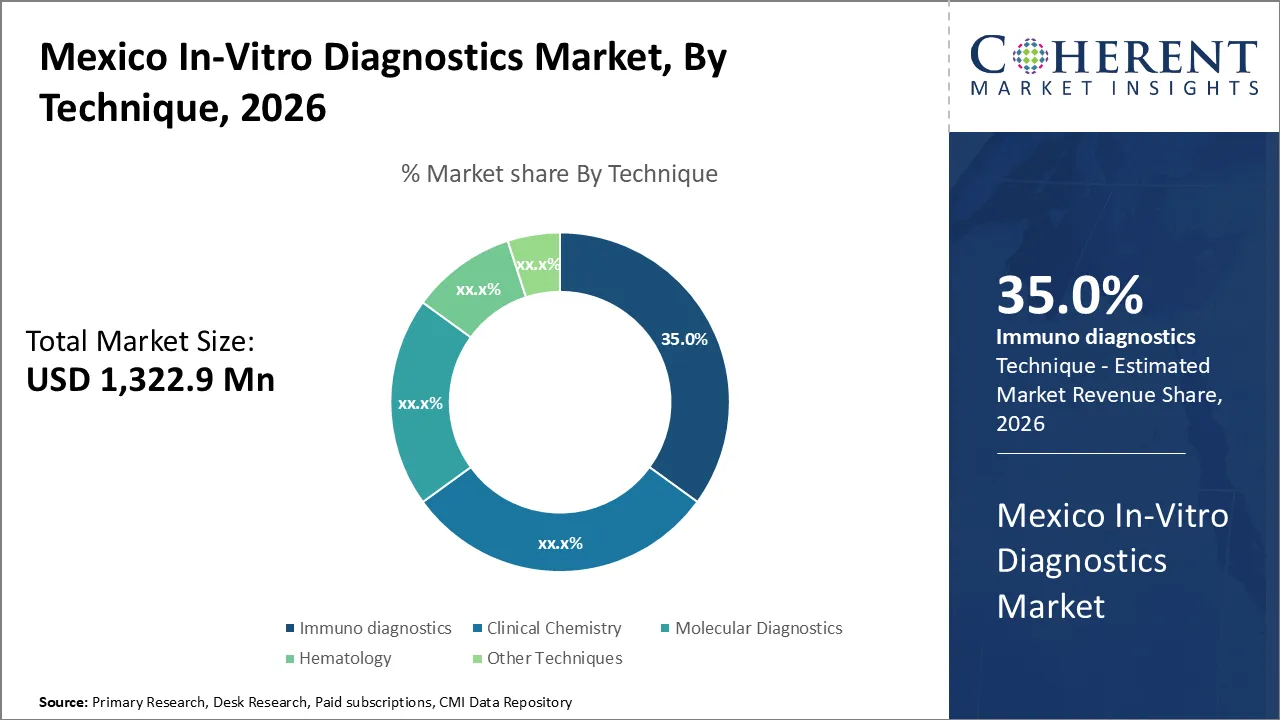
The Mexico in-vitro diagnostics market size is estimated to reach around USD 1,322.9 Mn in 2026 and is projected to grow at a CAGR of 8.5% during the forecast period (2026-2033), totalling USD 2,230 Mn by 2033.
Key Takeaways from the Mexico In-Vitro Diagnostics Market Report
- Immuno diagnostics are expected to remain the most sought-after technique, accounting for a market revenue share of 35% in 2026, because of increasing demand for tests related to infectious diseases, chronic conditions, and personalized medicine, which rely heavily on antibody-based assays.
- By product, reagent segment is slated to dominate the Mexico market during the forecast period.
- By usability, disposable IVD devices segment is slated to dominate the Mexico market during the forecast period.
- By application, infectious diseases segment is slated to dominate the Mexico market during the forecast period.
- By end user, diagnostic laboratories segment is slated to dominate the Mexico market during the forecast period.
Mexico In-Vitro Diagnostics Market Overview
The expansion of the private healthcare sector and diagnostic laboratories in Mexico has emerged as a pivotal force driving the development of the country’s In-Vitro Diagnostics (IVD) market. Over the past few years, Mexico has witnessed a significant shift in its healthcare landscape, with private healthcare providers increasingly filling gaps in accessibility, quality, and technological adoption that were traditionally managed by the public sector.
The growing awareness about preventive healthcare and early disease detection has become a significant driver in the Mexico In-Vitro Diagnostics (IVD) market, fundamentally transforming how healthcare services are delivered and consumed in the country. Increased public knowledge about the benefits of early diagnosis and routine health screenings has resulted in more individuals proactively seeking diagnostic tests before symptoms arise.
The growing burden of chronic and infectious diseases in Mexico is a key driver of the nation’s in-vitro diagnostics (IVD) market. Mexico is facing a dual challenge: a persistent presence of communicable diseases alongside a rising incidence of non-communicable conditions such as diabetes, cardiovascular diseases, and cancer. For instance, according to the Mexico National Hepatitis Elimination Report 2025, the prevalence of chronic HCV is 0.36%, with 9.2 deaths per 100,000 people. Additionally, over 10% of adults in Mexico have diabetes, and cardiovascular diseases account for nearly 20% of all deaths in the country. This combination of chronic and infectious conditions is fueling demand for advanced diagnostic tests, driving the expansion of laboratories, hospitals, and point-of-care diagnostic services across the nation.
The growing emphasis on molecular diagnostics and personalized medicine is significantly shaping the trajectory of Mexico’s In-Vitro Diagnostics (IVD) market, driving expansion through innovation and improved healthcare outcomes. Molecular diagnostics, which involve analyzing biological markers at the genetic and molecular level, have become critical in early disease detection, prognosis, and targeted treatment strategies.
Current Events and Their Impact
Current Event | Description and its Impact |
Government Healthcare Initiatives |
|
Technological Advancements in Diagnostics |
|
Segmental Insights
- Current Industry Events of 2026
- Market Size Estimation
- Regional Breakdown
- Competitive Landscape
- Customer Intelligence
- Segmental Analysis
- Pricing Analysis
- Key Market Drivers, Challenges & Future Trends
- Customized Insights Section
Mexico In-Vitro Diagnostics Market Insights, By Technique - Immuno Diagnostics Remain Top-Selling Technique
Based on technique, immuno diagnostics segment is expected to dominate the Mexico market, with a revenue share of about 35% in 2026. Owing to its widespread adoption in diagnosing a variety of diseases, ranging from infectious diseases to chronic conditions such as autoimmune disorders, allergies, and cancer. Immuno Diagnostics encompasses a broad range of assay formats, including enzyme-linked immunosorbent assays (ELISA), chemiluminescence immunoassays, and immunofluorescence techniques, all of which offer high sensitivity, specificity, and automation potential.
The extensive utilization of immunoassays in prenatal testing, oncology markers, and infectious disease detection underpins this segment’s dominance. For example, Mexico’s efforts to combat infectious diseases like dengue fever, and Zika virus have heightened reliance on rapid immunoassays and serological tests developed and deployed in local healthcare settings, supported by collaborations with public health organizations such as the Mexican Ministry of Health and international bodies like the Pan American Health Organization (PAHO).
Mexico In-Vitro Diagnostics Market Insights, By Product - Reagent Dominates Product Segment
By product, reagent segment is slated to hold a dominant position in Mexico market over the forecast period. Owing to its critical role in diagnostic testing and continuous demand across a broad spectrum of healthcare applications. Reagents are essential components used for the detection, measurement, or analysis of biological samples, and their usage is integral to almost every diagnostic assay, ranging from blood glucose monitoring to infectious disease detection and cancer biomarker evaluation.
The prominence of reagents in the Mexico IVD market can be attributed to several factors, including the expansion of healthcare infrastructure, increasing prevalence of chronic diseases such as diabetes and cardiovascular disorders, and the rising emphasis on preventive healthcare, which all drive the demand for a steady supply of diverse reagents tailored to various diagnostic procedures.
Mexico In-Vitro Diagnostics Market Insights, By Usability - Disposable IVD Devices Dominates Product Segment
By usability, Disposable IVD Devices segment is slated to hold a dominant position in Mexico market over the forecast period. Owing to several critical factors, including their convenience, safety profile, and alignment with stringent regulatory requirements aimed at minimizing infection risks and cross-contamination in clinical settings. These disposable tools, such as single-use test strips, cartridges, and kits, are widely favored in Mexico's healthcare infrastructure due to their ability to provide rapid results while ensuring sterility, which is paramount for maintaining patient safety and diagnostic accuracy.
Mexico In-Vitro Diagnostics Market Insights, By Application - Infectious Diseases Dominates Application Segment
By application, infectious diseases segment is slated to hold a dominant position in Mexico market over the forecast period. Primarily driven by the ongoing public health priorities and epidemiological challenges faced by Mexico. The country has a considerable burden of communicable diseases such as tuberculosis, HIV/AIDS, hepatitis, and various emerging viral infections, which necessitate extensive and continuous diagnostic testing capabilities.
The widespread prevalence of infectious diseases combined with government-led screening programs and vaccination campaigns fuels the demand for precise and rapid diagnostic tools, particularly in public health settings.
Mexico In-Vitro Diagnostics Market Insights, By End User - Diagnostic Laboratories Dominates End User Segment
By End User, diagnostic laboratories segment is slated to hold a dominant position in Mexico market over the forecast period. This dominance stems from the pivotal role that diagnostic laboratories play in providing specialized testing services that are essential for disease diagnosis, monitoring, and treatment management.
Diagnostic laboratories in Mexico have emerged as central hubs for conducting a broad spectrum of in-vitro diagnostic tests, ranging from routine blood tests to complex molecular diagnostics. Their leading market position can be attributed to several key factors. Firstly, these laboratories benefit from the growing emphasis on medical specialization and the concentration of diagnostic expertise, which hospitals and clinics sometimes lack due to resource constraints.
Mexico In-Vitro Diagnostics Industry News
- In May 2025, Danaher Corporation, a global science and technology company, announced a new partnership with AstraZeneca to develop and sell innovative diagnostic tests. These tests aim to help doctors identify which patients will benefit most from precision medicine. This collaboration strengthens Danaher’s position in the global in-vitro diagnostics (IVD) market, particularly in the growing field of precision and molecular diagnostics.
- In February 2026, QuidelOrtho has signed a long-term agreement with Lifotronic Technology to grow its immunoassay tests in markets outside the United States, including Mexico. The deal gives QuidelOrtho access to many testing machines and will add over 25 new tests that are not yet on its VITROS system.
Market Report Scope
Mexico In-Vitro Diagnostics Market Report Coverage
| Report Coverage | Details | ||
|---|---|---|---|
| Base Year: | 2025 | Market Size in 2026: | USD 1,322.9 Mn |
| Historical Data for: | 2020 To 2024 | Forecast Period: | 2026 To 2033 |
| Forecast Period 2026 to 2033 CAGR: | 8.5% | 2033 Value Projection: | USD 2,230 Mn |
| Segments covered: |
| ||
| Companies covered: | Danaher Corporation, BioMerieux SA, Thermo Fisher Scientific Inc., Siemens Healthineers, Sysmex Corporation, Abbott Laboratories, Bio-Rad Laboratories Inc., F. Hoffmann-La Roche AG, and Becton, Dickinson and Company, among others | ||
| Growth Drivers: |
| ||
| Restraints & Challenges: |
| ||
Market Dynamics
Mexico In-Vitro Diagnostics Market Drivers
Growing geriatric population requiring regular health monitoring
The expanding geriatric population in Mexico is driving growth in the country’s In-Vitro Diagnostics (IVD) market. As people age, the prevalence of chronic conditions such as diabetes, cardiovascular diseases, and cancer rises, increasing the need for regular health monitoring and timely medical interventions. This growing demand for diagnostic testing is a key factor supporting the expansion of the IVD sector in Mexico.
According to the OECD Mexico’s life expectancy is 75.5 years, 5.6 years below the OECD average of 81.1 years. Preventable mortality is 243 per 100,000, compared with the OECD average of 145, and treatable mortality is 175 per 100,000, versus the OECD average of 77. These figures indicate higher health risks among the Mexican population and highlight the need for regular diagnostics and monitoring, reinforcing the role of the IVD market in managing age-related and chronic health conditions.
Mexico In-Vitro Diagnostics Market Drivers
Increasing healthcare expenditure and government healthcare initiatives
The growth of the In-Vitro Diagnostics (IVD) market in Mexico is being significantly driven by rising healthcare expenditure and proactive government healthcare initiatives. By increasing the healthcare budget, the government aims to improve the accessibility and quality of medical services, which directly supports greater demand for diagnostic solutions.
Currently, 78% of the Mexican population is covered for a core set of healthcare services, reflecting the impact of government initiatives. However, only 56% of people are satisfied with the availability of quality healthcare (below the OECD average of 64%), indicating opportunities for further improvement. These factors together suggest that government efforts to expand access and enhance healthcare quality are likely to continue driving growth in the IVD market.
Mexico In-Vitro Diagnostics Market Trends
Shift towards molecular diagnostics and personalized medicine
The shift towards molecular diagnostics and personalized medicine is significantly transforming the In-Vitro Diagnostics (IVD) market in Mexico by driving innovation, enhancing diagnostic accuracy, and enabling tailored treatment approaches. Molecular diagnostics, which involve detecting specific genetic material such as DNA or RNA, is increasingly pivotal in identifying infectious diseases, genetic disorders, and cancers at early stages. This advancement allows clinicians in Mexico to move away from traditional one-size-fits-all methodologies and towards more precise, targeted therapies that improve patient outcomes.
Mexico In-Vitro Diagnostics Market Opportunities
Adoption of point-of-care testing and rapid diagnostic technologies
The adoption of point-of-care testing (POCT) and rapid diagnostic technologies represents a significant opportunity within the Mexico In-Vitro Diagnostics (IVD) market, especially given the nation’s ongoing healthcare challenges and the evolving landscape of medical infrastructure. POCT offers decentralized testing solutions that enable quicker clinical decisions by delivering rapid test results near the site of patient care, which is particularly crucial in the vast rural and underserved areas of Mexico where access to centralized laboratories is limited.
Expansion of diagnostic services in underserved rural areas
The expansion of diagnostic services in underserved rural areas represents a significant opportunity within the Mexico In-Vitro Diagnostics (IVD) market, particularly as healthcare access disparities continue to challenge the nation’s public health landscape. Rural regions in Mexico often experience limited access to advanced medical facilities and diagnostic tools, which hinders early detection and management of diseases such as diabetes, cardiovascular conditions, and infectious diseases, prevalent health issues in these communities.
Analyst Opinion (Expert Opinion)
- The Mexico In-Vitro Diagnostics (IVD) market is poised for substantial development, driven primarily by the increasing prevalence of chronic diseases such as diabetes, cardiovascular disorders, and cancer. Rising healthcare awareness and government initiatives aimed at enhancing diagnostic infrastructure are further propelling demand for advanced and accurate diagnostic tools.
- Moreover, the growing adoption of point-of-care testing and molecular diagnostics technologies is transforming the landscape, enabling faster and more reliable disease detection, which is critical in managing health outcomes effectively.
- However, the market faces challenges including regulatory complexities and limited reimbursement frameworks, which can hinder rapid market penetration for new diagnostic innovations. Additionally, economic disparities in rural regions restrict accessibility to sophisticated IVD services, emphasizing the need for more inclusive healthcare strategies.
- Opportunities abound in expanding telemedicine integration and leveraging AI-driven diagnostic solutions, which can enhance the efficiency and accuracy of testing procedures. Mexico City and other urban centers remain market hotspots due to well-established healthcare infrastructure and higher patient awareness. Meanwhile, emerging regional areas present untapped potential for market expansion as healthcare facilities modernize.
- The Mexico IVD market is shaped by a dynamic interplay of growing healthcare needs and technological advancements. Overcoming infrastructural and regulatory hurdles will be crucial to unlocking the full market potential. Companies that strategically invest in innovation and inclusive healthcare delivery models are well-positioned to capitalize on the evolving diagnostic demands in Mexico.
Speak to the analyst
Want personalized insights?
Take the findings above to one of our principal consultants, or have the report rebuilt around the segments, geographies and competitors you actually track.
Market Segmentation
- By Technique Insights ( Revenue, US$ Mn, 2020 - 2033)
- Clinical Chemistry
- Molecular Diagnostics
- Immuno Diagnostics
- Hematology
- Other Techniques
- By Product Insights ( Revenue, US$ Mn, 2020 - 2033)
- Instrument
- Reagent
- Other Products
- By Usability Insights ( Revenue, US$ Mn, 2020 - 2033)
- Disposable IVD Devices
- Reusable IVD Devices
- By Application Insights ( Revenue, US$ Mn, 2020 - 2033)
- Infectious Diseases
- Cancer/Oncology
- Cardiology
- Autoimmune Disease
- Diabetes Nephrology
- Other Applications
- By End User Insights ( Revenue, US$ Mn, 2020 - 2033)
- Diagnostic laboratories
- Hospitals and Clinics
- Other End Users
- Key Players
- Danaher Corporation
- BioMerieux SA
- Thermo Fisher Scientific Inc.
- Siemens Healthineers
- Sysmex Corporation
- Abbott Laboratories
- Bio-Rad Laboratories Inc.
- Hoffmann-La Roche AG
- Becton, Dickinson and Company
Sources
Primary Research interviews
- Clinical Laboratory Managers
- In-Vitro Diagnostic Equipment Manufacturers
- Healthcare Professionals
- Distributors & Suppliers
- Others
Databases
- Global Health Data Exchange (GHDx)
- Frost & Sullivan
- Others
Magazines
- Diagnostics World
- Clinical Lab Products
- In-Vitro Diagnostics Today
- Medical Device News Magazine
- Others
Journals
- Journal of Clinical Laboratory Analysis
- Diagnostics
- Journal of Medical Screening
- Clinical Chemistry and Laboratory Medicine
- Others
Newspapers
- Mexico News Daily
- The Mexico Times
- El Universal
- The Healthcare Business News
- Others
Associations
- Mexican Association of Clinical Laboratory Sciences (AMCCL)
- Mexican Federation of In-Vitro Diagnostics
- International Federation of Clinical Chemistry (IFCC)
- Latin American Society for Clinical Immunology and Allergy
- Others
Public Domain sources
- World Health Organization (WHO)
- Mexican Ministry of Health
- Centers for Disease Control and Prevention (CDC)
- Global Market Insights
- Others
Proprietary Elements
- CMI Data Analytics Tool
- Proprietary CMI Existing Repository of information for last 8 years
Get access to 250+ pages report
Every segment, forecast, competitor profile and data table behind the analysis above — available for instant download.
- ESOMAR Member
- ISO 9001:2015 Certified
- D-U-N-S Registered
- GDPR & CCPA Compliant
Missing comfort of reading report in your local language? Find your preferred language:
Transform your Strategy with Exclusive Trending Reports
Frequently Asked Questions
The Mexico market is estimated to be valued at USD 1,322.9 Mn in 2026.
Mexico In-Vitro diagnostics market value is expected to surpass USD 2,230 Mn by 2033.
Mexico market is poised to exhibit a CAGR of 8.5% from 2026 to 2033.
Major growth factors include increasing prevalence of chronic and autoimmune disease and the outbreak of COVID-19.
Stringent regulatory policies and poor reimbursement scenario are the major factors restraining growth of the market.
Immuno diagnostics segment, with about 35% market share in 2026, dominates the market.
Danaher Corporation, BioMerieux SA, Thermo Fisher Scientific Inc., Siemens Healthineers, Sysmex Corporation, Abbott Laboratories, Bio-Rad Laboratories Inc., F. Hoffmann-La Roche AG, and Becton, Dickinson and Company, among others are the major players.