

Orthobiologics Market Analysis & Forecast: 2026-2033
The Global Orthobiologics Market size is estimated to be valued at USD 8.18 Bn in 2026 and is expected to reach USD 12.79 Bn by 2033, exhibiting a compound annual growth rate (CAGR) of 6.6% from 2026 to 2033.
Key Takeaways
- By the Product Type, the Bone Allograft Segment will continue to lead the orthobiologics market outlook due to its extensive clinical application in bone repair surgeries, biocompatibility and convenience. This segment is expected to garner market share of 34.9% by 2026 due to greater utilization in orthopedic surgery and trauma cases.
- By Application, the Spinal Fusion Segment is expected to grow with a share of 38.9% of the market by 2026 owing to higher prevalence of spinal disorders and the increasing globalization of minimally invasive spinal surgeries.
- By End User, the Hospitals Segment is expected to have the highest share at 41.4% by 2026, due to the growing healthcare infrastructure, increase in patient volume and presence of enhanced surgical technology in the hospitals.
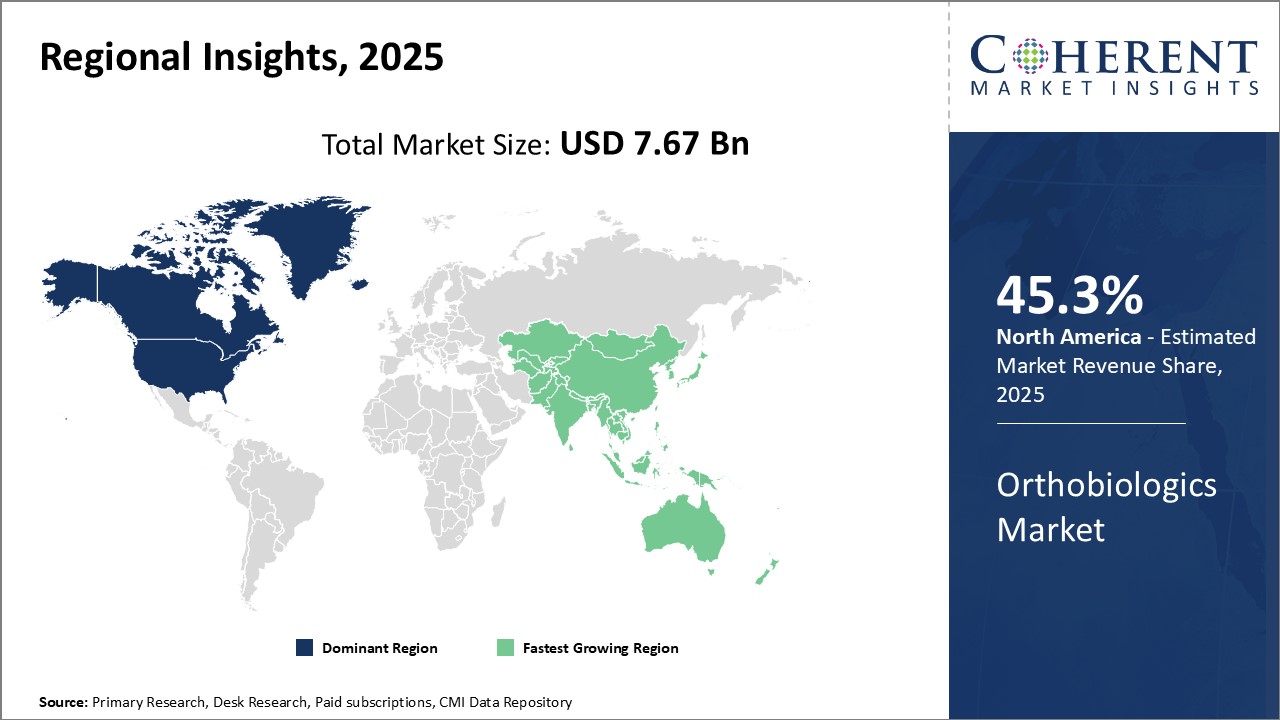
- By Region, North America will likely retain its leading position in the orthobiologics market worldwide with a share of 45.3% by 2026. This is supported by the well-developed healthcare system, strong spending on orthopedic care, and fast adoption of new biologic solutions.
Market Overview
The orthobiologics market demand is predicted to grow exceedingly during the review period. Some motivating factors include the increasing older population, more chronic health issues, and rising sports injuries. Moreover, lower chances of disease transmission and less invasive procedures associated with orthobiologics compared to traditional therapies are raising their demand. In addition, the enduring progress of novel products with greater therapeutic efficacy is anticipated to propel growth further. On the other hand, expensive costs relative to other available treatments and strict regulations are barriers that hinder growth.
Current Events and Its Impact on the Orthobiologics Market
Event | Description and Impact |
Aging Population and Increasing Prevalence of Orthopedic Disorders |
|
Technological Advancements in Orthobiologics |
|
Regulatory Landscape and Reimbursement Policies |
|
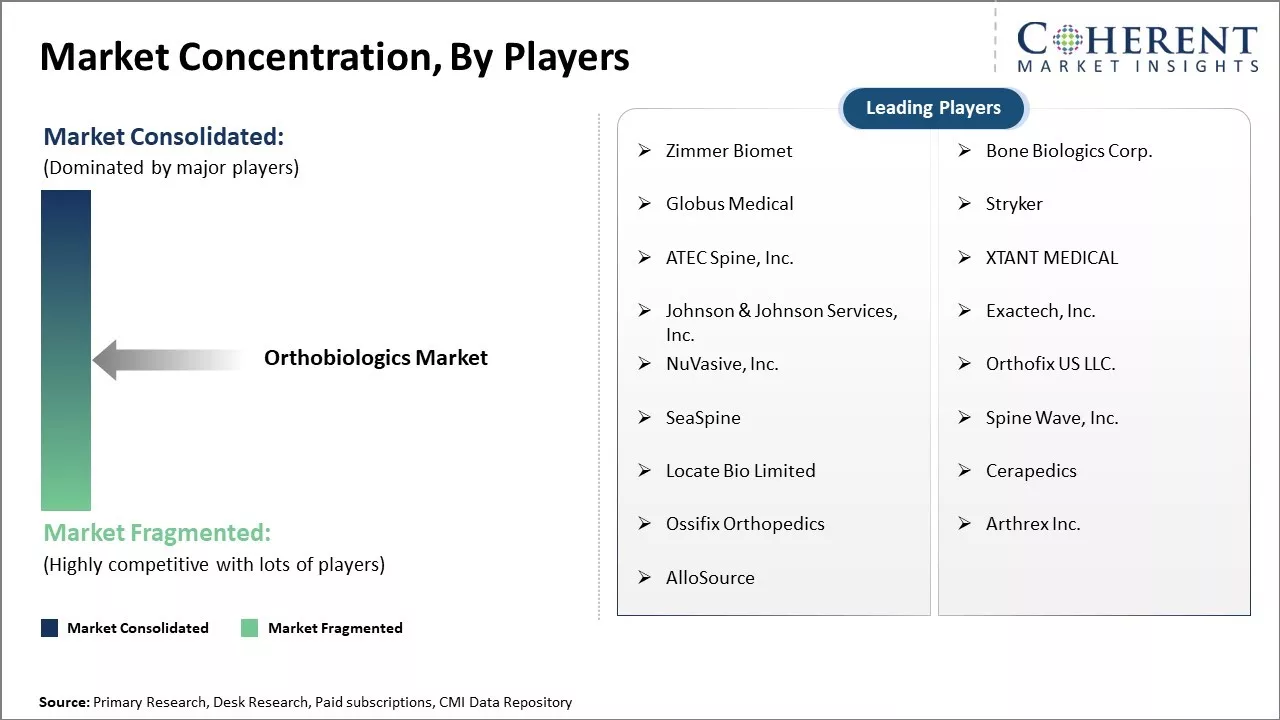
Market Concentration and Competitive Landscape
- Current Industry Events of 2026
- Market Size Estimation
- Regional Breakdown
- Competitive Landscape
- Customer Intelligence
- Segmental Analysis
- Pricing Analysis
- Key Market Drivers, Challenges & Future Trends
- Customized Insights Section
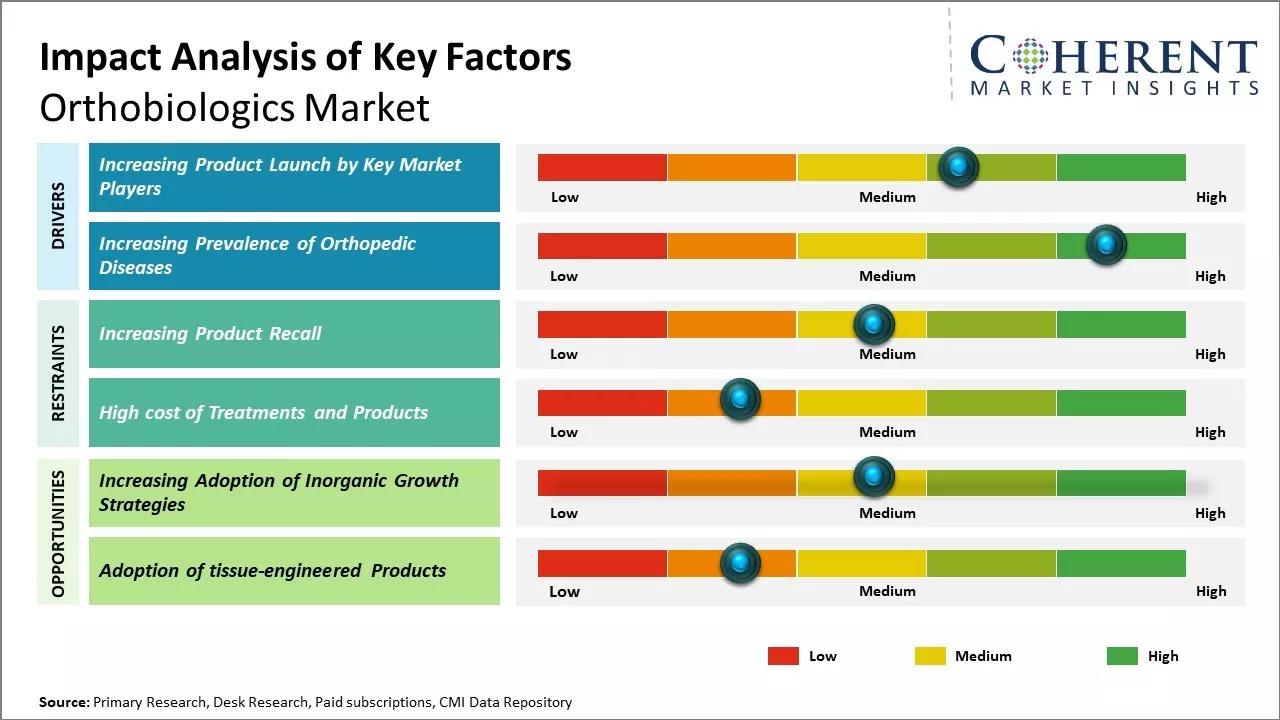
Increasing prevalence of orthopedic diseases
The Increasing prevalence of diseases and conditions has been on the rise over the past few decades. As lifestyle patterns changed with increased sedentary jobs and less physical activity, obesity rates surged dramatically impacting musculoskeletal health. According to studies, obesity significantly increases the risk of developing osteoarthritis, one of the most common orthopedic ailments affecting mobility and quality of life especially in the geriatric population.
Similarly, the risks of bone fractures, knee replacements, and spinal disorders are heightened due to excess weight. With overall improvement in life expectancy worldwide. Old age itself is a risk factor for osteoarthritis and osteoporosis as the regenerative abilities of the body slows down with time. Moreover, weight-bearing and repetitive physical activities performed throughout lifetime often manifest their effects on the bones and joints only later in life. Seniors are also prone to fall-related injuries like hip fractures
Increasing Product Launches by Key Market Players
The adoption of inorganic growth strategies such as product launches by key market players is expected to drive the global orthobiologics market growth over the forecast period. For instance, in July 2022, Ossifix Orthopedics, a subsidiary of Umbra Applied Technologies Group, Inc., a medical technology company, announced that it had launched crunch, a demineralized bone matrix that contains cancellous bone fragments to provide the osteoconductive scaffolding to promote new bone growth. This product launch will expand its suite of orthopedic products
Market Opportunities – Increasing Adoption of Inorganic Growth Strategies
Increasing agreements among key market players are expected to offers lucrative opportunities in the market over the forecast period. For instance, in August 2022, Orthofix Medical Inc., a medical device company with a focus on spine and orthopedics, announced a strategic partnership agreement with CGBio, a developer of innovative, synthetic bone grafts currently used clinically in Asia Pacific for spine, orthopedic, trauma, and dental software. The two companies will work together for the clinical development and commercialization of Novosis recombinant human bone morphogenetic protein-2 (rhBMP-2) bone growth materials and other future tissue regenerative solutions for the U.S. and Canadian markets
Segmental Insights
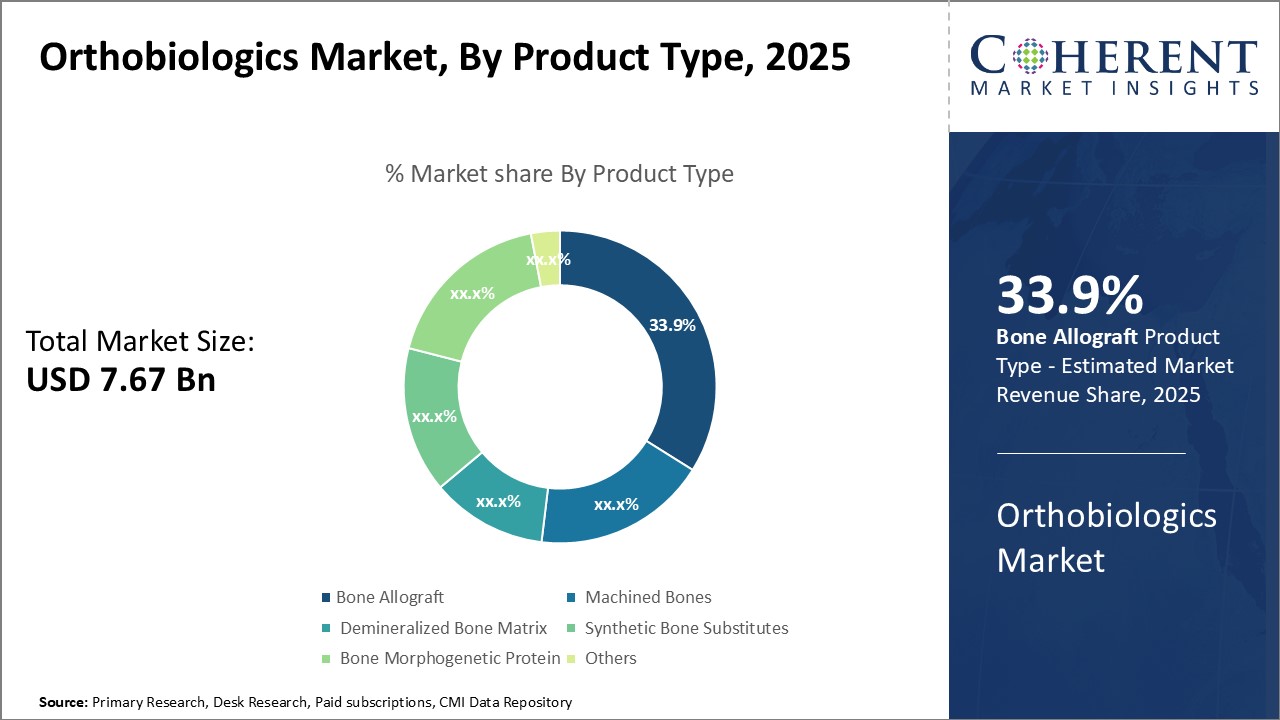
Orthobiologics Market Insights, By Product Type
The product type segment includes bone allograft, machined bones, demineralized bone matrix, synthetic bone substitutes, bone morphogenetic protein (bmp), and others. The bone allograft sub-segment is estimated to hold 34.9% of the Orthobiologics Market share in 2026 owing to its advantages over synthetic substitutes. Bone allografts are the most preferred option for orthopedic procedures like spinal fusion due to their osteoinductive properties that aid in new bone formation.
Compared to synthetic substitutes, bone allografts provide a more physiological healing environment and help achieve long term fusion through remodeling. Advancements in allograft processing have also addressed safety concerns related to disease transmission, making them safer and readily available. Moreover, bone allografts elicit a more natural healing response from the body as compared to synthetic bone graft substitutes. This factor has been a major driver for the growth of the bone allograft segment.
Developments in bone processing technologies that efficiently maintain the biological properties and microstructures of donated bones further support the increasing demand for bone allografts in orthopedic surgical procedures.
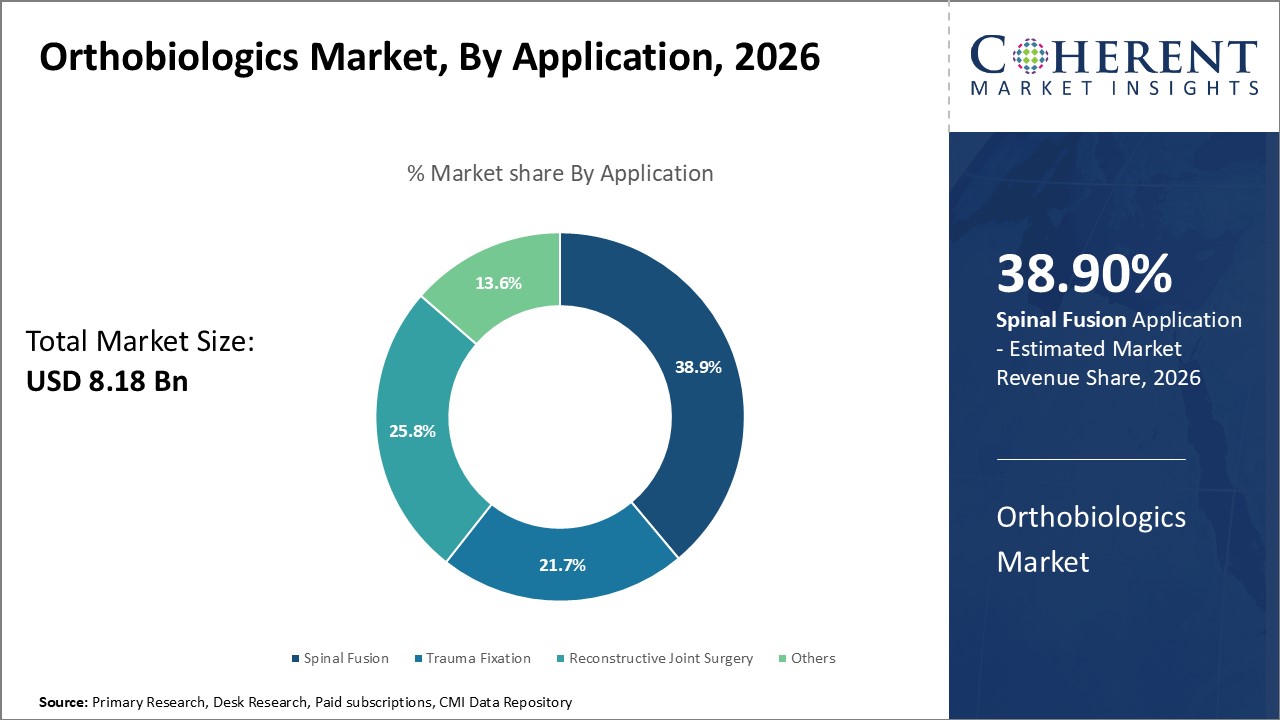
Orthobiologics Market Insights, By Application
The application segment includes spinal fusion, trauma fixation, reconstructive joint surgery, and others. The spinal fusion sub-segment is estimated to hold 38.9% of the Orthobiologics Market growth share in 2026 owing to the rising prevalence of spinal disorders globally. Conditions like degenerative disc disease, spondylolisthesis, spinal stenosis, and spinal deformities lead to severe back pain and neurological compromise.
Spinal fusion surgery offers clinical benefits like reduced pain, restored stability, and improved neurological function in patients with unstable spinal conditions. It is gradually becoming the standard of care for spine pathologies warranting surgical intervention. The availability of advanced interbody fusion devices, bone graft substitutes, and fixation systems has further boosted the adoption of spinal fusion as a preferred technique for correcting spinal deformities.
Orthobiologics Market Insights, End User
The end user segment includes hospitals, orthopedic clinics, ambulatory surgical centers, and others. The hospitals sub-segment is estimated to hold 41.4% of the market share in 2026 owing to their advanced infrastructure and concentration of specialty orthopedic surgeons. Well-equipped operation theatres, intensive care facilities, and in-house rehabilitation services enable complex orthobiologics procedures like spinal fusions to be performed safely under hospital settings.
Expanding healthcare infrastructure in developing nations, favorable government initiatives towards boosting healthcare access, and rising medical tourism are fueling the demand for orthopedic services within hospitals. Preference for hospitals also stems from the fact that most orthobiologics procedures require care beyond stand-alone clinics during the early postoperative period. Moreover, large patient volumes allow for cost-saving through bulk procurement of orthobiologics products in hospitals. These factors have established hospitals as the key end-users for orthobiologics.
Regional Insights
North America Orthobiologics Market Analysis and Trends
North America is expected to contribute the highest share of the global orthobiologics market trend in 2026, accounting for around 45.3% of the total market. This dominance is due to strong investments in research and development, favorable reimbursement policies, and a well-established healthcare infrastructure. The region also benefits from the presence of innovative domestic players who continuously expand their product portfolios, intensifying competition and accelerating new product launches. Additionally, North America acts as a key export hub with companies establishing global footprints.
Asia Pacific Orthobiologics Market Analysis and Trends
Asia Pacific is projected to be the fastest growing region in the global orthobiologics market by 2026. Rapid economic development, increasing healthcare expenditures, and rising awareness about advanced treatments in countries such as China and India have driven the surge in orthopedic surgeries. Local manufacturers have enhanced production capabilities to meet both domestic and export demands, reducing dependency on imports. Supportive government regulations and the emergence of specialized hospitals and bone banks further bolster market growth.
Dominating Countries Orthobiologics Market Analysis and Trends
United States Orthobiologics Market Analysis and Trends
The United States leads North America’s orthobiologics market, supported by its advanced healthcare infrastructure and substantial investments in research and development. The presence of major research universities fosters continuous innovation, enabling the U.S. to maintain a competitive edge in developing advanced orthobiological solutions.
China Orthobiologics Market Analysis and Trends
In the Asia Pacific region, China stands out as the dominant country in the orthobiologics market. Its large patient population and rapidly expanding healthcare infrastructure drive strong demand for orthobiologics. Additionally, China’s growing emphasis on innovation and clinical research is accelerating product development and adoption, positioning it as a key growth hub in the region.
Market Report Scope
Orthobiologics Market Report Coverage
| Report Coverage | Details | ||
|---|---|---|---|
| Base Year: | 2025 | Market Size in 2026: | USD 8.18 Bn |
| Historical Data for: | 2020 To 2024 | Forecast Period: | 2026 To 2033 |
| Forecast Period 2026 to 2033 CAGR: | 6.6% | 2033 Value Projection: | USD 12.79 Bn |
| Geographies covered: |
| ||
| Segments covered: |
| ||
| Companies covered: | Zimmer Biomet, Bone Biologics Corp., Globus Medical, Stryker, ATEC Spine, Inc., XTANT MEDICAL, Johnson & Johnson Services, Inc., Exactech, Inc., NuVasive, Inc., Orthofix US LLC., SeaSpine, Spine Wave, Inc., Locate Bio Limited, Cerapedics, Ossifix Orthopedics, Arthrex Inc., and AlloSource | ||
| Growth Drivers: |
| ||
| Restraints & Challenges: |
| ||
Analyst Viewpoint
- The Orthobiologics Market presents a highly promising growth trajectory, fueled by several critical factors. The rising prevalence of orthopedic disorders—including osteoarthritis and rheumatoid arthritis—combined with an aging global population and an increase in sports-related injuries, is significantly boosting demand for orthobiologic products. Furthermore, ongoing advancements in regenerative medicine, particularly in innovative therapies like stem cell treatments and platelet-rich plasma (PRP) therapy, are unlocking new growth opportunities for market players.
- The market’s growth potential remains robust. North America continues to lead the global market, supported by its advanced healthcare infrastructure, substantial healthcare spending, and a large patient population. Meanwhile, the Asia-Pacific region is anticipated to be the fastest-growing market segment, driven by increasing awareness of orthobiologic therapies, rising disposable incomes, and expanding healthcare facilities in countries such as China and India.
- The Orthobiologics Market offers attractive prospects for investors and industry stakeholders, marked by significant opportunities for innovation, expansion, and improved patient outcomes.
Orthobiologics Market Key Development
- In March 2025, Zimmer Biomet launched a new line of synthetic bone graft substitutes in North America, engineered to accelerate bone regeneration and improve surgical outcomes in orthopedic patients.
- In January 2025, Medtronic received FDA approval for its next-generation orthobiologic device designed specifically for spinal fusion surgeries, enabling enhanced healing and reduced recovery time.
- In November 2024, Smith+Nephew expanded its biologics portfolio through the acquisition of a regenerative medicine startup focused on stem-cell therapies for joint repair, aiming to strengthen its presence in the sports medicine segment.
- In September 2024, Bioventus Inc. introduced an innovative biologic injectable targeting early-stage osteoarthritis, designed to reduce inflammation and promote cartilage regeneration.
Market Segmentation
- Product Type Insights (Revenue, USD Bn, 2021 - 2033)
- Bone Allograft
- Machined Bones
- Demineralized Bone Matrix
- Synthetic Bone Substitutes
- Bone Morphogenetic Protein (BMP)
- Others
- Application Insights (Revenue, USD Bn, 2021 - 2033)
- Spinal Fusion
- Trauma Fixation
- Reconstructive Joint Surgery
- Others
- End User Insights (Revenue, USD Bn, 2021 - 2033)
- Hospitals
- Orthopedic Clinics
- Ambulatory Surgical Centers
- Others
- Regional Insights (Revenue, USD Bn, 2021 - 2033)
- North America
- U.S.
- Canada
- Latin America
- Brazil
- Argentina
- Mexico
- Rest of Latin America
- Europe
- Germany
- U.K.
- Spain
- France
- Italy
- Russia
- Rest of Europe
- Asia Pacific
- China
- India
- Japan
- Australia
- South Korea
- ASEAN
- Rest of Asia Pacific
- Middle East
- GCC Countries
- Israel
- Rest of Middle East
- Africa
- South Africa
- North Africa
- Central Africa
- Key Players Insights
- Zimmer Biomet
- Bone Biologics Corp.
- Globus Medical
- Stryker
- ATEC Spine, Inc.
- XTANT MEDICAL
- Johnson & Johnson Services, Inc.
- Exactech, Inc.
- NuVasive, Inc.
- Orthofix US LLC.
- SeaSpine
- Spine Wave, Inc.
- Locate Bio Limited
- Cerapedics
- Ossifix Orthopedics
- Arthrex Inc.
- AlloSource
Sources
Primary Research interviews
- Orthobiologics Product Manufacturers
- Medical Device Suppliers and Distributors
- Orthopedic Surgeons and Physicians
- Medical Research & Clinical Experts
- Others
Databases
- EMBASE
- Medline
- Others
Magazines
- Orthopedic Design & Technology Magazine
- Becker's Spine Review
- Orthopedics This Week
- Others
Journals
- The Journal of Bone & Joint Surgery
- Journal of Orthopaedic Research
- Journal of Clinical Orthopaedics and Trauma
- Others
Newspapers
- The New York Times Health Section
- Medical News Today
- The Guardian - Healthcare
- Others
Associations
- American Academy of Orthopaedic Surgeons (AAOS)
- International Cartilage Repair Society (ICRS)
- Orthopaedic Research Society (ORS)
- American Orthopaedic Society for Sports Medicine (AOSSM)
- Others
Public Domain sources
- U.S. Food and Drug Administration (FDA)
- World Health Organization (WHO)
- Centers for Disease Control and Prevention (CDC)
- National Institutes of Health (NIH)
- Others
Proprietary Elements
- CMI Data Analytics Tool, Proprietary CMI Existing Repository of information for last 8 years
*Definition: Orthobiologics use body’s own cells and healing factors to reverse the effects of orthoarthritis and accelerate the healing of tendon and ligament injuries (rotator cuff tendonitis, ankle sprain, etc.). Orthobiologics involve substances that help the body to heal more quickly. They can improve the healing of injured muscles, tendons, and ligaments and help to repair damage from osteoarthritis. These products are made from substances that are naturally found in body. Stem cells are special cells in body that can turn into other types of cells. During the healing process, stem cells are called to the area of body that needs to repair.
Get access to 250+ pages report
Every segment, forecast, competitor profile and data table behind the analysis above — available for instant download.
- ESOMAR Member
- ISO 9001:2015 Certified
- D-U-N-S Registered
- GDPR & CCPA Compliant
Missing comfort of reading report in your local language? Find your preferred language:
Transform your Strategy with Exclusive Trending Reports
Frequently Asked Questions
The Orthobiologics Market size is estimated to be valued at USD 8.18 Bn in 2026, and is expected to reach USD 12.79 Bn by 2033.
The CAGR of the global Market is projected to be 6.6% from 2026 to 2033.
Increasing product launch by key market players and increasing prevalence of orthopedic diseases are the major factors driving the growth of the market.
Increasing product recalls and high cost of treatments and products are the major factors hampering the growth of the orthobiologics industry.
In terms of product type, bone allograft is estimated to dominate the market revenue share in 2026.
Zimmer Biomet, Bone Biologics Corp., Globus Medical, Stryker, ATEC Spine, Inc., XTANT MEDICAL, Johnson & Johnson Services, Inc., Exactech, Inc., NuVasive, Inc., Orthofix US LLC., SeaSpine, Spine Wave, Inc., Locate Bio Limited, Cerapedics, Ossifix Orthopedics, Arthrex Inc., and AlloSource are the major players.
North America is expected to lead the global market.