

Primary Biliary Cholangitis Treatment Market Size and Forecast
Primary Biliary Cholangitis Treatment Market size is estimated to be valued at USD 838.6 Mn in 2026 and is expected to reach USD 1,533.1 Mn in 2033, exhibiting a compound annual growth rate (CAGR) of 9.0% from 2026 to 2033.
Key Takeaways
- Based on Treatment Type, the Ursodeoxycholic Acid (UDCA) segment is expected to capture the highest share of the market in 2026, as it is the first-line treatment for primary biliary cholangitis.
- Based on Distribution Channel, the Hospital pharmacies segment is projected to capture he largest share of the market in 2026, due to its ability to offer specialist prescribed medications.
- Based on Region, North America is set to lead the global primary biliary cholangitis treatment market in 2026, with a 33.5% share. While Europe is anticipated to be the fastest growing region during the forecast period.
Market Overview
The Primary Biliary Cholangitis Treatment Market demand is growing steadily due to rising diagnosis rates, unmet clinical needs, and new drug approvals. Increased focus on rare disease research, improved access, and support from regulatory bodies are also fueling market expansion.
Many people with PBC have no symptoms in the early stages. As the disease progresses, signs of biliary disease begin to appear. The earliest and most common symptoms of people with PBC are fatigue and itchy skin. These symptoms affect different people to different degrees. They can occur later or earlier in the course of the disease, and they can be mild to severe at any stage.
Current Events and their Impact on the Primary Biliary Cholangitis Treatment Market
Current Event | Description and its Impact |
FDA Regulatory Decisions on PBC Therapies |
|
Clinical Pipeline Developments |
|
Reimbursement Policy
Reimbursement policies for Primary Biliary Cholangitis (PBC) treatment vary significantly across global markets, shaped by healthcare system structures and drug approval status. In the United States, treatments like ursodeoxycholic acid (UDCA) and obeticholic acid (Ocaliva®) are reimbursed under Medicare and private insurance, though prior authorization and step therapy are common. In Europe, national health systems cover first-line therapies like UDCA, while second-line treatments often face delayed or conditional reimbursement. For instance, in the UK, NICE has approved elafibranor (Iqirvo®) for NHS reimbursement as a second-line option, reflecting a shift toward addressing unmet needs. Germany and France typically offer broader access under statutory insurance but may impose cost-effectiveness reviews. Japan covers PBC treatments under its national insurance scheme, though stricter inclusion criteria may apply. Emerging markets such as Brazil and India have limited public reimbursement, and patients often rely on out-of-pocket payments or private coverage. Globally, access and affordability are directly tied to health authority appraisals, with cost-effectiveness and clinical benefit being key determinants in reimbursement decisions.
- Current Industry Events of 2026
- Market Size Estimation
- Regional Breakdown
- Competitive Landscape
- Customer Intelligence
- Segmental Analysis
- Pricing Analysis
- Key Market Drivers, Challenges & Future Trends
- Customized Insights Section
Segmental Insights
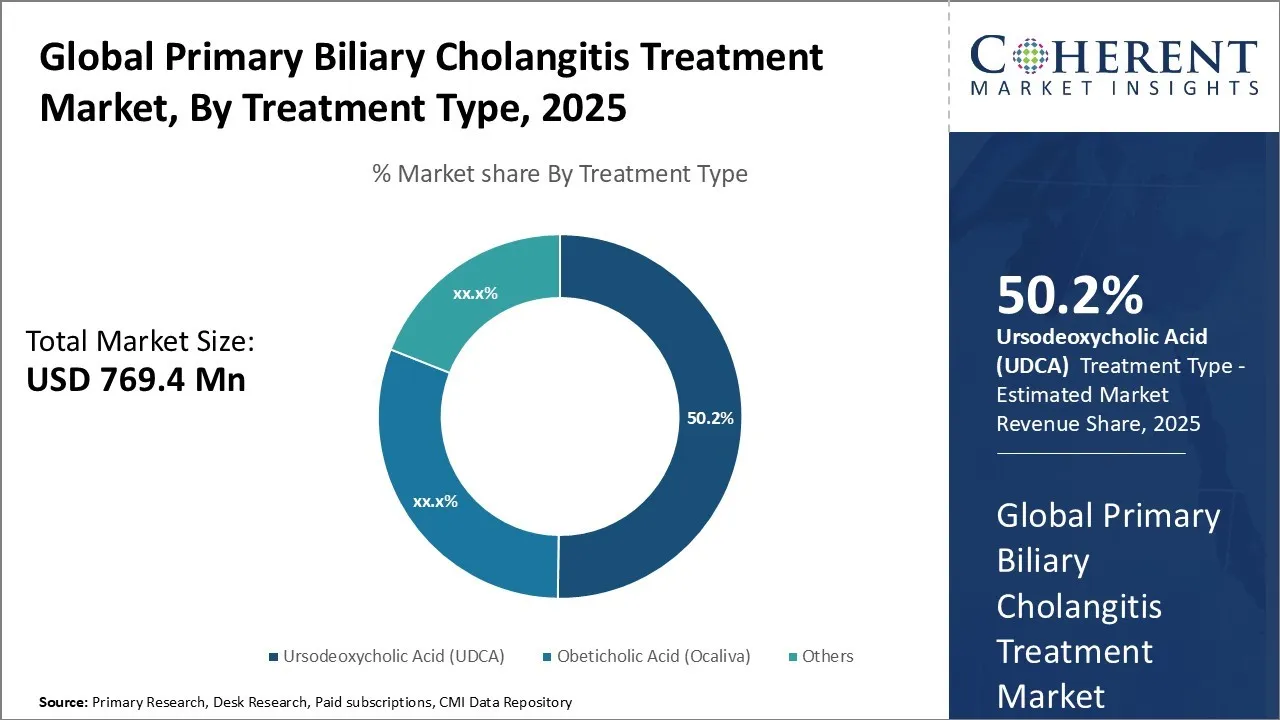
Primary Biliary Cholangitis Treatment Market Insights, By Treatment Type
Ursodeoxycholic Acid (UDCA) Segment Dominates the Overall Market
In terms of treatment type, the Ursodeoxycholic acid (UDCA) segment is expected to hold largest share of the market in 2026, as it is the first line standard therapy for most PBC patients and has been widely used for decades due to its effectiveness in slowing disease progression and improving liver enzyme levels. Ursodeoxycholic acid is wide available and affordable, in comparison to Obeticholic Acid (Ocaliva) and fibrates, it also better tolerated, especially in early-stage disease.
In December 2024, the CDSCO’s Subject Expert Committee granted approval for Abbott Healthcare to manufacture and market ursodeoxycholic acid (UDCA) tablets (300 mg and 450 mg) for the treatment of obstetric cholestasis, a potentially serious liver condition during pregnancy. The decision follows comprehensive review of clinical data, and the committee has mandated a post-marketing surveillance study, with a protocol to be submitted within three months. UDCA works by improving bile flow and protecting liver cells, offering relief from severe itching and reducing risks to both mother and fetus. Abbot’s entry is expected to broaden therapeutic options in India.
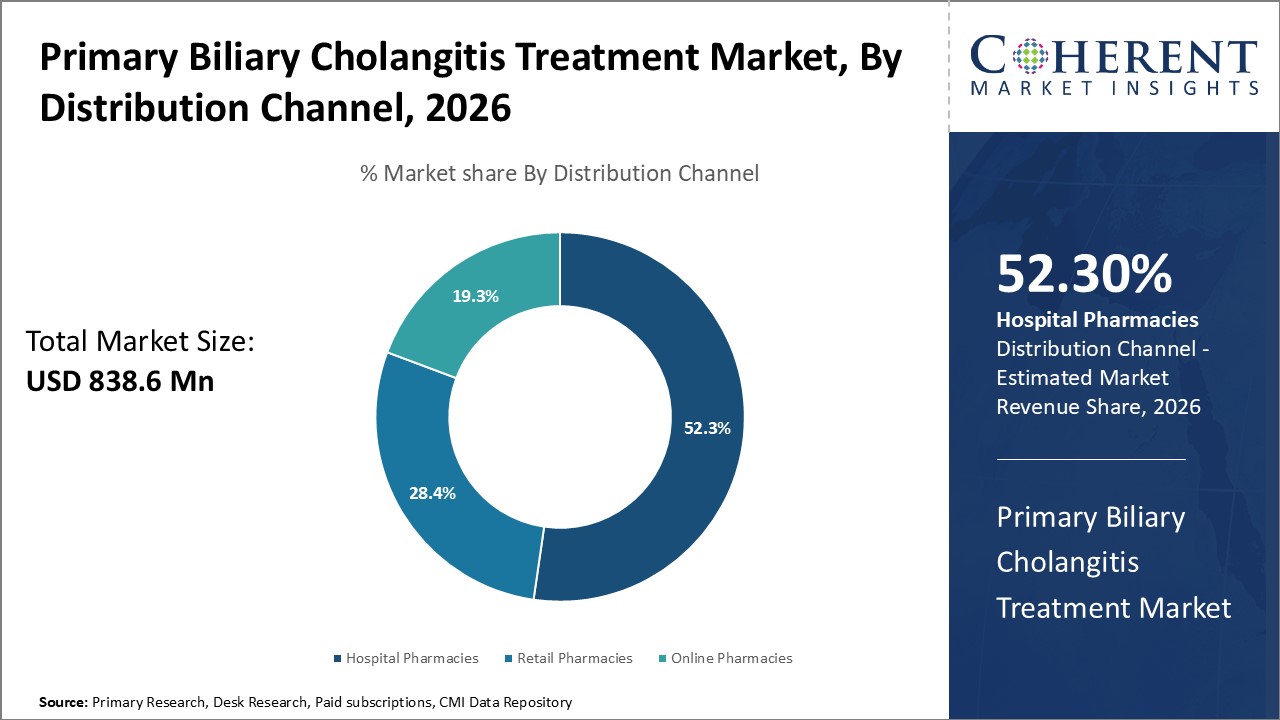
Primary Biliary Cholangitis Treatment Market Insights, By Distribution Channel
Hospital Pharmacies leads owing to its Specialized Prescribed Medication
In terms of distribution channel, the hospital pharmacies segment is expected to contribute the highest share of the market in 2026, owing to its ability to offer specialized prescribed medications such as ursodeoxycholic acid, obeticholic acid, which are more commonly initiated and dispensed in hospital settings. Newly approved or investigational drugs for PBC are typically distributed through hospital and specialty pharmacies due to administration protocols and monitoring needs.
Hospitals across the U.S. have begun stocking two newly FDA-approved oral drugs for Primary Biliary Cholangitis (PBC). Ipsen’s Iqirvo (elafibranor) received accelerated approval in June for use with ursodeoxycholic acid (UDCA) or as monotherapy in UDCA-intolerant patients, demonstrating reduced alkaline phosphatase and itching relief. For instance, in August 2024, Gilead’s Livdelzi (seladelpar) received its FDA clearance, showing strong biochemical responses and pruritus improvement in those with inadequate UDCA response. With inclusion in major hospital formularies, these agents offer clinicians new options for managing PBC, a rare liver disease affecting approximately 100,000 adults in the U.S.
Regional Insights
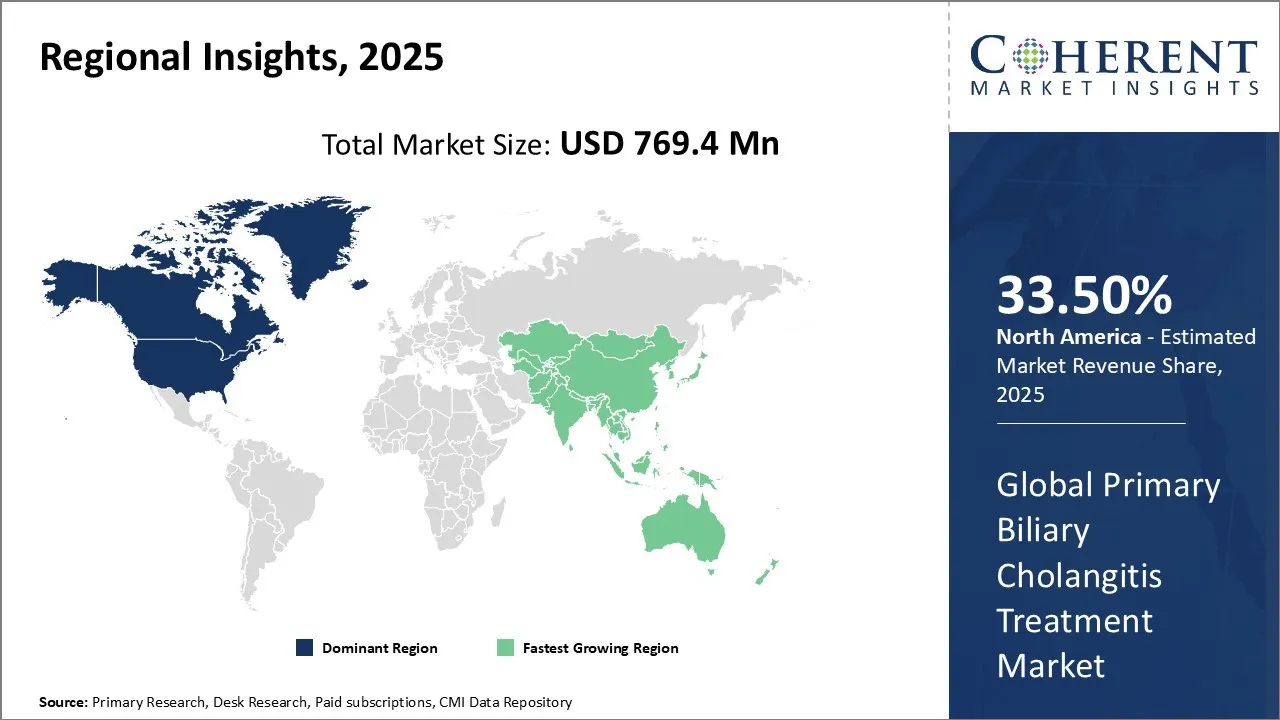
North America Primary Biliary Cholangitis Treatment Market Analysis & Trends
The North America region is projected to lead the market with a 33.50% share in 2026. The region including the U.S. and Canada, has a well-established healthcare infrastructure and has a strong presence of leading key players, such as Intercept Pharmaceuticals, Inc., GSK plc., Bristol-Myers Squibb and Company, and Enanta Pharmaceuticals, focused on the research and development of primary biliary cholangitis treatment. The market for primary biliary cholangitis treatment in North America is expected to be significant, driven by the increasing research and development activities. For instance, in November 2026, Intercept Pharmaceuticals, Inc., a biopharmaceutical company, announced that results from two analyses assessing the potential of obeticholic acid (OCA) to improve outcomes for patients with primary biliary cholangitis (PBC).
Europe Primary Biliary Cholangitis Treatment Market Analysis & Trends
Europe region is expected to exhibit the fastest growth in the market during the forecast period. Europe region has a strong focus on the development of novel therapeutics for PBC. Countries, such as Germany, France, and the U.K., have robust healthcare pharmaceutical companies, which contribute to the demand for therapeutics for PBC. The market in Europe is expected to experience steady growth due to the increasing prevalence of primary biliary cholangitis (PBC). For instance, in February 2026, the European Commission approved seladelpar (Livdelzi) as a treatment for Primary Biliary Cholangitis (PBC), complementing or replacing ursodeoxycholic acid in adults with inadequate response. The decision follows a CHMP positive opinion based on the RESPONSE trial, demonstrating improvements in alkaline phosphatase and pruritus.
Primary Biliary Cholangitis Treatment Market Outlook Country-Wise
The U.S. Primary Biliary Cholangitis Treatment Market Trends
The U.S. primary biliary cholangitis treatment market is characterized by the rising prevalence and early diagnosis. According to National Institute of Health, PBC affects an estimated 1 in 1,000 women over age 40 in the U.S., with rising prevalence due to better diagnostic awareness and expanded use of liver function screening tests. U.S. patients also have access to approved therapies including ursodeoxycholic acid (UDCA) and obeticholic acid (Ocaliva), which are widely available through both hospital and specialty pharmacies. Further move, strong patient advocacy from organizations like the PBCers Organization and American Liver Foundation promotes education, early testing, and support, increasing diagnosis and treatment uptake. This is further proliferating the primary biliary cholangitis market share.
U.K. Primary Biliary Cholangitis Treatment Market Trends
The U.K. primary biliary cholangitis treatment market is rapidly expanding, fueled by its expanding treatment option for PBC including high unmet medical needs, inconsistent and substandard care and many more. Around 40% of patients don't fully respond to first-line therapy (UDCA), and over 30% fail to respond to second-line treatments. Without effective alternatives, disease progression can lead to liver failure and transplantation. National audits covering NHS hospitals have found widespread shortfalls in UDCA dosing, symptom monitoring, and transplant evaluation. PBC affects approximately 20,000–25,000 people in the UK, mainly middle-aged women, with significant impacts on quality of life and NHS costs related to transplants and complications.
Market Report Scope
Primary Biliary Cholangitis Treatment Market Report Coverage
| Report Coverage | Details | ||
|---|---|---|---|
| Base Year: | 2025 | Market Size in 2026: | USD 838.6 Mn |
| Historical Data for: | 2020 To 2024 | Forecast Period: | 2026 To 2033 |
| Forecast Period 2026 to 2033 CAGR: | 9.0% | 2033 Value Projection: | USD 1,533.1 Mn |
| Geographies covered: |
| ||
| Segments covered: |
| ||
| Companies covered: | Intercept Pharmaceuticals, Inc., Highlight Therapeutics, S.L., GSK plc., Bristol-Myers Squibb and Company, Enanta Pharmaceuticals, NW Biotherapeutics, Merck & Co Inc., Ipsen Pharma, Johnson & Johnson, GENFIT, Ironwood Pharmaceuticals, Inc., Novartis AG, COUR Pharmaceuticals, and Kaken Pharmaceutical Co., Ltd. | ||
| Growth Drivers: |
| ||
| Restraints & Challenges: |
| ||
Primary Biliary Cholangitis Treatment Market Drivers
- Increasing Prevalence of Primary Biliary Cholangitis: The rising prevalence of primary biliary cholangitis across the globe is one of the major factors fueling the growth of the global primary biliary cholangitis treatment market. With changing lifestyles and increased life expectancy, and liver diseases are on the rise which require effective treatment options. Primary biliary cholangitis treatment has emerged as a revolutionary approach to develop more targeted and efficient drugs to treat such complex diseases. According to recent developments, the UK’s NHS approved elafibranor (Iqirvo®) in 2025 for patients unresponsive to UDCA, marking a significant milestone in primary biliary cholangitis treatment market research and expanding access to innovative second-line therapies.
- Growing Adoption of Novel Drugs: Primary biliary cholangitis has traditionally been treated with ursodeoxycholic acid (UDCA) as the first-line therapy. However, with close to 40% of patients not responding adequately to UDCA, there was a considerable unmet need for alternative treatment options. This has prompted drug manufacturers to focus on developing novel precision therapies targeting specific disease pathways involved in PBC. In the last 5 years alone, three new drugs have been approved by regulatory agencies like the U.S. FDA and European Medicines Agency (EMA) - obeticholic acid (Ocaliva), fibric acid derivatives such as bezafibrate (Pemptor), and interleukin-12/23 inhibitors like mirikizumab (Kineret). Compared to conventional treatments, these novel drugs have demonstrated higher rates of biochemical response and incomplete biochemical response in clinical trials.
Primary Biliary Cholangitis Treatment Market Opportunities
- Increasing adoption of Combination Therapy: Combination therapy holds significant potential to drive the growth in the global primary biliary cholangitis treatment market. As per medical experts, combination of two or more treatment options may help achieve better clinical response for patients suffering from primary biliary cholangitis (PBC). PBC is an autoimmune disease where there is slow destruction of smaller bile ducts inside the liver over a period of time. Current treatment options, such as ursodeoxycholic acid (UDCA) and obeticholic acid, provide relief to some extent but not all patients respond equally to single drug therapies. Medical reports from the World Health Organization (WHO) suggest that maximum 50-60% patients respond to UDCA, leaving remainder with inadequate response. This is where combination therapies can make a difference. Combining UDCA with other immunomodulatory drugs holds promise. Recent clinical studies show that combining UDCA with fibric acid derivatives, such as bezafibrate, led to improved biochemical, serological, and histological responses in UDCA partial responders or non-responders. Similarly, combining UDCA and monoclonal antibodies targeting specific inflammatory pathways demonstrated enhanced therapeutic benefits over monotherapies. Ongoing phase 3 clinical trials evaluating safety and efficacy of UDCA in combination with immunomodulators like Budesonide and combination of Obeticholic acid with other agents are encouraging. Positive outcomes from such combination therapy trials can go a long way in better management of PBC and improving patient outcomes. This will likely fuel the increased adoption of combination drug regimens among physicians and healthcare providers for PBC treatment. Growing clinical evidence on benefits of combination approach is expected to drive higher treatment uptake beyond existing patient pools, thereby accelerating the primary biliary cholangitis treatment market forecast with a focus on novel therapy development and precision care models over the forecast period.
Primary Biliary Cholangitis Treatment Market Trends
- Strategic Alliance and Collaboration between Companies: Strategic alliances and collaborations between companies have become increasingly common in the global primary biliary cholangitis treatment market in recent years. By joining forces, companies are able to pool together their complementary strengths like research expertise, clinical trial networks, manufacturing capabilities, and marketing reach to accelerate drug development and better serve patients. For instance, on January 8, 2023, CymaBay Therapeutics, Inc., a clinical-stage biopharmaceutical company, announced that it has entered into a collaboration and license agreement with Kaken Pharmaceutical Co., Ltd., a pharmaceutical company, for the development and commercialization in Japan of CymaBay’s investigational drug, seladelpar for the treatment of primary biliary cholangitis. Increasing strategic alliances like these indicate companies recognize that collaborating is essential to address the challenges of effectively researching, developing, and commercializing new treatment options for rare diseases like primary biliary cholangitis on a global scale. It ultimately benefits patients by accelerating the availability of novel therapies.
Recent Developments
- In June 2025, GSK has announced that the U.S. Food and Drug Administration (FDA) accepted its New Drug Application (NDA) for linerixibat, an oral ileal bile acid transporter (IBAT) inhibitor, to treat cholestatic pruritus in patients with primary biliary cholangitis (PBC).
- In May 2025, Mirum Pharmaceuticals presented new 28-week findings from its Phase 2b VANTAGE study at the European Association for the Study of the Liver (EASL) showing that its oral IBAT inhibitor volixibat significantly improved symptoms in patients with primary biliary cholangitis (PBC).
- In June 2023, Ipsen Pharma, a biopharmaceutical company, and GENFIT, a biopharmaceutical group, announced positive topline data from the pivotal ELATIVE Phase III trial. In the trial the efficacy and safety of elafibranor, an investigational dual α, δ PPAR agonist, is being assessed for the treatment of patients with the rare cholestatic liver disease, primary biliary cholangitis (PBC), who have an inadequate response or intolerance to the current standard of care therapy, ursodeoxycholic acid (UDCA).
Analyst Opinion (Expert Opinion)
The Primary Biliary Cholangitis (PBC) treatment market value is undergoing a long-overdue transformation, driven by two primary forces: a rising clinical dissatisfaction with ursodeoxycholic acid (UDCA) monotherapy and the emerging class of nuclear receptor modulators—most notably, farnesoid X receptor (FXR) agonists and peroxisome proliferator-activated receptor (PPAR) agonists.
While UDCA remains the first-line therapy, approximately 30%–40% of patients fail to achieve biochemical response, a figure consistently reported in large cohorts such as the UK-PBC study (2016) and validated in real-world registries. The biochemical non-response population represents a clinically distinct and commercially addressable segment—one that current players like Intercept Pharmaceuticals and Genfit have rightly targeted. However, most manufacturers are failing to act with the urgency this market demands, especially given the accelerating regulatory traction in the second-line space.
Obeticholic acid (OCA), the only approved FXR agonist for PBC as of now, has shown statistically significant reductions in alkaline phosphatase (ALP) and GGT levels in Phase III POISE trials. Yet, its commercial success is increasingly constrained by two factors: pruritus-related tolerability issues and reluctance among hepatologists to adopt it as a long-term solution. This creates a clear opening for dual-acting molecules. Elafibranor, for example—a dual PPAR-α/δ agonist—has demonstrated promising interim data from the ELATIVE Phase III study, showing ALP normalization in nearly 47% of patients without the itch burden typically seen with FXR agonists.
Furthermore, the U.S. and European regulatory frameworks are beginning to favor accelerated pathways for second-line agents addressing biochemical non-responders, as evidenced by orphan drug designations and Fast Track approvals for newer entrants. These regulatory incentives, coupled with high unmet need and clear biomarker endpoints, make PBC a uniquely attractive segment for biotech investment.
In my assessment, the market is poised to pivot from mono-pathway targeting to combination regimens that modulate bile acid metabolism, fibrogenesis, and immune dysregulation concurrently. Stakeholders who invest early in dual or triple-acting molecules, especially those with differentiated safety profiles—will command not just market share but also formulary preference.
Speak to the analyst
Want personalized insights?
Take the findings above to one of our principal consultants, or have the report rebuilt around the segments, geographies and competitors you actually track.
Market Segmentation
- By Treatment Type (Revenue, USD Mn, 2021 - 2033)
- Ursodeoxycholic Acid (UDCA)
- Obeticholic Acid (Ocaliva)
- Others (Fibrates (Tricor), etc.)
- By Distribution Channel (Revenue, USD Mn, 2021 - 2033)
- Hospital Pharmacies
- Retail Pharmacies
- Online Pharmacies
- By Region (Revenue, USD Mn, 2021 - 2033)
- North America
- U.S.
- Canada
- Latin America
- Brazil
- Argentina
- Mexico
- Rest of Latin America
- Europe
- Germany
- U.K.
- Spain
- France
- Italy
- Russia
- Rest of Europe
- Asia Pacific
- China
- India
- Japan
- Australia
- South Korea
- ASEAN
- Rest of Asia Pacific
- Middle East
- GCC Countries
- Israel
- Rest of Middle East
- Africa
- South Africa
- North Africa
- Central Africa
- North America
- Top Companies in the Primary Biliary Cholangitis Treatment Market
- Intercept Pharmaceuticals, Inc.
- Highlight Therapeutics, S.L.
- GSK plc.
- Bristol-Myers Squibb and Company
- Enanta Pharmaceuticals
- NW Biotherapeutics
- Merck & Co Inc.
- Ipsen Pharma
- Johnson & Johnson
- GENFIT
- Ironwood Pharmaceuticals, Inc.
- Novartis AG
- COUR Pharmaceuticals
- Kaken Pharmaceutical Co., Ltd.
Sources
Primary Research Interviews from the following stakeholders
Stakeholders
- Interviews with hepatologists, gastroenterologists, transplant specialists, hospital pharmacy heads, clinical trial coordinators, and patient advocacy group leads across North America, Europe, and Asia-Pacific
Databases
- World Health Organization (WHO) Global Health Observatory
- Orphanet Rare Disease Database
- U.S. National Library of Medicine – ClinicalTrials.gov
- European Medicines Agency (EMA) Data Portal
- FDA Orphan Drug Product Designation Database
- Global Health Data Exchange (GHDx)
- India’s Ministry of Health & Family Welfare Statistics
- China Health Statistics Yearbook
- Japan Ministry of Health, Labour and Welfare – Rare Disease Reports
Magazines
- PharmaTimes
- Pharmaceutical Technology
- GEN – Genetic Engineering & Biotechnology News
- Medical News Today – Autoimmune & Liver Sections
- Drug Discovery & Development
- Fierce Biotech – Liver & Autoimmune Updates
- Pharma Focus Asia
- MedTech Outlook
Journals
- Journal of Hepatology
- Hepatology (AASLD)
- Clinical Gastroenterology and Hepatology
- Journal of Autoimmunity
- Alimentary Pharmacology & Therapeutics
- Orphanet Journal of Rare Diseases
- Drug Safety
- Lancet Gastroenterology & Hepatology
Newspapers
- The New York Times – Health Section
- Financial Times – Global Pharmaceuticals
- The Guardian – Healthcare Innovation
- Business Standard – Indian Biotech & Pharma
- Handelsblatt – European Drug Market Coverage
- Japan Times – Health and Drug Development
Associations
- American Association for the Study of Liver Diseases (AASLD)
- European Association for the Study of the Liver (EASL)
- Asia-Pacific Association for the Study of the Liver (APASL)
- International Autoimmune Hepatitis Group
- Indian National Association for the Study of the Liver (INASL)
- International Alliance of Patients’ Organizations (IAPO)
- Canadian Liver Foundation
- World Hepatitis Alliance
Public Domain Sources
- National Institutes of Health (NIH), U.S.
- European Commission Public Health Reports
- India’s Department of Pharmaceuticals
- Ministry of Health, Labour and Welfare (Japan)
- China National Medical Products Administration (NMPA)
- OECD Health Statistics
- World Bank – Healthcare Access and Disease Burden Reports
- Department of Health and Social Care (UK)
Proprietary Elements
- CMI Data Analytics Tool, and Proprietary CMI Existing Repository of information for last 8 years
*Definition: Primary biliary cholangitis is a chronic disease in which the small bile ducts in the liver become inflamed and are eventually destroyed. When there are no bile ducts, bile builds up and causes liver damage. Over time, this damage can lead to liver scarring, cirrhosis, and eventually liver failure.
Get access to 250+ pages report
Every segment, forecast, competitor profile and data table behind the analysis above — available for instant download.
- ESOMAR Member
- ISO 9001:2015 Certified
- D-U-N-S Registered
- GDPR & CCPA Compliant
Missing comfort of reading report in your local language? Find your preferred language:
Transform your Strategy with Exclusive Trending Reports
Frequently Asked Questions
The Primary Biliary Cholangitis Treatment Market is estimated to be valued at USD 838.6 Mn in 2026, and is expected to reach USD 1,533.1 Mn by 2033.
The CAGR of the Primary Biliary Cholangitis Treatment Market is projected to be 9.0% from 2026 to 2033.
The major factors driving the primary biliary cholangitis treatment market growth include the increasing prevalence of primary biliary cholangitis and the growing adoption of novel drugs.
The leading treatment type segment in the primary biliary cholangitis treatment market is the Ursodeoxycholic Acid (UDCA) segment.
The major players operating in the primary biliary cholangitis treatment market include Intercept Pharmaceuticals, Inc., Highlight Therapeutics, S.L., GSK plc., Bristol-Myers Squibb and Company, Enanta Pharmaceuticals, NW Biotherapeutics, Merck & Co Inc., Ipsen Pharma, Johnson & Johnson, GENFIT, Ironwood Pharmaceuticals, Inc., Novartis AG, COUR Pharmaceuticals, and Kaken Pharmaceutical Co., Ltd.
North America is expected to lead the primary biliary cholangitis treatment market, followed by Europe and the Asia Pacific region.
Ursodeoxycholic acid and obeticholic acid are the most commonly prescribed therapies for Primary Biliary Cholangitis treatment worldwide.