

Protein Bar Market Size and Share Analysis - 2026 To 2033
The Global Protein Bar Market Size is estimated to increase at a CAGR of 5.5%, from USD 16.7 Bn in 2026 to reach about USD 24.2 Bn by 2033. Some of the key drivers for growth in this market are rising consumer demand for quick and protein packed snacks, growing health and fitness consciousness, increasing engagement in sports and physical activities, and increased use of protein bars as meal replacement and nutritional snack foods. The market is further driven by increased availability of plant based, low sugar, gluten free, clean label, and functional protein bars through supermarkets, convenience stores, specialist nutrition stores, and online retail channels. The 2026 State of Snacking Study by Mondelēz International revealed that six out of ten consumers in selected global markets snack once every day, almost half of them at times skip meals in favor of snacking, and four out of ten consumers prefer healthy snacks.
Key Takeaways
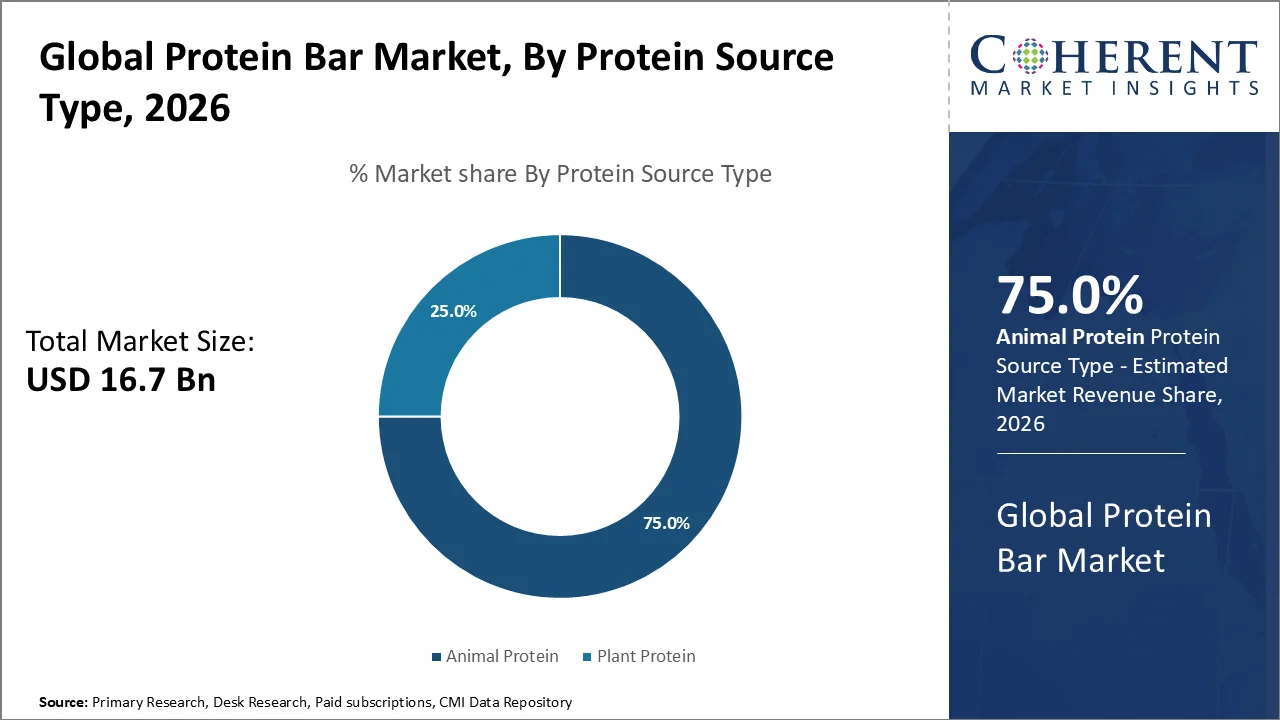
- The animal protein segment is likely to dominate the market with an estimated 75.0% share in 2026. The segment’s growth is owing to the widespread use of whey, casein, milk, collagen, and egg proteins, which offer complete amino-acid profiles, high digestibility, established consumer acceptance, and strong applicability in sports- and performance-nutrition bars. According to the International Food Information Council’s 2025 research, consumers’ most preferred protein sources were meat and poultry at 65%, eggs at 62%, and fish and seafood at 48%, while 41% preferred dairy products such as yogurt, cottage cheese, and cheese.
- The energy protein bars segment is anticipated to lead the product-type category with an estimated 42.0% share in 2026. The growth witnessed by this category has been attributed to the rise in sporting and fitness activities, growing need for convenient pre- and post-exercise nutrition, increased demand for energy bars, and rising consumption of portable bars while participating in outdoor recreational activities. As per the Sports & Fitness Industry Association, 247.1 million Americans, accounting for 80% of the population above six years of age, participated in some form of sport, fitness, or outdoor activity in 2024.
- The high protein (Above 25 gm) segment, with more than 25 grams of protein, is expected to have an estimated market share of 56.0% by 2026. The growth in this segment is due to the rising consumer interest in muscle building, post-workout recovery, satiety, healthy aging, weight loss, and convenient protein intake. According to the 2025 Protein Profile of Cargill, it was noted that 61% of consumers increased their intake of protein in 2024, while 63% desired protein in forms like protein bars, yoghurt, shakes, and jerky.
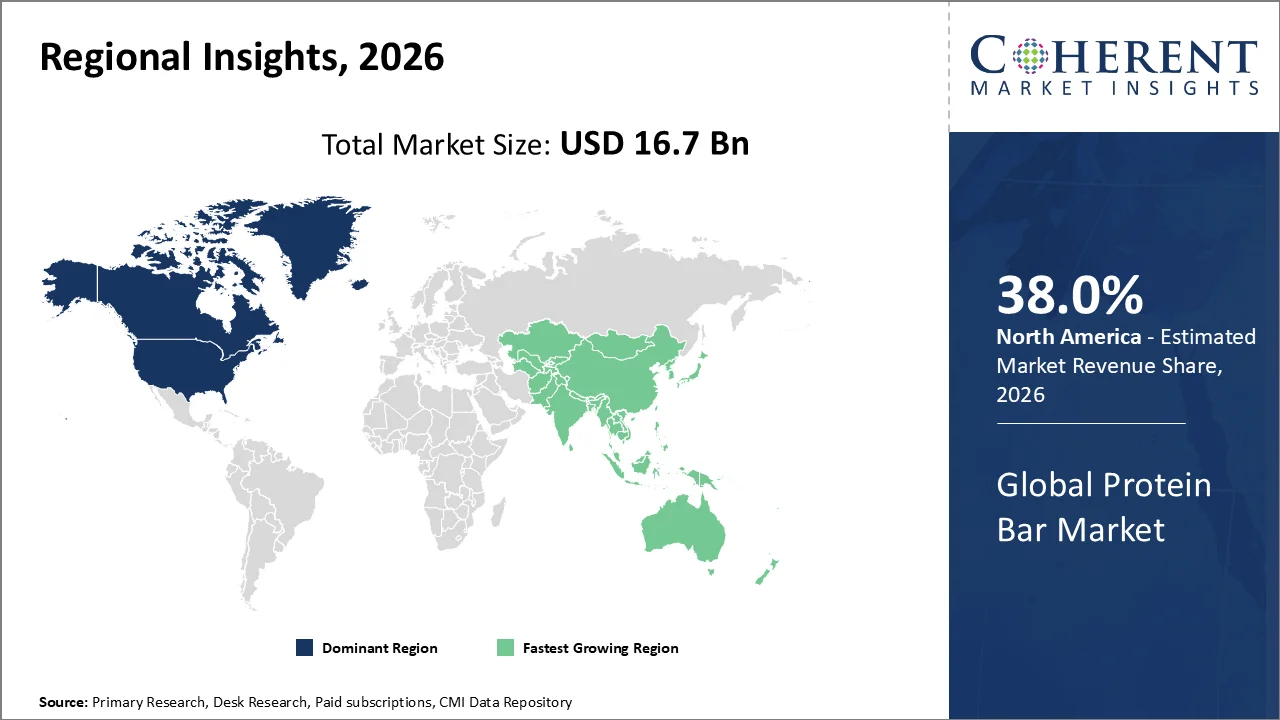
- North America is likely to dominate the global protein bar market with an estimated 38.0% share in 2026. The region’s growth is owing to strong consumer demand for convenient protein-rich foods, an established sports and fitness culture, widespread availability of protein bars across supermarkets, pharmacies, convenience stores and online channels, and the presence of major nutrition and snack-bar manufacturers. At the 2025 USDA Agricultural Outlook Forum, the USDA highlighted that U.S. protein demand remained exceptionally strong and that convenience, value and product quality had become important consumer purchasing considerations
Market Drivers
Rising Fitness Participation is Accelerating Protein Bar Consumption
The global protein bar market is benefiting from increasing participation in physical activity, recreational sports, gym-based training, and muscle-strengthening exercises. Active consumers increasingly prefer portable nutritional products that can be consumed before exercise, after workouts, while travelling, or between meals. Protein bars provide a convenient combination of protein, carbohydrates, fibre, and other functional ingredients without requiring preparation or refrigeration.
According to an April 2026 report by the U.S. Centers for Disease Control and Prevention, the percentage of U.S. adults who complied with the federal guidelines on aerobic physical activity in 2024 was 47.2%. The compliance rose to 52.3% for males and 51.9% for adults residing in the western part of the United States. This huge number of consumers who are physically active is responsible for increased demand for energy protein bars and high-protein bars.
Low-Sugar and Nutrient-Dense Product Innovation is Expanding Market Opportunities
The makers of protein bars have started to redesign their bars to include low sugar content, lower saturated fat, use of whole grains, nuts, seeds, natural sweeteners, and plant-based or milk-based protein sources. The consumer base is becoming more concerned about nutrition content on labels, which helps them distinguish between normal high-sugar bars and bars that provide additional nutrition.
In December 2024, the FDA of the United States made changes to the requirements related to the “healthy” claim on the labels of food items. The criteria require that the items using the label should have a certain amount of food groups and should also meet the criteria of having a certain limit of added sugars, saturated fat, and sodium content.
Current Events and Their Impact on the Protein Bar Market
Current Event | Description and its Impact |
U.S. FDA Proposes Mandatory Front-of-Package Nutrition Labeling for Packaged Foods (2025–2026) |
|
UK Restrictions on Advertising Less-Healthy Foods Come into Force (2026) |
|
- Current Industry Events of 2026
- Market Size Estimation
- Regional Breakdown
- Competitive Landscape
- Customer Intelligence
- Segmental Analysis
- Pricing Analysis
- Key Market Drivers, Challenges & Future Trends
- Customized Insights Section
Segmental Insights
Why is Animal Protein Acquiring the Largest Share?
On the basis of protein source, the animal protein segment is projected to account for the largest Protein Bar Market share of approximately 75.0% in 2026. The segment’s growth is owing to the extensive use of whey protein, milk protein concentrate, casein, collagen, and egg protein in sports-nutrition and meal-replacement bars. These ingredients offer complete amino-acid profiles, established consumer acceptance, desirable texture, and compatibility with high-protein product formulations. According to the USDA National Agricultural Statistics Service, U.S. dry whey production reached 76.9 million pounds in April 2026, representing an increase of 7.8% compared with April 2025.
In April 2026, Barebells launched its limited-edition Strawberry Sundae Soft Bar, containing 16 grams of protein per bar with no added sugar. The product combines an indulgent strawberry-and-vanilla flavour with a soft, layered texture, reflecting manufacturers’ increasing focus on improving the taste and sensory appeal of high-protein products.
Why are Energy Protein Bars Acquiring the Largest Share?
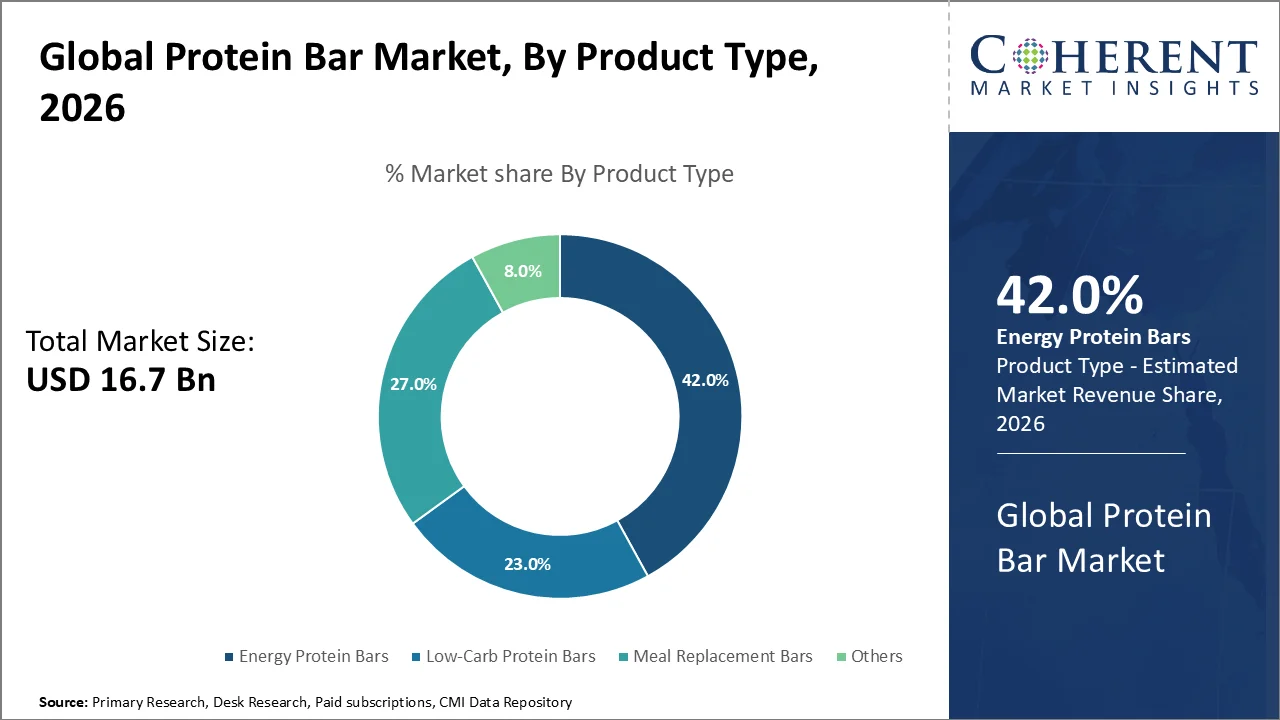
On the basis of product type, the energy protein bars segment is anticipated to lead with approximately 42.0% share in 2026. The segment’s growth is owing to increasing participation in gym training, running, cycling, outdoor recreation, and muscle-strengthening activities. Energy protein bars are widely consumed before or after exercise because they offer portable nutrition, convenient portioning, and a combination of protein and carbohydrates for energy replenishment and recovery.
According to the Outdoor Industry Association’s Outdoor Participation Trends Report 2025, significant activities like hiking, camping, and fishing added 2 million or more participants each during the reporting period. The core outdoor participant base was also augmented by 5 million, while senior and youth participation rates saw growth of 7.4% and 5.6%, respectively.
In July 2026, PepsiCo expanded its Quaker protein-bar portfolio with the launch of Quaker Protein Granola Bars in Chocolate Pretzel flavour, providing 10 grams of protein per serving.
Why is the High Protein Segment Acquiring the Largest Share?
On the basis of protein content, the high protein segment, containing above 25 grams of protein, is expected to dominate with approximately 56.0% share in 2026. The segment’s growth is owing to rising demand for muscle recovery, strength development, satiety, weight management, healthy aging, and convenient achievement of daily protein-intake targets. Manufacturers are consequently introducing bars with higher concentrations of whey protein isolate, milk protein, collagen, egg protein, and blended protein ingredients.
In February 2026, the U.S. Dairy Export Council reported that U.S. exports of high-protein whey, including WPC80+, increased by 6% to 77,811 metric tons in 2025. Shipments increased by 44% to the European Union, 52% to Southeast Asia, and 38% to India, demonstrating broad international demand for concentrated protein ingredients suitable for high-protein foods and sports-nutrition products.
Protein Bar Market Trends
- The rising consumer need for simplicity and recognizable ingredients is fueling the innovation of clean-label protein bars. RXBAR in June 2025 introduced their High Protein Bars which contained 18 grams of plant-based protein, six ingredients that are easily recognizable by consumers, no artificial sweeteners and organic agave nectar.
- Plant protein consumption has led to an increase in the production of plant proteins such as pea protein, nuts, seeds, and other non-dairy options used in making protein bars. According to a report from the Good Food Institute, 60% of households in the U.S. were buying plant-based foods in 2025, and plant-based bars grew in sales both in value and volume in the year.
- The increasing focus on taste, texture, and ease of form will drive protein bars to evolve away from dense and chewy bars. In January 2025, FULFIL introduced its new range of larger 55 grams protein bars that consist of 20 grams protein content and 2 grams sugar. It also introduced Protein Bites in smaller size which deliver 16 grams of protein content per pouch.
Regional Insights
North America Dominates Owing to the Established Fitness Culture and Strong Demand for Convenient Nutrition
The North American market is forecasted to capture the leading share in the global Protein Bar market, accounting for around 38.0% share of the market in 2026. The prominent position of the region in the global market is attributed to the sports culture of the region, high consumer awareness about protein consumption, the presence of sports nutrition companies, and easy availability of protein bars.
According to the Health & Fitness Association’s 2025 U.S. Health & Fitness Consumer Report, membership across U.S. fitness facilities reached a record 77 million people in 2024. Approximately 23% of fitness-facility members used a personal trainer, while 32% participated in small-group training, indicating strong engagement in structured exercise and performance-oriented lifestyles.
In May 2026, General Mills launched LÄRABAR Protein across major U.S. retailers in both single-bar and five-count pack formats. The new protein bar range contains 10–12 grams of plant-based protein per bar and is available in Peanut Butter Chocolate, Cinnamon Nut, and Lemon flavours.
Asia Pacific Protein Bar Market Trends
Asia Pacific is expected to be the fastest-growing region in the Protein Bar Market during 2026–2033. Regional growth is owing to increasing sports and fitness participation, rising disposable income, rapid urbanization, expanding modern retail and e-commerce channels, and growing consumer interest in convenient, protein-enriched, and functional snack products.
According to the General Administration of Sport of China’s 2025 National Fitness Activity Survey, 38.52% of the Chinese population regularly participated in physical exercise. The survey covered more than 141,000 respondents across 31 provincial-level regions, demonstrating the broad expansion of fitness participation in one of Asia Pacific’s largest consumer markets.
In June 2026, Australian nutrition company Bulk Nutrients launched its new Cookies & Cream Protein Bar. The product contains 20 grams of protein and combines a soft, fudge-like centre with cookie pieces and a white-chocolate coating.
Strong Digital Retail Penetration and High-Protein Product Innovation are Accelerating the Protein Bar Market in the United States
The U.S. Protein Bar Market is seeing tremendous growth due to the presence of the already developed culture of snacking, increased popularity of foods with high protein content and low sugar, wide availability through grocery and convenience stores, and the increasing number of direct-to-consumer and online sales channels. The shelf stability and portability of protein bars make them a great fit for online purchases and multipacks.
Product development is also shifting toward formulations that combine high protein content with reduced sugar. In 2026, KIND’s U.S. portfolio includes Protein MAX bars containing 20 grams of protein and only 1 gram of total sugar per bar. The products use peanuts as the leading ingredient and are marketed without artificial sweeteners, demonstrating the increasing focus on protein density, recognizable ingredients, and reduced-sugar formulations in the U.S. market.
China Protein Bar Market Trends
China is expected to witness strong growth in the Protein Bar Market over the forecast period. The country’s growth is owing to government emphasis on improved protein consumption, increasing demand for nutrient-dense foods, rapid expansion of online food retail, rising availability through convenience stores and supermarkets, and growing consumer interest in portable nutrition products.
In March 2025, China introduced its Food and Nutrition Development Guideline for 2025–2030, which promotes greater consumption of protein- and fibre-rich foods. The policy targets high-quality protein accounting for more than 50% of total daily protein intake by 2030. It also recommends limiting added sugar intake to 25 grams per day, creating favourable conditions for protein bars positioned around high-quality protein, low sugar, controlled portions, and balanced nutrition.
Who are the Major Companies in Protein Bar Industry
Some of the major key players in Protein Bar Market are Groupe Danone, Kellogg Co., General Mills, Inc., Premier Nutrition, Abbott Laboratories, Quest Nutrition, Universal Nutrition Corp., and Active Nutrition International GmbH.
Key News
- In July 2026, Danone’s Silk brand expanded its protein portfolio with Silk Protein Yogurt and Silk Protein Shakes in the U.S. The yogurt provides at least 12 grams of complete plant protein, while the shakes deliver 30 grams per serving.
- In March 2026, Quest Nutrition announced the debut of its new Stacks Protein Bar range through a partnership with professional basketball player Sophie Cunningham and USA Rugby athletes.
Market Report Scope
Protein Bar Market Report Coverage
| Report Coverage | Details | ||
|---|---|---|---|
| Base Year: | 2025 | Market Size in 2026: | USD 16.7 Bn |
| Historical Data for: | 2020 To 2024 | Forecast Period: | 2026 To 2033 |
| Forecast Period 2026 to 2033 CAGR: | 5.5% | 2033 Value Projection: | USD 24.2 Bn |
| Geographies covered: |
| ||
| Segments covered: |
| ||
| Companies covered: | Groupe Danone, Kellogg Co., General Mills, Inc., Premier Nutrition, Abbott Laboratories, Quest Nutrition, Universal Nutrition Corp., and Active Nutrition International GmbH. | ||
| Growth Drivers: |
| ||
| Restraints & Challenges: |
| ||
Analyst Opinion
- The Protein Bar Market is expected to maintain steady growth as protein bars increasingly serve multiple consumption occasions, including breakfast replacement, workout nutrition, travel, and between-meal snacking. Circana reported in July 2026 that 55% of U.S. consumers eat at least three snacks per day, while U.S. snack sales reached USD 231 billion, increasing by 3.2% year-on-year. Protein-rich products have become mainstream as consumers increasingly select snacks for energy, weight management, and nutritional benefits.
- The competitive future market will depend on the ability of the manufacturing industry to integrate protein content with convenience, taste, reduced sugar, and clean labeling of the ingredients. The 2026 IFIC Food & Health Survey found that convenience was a factor for 61% of food and beverage choices among Americans compared to 56% of healthiness. Additionally, 33% of consumers viewed a source of protein as an essential element of healthy foods, while 29% favored low-sugar products.
- Protein bars are anticipated to have an expansion in variety in terms of functional nutrition, meal replacement, high protein content, and without added sugar. According to FMI, in February 2026, 77% of grocery shoppers made some effort towards choosing healthier products, while 80% of food industry companies stated that nutrition and overall well-being were their primary wellness strategy. This indicates that protein bars with credible nutritional claims, transparent labelling, and differentiated functional benefits are likely to receive greater product-development and retail support.
Speak to the analyst
Want personalized insights?
Take the findings above to one of our principal consultants, or have the report rebuilt around the segments, geographies and competitors you actually track.
Market Segmentation
- By Protein Source Type (Revenue, USD Bn, 2021-2033)
- Plant Protein
- Animal Protein
- By Product Type (Revenue, USD Bn, 2021-2033)
- Energy Protein Bars
- Low- Carb Protein Bars
- Meal Replacement Bars
- Others
- By Protein Content (Revenue, USD Bn, 2021-2033)
- Low Protein (0-15 gm)
- Medium Protein (16 gm - 25 gm)
- High Protein (Above 25 gm)
- By Region (Revenue, USD Bn, 2021-2033)
- North America
- U.S.
- Canada
- Latin America
- Brazil
- Mexico
- Argentina
- Rest of Latin America
- Europe
- Germany
- U.K.
- France
- Italy
- Spain
- Russia
- Rest of Europe
- Asia Pacific
- China
- India
- Japan
- Australia
- South Korea
- ASEAN
- Rest of Asia Pacific
- Middle East
- GCC
- Israel
- Rest of Middle East
- Africa
- South Africa
- Central Africa
- North Africa
- North America
Sources
Primary Research Interviews
- Protein bar manufacturers and brand managers
- Sports nutrition product developers
- Food scientists and nutrition formulation experts
- Whey, milk, collagen, and plant protein suppliers
- Retail category managers and distributors
- Gym, fitness centre, and sports nutrition retailers
- Dietitians, nutritionists, and sports nutrition professionals
- Procurement managers from supermarkets and convenience stores
- E-commerce sellers and direct-to-consumer nutrition brands
- Key opinion leaders in functional foods and performance nutrition
Databases
- World Bank
- Organisation for Economic Co-operation and Development (OECD)
- United Nations Comtrade Database
- Food and Agriculture Organization of the United Nations (FAO)
- U.S. Department of Agriculture (USDA)
- Eurostat
- U.S. Census Bureau
- National Bureau of Statistics of China
- International Trade Centre Trade Map
- UN Industrial Development Organization Statistics
Magazines
- Food Business News
- Nutraceuticals World
- Food Navigator
- Nutrition Insight
- Beverage Industry
- Prepared Foods
- Snack Food & Wholesale Bakery
- Food Processing
- Natural Products Insider
- Sports Nutrition Insider
Journals
- Journal of the International Society of Sports Nutrition
- Nutrients
- Food Research International
- Journal of Functional Foods
- Food Chemistry
- International Journal of Food Science & Technology
- Journal of Food Science
- Appetite
- Sports Medicine
- Frontiers in Nutrition
Newspapers
- The Wall Street Journal
- Financial Times
- The New York Times
- The Guardian
- Reuters
- CNBC
- The Economic Times
- Nikkei Asia
- South China Morning Post
- The Australian Financial Review
Associations
- International Food Information Council
- International Society of Sports Nutrition
- Sports & Fitness Industry Association
- Health & Fitness Association
- Food Industry Association
- Consumer Brands Association
- International Dairy Foods Association
- U.S. Dairy Export Council
- Good Food Institute
- Specialty Food Association
Public Domain Sources
- Company annual reports and investor presentations
- Company press releases and product-launch announcements
- Government nutrition and dietary-guideline publications
- Food labelling and regulatory publications from the U.S. FDA
- European Commission food-safety and packaging regulations
- USDA dairy, protein ingredient, and food-consumption statistics
- National retail and e-commerce statistics
- Publicly available import and export databases
- University publications on sports and functional nutrition
- Patent databases such as WIPO, USPTO, and Google Patents
- Product labels, ingredient lists, and nutritional information
- Supermarket and e-commerce product listings
Proprietary Elements
- CMI Data Analytics Tool
- Proprietary CMI Existing Repository of Information for the Last 10 Years
Get access to 250+ pages report
Every segment, forecast, competitor profile and data table behind the analysis above — available for instant download.
- ESOMAR Member
- ISO 9001:2015 Certified
- D-U-N-S Registered
- GDPR & CCPA Compliant
Missing comfort of reading report in your local language? Find your preferred language:
Transform your Strategy with Exclusive Trending Reports
Frequently Asked Questions
The global Protein Bar Market is expected to reach approximately USD 24.2 Bn by 2033, increasing from USD 16.7 Bn in 2026.
Major companies operating in the global Protein Bar Market include Groupe Danone, Kellanova, General Mills, Inc., Premier Nutrition Company, Abbott Laboratories, Quest Nutrition, Universal Nutrition Corporation, and Active Nutrition International GmbH, among others.
High protein-ingredient costs, fluctuating whey and plant-protein prices, taste and texture formulation challenges, allergen risks, strict food-labelling regulations, and competition from alternative protein snacks are the key factors hampering market growth.
Increasing demand for convenient protein-rich snacks, rising participation in sports and fitness activities, growing adoption of meal-replacement products, and expanding demand for high-protein, low-sugar, plant-based, and clean-label formulations are driving market growth.
The global Protein Bar Market is anticipated to grow at a CAGR of approximately 5.5% between 2026 and 2033.
North America is expected to account for the largest share of the global Protein Bar Market, with an estimated 38.0% share in 2026.
Asia Pacific is expected to be the fastest-growing regional market during the forecast period owing to increasing fitness participation, urbanization, disposable income, e-commerce penetration, and demand for convenient nutritional products in China, India, Australia, Japan, and other regional markets.