

Smart Power Technology Market Size and Forecast — 2026 - 2033
The Global Smart Power Technology Market size is estimated to be valued at USD 45.8 billion in 2026 and is expected to reach USD 114.6 billion by 2033, exhibiting a compound annual growth rate (CAGR) of 13.6% from 2026 to 2033.
Overview
The Smart Power Technology Market is driven by the increasing demand for efficient energy management and reliable power distribution systems. Rapid urbanization and industrialization are boosting electricity consumption, encouraging the adoption of smart grids and advanced power solutions. Growing integration of renewable energy sources such as solar and wind requires intelligent power systems for stable distribution and grid optimization. Government initiatives promoting energy efficiency and carbon reduction are further supporting market growth. Additionally, rising investments in IoT-enabled energy monitoring, smart meters, and automated control systems are enhancing operational efficiency, reducing power losses, and driving the adoption of smart power technologies globally.
Key Takeaways
Smart Inverters dominate the technology segment with over 45% market share, fueled by rising renewable energy integration and grid modernization initiatives.
The utility/grid application segment generates significant revenue due to growing demand for smart grid solutions that improve energy distribution, reliability, and management.
North America leads regional market share at around 38%, supported by proactive government policies, infrastructure upgrades, and the presence of major market players.
Asia Pacific exhibits the highest CAGR, driven by rapid urbanization, expanding manufacturing industries, and aggressive renewable energy adoption, particularly in China and India.
Smart Power Technology Market Segmentation Analysis
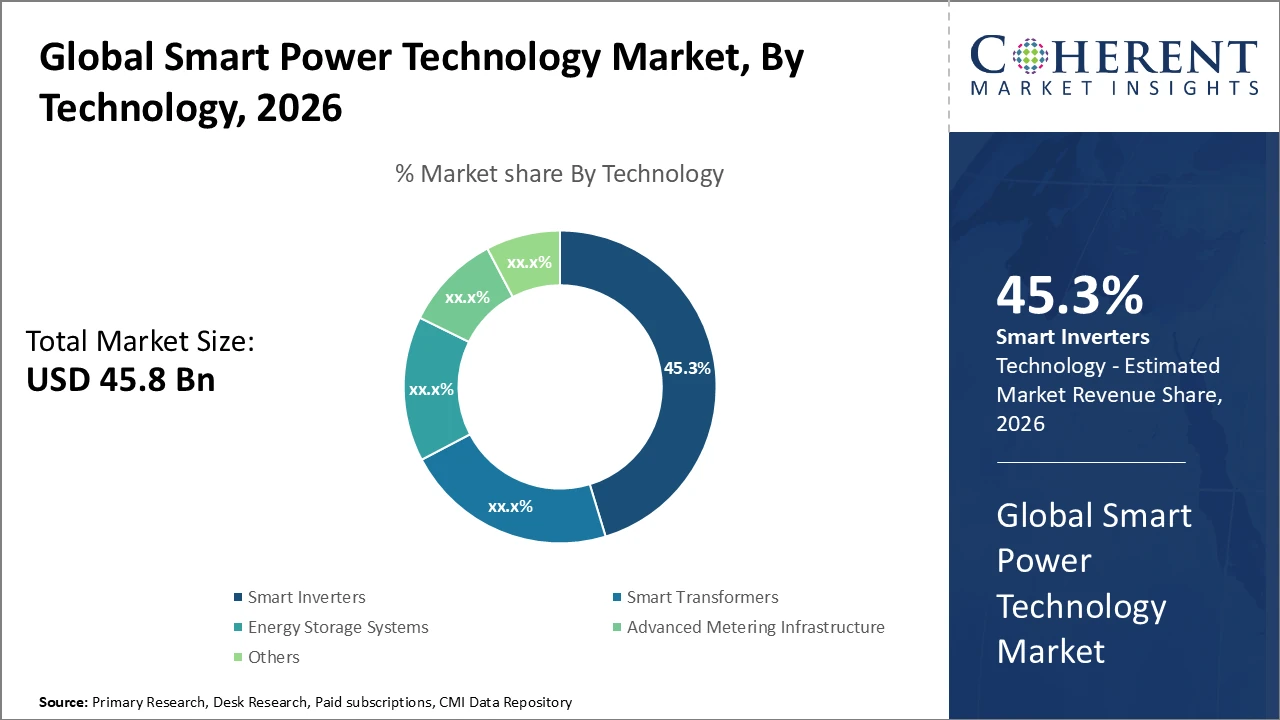
Smart Power Technology Market Insights, By Technology
Smart Inverters dominate the market with a 45.3% share, driven by their essential role in integrating renewable energy into power grids, improving stability, and enhancing power quality. Energy Storage Systems represent the fastest-growing subsegment, propelled by rising demand for grid resilience and load-shifting solutions to manage renewable intermittency. Smart Transformers aid in voltage regulation and fault detection, while Advanced Metering Infrastructure enables real-time monitoring and billing for consumers.
Smart Power Technology Market Insights, By Application
The Utility/Grid segment leads the market due to its essential role in grid modernization and widespread adoption of smart power technologies. Rising renewable energy capacity and global smart city initiatives further drive demand in this segment. Residential applications are the fastest-growing subsegment, fueled by smart home energy management systems and increasing consumer focus on energy efficiency and sustainability. Commercial and Industrial segments exhibit steady growth as businesses implement solutions to optimize energy usage and comply with environmental regulations.
Smart Power Technology Market Insights, By End User
Utilities continue to dominate the end-user segment, commanding the largest market share as they manage power grids that require advanced technologies for stability, efficiency, and adherence to renewable energy mandates. The Transportation sector is the fastest-growing subsegment, driven by the rapid expansion of electric vehicles and associated fast-charging infrastructure supported by smart grids. IT and Data Centers increasingly demand smart power solutions to ensure reliable energy supply amid growing digitalization. Manufacturing adopts these technologies incrementally to optimize energy-intensive operations, while Telecom and Other sectors represent niche demand fueled by the expansion of digital and critical infrastructure.
Smart Power Technology Market Trends
The Smart Power Technology market trend is marked by the integration of digital technologies with traditional energy infrastructure.
AI-powered energy management systems adoption increased by 18% in 2026, allowing utilities to efficiently predict and manage energy loads.
Blockchain-enabled peer-to-peer energy transactions progressed from pilot projects to early commercial deployment in Europe and North America, significantly lowering transaction costs.
Electric vehicles integrated as distributed energy resources via Vehicle-to-Grid (V2G) technology saw a 20% adoption increase in 2025, driving new energy management capabilities.
These trends reflect dynamic technological shifts shaping operational efficiency, cost reduction, and market innovation.
Smart Power Technology Market Insights, By Geography
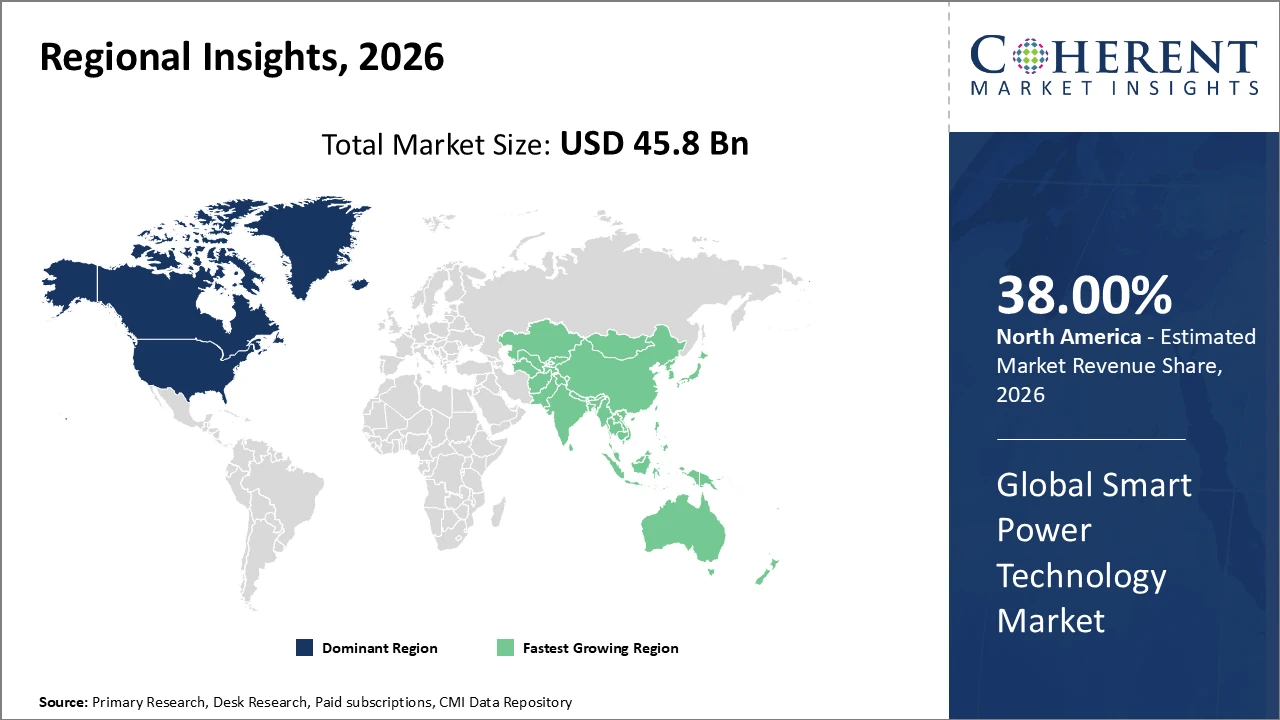
North America Smart Power Technology Market Analysis and Trends
North America maintains a dominant position in the Smart Power Technology market, capturing around 38% of the global share, supported by a mature smart grid infrastructure and strong federal and state policies promoting renewable energy integration. Major investments by leading companies, including General Electric and Eaton Corporation, enhance technological deployment and service capabilities. High adoption rates of energy management systems, advanced metering infrastructure, and grid modernization projects further reinforce market growth. Additionally, the region benefits from a large consumer base for clean energy solutions and continued emphasis on operational efficiency and sustainability, driving consistent revenue expansion and innovation.
Asia Pacific Smart Power Technology Market Analysis and Trends
The Asia Pacific region demonstrates the fastest growth in the Smart Power Technology market, with a CAGR exceeding 15%, driven by rapid urbanization, industrial expansion, and proactive government policies supporting renewable energy adoption, particularly in China and India. Significant infrastructure transformation initiatives, including smart grid modernization and energy storage integration, are further accelerating market demand. Additionally, strategic collaborations between global technology providers and local enterprises are enhancing market penetration and knowledge transfer, boosting regional capabilities. Rising energy consumption, coupled with the push for sustainable and reliable power solutions, positions Asia Pacific as a key growth engine for the global smart power technology market.
Smart Power Technology Market Outlook for Key Countries
USA Smart Power Technology Market Analysis and Trends
The U.S. Smart Power Technology market is driven by supportive policy frameworks, including the Green New Deal and Smart Grid Investment Grants, which accelerate the adoption of advanced energy solutions. Industry leaders like Siemens AG and General Electric have deployed innovative smart inverters and energy storage systems, bolstering market revenue. In 2025, utility-scale smart transformer installations grew by 22%, reflecting robust technology uptake. The country’s ongoing transition toward decarbonization, coupled with increasing investments in renewable integration and grid modernization, continues to enhance operational efficiency, drive business expansion, and expand the overall market size across residential, commercial, and utility sectors.
Germany Smart Power Technology Market Analysis and Trends
Germany’s Smart Power Technology market is characterized by mature grid infrastructure and strong regulatory frameworks promoting renewable energy integration and energy efficiency. The country leads in smart grid deployments, driven by policies like the Energiewende and incentives for distributed energy resources. Key players, including Siemens AG and ABB, focus on deploying smart transformers, advanced metering infrastructure, and energy storage systems to enhance grid reliability and flexibility. Residential adoption of smart power solutions is rising, supported by government subsidies and energy efficiency programs. Germany’s focus on decarbonization and digitalization continues to drive market growth, innovation, and revenue expansion across utility and industrial applications.
Analyst Opinion
Increasing production capacity of smart inverters and energy storage devices is boosting market size, with smart inverter shipments rising 18% in 2025, supporting grid-scale storage integration, especially in North America and Asia Pacific.
Import trends highlight strong demand, as Asia Pacific experienced a 22% growth in smart power imports in 2024, driven by electrification efforts and adoption across electric vehicles, smart homes, and other end-use industries.
Pricing trends show an 8% decline in smart power component costs from 2024 to 2026, due to technological advancements and economies of scale, encouraging broader adoption in commercial and residential sectors.
Micro-indicators, like the 30% increase in smart transformer deployment in Europe in 2026, demonstrate improved operational efficiency, grid stability, and energy management.
- Current Industry Events of 2026
- Market Size Estimation
- Regional Breakdown
- Competitive Landscape
- Customer Intelligence
- Segmental Analysis
- Pricing Analysis
- Key Market Drivers, Challenges & Future Trends
- Customized Insights Section
Market Scope
| Report Coverage | Details | ||
|---|---|---|---|
| Base Year: | 2025 | Market Size in 2026: | USD 45.8 billion |
| Historical Data for: | 2020 To 2024 | Forecast Period: | 2026 To 2033 |
| Forecast Period 2026 to 2033 CAGR: | 13.6% | 2033 Value Projection: | USD 114.6 billion |
| Geographies covered: |
| ||
| Segments covered: |
| ||
| Companies covered: | Siemens AG, Hitachi, Ltd., Rockwell Automation, ABB Ltd., Siemens AG, Eaton Corporation plc, Toshiba Corporation, Delta Electronics Inc., LG Electronics Inc., General Electric Company | ||
| Growth Drivers: |
| ||
Smart Power Technology Market Growth Factors
Rapid urbanization and infrastructure modernization are driving significant growth in the Smart Power Technology market, as cities increasingly demand resilient, energy-efficient power systems. In 2025, global smart city projects expanded by 20%, boosting the adoption of smart power solutions. Rising penetration of renewables like solar and wind necessitates grid stability and real-time energy management, with 2024 seeing over 38% of new generation capacity from renewable sources. Government incentives, particularly in Europe, increased smart metering deployment by 25% in 2025. Additionally, industrial automation and digitalization, including a 30% rise in data center adoption between 2024 and 2026, further fuel market expansion.
Smart Power Technology Market Development
In April 2026, Tata Power launched its EZ Home Solutions in Hyderabad, introducing smart home automation focused on comfort, safety, and energy efficiency. The system enables app-based control and real-time monitoring of lighting, climate, security, and energy systems, catering to modern urban living needs.
Key Players
Leading Companies of the Market
Siemens AG
ABB Ltd.
Eaton Corporation plc
Hitachi Ltd.
Delta Electronics, Inc.
Rockwell Automation
Toshiba Corporation
General Electric Company
LG Electronics Inc.
Several leading companies in the Smart Power Technology market have actively pursued strategic acquisitions and R&D investments to strengthen their market position. In 2025, Siemens AG invested USD 250 million to advance its smart grid technology portfolio, driving a 12% increase in European market share. Similarly, ABB Ltd. expanded its presence in Asia Pacific through collaborations with local utilities, resulting in a 15% revenue growth from smart transformer solutions in 2024, reinforcing its regional competitiveness and supporting broader adoption of smart power infrastructure.
Smart Power Technology Market Future Outlook
The Smart Power Technology market is expected to experience robust growth through 2033, driven by the increasing integration of renewable energy sources and the global push for grid modernization. Advancements in AI-enabled energy management, smart inverters, and energy storage systems are anticipated to enhance grid stability, efficiency, and resilience. Expansion of smart city initiatives and electrification of transportation infrastructure will further fuel demand, particularly in Asia Pacific and North America. Additionally, government policies and incentives promoting decarbonization and energy efficiency are projected to accelerate adoption. Continuous technological innovation and strategic partnerships among key players will sustain market expansion and revenue growth.
Smart Power Technology Market Historical Analysis
The Smart Power Technology market has witnessed significant evolution over the past decade, driven by rising energy demand, renewable energy integration, and the modernization of power grids. From 2015 to 2025, adoption of smart inverters and advanced metering infrastructure expanded steadily, particularly in North America and Europe, supported by government incentives and infrastructure investment programs. Early deployments focused on utility-scale projects, while residential and commercial adoption grew gradually. Technological innovations such as energy storage systems, digital grid management, and predictive analytics enhanced operational efficiency and reliability. These developments laid the foundation for rapid market expansion observed in the mid-2020s.
Sources
Primary Research Interviews:
Energy utility managers, grid operators, and smart meter program directors overseeing grid modernization and renewable integration projects.
Engineers, project managers, and planners from power technology and infrastructure companies involved in smart grid, inverter, and energy storage deployments.
Industry experts from smart power solution providers and technology developers focusing on AI-based energy management, predictive maintenance, and grid automation.
Magazines:
Power Electronics – Trends in smart inverters, energy storage, and grid modernization.
Renewable Energy World – Developments in renewable integration and smart power solutions.
Smart Energy International – Innovations in energy management, smart grids, and distributed energy resources.
Journals:
IEEE Transactions on Smart Grid – Research on grid automation, energy management systems, and smart metering.
Energy Policy – Studies on regulatory frameworks, incentives, and adoption of smart power technologies.
Renewable & Sustainable Energy Reviews – Insights on smart grid deployment, energy storage, and power quality solutions.
Newspapers:
The Wall Street Journal – Investments, mergers, and market developments in smart power technologies.
Financial Times – Regulatory updates, corporate strategies, and renewable energy trends affecting power technology markets.
Reuters – Company performance, smart grid technology adoption, and market growth insights.
Bloomberg – Market reports, investment trends, and financial performance of key smart power players.
Associations:
Smart Electric Power Alliance (SEPA) – Best practices, standards, and research for smart grid and energy management.
IEEE Power & Energy Society (PES) – Data, policies, and technical insights for smart power technologies.
International Electrotechnical Commission (IEC) – Guidelines and standards for smart grid and smart power system development.
Get access to 250+ pages report
Every segment, forecast, competitor profile and data table behind the analysis above — available for instant download.
- ESOMAR Member
- ISO 9001:2015 Certified
- D-U-N-S Registered
- GDPR & CCPA Compliant
Missing comfort of reading report in your local language? Find your preferred language:
Transform your Strategy with Exclusive Trending Reports
Frequently Asked Questions
Leading companies such as Siemens AG, ABB Ltd, and Eaton Corporation plc dominate the market by offering advanced smart grid solutions and expanding into emerging regions across multiple continents.
The market is projected to reach USD 114.6 billion by 2033, driven by growing energy efficiency demands, smart grid adoption, and continuous technological innovation.
The utility/grid sector presents the largest growth opportunity due to ongoing grid modernization projects, smart metering deployments, and renewable energy integration worldwide.
Key trends include AI-driven energy management, blockchain-enabled energy trading, and vehicle-to-grid (V2G) technology adoption, reshaping business models and technology usage.
The market is highly competitive, driven by innovation and strategic partnerships, with challenges such as high upfront costs, regulatory compliance, and technology standardization.
Market participants leverage joint ventures, acquisitions, and regional customization of smart power solutions to strengthen presence and capture local market share.