

Tallow Fatty Acids Market Size and Trends
The global tallow fatty acids market is estimated to be valued at USD 3.00 Bn in 2026 and is expected to reach USD 4.16 Bn by 2033, exhibiting a compound annual growth rate (CAGR) of 4.8% from 2026 to 2033.
Key Takeaways
- Based on Product Type, the Saturated Fatty Acids segment is projected to hold approximately 59.9 % of the global market share in 2026, driven by their superior chemical stability, high melting points, and widespread utility in the formulation of solid/semi-solid products including soaps, cosmetics, and industrial coatings.
- Based on Application, the Soaps & Detergents segment is anticipated to account for nearly 29.9 % of the market share in 2026, owing to the strong cleansing capabilities of tallow fatty acids and their extensive use as surfactants in both household and industrial cleaning formulations.
- Based on Region, Asia Pacific is expected to dominate the global tallow fatty acids market with a 47.9 % share in 2026, primarily attributed to robust demand from key end-use industries such as soaps, detergents, and personal care, along with abundant raw material availability and expanding manufacturing capacities across countries like China and India.
Market Overview
The global tallow fatty acids market is experiencing steady growth, primarily fuelled by rising demand from key end-use industries such as soaps & detergents, lubricants, and biodiesel. Tallow fatty acids are favoured for their emulsifying, stabilizing, and detergent properties, making them essential raw materials in numerous industrial and consumer product formulations. The increasing industrial applications of oleochemicals, coupled with the cost-effectiveness of tallow-based derivatives compared to vegetable alternatives, further reinforce their market position.
Moreover, the growing global emphasis on sustainability and the transition toward eco-friendly and bio-based ingredients are expected to shape the future of the market. While consumer preferences are gradually shifting toward plant-derived alternatives, tallow fatty acids continue to maintain relevance due to their versatility and compatibility across applications. This balance between traditional usage and emerging environmental considerations is likely to support continued demand for tallow fatty acids throughout the forecast period.
Current Events and Its Impact
Current Events | Description and its impact |
Global Economic Slowdown and Inflation Trends |
|
Growing Sustainability Regulations and Environmental Policies |
|
Technological Advancements and Innovation in Oleochemicals Industry |
|
Export-Import Analysis of Tallow
From November 2023 to October 2024 (TTM), the world exported 5,930 shipments of tallow through 770 exporters to 822 buyers, reflecting a 5% decline compared to the previous year.
In October 2024 alone, there were 572 tallow export shipments worldwide, showing no change both year-on-year from October 2023 and month-on-month from September 2024.
The main destinations for global tallow exports are Malaysia, Nepal, and the United States.
The top three global exporters of tallow are India, China, and the United States. India leads with 15,107 shipments, followed by China with 2,561 shipments, and the United States in third place with 2,090 shipments.
- Current Industry Events of 2026
- Market Size Estimation
- Regional Breakdown
- Competitive Landscape
- Customer Intelligence
- Segmental Analysis
- Pricing Analysis
- Key Market Drivers, Challenges & Future Trends
- Customized Insights Section
Segmental Insights
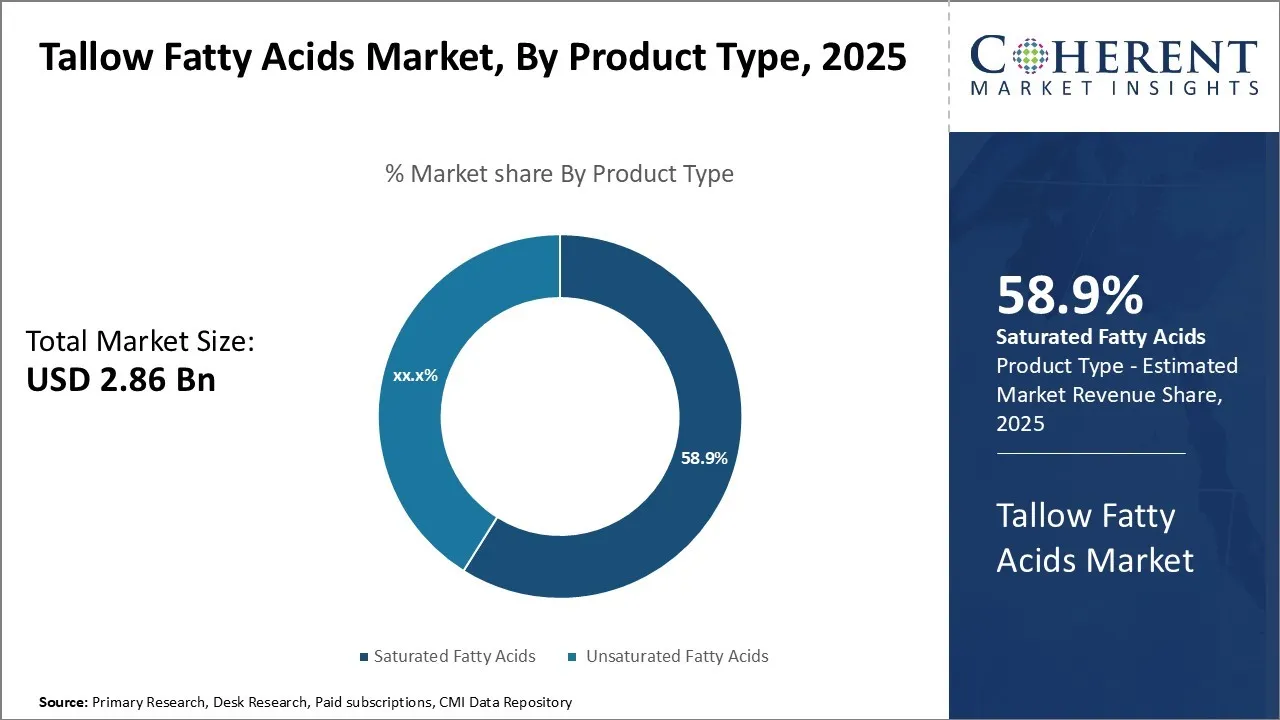
Tallow Fatty Acids Market Insights, By Product Type - Saturated fatty acids dominate due to widespread applications
In terms of product type, saturated fatty acids segment is estimated to contribute the highest market share of 59.9% in 2026, owing to its versatile properties and diverse applications across industries. Saturated fatty acids are more stable and have higher melting points compared to unsaturated fatty acids. This allows them to be used in the manufacturing of various solid/semi-solid end-products like soaps, cosmetics, coatings, and others without affecting their form or consistency. From an industry perspective, the dominance of saturated fatty acids in the tallow fatty acids market is well justified given their unmatched stability and performance characteristics. Their ability to maintain product integrity under varying temperature conditions makes them indispensable in formulations requiring consistent texture and durability.
Beef tallow, rendered beef fat, is experiencing a resurgence in popularity due to its versatility and nutrient profile. Beef tallow has a high smoke point of approximately 480°F (249°C), making it ideal for high-heat cooking methods such as deep frying and roasting. Notably, McDonald's famously used beef tallow to fry their French fries until 1990, contributing to their unique flavor.
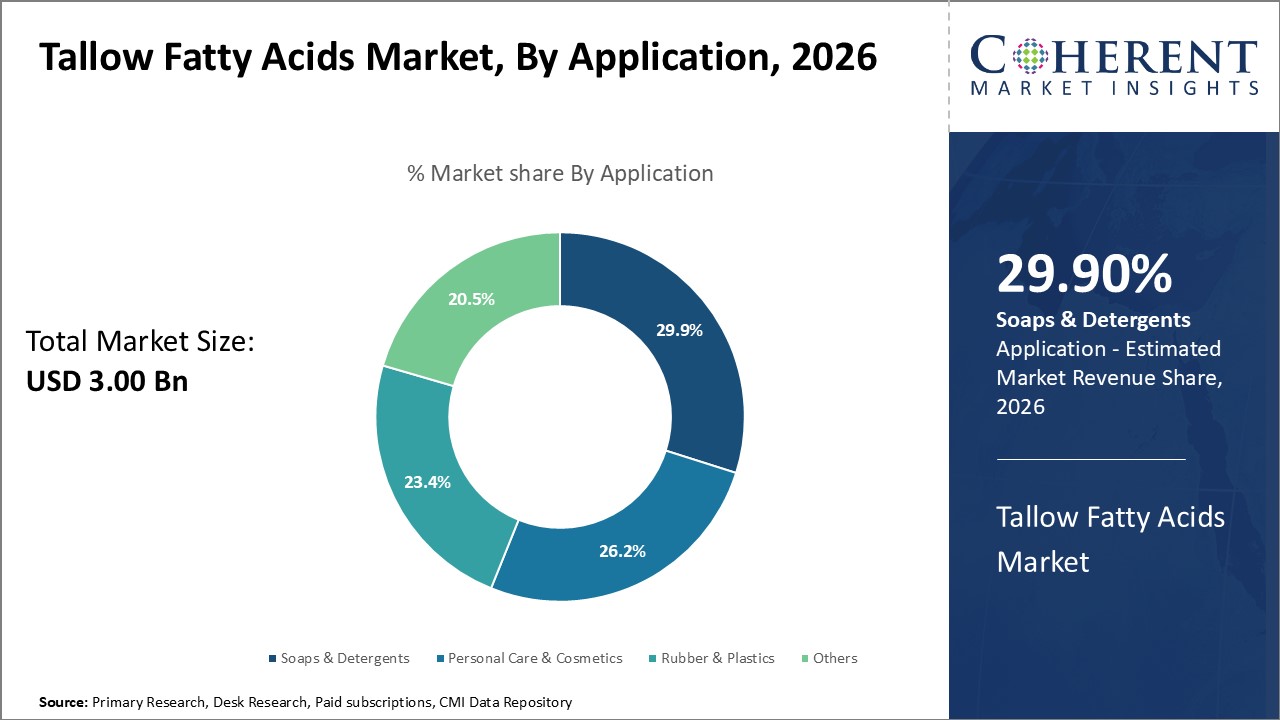
Tallow Fatty Acids Market Insights, By Application - Soaps & detergents dominate due to cleaning needs
In terms of application, soaps & detergents segment is estimated to contribute the highest market share of 29.9% in 2026. Tallow fatty acids are extensively used as an important raw material in the production of laundry soaps, toilet soaps, and various types of detergents. Saturated fatty acid chains have excellent cleaning properties due to their linear hydrophobic structure that can breakdown oil, dirt, and grease effectively. From a broader perspective, the dominance of soaps and detergents in the tallow fatty acids market is no surprise given the indispensable role these products play in daily hygiene and sanitation. The superior cleaning efficacy of tallow fatty acids, combined with their affordability and natural origin, makes them a preferred choice for manufacturers striving to meet both performance and sustainability goals. Despite rising interest in plant-based alternatives, the robustness and versatility of tallow fatty acids in breaking down stubborn soils ensure they remain a cornerstone ingredient, especially in markets where cost-effectiveness and product reliability cannot be compromised. This entrenched demand highlights the ongoing significance of tallow fatty acids within the cleaning products sector, underscoring their essential contribution to maintaining global cleanliness standards. Health y Sol Soap offers a range of tallow-based products, including their Grass Fed Tallow Bar Soap and Tallow & Honey Liquid Soap. These soaps are crafted using organic ingredients such as grass-fed beef tallow, organic extra virgin olive oil, and organic unrefined coconut oil.
Regional Insights
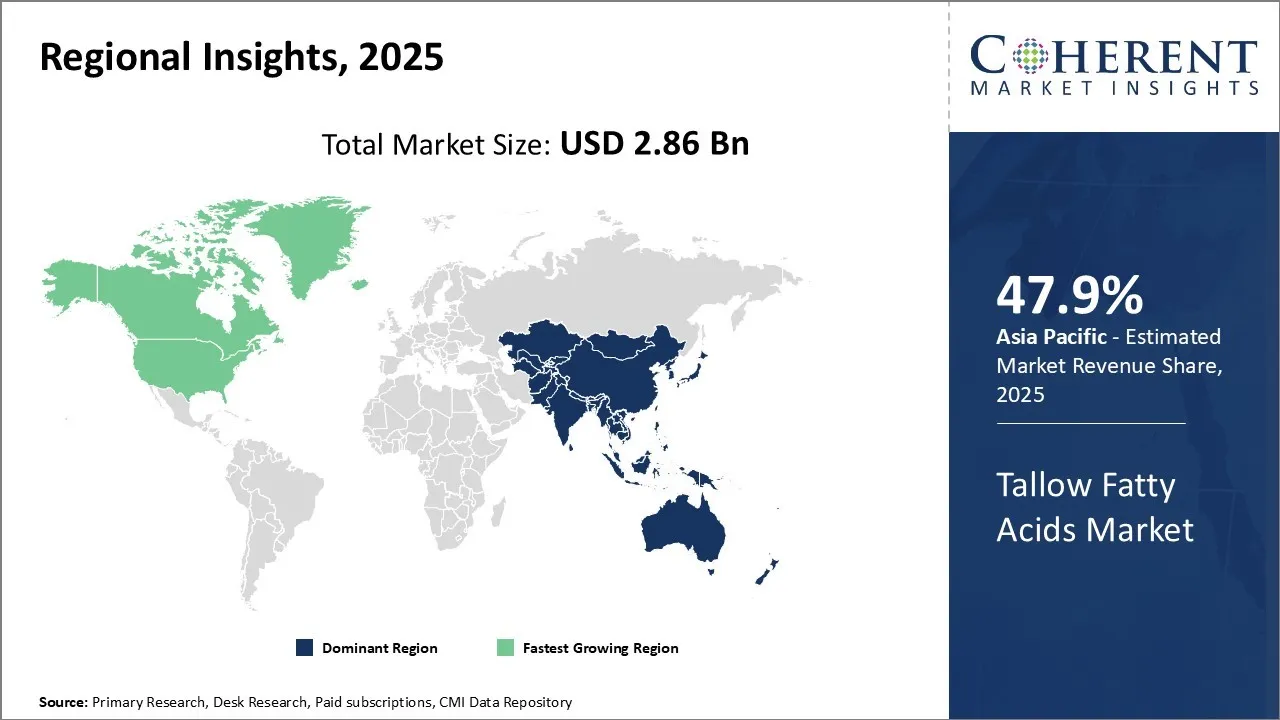
Global Tallow Fatty Acids Market Dominating Region: Asia Pacific Tallow Fatty Acids Market Trends
Asia Pacific is expected to dominate the market in 2026 with an estimated share of 47.9%. Asia Pacific’s dominance in the market can be attributed to strong demand from key end-use industries such as soaps and detergents. China tallow fatty acids market is set to witness substantial growth, fuelled by the country's expanding meat industry, which serves as a primary source for tallow. With rising consumer awareness of sustainable products, there is an increasing demand for tallow-derived ingredients in cosmetics and personal care products. This aligns with broader trends towards organic and sustainably sourced materials. Quality Standards and Demand for Natural Ingredients in Japan, tallow fatty acids market is characterized by high-quality standards and a strong focus on health and nutrition. This has led to a preference for tallow sourced from grass-fed animals. The personal care industry is a key segment for tallow fatty acids in Japan, with increased emphasis on natural ingredients. Idemitsu Kosan's advancement of its Sustainable Aviation Fuel (SAF) project at the Tokuyama petrochemical complex in Japan signifies a pivotal development in the Asia Pacific tallow fatty acids market. The company plans to produce 250,000 kiloliters of SAF annually by 2028 using Hydroprocessed Esters and Fatty Acids (HEFA) technology, which utilizes feedstocks such as tallow, waste cooking oil, soybean oil, and future sources like pongamia oil.
North America Tallow Fatty Acids Market Trends
North America exhibits the fastest growth, driven by a growing consumer class demanding high-quality personal care and household products. Rapid industrialization across the U.S. and Canada has fueled the need for improved productivity via performance-enhancing additives. Southeast Asian nations have seen drastic GDP gains from wide-scale manufacturing of chemicals, plastics, and consumer goods. This growth is largely influenced by increasing demand from industries such as soaps and detergents, personal care, rubber, and plastics. Major players in the Canada tallow fatty acids market include both domestic producers and international companies. Collaborations and partnerships are common as firms seek to enhance their product offerings and market reach.
United States Tallow Fatty Acids Market
The U.S. has a well-developed tallow fatty acid industry, with significant demand across industrial, household, and personal care applications. This demand is driven by a strong personal care industry, soap and detergent markets, and diverse industrial applications. Increasingly stringent environmental regulations and the sustainability movement push the industry toward bio-based products, though tallow remains a strong player in certain markets. The United States tallow fatty acids market is experiencing a resurgence, influenced by shifting consumer preferences and policy discussions. A notable development is the growing advocacy for beef tallow as a cooking fat alternative to seed oils. This trend is partly driven by public figures like Health and Human Services Secretary Robert F. Kennedy Jr., who has criticized seed oils and promoted beef tallow for frying foods. Such endorsements have led some fast-food chains to reconsider their cooking oil choices, with establishments like Steak 'n Shake reportedly transitioning to beef tallow for frying, further propelling the tallow fatty acid market demand.
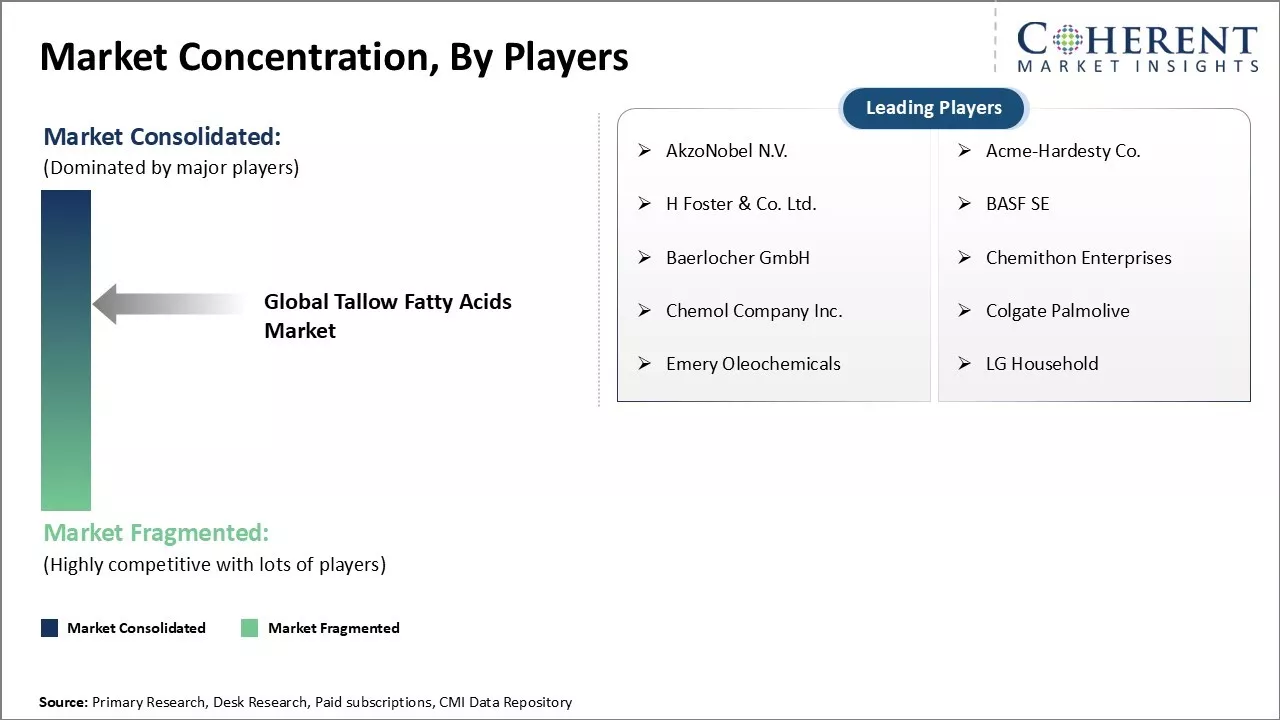
Market Concentration and Competitive Landscape
Recent Developments
- In October 2024, Fastmarkets announced to add Brazilian tallow prices to its international animal fats publication to address increasing demand for both export and domestic tallow pricing in Brazil.
- In August 2024, tallow fatty acid prices in China surged unexpectedly following Typhoon Gaemi, which disrupted logistics and temporarily halted operations at multiple industrial processing plants.
- In September 2024, Steak 'n Shake and Popeyes shifted toward using beef tallow in their frying oils, citing public demand for alternatives to seed oils. The move, championed by figures like Robert F. Kennedy Jr., reflects growing consumer interest in ancestral and animal-fat-based diets.
Market Report Scope
Tallow Fatty Acids Market Report Coverage
| Report Coverage | Details | ||
|---|---|---|---|
| Base Year: | 2025 | Market Size in 2026: | USD 3.00 Bn |
| Historical Data for: | 2020 To 2024 | Forecast Period: | 2026 To 2033 |
| Forecast Period 2026 to 2033 CAGR: | 4.8% | 2033 Value Projection: | USD 4.16 Bn |
| Geographies covered: |
| ||
| Segments covered: |
| ||
| Companies covered: | AkzoNobel N.V., Acme-Hardesty Co., H Foster & Co. Ltd., BASF SE, Baerlocher GmbH, Chemithon Enterprises, Chemol Company Inc., Colgate Palmolive, Emery Oleochemicals, and LG Household | ||
| Growth Drivers: |
| ||
| Restraints & Challenges: |
| ||
Tallow Fatty Acid Market Dynamics
Market Driver - Surging Demand for Soaps and Detergents
The global demand for soaps and detergents has been rising steadily over the past few years. With improving living standards and incomes globally, more people are adopting hygiene-oriented lifestyles. This increasing focus on personal hygiene and cleaning has led to higher consumption of products like soaps, laundry detergents and dish washing liquids. As per data from UN COMTRADE 2021, the global trade volumes of soaps and detergents rose by over 12% between 2020-2022.
Market Opportunity - Growing Personal Care and Cosmetics Industry
The market sees huge potential growth opportunities in the emerging markets for personal care and cosmetics applications. Countries like India, Brazil, China, and Southeast Asian nations are witnessing rising disposable incomes and growing expenditure on personal grooming and appearance among the expanding middle-class population. As personal grooming gains cultural significance, the sales of premium cosmetics targeted age Z and millennial spenders are increasing. A 2021 IMF report stated that the global middle-class population will double to 5 billion people by 2030, with over 90% residing in developing regions.
Key Takeaways from Analyst
- The market is expected to witness steady growth over the forecast period driven by favorable demands from soap and detergent industries. Tallow fatty acids find widespread application in the production of soaps, detergents, lubricants, biodiesel, and others owing to their cost effectiveness as compared to other vegetable and animal fats.
- China’s consumption of soap products remains significant, with per capita usage nearing 3.5 kg/year, significantly higher than several ASEAN counterparts. This underpins robust demand for tallow-derived fatty acids, especially in low-cost formulations used by domestic brands. Moreover, India’s reintroduction of beef tallow in certain industrial applications post-2021, following a period of regulatory tightening, has reignited local procurement networks, particularly in states with active rendering operations. However, such progress remains vulnerable to sociopolitical sensitivities and shifting legal frameworks around animal by-products.
- However, stringent environmental regulations around the world pertaining to wastewater discharge from soap and detergent manufacturing plants may negatively impact the market in the long run. Also, growing preference for plant-based feedstock over animal fats in developed nations is a major challenge. The Asia Pacific region, led by China, currently dominates the market and is likely to continue its dominance during the forecast years.
Market Segmentation
- Product Type Insights (Revenue, USD Bn, 2019 - 2033)
- Saturated Fatty Acids
- Unsaturated Fatty Acids
- Application Insights (Revenue, USD Bn, 2019 - 2033)
- Soaps & Detergents
- Personal Care & Cosmetics
- Rubber & Plastics
- Others
- Regional Insights (Revenue, USD Bn, 2019 - 2033)
- North America
- U.S.
- Canada
- Latin America
- Brazil
- Argentina
- Mexico
- Rest of Latin America
- Europe
- Germany
- U.K.
- Spain
- France
- Italy
- Russia
- Rest of Europe
- Asia Pacific
- China
- India
- Japan
- Australia
- South Korea
- ASEAN
- Rest of Asia Pacific
- Middle East
- GCC Countries
- Israel
- Rest of Middle East
- Africa
- South Africa
- North Africa
- Central Africa
- North America
- Key Players Insights (Revenue, USD Bn, 2021 - 2033)
- AkzoNobel N.V.
- Acme-Hardesty Co.
- H Foster & Co. Ltd.
- BASF SE
- Baerlocher GmbH
- Chemithon Enterprises
- Chemol Company Inc.
- Colgate Palmolive
- Emery Oleochemicals
- LG Household
Sources
Primary Research Interviews
- Procurement managers at oleochemical manufacturing units in India, Malaysia, and the Netherlands
- Senior executives from tallow processing divisions of multinational consumer goods companies
- Cosmetic chemists specializing in lipid-based formulations
- Supply chain officers from major restaurant chains experimenting with tallow-based cooking oils
Databases
- ScienceDirect – Peer-reviewed journals on animal fat derivatives, saturated fatty acids, and oleochemicals
- Google Scholar – Academic literature on tallow use in industrial and cosmetic applications
- PubMed – Biomedical research on topical and nutritional impacts of saturated fats
- FAOSTAT – Animal by-product production statistics and regional trade dynamics
Magazines & News Articles
- The Wall Street Journal – Coverage of U.S. restaurant chains switching to beef tallow (2024)
- Wired – Critical analysis of beef tallow use in skincare and dermatological concerns
- The Times (UK) – Reports on viral tallow skincare trends in the UK and consumer responses
- ChemAnalyst – Reports on tallow fatty acid price volatility post-typhoon disruptions in China
- Fortune India – Analysis of edible fat regulations and supply chain shifts in India
- Bloomberg – Global commodity news related to tallow exports and restrictions
Journals
- Journal of the American Oil Chemists' Society (JAOCS) – Research on tallow fatty acid composition and applications
- Industrial Crops and Products – Studies on oleochemical feedstocks including tallow derivatives
- International Journal of Cosmetic Science – Peer-reviewed articles on animal-fat-based skincare
- Renewable and Sustainable Energy Reviews – Insights into tallow use in biofuel and sustainability trade-offs
- Journal of Food Science – Investigations into sensory and functional roles of beef tallow in cooking
Newspapers & Reports
- The Hindu BusinessLine – Updates on India’s edible oil policy and import-export changes affecting tallow trade
- Financial Times – Analysis of global fat and oil markets, including by-product pricing
- The Economic Times – Reports on regulatory developments for animal-derived products in FMCG and pharma sectors
- Business Standard – Insights on local sourcing strategies and the ban of non-edible fats in industrial use
- South China Morning Post – Regional impact of natural disasters on China’s oleochemical and tallow industries
Associations
- FSSAI (Food Safety and Standards Authority of India) – Guidelines on use of animal fats in food and cosmetics
- American Oil Chemists’ Society (AOCS) – Technical documents and certification standards for fatty acid products
- European Food Safety Authority (EFSA) – Regulatory reviews on the safety of animal-derived fats in food and feed
- National Renderers Association (USA) – Market trends, sustainability reports, and export guidance
- Bureau of Indian Standards (BIS) – Specifications for industrial-grade tallow and fatty acids
Public Domain Sources
- Ministry of Commerce & Industry, India – Trade data and export-import policy regarding tallow products
- USDA Foreign Agricultural Service – GAIN reports on beef tallow production and export trends
- World Bank – Studies on sustainability and by-product reuse in animal processing industries
- European Commission – Directives on the use of animal by-products for non-human consumption
- National Institutes of Health (NIH) – Research summaries on topical effects of saturated animal fats
Proprietary Elements
- CMI Data Analytics Tool, Proprietary CMI Existing Repository of information for last 8 years
Get access to 250+ pages report
Every segment, forecast, competitor profile and data table behind the analysis above — available for instant download.
- ESOMAR Member
- ISO 9001:2015 Certified
- D-U-N-S Registered
- GDPR & CCPA Compliant
Missing comfort of reading report in your local language? Find your preferred language:
Transform your Strategy with Exclusive Trending Reports
Frequently Asked Questions
The Tallow Fatty Acids Market is estimated to be valued at USD 3.00 Bn in 2026, and is expected to reach USD 4.16 Bn by 2033.
The CAGR of the Tallow Fatty Acids Market is projected to be 4.8% from 2026 to 2033.
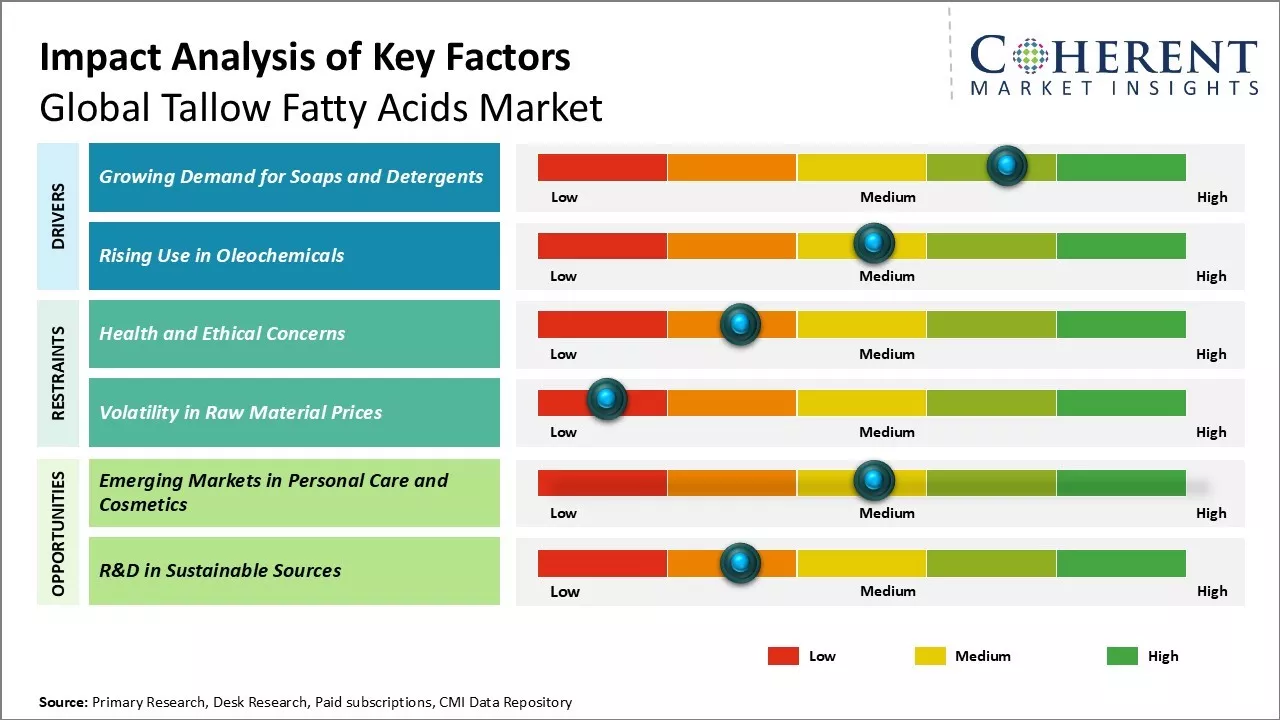
Growing demand for soaps and detergents and rising use in oleochemicals are the major factors driving the growth of the global tallow fatty acids industry.
Health and ethical concerns and volatility in raw material prices are the major factors hampering the growth of the global tallow fatty acids industry.
In terms of product type, saturated fatty acids segment is estimated to dominate the market revenue share in 2026.
AkzoNobel N.V., Acme-Hardesty Co., H Foster & Co. Ltd., BASF SE, Baerlocher GmbH, Chemithon Enterprises, Chemol Company Inc., Colgate Palmolive, Emery Oleochemicals, and LG Household are the major players.
Asia Pacific is expected to lead the global tallow fatty acids market in 2026.