

Telerehabilitation Services Market Size and Forecast – 2026 to 2033
The Telerehabilitation Services Market is anticipated to grow at a CAGR of 12.2% with USD 7.5 Bn in 2026 and is expected to reach USD 13.2 Bn in 2033. An aging population, rising chronic diseases, and growing adoption of digital health technologies drive the telerehabilitation services market. According to the WHO, by 2030, one in six people worldwide will be aged 60 years or older, with this population increasing from 1 Bn in 2020 to 1.4 Bn. By 2050, the number of people aged 60 and above is projected to reach 2.1 Bn.
Key Takeaways
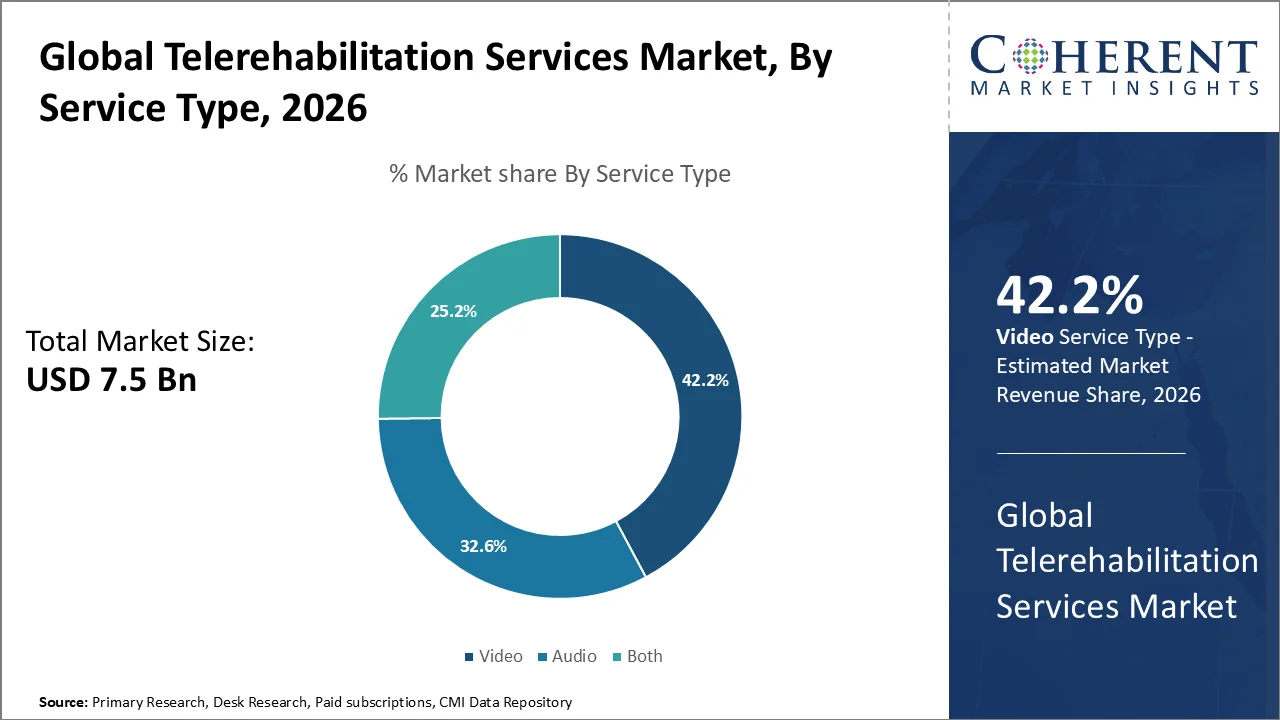
- Video hold the largest market share of 42.2% in 2026 owing to its rising demand for remote rehabilitation care. In May 2026, PharmEasy launched an AI-driven at-home rehabilitation and online physiotherapy service, expanding its digital healthcare portfolio to include recovery-focused care.
- Cardiovascular Physical Therapy expected to hold largest market share of 38.9% in 2026 owing to the need for long-term cardiac rehabilitation adherence. Cardiovascular diseases (CVDs) are the leading global cause of death, accounting for an estimated 17.9 million deaths annually.
- Hospitals acquired the largest market share of 43.1% in 2026 owing to its rising pressure to reduce hospital readmissions. The WHO projects a global shortage of 11 million health workers by 2030, primarily in low- and lower-middle-income countries, this shortfall further drives the demand for telerehabilitation services.
- North America is expected to acquire the dominant share of 43.8% in 2026 owing to the advanced digital health and telemedicine In 2021, 37.0% of U.S. adults reported using telemedicine within the previous 12 months.
Current Events and Their Impact on the Telerehabilitation Services Market
Current Event | Description and its Impact |
Extension of Medicare Telehealth Reimbursement (U.S., 2025) |
|
WHO Accessibility Standards Driving Inclusive Telerehabilitation (2025) |
|
Segmental Insights
- Current Industry Events of 2026
- Market Size Estimation
- Regional Breakdown
- Competitive Landscape
- Customer Intelligence
- Segmental Analysis
- Pricing Analysis
- Key Market Drivers, Challenges & Future Trends
- Customized Insights Section
Why is Video Acquiring the Largest Market Share?
Video hold the largest market share of 42.2% in 2026. Rising demand for remote rehabilitation care drives the video segment in the telerehabilitation services market, especially for patients recovering from stroke, orthopedic surgery, and cardiovascular conditions. Approximately one in four adults aged over 25 years will experience a stroke during their lifetime, with more than 60% of strokes occurring in individuals younger than 70 years. Healthcare providers increasingly adopt digital health platforms, while improved internet connectivity and widespread smartphone use enable real-time video interactions between patients and therapists. Providers focus on reducing hospital visits and costs, and patients prefer home-based therapy, which further boosts adoption.
Cardiovascular Physical Therapy expected to hold largest market share
Cardiovascular Physical Therapy expected to hold largest market share of 38.9% in 2026 owing to the aging population and high-risk patient groups. Rising heart disease cases and the growing need for long-term cardiac rehabilitation drive the cardiovascular physical therapy segment in the telerehabilitation services market. According to the National Institutes of Health, between 2025 and 2050, cardiovascular disease prevalence is projected to increase by 90.0%, with crude mortality rising by 73.4% and crude DALYs by 54.7%. Healthcare providers use video-based platforms to support recovery after myocardial infarction, manage heart failure, and deliver preventive care. Wearable devices enable continuous remote monitoring of vital signs, while advanced digital health infrastructure improves access to services. Patients choose home-based rehabilitation for convenience and safety, and hospitals adopt telerehabilitation to enhance adherence, reduce readmissions, and maintain continuous cardiac care delivery. For instance, in March 2026, GAIA, a pioneer in evidence-based digital therapeutics, and Daiichi Sankyo Europe have announced an exclusive partnership to commercialize Lipodia following regulatory approval. The digital therapeutic will support adults with hypercholesterolemia. The collaboration combines GAIA’s expertise in clinically validated non-pharmacological interventions with Daiichi Sankyo’s strength in cardiovascular risk management.
Which End User segment dominates the market?
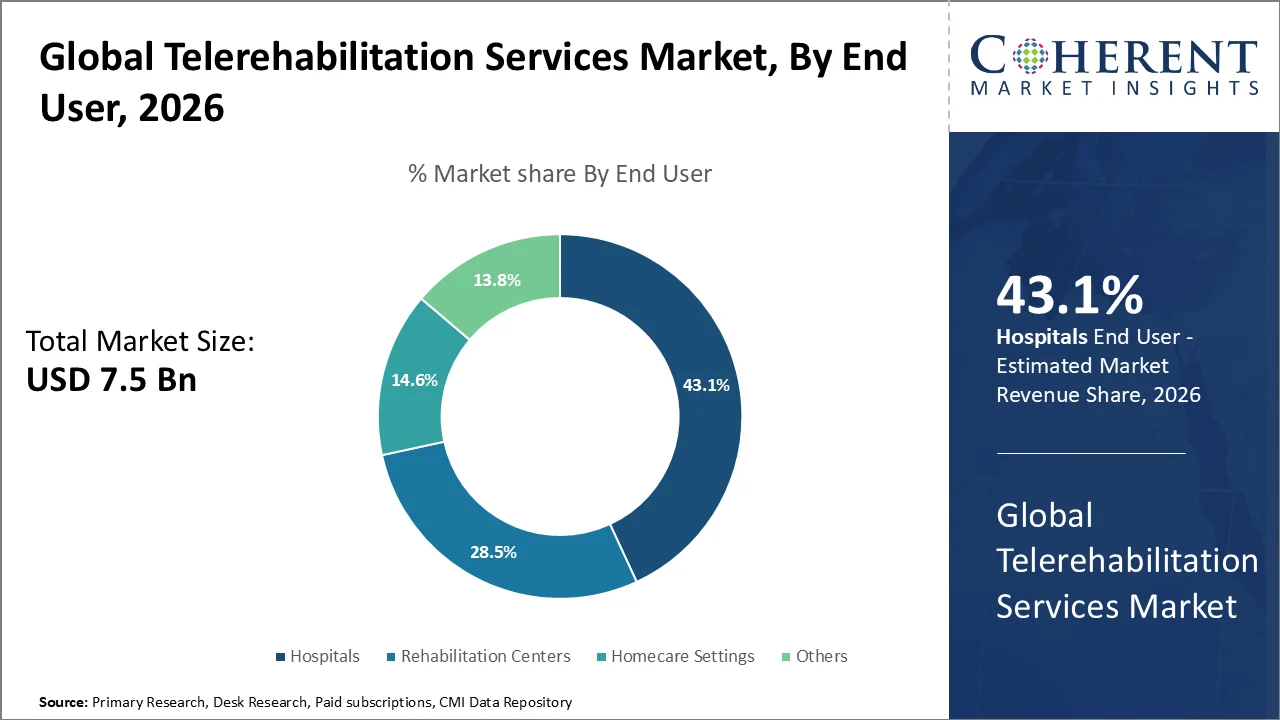
Hospitals acquired the largest market share of 43.1% in 2026. Hospitals adopt video-based platforms to improve post-acute care and reduce readmissions in the telerehabilitation services market. They integrate telehealth systems into existing workflows to extend rehabilitation beyond patient discharge. Rising patient volumes and limited inpatient rehabilitation capacity push hospitals to implement remote therapy solutions. Outpatient care patient volumes are projected to increase by 18% over the next decade. Healthcare providers prioritize cost efficiency, better resource utilization, and improved patient outcomes. Hospitals also leverage digital transformation initiatives, benefit from supportive reimbursement policies, and respond to growing demand for convenient, home-based rehabilitation services that strengthen continuity of care.
Telerehabilitation Services Market Trends
- Rising demand for video-based telerehabilitation services improves access to remote care, enhances patient engagement, and supports continuity of rehabilitation across clinical settings. The adoption of telehealth accelerated significantly following the COVID-19 pandemic. According to the U.S. Centers for Medicare & Medicaid Services (CMS), Medicare telehealth utilization increased sharply, with approximately 28 million Medicare beneficiaries receiving telehealth services during the first year of the pandemic (2020). This expansion demonstrated the scalability of remote healthcare delivery models, including rehabilitation services.
- Aging global population and rising prevalence of chronic diseases such as cardiovascular, neurological, and orthopedic conditions drive long-term demand for telerehabilitation services worldwide. According to the United Nations Department of Economic and Social Affairs (UN DESA), the global population aged 65 years and older is projected to increase from 761 million in 2021 to 1.6 billion by 2050, creating substantial demand for long-term care, chronic disease management, and rehabilitation services.
- Supportive government initiatives and reimbursement policies for telehealth services expand patient access to remote rehabilitation. In the United States, CMS expanded Medicare telehealth coverage, allowing beneficiaries to access a broader range of virtual healthcare services. These policy changes have supported the integration of telehealth into routine care delivery, including rehabilitation-related services.
Regional Insights
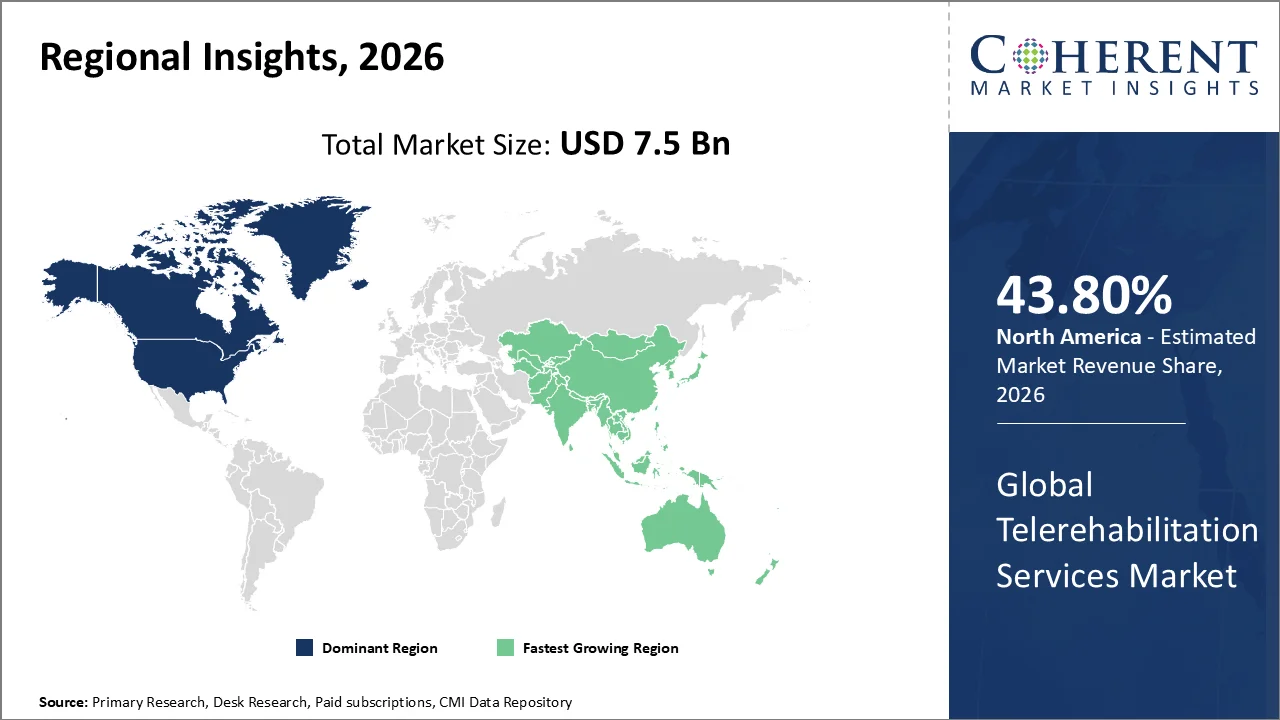
North America dominates owing to shortage of rehabilitation professionals in some regions
North America is expected to acquire the dominant share of 43.80% in 2026. North America leads the telerehabilitation services market because it maintains advanced digital healthcare infrastructure and widely adopts telehealth technologies. High rates of chronic and musculoskeletal conditions drive the need for long-term rehabilitation. Musculoskeletal (MSK) conditions, including arthritis, low back pain, and neck pain, affect more than half of adults in the United States. Healthcare providers integrate remote rehabilitation into routine care to improve patient outcomes and reduce readmissions. Strong reimbursement policies support service uptake, while increasing use of wearable devices and rising investment in digital health innovation strengthen the market. Patients also prefer convenient home-based care, which further accelerates telerehabilitation adoption across the region. For instance, in May 2025, VSee Health, Inc., a digital health solutions provider, launched Project MAMA (Mom’s AI for Maternity Aid), a telehealth initiative aimed at reducing high maternal mortality rates in rural and remote communities of Zamboanga Sibugay, Philippines.
Asia Pacific Telerehabilitation Services Market Trends
Rising cases of chronic diseases and a rapidly growing elderly population drive the Asia Pacific telerehabilitation services market. Patients increasingly demand remote healthcare solutions, while expanding internet connectivity and widespread smartphone use improve access across urban and rural regions. Governments actively support digital health and rehabilitation initiatives, boosting adoption. A shortage of skilled rehabilitation professionals and the need for affordable care encourage the use of virtual platforms. Meanwhile, advancements in wearable devices and AI-based tools strengthen patient monitoring and treatment outcomes. For instance, Sakra World Hospital, a joint venture between Secom and Toyota Tsusho (Japan), has launched Karnataka’s first world-class robotic-assisted neuro-rehabilitation center in Bangalore.
United States Telerehabilitation Services Market Trends
Healthcare providers in the United States are driving the telerehabilitation services market by responding to growing demand for convenient and accessible rehabilitation care, particularly for patients with mobility limitations. In the United States, approximately 76% of adults have at least one chronic condition, while more than half (51%) are affected by multiple chronic diseases. They are adopting remote therapy to address the rising incidence of chronic diseases and post-surgical recovery needs. Healthcare systems are leveraging advanced digital health technologies, widespread smartphone and internet use, and supportive reimbursement policies.
Japan Telerehabilitation Services Market Trends
Japan’s aging population drives higher demand for long-term rehabilitation care due to the growing burden of chronic diseases. Demand for home-based healthcare increases, while advanced digital infrastructure and widespread internet access accelerate adoption of telerehabilitation services. In addition, advancements in wearable devices and AI-based monitoring enhance treatment effectiveness and improve patient engagement.
Who are the Major Companies in Telerehabilitation Services Industry
Some of the major key players in Telerehabilitation Services are MTI America, UnaliWear Inc., Virtual Physical Therapists, Conversa Health, Rehab Management Pty Ltd, MindStreet Inc., MedRisk, NeoRehab, Global Outreach TeleRehabilitation Services, Inc., and Empatha
Key News
- In October 2024, Chief Minister Shri Bhupendra Patel inaugurated and laid the foundation stones for several development projects, including a tele-rehabilitation center, an audiology and speech-language pathology college, the Gota vegetable market, a solid waste management project, a water supply project, pink toilets, libraries, and various ponds and gardens.
Market Report Scope
Telerehabilitation Services Market Report Coverage
| Report Coverage | Details | ||
|---|---|---|---|
| Base Year: | 2025 | Market Size in 2026: | USD 7.5 Bn |
| Historical Data for: | 2020 To 2024 | Forecast Period: | 2026 To 2033 |
| Forecast Period 2026 to 2033 CAGR: | 12.2% | 2033 Value Projection: | USD 13.2 Bn |
| Geographies covered: |
| ||
| Segments covered: |
| ||
| Companies covered: | MTI America, UnaliWear Inc., Virtual Physical Therapists, Conversa Health, Rehab Management Pty Ltd, MindStreet Inc., MedRisk, NeoRehab, Global Outreach TeleRehabilitation Services, Inc., and Empatha | ||
Analyst Opinion
- Telerehabilitation services are not expanding due to convenience alone, but because healthcare systems are structurally unable to meet long-term rehabilitation demand through in-person care. Globally, neurological conditions alone affect over 3 billion people, and stroke remains a leading cause of long-term disability, with more than 12 million new strokes occurring each year—most requiring extended rehabilitation. This creates sustained pressure on rehabilitation systems that cannot scale physically.
- In countries like Japan, where over 29% of the population is aged 65 and above, post-acute rehabilitation demand is disproportionately high, especially for conditions such as stroke, osteoarthritis, and Parkinson’s disease. In such settings, hospital-based physiotherapy capacity is consistently outstripped, forcing healthcare providers to shift care delivery into home-based and hybrid models.
- Clinical studies reinforce the value proposition of telerehabilitation. Research in post-stroke recovery shows that virtual rehabilitation can achieve comparable functional outcomes to in-clinic therapy for motor and mobility improvement, particularly when combined with wearable motion tracking and AI-assisted feedback systems. Platforms such as remote physiotherapy programs used in leading Japanese hospitals demonstrate that adherence improves when therapy is delivered at home, especially among elderly patients who face mobility constraints.
- The adoption of telerehabilitation is therefore not demand-driven in a traditional sense—it is necessity-driven. The combination of rising disability burden, constrained clinical workforce capacity, and validated digital rehabilitation outcomes is structurally embedding remote rehabilitation as a permanent component of care delivery rather than an optional alternative.
Speak to the analyst
Want personalized insights?
Take the findings above to one of our principal consultants, or have the report rebuilt around the segments, geographies and competitors you actually track.
Market Segmentation
- By Service Type (Revenue, USD Bn, 2021-2033)
- Audio
- Video
- Both
- By Application (Revenue, USD Bn, 2021-2033)
- Cardiovascular Physical Therapy
- Orthopedic Physical Therapy
- Neurological Physical Therapy
- Pressure Ulcers
- Cognitive Rehabilitation
- Vocational Rehabilitation
- Others
- By End User (Revenue, USD Bn, 2021-2033)
- Hospitals
- Rehabilitation Centers
- Homecare Settings
- Others (Long Term care Centers, Specialty Clinics, etc.)
- By Region (Revenue, USD Bn, 2021-2033)
- North America
- U.S.
- Canada
- Latin America
- Brazil
- Mexico
- Argentina
- Rest of Latin America
- Europe
- Germany
- U.K.
- France
- Italy
- Spain
- Russia
- Rest of Europe
- Asia Pacific
- China
- India
- Japan
- Australia
- South Korea
- ASEAN
- Rest of Asia Pacific
- Middle East
- GCC
- Israel
- Rest of Middle East
- Africa
- South Africa
- Central Africa
- North Africa
- North America
Sources
Primary Research interviews
- Interviews with physiotherapists, rehabilitation physicians, neurologists, and hospital-based telehealth coordinators involved in post-acute and chronic care management
- Discussions with digital health platform developers and providers of remote monitoring and wearable rehabilitation technologies
- Insights from healthcare administrators managing rehabilitation units in acute care and long-term care facilities
Databases
- PubMed
- Cochrane Library
- World Health Organization (WHO) Global Health Observatory
- OECD Health Statistics
- World Bank Health Nutrition and Population Data
- National health and eHealth repositories (e.g., Japan Ministry of Health, Labour and Welfare data portals)
Magazines
- The Lancet Digital Health
- Nature Medicine
- Healthcare IT News
- MedTech Dive
- mHealth Intelligence
Journals
- Journal of Telemedicine and Telecare
- Archives of Physical Medicine and Rehabilitation
- Neurorehabilitation and Neural Repair
- IEEE Journal of Biomedical and Health Informatics
- Journal of Rehabilitation Medicine
Newspapers
- The Japan Times
- Nikkei Asia
- The Guardian (Health section)
- Financial Times (Health & Technology coverage)
- The Wall Street Journal (Health & Science coverage)
Associations
- World Confederation for Physical Therapy (WCPT)
- American Telemedicine Association (ATA)
- International Society of Physical and Rehabilitation Medicine (ISPRM)
- Japan Association of Rehabilitation Medicine
- European Society of Physical and Rehabilitation Medicine (ESPRM)
Public Domain sources
- World Health Organization (WHO) reports and fact sheets
- Government health ministry publications and national rehabilitation guidelines
- Open-access clinical trial registries (e.g., ClinicalTrials.gov)
- Academic institutional research repositories
- United Nations health and ageing reports
Proprietary Elements
- CMI Data Analytics Tool
- Proprietary CMI Existing Repository of information for last 10 years
Get access to 250+ pages report
Every segment, forecast, competitor profile and data table behind the analysis above — available for instant download.
- ESOMAR Member
- ISO 9001:2015 Certified
- D-U-N-S Registered
- GDPR & CCPA Compliant
Missing comfort of reading report in your local language? Find your preferred language:
Transform your Strategy with Exclusive Trending Reports
Frequently Asked Questions
The Telerehabilitation Services Market is anticipated to grow at a CAGR of 12.2% with USD 7.5 Bn in 2026 and is expected to reach USD 13.2 Bn in 2033.
Factors such as low price of physical therapy and telerehabilitation solutions as well as launches and approvals of novel telerehabilitation solutions are expected to drive the market growth during the forecast period.
Video segment is expected to hold a major market share during the forecast period.
The major factors hampering growth of the market include limited awareness and lack of skilled professionals in developing countries.
Major players operating in the market are MTI America, UnaliWear Inc., Virtual Physical Therapists, Conversa Health, Rehab Management Pty Ltd, MindStreet Inc., MedRisk, NeoRehab, Global Outreach TeleRehabilitation Services, Inc., and Empatha.