

Thermoform Packaging Market Size and Forecast — 2026 - 2033
The Global Thermoform Packaging Market size is estimated to be valued at USD 12.5 billion in 2026 and is expected to reach USD 23.2 billion by 2033, exhibiting a compound annual growth rate (CAGR) of 9.2% from 2026 to 2033.
Overview
The thermoform packaging products market is driven by rising demand for packaged and ready-to-eat food, supported by changing lifestyles and growth of e-retail and food delivery services. Increasing use in the food & beverage sector, which holds over half of market share, significantly boosts demand. Additionally, expansion of the pharmaceutical industry and preference for blister packaging due to superior protection and hygiene further fuel growth. Cost-effectiveness, lightweight nature, and high product visibility make thermoformed packaging attractive. Moreover, innovations such as modified atmosphere packaging (MAP) and growing demand for single-serve, convenience packaging continue to accelerate market expansion globally.
Key Takeaways
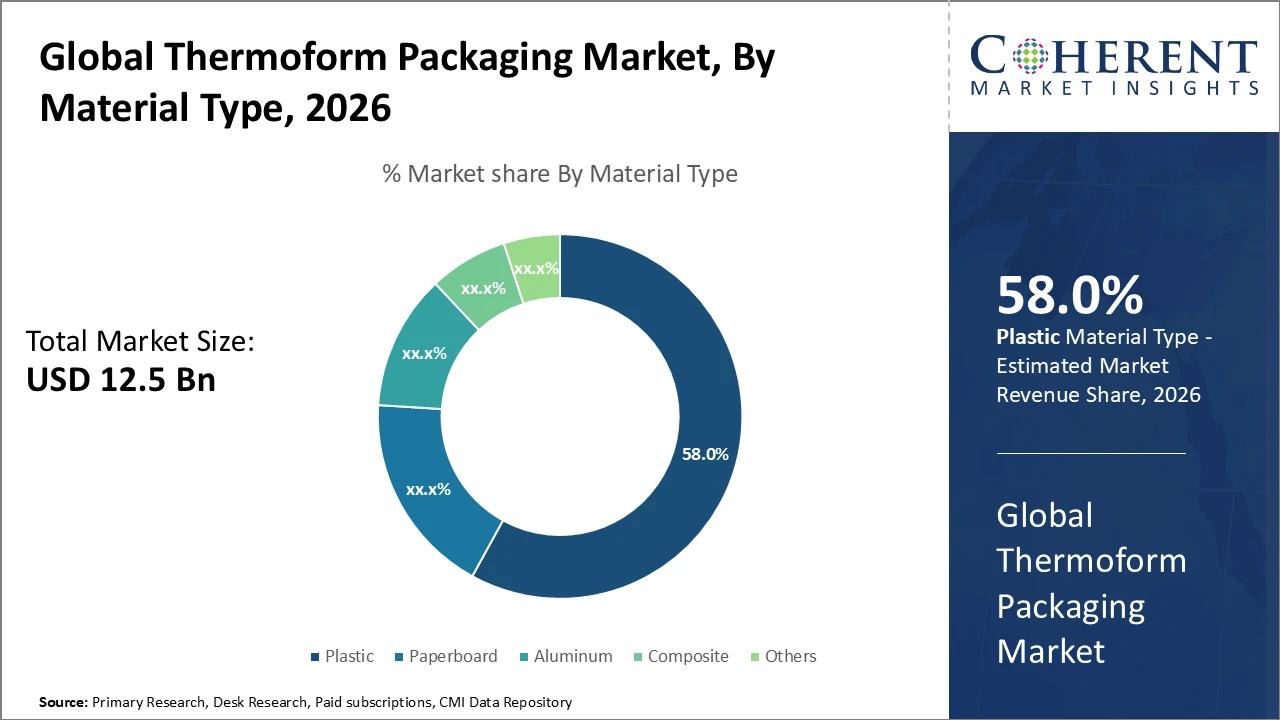
Plastic-based thermoform packaging dominates with 58% market share, supported by versatility and cost efficiency; however, the fastest growth is observed in composite materials due to their enhanced barrier properties and sustainability push.
Food & Beverage packaging leads with a 47% share, driven by convenience food consumption patterns; pharmaceutical packaging is rapidly expanding, benefitting from innovations in protective and sterile packaging solutions.
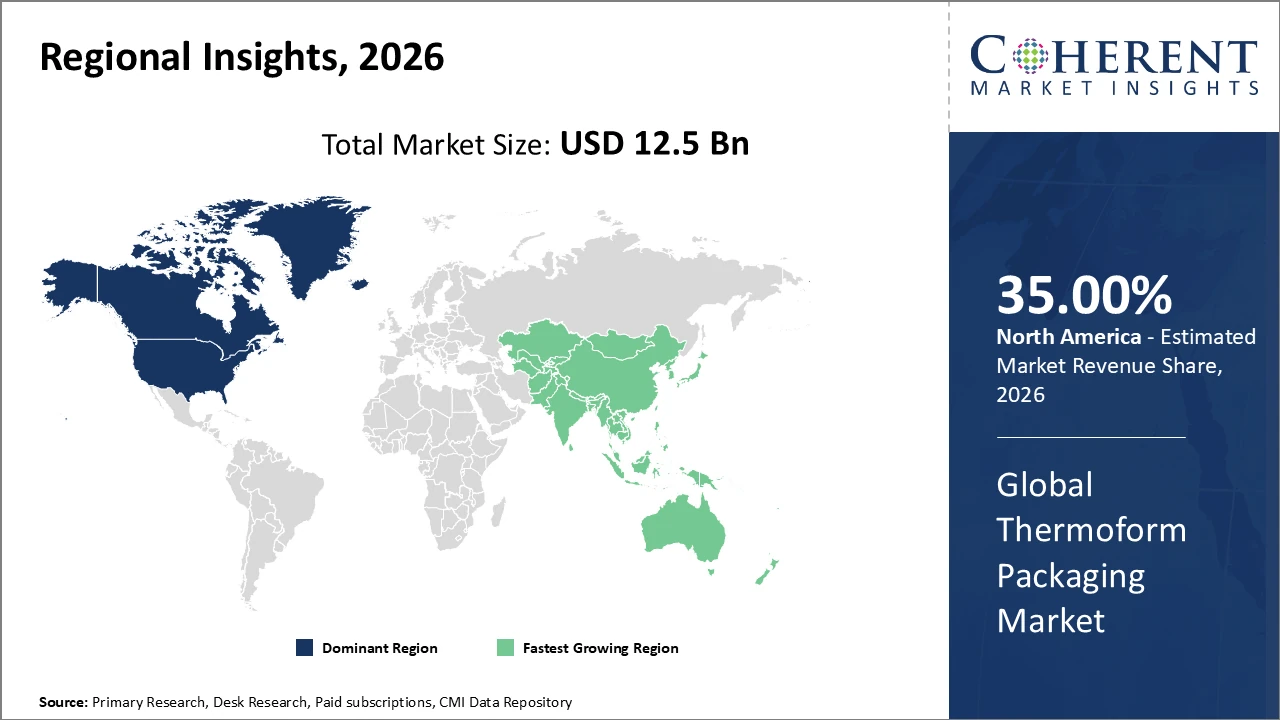
North America remains a key region controlling over 35% of the thermoform packaging market share, due to established industry presence and stringent regulatory standards encouraging sustainable solutions.
Asia Pacific is the fastest-growing region with an expected CAGR surpassing 11%, propelled by expanding manufacturing infrastructure, rising disposable incomes, and shifting consumer preferences towards packaged foods and healthcare products.
Thermoform Packaging Market Segmentation Analysis
Thermoform Packaging Market Insights, By Material Type
Plastic subsegment dominates the market share with approximately 58%, driven by cost-effectiveness, flexibility, and wide usage in food and pharmaceutical packaging. It provides strong moisture and oxygen barriers, ensuring longer product shelf life. The fastest-growing subsegment is composite materials, combining plastics with biodegradable layers or aluminum for improved sustainability and protection. Paperboard packaging serves niche applications requiring lightweight and recyclable solutions. Aluminum is used where high barrier protection against light and gases is essential. The others category includes bio-based polymers and innovative composites, which are gaining attention for specialized applications due to increasing environmental concerns and technological advancements in sustainable packaging.
Thermoform Packaging Market Insights, By Application
Food & Beverage packaging holds the largest market share at around 47%, driven by rising demand for convenience foods, hygiene, and extended shelf life. Growth is supported by increasing consumption of ready-to-eat meals and retail-ready packaging formats. Pharmaceutical packaging is the fastest-growing segment, fueled by strict regulations and innovations like advanced blister packs with freshness indicators. Consumer goods packaging shows steady growth, particularly in cosmetics and personal care requiring attractive and protective designs. Electronics packaging remains stable, requiring anti-static and durable solutions.
Thermoform Packaging Market Insights, By End User Industry
The food processing industry holds the largest share due to strong demand for packaging of fresh and processed foods, driven by convenience and safety needs. Growth is supported by strict food safety regulations and continuous innovation in packaging formats. Healthcare is the fastest-growing segment, fueled by rising demand for pharmaceutical and medical device packaging, along with increased focus on sterile solutions and traceability. Personal care and cosmetics show steady growth through visually appealing and functional packaging. Aerospace and automotive sectors use thermoform packaging for protective transport, while retail emphasizes attractive and reusable packaging.
Thermoform Packaging Market Trends
The thermoform packaging market is increasingly driven by the adoption of sustainable packaging solutions, supported by strong regulatory pressure in Europe and North America encouraging environmentally responsible materials.
Development of biodegradable thermoform materials, such as polylactic acid blends, has accelerated, with around an 18% increase in new product launches recorded in 2025.
Digitalization and smart packaging integration are emerging as key trends, including IoT-enabled freshness indicators and anti-counterfeiting sensors to enhance product safety and consumer engagement.
North America leads in early adoption of smart packaging technologies, with such features incorporated into over 10% of product lines by 2026.
Thermoform Packaging Market Insights, By Geography
North America Thermoform Packaging Market Analysis and Trends
In North America, the thermoform packaging market maintains strong dominance with a share of 35%, due to a well-established packaging ecosystem, presence of leading companies, and strict regulatory frameworks supporting sustainable and safe packaging practices. The United States accounts for prominent regional market share, driven by robust demand from food and beverage as well as pharmaceutical industries. Significant investments in manufacturing capacity and research and development, particularly in states like Ohio and Michigan, have accelerated innovation. These efforts have led to the introduction of advanced thermoform packaging solutions, including smart packaging technologies and environmentally sustainable materials, strengthening the region’s competitive position globally.
Asia Pacific Thermoform Packaging Market Analysis and Trends
Asia Pacific is the fastest-growing thermoform packaging market, with a projected CAGR exceeding 11%, driven by rapid urbanization, rising disposable incomes, and expanding food processing industries in countries such as China and India. Government initiatives like “Make in India” and “China Packaging 2030” have encouraged domestic manufacturers to adopt advanced thermoforming technologies. Additionally, international companies are establishing joint ventures and local production facilities, boosting technological adoption and market capacity. Rising demand for packaged foods, pharmaceuticals, and personal care products further supports growth. Combined, these factors are expanding both the market size and regional industry share, positioning Asia Pacific as a key growth hub.
Thermoform Packaging Market Outlook for Key Countries
USA Thermoform Packaging Market Analysis and Trends
The USA represents the largest single-country market for thermoform packaging, driven by strong demand in food service and pharmaceutical sectors. In 2025, it accounted for approximately 28% of global market revenue. Leading companies, including Amcor PLC and Sealed Air Corporation, have established significant operations in the country, focusing on innovations such as compostable material blends and smart packaging solutions. Regulatory frameworks, including FDA packaging safety guidelines and EPA initiatives on recyclability, further encourage product development and adoption. Additionally, the rapid growth of e-commerce fuels the need for lightweight, durable, and protective packaging, reinforcing the United States’ dominant position in the global market.
Germany Thermoform Packaging Market Analysis and Trends
Germany is the leading thermoform packaging market in Europe, holding approximately 15% of the regional share. Strong demand stems from its food processing, automotive, and healthcare industries, which require advanced packaging solutions. Government regulations on packaging waste and circular economy initiatives have accelerated the adoption of sustainable thermoform materials. Companies such as Printpack, Inc. and Bemis have expanded manufacturing operations in Germany to serve both domestic and export markets. Innovation centers in Bavaria and Baden-Württemberg focus on integrating biodegradable polymers and automated thermoforming technologies, driving efficiency and sustainability. These efforts help Germany maintain a competitive edge in the European market.
Analyst Opinion
Increasing production capacity in key regions is a pivotal supply-side driver. In 2025, major manufacturing hubs in Asia Pacific expanded thermoforming lines by over 15%, boosting output volumes and enabling players to meet growing demand, while providing pricing leverage over substitute packaging forms.
Demand-side trends show consumers shifting toward sustainable packaging. In 2024, biodegradable and recyclable thermoform packaging demand rose by 20% in North America, supported by regulatory policies promoting eco-friendly materials in sectors like food service.
Nano-scale innovations in materials and machinery improved efficiency, reducing raw material consumption per unit by 12% by mid-2026, supporting revenue while maintaining product integrity, especially in pharmaceutical applications.
Import-export dynamics influence regional shares. In 2026, Europe’s thermoform packaging imports from Asia increased by 10% due to competitive pricing and quality, prompting companies to focus on partnerships and local presence for better market penetration.
- Current Industry Events of 2026
- Market Size Estimation
- Regional Breakdown
- Competitive Landscape
- Customer Intelligence
- Segmental Analysis
- Pricing Analysis
- Key Market Drivers, Challenges & Future Trends
- Customized Insights Section
Market Scope
| Report Coverage | Details | ||
|---|---|---|---|
| Base Year: | 2025 | Market Size in 2026: | USD 12.5 billion |
| Historical Data for: | 2020 To 2024 | Forecast Period: | 2026 To 2033 |
| Forecast Period 2026 to 2033 CAGR: | 9.2% | 2033 Value Projection: | USD 23.2 billion |
| Geographies covered: |
| ||
| Segments covered: |
| ||
| Companies covered: | Amcor PLC, Sealed Air Corporation, Bemis Company Inc., Sigma Plastics Group, Multivac Group, Printpack Inc., Winkpak Ltd., Berry Global Inc., Constantia Flexibles, Nissha Co. Ltd. | ||
| Growth Drivers: |
| ||
Thermoform Packaging Market Growth Factors
The rising demand for ready-to-eat and convenience foods, particularly in urban areas, has significantly driven thermoform packaging growth. E-commerce and direct-to-consumer sales further boost the need for durable, lightweight packaging. In 2026, food packaging represented nearly half of market revenue, supported by an 8% annual rise in packaged food consumption globally. Regulatory mandates promoting recyclable and biodegradable materials, especially in Europe since 2024, increased sustainable thermoform product revenue by 12%. Technological advancements, including 3D printing-assisted thermoforming and IoT integration, expanded pharmaceutical packaging market share by over 10% in 2025. Cost-efficient manufacturing in Asia Pacific reduced unit costs by 7% in 2026.
Thermoform Packaging Market Development
In October 2025, Amcor introduced AmSecure thermoformed trays and rollstock as part of its healthcare portfolio. This APET-based solution is designed to match the performance of PETG while maintaining clarity, strength, and sterilization compatibility. It also offers a more cost-effective and sustainable alternative to PETG.
Key Players
Leading Companies of the Market
Amcor PLC
Sealed Air Corporation
Berry Global Inc.
Nissha Co. Ltd.
Winkpad Ltd.
Bemis Company Inc.
Printpack Inc.
Sigma Platics Group
Multivac Group
Constantia Flexibles
Several leading companies have strategically expanded their thermoforming capacities through acquisitions and investments in automation technology. Amcor’s acquisition of Bemis in 2024 enhanced its market share and innovation capabilities, broadening its product portfolio with a focus on sustainable packaging solutions. Similarly, Sealed Air Corporation’s investment in smart packaging technologies, including IoT-enabled freshness indicators and anti-counterfeiting features, contributed to a 16% increase in market revenue in North America during 2025, reinforcing its competitive position and enabling the company to meet rising demand for advanced, high-tech packaging solutions across multiple sectors.
Thermoform Packaging Market Future Outlook
The thermoform packaging market is expected to experience robust growth in the coming years, driven by increasing demand for sustainable, lightweight, and customizable packaging solutions across food, pharmaceutical, and consumer goods sectors. Innovations in smart packaging, including IoT-enabled monitoring and anti-counterfeiting technologies, will expand applications in healthcare and high-value products. Rising urbanization, e-commerce growth, and changing consumer preferences toward convenience and ready-to-eat products will further support market expansion. Additionally, regulatory pressures promoting recyclable and biodegradable materials, combined with advancements in automation and material efficiency, are likely to enhance profitability and adoption, positioning the market for strong long-term growth globally.
Thermoform Packaging Market Historical Analysis
The thermoform packaging market has witnessed steady growth over the past decade, driven primarily by the expanding food and beverage, pharmaceutical, and consumer goods sectors. Rising demand for protective, lightweight, and visually appealing packaging solutions fueled adoption of plastic-based thermoform products, which dominated historical market shares. Regulatory emphasis on hygiene and product safety, especially in North America and Europe, encouraged innovation in barrier and sterile packaging. Early adoption of automation and cost-efficient manufacturing techniques improved production capacity and profitability. Additionally, gradual awareness of environmental sustainability prompted initial shifts toward recyclable and biodegradable materials, laying the foundation for the market’s current focus on eco-friendly packaging solutions.
Sources
Primary Research Interviews:
Executives, product managers, and operations heads at packaging, manufacturing, and logistics companies
R&D managers, sustainability officers, and production supervisors overseeing thermoform packaging lines
Technology providers of biodegradable materials, smart packaging solutions, and automated thermoforming equipment
Magazines:
Packaging World – Advances in Thermoform Packaging Technologies and Sustainability
Food & Beverage Packaging – Trends in Ready-to-Eat and Retail Packaging Solutions
Packaging Digest – Innovations in Smart and Biodegradable Thermoform Materials
Plastics News – Developments in Plastic and Composite Thermoforming
Journals:
Journal of Packaging Technology and Research – Thermoform Applications in Food and Pharmaceuticals
International Journal of Advanced Manufacturing Technology – Automation and Efficiency in Thermoforming
Packaging Technology and Science – Smart Packaging, IoT Integration, and Material Innovations
Journal of Industrial Ecology – Sustainable Packaging Materials and Circular Economy Practices
Newspapers:
The Wall Street Journal – Packaging Industry Developments and Sustainability Trends
Financial Times – Market Dynamics in Packaging and Consumer Goods
Plastics Today – Innovations in Thermoform Materials and Manufacturing Processes
Business Insider – Thermoform Packaging Market Updates and Emerging Technologies
Associations:
Flexible Packaging Association (FPA) – Standards and Guidelines for Thermoform Packaging
Institute of Packaging Professionals (IoPP) – Best Practices and Industry Research in Packaging Solutions
Get access to 250+ pages report
Every segment, forecast, competitor profile and data table behind the analysis above — available for instant download.
- ESOMAR Member
- ISO 9001:2015 Certified
- D-U-N-S Registered
- GDPR & CCPA Compliant
Missing comfort of reading report in your local language? Find your preferred language:
Transform your Strategy with Exclusive Trending Reports
Frequently Asked Questions
The key market players include Amcor PLC, Sealed Air Corporation, Winpak Ltd., Bemis Company, and Printpack, which have significant industry share and innovation capabilities driving market growth.
The market size is projected to grow from USD 12.5 billion in 2026 to USD 23.2 billion by 2033, exhibiting a CAGR of 9.2%, reflecting substantial market expansion opportunities.
The Food processing industry currently dominates the market.
Market developments will focus on sustainability via recyclable and biodegradable materials, smart packaging technologies, and automation-driven customization to meet evolving consumer needs.
The competitive landscape is characterized by innovation-driven strategies, capacity expansions, and regional partnerships, while challenges include raw material price fluctuations and regulatory compliance.
Partnerships, mergers and acquisitions, product innovation focused on sustainability, and expanding manufacturing footprints in high-growth regions are primary strategies employed by market companies.