

Vitiligo Drug Market Size and Share Analysis - Growth Trends and Forecasts (2026–2033)
The Vitiligo Drug Market size is estimated to expand at a CAGR of 12.6% from USD 124.1 Mn in 2018 and is expected to reach USD 309.6 Mn in 2026 and further forecasted to touch USD 710.5 Mn by 2033. Some of the key growth factors are increasing prevalence of vitiligo, high awareness of treatment options, increased demand for targeted therapy, and increased R&D activities for autoimmune skin diseases. Development of new topical drugs, JAK inhibitors, combination phototherapy, and personalized treatments is also driving the growth of the market. A recent scientific study has highlighted that the global physician diagnosed lifetime prevalence of vitiligo was estimated at 0.36%, while 0.55% of the global population had not been diagnosed but had vitiligo, thus making the total global prevalence of vitiligo to be 0.91% or about 73 Mn people.
Key Takeaways
- Marketed drug will be considered as the dominant segment in terms of the global vitiligo drug market with a share of 70% in 2026 due to availability of approved drugs, higher acceptance among physicians and availability of drugs to patients. Incyte in April 2026 revealed that Opzelura (ruxolitinib) cream achieved USD143 Mn first-quarter net sales, marking a growth of 20% from the year ago quarter. Sales in the U.S. grew 17% year-over-year whereas sales outside the U.S. increased by 56% to reach USD 37 Mn.
- Non-Segmental Vitiligo Segment Will Dominate the Market Share of 88.6% by 2026. This growth in the segment will be due to its high prevalence rate, bilateral manifestation, wider range of patients eligible for treatment, and presence of approved targeted drugs. In 2024, a study conducted on 573 patients of vitiligo revealed that 88% of them were suffering from non-segmental vitiligo.
- The topical segment is expected to dominate the market with 82.4% in 2026. The segment’s growth is owing to the extensive use of topical corticosteroids, calcineurin inhibitors, and ruxolitinib cream for localized disease management. A 2025 Canadian expert consensus reported 100% agreement that topical corticosteroids, topical calcineurin inhibitors, and topical JAK inhibitors can be considered first-line monotherapy for vitiligo.
- The retail pharmacies segment is projected to lead with 49.7% in 2026. The segment’s growth is owing to the outpatient nature of vitiligo treatment, recurring prescription refills, increasing availability of topical therapies, and expanding insurance-supported access. Incyte’s 2026 regulatory filing confirms that Opzelura is distributed through specialty and retail pharmacies, specialty distributors, wholesalers, and hospital pharmacy networks across major markets.
- The North America region is expected to dominate the vitiligo drug market with 42.8% in 2026. The growth in the region is due to higher rates of diagnosis, presence of a strong dermatology market, availability of treatment options early on, and high compliance to treatment among patients. Based on findings from a peer-reviewed journal, as of 2026, 0.77% of adults in the U.S. were clinically diagnosed with vitiligo, out of which 30.7% had visited a dermatologist in the last six months as compared to 22.8% in Europe.
Segmental Insights
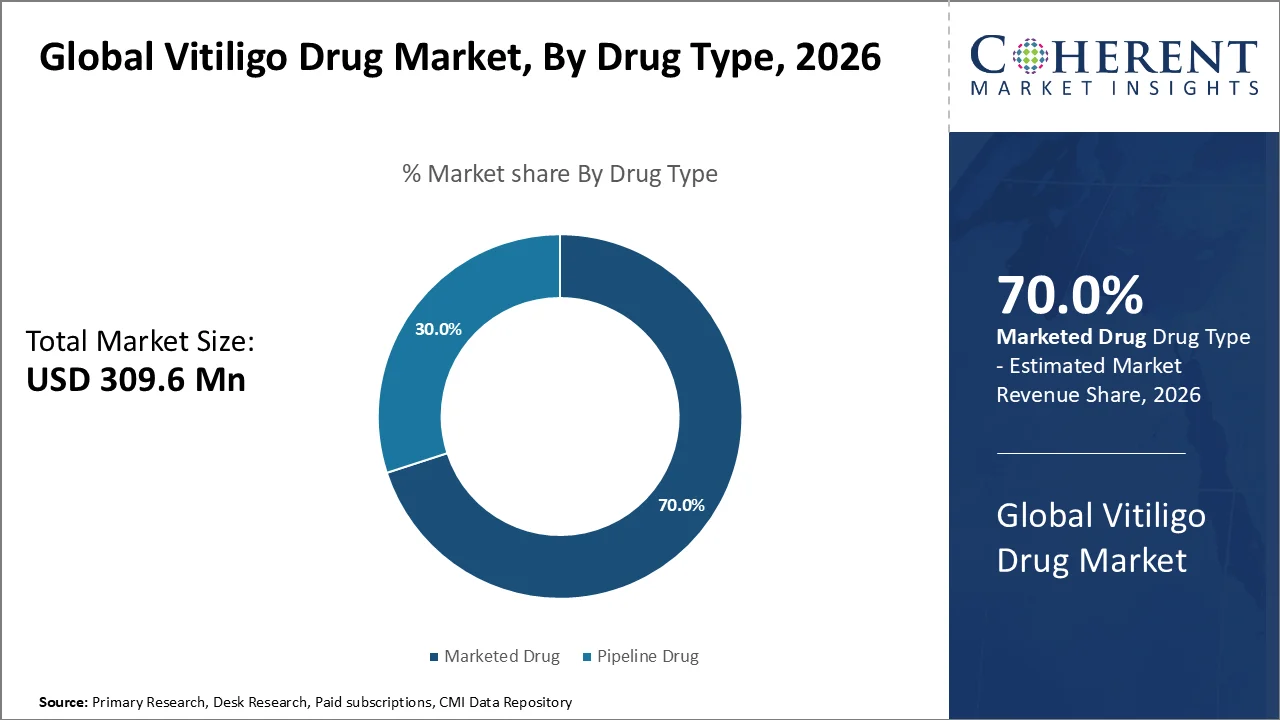
Why are Marketed Drugs Acquiring the Largest Share?
On the basis of drug type, the marketed drug segment is projected to account for the largest Vitiligo Drug Market share of 70% in 2026. The segment’s growth is owing to the availability of approved therapies, established clinical efficacy, physician adoption, and increasing patient access to commercially available treatments.
More recent 2026 TRuE-V data showed that among patients who relapsed after withdrawing treatment, 75% regained at least 75% facial repigmentation after restarting ruxolitinib cream, with a median recovery period of 85 days.
In April 2026, Incyte announced Positive Phase 3 Results of Povorcitinib Tablet: Incyte announced positive Phase 3 trial results of the STOP-V1 and STOP-V2 trials involving once-daily oral administration of 30 mg of povorcitinib, a selective inhibitor of JAK1, in patients with non-segmental vitiligo.
- Current Industry Events of 2026
- Market Size Estimation
- Regional Breakdown
- Competitive Landscape
- Customer Intelligence
- Segmental Analysis
- Pricing Analysis
- Key Market Drivers, Challenges & Future Trends
- Customized Insights Section
Why Does Non-Segmental Vitiligo Hold the Largest Market Share?
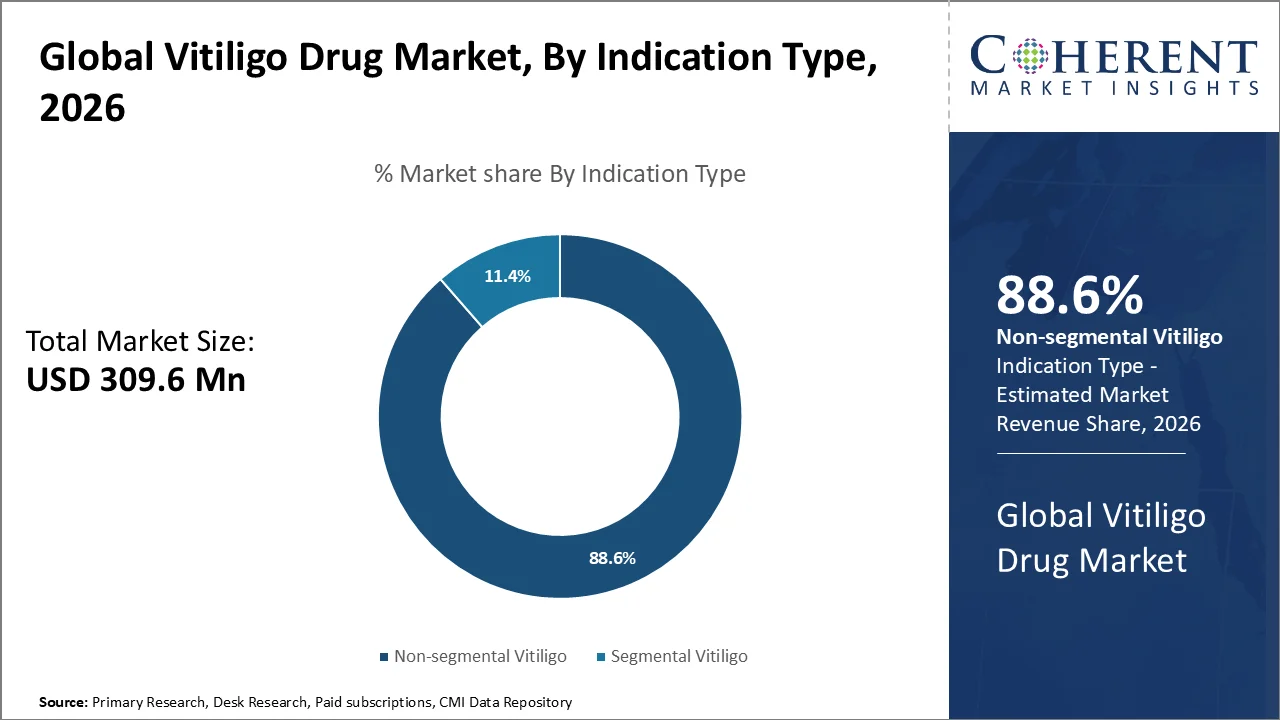
On the basis of indication type, the non-segmental vitiligo segment is projected to lead with an 88.6% market share in 2026. The segment’s dominance is owing to its substantially larger patient population, chronic and progressive disease characteristics, bilateral lesion distribution, and broader eligibility for currently approved and investigational pharmacological therapies.
According to Indiana University School of Medicine’s dermatology research program, non-segmental vitiligo accounts for approximately 85%–90% of all vitiligo cases worldwide. This large patient pool closely supports the segment’s estimated market share and encourages pharmaceutical companies to concentrate clinical trials and targeted drug-development programs on non-segmental disease.
In May 2026, Pfizer Advances Ritlecitinib Phase 3 Program for Non-Segmental Vitiligo: Pfizer confirmed that LITFULO (ritlecitinib), an oral JAK3/TEC inhibitor, remains in Phase 3 development for vitiligo, with results from the TRANQUILLO clinical program listed among the company’s anticipated 2026 data readouts.
Why is the Topical Route Acquiring the Largest Share?
On the basis of route of administration, the topical segment is expected to account for the largest Vitiligo Drug Market share of 82.4% in 2026. The segment’s growth is owing to the extensive use of topical corticosteroids, calcineurin inhibitors, and ruxolitinib cream, along with localized drug delivery, ease of self-administration, limited systemic exposure, and suitability for long-duration outpatient treatment.
A 2025 integrated safety analysis evaluated topical ruxolitinib across 673 vitiligo patients and 867.9 person-years of treatment exposure. There were no treatment emergent severe adverse reactions, major adverse cardiovascular events, or fatalities observed in this study up to 104 weeks, lending credibility to the use of this therapy on a long-term basis.
In March 2026, Ruxolitinib Cream Begins Prescribing in China: China Medical System informed that Lumirix (ruxolitinib phosphate cream) was being prescribed for the first time in several regions in China just less than 1.5 months after it got approval for non-segmental vitiligo.
Why Do Retail Pharmacies Hold the Largest Market Share?
On the basis of distribution channel, the retail pharmacies segment is projected to lead with a 49.7% market share in 2026. The segment’s dominance is owing to the outpatient nature of vitiligo management, recurring prescription refills, convenient access to topical medicines, growing pharmacy-based insurance support, and the increasing involvement of specialty pharmacies in prior authorization and patient-access services.
In Q2 of 2025, Incyte announced that the U.S. net sales for Opzelura amounted to USD 132 million, growing by 19%, whereas the international sales amounted to USD 32 million, growing by 195%.
In March 2026, Pharmacy Access and Copay Assistance Increase Opzelura Prescriptions: During the AAD 2026 Annual Meeting, scientists have conducted a survey among 309 patients with vitiligo and analyzed their real-life experience with the drug.
Market Drivers
Targeted JAK Inhibitors and Systemic Therapies are Expanding the Vitiligo Treatment Landscape
The fast development of the specific immunomodulatory treatments is dramatically changing the vitiligo drug market. The pharmaceutical companies tend to focus on the JAK-STAT signaling pathway that has been associated with the autoimmune destruction of the melanocytes. The new approaches will make possible to go beyond traditional topical steroids, calcineurin inhibitors, and light therapy.
Clinical trial of Phase 2 involving oral povorcitinib conducted in 2025 examined 171 participants with extensive non-segmental vitiligo. At the 24-week mark, patients under various doses of povorcitinib obtained a repigmentation of 15.7% to 19.1%, while patients on placebo worsened by 2.3%. Repigmentation progressed even at the 52-week mark, indicating the future prospects of development of oral JAK1 inhibitors in patients with extensive vitiligo.
In June 2026, the European Medicines Agency’s CHMP adopted a positive opinion recommending Rinvoq (upadacitinib) for adults and adolescents aged 12 years and older with non-segmental vitiligo who are candidates for systemic treatment.
Current Events and Their Impact on the Vitiligo Drug Market
Current Event | Description and its Impact |
NICE Recommends Ruxolitinib Cream for NHS Funding in England (2026) |
|
Canada’s Drug Agency Declines Public Reimbursement for Opzelura (2025) |
|
Vitiligo Drug Market Trends
- Treatment methods which combine the use of topical JAK inhibitors together with narrow-band UVB therapy are resulting in improved repigmentation rates in patients who have inadequate response to medication. During the phase 2 study done in 2025 on 55 individuals, it was found out that 57.7% of them showed more than 50% total body repigmentation while 19.2% of them showed at least 75% improvement following inadequate use of ruxolitinib cream.
- The development pipeline for the drugs is expanding from JAK inhibitors to more sustained biologics that act on IL-15 and tissue-resident memory T cells that are associated with chronic and recurrent vitiligo. In July 2026, Teva noted that the development of Phase 2b for TEV-408 would commence after the completion of Phase 1b clinical trials wherein 42 percent of the patients achieved more than 50 percent of repigmentation of the face and 21 percent attained more than 75 percent improvement within 24 weeks.
Regional Insights
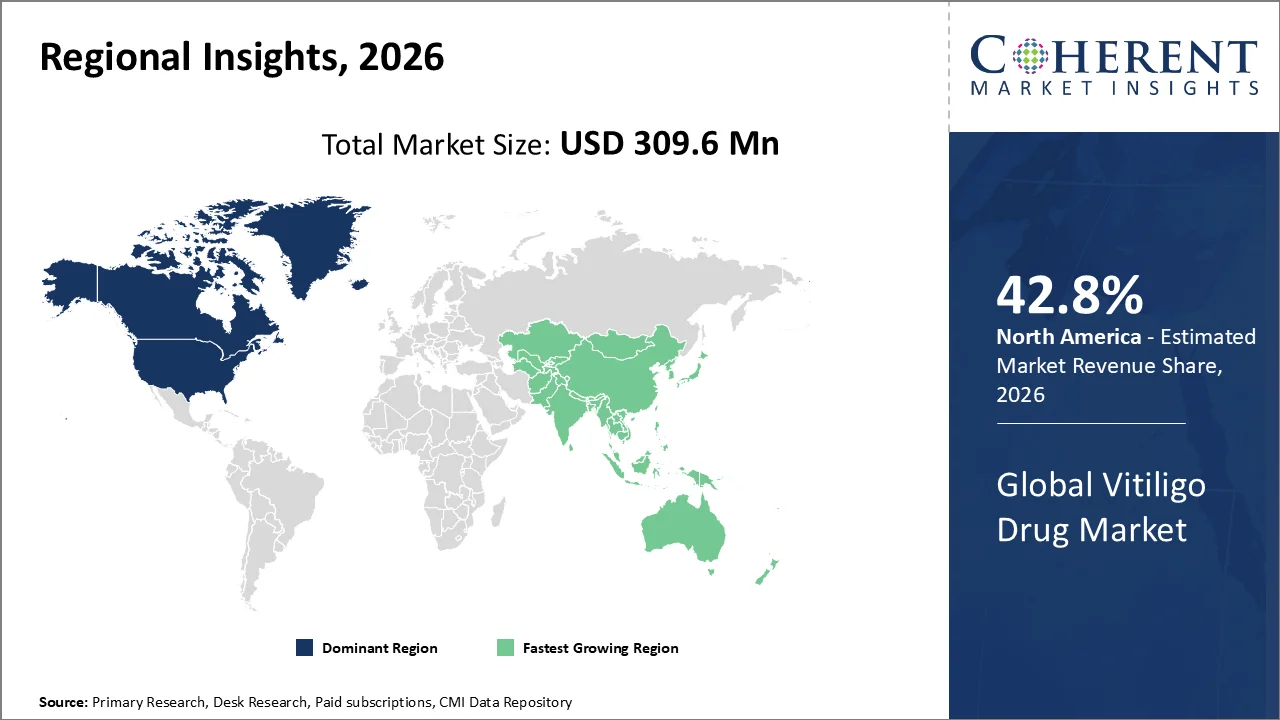
North America Dominates Owing to Early Regulatory Approval and Advanced Dermatology Infrastructure
North America region is estimated to hold major share of 42.8% in vitiligo drugs market in 2026. North America is expected to lead the vitiligo drugs market owing to the presence of advanced therapeutic options, robust clinical research infrastructure, and supportive regulatory environment for dermatological therapies. In the U.S., Opzelura cream, which received approval from the U.S. FDA, showed high efficacy in two Phase III clinical trials on 674 patients of non-segmental vitiligo.
In May 2026, Incyte announced positive Phase 3 STOP-V1 clinical trial results for povorcitinib, an oral JAK1 inhibitor for adults with nonsegmental vitiligo. The company reported that the study met its primary endpoint, with patients achieving statistically significant improvements in facial and total body repigmentation compared with placebo.
Asia Pacific Vitiligo Drug Market Trends
Asia Pacific is expected to witness substantial growth owing to increasing awareness of autoimmune skin diseases, expanding access to dermatology services, and growing participation in clinical research. Countries such as China, Japan, South Korea, and India are strengthening dermatology research and improving access to advanced therapies.
Based on findings from a recent clinical study as published in Frontiers in Medicine in 2025, vitiligo is highly prevalent in some countries, with India being one of those nations where prevalence as high as 8.8% has been found in populations from the state of Gujarat. The study has indicated that the prevalence in China is around 0.91%.
In January 2026, the Vitiligo Research Foundation (VRF) issued its Vitiligo Drug Pipeline Analysis 2026 and stated that there were over 70 drug programs in progress throughout the world, including clinical trials in Japan and other Asian countries.
FDA Approvals and Strong Clinical Research Ecosystem are Accelerating the Vitiligo Drug Market in the United States
The U.S. vitiligo drug market is witnessing strong growth owing to rapid adoption of targeted immunotherapies, a robust clinical research ecosystem, and supportive regulatory pathways for innovative dermatology drugs. The country continues to lead global vitiligo research through active Phase II and Phase III clinical trials evaluating JAK inhibitors and other novel immune-modulating therapies.
A 2025 analysis presented in Dermatology Times using the NIH All of Us Research Program database evaluated more than 200,000 U.S. patients with vitiligo, making it one of the largest real-world datasets used to assess diagnosis patterns, treatment utilization, and healthcare disparities in the United States.
China Vitiligo Drug Market Trends
China is expected to witness strong growth in the vitiligo drug market owing to its large patient population, increasing dermatology research, expanding clinical trial activity, and improving access to innovative autoimmune disease therapies. Government support for biomedical innovation and precision medicine is also strengthening the country's dermatology research ecosystem.
In November 2024, Pfizer China announced that the National Medical Products Administration (NMPA) approved LITFULO (ritlecitinib) for the treatment of severe alopecia areata in patients aged 12 years and older.
Who are the Major Companies in Vitiligo Drug Industry
Some of the major key players in Vitiligo Drug Market are Dermavant Sciences, Inc., Incyte Corporation, Aclaris Therapeutics, Inc., Dr. Reddy’s Laboratories Ltd., Bristol - Myers Squibb, Pfizer Inc., Clinuvel Pharmaceuticals Ltd., Boston Pharmaceuticals, Applied Biology, Inc., Arcutis Biotherapeutics, Inc., Villaris Therapeutics, Arrien Pharmaceuticals LLC, and Temprian Therapeutics Inc.
Key News
- In March 2025, Clinuvel Pharmaceuticals announced its vitiligo development program at the American Academy of Dermatology (AAD) 2025 Annual Meeting, presenting its research strategy for afamelanotide (SCENESSE®) combined with phototherapy approaches for repigmentation.
- In February 2026, Aclaris Therapeutics announced clinical progress across its immuno-inflammatory pipeline, including advancement of novel immune-targeting candidates.
Market Report Scope
Vitiligo Drug Market Report Coverage
| Report Coverage | Details | ||
|---|---|---|---|
| Base Year: | 2025 | Market Size in 2026: | USD 309.6 Mn |
| Historical Data for: | 2020 To 2024 | Forecast Period: | 2026 To 2033 |
| Forecast Period 2026 to 2033 CAGR: | 12.6% | 2033 Value Projection: | USD 710.5 Mn |
| Geographies covered: |
| ||
| Segments covered: |
| ||
| Companies covered: | Dermavant Sciences, Inc., Incyte Corporation, Aclaris Therapeutics, Inc., Dr. Reddy’s Laboratories Ltd., Bristol - Myers Squibb, Pfizer Inc., Clinuvel Pharmaceuticals Ltd., Boston Pharmaceuticals, Applied Biology, Inc., Arcutis Biotherapeutics, Inc., Villaris Therapeutics, Arrien Pharmaceuticals LLC, and Temprian Therapeutics Inc. | ||
| Growth Drivers: |
| ||
| Restraints & Challenges: |
| ||
Analyst Opinion
- The vitiligo drug market is entering a new growth phase driven by the shift toward targeted immune-modulating therapies, particularly JAK inhibitors. The FDA approval of ruxolitinib cream (Opzelura®) for nonsegmental vitiligo established a new treatment category by providing a disease-specific pharmacological option for repigmentation. The approval is expected to encourage further investment in next-generation vitiligo therapies targeting immune pathways.
- The drug pipeline for the treatment of vitiligo is becoming more diverse as pharmaceutical companies work on creating oral JAK inhibitors, biologics, and immunomodulators that have the capability to provide superior disease management. The advancements in the development of an oral JAK1 inhibitor, known as povorcitinib, by Incyte Company, provide evidence of growing interest in systemic treatments among pharmaceutical companies.
- Real-world evidence and improved disease understanding are strengthening treatment adoption. Large-scale studies using U.S. healthcare databases are helping researchers evaluate treatment patterns, disease burden, and unmet needs among vitiligo patients, supporting better clinical decision-making and future drug development strategies.
Speak to the analyst
Want personalized insights?
Take the findings above to one of our principal consultants, or have the report rebuilt around the segments, geographies and competitors you actually track.
Market Segmentation
- By Drug Type (Revenue, USD Mn, 2021-2033)
- Marketed Drug
- Calcineurin Inhibitors
- Corticosteroids
- Psoralens
- Pipeline Drug
- Ruxolitinib (Phase 3)
- Marketed Drug
- By Indication Type (Revenue, USD Mn, 2021-2033)
- Segmental Vitiligo
- Non-segmental Vitiligo
- By Route of Administration (Revenue, USD Mn, 2021-2033)
- Oral
- Topical
- By Distribution Channel (Revenue, USD Mn, 2021-2033)
- Hospital Pharmacies
- Retail Pharmacies
- Online Pharmacies
- By Region (Revenue, USD Mn, 2021-2033)
- North America
- U.S.
- Canada
- Latin America
- Brazil
- Mexico
- Argentina
- Rest of Latin America
- Europe
- Germany
- U.K.
- France
- Italy
- Spain
- Russia
- Rest of Europe
- Asia Pacific
- China
- India
- Japan
- Australia
- South Korea
- ASEAN
- Rest of Asia Pacific
- Middle East
- GCC
- Israel
- Rest of Middle East
- Africa
- South Africa
- Central Africa
- North Africa
- North America
Sources
Primary Research Interviews
- Dermatologists and vitiligo treatment specialists
- Clinical researchers involved in autoimmune skin disorder trials
- Dermatology-focused pharmaceutical company executives and R&D leaders
- Key opinion leaders (KOLs) in pigmentary disorders and immunodermatology
- Clinical trial investigators involved in vitiligo drug development programs
- Hospital dermatology department heads and specialty care providers
- Patient advocacy organizations and vitiligo support groups
Databases
- U.S. Food and Drug Administration (FDA) – Drugs and Clinical Trial Database
- National Institutes of Health (NIH) – ClinicalTrials.gov
- National Library of Medicine (PubMed)
- European Medicines Agency (EMA) Database
- World Health Organization (WHO) Health Topics Database
- National Health and Wellness Survey (NHWS) Database
- NIH All of Us Research Program Database
- Pharmaceuticals and Medical Devices Agency (PMDA), Japan
- National Medical Products Administration (NMPA), China
Magazines
- Dermatology Times
- Dermatology Advisor
- The Dermatologist
- Pharmaceutical Technology
- Fierce Pharma
- BioPharma Dive
- Clinical Trials Arena
Journals
- Journal of the American Academy of Dermatology (JAAD)
- JAMA Dermatology
- British Journal of Dermatology
- Journal of Investigative Dermatology
- Frontiers in Medicine
- Clinical and Experimental Dermatology
- Dermatology and Therapy
- Pigment Cell & Melanoma Research
- International Journal of Dermatology
Newspapers
- The Wall Street Journal
- Financial Times
- The New York Times
- Reuters Health
- Bloomberg Health
- The Economic Times
- The Times of India
Associations
- American Academy of Dermatology (AAD)
- European Academy of Dermatology and Venereology (EADV)
- Global Vitiligo Foundation (GVF)
- Vitiligo Research Foundation (VRF)
- International Federation of Psoriasis Associations (IFPA)
- International Society of Dermatology (ISD)
- National Organization for Rare Disorders (NORD)
Public Domain Sources
- FDA drug approval documents and prescribing information for vitiligo therapies
- EMA regulatory assessment reports and medicine databases
- Clinical trial registrations and results from ClinicalTrials.gov
- Peer-reviewed epidemiological studies on vitiligo prevalence and disease burden
- Company annual reports, investor presentations, and regulatory filings
- Pharmaceutical company press releases and pipeline updates
- University dermatology research publications
- Government healthcare publications and disease burden reports
- Patent databases including WIPO, USPTO, and Google Patents
- Regulatory guidelines related to dermatology and autoimmune disease treatments
Proprietary Elements
- CMI Data Analytics Tool
- Proprietary CMI existing repository of information for the last 10 years
Get access to 250+ pages report
Every segment, forecast, competitor profile and data table behind the analysis above — available for instant download.
- ESOMAR Member
- ISO 9001:2015 Certified
- D-U-N-S Registered
- GDPR & CCPA Compliant
Missing comfort of reading report in your local language? Find your preferred language:
Transform your Strategy with Exclusive Trending Reports
Frequently Asked Questions
The Vitiligo Drug Market is expected to reach USD 710.5 Million by 2033, growing at a CAGR of 12.6% between 2026 and 2033. The growth is driven by increasing vitiligo prevalence, rising awareness, expanding access to dermatology care, and increasing adoption of targeted therapies such as JAK inhibitors.
Major players operating in the global Vitiligo Drug Market include Dermavant Sciences, Inc., Incyte Corporation, Aclaris Therapeutics, Inc., Dr. Reddy’s Laboratories Ltd., Bristol - Myers Squibb, Pfizer Inc., Clinuvel Pharmaceuticals Ltd., Boston Pharmaceuticals, Applied Biology, Inc., Arcutis Biotherapeutics, Inc., Villaris Therapeutics, Arrien Pharmaceuticals LLC, and Temprian Therapeutics Inc.
The high cost of advanced vitiligo therapies, limited availability of approved treatment options, long treatment duration, and challenges associated with achieving consistent repigmentation outcomes are key factors limiting market growth.
The increasing adoption of targeted therapies such as JAK inhibitors, rising global prevalence of vitiligo, growing awareness of autoimmune skin disorders, and increasing investment in clinical research for novel dermatology treatments are driving market expansion.
The Vitiligo Drug Market is anticipated to grow at a CAGR of 12.6% between 2026 and 2033.
Among regions, North America is expected to account for the largest market share of 42.8% in 2026 due to early adoption of targeted therapies, strong dermatology infrastructure, high diagnosis rates, and favorable regulatory support for innovative treatments.
Vitiligo is a chronic autoimmune skin disorder characterized by the loss of melanocytes, resulting in depigmented patches on the skin. The condition can affect visible areas such as the face, hands, and other exposed body regions and may significantly impact quality of life.