Biodegradable Tableware Market Analysis & Forecast: 2026-2033

Biodegradable Tableware Market Size and Forecast – 2026 – 2033
The Global Biodegradable Tableware Market size is estimated to be valued at USD 2.40 billion in 2026 and is expected to reach USD 6.16 billion by 2033, exhibiting a compound annual growth rate (CAGR) of 14.4% from 2026 to 2033.
Global Biodegradable Tableware Market Overview
Biodegradable tableware products are disposable food-service items made from natural, compostable materials such as bagasse, bamboo, palm leaves, paper, and biopolymers. These products include plates, bowls, cups, cutlery, and food containers designed to decompose naturally without harmful residues. They are heat-resistant, lightweight, and suitable for hot and cold foods, making them ideal for catering, takeaways, and events. Product attributes focus on durability, food safety compliance, compostability standards, and eco-friendly branding.
Key Takeaways
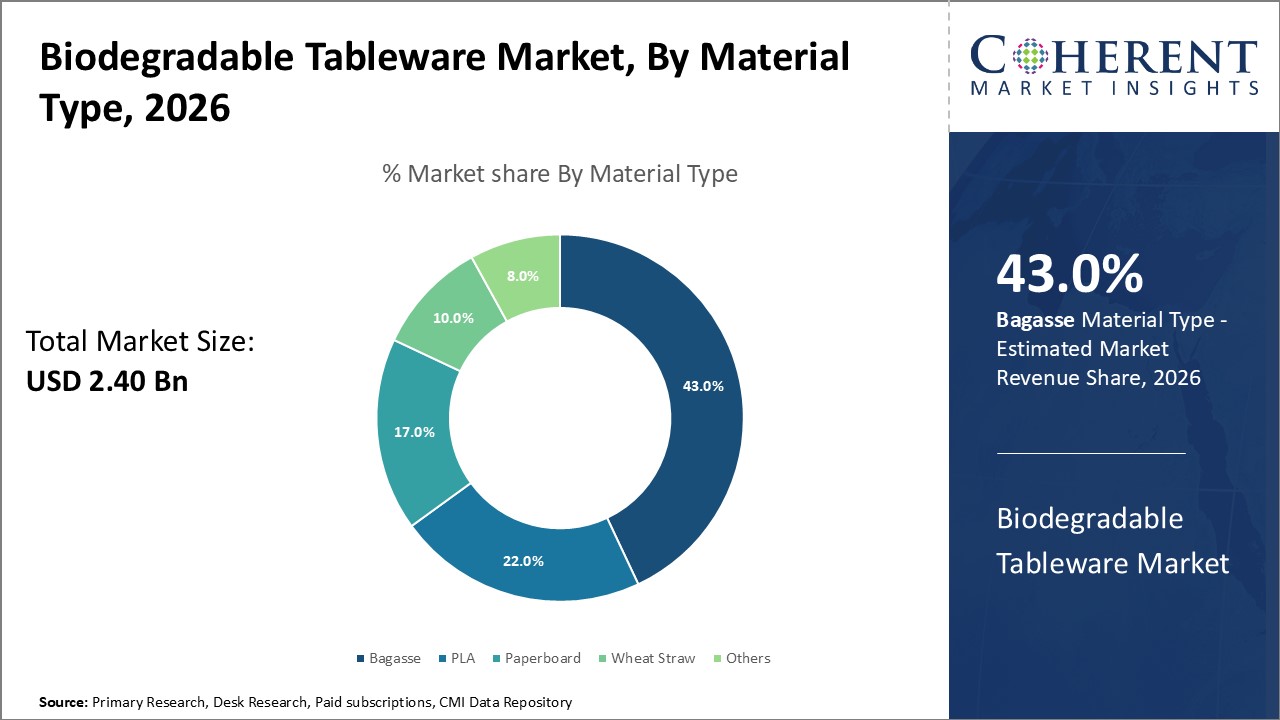
The bagasse subsegment dominates material type with about 43% market share, leveraged by its cost efficiency and biodegradability, driving material-based revenue.
The plates & trays product subsegment leads the market demand owing to high application in quick service restaurants and event catering.
The QSRs end-use industry segment represents the largest revenue contributor, benefiting from the growing adoption of eco-friendly disposables.
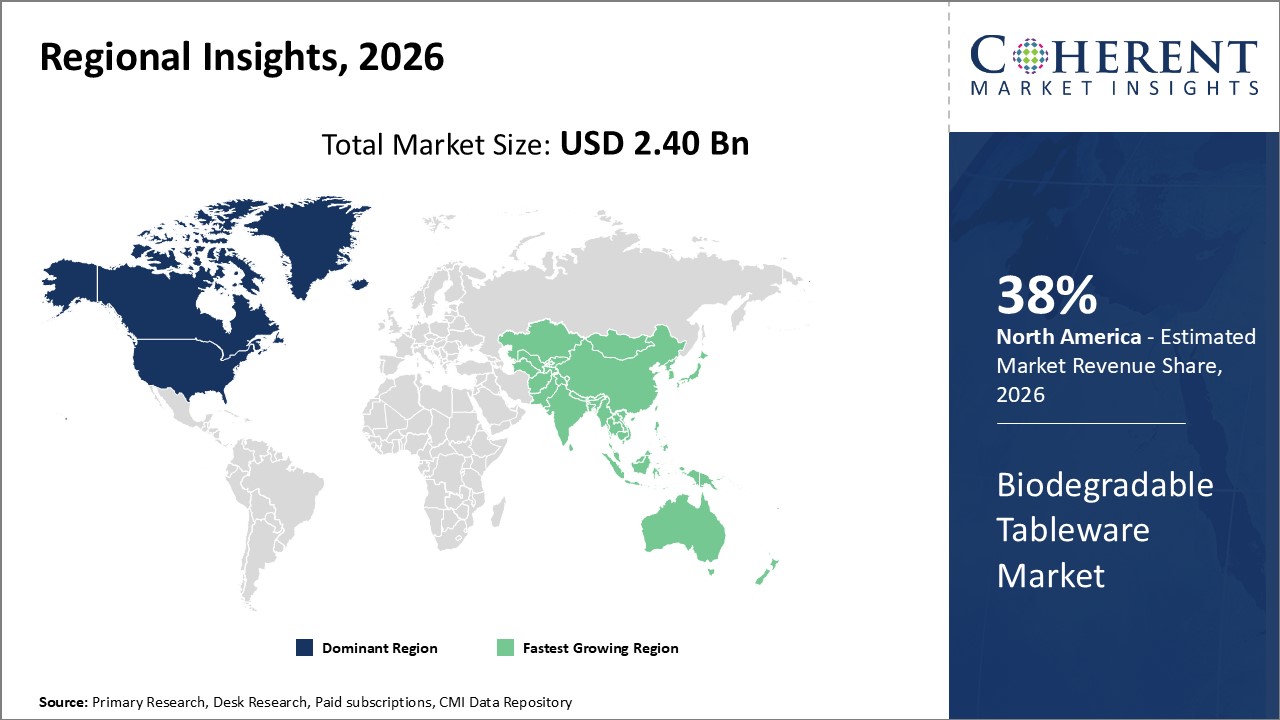
North America holds the dominant regional industry share, driven by stringent regulations and mature foodservice industry infrastructure.
Asia Pacific demonstrates the fastest CAGR due to rapid industrialization, rising urban population, and increasing environmental awareness.
Europe remains a key region emphasizing regulatory impetus and innovation-led product development, fostering business growth.
Biodegradable Tableware Market Segmentation Analysis
To learn more about this report, Request Free Sample
Biodegradable Tableware Market Insights, By Material Type
Bagasse dominates the market share. Bagasse, a sugarcane residue, offers superior compostability and cost-effectiveness relative to bioplastics, making it the preferred choice across regions with vast sugarcane agriculture. Its rapid biodegradation (typically within 60 days under composting) and mechanical strength drive high adoption in plates and bowls applications. PLA (Polylactic Acid) is the fastest growing subsegment due to its versatility and thermoplastic nature, allowing for items like cups and cutlery to be produced with high clarity and heat resistance. Advancements in PLA manufacturing, such as blending with natural fibers for enhanced biodegradability and performance, have accelerated growth. Paperboard and wheat straw contribute niche market segments, favored for lightweight and eco-friendly disposables, especially in regions with developed recycling infrastructure.
Biodegradable Tableware Market Insights, By Product Type
Plates & Trays dominate the share as they fulfill diverse foodservice needs in both QSRs and catering sectors, favored for their stackability, strength, and compostability. The growth in on-the-go food consumption and event catering has driven demand for such disposables. Cups represent the fastest-growing product due to increasing adoption in beverage service, fueled by innovations in PLA cups compatible with both hot and cold liquids. Cutlery is steadily expanding as regulations phase out plastic utensils; biodegradable forks, knives, and spoons gain traction, especially in institutional catering.
Biodegradable Tableware Market Insights, By End-Use Industry
QSRs dominate market share due to their large-scale usage of disposable tableware as part of sustainable branding and regulatory compliance strategies. The fast-food sector's high turnover volume emphasizes rapid adoption of bio-based disposables. Institutional Catering is the fastest-growing subsegment, driven by increased sustainability mandates in schools, hospitals, and corporate dining facilities, reflecting rising awareness and eco-friendly policy adoptions. Household Consumption remains a niche but evolving segment with growth driven by retail expansion and consumer inclination towards zero-waste lifestyles. Events & Catering Services benefit from the trend of green events, leveraging biodegradable tableware to minimize environmental impact.
Biodegradable Tableware Market Trends
The biodegradable tableware market demonstrates upwards momentum, heavily influenced by legislative frameworks such as the EU’s Single-Use Plastics Directive and extensive plastic bans in North America.
A significant trend is the growing convergence of packaging innovation and sustainability, where emerging materials like mushroom-based tableware and seaweed composites are piloted for commercial use.
The market also witnesses increased digitalization in purchasing, with sustainability verification becoming a key purchase criterion.
For example, North American QSRs adopted biodegradable packaging in over 60% of outlets by 2026, driven by consumer advocacy and brand commitments.
Biodegradable Tableware Market Insights, By Geography
To learn more about this report, Request Free Sample
North America Biodegradable Tableware Market Analysis and Trends
In North America, the dominance in the Biodegradable Tableware Market stems from established regulatory environments and a mature foodservice ecosystem. This region accounts for nearly 38% of the industry share, propelled by policies restricting plastic disposables and increasing consumer preference for sustainable products. Leading companies such as Eco-Products and Huhtamaki have expanded capacity and formed significant partnerships with regional QSRs, driving consistent market revenue growth. The U.S. supports a strong supply chain ecosystem with access to raw materials like bagasse and PLA, ensuring supply stability and innovation.
Asia Pacific Biodegradable Tableware Market Analysis and Trends
Meanwhile, Asia Pacific exhibits the fastest growth with a CAGR exceeding 17%, fueled by rapid urbanization, increasing health awareness, and expanding foodservice sectors in countries like India and China. Government initiatives encouraging biodegradable alternatives in India’s urban centers and China’s zero-waste policies have boosted market traction. Companies such as Fabri-Kal and Biopak are aggressively expanding manufacturing bases here to cater to growing demand, while local players innovate with cost-effective raw material sourcing.
Biodegradable Tableware Market Outlook for Key Countries
USA Biodegradable Tableware Market Analysis and Trends
The USA’s market is characterized by intensive regulatory actions at the federal and state levels targeting single-use plastics, making it a hotspot for biodegradable tableware demand. Growth in food delivery services and institutional catering has been strong, with biodegradable plates and cutlery used in over 55% of QSR chains as of 2026. Key market players, Eco-Products and World Centric, have recorded a 20% increase in sales volumes post-2025 due to favorable consumer behavior changes and regulatory compliance. Capacity expansions and new product certifications underscore the competitive landscape, strengthening the market’s leadership.
India Biodegradable Tableware Market Analysis and Trends
India’s market is shaped by rising environmental regulations on plastic ban enforcement in metropolitan and tier-1 cities, coupled with growing environmental consciousness among consumers. The biodegradable tableware market revenue surged 30% in 2025, supported by government initiatives and expanding e-commerce platforms promoting sustainable products. Local companies leverage agricultural residue for raw materials driving cost competitiveness, while leading players like Fabri-Kal have initiated joint ventures to scale production. Increasing institutional adoption in events and catering services further propels demand.
Analyst Opinion
The surge in demand for fiber-based biodegradable tableware, such as bagasse and wheat straw, primarily drives market expansion. In 2025, bagasse accounted for approximately 43% of the market share due to its superior compostability and wide application in foodservice. Industry production capacity increased by 29% year-over-year, underscoring the supply-side robustness.
Pricing dynamics have shifted favorably as raw material costs for bioplastics and natural fibers stabilized in 2025 after a volatile period in 2023. Imports of biodegradable tableware into major markets like the United States grew by 23% indicative of strong cross-border demand. This illustrates a shift towards more competitively priced products without compromising sustainable value propositions.
Application segments such as QSRs (Quick Service Restaurants) and institutional catering have actively expanded usage, with QSRs reflecting nearly 39% of overall consumption in 2026. Industry surveys reveal rising consumer willingness to pay a premium (+16% on average) for biodegradable tableware versus traditional plastics as of early 2026.
Regulatory frameworks tightening plastic bans across Europe and North America have accelerated market penetration. For example, the European Union’s Single-Use Plastics Directive, implemented in 2025, resulted in a 31% surge in biodegradable tableware sales in affected regions during the following year, indicating strong policy-driven growth.
Market Scope
| Report Coverage | Details | ||
|---|---|---|---|
| Base Year: | 2025 | Market Size in 2026: | USD 2.40 billion |
| Historical Data for: | 2020 To 2024 | Forecast Period: | 2026 To 2033 |
| Forecast Period 2026 to 2033 CAGR: | 14.4% | 2033 Value Projection: | USD 6.16 billion |
| Geographies covered: |
|
||
| Segments covered: |
|
||
| Companies covered: | World Centric Inc., BASF SE, Berry Global, Inc., Sabert Corporation, Biolive, Inc., Novamont S.p.A., Tipa Corp., Pactiv Evergreen Inc., Biofase, United Bioplastics | ||
| Growth Drivers: |
|
||
Uncover macros and micros vetted on 75+ parameters: Get instant access to report
Biodegradable Tableware Market Growth Factors
Increasing regulatory pressure on single-use conventional plastics across North America and Europe continues to serve as a formidable market driver, ensuring rising demand for biodegradable tableware. For instance, the ban on plastic cutlery and plates in over 30 U.S. states by 2026 spurred a 24% market growth in the region. Another critical growth factor is technological advancement in raw material processing, such as innovations in PLA and bagasse treatments that improve durability and reduce costs, facilitating wider adoption across foodservice industries. Consumer consciousness and preference for eco-friendly products in food packaging continue to surge, demonstrated by a 33% rise in biodegradable tableware purchases reported in Latin America in 2025. Furthermore, expanding institutional catering and event management sectors are adopting sustainable tableware options as part of their corporate responsibility, pushing market revenues higher in 2026.
Biodegradable Tableware Market Development
In November 2026, Meraki Pack launched a new range of packaging products made from sugarcane bagasse, expanding its portfolio of sustainable foodservice and takeaway solutions. The range targets growing demand for plastic-free, compostable packaging alternatives, particularly among restaurants, cafés, and eco-conscious brands seeking to reduce environmental impact.
In September 2025, CHUK introduced a new line of compostable food packaging products tailored for quick-service restaurants (QSRs). The launch focused on high-performance, grease-resistant, and heat-tolerant designs, supporting QSR operators in meeting sustainability goals while complying with tightening regulations on single-use plastics.
Key Players
Leading Companies of the Market
World Centric Inc.
BASF SE
Berry Global, Inc.
Sabert Corporation
Biolive, Inc.
Novamont S.p.A.
Tipa Corp.
Pactiv Evergreen Inc.
Biofase
United Bioplastics
Among these market companies, NatureWorks has successfully increased its biopolymer production capacity by 36% in 2025, enabling it to lower costs and improve supply chain resilience. Eco-Products adopted strategic partnerships with major QSR chains in North America, boosting sales by over 21% in 2026. Meanwhile, Huhtamaki expanded its product portfolio through acquisitions in the Asia Pacific region, enhancing its geographic footprint and market share considerably in the region.
Biodegradable Tableware Market Future Outlook
The future of the biodegradable tableware market is promising as sustainability becomes a core purchasing criterion. Expansion of composting infrastructure, stricter plastic regulations, and growing consumer awareness will support long-term growth. Product innovation will focus on enhancing heat resistance, moisture control, and cost competitiveness. The market is expected to see increased penetration in quick-service restaurants, institutional catering, and large-scale events.
Biodegradable Tableware Market Historical Analysis
The market emerged in response to rising environmental concerns over single-use plastics. Initially limited by higher costs and lower durability, product improvements and regulatory bans on plastic disposables significantly boosted market acceptance. Over the past decade, advancements in natural fiber processing and biopolymer formulations have improved performance, enabling broader adoption across foodservice and catering sectors.
Sources
Primary Research Interviews:
Packaging Manufacturers
Foodservice Operators
Sustainability Consultants
Retail Buyers
Composting Experts
Databases:
Euromonitor Packaging
UN Environment Plastics Data
GlobalData Packaging Reports
OECD Environment Data
Magazines:
Packaging Europe
Food Packaging Forum
Sustainable Brands
GreenBiz
Packaging Digest
Journals:
Journal of Cleaner Production
Packaging Technology & Science
Waste Management
Sustainability Journal
Environmental Science & Policy
Associations:
Biodegradable Products Institut
European Bioplastics
Sustainable Packaging Coalition
Plastics Europe
Ellen MacArthur Foundation
Share
Share

Credibility and Certifications

860519526

9001:2015
27001:2022


Need a Custom Report?
We can customize every report - free of charge - including purchasing stand-alone sections or country-level reports
Customize NowJoining thousands of companies around the world committed to making the Excellent Business Solutions.
View All Our Clients