E-Coat Market Analysis & Forecast: 2026-2033

E-Coat Market Size and Forecast – 2026 – 2033
The Global E-Coat Market size is estimated to be valued at USD 3.2 billion in 2026 and is expected to reach USD 5.8 billion by 2033, exhibiting a compound annual growth rate (CAGR) of 8.3% from 2026 to 2033.
Global E-Coat Market Overview
E-Coat, or electrocoating, is a painting process that uses electrical current to deposit a protective coating onto a metal surface. In this method, metal parts are submerged in a water-based paint bath containing resin particles, and an electric charge causes the coating to uniformly bond to the surface. The process ensures even coverage, including hard-to-reach areas, and provides excellent corrosion resistance, adhesion, and durability. After coating, the part is cured in an oven to harden the finish. E-Coat is widely used in automotive, appliance, construction, and industrial manufacturing for primer applications and long-lasting protection.
Key Takeaways
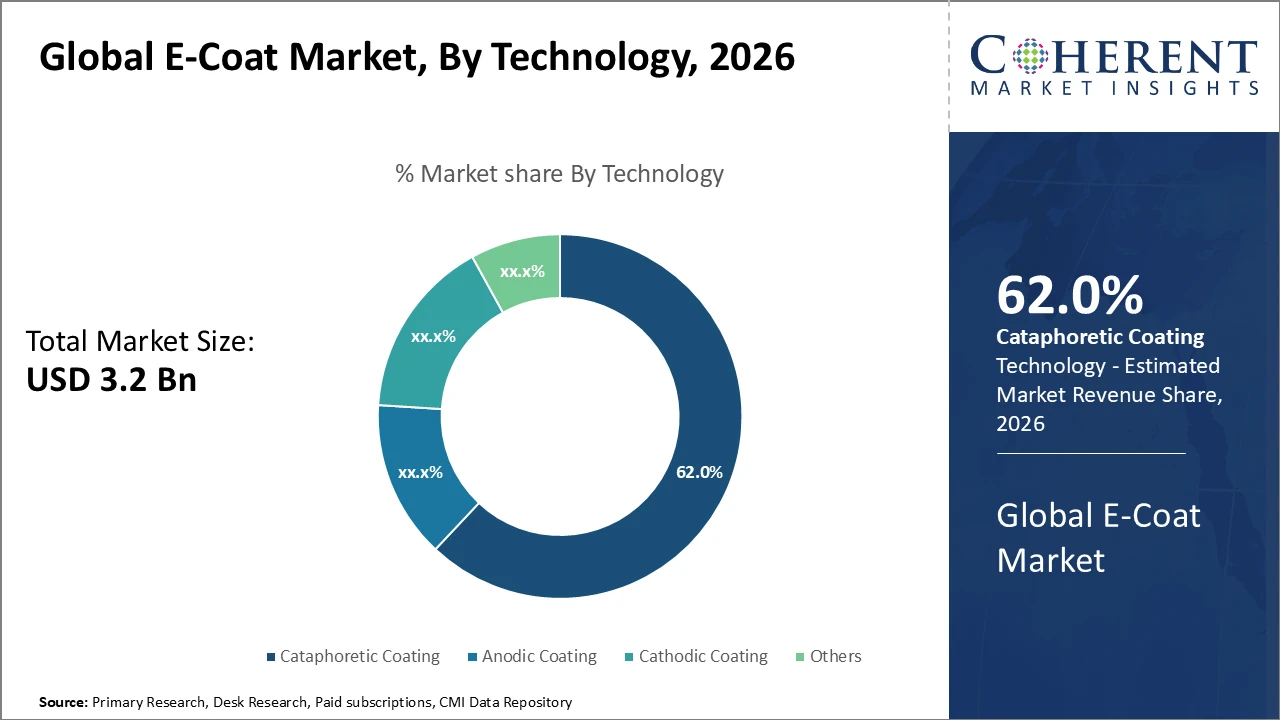
The Cataphoretic Coating segment commands 62% market share, driven by its superior corrosion resistance and extensive use in automotive bodies and industrial machinery.
Automotive applications remain the largest contributor to market revenue, reflecting strong alignment with industry trends and regulatory standards.
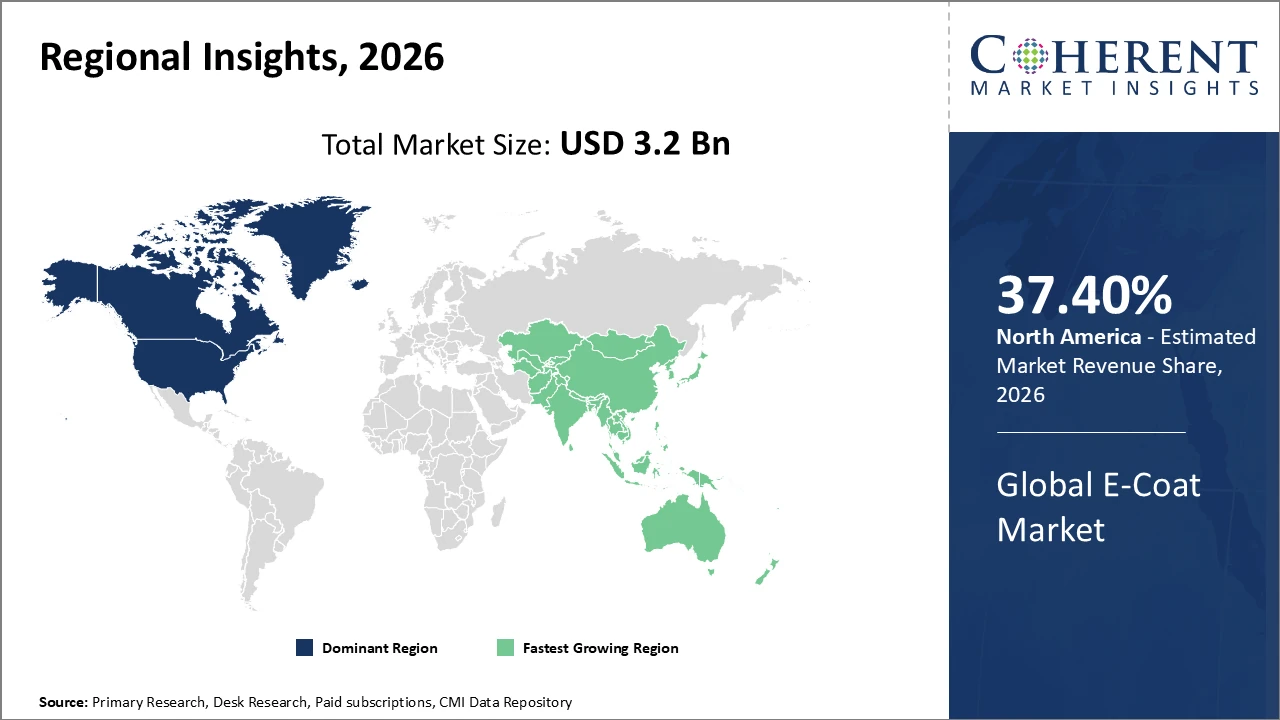
Asia Pacific is the fastest-growing region, supported by rapid industrialization and government incentives promoting advanced coating technologies.
North America holds a dominant position, with established automotive and industrial sectors driving high adoption rates of premium e-coat technologies.
E-Coat Market Segmentation Analysis
To learn more about this report, Request Free Sample
E-Coat Market Insights, By Technology
Cataphoretic coating dominates the e-coat market with a 62% share, driven by its superior coverage, corrosion resistance, and efficiency in automotive bodywork requiring uniform coatings for enhanced durability. This method also offers higher deposition efficiency, reducing waste and improving environmental compliance. Anodic coating, although less common, is vital in specific industrial applications demanding enhanced wear resistance, while cathodic coating is used selectively for lightweight substrates due to its unique electrochemical properties. The Others category encompasses emerging electro-coating methods for niche applications. Growing demand for automation and eco-friendly solutions, coupled with ongoing R&D in advanced resin systems and process optimization, continues to propel cataphoretic technology forward.
E-Coat Market Insights, By Resin Type
Epoxy resin commands the largest market share due to its excellent chemical resistance, strong adhesion, and cost efficiency, making it the preferred choice for automotive and heavy-duty industrial applications where durability is critical. Polyurethane resins are gaining traction for their superior flexibility and UV resistance, particularly in architectural and consumer goods applications. Acrylic resins, valued for rapid curing and color retention, are used in niche decorative applications. Hybrid resins, which combine features of multiple chemistries, are emerging to meet evolving performance requirements, while specialty resins in the Others category serve highly demanding applications. Ongoing R&D efforts further accelerate growth in this segment.
E-Coat Market Insights, By Application
The automotive segment dominates the e-coat market, driven by strong demand for premium corrosion protection on vehicle chassis and components, with manufacturers increasingly requiring e-coat solutions to meet environmental and durability standards. The industrial equipment segment is the fastest-growing application, supported by rapid industrialization and infrastructure expansion, which demand robust protection for heavy machinery and components. Consumer goods benefit from e-coat’s decorative and protective qualities in electronics and appliances, showing steady growth, while the architecture segment utilizes e-coat for enhanced weather resistance in metal constructions. Specialized niches, including aerospace and marine, adopt e-coat selectively, with innovation and regulatory compliance driving growth across all subsegments.
E-Coat Market Trends
The e-coat market is moving toward sustainability and digitalization, with increased adoption of waterborne and bio-resin coatings in Europe in 2025 leading to a 10% reduction in solvent emissions, reflecting environmental compliance trends.
Smart coatings integrated with IoT sensors enable real-time monitoring of coating thickness and quality. This technology, adopted in North America, improved production efficiencies by 8% in 2026.
Growth in electric vehicles has driven innovation in coating systems compatible with lightweight substrates, particularly in Asia Pacific’s expanding EV manufacturing hubs.
E-Coat Market Insights, By Geography
To learn more about this report, Request Free Sample
North America E-Coat Market Analysis and Trends
In North America, the e-coat market is dominated by a well-established automotive and industrial infrastructure, supported by advanced manufacturing technologies and stringent regulations promoting low-VOC coatings. The region accounted for approximately 37.40% of global market revenue in 2026, reflecting strong adoption across automotive, industrial equipment, and consumer goods sectors. Leading companies such as Sherwin-Williams and Axalta maintain market leadership through significant R&D investments, process automation, and technological innovations that enhance coating performance and efficiency. The combination of regulatory compliance, robust industrial demand, and continuous product development reinforces North America’s position as a key hub for high-performance, sustainable e-coat solutions.
Asia Pacific E-Coat Market Analysis and Trends
The Asia Pacific region shows the fastest e-coat market growth, driven by expanding automotive production in China and India, rapid industrialization, and supportive government policies. From 2024 to 2026, the region recorded a CAGR exceeding 9%, fueled by subsidies for electric vehicles and growth in consumer electronics manufacturing. Leading companies, including Kansai Paint and Nippon Paint, are leveraging this trend by setting up local production facilities and forming strategic partnerships, strengthening their regional presence and meeting rising demand. These initiatives position Asia Pacific as a key growth hub for innovative, high-performance e-coating solutions across multiple industries.
E-Coat Market Outlook for Key Countries
USA E-Coat Market Analysis and Trends
The U.S. e-coat market is fueled by strict environmental regulations from the EPA and the presence of robust automotive and aerospace industries. In 2026, major investments in advanced e-coat technologies by companies such as PPG Industries led to the introduction of waterborne coatings that reduced VOC emissions by 20%, supporting sustainability goals. Additionally, the region benefits from R&D centers focused on innovations in nanotechnology, smart coatings, and digital process optimization, enhancing product performance and manufacturing efficiency. These factors collectively drive continuous market growth, strengthen competitive advantages, and reinforce the U.S. as a key hub for high-performance, environmentally compliant e-coat solutions.
Germany E-Coat Market Analysis and Trends
The Germany e-coat market is driven by strong demand from the automotive, industrial equipment, and construction sectors, with an emphasis on sustainability and regulatory compliance. Strict environmental standards, including low-VOC coating mandates, have accelerated adoption of waterborne and bio-resin e-coats. The automotive industry, particularly in electric vehicle manufacturing, fuels growth through requirements for lightweight, corrosion-resistant coatings. Investments in R&D have enabled advances in nanotechnology-enhanced coatings, digital process monitoring, and higher deposition efficiency. Companies are also focusing on local production and technological collaborations to maintain competitiveness. Overall, Germany remains a mature and innovation-driven market within the European e-coat landscape.
Analyst Opinion
Rising production capacity in the automotive sector is a key supply-side driver for e-coat volume. In 2025, global automotive production reached 88 million units, a 3.6% year-over-year increase, boosting demand for corrosion-resistant e-coat solutions.
Pricing dynamics indicate a steady upward trend due to raw material cost inflation and innovations positioning e-coat as a cost-effective alternative to traditional coatings. Between 2024 and 2026, average e-coat prices increased by 5%, reflecting strong value for manufacturers.
Growth in industrial imports and diversification beyond automotive, including consumer electronics and agricultural machinery, has expanded the market footprint. E-coating machinery imports in Asia Pacific rose 12% in 2026, showing higher technology adoption.
Micro-indicators from nanotechnology-enhanced coatings show improvements in durability and environmental compliance. A 2025 European pilot study reported a 15% increase in corrosion resistance using nanoparticle-integrated e-coat formulations.
Market Scope
| Report Coverage | Details | ||
|---|---|---|---|
| Base Year: | 2025 | Market Size in 2026: | USD 3.2 billion |
| Historical Data for: | 2020 To 2024 | Forecast Period: | 2026 To 2033 |
| Forecast Period 2026 to 2033 CAGR: | 8.3% | 2033 Value Projection: | USD 5.8 billion |
| Geographies covered: |
|
||
| Segments covered: |
|
||
| Companies covered: | PPG Industries, BASF SE, Jotun Group, The Valspar Corporation, RPM International Inc., Covestro AG, Evonik Industries AG, Asian Paints Ltd., Akzo Nobel N.V., Sherwin-Williams | ||
| Growth Drivers: |
|
||
Uncover macros and micros vetted on 75+ parameters: Get instant access to report
E-Coat Market Growth Factors
The e-coat market is being propelled by increasingly stringent environmental regulations, as governments worldwide push for reduced emissions and low-pollutant coatings. For example, the U.S. EPA’s updated VOC limits in 2024 led to a 7% increase in demand for compliant e-coat products. Rapid industrialization and expanding automotive manufacturing hubs in Asia Pacific, particularly in China and India, contributed to over 45% of market growth in 2026. Advancements in e-coat formulations providing superior corrosion resistance and application efficiency are creating opportunities in consumer electronics and heavy machinery, while digitalization and robotic application technologies further enhance production efficiency and market expansion.
E-Coat Market Development
In 2025, PPG Industries launched a next-generation waterborne epoxy e-coat in North America, designed to meet stringent VOC regulations while providing enhanced corrosion resistance for automotive and industrial applications. This innovation enabled a 20% reduction in solvent emissions and improved coating uniformity, reinforcing PPG’s position as a market leader and driving adoption across automotive OEMs and heavy machinery manufacturers.
Key Players
Leading Companies of the Market
PPG Industries
BASF SE
Jotun Group
The Valspar Corporation
RPM International Inc.
Covestro AG
Evonik Industries AG
Asian Paints Ltd.
Akzo Nobel N.V.
Sherwin-Williams
Several leading companies in the e-coat market have adopted sustainability-driven strategies, focusing on low-VOC and waterborne technologies. In 2025, BASF SE launched a bio-based resin system that reduced its carbon footprint by 20% and expanded its European customer base by 10%. Similarly, Axalta Coating Systems achieved a 15% revenue increase in 2026 by integrating automation into their e-coat production lines, enhancing throughput, consistency, and quality control. These initiatives demonstrate how major players are leveraging innovation and sustainable practices to strengthen market position, meet regulatory requirements, and address growing demand for environmentally friendly, high-performance coating solutions.
E-Coat Market Future Outlook
The e-coat market is poised for sustained growth, driven by increasing demand for corrosion-resistant, environmentally compliant coatings across automotive, industrial equipment, consumer electronics, and construction sectors. Future trends will emphasize sustainability through bio-based and low-VOC formulations, as well as innovations in nanotechnology and smart coatings for improved durability and real-time quality monitoring. Expansion in electric vehicle production and lightweight substrate applications, particularly in Asia Pacific, will further accelerate adoption. Investments in automated manufacturing, digitalized processes, and regional production capacity are expected to enhance efficiency and supply reliability. Overall, the market outlook reflects a strong focus on performance, compliance, and technological advancement.
E-Coat Market Historical Analysis
The e-coat market has steadily evolved over the past decades, initially driven by automotive and industrial demand for uniform, corrosion-resistant coatings. Early adoption focused on cathodic electrodeposition methods using epoxy and acrylic resins, providing enhanced adhesion and chemical resistance on metal substrates. North America and Europe led initial production, supported by industrialization and infrastructure growth. Over time, technological advancements, including waterborne and low-VOC formulations, improved environmental compliance and efficiency. Asia Pacific emerged as a key growth region with rapid automotive and electronics manufacturing. Increasing regulatory pressures and innovations in nanotechnology and smart coatings have shaped modern market dynamics, setting the stage for current and future expansion.
Sources
Primary Research Interviews:
Automotive OEMs and component manufacturers
Marine and shipbuilding engineers
Electronics and consumer goods manufacturers
Industrial equipment and machinery producers
Magazines:
Coatings World
Chemical Week
ICIS Chemical Business
Paint & Coatings Industry Magazine
Journals:
Journal of Coatings Technology and Research
Progress in Organic Coatings
Industrial & Engineering Chemistry Research
Surface and Coatings Technology
Journal of Applied Polymer Science
Newspapers:
Financial Times – Chemicals & Industry
The New York Times – Business & Sustainability
The Guardian – Green Industry & Manufacturing
Reuters – Industrial Materials & Chemicals
The Hindu – Industrial Coatings & Infrastructure
Associations:
American Coatings Association (ACA)
European Coatings Federation (CEPE)
Society for Protective Coatings (SSPC)
Japanese Paint Manufacturers Association (JPMA)
International Paint & Printing Ink Council (IPPIC)
Share
Share
Yash Doshi is a Senior Management Consultant. He has 12+ years of experience in conducting research and handling consulting projects across verticals in APAC, EMEA, and the Americas.
He brings strong acumen in helping chemical companies navigate complex challenges and identify growth opportunities. He has deep expertise across the chemicals value chain, including commodity, specialty and fine chemicals, plastics and polymers, and petrochemicals. Yash is a sought-after speaker at industry conferences and contributes to various publications on topics related commodity, specialty and fine chemicals, plastics and polymers, and petrochemicals.

Credibility and Certifications

860519526


9001:2015
27001:2022


Need a Custom Report?
We can customize every report - free of charge - including purchasing stand-alone sections or country-level reports
Customize NowJoining thousands of companies around the world committed to making the Excellent Business Solutions.
View All Our Clients