Salicylic Acid Market Analysis & Forecast: 2026-2033
Salicylic Acid Market Size and Forecast – 2026 – 2033
The Global Salicylic Acid Market size is estimated to be valued at USD 675 million in 2026 and is expected to reach USD 1,120 million by 2033, exhibiting a compound annual growth rate (CAGR) of 7.9% from 2026 to 2033.
Global Salicylic Acid Market Overview
Salicylic acid is a beta hydroxy acid (BHA) commonly used in skincare and medicine for its exfoliating and anti-inflammatory properties. Derived originally from willow bark, it works by penetrating into pores and dissolving excess oil and dead skin cells, making it especially effective for treating acne, blackheads, and clogged pores. Unlike alpha hydroxy acids, salicylic acid is oil-soluble, allowing it to exfoliate inside the pore lining. It also helps reduce redness and swelling associated with breakouts. In medicine, it is used to treat conditions like warts, calluses, and psoriasis. When used correctly, it improves skin texture and promotes clearer, smoother skin.
Key Takeaways
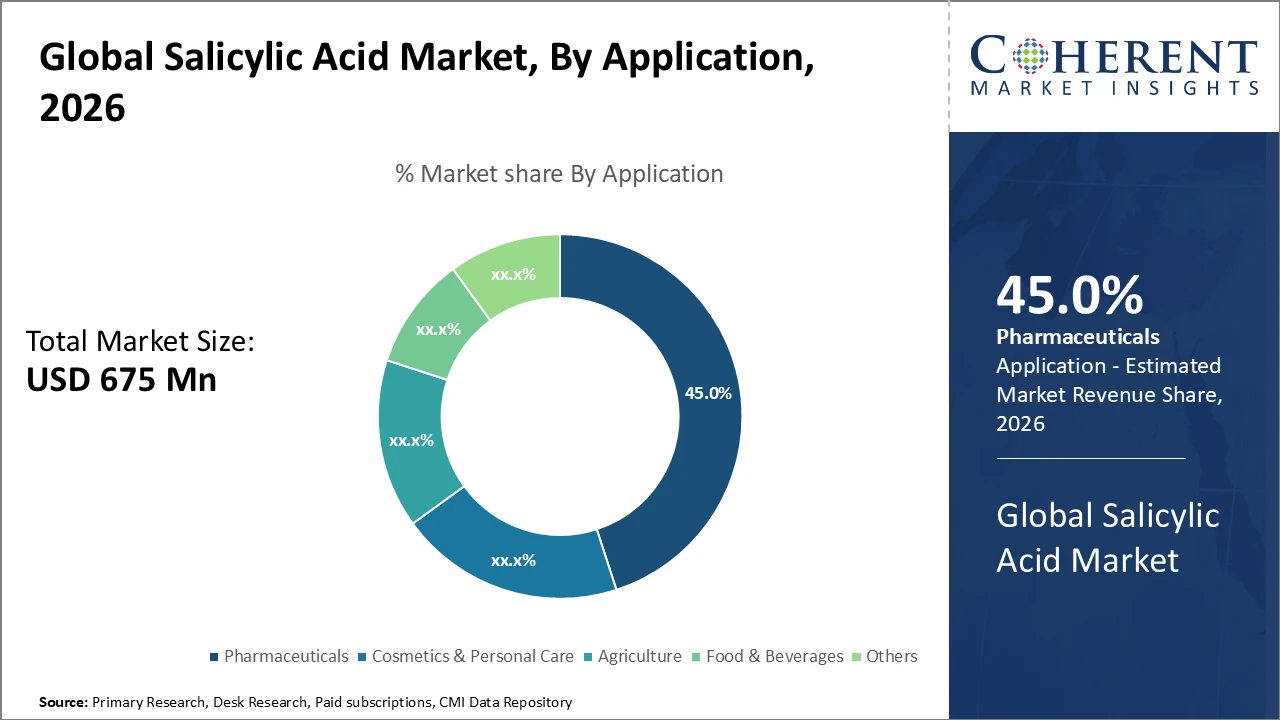
Pharmaceuticals lead the market segments with over 45% market revenue share, driven by increasing dermatological applications requiring high purity standards.
Synthetic salicylic acid remains the predominant product type, accounting for nearly 68% industry share due to cost-effective scalability and consistency.
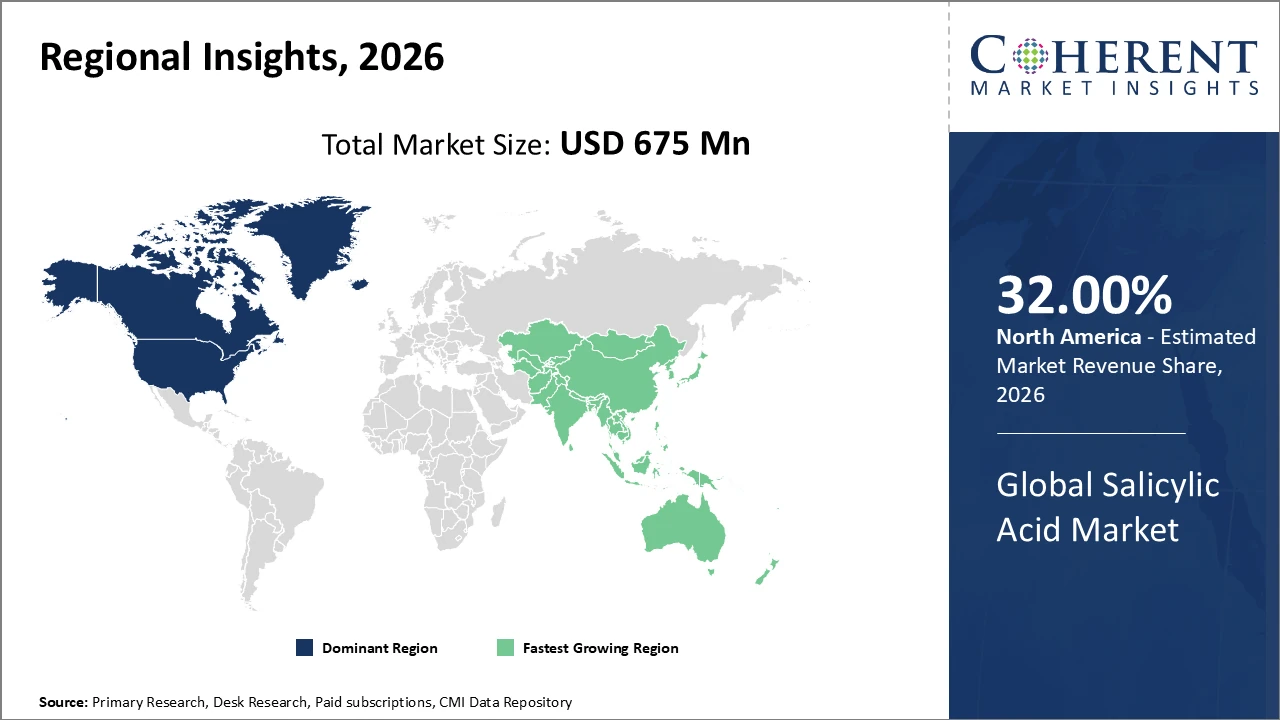
North America holds the majority industry share at 32%, largely fueled by strong pharmaceutical manufacturing and regulatory frameworks ensuring product safety.
Asia Pacific exhibits the highest CAGR, attributed to robust personal care market growth and agricultural investments promoting salicylic acid adoption.
Salicylic Acid Market Segmentation Analysis
To learn more about this report, Request Free Sample
Salicylic Acid Market Insights, By Application
Pharmaceuticals dominate the salicylic acid market, accounting for 45% of total revenue, driven by widespread use in dermatological drugs and rising global incidence of skin disorders. Regulatory support for topical treatments further propels this segment’s growth. The Cosmetics & Personal Care subsegment is expanding rapidly, fueled by growing consumer demand for acne-care and anti-aging products containing salicylic acid. Agriculture represents a smaller yet significant share, utilized for enhancing plant growth and disease resistance, particularly in emerging economies. Food & Beverages and other industrial applications sustain niche demand, serving as preservatives and raw materials for chemical processes, respectively.
Salicylic Acid Market Insights, By Product Type
Synthetic salicylic acid dominates the market with a 68% share, driven by cost-efficiency, scalability, and consistent purity essential for pharmaceutical-grade applications. Natural extraction is gaining traction as consumer preference for naturally derived ingredients rises, especially in personal care products. Derivatives represent the fastest-growing subsegment, fueled by innovative uses in complex formulations, including targeted drug delivery and multifunctional cosmetics. The Others category includes specialty salts and modified salicylic acid compounds, catering to niche industrial needs but contributing minimally to overall revenue. Overall, product segmentation reflects a balance between large-scale industrial demand and emerging trends toward natural and specialized applications.
Salicylic Acid Market Insights, By End-Use Industry
Dermatology holds the largest market share, driven by rising prescriptions of acne and psoriasis treatments containing salicylic acid. FMCG emerges as the fastest-growing end-use subsegment, reflecting strong global demand for skincare and haircare products enriched with salicylic acid. Agriculture is also expanding, supported by its role as a sustainable plant defense agent and favorable ecological farming policies in key regions. Chemical Manufacturing and other industrial applications occupy smaller market shares, primarily used in dyes, corrosion inhibitors, and specialty chemicals. Overall, end-use segmentation highlights a balance between pharmaceutical dominance, growing consumer product demand, and emerging agricultural applications.
Salicylic Acid Market Trends
The Salicylic Acid market is shifting towards sustainability, product innovation, and diversified applications.
Green synthesis methods, especially bio-fermentation, are gaining traction, reducing environmental impact and meeting eco-conscious consumer demand.
Companies like BASF SE achieved around 15% emissions reduction in 2025 through green chemistry initiatives.
The cosmetic sector is adopting hybrid formulations that combine salicylic acid with botanical extracts for multifunctional benefits.
Drug delivery innovations using salicylic acid derivatives demonstrate technological advancement, supported by ongoing clinical research since 2024.
Salicylic Acid Market Insights, By Geography
To learn more about this report, Request Free Sample
North America Salicylic Acid Market Analysis and Trends
North America leads the salicylic acid market, accounting for over 32% of total share, driven by a mature pharmaceutical infrastructure, strict regulatory frameworks ensuring product quality, and significant R&D investments. The region hosts leading companies, particularly in the U.S., that spearhead innovation in dermatological formulations and high-purity applications. Favorable government policies supporting pharmaceutical exports, coupled with strong consumer spending on healthcare and personal care products, further bolster market growth. Additionally, advanced manufacturing capabilities and well-established distribution networks ensure consistent supply, reinforcing North America’s position as a dominant and innovation-driven hub within the global salicylic acid market.
Asia Pacific Salicylic Acid Market Analysis and Trends
Meanwhile, the Asia Pacific region demonstrates the fastest growth in the salicylic acid market, with a CAGR exceeding 9%, driven by expanding cosmetic and agricultural sectors. Rising disposable incomes, rapid urbanization, and government-supported sustainable agriculture initiatives in countries like India and China have accelerated product adoption. Import dependency also contributes significantly, with a 6% increase in salicylic acid imports supporting market expansion. To address supply chain challenges, domestic manufacturers are progressively scaling up production capacities. Overall, the region’s growth reflects a combination of strong consumer demand, agricultural development, and strategic efforts to enhance local manufacturing capabilities.
Salicylic Acid Market Outlook for Key Countries
USA Salicylic Acid Market Analysis and Trends
The U.S. market is a key driver of the North American salicylic acid industry, propelled by extensive pharmaceutical R&D and high demand for dermatology-specific products. Strict regulatory frameworks ensure product purity and quality, strengthening market credibility. Leading companies, including Eastman Chemical and American Regent, dominate by investing in innovative formulations and sustainable manufacturing practices. Recent 2025 data shows that over 60% of North American demand originates from the U.S., highlighting its central role in both revenue generation and technological advancement. Overall, the U.S. market combines regulatory rigor, consumer demand, and industrial innovation to maintain global leadership.
Germany Salicylic Acid Market Analysis and Trends
Germany’s salicylic acid market is driven by a robust pharmaceutical sector, advanced chemical manufacturing, and stringent EU regulations ensuring high product quality. Dermatology applications dominate, supported by strong R&D in topical treatments and acne-care formulations. The cosmetics and personal care segment is also expanding, fueled by rising consumer preference for anti-aging and multifunctional skincare products. Sustainable production methods, including bio-fermentation and green chemistry, are increasingly adopted by local manufacturers to meet environmental standards. Germany’s well-established industrial infrastructure, skilled workforce, and export-oriented policies further bolster market growth, positioning the country as a key European hub for salicylic acid production and innovation.
Analyst Opinion
The surge in demand from the pharmaceutical sector has been a key driver of recent market growth. In 2024, over 58% of North American salicylic acid demand came from pharmaceutical formulations for dermatologic applications, boosting revenue and market share.
Pricing dynamics remained moderately stable, with slight increases of 3-5% in 2025 due to constrained raw material supply. This prompted manufacturers to optimize supply chains and explore greener synthesis methods, supporting long-term market sustainability.
Asia Pacific imports rose 6% year-on-year as domestic production lagged behind growing demand, particularly in India and China’s cosmetic and personal care sectors, fueled by higher disposable incomes and awareness of skin health.
Diversification beyond pharmaceuticals is notable, with agricultural applications, including plant growth regulators and disease resistance agents, contributing nearly 12% of total market share in 2026, highlighting untapped growth potential.
Market Scope
| Report Coverage | Details | ||
|---|---|---|---|
| Base Year: | 2025 | Market Size in 2026: | USD 675 million |
| Historical Data for: | 2020 To 2024 | Forecast Period: | 2026 To 2033 |
| Forecast Period 2026 to 2033 CAGR: | 9.3% | 2033 Value Projection: | USD 1,120 million |
| Geographies covered: |
|
||
| Segments covered: |
|
||
| Companies covered: | BASF SE, Eastman Chemical Company, Samartex Chemicals, Tokyo Chemical Industry Co., Ltd., Izzo Chemicals, American Regent, Inc., Mitsubishi Chemicals Co., Ltd., Ningbo Sishen Chemical Co. Ltd., Izzo Chemicals | ||
| Growth Drivers: |
|
||
Uncover macros and micros vetted on 75+ parameters: Get instant access to report
Salicylic Acid Market Growth Factors
The expanding pharmaceutical industry remains the primary growth driver, as salicylic acid plays a critical role in acne and psoriasis treatment formulations, with global pharmaceutical expenditure rising over 8% annually. The growing trend toward clean-label and natural personal care products has encouraged cosmetic companies to innovate new salicylic acid derivatives, resulting in a 10% growth in the cosmetic segment in 2025. Additionally, agricultural applications are increasing, with salicylic acid enhancing plant resistance, supported by government-backed sustainable farming initiatives in Asia Pacific in 2024. Rising investments in R&D to develop eco-friendly synthesis routes have streamlined market dynamics, reduced environmental impact, and fostered overall business growth.
Salicylic Acid Market Development
In February 2025, Garnier, America’s #1 Micellar Brand*, unveiled Garnier Micellar Water with Salicylic Acid in partnership with Ilana Glazer. The new product is designed to remove makeup, cleanse skin, and help control excess oil in one simple step.
Key Players
Leading Companies of the Market
Eastman Chemical Company
Samartex Chemicals
Tokyo Chemical Industry Co. Ltd.
Izzo Chemicals
American Regent, Inc.
Mtisubishi Chemicals Co. Ltd.
Ningbo Sishen Chemical Co. Ltd.
Izzo Chemicals
Competitive strategies in the salicylic acid market have increasingly focused on capacity expansion and product portfolio diversification, with a growing emphasis on sustainability and high-value applications. For example, Jubilant Life Sciences increased its green salicylic acid production capacity by 20% in 2025, leveraging sustainable chemistry practices to appeal to environmentally conscious customers and strengthen its position in regulated markets where ESG considerations influence purchasing decisions. Similarly, Eastman Chemical Company adopted a differentiation strategy through strategic partnerships aimed at developing high-purity, pharmaceutical-grade salicylic acid. This innovation-driven approach enhanced product quality and regulatory compliance, contributing to a 15% increase in its market share in 2026 and reinforcing its competitive advantage in high-margin pharmaceutical segments.
Salicylic Acid Market Future Outlook
The salicylic acid market is expected to witness steady growth driven by rising demand from pharmaceuticals, cosmetics, and food preservation industries. Increasing awareness of skincare, particularly anti-acne and exfoliation products, will continue to boost consumption in personal care applications. Pharmaceutical-grade salicylic acid demand is projected to expand due to growing production of aspirin and dermatological formulations. Sustainability trends and green chemistry innovations are likely to shape competitive strategies, with manufacturers investing in eco-friendly processes. Emerging markets in Asia-Pacific and Latin America are anticipated to offer strong growth opportunities, supported by expanding healthcare infrastructure and rising disposable incomes.
Salicylic Acid Market Historical Analysis
The salicylic acid market has experienced steady growth over the past decade, supported by expanding applications in pharmaceuticals, personal care, and food preservation. Historically, demand was largely driven by its use in aspirin production and topical dermatological treatments. Over time, increasing consumer awareness of skincare and the rise of anti-acne and exfoliation products significantly boosted consumption in the cosmetics sector. Industrial advancements improved production efficiency and product purity, enabling manufacturers to serve high-grade pharmaceutical needs. Additionally, growth in emerging economies, expanding healthcare access, and rising disposable incomes contributed to consistent market expansion across global regions.
Sources
Primary Research Interviews:
Pharmaceutical Manufacturers
Dermatologists and Skincare Specialists
Cosmetic Product Manufacturers
Chemical Industry Experts and Distributors
Databases:
World Health Organization (WHO)
OECD Health Statistics
UN Comtrade Database
U.S. FDA Drug Database
European Medicines Agency (EMA)
Magazines:
Chemical Week
ICIS Chemical Business
Cosmetics & Toiletries
Pharmaceutical Technology
Chemical & Engineering News
Journals:
International Journal of Pharmaceutics
Journal of Cosmetic Dermatology
Industrial & Engineering Chemistry Research
Journal of Chemical Technology & Biotechnology
European Journal of Pharmaceutical Sciences
Newspapers:
The Wall Street Journal (Business/Healthcare)
Financial Times (Chemicals & Healthcare)
Reuters Business & Health
Bloomberg
The Economic Times (Chemicals & Pharma)
Associations:
American Chemical Society (ACS)
International Federation of Pharmaceutical Manufacturers & Associations (IFPMA)
Personal Care Products Council (PCPC)
European Federation of Pharmaceutical Industries and Associations (EFPIA)
Share
Share
Kalpesh Gharte is a senior consultant with approximately 5 years of experience in the consulting industry. Kalpesh holds an MBA in Operations and Marketing Management, providing him with a strong foundation in market strategy and analysis. He has contributed to various consulting and syndicated reports, delivering valuable insights that support informed business decisions

Credibility and Certifications

860519526

9001:2015
27001:2022


Need a Custom Report?
We can customize every report - free of charge - including purchasing stand-alone sections or country-level reports
Customize NowJoining thousands of companies around the world committed to making the Excellent Business Solutions.
View All Our Clients