

Global 3D Scaffolds Market Size and Forecast – 2026 to 2033
The global 3D scaffolds market is estimated to be valued at USD 1070.1 Mn in 2026 and is expected to reach USD 2,059.0 Mn by 2033, exhibiting a compound annual growth rate (CAGR) of 9.8% from 2026 to 2033. This growth reflects increasing advancements in tissue engineering and regenerative medicine, driving the demand for sophisticated 3D scaffold technologies that facilitate cell growth and tissue regeneration across various medical applications.
Key Takeaways of the Global 3D Scaffolds Market
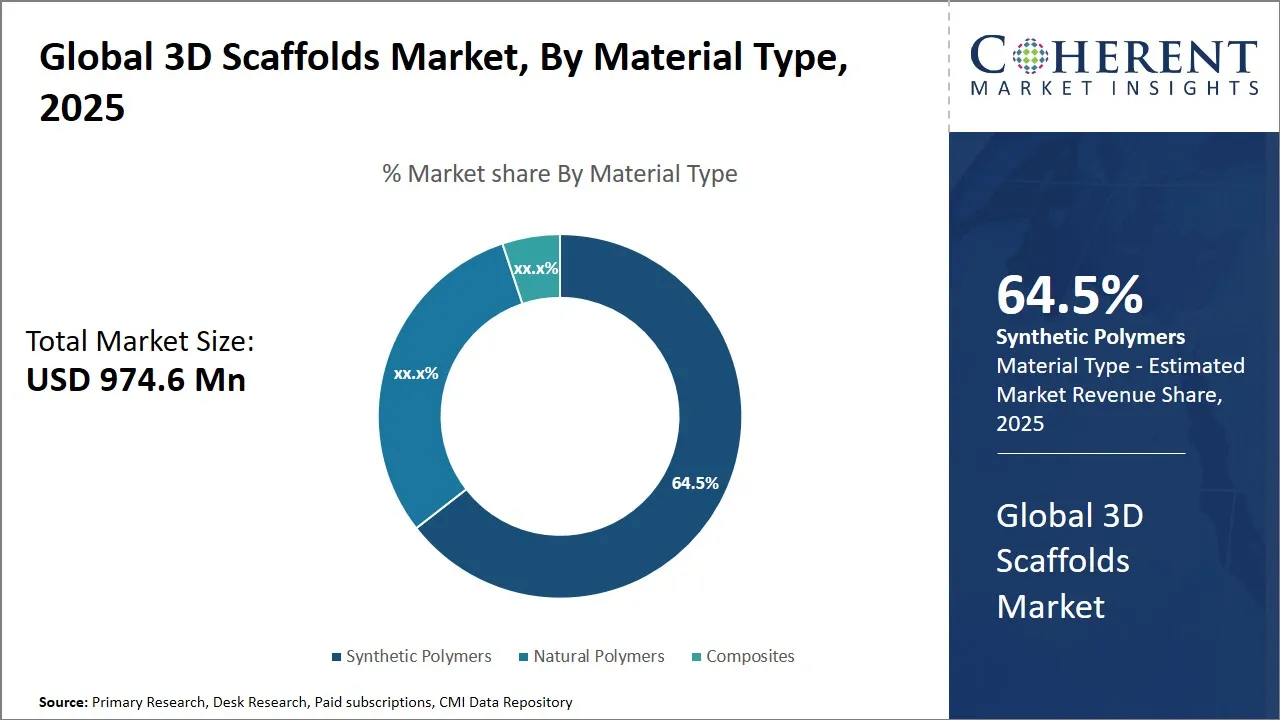
- Synthetic polymers segment is projected to account for 65.5 % of the global 3D scaffolds market share in 2026.
- 3D bioprinting segment is expected to capture 41.5 % of the market share in 2026.
- Cancer research segment is projected to hold 26.5 % of the market share in 2026.
- North America is expected to lead the market, holding a share of 38.3 % in 2026. Asia Pacific is anticipated to be the fastest-growing region, with an estimated market share of 23.3% in 2026.
Market Overview
The market trend indicates a significant shift towards the integration of biomaterials and additive manufacturing techniques, enhancing scaffold customization and functionality. Innovations such as bioprinting and the use of biodegradable polymers are becoming increasingly prominent, enabling more precise and efficient scaffold production. Additionally, rising investments in research and development, coupled with expanding applications in orthopedics, wound healing, and advanced drug delivery systems, are poised to further accelerate the market expansion over the forecast period.
Current Events and Its Impact
Current Events | Description and its Impact |
Launch of CollPlant’s rhCollagen-Based BioInk |
|
Surge in Organ-on-a-Chip and Disease Modeling Adoption |
|
Segmental Insights
- Current Industry Events of 2026
- Market Size Estimation
- Regional Breakdown
- Competitive Landscape
- Customer Intelligence
- Segmental Analysis
- Pricing Analysis
- Key Market Drivers, Challenges & Future Trends
- Customized Insights Section
3D Scaffolds Market Insights, By Material Type - Synthetic Polymers Contribute the Highest Market Share Owing to their Versatile Properties and Customization Potential
In 2026, synthetic polymers will be the largest players in the global 3D scaffolds market, with a share of 65.5%, because of their extraordinary flexibility and controllability in plaster design, which are essential for duplicating intricate tissue structures. Synthetic polymers, on the other hand, can be precisely designed to have specific mechanical strengths, degradation rates, and porosity, which are the desired characteristics in scaffolds for different applications.
The property-tuning capability is what makes synthetic polymers so attractive for a range of tissue engineering and regenerative medicine applications, where the scaffold must behave like the physiological environment it is placed in.
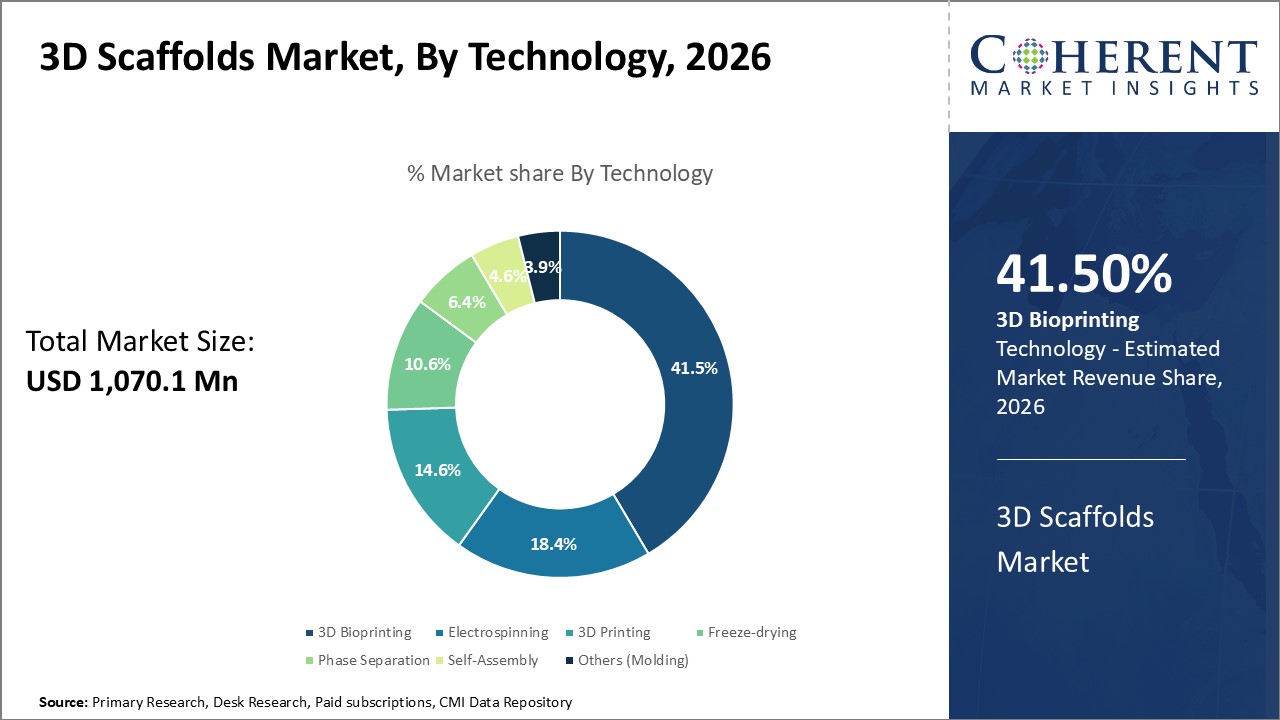
3D Scaffolds Market Insights, By Technology - 3D Bioprinting Contributes the Highest Market Share Due to Its Capability to Create Biomimetic and Patient-Specific Tissue Constructs
In 2026, 3D bioprinting will be the leading technology segment in the global scaffolds market, with a market share of 41.5%, due to its ability to place cells, growth factors, and biomaterials in the exact location at the same time. This power to mix living cells with scaffolds made of biomaterials also makes it possible to manufacture tissue analogs that are very functional and imitate the native tissues' cellular arrangement and microenvironment.
The top reason for the 3D bioprinting technology development is still it's customization facility that no other technique offers. By means of specific imaging data from the patient, bioprinting can create scaffold structures that are customized to a person's anatomical and biological requirements.
3D Scaffolds Market Insights, By Application - Cancer Research Holds the Highest Market Share Driven by the Need for Physiologically Relevant In Vitro Tumor Models
The cancer research segment in the global market for 3D scaffolds will have a share of 26.5% in 2026, due to the urgent need for more accurate and predictive models of tumors for drug screening and mechanistic studies. Among the most significant disadvantages of traditional 2D cell culture models are the lack of replicating the complex, and sometimes even the very heterogeneous, three-dimensionality of actual tumors, thus limiting the relevance of the model in preclinical testing.
For instance, in September 2025, a team of researchers from Bioengineer, a research platform specializing in science and technology, namely Ma, Shi, and Zhang, revealed a biodegradable bioengineered 3D scaffold aimed at the therapy of bone tumors through drug delivery. The scaffold provides a direct to tumor site delivery of 5-fluorouracil (5-FU) loaded nanoparticles, resulting in improved drug precision and reduction of side effects.
Regional Insights
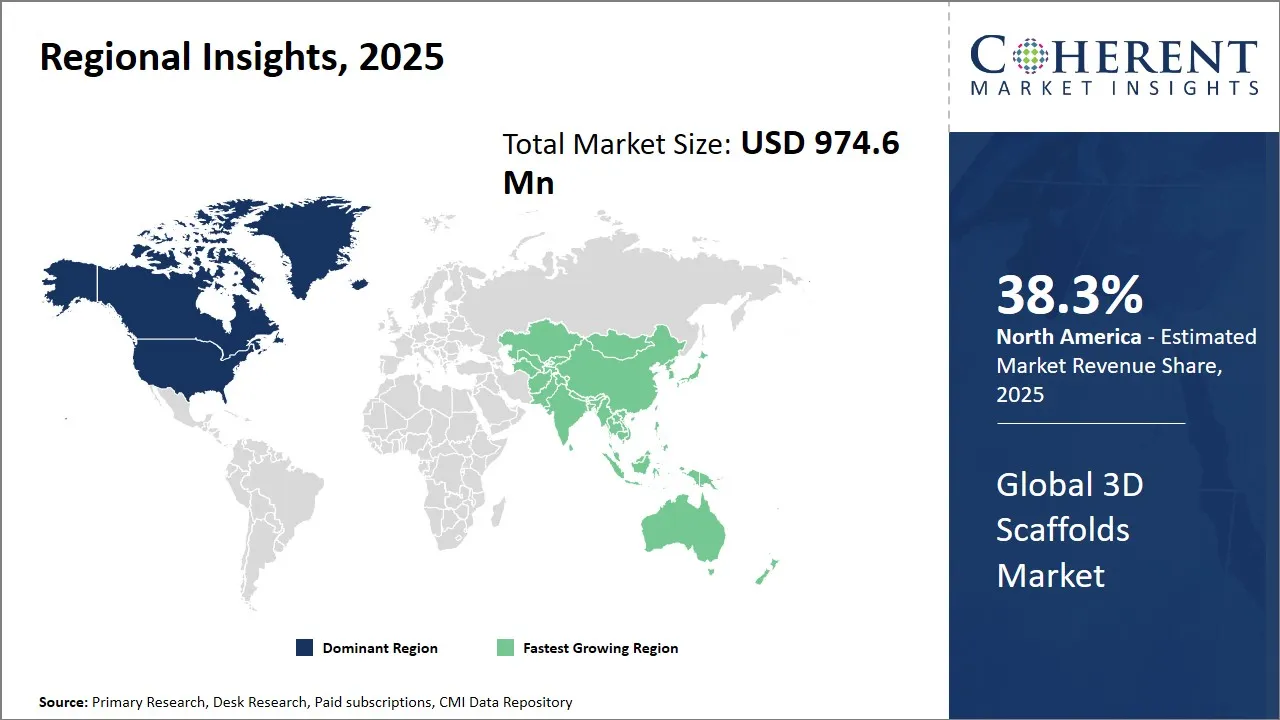
North America 3D Scaffolds Market Analysis and Trends
North America’s dominance in the global 3D scaffolds market, with an estimated share of 38.3% in 2026, can be attributed to the region's advanced healthcare infrastructure, strong presence of key market players, and robust R&D ecosystem. The U.S., in particular, hosts a significant number of leading biotechnology and tissue engineering companies that continuously innovate in scaffold fabrication and biomaterials.
For example, leading companies contributing to this growth include Organovo Holdings Inc. (3D bioprinting for regenerative tissues), 3D Systems Inc. (healthcare printing solutions and biocompatible materials), Corning Incorporated (extracellular matrix materials like Matrigel), Thermo Fisher Scientific (cell culture and biomaterial platforms), CollPlant Biotechnologies (rhCollagen-based bioinks and 3D scaffolds), and RegenHU Ltd. (3D bioprinting hardware and scaffold design systems).
Asia Pacific 3D Scaffolds Market Analysis and Trends
Asia Pacific exhibits the fastest growth in the global 3D scaffolds market with a projected share of 23.3% in 2026, driven by emerging economies with increasing healthcare expenditure and expanding biomedical research capabilities. Countries like China, Japan, South Korea, and India are witnessing rising investments in tissue engineering and regenerative medicine, supported by government policies that promote innovation and domestic production.
Key players include Cyfuse Biomedical K.K., T&R Biofab Co., Ltd., Regenovo Biotechnology Co., Ltd., Aspect Biosystems, Poietis Asia, and Esco Lifesciences Group, advancing regional innovation in tissue engineering and regenerative medicine.
3D Scaffolds Market Outlook for Key Countries
U.S. 3D Scaffolds Market Analysis and Trends
The U.S. 3D scaffolds market is still the main 3D scaffolds' development hub due to great venture capital investments and top-notch research backgrounds. The large government support for regenerative medicine and the choice of U.S. FDA regulatory paths make the country even better. Cooperative relationships between hospital and scaffold manufacturers speed up the transfer of innovations into clinical practice.
There are several key players such as Organovo Holdings Inc. (3D bioprinting and tissue models), 3D Systems Inc. (biocompatible printing materials), Corning Incorporated (extracellular matrices including Matrigel), Thermo Fisher Scientific (biomaterials and cell culture platforms), and CollPlant Biotechnologies (rhCollagen-based 3D scaffolds) that are driving the innovation and commercialization through hospital-industry collaborations.
China 3D Scaffolds Market Analysis and Trends
China 3D scaffolds market is getting into a high gear due to the support of the national initiatives like "Made in China 2026" and "Healthy China 2030" which focus on biotechnological and healthcare areas. Also, the government's rising R&D expenditures and incentives are pulling in domestic and international companies alike which makes a better innovation climate. The interaction of academia and industry in China is another factor that is working for the scaffold design and applications.
Leading companies are those such as Regenovo Biotechnology Co., Ltd. (3D bioprinting systems for tissue engineering), Shanghai United Imaging Healthcare Co., Ltd. (medical 3D printing integration), Revotek Co., Ltd. (bio-ink and vascular scaffold technology), and Jiangsu Advanced Biomaterials Co., Ltd. (collagen and hydrogel-based scaffolds), who rely on strong partnerships with academia that facilitate the speed of innovation.
Germany 3D Scaffolds Market Analysis and Trends
Germany is an important player in Europe, with a well-developed biomedical industry and a solid regulatory framework inside the EU. The European Union's Horizon 2020 program and other EU-wide research sources keep the country in the competition for global markets through its already established scaffold development and production.
In March 2023, Evonik, a Germany-based specialty chemicals company, partnered with BellaSeno, a medical technology firm, to commercialize 3D-printed bone scaffolds made using Evonik’s RESOMER polymers for treating large and complex bone defects.
Japan 3D Scaffolds Market Analysis and Trends
Japan being the second player in the field has a supporting government and world-class technology. The Japanese Ministry of Health has issued forward-thinking policies that let the innovators of tissue engineering in the region breathe, such as granting early access to the market for regenerative medicine products. Cyfuse Biomedical, for example, focuses heavily on automated 3D bioprinting systems which allow for more accurate and consistent scaffold production.
Major firms like Cyfuse Biomedical K.K. (automated 3D bioprinting systems), Nitta Gelatin Inc. (collagen scaffolds and biopolymer materials), FujiFilm Cellular Dynamics Inc. (cell-based scaffold technologies), and Kuraray Co., Ltd. (biomedical polymers) are progressively and precisely building the scaffold solutions through cooperation between the research departments.
End User Feedback and Unmet Needs for the 3D Scaffolds Market
- The end users in research entities, biotech companies, and clinical laboratories unanimously agree that the application of 3D scaffolds brings immense benefits in terms of cell growth, structural integrity, and reproducibility of experiments. The majority of the university and hospital scientists express their high contentment with scaffold materials that have improved biocompatibility and are also very easy to integrate with the existing bioprinting systems.
- The use of collagen-based and polymeric scaffolds has been endorsed by researchers at top universities and biotech centers as the main features of their cell adhesion, realistic tissue formation, and compatibility with 3D bioprinting systems. This has been seen as a significant improvement in the fields of regenerative medicine and cancer research. Nevertheless, the concern over the high price of advanced scaffolds, limited customization options for specific tissues, and problems integrating the proprietary bioinks continues to be raised by a number of smaller labs and start-ups.
- There are now materials that need to be versatile, plus demand for sensor-integrated scaffold systems, and more affordable product lines that could greatly increase the acceptance of the technologies, strengthen the trust of the users, and stimulate the next wave of innovation in tissue engineering to happen.
Market Players, Key Developments, and Competitive Intelligence
Key Developments
- In August 2025, researchers at the University of Minnesota Twin Cities, a leading U.S. public research university, published a study in Advanced Healthcare Materials introducing a breakthrough that integrates 3D printing, stem cell biology, lab-grown tissues, and 3D scaffolds to support spinal cord injury recovery. The team’s approach demonstrated how precisely engineered 3D scaffolds can guide cell growth and tissue regeneration, marking a major advancement in regenerative medicine and the broader Medical Wellness field.
- In December 2024, the Institute for Bioengineering of Catalonia (IBEC), a Spanish research center specializing in biomaterials and regenerative medicine, developed 3D-printed scaffolds made from polylactic acid and calcium phosphate that enhanced blood vessel formation and improved bone tissue regeneration.
- In August 2024, CytoNest Inc., a University of Georgia (UGA) startup specializing in advanced biomaterials and tissue engineering, launched its first commercial product, the CytoSurge 3D fiber scaffold. Supported by grants from the Georgia Research Alliance, the Good Food Institute, and the U.S. Department of Agriculture, the company developed this edible, fiber-based scaffold to enhance cell manufacturing and tissue engineering across medical and food sectors.
- In July 2023, 3D BioFibR, a Canadian biotechnology company specializing in collagen-based biomaterials for regenerative medicine, launched two new CollaFibR tissue engineering products μCollaFibR and CollaFibR 3D Scaffold. These products, developed using the company’s proprietary dry-spinning technology that enables large-scale production of high-strength collagen fibers, are designed to enhance 3D bioprinting and tissue culture applications.
Top Strategies Followed by Global 3D Scaffolds Market Players
- To sustain the trend, established companies in this area will be escalating their research & development (R&D) costs substantially to come up with 3D scaffold products that would eventually be universally utilized in all biomedical applications i.e. tissue engineering and regenerative medicine. They are more or less doing the same, just with their strong financial backing, but are however aiming to not just improve but also to increase the production of scaffolds possessing the very new quality of being biocompatible, mechanically strong, and also scalable.
- Corning, Thermo Fisher Scientific, and 3D Biotek are examples of companies that are leading this trend by carrying out heavy R&D investments and are developing advanced scaffolds like Matrigel and AlgiMatrix for tissue engineering and regenerative medicine. Their concern is mainly on biocompatibility, scalability, and ease of use with automated bioprinting systems.
- Mid-tier companies operating in the 3D scaffolds market generally aim at providing lower-cost solutions that are reasonably good in quality at the same time. The companies keenly understand the priceliness of the different consumer factions, more so in developing markets and smaller health care units, and therefore strategically innovate their products to attain the demand for decent-priced and dependable 3D scaffolds.
- Amongst others, ReproCELL, BICO Group, and Synthecon manufacture scaffold systems that are both economical and of high quality for research labs and intermediate-sized biotechs. The bioprinters of BICO and the culture systems of ReproCELL contribute to the affordability problem but together with that, the performance remains trusty and good.
- The small-scale companies in the 3D scaffolds market worldwide typically create distinctive niches for themselves by concentrating on certain product attributes or scientific techniques. They are usually dealing with custom scaffolds with particular characteristics like better cell adhesion, materials that disintegrate, or combinations with new bioactive agents, thereby serving regional or niche biomedical research sectors.
- Examples of niche innovators are Nanoscribe, BellaSeno, and 4D Biomaterials who deal with precision, biodegradable, and smart scaffolds. Some of the specific case studies are the microscopic scaffolds of Nanoscribe and the customized patient-oriented bone regeneration implants of BellaSeno which are directed toward personalized biomedical applications.
Market Report Scope
3D Scaffolds Market Report Coverage
| Report Coverage | Details | ||
|---|---|---|---|
| Base Year: | 2025 | Market Size in 2026: | USD 1070.1 Mn |
| Historical Data for: | 2020 To 2024 | Forecast Period: | 2026 To 2033 |
| Forecast Period 2026 to 2033 CAGR: | 9.8% | 2033 Value Projection: | USD 2,059.0 Mn |
| Geographies covered: |
| ||
| Segments covered: |
| ||
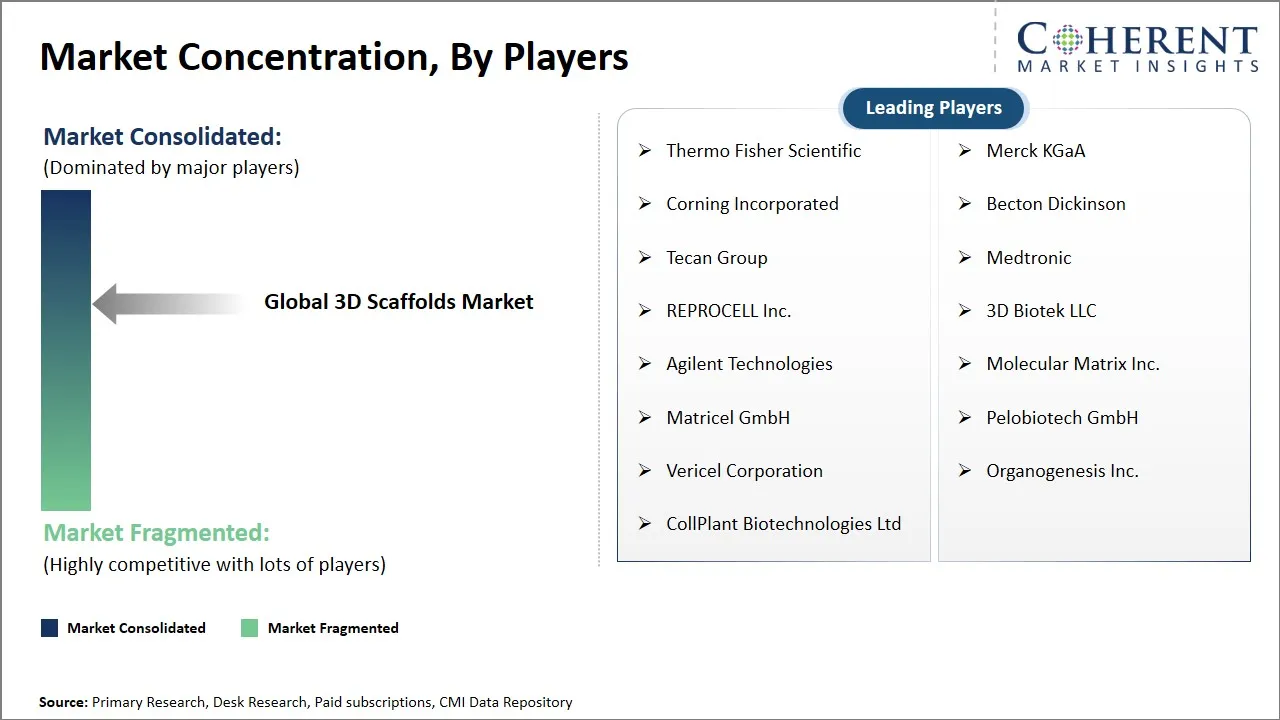
| Companies covered: | Thermo Fisher Scientific, Merck KGaA, Corning Incorporated, Becton Dickinson, Tecan Group, Medtronic, REPROCELL Inc., 3D Biotek LLC, Agilent Technologies, Molecular Matrix Inc., Matricel GmbH, Pelobiotech GmbH, Vericel Corporation, Organogenesis Inc., and CollPlant Biotechnologies Ltd | ||
| Growth Drivers: |
| ||
| Restraints & Challenges: |
| ||
3D Scaffolds Market Dynamics
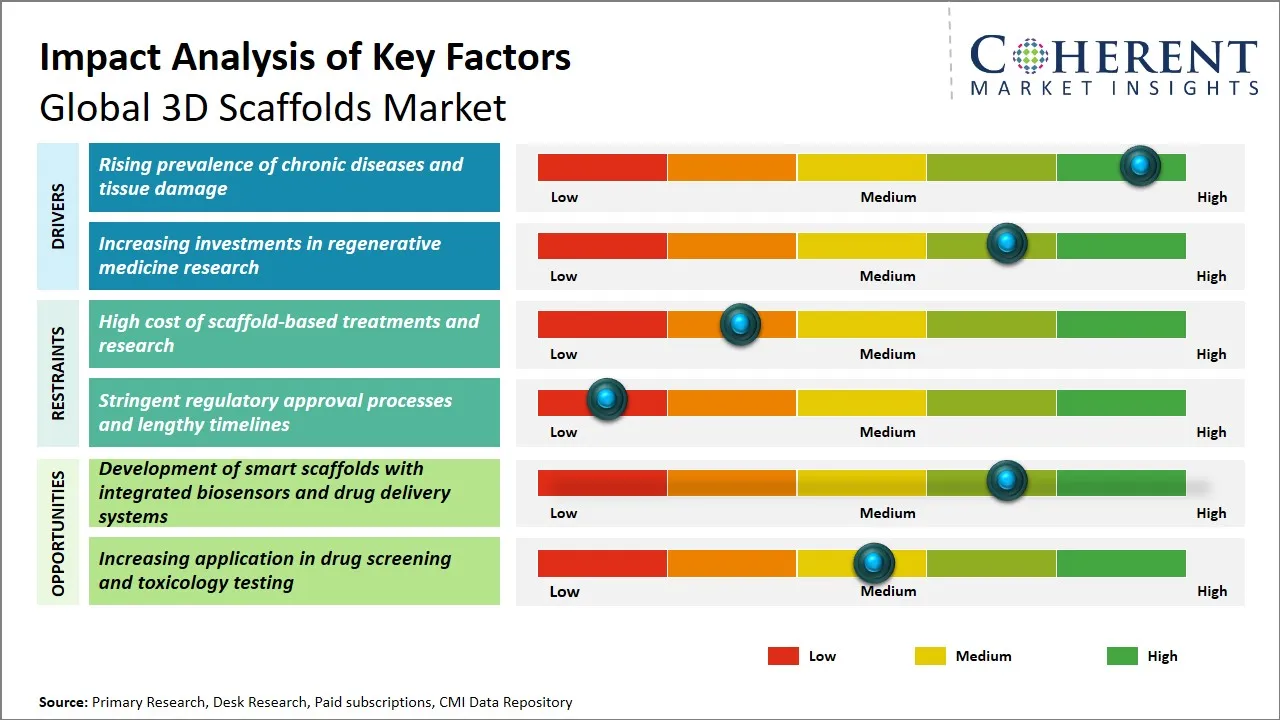
3D Scaffolds Market Driver - Rising Prevalence of Chronic Diseases and Tissue Damage
The growing occurrence of chronic ailments such as heart diseases, diabetes, and neurodegenerative diseases has very much increased the demand for improved medicinal solutions and thus the adoption of 3D scaffolds in regenerative medicine. These scaffolds are a necessary part of tissue engineering because they also help to grow, differentiate, and repair tissues by providing a supportive framework, thus this is the solution to the complex tissue damage that traditional medical treatments have to deal with and often not very successfully. The aging of the world population is a major factor; the chronic diseases that lead to the organs getting less functional or dying and the tissues getting worse condition are increasing in number, thus there will be a strong demand for the biocompatible and functional 3D scaffolds that are capable of providing the basis for the development of personalized and regenerative therapies
For example, in September 2025, the World Health Organization (WHO) reported a sharp rise in the global burden of chronic or noncommunicable diseases, which claimed around 43 million lives in 2021—accounting for 75% of non-pandemic-related deaths. The data highlighted cardiovascular diseases, cancers, chronic respiratory conditions, and diabetes as the leading causes, with 80% of premature deaths occurring in low- and middle-income countries.
3D Scaffolds Market Opportunity - Development of Smart Scaffolds with Integrated Biosensors and Drug Delivery Systems
The global 3D scaffolds market will definitely grow considerably as a result of smarts scaffolds with integrated biosensors and drug delivery systems becoming more advanced. This new idea is indeed a radical one since it is the severing of the tissue engineering and the instantaneous biological monitoring along with the targeted therapeutic delivery. The Smart scaffolds that have biosensors in them can keep an eye on the microenvironmental conditions all the time, such as pH, temperature, oxygen levels, and biochemical markers, which will then be the basis of a precise evaluation of the tissue regeneration progress.
For example, BellaSeno GmbH, this clinical-stage company is developing fully absorbable, custom-made scaffolds for orthopedic, breast reconstruction, and trauma applications. Their device platform targets large bone defects and complex surgical reconstructions in a patient-specific way.
Analyst Opinion (Expert Opinion)
- The market for 3D scaffolds is experiencing a fast-paced growth that is backed by the application of new biomaterials, advanced bioprinting and refined processing methods that lead to a better pairing with human tissues, stronger mechanical properties and wider application range. This is the case, the main driving forces for global market growth are the increased use of regenerative medicine, more investments in biomedical R&D and the presence of supporting regulatory frameworks. The area is also witnessing emergence of opportunities in the area of smart scaffolds that are equipped with biosensors and localized drug delivery systems, which enable real-time tissue monitoring and personalized therapy. On the other hand, the market still has to cope with challenges like high production costs, limited scalability, and the absence of standardized protocols for clinical translation.
- Industry engagement has increased substantially due to major global events like the International Conference on Tissue Engineering and Regenerative Medicine, TERMIS World Congress, and the 3D Bioprinting Conference which have been very important in knowledge exchange, policy framing, and technological innovation showcasing. Another example is the recent endeavors of BellaSeno’s biodegradable scaffolds for bone regeneration and government-funded regenerative medicine programs in Japan and South Korea which are indicative of the field's practical progress. The future tissue engineering landscape is expected to be shaped by these developments as they will connect laboratory research and clinical applications.
Speak to the analyst
Want personalized insights?
Take the findings above to one of our principal consultants, or have the report rebuilt around the segments, geographies and competitors you actually track.
Market Segmentation
- Material Type Insights (Revenue, USD Mn, 2021 - 2033)
- Synthetic Polymers
- Natural Polymers
- Composites
- Technology Insights (Revenue, USD Mn, 2021 - 2033)
- 3D Bioprinting
- Electrospinning
- 3D Printing
- Freeze-drying
- Phase Separation
- Self-Assembly
- Others (Molding)
- Application Insights (Revenue, USD Mn, 2021 - 2033)
- Cancer Research
- Stem Cell Research
- Tissue Engineering
- Drug Discovery and Toxicology Testing
- Regenerative Medicine
- End User Insights (Revenue, USD Mn, 2021 - 2033)
- Biotechnology and Pharmaceutical Companies
- Academic and Research Institutes
- Hospitals and Diagnostic Laboratories
- Contract Research Organizations (CROs)
- Others
- Regional Insights (Revenue, USD Mn, 2021 - 2033)
- North America
- U.S.
- Canada
- Latin America
- Brazil
- Argentina
- Mexico
- Rest of Latin America
- Europe
- Germany
- U.K.
- Spain
- France
- Italy
- Russia
- Rest of Europe
- Asia Pacific
- China
- India
- Japan
- Australia
- South Korea
- ASEAN
- Rest of Asia Pacific
- Middle East
- GCC Countries
- Israel
- Rest of Middle East
- Africa
- South Africa
- North Africa
- Central Africa
- North America
- Key Players Insights
- Thermo Fisher Scientific
- Merck KGaA
- Corning Incorporated
- Becton Dickinson
- Tecan Group
- Medtronic
- REPROCELL Inc.
- 3D Biotek LLC
- Agilent Technologies
- Molecular Matrix Inc.
- Matricel GmbH
- Pelobiotech GmbH
- Vericel Corporation
- Organogenesis Inc.
- CollPlant Biotechnologies Ltd
Sources
Primary Research Interviews
- Industry Stakeholders
- Interviews with biomaterials manufacturers
- Interviews with equipment/3D-printing platform providers for scaffold fabrication
- End Users
- Interviews with research institutes/universities using 3D scaffolds in cell culture or tissue engineering
- Interviews with hospitals or regenerative-medicine clinics adopting scaffold technologies
Government and International Databases
- National Institute of Standards and Technology (NIST)
- European Commission (EC)
- World Health Organization (WHO)
- Organization for Economic Co-operation and Development (OECD)
- United States Food and Drug Administration (FDA)
- European Medicines Agency (EMA)
Trade Publications
- Biomaterials World News
- Tissue Engineering Review
- 3D Printing Industry
- BioProcess International
- Medical Device Network
- Manufacturing Chemist
Academic Journals
- Biomaterials
- Acta Biomaterialia
- Journal of Tissue Engineering
- Materials Science and Engineering C
- Journal of Biomedical Materials Research
- Advanced Healthcare Materials
Reputable Newspapers
- The New York Times
- The Guardian
- Financial Times
- Bloomberg
- Nature News
- MIT Technology Review
Industry Associations
- Society for Biomaterials (SFB)
- Tissue Engineering and Regenerative Medicine International Society (TERMIS)
- AO Foundation
- European Society for Biomaterials (ESB)
- American Association of Tissue Banks (AATB)
- Nanotechnology Industries Association (NIA)
Public Domain Resources
- Google Patents
- NIH RePORTER
- EU Open Data Portal
- OpenAIRE
Proprietary Elements
- CMI Data Analytics Tool: Proprietary analytics tool to analyze real-time market trends, consumer behavior, and technology adoption in market
- Proprietary CMI Existing Repository of Information for Last 8 Years
Get access to 250+ pages report
Every segment, forecast, competitor profile and data table behind the analysis above — available for instant download.
- ESOMAR Member
- ISO 9001:2015 Certified
- D-U-N-S Registered
- GDPR & CCPA Compliant
Missing comfort of reading report in your local language? Find your preferred language:
Transform your Strategy with Exclusive Trending Reports
Frequently Asked Questions
The global 3D scaffolds market is estimated to be valued at USD 1070.1 Mn in 2026 and is expected to reach USD 2,059.0 Mn by 2033.
The CAGR of the global 3D scaffolds market is projected to be 9.8% from 2026 to 2033.
Rising prevalence of chronic diseases and tissue damage and increasing investments in regenerative medicine research are the major factors driving the growth of the global 3D scaffolds market.
High cost of scaffold-based treatments and research and stringent regulatory approval processes and lengthy timelines are the major factors hampering the growth of the global 3D scaffolds market.
In terms of material type, synthetic polymers segment is estimated to dominate the market revenue share in 2026.
3D printing allows for precise fabrication of scaffolds with complex structures, enhancing customization for patient-specific needs in regenerative therapies.
The market is expected to grow rapidly with technological innovations, expanding applications in regenerative medicine, and increasing clinical adoption.