

Global Agriculture Sensor Market Size and Forecast – 2026-2033
The Global Agriculture Sensor Market is estimated to be valued at USD 3.65 Bn in 2026 and is expected to reach USD 5.42 Bn by 2033, reflecting a compound annual growth rate (CAGR) of 5.8% from 2026 to 2033.
Key Takeaways of the Agriculture Sensor Market
- Location sensors segment is expected to account for 19.5 % of the global agriculture sensor market share in 2026.
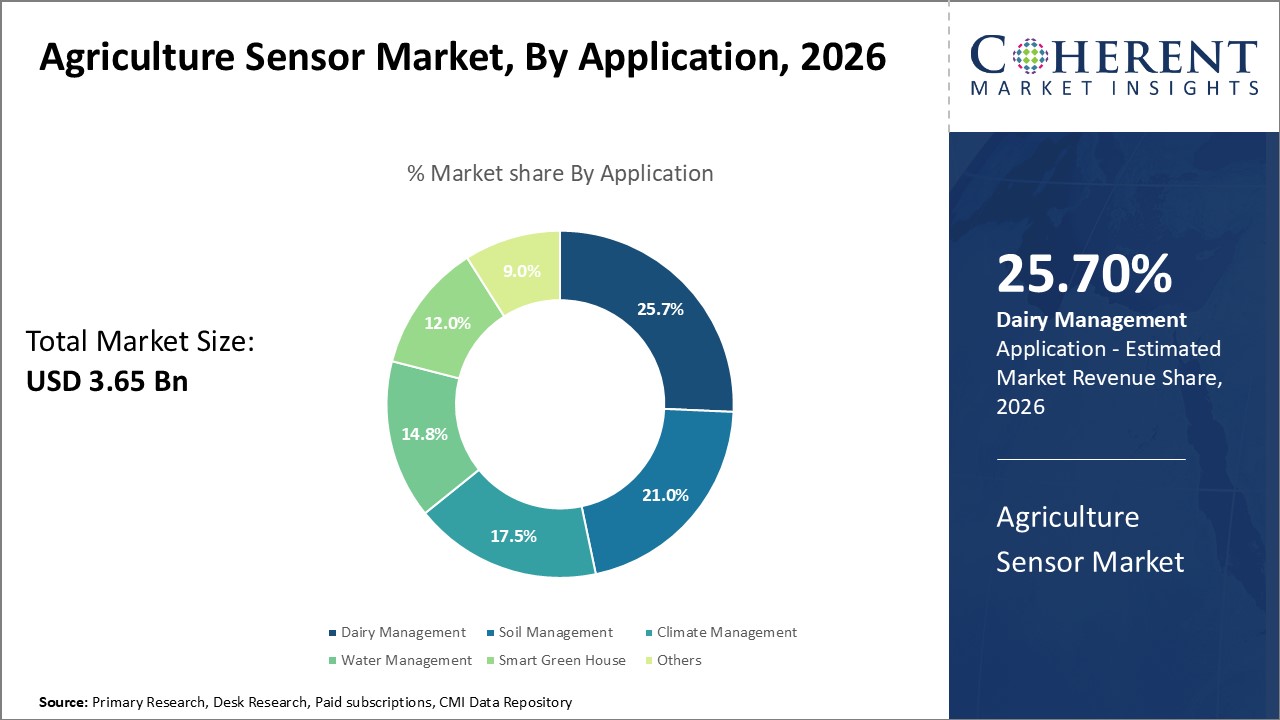
- Dairy management segment is estimated to hold 25.7 % of the market share in 2026.
- IoT-based sensors segment is projected to hold a 64.5 % of the agriculture sensor market share in 2026.
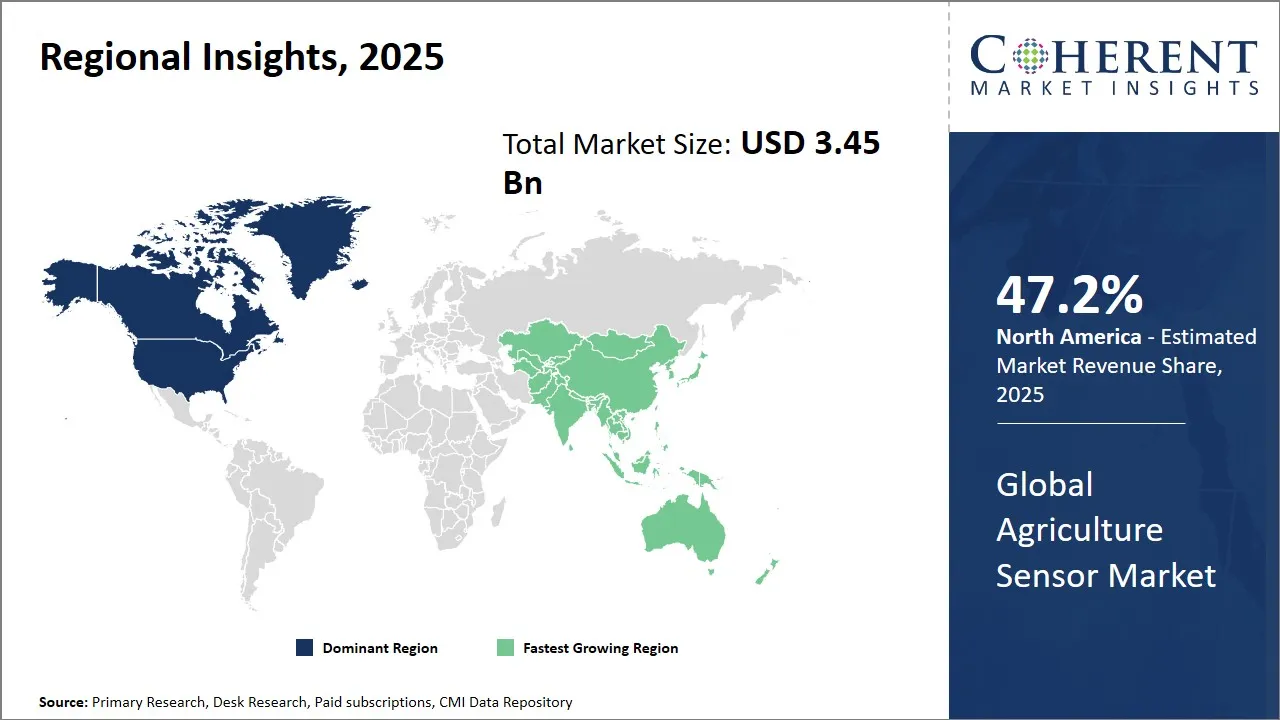
- North America leads the agriculture sensor market in 2026 with an estimated 47.2 % share.
- Asia Pacific will hold 15.3 % share in 2026 and record the fastest growth.
Market Overview
- A key market trend is the integration of Internet of Things (IoT) and artificial intelligence (AI) with agriculture sensors, enabling real-time monitoring and data-driven decision-making.
- Precision farming techniques are gaining traction, with sensors measuring soil moisture, temperature, and nutrient levels to improve efficiency and sustainability.
- Additionally, government initiatives promoting smart agriculture and the growing emphasis on reducing environmental impact are further propelling the market growth globally.
Current Events and Its Impact
Current Events | Description and its impact |
EU push to digitalize agriculture (policy priority for 2024–2029) |
|
Institutional funding streams for precision, geospatial, and sensor R&D (U.S. research funding) |
|
Segmental Insights
- Current Industry Events of 2026
- Market Size Estimation
- Regional Breakdown
- Competitive Landscape
- Customer Intelligence
- Segmental Analysis
- Pricing Analysis
- Key Market Drivers, Challenges & Future Trends
- Customized Insights Section
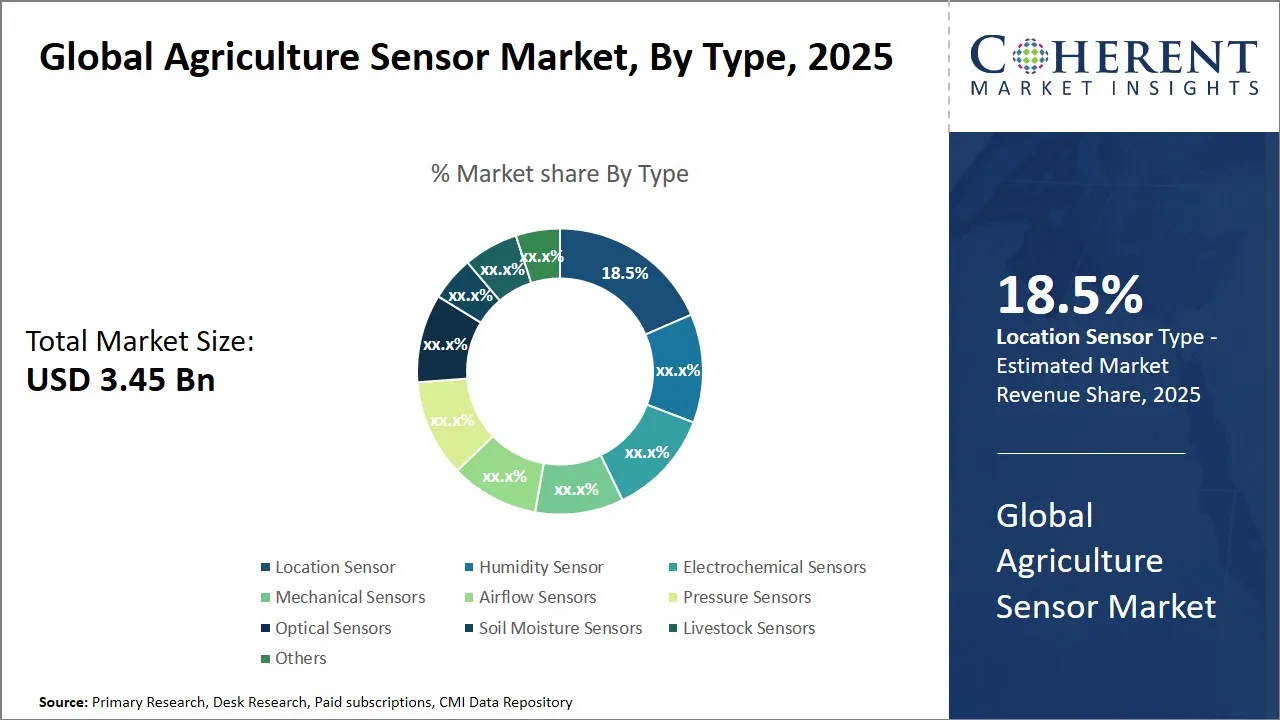
Why Does Location Sensors Dominate the Agriculture Sensor Market in 2026?
Location sensors are expected to hold 19.5% of the global agriculture sensor market share in 2026. This dominance is, to a good part, due to the increasing demand for the accuracy of spatial positioning and tracking in contemporary agricultural activity. Location sensors help farmers to get precise geospatial data that is essential in different farming tasks like computerized planting, mapping of the fields and soil sampling. The applications are useful in maximizing the use of resources, minimizing wastage, and maximizing the overall crop production to make sure that inputs are used at the right place.
The development of location sensors is also supported by the implementation of GPS and GNSS technologies in farm equipment, which make it possible to track and receive data in real-time. Agronomists and farm managers can make wise decisions using this technology because they can correlate location-specific data with environmental and crop data.
For example, John Deere AutoTrac guidance systems (Precise steering through high-precision GPS-based location sensor) are used in planting and spraying. AutoTrac has become a common practice by farmers and yields more consistent results of straight rows, reduction of overlap, less fuel and input usage, and yields more consistently on large scale farms.
Why is Dairy Management the Leading Application in the Global Agriculture Sensor Market?
Dairy management segment is projected to hold 25.7% of the market share in 2026. This can be attributed to the critical need for continuous monitoring and management of dairy livestock to optimize milk production, ensure animal health, and improve operational efficiency on dairy farms.
Dairy management agriculture sensors enable dairy farmers to track a variety of biometric as well as environmental factors to influence the livestock productivity and welfare. They monitor aspects like the activity of animals, body temperature, rumination habits, and milk production, providing early warning of diseases or calving, resulting in reduced losses and veterinary expenses. This preventive health care is critical to the profitability and quality of dairy business.
IoT-Based Sensors Dominate Global Agriculture Sensor Market
IoT-based sensors segment is set to hold 64.5% of the agriculture sensor market share in 2026, as they will provide real-time connection to data and advanced analytics. The Internet of Things (IoT) transforms the sphere of agriculture by integrating different sensors throughout the farm system, allowing communication with each other without any issues and monitoring of the state of the environment, soil, and crops.
The sensors using IoT can also be used in precision agriculture to remotely monitor soil moisture and temperature, nutrient levels, and pest infestations and send data to cloud-based services, which then analyze and deliver feedback to farmers. Such real-time information can help farmers make decisions in time, automating irrigation and fertilization and pest control processes with the highest level of accuracy and efficiency. This type of data-driven farming is the optimal solution to resource use, growing plant health, and yield performance.
Regional Insights
North America Agriculture Sensor Market Analysis and Trends
The North America region is projected to lead the market with a 47.2% share in 2026, because of a developed agricultural ecosystem and widespread adoption of technology. With the fact that sophisticated farming activities are in place and there is a growing investment in precision farming, it has created a favorable climate for agriculture sensors. The government policies regarding smart agricultural projects and subsidies of the digital farming devices contribute to the market development.
In addition, the area is also home to some of the leading players in the industry such as Trimble Inc., John Deere and AGCO Corporation, which constantly develop sensor technologies to monitor soil moisture, crop health and environmental conditions. This has been enhanced by the established supply chain and trade infrastructure which makes the distribution of equipment and provision of after-sales services easier which holds more power in the market.
Asia Pacific Agriculture Sensor Market Analysis and Trends
The Asia Pacific region is expected to exhibit the fastest growth in the market contributing 15.3% share in 2026, due to the modernization of agriculture in the region and because of the necessity to enhance the harvest of crops due to the increasing food demand. This is because countries in this region are increasingly implementing IoT-based sensors and automated systems to ensure that they optimize on the use of water and minimize farming inputs.
In other countries, including China and India, there are government initiatives on smart farming and digital agriculture where subsidies are given and adoption of technology encouraged among small and medium-scale farmers. The exploding agritech startups in India, China and South Asia are key growth engines and they are offering cost-effective and scalable sensor solutions. Xiaomi Company in China and CropIn Company in India are also on the frontline to help in the growth by incorporating AI and sensor data analytics to improve farm productivity and sustainability.
Global Agriculture Sensor Market Outlook for Key Countries
U.S. Agriculture Sensor Market Trends
U.S. agriculture sensor market is typified by pervasive application of advanced technology of agriculture sensors that includes GPS-based soil sensors, aerial drones to monitor crops and climate-responsive devices. The U.S. enjoys the top position in research and development spending, allowing sensorization of farm manager software solutions, dominated by such companies as Trimble and John Deere. Precision agriculture adoption is promoted by strong government leaders, such as USDA efforts. The reason is that the well-established agricultural machinery industry incorporates sensors to enhance efficiency, which is fueled by big commercial farms.
India Agriculture Sensor Market Trends
The market for agriculture sensors in India is developing at high rates with the focus on the affordable and scaleable sensor technology that would be focused on the small farmers. Government initiatives, such as Digital India and National Agriculture Market, and their public-private partnerships are favorable to the adoption of sensors to make the use of resources in the agricultural field more efficient. CropIn and Stellapps are among the companies that lead in the industry by combining sensors with mobile apps, allowing the farmer to observe the health of the soil and its water consumption and pest occurrence in real-time. The emerging agritech startup ecosystem and penetration of the digital platform enhances the availability of sensor-based technologies in the rural regions.
China Agriculture Sensor Market Trends
China is still on top of the Asia Pacific market because of the huge agricultural modernization initiatives and extensive investments in intelligent farming technologies. The sustainable agricultural practices promoted by the governments promote the application of precision sensors to optimize irrigation, management of crops and chemicals and monitoring of crops. Such prominent companies as DJI and Xiaomi also play their role in creating strong sensor platforms, coupled with drones and IoT networks, to organize the process of data collection on extensive farming areas. The vast manufacturing and research potential of Chinas allows it to innovate and also produce sensors quickly and at low cost, which can be used in both the domestic and export market.
Brazil Agriculture Sensor Market Trends
The Brazil’s market for agriculture sensors has advantages in the world of agribusiness and export production. Implementation of sensor technologies assists in enhancing efficiency of commodity crop production of soybean and coffee. The governmental initiatives to promote sustainable farming and environmental safety promote the use of sensors in monitoring soil condition and water preservation. Homegrown vendors, and multimedia companies such as AGCO and Siemens, offer custom sensor products with an emphasis on tropical weather and massive farms. The logistics infrastructure in Brazil’s facilitates good distribution channels, which have contributed to the extensive introduction of technology in the rural areas.
Australia Agriculture Sensor Market Trends
Trends in the agriculture sensor market in Australia are motivated by the necessity to cope with water shortage and respond to climate change. The sensors of the soil moisture, weather conditions, and stress of crops are highly demanded in order to maximize irrigation and improve drought resistance. Such companies as CSIRO have played a key role in the development of innovative sensor technology to be used in arid conditions. The use of smart farming solutions is encouraged by the government incentives and partnerships with private enterprises. This market continues to expand due to the large agricultural firms that invest in precision farming in this area.
Comparative Sensor Accuracy & Drift Metrics
Sensor Brand Tier | Sensor Type | Accuracy (%) | Avg. Recalibration Cycle | Commercial Implication |
Premium Global Brand | Soil Moisture | 97–99 | 18–24 months | Preferred for precision farming & export crops |
Mid-Tier Regional Brand | Soil Moisture | 93–95 | 9–12 months | Balanced cost–performance for commercial farms |
Premium Global Brand | Weather Sensor | 96–98 | 18 months | Reliable for climate-linked irrigation models |
Market Players, Key Development, and Competitive Intelligence
Key Developments
- In September 2024, CropX inc., one of the market players in agriculture technology, acquired technology application startup, EnGeniousAg. The startup delivered innovation-based nitrogen sensing technique to assist farmers in optimizing nitrogen fertilizer application while reducing the environmental impact.
- In January 2024, Ethos Connected, a company with a portfolio of environmental and agriculture technology solutions, unveiled its sensor production facility in Lincoln, Nebraska. The strategically located facility is anticipated to assist local farmers and the agriculture ecosystem in the state of Nebraska in continuing to play their crucial role through water conservation, technology advancements, and more.
Top Strategies Followed by Global Agriculture Sensor Market Players
Player Type | Strategic Focus | Example |
Established Market Leaders | Heavy investment in R&D and innovation | For instance, John Deere’s Operations Center can give an example, where sensor data are used along with real-time analytics and automation of machines, keeping customers in an end-to-end digital agriculture ecosystem. |
Mid-Level Players | Cost-effective solutions with balanced quality | Companies like CropX, Pycno and Sentek specialize in soil moisture, nutrient, and weather sensors which can be used with third-party farm management software instead of costly proprietary systems. |
Small-Scale Players | Niche specialization & innovative variants | For instance, LoRaWAN-based soil and weather sensors Small-scale players have niche applications such as soil and weather sensors designed to address local agronomic issues that are not a priority to global players. These firms are greatly depending on collaboration with agriculture colleges, research centers and local cooperatives to approve items, expedite pilot projects and earn approval on the grassroots scale. |
Market Report Scope
Agriculture Sensor Market Report Coverage
| Report Coverage | Details | ||
|---|---|---|---|
| Base Year: | 2025 | Market Size in 2026: | USD 3.65 Bn |
| Historical Data for: | 2020 To 2024 | Forecast Period: | 2026 To 2033 |
| Forecast Period 2026 to 2033 CAGR: | 5.8% | 2033 Value Projection: | USD 5.42 Bn |
| Geographies covered: |
| ||
| Segments covered: |
| ||
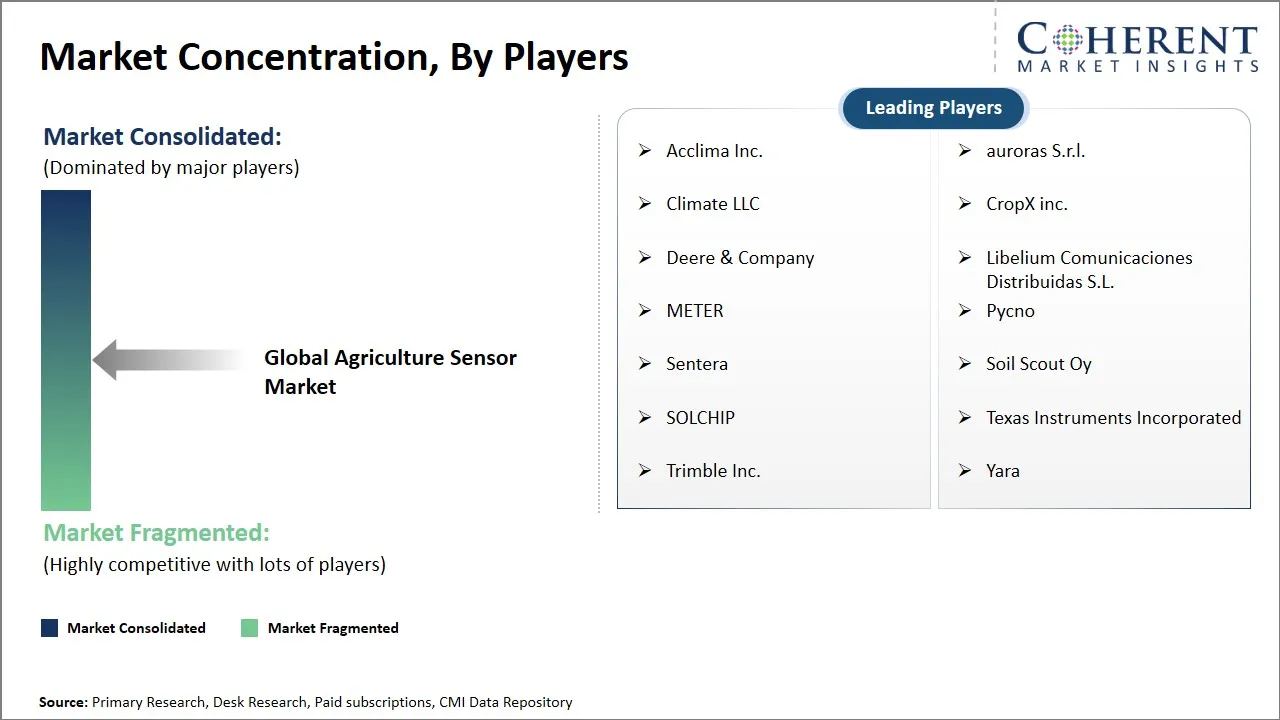
| Companies covered: | Acclima Inc., auroras S.r.l., Climate LLC, CropX inc., Deere & Company, Libelium Comunicaciones Distribuidas S.L., METER, Pycno, Sentera, Soil Scout Oy, SOLCHIP, Texas Instruments Incorporated, Trimble Inc., and Yara | ||
| Growth Drivers: |
| ||
| Restraints & Challenges: |
| ||
Agriculture Sensor Market Dynamics
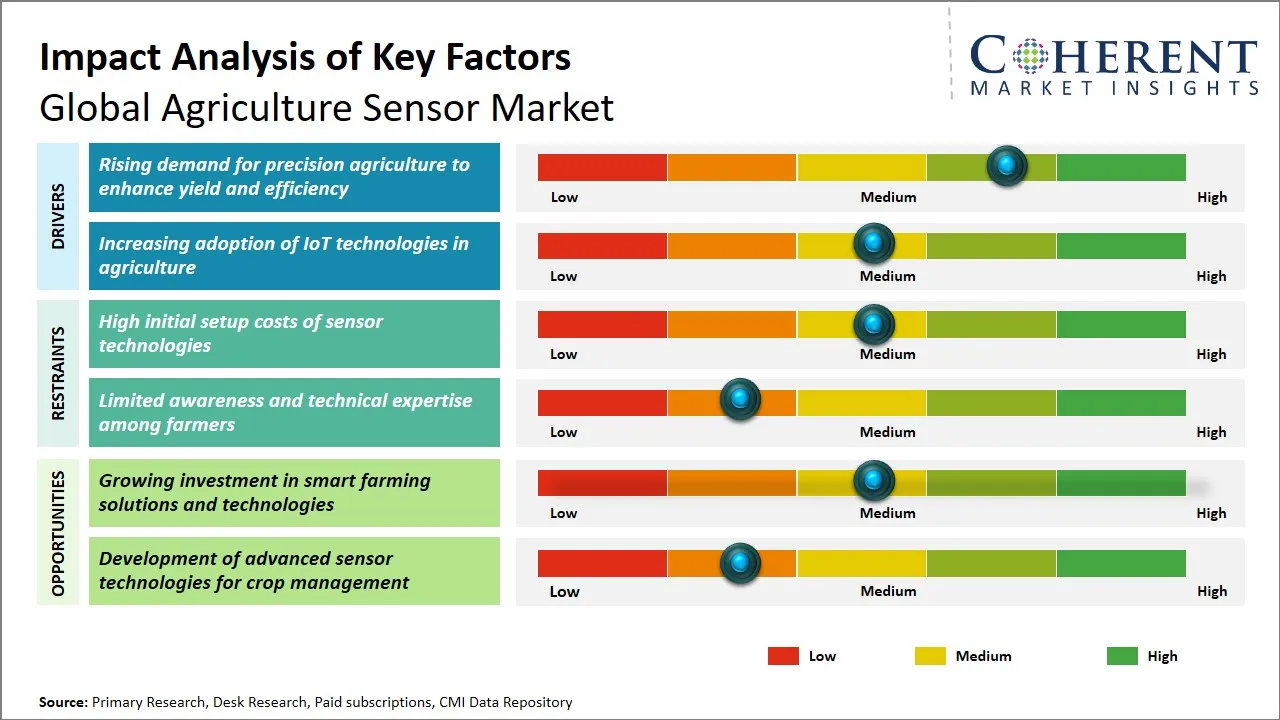
Agriculture Sensor Market Driver - Rising Demand for Precision Agriculture to Enhance Yield and Efficiency
The rising demand of maximizing crop yield, at the same time reducing the use of resources is one of the crucial reasons that make agriculture sensors prevalent worldwide. Precision agriculture technologies allow farmers to register the soil conditions, moisture levels, nutrient availability, and weather patterns in real-time and make decisions that are supported by the data, according to which the crop yield and resource utilization become the highest possible. As the demand to nourish a growing world population increases and the need to enhance sustainable farming methods becomes increasingly apparent, farmers are resorting to the use of sophisticated sensor technology to enhance the precision of their operations and lower the associated costs of water, fertilizers, and pesticides.
The large corn and soybean farms situated in the U.S. Midwest utilize soil moisture, EC, and nutrient sensors that are connected to the variable-rate irrigation and fertilization systems. Farmers spray water and fertilizers on a zone basis as opposed to blanket spraying. These cuts reduce costs by 15 to 25 percent and enhance uniform yields despite the variability of rainfall. The break-even period, which is the ROI, is normally attained in 1 to 2 crop cycles, pushing to rapid adoption.
(Source: https://ers.usda.gov/publications/pub-details?pubid=42431)
Agriculture Sensor Market Opportunity - Growing Investment in Smart Farming Solutions and Technologies
The global agriculture sensor market is likely to gain greatly due to the growing investment into smart farming solutions and advanced technologies in farming. Both governments, individual businesses and venture capitalists are investing high amounts of money in the creation and implementation of precision agriculture tools that use sensors to gather and analyze real-time data. The need to boost crop productivity, maximize resource use, and solve the problem of climate change and increasing population of the world underlines these investments. Sensors in soil, weather stations, and crop monitoring system can be used to give essential information on soil moisture, nutrient content and on crop health, allowing farmers to make informed decision.
India has digital agriculture initiatives supported by the government, which encourages IoT soil sensors and automated weather stations among small farmers. Startups use sensor systems that install sensor kits with mobile applications to offer irrigation and nutrient prescriptions. The initial costs are minimized by subsidies and pilot money, and then commercialized by the private investors. This produces a long-term demand of low-cost sensors and data analytics service fee.
Analyst Opinion (Expert Opinion)
- The agriculture sensor market will grow dramatically as the demand for precision agriculture and data-guided agricultural practices grows. The Global Precision Agriculture Conference (2023) and the International Conference on Agriculture Sensors (2022) included informative insights into exceptional innovations with such companies as John Deere and Trimble taking the lead in the development of sensor technology to monitor crops and manage resources.
- The recent launching of an innovative soil moisture sensor by John Deeres that allows its users to see real-time data on the watering requirements can be viewed as an illustration of how the industry is being restructured to embrace smart solutions that can be used to reduce water consumption and enhance the production of crops.
- During these conferences, it was noted that the use of IoT technology to gather detailed information was on the rise to help farmers make sound decisions without increasing their environmental impact. Nevertheless, issues regarding the expenses of the initial investments and the necessity of educating farmers in the use of technologies were raised regularly.
Speak to the analyst
Want personalized insights?
Take the findings above to one of our principal consultants, or have the report rebuilt around the segments, geographies and competitors you actually track.
Market Segmentation
- Type Insights (Revenue, USD Bn, 2021 - 2033)
- Location Sensor
- Humidity Sensor
- Electrochemical Sensors
- Mechanical Sensors
- Airflow Sensors
- Pressure Sensors
- Optical Sensors
- Soil Moisture Sensors
- Livestock Sensors
- Others
- Application Insights (Revenue, USD Bn, 2021 - 2033)
- Dairy Management
- Soil Management
- Climate Management
- Water Management
- Smart Green House
- Others
- Technology Insights (Revenue, USD Bn, 2021 - 2033)
- IoT-Based Sensors
- Non-IoT Sensors
- Regional Insights (Revenue, USD Bn, 2021 - 2033)
- North America
- U.S.
- Canada
- Latin America
- Brazil
- Argentina
- Mexico
- Rest of Latin America
- Europe
- Germany
- U.K.
- Spain
- France
- Italy
- Russia
- Rest of Europe
- Asia Pacific
- China
- India
- Japan
- Australia
- South Korea
- ASEAN
- Rest of Asia Pacific
- Middle East
- GCC Countries
- Israel
- Rest of Middle East
- Africa
- South Africa
- North Africa
- Central Africa
- North America
- Key Players Insights
- Acclima Inc.
- auroras S.r.l.
- Climate LLC
- CropX inc.
- Deere & Company
- Libelium Comunicaciones Distribuidas S.L.
- METER
- Pycno
- Sentera
- Soil Scout Oy
- SOLCHIP
- Texas Instruments Incorporated
- Trimble Inc.
- Yara
Sources
Primary Research Interviews
- CEO – Leading Agriculture Sensor Manufacturer (e.g., CropX or Deere & Company equivalent)
- Supply Chain Director – Major IoT Agriculture Sensor Distributor
- Production Lead – Precision Farming Sensor Developer
- Sustainability Officer – Agriculture IoT Certification Authority
Stakeholders
- Manufacturers
- End-use Sectors
- Precision Farming Operators (Crop Monitoring, Soil Analysis)
- Livestock Management Farms
- Smart Irrigation Systems Providers
- Regulatory & Certification Bodies (e.g., USDA for ag-tech standards, EU Digital Farming Compliance)
- E-commerce Platforms and Retailers (Alibaba, Amazon Industrial, DigiKey)
- Technology Integration Players: AI/ML Analytics Firms and Drone Sensor Integrators
Databases
- UN Comtrade Database (HS Codes for Sensors and IoT Devices)
- India Import Export (EXIM) Database
- USGS Mineral Commodity Summaries (Related Electronics/Ag-Tech Inputs)
- Eurostat Trade Statistics for Electronics and Sensors
- FAO Statistical Database (Agriculture Tech Adoption Metrics)
Magazines
- Precision Farming Dealer – Trends in agriculture IoT sensors
- com – Sensor innovations in smart farming
- Farm Journal – Precision ag sensor applications
- IoT World Today – Agriculture sensor market dynamics
- Smart Agriculture Magazine – IoT and sensor integrations
Journals
- Computers and Electronics in Agriculture – IoT sensors in precision farming
- Sensors (MDPI) – Agriculture sensor technologies
- Precision Agriculture – Data-driven sensor analytics
- Agricultural Systems – Sustainability via sensors
- Internet of Things (Elsevier) – Farm sensor networks
Newspapers
- The Wall Street Journal – Ag-tech sensor demand growth
- Financial Times – IoT in global agriculture
- Business Standard (India) – Agriculture sensor imports and adoption
- Reuters – Precision farming sensor market volatility
- Farmers Guardian – Sensor tech advancements
Associations
- International Society of Precision Agriculture (ISPA)
- Open Geospatial Consortium (Agriculture IoT Working Group)
- Association for Unmanned Vehicle Systems International (Drone Sensors)
- European Crop Care Association
- Global Agriculture and Food Security Program (Tech Focus)
Public Domain Sources
- USDA – Guidelines for precision agriculture sensors
- European Commission – Digital Farming and IoT Regulations
- FAO – Reports on smart agriculture sensors
- World Bank – Ag-tech adoption and sustainability data
- OECD – Digital agriculture transformation reports
Proprietary Elements
- CMI Data Analytics Tool, Proprietary CMI Existing Repository of information for last 8 years.
Get access to 250+ pages report
Every segment, forecast, competitor profile and data table behind the analysis above — available for instant download.
- ESOMAR Member
- ISO 9001:2015 Certified
- D-U-N-S Registered
- GDPR & CCPA Compliant
Missing comfort of reading report in your local language? Find your preferred language:
Transform your Strategy with Exclusive Trending Reports
Frequently Asked Questions
The global agriculture sensor market is estimated to be valued at USD 3.65 Bn in 2026 and is expected to reach USD 5.42 Bn by 2033.
The CAGR of global agriculture sensor market is projected to be 5.8% from 2026 to 2033.
They push real-time data to platforms, enable alerts/automation, and support analytics across multiple farm sites.
Rising demand for precision agriculture to enhance yield and efficiency and increasing adoption of IoT technologies in agriculture are the major factors driving the growth of the global agriculture sensor market.
High initial setup costs of sensor technologies and limited awareness and technical expertise among farmers are the major factors hampering the growth of the global agriculture sensor market.
In terms of type, the location sensor is estimated to dominate the market revenue share in 2026.
Acclima Inc., auroras S.r.l., Climate LLC, CropX inc., Deere & Company, Libelium Comunicaciones Distribuidas S.L., METER, Pycno, Sentera, Soil Scout Oy, SOLCHIP, Texas Instruments Incorporated, Trimble Inc., and Yara are the major players.