

Ambulatory Infusion Pumps Market
Market Definition |
|
|
Key Statistics Table
Source: Coherent Market Insights Analysis, July 2026 | |
Metric | Value |
| USD 1,087.0 Million |
| USD 1,784.7 Million |
| 7.2% |
| Peristaltic Pumps (64.8% share in 2026) |
| Pain Management Drugs (37.7% share in 2026) |
| Pain Management (37.2% share in 2026) |
| North America (38.8% share in 2026) |
| Asia Pacific (22.9% share in 2026) |
| 2025 |
| 2026-2033 |
| Baxter International Inc., Becton, Dickinson and Company, B. Braun SE, ICU Medical, Inc., Fresenius Kabi AG |
Global Ambulatory Infusion Pumps Market Size and Forecast – 2026 To 2033
The global ambulatory infusion pumps market is expected to grow from USD 1,087.0 Mn in 2026 to USD 1,784.7 Mn by 2033, registering a compound annual growth rate (CAGR) of 7.2% from 2026 to 2033. The market for ambulatory infusion pumps is poised for significant expansion, fueled by the soaring burden of chronic diseases requiring long-term infusion therapy.
According to the World Health Organization, non-communicable diseases have been responsible for over 43 million deaths worldwide in 2021, representing 75% of all deaths unrelated to pandemics. The mortality rate due to NCDs was about 18 million deaths per year before the age of 70 years, with about 82% of such early deaths occurring in developing countries. This underscores the surging demand for continuous drug delivery solutions such as ambulatory infusion pumps that support safe and effective treatment outside hospital settings.
Key Takeaways of the Global Ambulatory Infusion Pumps Market
- Peristaltic pumps are projected to hold 64.8 % of the global ambulatory infusion pumps market share in 2026, making it the dominant device type segment across North America due to the widespread adoption of smart infusion technologies in hospitals and home infusion settings. For instance, the U.S. Food and Drug Administration (FDA) continues to promote the adoption of safer infusion pump technologies through its Infusion Pump Improvement Initiative to reduce device-related adverse events and improve patient safety.
- Pain management drugs are projected to hold 37.7 % of the global ambulatory infusion pumps market share in 2026, making it the dominant drug type segment across North America owing to the increasing adoption of home infusion therapy for chronic and postoperative pain management. For instance, the U.S. Centers for Medicare & Medicaid Services (CMS) provides reimbursement for home infusion therapy services, supporting the growing use of ambulatory infusion pumps for pain medication delivery in outpatient settings.
- Pain management is projected to hold 37.2 % of the global ambulatory infusion pumps market share in 2026, making it the dominant application segment across Europe due to the growing emphasis on ambulatory care and enhanced postoperative recovery programs. For instance, the National Health Service England promotes virtual wards and hospital-at-home models that support the use of ambulatory infusion devices for continuous pain management outside conventional hospital settings.
- North America maintains its dominance with an expected share of 38.8 % in 2026, bolstered by the robust home healthcare infrastructure, high adoption of advanced infusion technologies, and increasing outpatient care. For instance, in January 2025, the U.S. Food and Drug Administration (FDA) issued updated guidance on infusion pump cybersecurity to enhance the safety and reliability of connected infusion devices, reinforcing confidence in their adoption across healthcare settings.
- Asia Pacific is expected to exhibit the fastest growth with an estimated contribution of 22.9 % share in 2026, propelled by expanding healthcare infrastructure, rising chronic disease burden, and increasing government investments in digital and home healthcare. For instance, Australia's Department of Health and Aged Care continues to expand the Hospital in the Home (HITH) program, enabling eligible patients to receive hospital-level treatments, including infusion therapies, in home settings and supporting the demand for ambulatory infusion pumps.
- Current Industry Events of 2026
- Market Size Estimation
- Regional Breakdown
- Competitive Landscape
- Customer Intelligence
- Segmental Analysis
- Pricing Analysis
- Key Market Drivers, Challenges & Future Trends
- Customized Insights Section
Segmental Insights
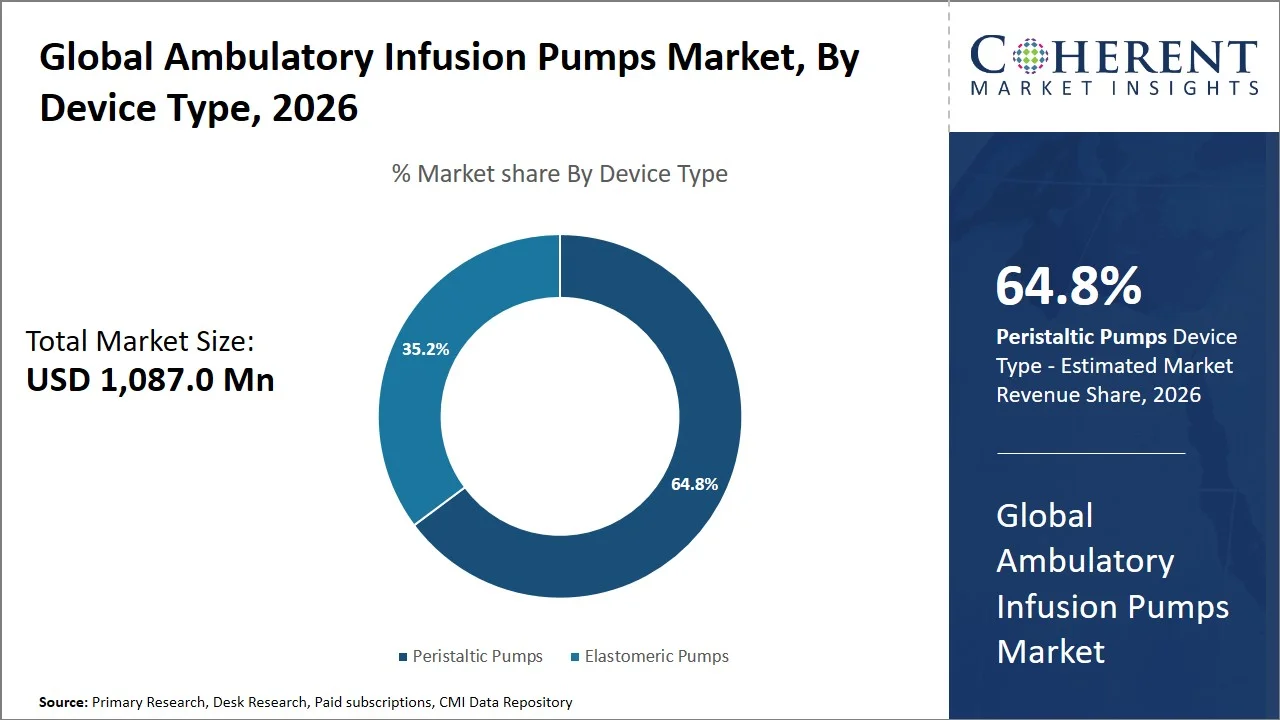
Why Do Peristaltic Pumps Dominate the Global Ambulatory Infusion Pumps Market?
Peristaltic pumps are projected to hold a market share of 64.8% in 2026, primarily attributed to high infusion accuracy, constant flow and versatility in several medications like anti-infective therapies, pain management, and oncology drugs. Their closed loop fluid path reduces contamination hazards and provides efficient and dependable long-term infusion for home based and outpatient settings. Furthermore, ongoing innovations in precision pumping mechanisms and digital connectivity continue to strengthen their adoption. For instance, in April 2025, ICU Medical, Inc. receives U.S. FDA 510(k) clearances for its Plum Solo Precision IV Pump, and Plum Duo Precision IV Pump with ±3% accuracy and improved interoperability with IV-EHR, and LifeShield infusion safety software to strengthen the IV Performance Platform with expanded safety and workflow features.
Why Do Pain Management Drugs Represent the Largest Drug Type Segment in the Ambulatory Infusion Pumps Market?
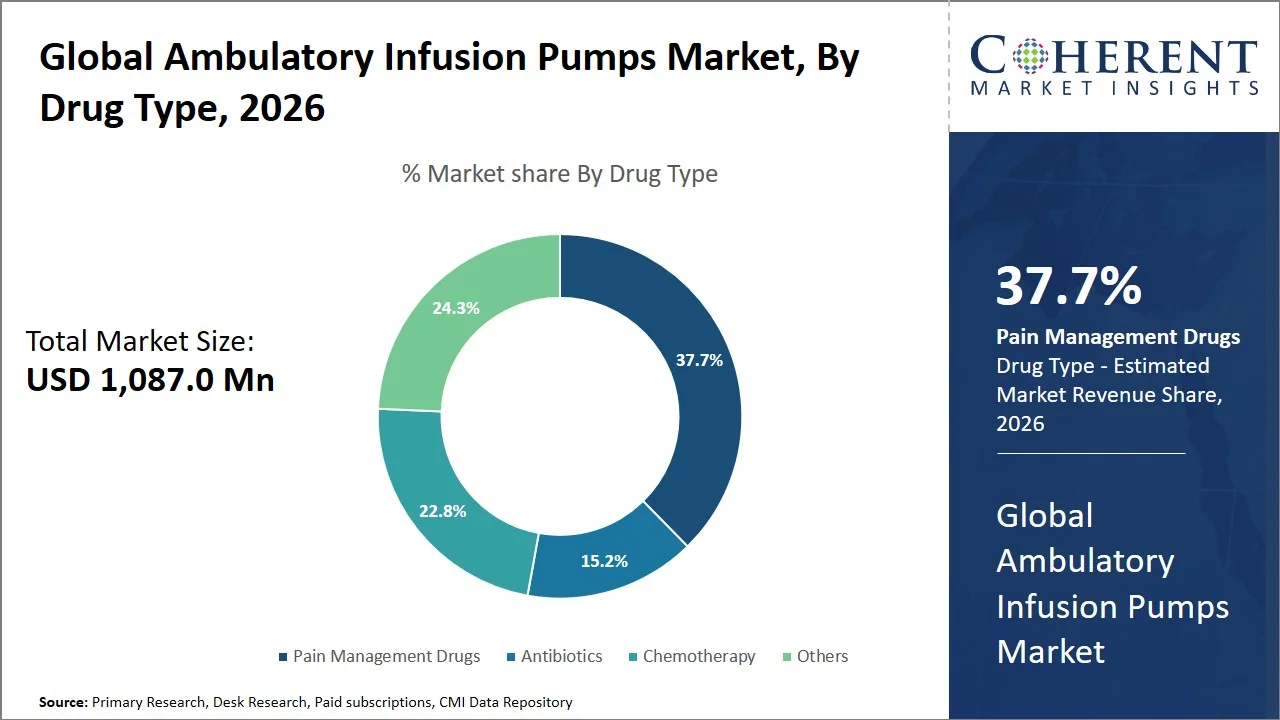
Pain management drugs are projected to hold a market share of 37.7% in 2026, because of their continuous and steady analgesic requirement in post-operative patients as well as those experiencing chronic pain. Ambulatory infusion pumps facilitate dose control, consistent pain relief, and also enhance patient mobility that would assist with home or outpatient infusion therapy or pain management solutions. Increasing popularity of patient-controlled analgesia (PCA), regional anesthesia techniques is further supporting demand for dedicated pain infusion systems. For instance, in November 2024, Avanos Medical, Inc. announced that its ON-Q Elastomeric Infusion Pump and ambIT Disposable Electronic Infusion Pump, each designed to facilitate continuous postoperative pain management, will be separately covered by Medicare under the NOPAIN Act, starting January 1, 2025, and would promote increased access to ambulatory non-opioid pain management treatment.
Pain Management Segment Dominates the Global Ambulatory Infusion Pumps Market
The pain management segment is projected to hold a market share of 37.2% in 2026, driven by increased utilization of outpatient surgery and recovery enhanced paths that promote early discharge of the patient post-operatively. Ambulatory infusions make regional anesthesia and patient-controlled analgesia feasible in the ambulatory care environment, thus shortening hospital lengths of stay without compromising the patient’s pain relief. Their ability to support continuous peripheral nerve block (cPNB) therapy has further expanded their use across orthopedic, abdominal, and sports medicine procedures. For instance, in February 2026, a clinical study published by ScienceDirect, highlighted that ambulatory continuous peripheral nerve block delivered via portable infusion pumps provided enhanced postoperative pain control, improved patient satisfaction, and decreased postoperative opioid use in patients undergoing outpatient orthopedic surgery.
Currents Events and their Impact
Current Events | Description and its Impact |
U.S. FDA Final Cybersecurity Guidance for Medical Devices (February 2026) |
|
European Commission Proposes Targeted Revision of the Medical Device Regulation (MDR) (December 2025) |
|
Ambulatory Infusion Pumps Market Dynamics
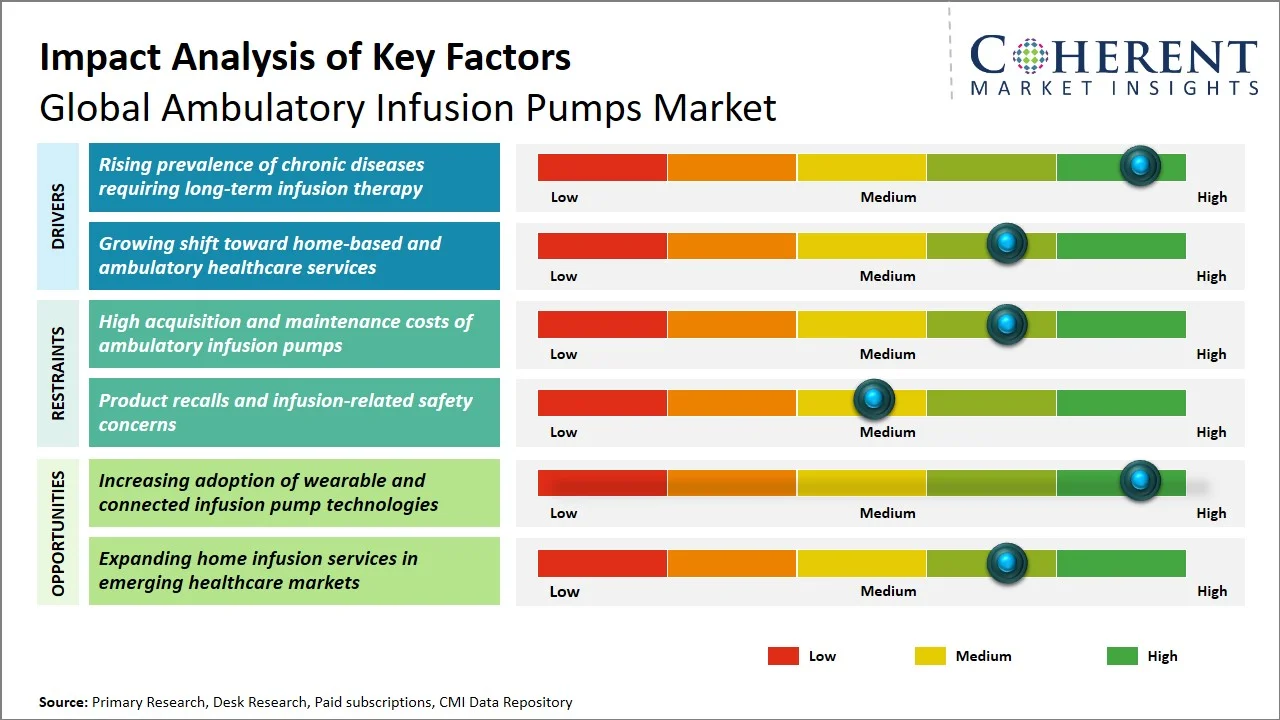
Market Drivers
- Rising prevalence of chronic diseases requiring long-term infusion therapy: Ambulatory infusion pumps market is promptly driven by rising prevalence of chronic diseases requiring long term infusions including diabetes, cancer, autoimmune diseases, and renal diseases. The use of ambulatory infusion pumps for home use and outpatients helps in maintaining constant accurate delivery of medication and enhancing the patient’s treatment regimen, thereby decreasing their dependence on hospitalization. For instance, according to the U.S. Centers for Disease Control and Prevention (CDC), approximately 6 in 10 adults in the U.S. live with at least one chronic disease, while 4 in 10 have two or more chronic conditions, underscoring the growing demand for long-term ambulatory infusion solutions.
- Growing shift toward home-based and ambulatory healthcare services: The growing shift towards home-based and ambulatory healthcare services is a key driver of the global ambulatory infusion pumps market, as hospitals are expanding their scope towards decentralized care models where patients receive treatment at home or ambulatory locations to enhance convenience and efficiency in their treatment process and resource management. Ambulatory infusion pumps allow seamless drug administration to the patients in their homes and decreases the costs related to inpatient hospitalization and other facilities. For instance, according to the U.S. Centers for Medicare & Medicaid Services (CMS), healthcare spending on home health care reached USD 147.8 billion in 2023, representing a 10.8% increase over 2022, reflecting the accelerating adoption of home-based healthcare services that support demand for ambulatory infusion technologies.
- Increasing Global Aging Population: The rapidly expanding geriatric population is driving the demand for ambulatory infusion pumps, as older adults are more susceptible to chronic diseases requiring long-term intravenous therapies, including oncology, nutrition support, and anti-infective treatments. Portable infusion systems enable elderly patients to receive continuous therapy in home settings while reducing hospital dependence. For instance, according to the World Health Organization, by 2030, 1 in 6 people in the world will be aged 60 years or over. By 2050, the world’s population of people aged 60 years and older will double (2.1 billion), while the number of persons aged 80 years or older is expected to triple between 2020 and 2050 to reach 426 million, creating sustained demand for ambulatory infusion therapies.
- Increasing Incidence of Cancer Requiring Infusion-Based Therapies: The rising incidence of cancer is accelerating the adoption of ambulatory infusion pumps, as many chemotherapy regimens require prolonged and precisely controlled drug administration. Ambulatory infusion systems enable continuous chemotherapy delivery while allowing patients to continue treatment outside hospital settings. For instance, according to the World Health Organization, about 1 in 5 people develop cancer in their lifetime, approximately 1 in 9 men and 1 in 12 women die from the disease. In 2022, there were an estimated 20 million new cancer cases and 9.7 million deaths globally, highlighting the growing need for long-term infusion-based oncology care.
- Rising Healthcare Expenditure Supporting Advanced Medical Technologies: Increasing healthcare expenditure across developed and emerging economies is supporting investments in advanced infusion technologies, home healthcare infrastructure, and digital medical devices. Higher healthcare spending enables broader adoption of portable infusion systems across hospitals and community care settings. For instance, according to Organisation for Economic Co-operation and Development, in 2024, average health spending in OECD countries was estimated to stand at nearly USD 6,000 per capita with the United States spending over USD 14,880 per person, reflecting considerable investments in healthcare systems that continue to drive demand for advanced ambulatory infusion technologies.
Market Restraints
- High acquisition and maintenance costs of ambulatory infusion pumps: High acquisition and ongoing costs of ambulatory infusion pumps impact uptake especially for the resource-limited and cost-conscious health settings. The complex circuitry, calibration requirements, software upgrades, maintenance needs and consumable supplies of modern electronic infusion pumps contribute to a higher overall life-cycle cost. For instance, according to the World Health Organization (WHO), around 2 billion people face financial hardship due to out-of-pocket health expenditures, highlighting affordability challenges that can restrict access to advanced medical technologies, including ambulatory infusion pumps.
- Product Recalls and Infusion-Related Safety Concerns: Product recalls and infusion-related safety concerns remain a significant restraint, as device malfunctions, software failures, and inaccurate drug delivery can compromise patient safety and delay therapy. Recalls also increase regulatory scrutiny, compliance costs, and healthcare providers' concerns regarding device reliability. For instance, in May 2025, the U.S. FDA designated Baxter Healthcare's Novum IQ Large Volume Pump correction as a Class I recall after identifying software issues that could interrupt or delay infusion delivery, posing risks of serious patient harm.
- Stringent Regulatory Approval and Cybersecurity Compliance Requirements: Stringent regulatory approval requirements and evolving cybersecurity standards continue to increase product development costs and extend commercialization timelines for ambulatory infusion pumps, particularly connected devices. Manufacturers must demonstrate software validation, interoperability, and cybersecurity risk management throughout the device lifecycle. For instance, in in January 2025, the European Commission began applying the European Database on Medical Devices (EUDAMED) Actor Registration and Notified Body & Certificates modules on a mandatory basis, increasing regulatory documentation and compliance requirements for medical device manufacturers, including infusion pump companies.
- Risk of Medication Errors and User-Related Operational Challenges: Medication errors associated with incorrect pump programming, infusion setup, or user handling remain a significant challenge, particularly in home healthcare settings where clinical supervision is limited. These errors may lead to inaccurate drug delivery and adverse patient outcomes. For instance, the World Health Organization (WHO) estimates that medication errors cause at least one death every day and harm approximately 1.3 million people annually in the United States, highlighting the continued need for safer infusion technologies and enhanced user training.
Top 5 Emerging Trends in Global Ambulatory Infusion Pumps Market
- Expansion of Smart and Connected Infusion Technologies: Manufacturers are embedding remote patient monitoring (RPM) and other connected-health functionalities like wireless communication and cloud platforms into their ambulatory infusion pumps. Real-time control and patient management and medication adherence among other capabilities turn the infusion pumps from stand-alone drug-delivery device to a component of a larger, integrated health solution.
- Growing Adoption of Wearable and Miniaturized Infusion Systems: Instead of large, bulky, station-bound infusion pumps, Medtech manufacturers are now striving to create smaller, lighter, more wearable infusion pumps that enable patient movement, as well as those for remote, home care. The future of infusion is mobile and, the more comfortable these wearable infusion devices become, the greater the likelihood of patient compliance and success in treating chronic conditions outside the hospital.
- Increasing Integration of Artificial Intelligence in Infusion Therapy: Manufacturers are using AI and predictive analytics with infusion platforms to optimize dosing accuracy, monitor infusion errors and enable personalization for patient treatment, enhancing the decision-making process while making patient care more secure.
- Rising Focus on Interoperability with Digital Health Ecosystems: Ambulatory infusion pumps are increasingly being developed to support data exchange with hospital information systems, electronic health records and telehealth applications. Through increased interoperability, processes are becoming simplified, information is more readily available, and comprehensive patient care is supported.
- Growing Emphasis on Cybersecurity and Software-Driven Safety: With the rise of connected infusion pumps, many manufacturers are taking steps to bolster their devices’ security by implementing secured communications protocol, software upgrades and stringent authentication protocols. As technology advances and infusion pump become increasingly connected to other hospital information systems, they continue to be strengthened against cyber-attacks to ensure patient safety and compliance.
Regional Insights
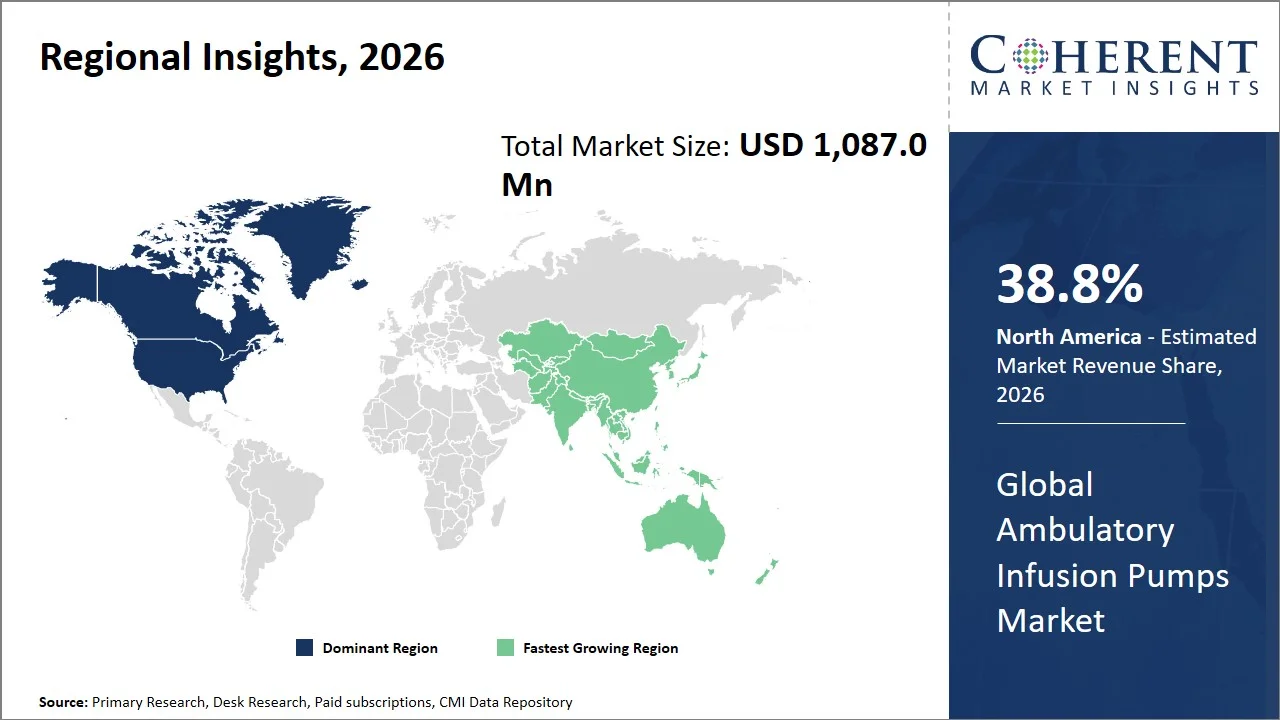
Why is North America a Strong Market for Ambulatory Infusion Pumps?
North America leads the global ambulatory infusion pumps market, accounting for an estimated 38.8% share in 2026, due to its mature outpatient infusion ecosystem, pervasive adoption of home healthcare services, and quick adoption of the cutting-edge infusion systems. Favorable government regulations toward the growing trend of outpatient services and chronic disease management are speeding up the shift of infusion from hospitals to patients’ home and outpatient facility.
For instance, in March 2026, the U.S. Centers for Medicare & Medicaid Services (CMS) expanded the Acute Hospital Care at Home (AHCAH) initiative that helps Medicare-certified hospitals deliver hospital-level care at the patients’ homes, reinforcing greater adoption of home-based infusion therapies and portable infusion technologies. Furthermore, stringent quality norms are helping in introducing secure and technologically advanced ambulatory infusion devices in the North America ambulatory infusion pumps market.
Why Does Asia Pacific Ambulatory Infusion Pumps Market Exhibit High Growth?
The Asia Pacific ambulatory infusion pumps market is expected to exhibit the fastest growth with an estimated contribution of 22.9% share to the global market in 2026, owing to rapidly growing healthcare infrastructure, increasing chronic disease incidence, and rising home-care based services. Government programs enhance access to state-of-the-art infusion therapy by fortifying healthcare delivery and healthcare coverage schemes in various emerging markets.
For instance, in June 2026, the Government of India, underlined that over 44 crore families are covered under government health insurance schemes and 1.86 lakh Ayushman Arogya Mandirs have been operationalized to strengthen primary healthcare delivery, supporting broader access to ambulatory and home-based medical technologies. (Source: Press Information Bureau) Furthermore, the penetration of ambulatory infusion pumps with enhanced features like portability and connectivity, combined with enhanced regional manufacturing, is expediting ambulatory infusion pumps market growth in Asia Pacific region.
Global Ambulatory Infusion Pumps Market Outlook for Key Countries
Why is the U.S. Leading Innovation and Adoption in the Ambulatory Infusion Pumps Market?
The U.S. is expected to account for an estimated 34.2% share of the global ambulatory infusion pumps market in 2026, due to robust uptake and usage of programmable infusion pumps that are widely used for specialty therapies, such as oncology, anti-infective treatment, pain management, and parenteral nutrition. Supported by an established network of outpatient infusion centers, home infusion providers and specialty pharmacies, the U.S. Market has been an early adopter of technologically advanced and connected ambulatory infusion solutions that support the safe delivery of complex therapies outside traditional hospital settings.
Is the U.K. a Favorable Market for Ambulatory Infusion Pumps?
The U.K. is expected to account for an estimated 4.2% of the global ambulatory infusion pumps market in 2026, due to the presence of robust ambulatory care pathways and a rising inclination towards home-based infusion therapies. The widespread adoption of connected, patient-centric infusion solutions is further accelerated by the increased utilization of portable infusion pumps for oncology, antimicrobial, and postoperative pain management, as well as the rise of hospital-at-home, and virtual ward settings.
Is China Emerging as a Key Growth Hub for the Ambulatory Infusion Pumps Market?
China is expected to account for an estimated 5.8% of the global ambulatory infusion pumps market in 2026, driven by escalating growth of home healthcare, rising use of portability in medical devices and continuous investment in the medical infrastructure in China (health expenditure reached 6.7% of GDP in 2024). The demand for continuous infusions, particularly to treat conditions like cancer, diabetes, and chronic diseases is growing. Simultaneously, the use of digital solutions and connectivity in the patient’s treatment is accelerating the pace of adoption of innovative ambulatory infusion pumps in China.
Why Does Germany Top the European Ambulatory Infusion Pumps Market?
Germany is expected to account for an estimated 7.1% of the global ambulatory infusion pumps market in 2026, owing to the widespread adoption of ambulatory infusion therapy, well-developed distribution network for programmable infusion systems, and its dedicated base of oncology infusion providers and home infusion pharmacies. In addition, leading manufacturers for infusion technology in infusion systems (such as B. Braun SE, Fresenius Kabi AG, and PFM Medical AG) and the trend toward the implementation of connected infusion pumps for long-term therapies in oncology, pain management and parenteral nutrition further bolsters the country growth in ambulatory infusion pumps market.
Is Ambulatory Infusion Pumps Market Developing in Japan?
Japan is expected to account for an estimated 6.3% of the global ambulatory infusion pumps market in 2026, fueled by the rising trend of home care infusion therapy and the increasing demand for portable drug delivery devices for chronic disease patients. The market is further boosted by Japan's preference towards precision medicine, mini medical devices and patient-oriented approach towards care that aids in the increased adoption of miniaturized, programmable ambulatory pumps at home care facilities and outpatient clinic centers.
Digital Technologies Shaping the Global Ambulatory Infusion Pumps Market
Digital Technology | Current Use Case in Ambulatory Infusion Pumps | Impact on Market |
Artificial Intelligence (AI) | Predictive dosing and anomaly detection | Improves dosing accuracy and patient safety |
Internet of Medical Things (IoMT) | Connected infusion pumps with remote monitoring | Enables home healthcare and real-time clinician oversight |
Cloud Connectivity | Data synchronization and therapy management | Improves care coordination and device management |
Electronic Health Record (EHR) Integration | Automatic documentation and prescription synchronization | Reduces medication errors and workflow burden |
Cybersecurity Solutions | Device authentication and encrypted communication | Enhances security and regulatory compliance |
How is the increasing adoption of wearable and connected infusion pump technologies creating new growth opportunities in the ambulatory infusion pumps market?
The increasing adoption of wearable and connected ambulatory infusion pumps offers lucrative growth opportunities with ongoing benefits around continuous drug delivery, increased patient mobility, and better treatment compliance for patients in the home and outpatient setting. By enabling real-time visibility into an infusion therapy through connectivity, remote monitoring and digital health, clinician teams can respond promptly and deliver patient-centered care. Furthermore, technological improvements in device miniaturization and smart infusion technologies contribute to improved ease of use, safety, and process efficiency. For instance, in April 2026, Eitan Medical unveiled the Avoset Pain Management System in the U.S, enabling access to connected infusion solutions, including peripheral nerve block infusions, digitally integrated features, and patient assistance programs, for patients suffering from post-surgical pain.
Market Players, Key Development, and Competitive Intelligence
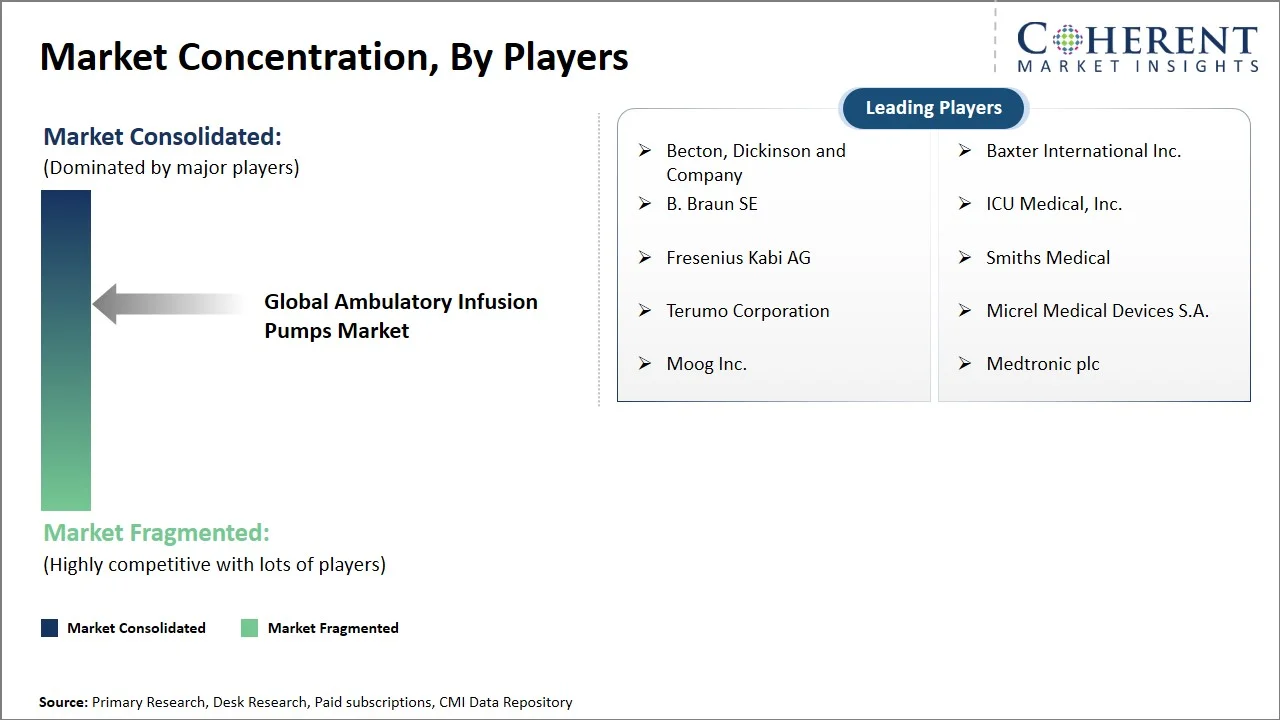
Key Developments
- Regulatory Approval/Certification
- In March 2026, KORU Medical Systems received EU Medical Device Regulation (EU MDR) certification for its Freedom60 Infusion Pump with prefilled syringe compatibility. The certification expands the pump's commercial availability across the European Union while reinforcing compliance with stringent safety and performance standards. The development is expected to support wider adoption of ambulatory infusion pumps for home infusion therapy and strengthen KORU's position in the European market.
- Regulatory / Reimbursement Policy
- In December 2025, InfuSystem Holdings announced that its ambulatory infusion pumps used in pain management will qualify for separate reimbursement under the U.S. NOPAIN Act beginning January 1, 2026. The policy is expected to improve reimbursement for non-opioid pain management therapies delivered through ambulatory infusion pumps, supporting wider adoption in outpatient and ambulatory care settings while creating favorable commercial opportunities for infusion pump manufacturers.
- Partnership
- In November 2025, KORU Medical Systems entered into a development agreement to advance next-generation subcutaneous immunoglobulin (SCIg) infusion systems. The collaboration aims to accelerate innovation in infusion technologies by enhancing device compatibility and patient-centric drug delivery solutions. The agreement is expected to strengthen KORU's ambulatory infusion pump portfolio and support the growing adoption of home-based infusion therapies.
- In February 2022, American Oncology Network (AON) partnered with InfuSystem Holdings to provide ambulatory infusion pumps for oncology patients receiving home-based infusion therapy. The collaboration aimed to improve access to ambulatory infusion devices and enhance continuity of cancer care through home infusion services.
- Merger & Acquisition (M&A)
- In August 2025, AleraCare and PURE Healthcare announced their merger to create a leading ambulatory infusion platform with an expanded national footprint. The combined organization aims to strengthen infusion therapy delivery by integrating specialty pharmacy, ambulatory infusion centers, and home infusion services. The merger is expected to accelerate patient access to ambulatory infusion therapies and drive demand for advanced portable infusion pump technologies.
Competitive Landscape Table
Company | Headquarters | Key Brands | Primary Market Segment |
Becton, Dickinson and Company | New Jersey, U.S. | BD Alaris, BD BodyGuard | Electronic Ambulatory Infusion Pumps |
Baxter International Inc. | Illinois, U.S. | Novum IQ, SIGMA Spectrum | Electronic Ambulatory Infusion Pumps |
B. Braun SE | Melsungen, Germany | Infusomat Space, Space plus | Peristaltic Ambulatory Infusion Pumps |
ICU Medical, Inc. | California, U.S. | CADD-Solis, CADD Legacy | Pain Management & Ambulatory Infusion Pumps |
Fresenius Kabi AG
| Bad Homburg, Germany | Agilia Connect, Volumat Agilia | Peristaltic Ambulatory Infusion Pumps |
Smiths Medical | Minnesota, U.S. | CADD Infusion Systems | Pain Management & Ambulatory Infusion Pumps |
Terumo Corporation | Tokyo, Japan | Terufusion Infusion Pumps | Peristaltic Ambulatory Infusion Pumps |
Micrel Medical Devices S.A.
| Athens, Greece | Rythmic Evolution, Micropump | Disposable & Electronic Ambulatory Infusion Pumps |
Moog Inc.
| New York, U.S. | CURLIN Infusion Pumps | Electronic Ambulatory Infusion Pumps (Home Care) |
Medtronic plc | Dublin, Ireland | MiniMed Insulin Pump Systems | Insulin Infusion Pumps (Diabetes Management) |
Market Report Scope
Ambulatory Infusion Pumps Market Report Coverage
| Report Coverage | Details | ||
|---|---|---|---|
| Base Year: | 2025 | Market Size in 2026: | USD 1,087.0 Mn |
| Historical Data for: | 2020 To 2024 | Forecast Period: | 2026 To 2033 |
| Forecast Period 2026 to 2033 CAGR: | 7.2% | 2033 Value Projection: | USD 1,784.7 Mn |
| Geographies covered: |
| ||
| Segments covered: |
| ||
| Companies covered: | Becton, Dickinson and Company, Baxter International Inc., B. Braun SE, ICU Medical, Inc., Fresenius Kabi AG, Smiths Medical, Terumo Corporation, Micrel Medical Devices S.A., Moog Inc., and Medtronic plc | ||
| Growth Drivers: |
| ||
| Restraints & Challenges: |
| ||
Analyst Opinion (Expert Opinion)
- In the coming years, ambulatory infusion pumps market is anticipated to experience a substantial growth as healthcare systems increasingly shift from hospital-based care to home and outpatient settings. Rising chronic disease prevalence, an aging population, and advancements in smart infusion technologies with remote monitoring and interoperability will continue to drive adoption. Over the coming years, connected and wearable infusion pumps integrated with digital health platforms are likely to become the standard of care, particularly in developed healthcare markets.
- The maximum opportunities are foreseen within electronic ambulatory infusion pumps for oncology applications in the U.S, supported by the high incidence of cancer, widespread home infusion therapy adoption, favorable reimbursement policies, and growing preference for outpatient chemotherapy. In Asia Pacific, electronic ambulatory infusion pumps for diabetes and home infusion therapy in China and Japan present significant opportunities owing to expanding healthcare infrastructure, increasing healthcare expenditure, and rapidly growing elderly populations.
- In order to gain a competitive advantage market players should prioritize the development of smart, interoperable, and AI-enabled ambulatory infusion pumps with enhanced cybersecurity, remote patient monitoring, and seamless integration with electronic health records. Expanding partnerships with home healthcare providers and oncology centers, strengthening presence in emerging Asian markets through local distribution networks, and investing in user-friendly, cost-effective portable devices will further help companies differentiate themselves and capture future market growth.
Speak to the analyst
Want personalized insights?
Take the findings above to one of our principal consultants, or have the report rebuilt around the segments, geographies and competitors you actually track.
Market Segmentation
- Device Type Insights (Revenue, USD Mn, 2021 - 2033)
- Peristaltic Pumps
- Elastomeric Pumps
- Drug Type Insights (Revenue, USD Mn, 2021 - 2033)
- Pain Management Drugs
- Antibiotics
- Chemotherapy
- Others
- Application Insights (Revenue, USD Mn, 2021 - 2033)
- Pain Management
- Diabetes
- Oncology
- Neonatology
- Others
- End User Insights (Revenue, USD Mn, 2021 - 2033)
- Hospitals
- Specialty Clinics
- Homecare settings
- Ambulatory Surgical Centers
- Others
- Regional Insights (Revenue, USD Mn, 2021 - 2033)
- North America
- U.S.
- Canada
- Latin America
- Brazil
- Argentina
- Mexico
- Rest of Latin America
- Europe
- Germany
- U.K.
- Spain
- France
- Italy
- Russia
- Rest of Europe
- Asia Pacific
- China
- India
- Japan
- Australia
- South Korea
- ASEAN
- Rest of Asia Pacific
- Middle East
- GCC Countries
- Israel
- Rest of Middle East
- Africa
- South Africa
- North Africa
- Central Africa
- North America
- Key Players Insights
- Becton, Dickinson and Company
- Baxter International Inc.
- Braun SE
- ICU Medical, Inc.
- Fresenius Kabi AG
- Smiths Medical
- Terumo Corporation
- Micrel Medical Devices S.A.
- Moog Inc.
- Medtronic plc
Sources
Primary Research Interviews
- Product managers and business development executives from ambulatory infusion pump manufacturers
- Clinical specialists in infusion therapy and home healthcare
- Biomedical engineers specializing in infusion technologies
- Hospital pharmacy directors and infusion center managers
- Executives from home infusion therapy service providers
- Medical device regulatory and quality assurance professionals
Stakeholders
- Ambulatory infusion pump manufacturers
- Home healthcare service providers
- Hospitals and ambulatory surgical centers (ASCs)
- Infusion therapy clinics and specialty care centers
- Contract manufacturing organizations (CMOs) for medical devices
- Healthcare distributors and procurement organizations
- End-use Sectors
- Hospitals and healthcare providers
- Home healthcare agencies
- Ambulatory care centers
- Specialty infusion clinics
- Regulatory & Health Bodies
- U.S. Food and Drug Administration (FDA)
- European Commission
- European Medicines Agency (EMA)
- Medicines and Healthcare products Regulatory Agency (MHRA), UK
- Pharmaceuticals and Medical Devices Agency (PMDA), Japan
- Health Canada
- Therapeutic Goods Administration (TGA), Australia
- National Medical Products Administration (NMPA), China
Databases
- U.S. FDA Medical Device Databases
- FDA MAUDE (Manufacturer and User Facility Device Experience)
- ClinicalTrials.gov
- European Commission EUDAMED
- WHO Global Health Observatory
- OECD Health Statistics
Magazines
- Medical Device Network
- MedTech Dive
- Medical Design & Outsourcing
- MedTech Intelligence
- Healthcare IT News
Journals
- Journal of Infusion Nursing
- Journal of Medical Devices
- BMJ Health & Care Informatics
- Journal of Clinical Medicine
- Nature Biomedical Engineering
Newspapers
- Financial Times – Healthcare & Life Sciences
- The Wall Street Journal – Healthcare
Associations
- Advanced Medical Technology Association (AdvaMed)
- Infusion Nurses Society (INS)
- Association for the Advancement of Medical Instrumentation (AAMI)
- Medical Device Manufacturers Association (MDMA)
- MedTech Europe
Public Domain Sources
- World Health Organization (WHO)
- U.S. Food and Drug Administration (FDA)
- Centers for Disease Control and Prevention (CDC)
- Centers for Medicare & Medicaid Services (CMS)
- European Commission
- European Medicines Agency (EMA)
- Health Canada
- Pharmaceuticals and Medical Devices Agency (PMDA), Japan
- National Medical Products Administration (NMPA), China
- Medicines and Healthcare products Regulatory Agency (MHRA), UK
Proprietary Elements
- CMI Data Analytics Tool, Proprietary CMI Existing Repository of information for last 10 years.
Get access to 250+ pages report
Every segment, forecast, competitor profile and data table behind the analysis above — available for instant download.
- ESOMAR Member
- ISO 9001:2015 Certified
- D-U-N-S Registered
- GDPR & CCPA Compliant
Missing comfort of reading report in your local language? Find your preferred language:
Transform your Strategy with Exclusive Trending Reports
Frequently Asked Questions
The global ambulatory infusion pumps market is estimated to be valued at USD 1,087.0 Mn in 2026 and is expected to reach USD 1,784.7 Mn by 2033.
Peristaltic Pumps dominate due to their high accuracy in drug delivery, compatibility with a wide range of medications, low risk of contamination, and extensive use across oncology, pain management, antibiotic therapy, and home infusion settings.
The CAGR of global ambulatory infusion pumps market is projected to be 7.2% from 2026 to 2033.
Remote patient monitoring enables clinicians to track infusion therapy in real time, improving patient adherence and clinical outcomes.
Wearable infusion pumps are improving patient mobility, comfort, and adherence by supporting continuous drug delivery outside hospital settings.
The market is expected to evolve toward AI-enabled, interoperable, and cloud-connected infusion systems supporting personalized home healthcare.
Smart infusion pumps with wireless connectivity, dose error reduction software, and remote monitoring are transforming ambulatory infusion therapy.