

Global Anti-Pollution Skincare Products Market Size and Forecast – 2026 to 2033
The global anti-pollution skincare products market is estimated to be valued at USD 14.39 Bn in 2026 and is expected to reach USD 23.11 Bn by 2033, exhibiting a compound annual growth rate (CAGR) of 7.0% from 2026 to 2033.
Key Takeaways of the Anti-Pollution Skincare Products Market
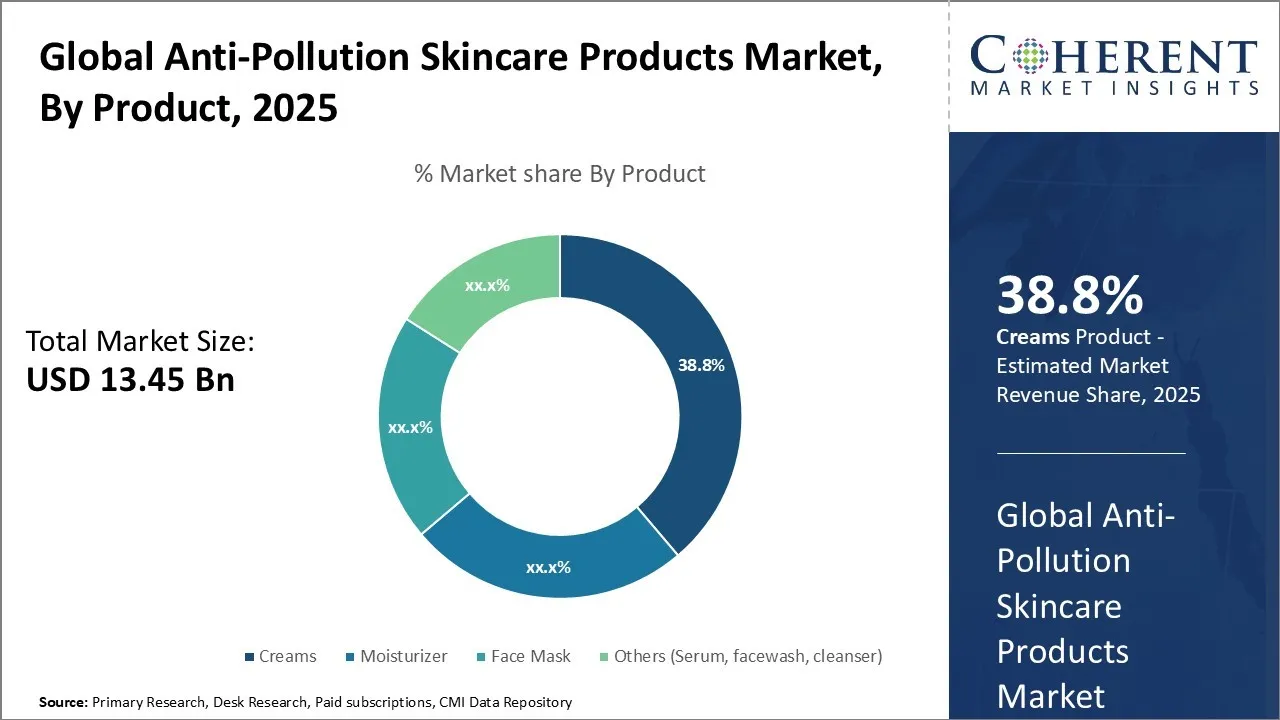
- The creams segment is expected to account for 39.8% of the anti-pollution skincare products market share in 2026.
- The conventional segment is projected to capture 57.9% of the market share in 2026.
- The female segment is expected to account for 55.7% of the global anti-pollution skincare products market share in 2026.
- Asia Pacific is set to lead the global anti-pollution skincare products market in 2026 with a 35.2% share. North America, with a 23.5% share in 2026, is projected to be the fastest-growing region.
Market Overview
The major factors making up the anti-pollution skincare products market are the use of natural and organic ingredients, new technological advancements in product formulations, and the introduction of customized skincare solutions for pollution-induced skin problems. There is a growing trend of consumers demanding multifunctional products that deliver not just protection from pollutants but also the pluses of antioxidants and rejuvenation as well. In addition, deeper digital penetration and social media impact are fast-tracking global product awareness and acceptance, particularly in the case of young, health-conscious people.
Currents Events and Its Impact
Current Events | Description and its Impact |
EU micropollutant‑polluter‑pays policy impacting cosmetics (European Union) |
|
Rapid urbanization and pollution growth in Asia Pacific leading to demand spike |
|
Segmental Insights
- Current Industry Events of 2026
- Market Size Estimation
- Regional Breakdown
- Competitive Landscape
- Customer Intelligence
- Segmental Analysis
- Pricing Analysis
- Key Market Drivers, Challenges & Future Trends
- Customized Insights Section
Anti-Pollution Skincare Products Market Insights, By Product – Creams Segment Dominates the Market Driven by Versatility and Consumer Preferences
Creams segment is expected to hold 39.8% of the anti-pollution skincare products market share in 2026, with its multifunctional features and consumer acceptance being the main factors. Creams deliver a treatment that is both preventive and restorative and attracts those who live in polluted areas. The thick creams not only serve the purpose of providing moisture but also building a wall against the pollution on the skin so that the skin is not exposed to airborne toxins, particulates, and harmful UV light.
This kind of wall is very important especially when there is a global concern about pollution being a major cause of unhealthy skin. In this case, L'Oréal's Revitalift Anti-Pollution SPF 50 cream not only provides anti-aging but also prevents pollution damage and thus mirrors the gradually increasing demand for multifunctional skincare products that can deal with both pollution and UV exposure in a single stroke.
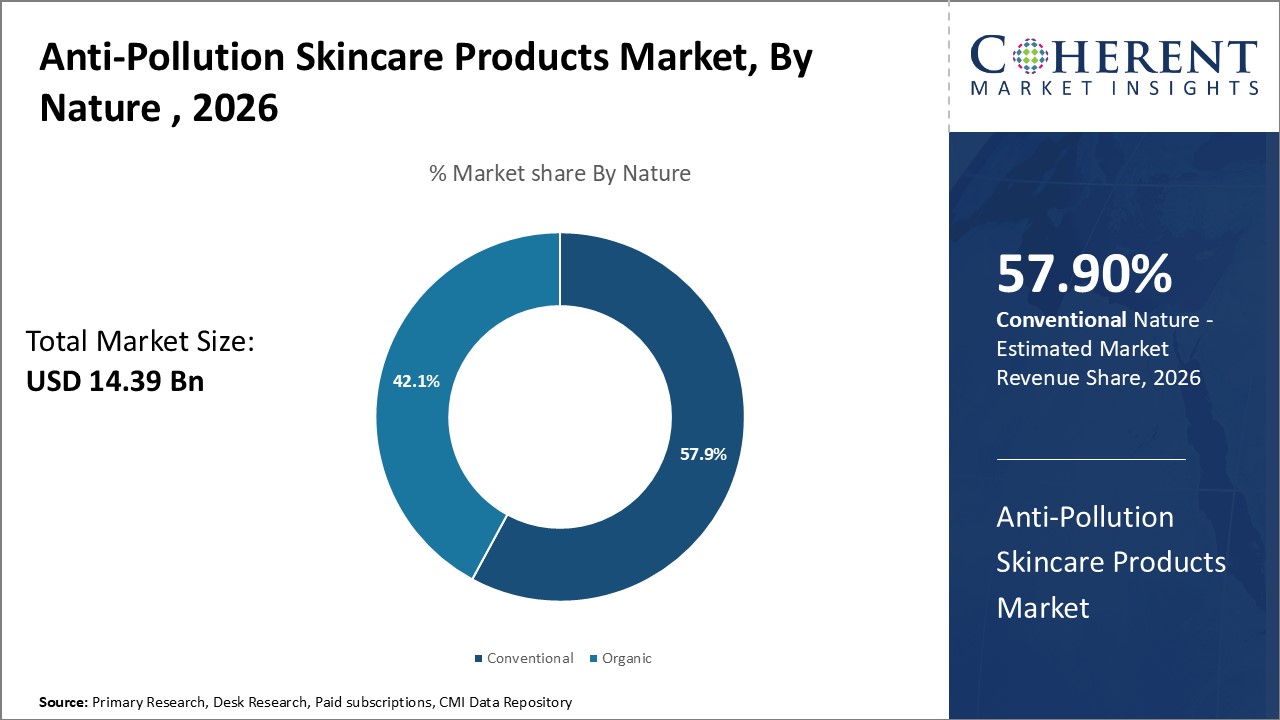
Anti-Pollution Skincare Products Market Insights, By Nature – Conventional Segment Dominates the Market due to Trust and Proven Effectiveness
The conventional segment is projected to hold 57.9% of the market share in 2026, mainly due to the consumer trust built over time and the effectiveness of the products. The organic and natural cosmetics trend is steadily gaining popularity but still many consumers choose to rely on conventional anti-pollution skin care products for their proven performance and the perception of superiority over the harshest environmental aggressors.
The conventional formulations very often include the most advanced synthetic ingredients and the latest delivery technologies that allow for better penetration and faster results. These features are vital in treating pollution-related skin issues like clogged pores, pigmentation, and aging. The scientific evidence that comes with it is reassuring to the consumers who are mainly interested in quick and measurable results when fighting urban pollutants with their skin.
Anti-Pollution Skincare Products Market Insights, By End User – Female Segment Dominates through Rising Awareness and Personalized Skincare Needs
Female segment is expected to hold 55.7% of the global anti-pollution skincare products market share in 2026. This phenomenon is supported by a variety of socio-cultural and behavioral factors that prompt women to use more protective skincare products than before.
In the first place, women have always been more aware of skincare and have been spending more on the personal care products that give them both the cosmetic and health benefits, especially the anti-pollution protection which falls under this category. The different aspects of pollution impacting the skin—such as dullness, dryness, and sensitivity—often lead women consumers to take up skin care routines that offer both prevention and correction.
Online vs Offline Purchasing Split
- Online purchasing for anti-pollution skincare products is growing rapidly, driven by increased smartphone adoption, e-commerce platform presence, and digital marketing including influencer promotions and AI personalization.
- E-commerce benefits include convenience, doorstep delivery, easy access to a wide variety of brands, customer reviews, and personalized skincare recommendations.
- Direct-to-consumer (DTC) online models and subscription services are gaining traction, boosting customer loyalty and order values.
- Offline sales, through physical retail stores such as department stores, pharmacies, beauty shops, and supermarkets, remain important for tactile experience, product trials, and personalized consultation.
- Offline channels hold a significant market share but face relative decline as online channels expand faster.
- In 2025, offline distribution still dominates with about 68% revenue share, but online sales are increasing their share rapidly, expected to account for up to 85% market share by 2033 in some segments.
Regional Insights
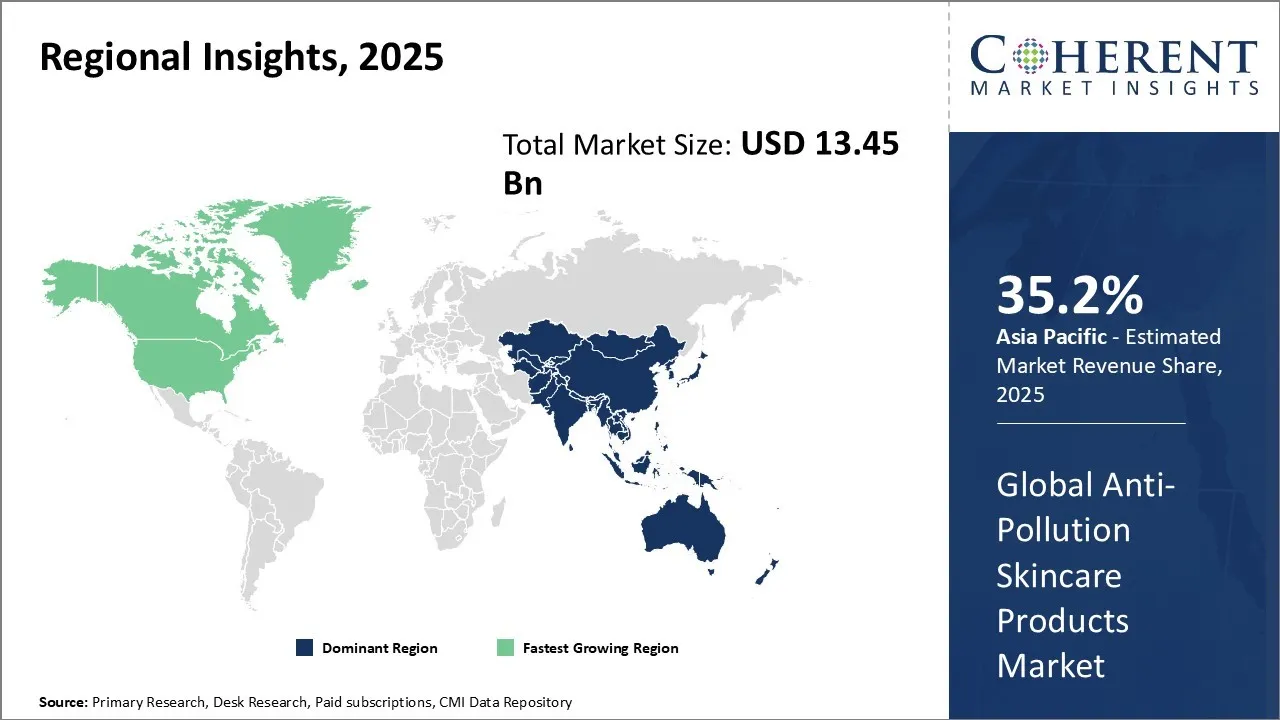
Asia Pacific Anti-Pollution Skincare Products Market Analysis and Trends
The Asia Pacific region is projected to lead the market with a 35.2% share in 2026, due to its rapid urbanization, increase in air pollution in the major cities, the rise of disposable incomes, and the middle-class population which is not only growing but also getting more beauty-conscious. The skincare product that counters the pollution-related skin damage, such as dullness, premature aging, and sensitivity, has gained the most demand in China, South Korea, India, and Japan.
Clean beauty and sustainable manufacturing practices promoted by government initiatives are at the same time pushing innovation forward and attracting consumers. The presence in the region of such a diverse range of beauty industry players from the global giants like L’Oréal and Shiseido to the local famous brands like Amorepacific and Innisfree, provides a wide variety of products that not only meets but also understands the different beauty routines and skin types across cultures. The growing cross-border e-commerce and social media influence are also contributing to the Asia Pacific region becoming a marketplace for product launches and marketing campaigns that are focused on the anti-pollution aspects, as they facilitate both penetration and consumer education in the region.
North America Anti-Pollution Skincare Products Market Analysis and Trends
The North America region is anticipated to be the fastest growing market with a 23.5% contribution in 2026. This is due to the strong consumer awareness about the environmental impact on skin health, the presence of a mature skincare industry, and the well-developed distribution channels. The U.S. and Canada have a number of the world's leading cosmetic and personal care giants, which continue to innovate by developing products that counteract the effects of urban pollution. Stringent regulations like the FDA’s requirements for safety and efficacy are, on the one hand, a challenge but, on the other, an incentive for companies to develop high-quality, science-backed products that attract consumers.
In addition, urbanization and air pollution concerns are driving the demand for anti-pollution skincare products. Companies like Estée Lauder, Procter & Gamble, and Johnson & Johnson are leading the trend by launching large product lines that highlight pollution protection, antioxidant-rich ingredients, and natural extracts, thus, strengthening the market. The region is not only home to R&D hubs but also the most competitive retail landscape that ranges from high-end beauty specialists to online platforms.
Anti-Pollution Skincare Products Market Outlook for Key Countries
U.S. Anti-Pollution Skincare Products Market Trends
The U.S. anti-pollution skincare products market is characterized by the use of high technology in skincare products that have a mix of pollutants-neutralizing ingredients such as antioxidants, vitamins, and botanical extracts. Heavy R&D by the leading brands Estée Lauder and Johnson & Johnson encourages product development to cater to urban customers who are likely to be in high pollution areas. The retail channels offer a complete range of stores, consisting of premium department stores, specialty beauty retailers, and online platforms, which also make it very easy for consumers to access the products. On the other hand, the demand for cruelty-free, sustainable, and dermatologist-tested products is influencing the new offerings coming to the market.
China Anti-Pollution Skincare Products Market Trends
China is quickly enlarging its anti-pollution skincare segment due to the growing concern of pollution in the major cities and the increasing number of consumers who are aware of skin health. Global players and local brands like Herborist are competing with each other with the likes of L’Oréal and Shiseido by customizing the product ingredients according to local tastes, often mixing traditional herbal components with modern science. Government regulations that support environmental conservation and the use of safer cosmetic ingredients also make brands more transparent and innovative. The strong presence of e-commerce sites such as Tmall and JD.com is a major factor in the acceptance of the products.
South Korea Anti-Pollution Skincare Products Market Trends
South Korea keeps up its lead in skin care innovations with a world-wide image of being a technological advanced and a source of new formulations in the beauty sector. South Korean brands such as Amorepacific, Innisfree, and Dr. Jart+ offer targeted anti-pollution products that integrate ingredients like green tea, ginseng, and fermented extracts, aligning with consumer desires for natural yet effective solutions. The country’s rapid urbanization and high pollution levels further fuel demand. Government support for beauty exports enhances market penetration abroad, reinforcing South Korea’s influence in the anti-pollution niche.
India Anti-Pollution Skincare Products Market Trends
Anti-pollution skincare products in India are gaining a substantial market share owing primarily to increased urbanization and deteriorating air quality which are driving consumers to seek skin protection products more urgently. MNCs and local players like Himalaya and Forest Essentials are concentrating on the combination of Ayurvedic ingredients with modern techniques to attract both the traditional and contemporary users. Besides, the regulatory reforms aimed at standardizing cosmetic quality and promoting “clean beauty” are boosting the aforementioned growths. The increasing online retail along with the growing beauty awareness among millennials and working professionals is the main reason for the market to expand in urban areas.
Japan Anti-Pollution Skincare Products Market Trends
Japan's anti-pollution skincare products market is slowly but surely growing and the main reason for that is the high standards consumers have for skincare efficacy and safety. The giant companies of Shiseido and Kosé offer the most expensive anti-pollution skin care lines that highlight the benefits of barrier repair and antioxidants, blending the traditional Japanese constituents with scientific advances.
The Japanese customer leaning towards lighter textured products that are appropriate for humid climates encourages innovations in the format of products. Eco-friendly government policies and promotions around sustainable packaging that align with the larger environment-friendly trend have also captivated the Japanese Market which is concerned about the environment. The large number of specialty shops and pharmacies make it easy for customers to access the products.
Pollution Exposure Index & Skin Health Correlation (Urban vs Rural)
- Pollution Exposure Index (e.g., Exposure Intensity Index, EII) correlates strongly with skin health, especially inflammation, showing urban residents experience higher skin redness and irritation than rural residents due to greater pollution levels.
- Urban pollution exposure leads to more pronounced skin issues such as dryness, premature aging, hyperpigmentation, and sensitivity, driving demand for anti-pollution skincare products.
- Growth drivers include rising urban pollution awareness, dermatological innovations, demand for natural/organic and multifunctional products with antioxidants, and increased online and retail sales channels.
- Women in urban environments dominate the consumer base, favoring creams, serums, and moisturizers that protect against air pollutants, oxidative stress, and UV-related damage.
Market Players, Key Development, and Competitive Intelligence
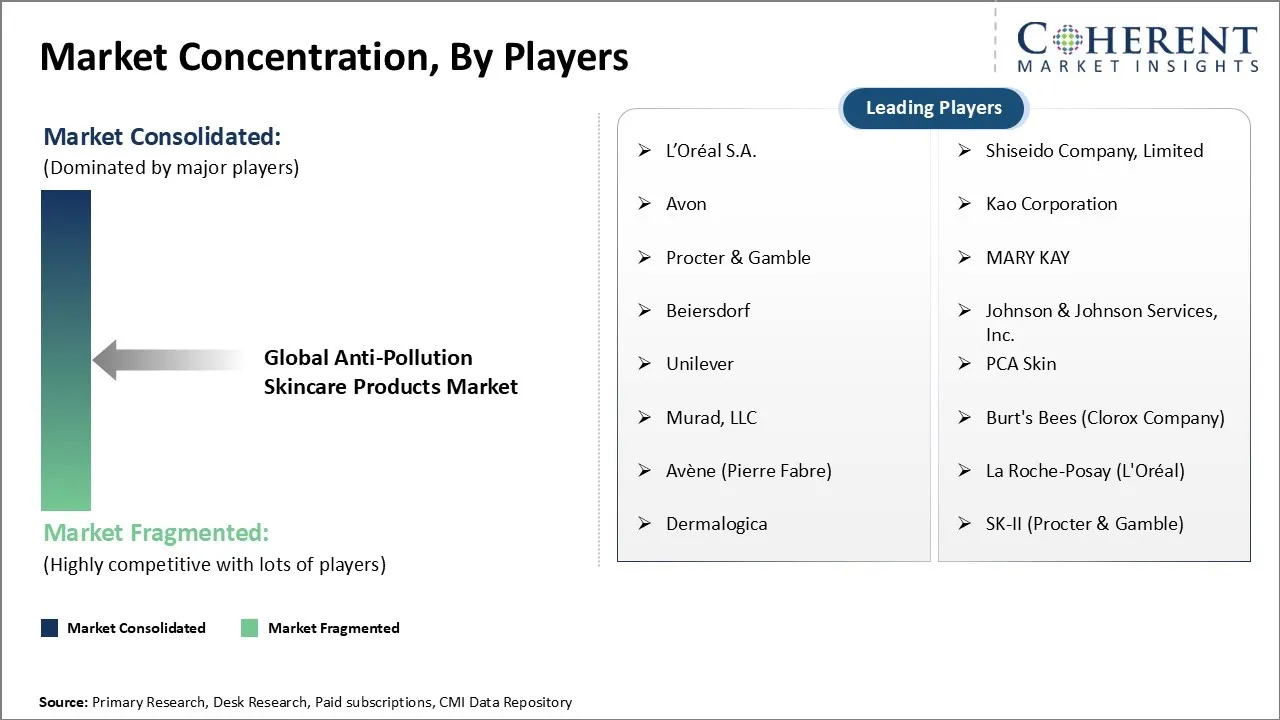
Key Development
- In April 2024, Cipla Limited, one of the prominent organizations in the pharmaceutical industry, acquired the global distribution and marketing business of Ivia Beaute Private Limited, India, including its brands Ikin, Astaberry, and Bhimsaini, through its wholly-owned subsidiary Cipla Health Limited.
Top Strategies Followed by Global Anti-Pollution Skincare Products Market Player s
- Established industry leaders prioritize heavy investments in research and development (R&D) to innovate and deliver high-performance products that meet the evolving needs of health-conscious consumers. These companies leverage advanced scientific research, incorporating cutting-edge ingredients and technologies designed to combat various environmental stressors such as pollution, UV radiation, and particulate matter.
- For example, L’Oréal is a leading example of an established player utilizing R&D to enhance its anti-pollution skincare lines. They have introduced products like the Revitalift Bright Reveal Brightening Peel Pads, which combine advanced antioxidants and pollution-fighting compounds to offer superior protection against environmental aggressors.
- Mid-range players in the anti-pollution skincare products market place their bets on economical solutions that are neither too cheap nor too expensive in terms of product quality. By acknowledging the price sensitivity of a large consumer group, these companies position themselves at the bottom of the value chain by targeting customers with low demands for skincare products who want functional yet cheap ones. In order to be sure they are competing effectively, mid-level players put emphasis on reducing cost of production without any loss in potency, and this they do by cutting down on the time taken to source and manufacture ingredients.
- For instance, Neutrogena, a mid-range player, perfectly depicts this tactic with its City Shield line that consists of the Neutrogena City Shield Face Serum and other products. The serum is low-priced yet powerful, created to act against pollution and environmental stress, thus it has become a favorite of city dwellers who want aesthetic treatment at a fair price.
- Small-scale players: Micro brands gain a foothold in the anti-pollution skincare sector by developing product characteristics or patented combinations that are not only profitable but also sought after by specific customers. The leading technology in this area is often bioengineered ingredients or eco-friendly packaging, which enables them to reach the consumer market while staying competitive with the big players. Their small size makes them able to react almost instantaneously to the latest market trends like organic certification, vegan-friendly products, or very specific pollution issues in the area.
- For example, Youth to the People, a micro brand, has managed to find its market spot by offering skin care products with anti-pollution properties that are made from sustainable and vegan ingredients. Their Superfood Air-Whip Moisture Cream is a pollution converter in disguise while turning its back on sustainability consciousness through using eco-friendly packaging and plant-based ingredients
Market Report Scope
Global Anti-Pollution Skincare Products Market Report Coverage
| Report Coverage | Details | ||
|---|---|---|---|
| Base Year: | 2025 | Market Size in 2026: | USD 14.39 Bn |
| Historical Data for: | 2020 To 2024 | Forecast Period: | 2026 To 2033 |
| Forecast Period 2026 to 2033 CAGR: | 7.0% | 2033 Value Projection: | USD 23.11 Bn |
| Geographies covered: |
| ||
| Segments covered: |
| ||
| Companies covered: | L’Oréal S.A., Shiseido Company, Limited, Avon, Kao Corporation, Procter & Gamble, MARY KAY, Beiersdorf, Johnson & Johnson Services, Inc., Unilever, PCA Skin, Murad, LLC, Burt's Bees (Clorox Company), Avène (Pierre Fabre), La Roche-Posay (L'Oréal), Dermalogica, and SK-II (Procter & Gamble) | ||
| Growth Drivers: |
| ||
| Restraints & Challenges: |
| ||
Anti-Pollution Skincare Products Market Dynamics
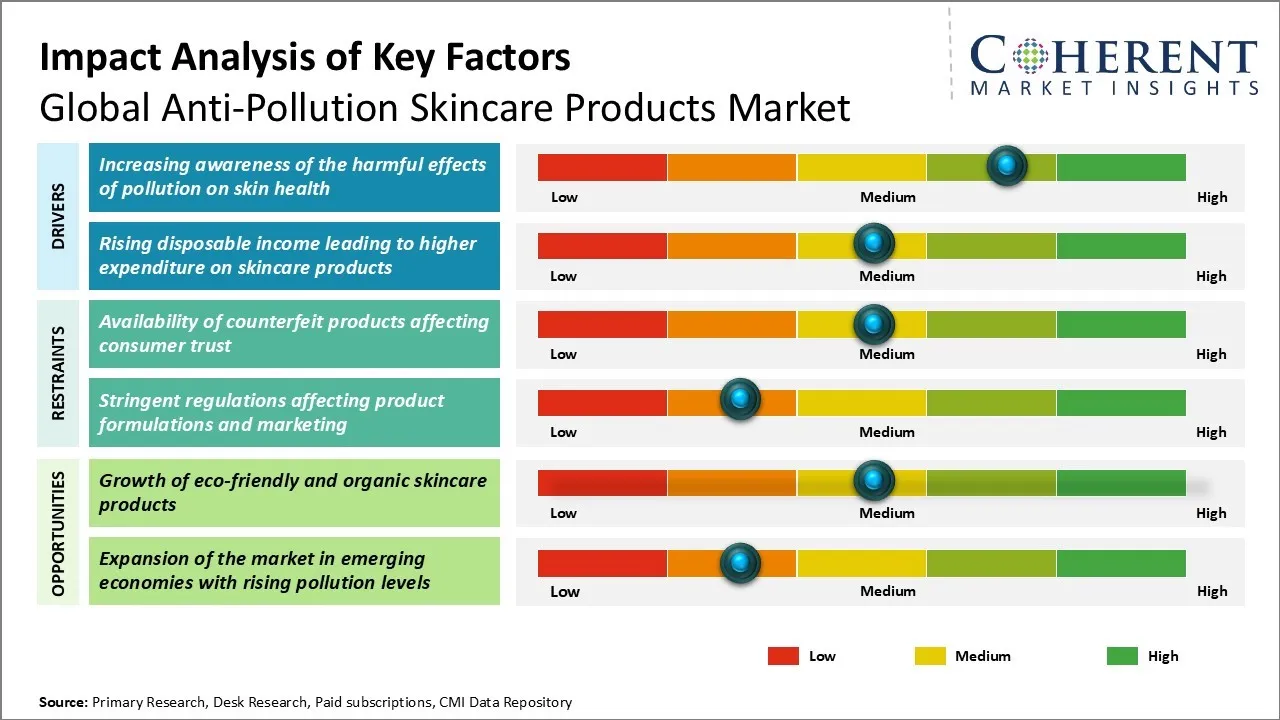
Anti-Pollution Skincare Products Market Driver - Increasing Awareness of the Harmful Effects of Pollution on Skin Health
The rising awareness among consumers regarding the negative impact of environmental pollutants on skin health has turned out to be a major factor for the growth of the anti-pollution skincare products market. The pollutants like particulate matter, smoke, and harmful chemicals, which are the by-products of urbanization and industrialization, are acknowledged more and more for their contribution to the development of skin problems like premature aging, inflammation, and dryness. Consequently, the recognition and the demand for skincare products that act as protective barriers against pollutants, free radicals, and that assist in skin’s innate defense repair, are growing simultaneously.
Clinique, one of the top skincare brands, has launched its Clinique Anti-Pollution range as an example. The line includes the Anti-Pollution Face Primer, which is one of the products that have been specifically made to protect the skin from pollution. The brand’s focus on the environmental skin stressors thus reflects the consumers' escalating demand for solutions that help to protect the skin from environmental pollution.
Anti-Pollution Skincare Products Market Opportunity - Growth of Eco-Friendly and Organic Skincare Products
The increase in consumer awareness about environmental sustainability and personal health has a big impact on the growth of eco-friendly and organic skincare products in the global anti-pollution skincare products market. The concerns about synthetic chemicals and pollutants have contributed to the demand for natural, organic, and biodegradable products that provide protection against urban pollutants while being less harmful to the environment. The consumers, particularly the younger generations, are looking more and more for openness and fairness in skincare and are therefore preferring the brands that not only practice cruelty-free but also use sustainable packaging and clean-label ingredients formulations.
The Body Shop has always been very clear about the eco-friendly and organic character of its skincare products. Their Hemp Oil Skin Protector series, which consists of 100% natural and biodegradable ingredients, is an illustration of the intersection between the demand for products that are both effective against pollution and environmentally sustainable. The Body Shop is dedicated to sustainable sourcing which is a quality that appeals to the millennials and Gen Zs who can relate to the adoption of the ethical practices.
Analyst Opinion (Expert Opinion)
- The market for anti-pollution skincare products is on the rise and to a great extent owing to rising consciousness about skin health and the environment as well as the availability of beauty solutions with protective effects. The Global Skincare Conference (2023) and the Sustainable Beauty Summit (2022) have thrown light on the massive innovations where brands such as Caudalie and Origins are at the forefront in the fight against pollution with their sophisticated formulations.
- The company Caudalie has recently launched a serum with antioxidants that is targeted at protecting skin from particulate matter and this move shows the skincare market's willingness to address consumer issues raised by urban living. Not only did these gatherings talk about the necessity of being open about the sourcing of ingredients and the adoption of eco-friendly practices, but also, this was viewed as a way to attract the already increasing number of environmentally friendly consumers. Nonetheless, among the factors that were identified as responsible for holding back the market were fierce competition and the requirement for a solid scientific backing for the claims made on the products.
- Brands that will educate consumers specifically about the benefits of the individual anti-pollution ingredients while guaranteeing the effectiveness of the products will likely be in the forefront of the competing market. All in all, the anti-pollution skincare products market would become a victim of its inability to innovate and adapt to changing consumer preferences and environmental facts.
Speak to the analyst
Want personalized insights?
Take the findings above to one of our principal consultants, or have the report rebuilt around the segments, geographies and competitors you actually track.
Market Segmentation
- Product Insights (Revenue, USD Bn, 2021 - 2033)
- Creams
- Moisturizer
- Face Mask
- Others (Serum, facewash, cleanser)
- Nature Insights (Revenue, USD Bn, 2021 - 2033)
- Conventional
- Organic
- End User Insights (Revenue, USD Bn, 2021 - 2033)
- Female
- Male
- Distribution Channel Insights (Revenue, USD Bn, 2021 - 2033)
- Online
- Offline
- Hypermarkets & Supermarket
- Specialty stores
- Others
- Regional Insights (Revenue, USD Bn, 2021 - 2033)
- North America
- U.S.
- Canada
- Latin America
- Brazil
- Argentina
- Mexico
- Rest of Latin America
- Europe
- Germany
- U.K.
- Spain
- France
- Italy
- Russia
- Rest of Europe
- Asia Pacific
- China
- India
- Japan
- Australia
- South Korea
- ASEAN
- Rest of Asia Pacific
- Middle East
- GCC Countries
- Israel
- Rest of Middle East
- Africa
- South Africa
- North Africa
- Central Africa
- North America
- Key Players Insights
- L’Oreal S.A.
- Shiseido Company, Limited
- Avon
- Kao Corporation
- Procter & Gamble
- MARY KAY
- Beiersdorf
- Johnson & Johnson Services, Inc.
- Unilever
- PCA Skin
- Murad, LLC
- Burt's Bees (Clorox Company)
- Avene (Pierre Fabre)
- La Roche-Posay (L'Oréal)
- Dermalogica
- SK-II (Procter & Gamble)
Sources
Primary Research Interviews
- R&D Director – Major Anti-Pollution Skincare Manufacturer
- Procurement Manager – Leading Beauty & Personal Care Retailer
- Product Development Head – Well-Known Cosmeceuticals Brand
- Sustainability Manager – Cosmetics Certification Agency
Stakeholders
- Manufacturers
- End-use Sectors
- Beauty & Personal Care Brands (anti-pollution creams, serums, masks)
- Functional Skincare Companies targeting urban consumers
- Regulatory & Certification Bodies
- E-commerce Platforms and Retailers
- Technology Integration Players: AI-driven personalization for skincare regimens
Databases
- UN Comtrade Database
- India Import Export (EXIM) Database
- Statista Cosmetics & Personal Care Database
Magazines
- Global Cosmetics Industry – Urban skincare, anti-pollution innovations
- Personal Care Magazine – Ingredients and formulations in anti-pollution skincare
- Premium Beauty News – Trends in environment-focused beauty products
- Cosmetics Business – Market updates, ingredient innovation, and growth opportunities in anti-pollution skincare
- Skincare Insight – Industry features on pollution defense and consumer adoption
Journals
- International Journal of Cosmetic Science – Efficacy and formulation techniques in anti-pollution skincare
- Journal of Dermatological Science – Skin barrier function and pollution impact
- Journal of Cosmetic Dermatology – Clinical effects of anti-pollution compounds
- Food and Chemical Toxicology – Absorption and safety of topical actives
- Cosmetics & Toiletries – Bioactive ingredients and anti-pollution research
Newspapers
- The Financial Times – Growth of anti-pollution skincare segment
- The Guardian – Consumer trends in skincare addressing pollution concerns
- Asia Beauty Journal – Expansion of anti-pollution skin products in Asia-Pacific
- European Beauty News – Regulatory trends and legislation on anti-pollution skincare
- The New York Times – Consumer shift to urban skincare regimens
Associations
- Cosmetics Europe
- Personal Care Products Council (PCPC)
- International Federation of Societies of Cosmetic Chemists (IFSCC)
- Clean Label Project
- Environmental Working Group (EWG)
Public Domain Sources
- FDA – Guidelines for cosmetic products, including anti-pollution claims
- European Commission – Cosmetic Ingredients Regulation and Claims Guidance
- World Health Organization – Impact of urban pollution on skin health
- OECD – Market assessment and safety studies for personal care products
Proprietary Elements
- CMI Data Analytics Tool
- Proprietary CMI Existing Repository of information for last 8 years.
Get access to 250+ pages report
Every segment, forecast, competitor profile and data table behind the analysis above — available for instant download.
- ESOMAR Member
- ISO 9001:2015 Certified
- D-U-N-S Registered
- GDPR & CCPA Compliant
Missing comfort of reading report in your local language? Find your preferred language:
Transform your Strategy with Exclusive Trending Reports
Frequently Asked Questions
The global anti-pollution skincare products market is estimated to be valued at USD 14.39 Bn in 2026 and is expected to reach USD 23.11 Bn by 2033.
The CAGR of the global anti-pollution skincare products market is projected to be 7.0% from 2026 to 2033
Increasing awareness of the harmful effects of pollution on skin health and rising disposable income leading to higher expenditure on skincare products are the major factors driving the growth of the global anti-pollution skincare products market
Availability of counterfeit products affecting consumer trust and stringent regulations affecting product formulations and marketing are the major factors hampering the growth of the global anti-pollution skincare products market.
In terms of product, the creams segment is estimated to dominate the market revenue share in 2026.
L’Oréal S.A., Shiseido Company, Limited, Avon, Kao Corporation, Procter & Gamble, MARY KAY, Beiersdorf, Johnson & Johnson Services, Inc., Unilever, PCA Skin, Murad, LLC, Burt's Bees (Clorox Company), Avène (Pierre Fabre), La Roche-Posay (L'Oréal), Dermalogica, and SK-II (Procter & Gamble) are the major players.
Asia Pacific is expected to lead the global anti-pollution skincare products market in 2026.