

N95 Grade Medical Protective Masks Market Size and Share Analysis: 2026 - 2033
The N95 grade medical protective masks market is anticipated to grow at a CAGR of 8.98% with USD 4.20 Mn in 2026 and is expected to reach USD 7.58 Mn in 2033. The major factor driving the N95 grade medical protective mask market is the increasing prevalence of respiratory disease (550 million). Moreover, rising awareness among the population of the prevention of the disease by usage of masks is also likely to contribute to the market growth.
Key Takeaways
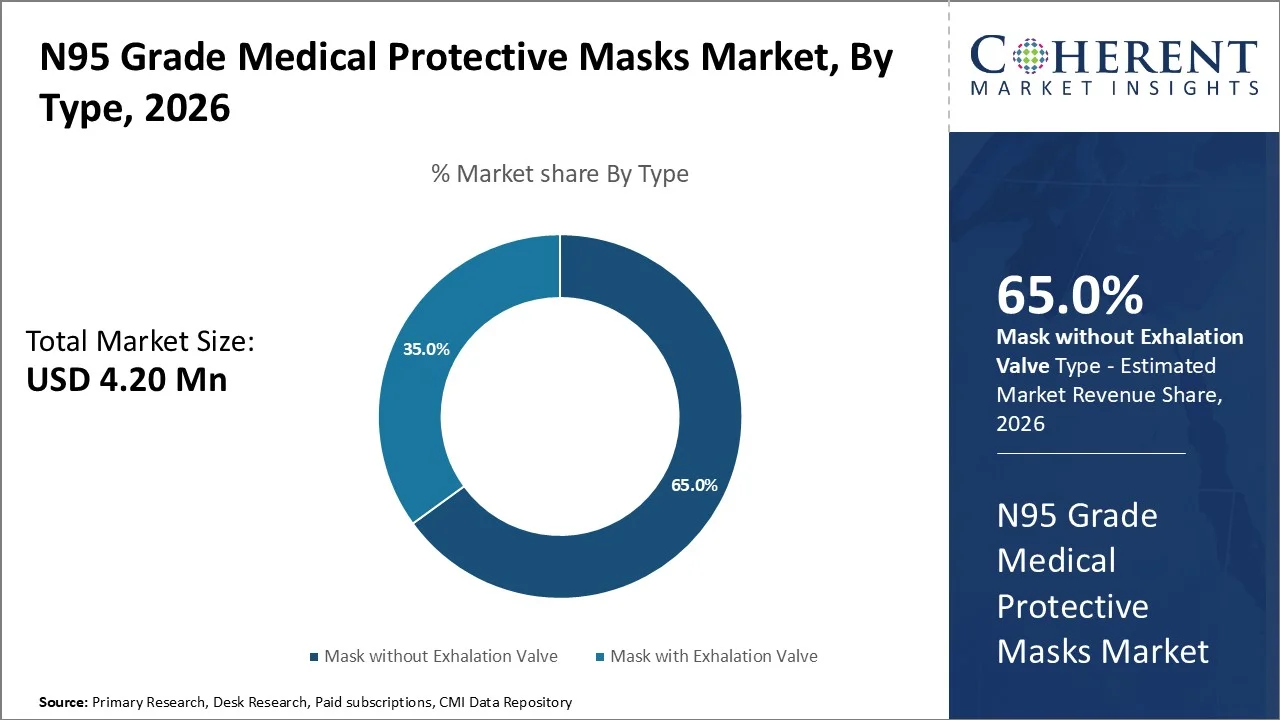
- Masks without exhalation valve is expected to account the largest share of 65% in 2026, these are widely preferred in medical and healthcare settings because they filter both inhaled and exhaled air, reducing the risk of spreading infections. the CDC recommends valveless N95 masks in healthcare environments to prevent pathogen transmission, and studies have shown that masks with valves can allow up to 25–30% of exhaled particles to escape, making valveless masks safer for infection control.
- Based on application, hospital & clinic will dominate with 55% in 2026, regulatory guidelines (CDC, WHO) mandate N95 usage for healthcare personnel in high-risk areas, which drives consistent demand. According to the CDC and WHO guidelines, healthcare workers are among the primary users of N95 respirators, and showed that over 70% of hospital staff relied on N95 masks for protection during peak periods.
- Based on distribution channel, hospitals/clinics will dominate with 60% in 2026, hospitals and clinics are the primary buyers of N95 masks, purchasing in bulk for healthcare workers and patients. during the COVID-19 pandemic, healthcare facilities in the U.S. accounted for over 60% of N95 respirator usage, according to CDC allocation reports, highlighting their central role in driving demand.
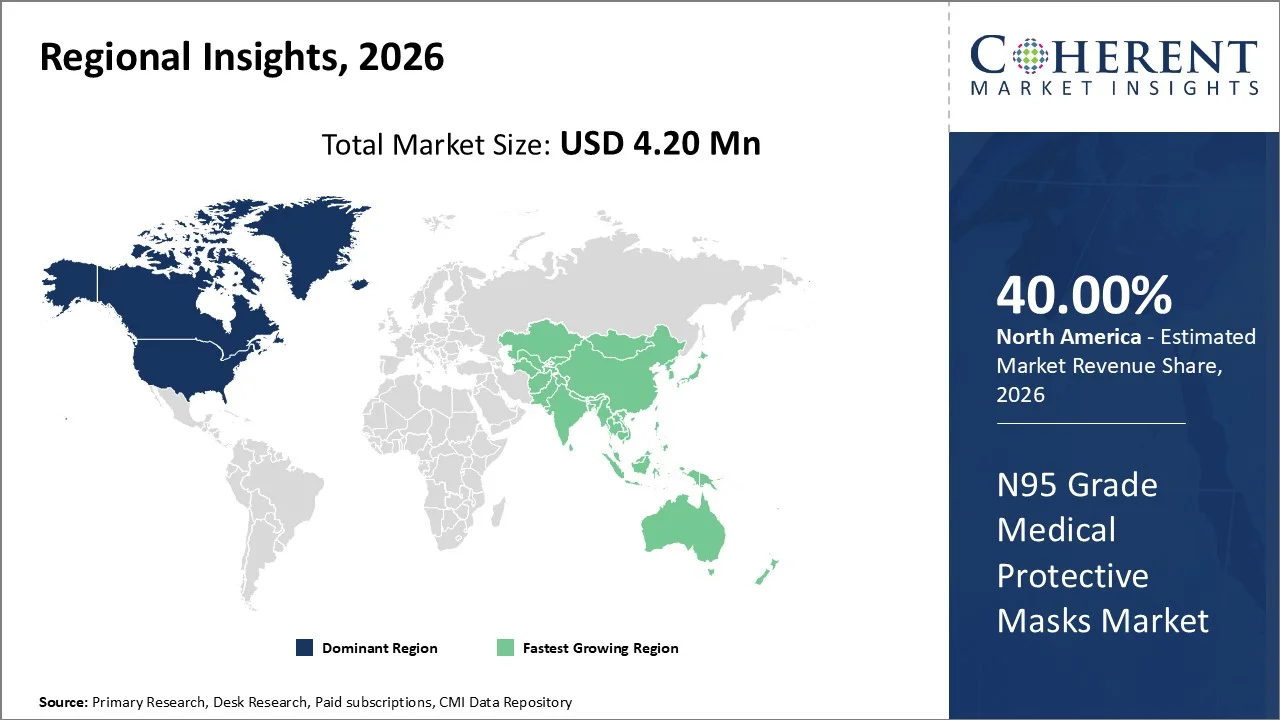
- North America is expected to acquire the dominant share of 40% in 2026, mainly because of the U.S. healthcare system, strict rules, and efforts to be ready for pandemics. Strong regulatory guidelines from OSHA and CDC mandate N95 utilization for healthcare workers as well as certain industrial applications, further bolstering demand.
Segmental Insights
Why is Masks without Exhalation Valve Acquiring the Largest Market Share?
Masks without Exhalation Valve is projected to account for the largest share of product type in 2026, representing approximately 65% of the total volume. This is attributed to its universal applicability in infection control scenarios as well as its endorsement by leading health organizations. Organizations such as the Centers for Disease Control and Prevention (CDC) and the World Health Organization (WHO) emphasize the use of masks without an exhalation valve particularly in clinical environments, where the protection not only of the wearer but also of those around them is paramount.
Analysts expect that about 65% of N95 masks in 2026 will be without valves, because they are recommended by health authorities and can be used in many infection control situations.
These masks filter the air you breathe in and breathe out, helping reduce the chance of spreading germs in places like hospitals and quarantine centers.
For instance, during the COVID-19 pandemic, healthcare workers mostly used N95 masks without valves because masks with valves let out unfiltered air, which could spread the virus to patients and coworkers.
- Current Industry Events of 2026
- Market Size Estimation
- Regional Breakdown
- Competitive Landscape
- Customer Intelligence
- Segmental Analysis
- Pricing Analysis
- Key Market Drivers, Challenges & Future Trends
- Customized Insights Section
Hospital & Clinic holds the Largest Market Share
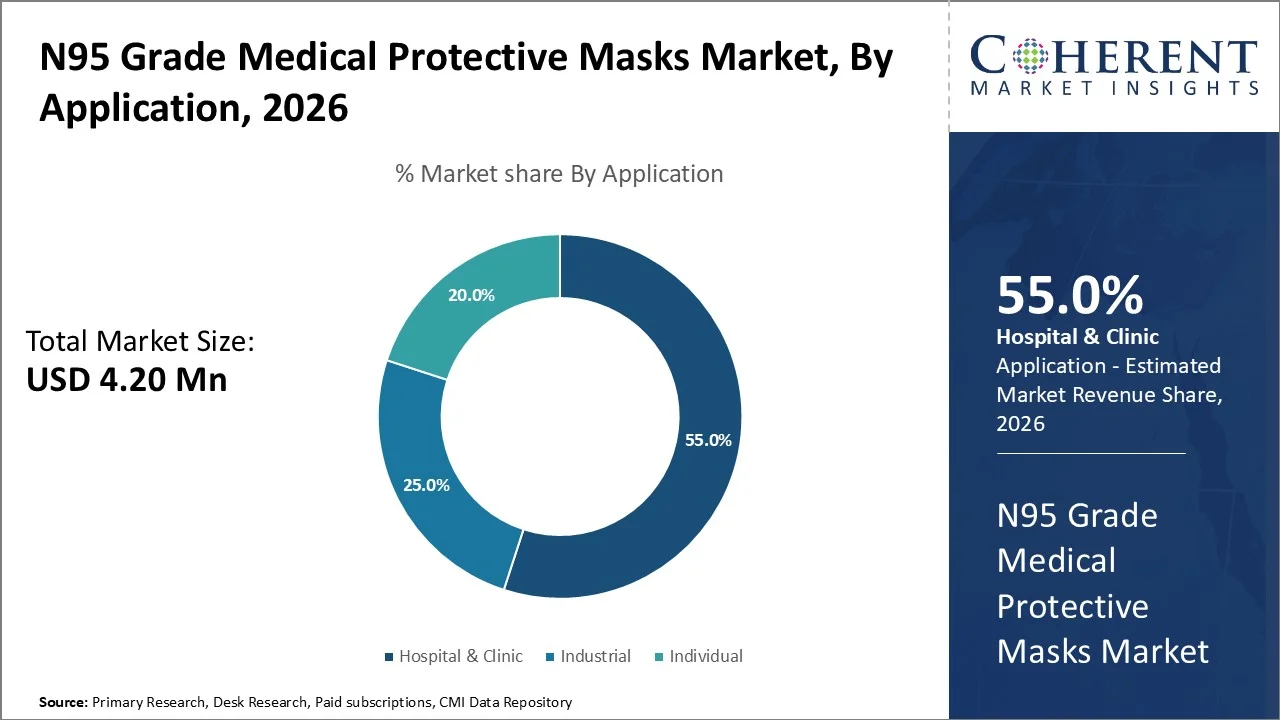
Based on application, hospital & clinic dominates the market, accounting for a significant 55% share in 2026, this dominance primarily attributed to the high awareness as well as adoption of personal protective measures by the general public, especially in response to prolonged global health emergencies, such as the COVID-19 pandemic. Individuals across different countries highly recognize the significance of wearing N95 masks for effective protection against airborne pathogens, pollutants, as well as allergens.
Public health organizations such as the Centers for Disease Control and Prevention (CDC) and the World Health Organization (WHO) have consistently targeted the role of N95 masks in lowering transmission of respiratory illnesses. This heightened public consciousness has fueled widespread use of these masks beyond healthcare settings, into daily life, travel, as well as public spaces, driving consistent demand from the Individual segment.
Hospitals/Clinics holds the Largest Market Share
Based on distribution channel, hospitals/clinics dominate the market, accounting for a significant 60% share in 2026, mainly because they are frontline healthcare workers who need a steady and reliable supply of high-quality protective masks. Hospitals and clinics are pivotal in managing patient care, especially for infectious disease control and during pandemics, which necessitate the continuous utilization of N95 masks to protect healthcare professionals and patients alike.
The World Health Organization predicts a shortfall of 11 million health workers by 2030. From nurses, community health workers, and pharmacists to midwives, epidemiologists, doctors, lab technicians, and more - all cadres of health workers, 70% of whom are women, are the backbone of high-quality, sustainable health service delivery.
These masks are required in surgical wards, ICUs, and during procedures that produce airborne particles, following rules from WHO and CDC.
For example, during COVID-19, hospitals around the world focused on buying N95 masks to follow safety rules and keep enough stock for their staff, which kept hospitals and clinics as the main buyers in this market.
Filtration Technology is transforming the N95 Grade Medical Protective Masks Industry
The effectiveness of N95 masks comes from their high filtration efficiency, made through non-woven polypropylene fabric using melt-blown technology combined with electrostatic charging. Melt-blown fabric forms a fine mesh of synthetic polymer fibers that mechanically block particles, while electret technology adds an electrostatic charge to attract as well as trap particles apart from mechanical filtration.
Leading manufacturers like 3M as well as Honeywell have leveraged these technologies to deliver masks with >95% filtration efficiency, ensuring both protection as well as comfort. This advanced filtration has had a profound impact, saving countless lives, particularly for healthcare workers during infectious outbreaks.
Current Events and Their Impact on the N95 Grade Medical Protective Masks Market
Current Event | Description and its Impact |
CDC Updates N95 Mask Guidelines for Healthcare Workers (2026) |
|
EU Strengthens PPE Regulations in Hospitals (2025) |
|
N95 Grade Medical Protective Masks Market Trends
- High Adoption Beyond Healthcare, while hospitals and clinics remain the main users, industries such as manufacturing, construction, public transportation, etc., are highly adopting N95 masks to protect workers from dust, pollutants, and airborne pathogens. This broader usage is expanding the overall market.
- Technological Innovations, manufacturers are introducing masks with enhanced filtration efficiency, exhalation valves, adjustable straps, as well as improved breathability. These features improve comfort for long-term use and are becoming key factors influencing customer preference.
- Sustainability Initiatives, high environmental awareness is driving the development of reusable as well as biodegradable masks. These eco-friendly options aid reduce medical waste and appeal to environmentally conscious consumers and institutions.
- Government Mandates and Stockpiling, governments in several regions continue to require mask usage in high-risk environments and maintain strategic reserves. Such measures aid stabilize demand as well as ensure consistent adoption across healthcare and industrial sectors.
Regional Insights
North America dominates owing to stringent regulatory environment
North America account 40% market share in 2026, North America, primarily, the United States, which dominates this, has maintained a stringent regulatory environment spearheaded by the Centers for Disease Control and Prevention (CDC) and the National Institute for Occupational Safety and Health (NIOSH), who certify and mandate the use of N95 masks in healthcare settings and other high-risk environments.
NIOSH has approved more than 1,200 N95 mask models for hospitals and industries, and in 2025, CDC rules still require healthcare workers in high-risk areas to wear them.
This regulatory landscape ensures the sustained demand as well as supply of genuine N95 grade protective masks. For example, during the COVID-19 pandemic, the U.S. government authorities activated the Defense Production Act to majorly ramp up domestic production of N95 masks, making sure that healthcare workers as well as vulnerable populations had prioritized access to these masks.
Asia Pacific N95 Grade Medical Protective Masks Market Trends
The Asia-Pacific region is poised to be the fastest-growing region through 2026-2033, expanding at a CAGR of approximately 7.5%. Significant presence of healthcare facilities, along with an increasing awareness regarding respiratory health especially in the wake of recent respiratory disease and seasonal air pollution crises. China and India, as two of the largest healthcare markets in the region, have been pivotal in driving demand for N95-grade masks owing to public health mandates as well as ample amount of scale production capabilities.
China’s healthcare infrastructure has over 40,000 hospitals with more than 8 million beds, and 70% are public. This creates high demand for N95 masks, making China a key driver of the Asia Pacific market.
Furthermore, strict safety rules in Japan and South Korea mean workers in hospitals and industries must always use high-quality masks. A recent data point highlighting Asia Pacific’s leadership within the region is the widespread government-led initiatives to ensure stockpiling of N95 masks to prepare for future pandemics.
Its Well-Established Healthcare Infrastructure is Accelerating the N95 Grade Medical Protective Masks Market Demand in United States
The U.S. contributes the highest share in the N95 Grade Medical Protective Masks market due to its well-established healthcare infrastructure, stringent regulatory framework, as well as substantial government initiatives aimed at safeguarding healthcare workers and the general public during health crises.
The U.S. Centers for Disease Control and Prevention (CDC) and the National Institute for Occupational Safety and Health (NIOSH) play major roles in setting rigorous standards for N95 masks, ensuring their widespread adoption in hospitals, clinics, as well as other medical establishments across the country.
Furthermore, The U.S. government saved extra masks and boosted production using the Defense Production Act during COVID-19, showing the country’s leadership in this market. For example, the U.S. Department of Health and Human Services (HHS), through its Biomedical Advanced Research and Development Authority (BARDA), invested highly in domestic manufacturing capacities to mitigate dependency on imports during the pandemic, thereby securing continuous supply chains and technological advancements in mask design and filtration technology.
China N95 Grade Medical Protective Masks Market Trends
The China subsegment contributes the highest share in the N95 Grade Medical Protective Masks Market in APAC owing to several critical factors tied to its manufacturing capabilities, response to public health crises, and government initiatives supporting domestic production and export.
China’s dominance has been significantly reinforced during the COVID-19 pandemic when it quickly transformed its industrial base to prioritize the production of medical-grade masks. For example, according to the Chinese National Health Commission and the Ministry of Industry and Information Technology, the country surged its daily production capacity of N95 masks from approximately 20 million in early 2020 to over 90 million by late 2021, meeting both domestic as well as global demand.
Making so many masks meant China had plenty for itself and could also send a lot to other APAC countries and the world, making it a top supplier.
Who are the Major Companies in N95 Grade Medical Protective Masks Industry
Some of the major key players in 3M Company, Honeywell International Inc., Kimberly-Clark Corporation, Cardinal Health, Inc., Kowa Company Ltd., Shanghai Dasheng, Vogmask, Hakugen Co. Ltd, Sinotextiles Corporation Limited, and The Gerson Company
Key News
- In March 2025, 3M announced the opened a new N95 respirator manufacturing facility in North Carolina to increase domestic production capacity and reduce reliance on imports.
Market Report Scope
N95 Grade Medical Protective Masks Market Report Coverage
| Report Coverage | Details | ||
|---|---|---|---|
| Base Year: | 2025 | Market Size in 2026: | USD 4.20 Mn |
| Historical Data for: | 2020 To 2024 | Forecast Period: | 2026 To 2033 |
| Forecast Period 2026 to 2033 CAGR: | 8.98% | 2033 Value Projection: | USD 7.58 Mn |
| Geographies covered: |
| ||
| Segments covered: |
| ||
| Companies covered: | 3M Company, Honeywell International Inc., Kimberly-Clark Corporation, Cardinal Health, Inc., Kowa Company Ltd., Shanghai Dasheng, Vogmask, Hakugen Co. Ltd, Sinotextiles Corporation Limited, and The Gerson Company. | ||
| Growth Drivers: |
| ||
| Restraints & Challenges: |
| ||
Analyst Opinion
- The N95 mask market is driven by real healthcare and industrial needs, not trends. CDC 2025 updates highlight ongoing risks from airborne diseases, meaning high-filtration masks remain essential for hospitals, clinics, and public transport.
- Hospitals lead demand, but industries are rapidly adopting masks for worker safety. In 2025, over 60% of industrial workplaces in the U.S. required N95 respirators, showing that adoption is necessity-driven.
- Technological innovations are reshaping the market. 3M and Honeywell’s 2025 launch with graphene coatings as well as nanofiber layers allow multiple sterilizations while maintaining >95% filtration, making N95 masks durable, high-performance, as well as widely adopted across healthcare and other industry.
- Policies made by government authorities and stockpiling stabilize demand. Strategic reserves and mask mandates in regions like the U.S., Europe, and parts of Asia ensure a consistent market base, reducing volatility and supporting long-term manufacturer investment.
Speak to the analyst
Want personalized insights?
Take the findings above to one of our principal consultants, or have the report rebuilt around the segments, geographies and competitors you actually track.
N95 Grade Medical Protective Masks Market Segmentation
- By Type
- Mask with Exhalation Valve
- Mask without Exhalation Valve
- By Application
- Individual
- Industrial
- Hospital & Clinic
- By Distribution Channel
- Hospitals/Clinics
- Drug Stores
- Online Stores
- Global N95 Grade Medical Protective Masks Market, By Region
- North America
- U.S.
- Canada
- Latin America
- Brazil
- Mexico
- Argentina
- Rest of Latin America
- Europe
- Germany
- U.K.
- France
- Italy
- Spain
- Russia
- Rest of Europe
- Asia Pacific
- China
- India
- Japan
- Australia
- South Korea
- ASEAN
- Rest of Asia Pacific
- Middle East
- GCC
- Israel
- Rest of Middle East
- Africa
- South Africa
- Central Africa
- North Africa
- North America
Sources
Primary Research Interviews
- Medical Device Manufacturers
- Healthcare Providers and Hospitals
- PPE Distributors and Retailers
- Regulatory Authorities
- Others
Databases
- Euromonitor International
- IBISWorld Industry Reports
- Others
Magazines
- Medical Device and Diagnostic Industry (MD+DI)
- PPE Technology Magazine
- Healthcare Purchasing News
- Infection Control Today
- Others
Journals
- Journal of Medical Devices
- American Journal of Infection Control
- Journal of Occupational and Environmental Hygiene
- Others
Newspapers
- The Wall Street Journal
- The New York Times - Health Section
- The Guardian - Healthcare
- Financial Times - Medical Devices
- Others
Associations
- American Association of Medical Instrumentation (AAMI)
- International Safety Equipment Association (ISEA)
- National Institute for Occupational Safety and Health (NIOSH)
- European Safety Federation (ESF)
- Others
Public Domain Sources
- World Health Organization (WHO)
- Centers for Disease Control and Prevention (CDC)
- U.S. Food and Drug Administration (FDA)
- National Health Service (NHS)
- Others
Proprietary Elements
- CMI Data Analytics Tool
- Proprietary CMI Existing Repository of information for last 10 years
Get access to 250+ pages report
Every segment, forecast, competitor profile and data table behind the analysis above — available for instant download.
- ESOMAR Member
- ISO 9001:2015 Certified
- D-U-N-S Registered
- GDPR & CCPA Compliant
Missing comfort of reading report in your local language? Find your preferred language:
Transform your Strategy with Exclusive Trending Reports
Frequently Asked Questions
The N95 grade medical protective masks market is expected to reach USD 7.58 Mn in 2033.
Major players operating in the global N95 grade medical protective masks market include Baxter International Inc., B. Braun Medical Inc., Smiths Medical, NIPRO Medical Corporation, AngioDynamics, Inc., and C. R. Bard, Inc.
The availability of medical, surgical, and patient care face masks are major factors restraining growth of the N95 grade medical protective masks market.
Growth in healthcare infrastructure globally is expected to propel growth of the market over the forecast period.
The N95 grade medical protective masks market is anticipated to grow at a CAGR of 8.98% between 2026 and 2033.
Among regions, North America is expected to account for a largest market share in the global N95 grade medical protective masks market over the forecast period.