

Global Atopic Disease Therapeutics Market Size and Forecast – 2026 to 2033
According to Coherent Market Insights, the global atopic disease therapeutics market is estimated to be valued at USD 13.9 Bn in 2026 and is expected to reach USD 26.24 Bn by 2033, exhibiting a compound annual growth rate (CAGR) of 9.5% from 2026 to 2033. This substantial growth reflects increasing prevalence of atopic diseases worldwide, ongoing advancements in therapeutic treatments, and rising awareness related to atopic disease therapeutics among patients and healthcare providers. The market's expansion is further driven by innovations in biologics and targeted therapies offering improved efficacy and safety profiles.
Key Takeaways of the Atopic Disease Therapeutics Market
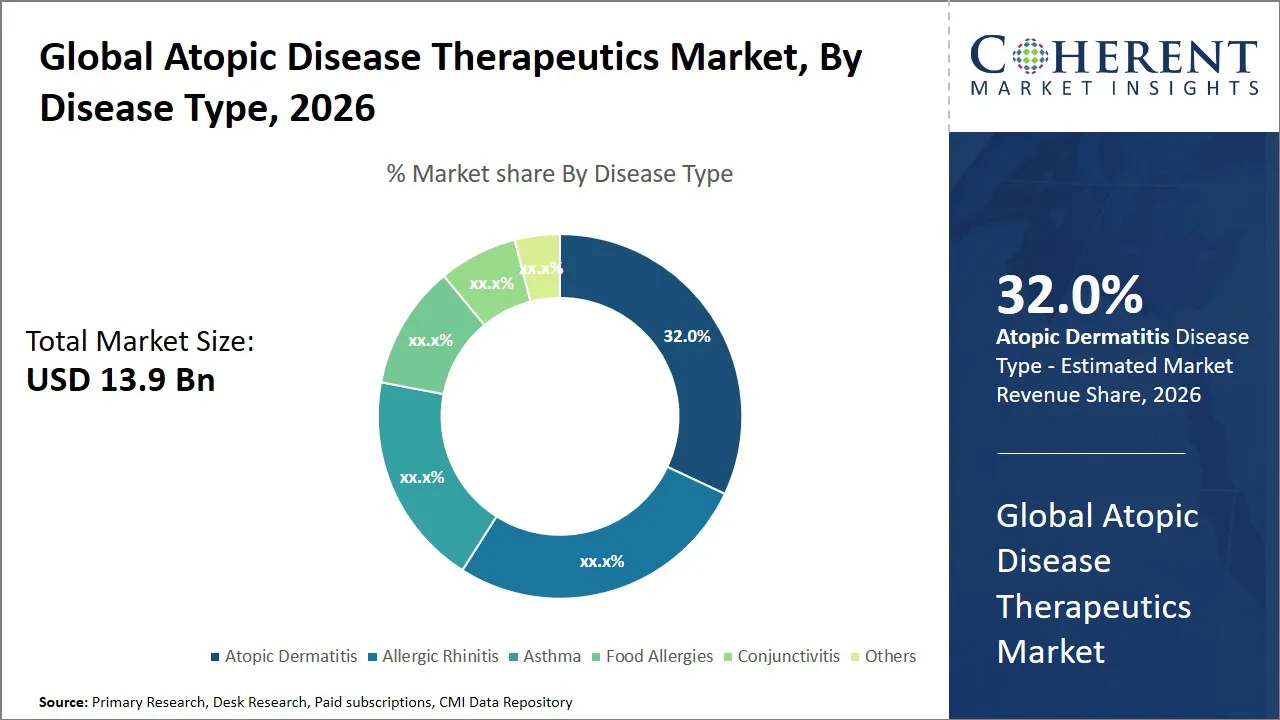
- The atopic dermatitis segment is expected to lead the global atopic disease therapeutics market capturing 32% share in 2026.
- The topical steroids segment is estimated to represent 35% of the global atopic disease therapeutics market share in 2026.
- The topical segment is projected to dominate with 52% of the market share in 2026.
- North America is expected to lead the market, holding a share of 43% in 2026.
- Asia Pacific is anticipated to be the fastest-growing region, with 27% share in 2026.
Market Overview
- The market includes prescription and OTC therapies used to manage chronic allergic inflammation, mainly atopic dermatitis, allergic rhinitis, and atopic asthma, across mild, moderate, and severe patient groups.
- Demand is rising because more patients are being diagnosed earlier, urban lifestyles are increasing allergy exposure, and chronic relapse patterns are pushing long-term treatment adoption.
- Treatment preference is moving beyond basic symptom control toward stronger disease control, which is increasing usage of biologics, JAK inhibitors, PDE4 inhibitors, and steroid-sparing topicals.
- Dermatology and allergy clinics are driving most prescriptions, especially for moderate-to-severe cases where long-term maintenance therapy is needed to prevent flare cycles and repeated hospital visits.
Current Events and Its Impact
Current Events | Description and its Impact |
New biologic approvals expanding advanced therapy choices |
|
Pediatric treatment expansion boosting steroid-free demand |
|
Segmental Insights
- Current Industry Events of 2026
- Market Size Estimation
- Regional Breakdown
- Competitive Landscape
- Customer Intelligence
- Segmental Analysis
- Pricing Analysis
- Key Market Drivers, Challenges & Future Trends
- Customized Insights Section
Why Does the Atopic Dermatitis Segment Dominate the Global Atopic Disease Therapeutics Market in 2026?
The atopic dermatitis segment is expected to hold the largest share of 32% in 2026, primarily driven by its widespread prevalence and significant impact on patient quality of life. The rising prevalence of AD across all parts of the globe, particularly in urbanized and industrialized zones, is a defining force driving the need to come up with efficient therapeutics. It is a long-term inflammatory skin disease that occurs mainly in children, but also in adults, which forms the basis of long-term care requirements. Environmental pollution, changing lifestyles, and genetic predisposition represent some of the factors that add to the increasing number of patients, thereby increasing the market size of AD therapies.
The other significant effect in the growth of the segments is the increasing level of awareness and better diagnostics. It is becoming more possible to identify and diagnose AD at an early stage to initiate timely treatment using the most fitting therapeutics both to patients and healthcare providers. Also, problems with sleep disruption, social stigma, and anxiety are among the psychosocial burdens of AD that compel patients to pursue higher-order treatment modalities that may provide them with better symptom management and quality of life. This has sharpened the funding on new treatments that are specific to AD and pharmaceutical firms have pursued R&D efforts in this disease.
For instance, EBGLYSS (lebrikizumab-lbkz) developed by Eli Lilly has been approved by the U.S. FDA to treat moderate-to-severe atopic dermatitis in adults and adolescents aged 12 years and older, whose condition has not been responsive to topical prescription therapies. The endorsement enhances the biologics pipeline in the atopic dermatitis segment, and the number of treatment choices open to those who need to management a disease in the long-term beyond the conventional topical treatment. The growth will likely enhance the rate of uptake of improved targeted treatments in the dermatology practice, particularly severe and persistent cases of eczema.
Why Does the Topical Steroids Segment Dominate the Global Atopic Disease Therapeutics Market in 2026?
The topical steroids segment is expected to hold the largest share of 35% in 2026, owing to their widespread acceptance stems from their potent anti-inflammatory and immunosuppressive properties, providing rapid relief from symptoms such as itching, redness, and swelling. Topical steroids are among the first line treatment options prescribed by healthcare professionals particularly in mild to moderate cases because of their track record and the well-established clinical guidelines. This is a systematic clinical preference that contributes to long-term demand in this segment.
Topical steroid dominance is also greatly affected by the familiarity and user-friendliness of the patients. They are highly available and in different formulations like creams, ointments or gels which enable flexible application to be applied depending on the needs of the patients and the severity of the diseases. This is because targeted therapy to the affected areas of the skin can be administered which reduces the number of side effects on the systems, leading to patient adherence and satisfaction. Moreover, due to continuous improvement of steroid molecule formulations, products with a better safety margin have been obtained, which is less prone to skin atrophy and other unpleasant side effects, extending their usefulness as a choice of treatment.
Topical Dominates the Atopic Disease Therapeutics Market
The topical segment is expected to capture the highest share of 52% in 2026, largely due to its targeted delivery and favorable safety profile. Because most patients with atopic diseases, particularly atopic dermatitis and conjunctivitis, exhibit illness on the skin or mucous membranes, topical therapy can be applied directly to the disease, allowing therapeutic action in the area with minimal absorption of the agent. This localization plays a vital role in the reduction of risk of systemic side effects, and this is a critical factor that provokes both clinicians and patients to use topical administration.
Atopic disease therapeutics are also patient-convenient and compliance-based, which is essential in the treatment of chronic atopic conditions that may need a long-term treatment. Convenience of self-administration without visits to the healthcare facilities or injections increases the compliance of patients with prescriptions. This is more important especially in pediatrics where discomfort and invasiveness have to be avoided at all costs. Moreover, the introduction of high-technology topical preparations as foams, sprays, and patches has enhanced drug penetration and patient satisfaction, which have increased acceptance.
Biologics vs JAK Inhibitors vs Topical Adoption
- As the global market in the field of atopic disease therapeutics, end-user adoption is taking three distinct lanes that rely on the severity, cost-effectiveness, and the healthcare facility. Tertiary hospitals and dermatology clinics are shifting to the use of biologics in patients with the moderate to severe type of atopic dermatitis due to predictability of outcomes and higher ability to control flares in the long run. An illustration is that in specialized care, biologic-driven treatment pathways are becoming a desirable surgical choice when topical treatment regimens fail repeatedly, in part due to patients reporting an improvement in sleep, a reduction in flare cycles, and an increase in daily functioning when the disease is put under control. Concurrently, JAK inhibitors are becoming popular where quick relief is essential such as in severe itch and inflammation, but typically they are administered with increased observation. At the same time, the type of topical therapy continues to dominate in volume demands particularly in primary care, public hospitals and retail pharmacy practice due to it being the first line in mild to moderate disease secondary to its easy administration and accessibility.
- The largest issue that continues to be raised by end users relates to the disparity between clinical value and actual accessibility. Biologics and JAK inhibitors have become limited by costs and reimbursement approvals, as well as by the availability of specialists and this imposes delays even in patients who have obvious escalation demands. The standard weakness observed in publicly provided healthcare facilities is the delay in approving advanced therapies, which forces patients to a long course of steroids, which most caregivers and clinicians strive to prevent. This creates one giant gap of need concerning cost, expediency in approvals of payers, and easier monitoring routes to oral advanced drugs. Manufacturers can open up growth opportunities by providing patient support initiatives, predictable supply, and flexible pricing frame work in emerging markets and policy makers can improve their outcomes by expanding reimbursement criteria and provision of fast-track access to severe cases led by dermatologists.
Regional Insights
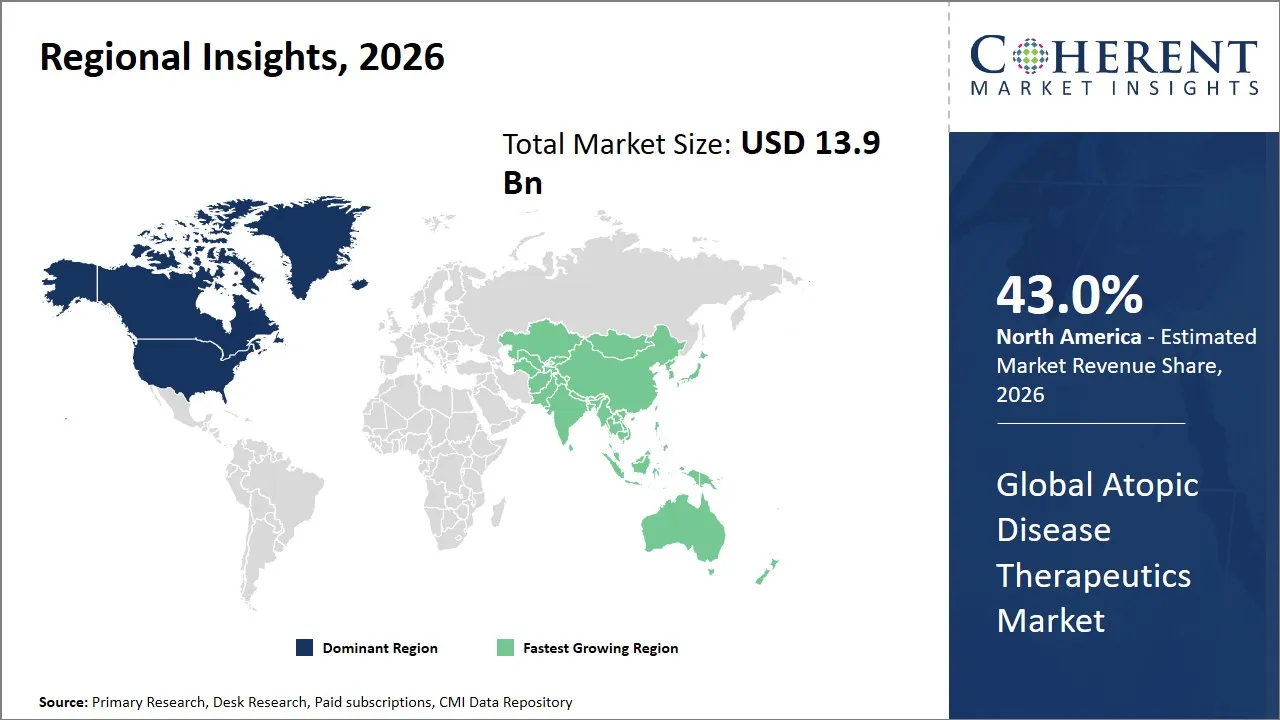
North America Atopic Disease Therapeutics Market Analysis and Trends
The North America region is projected to lead the market with a 43% share in 2026, attributed to a matured healthcare infrastructure supported by strong government initiatives and significant investments in research and development. The existence of the major pharmaceutical and biotechnology companies, like Pfizer, Johnson and Johnson, and Regeneron Pharmaceuticals, enhanced the innovation in the methods of atopic disease treatment, including biologics and targeted therapies.
Furthermore, universal coverage of insurance and the increasing awareness of patients concerning atopic disorders also lead to the extensive market penetration. The regulatory authorities such as the FDA have a sound approval system that enables effective market introduction of new therapeutics. In addition, the active involvement of North America in clinical trials, collaboration between academic and industry actors contribute to the dynamism of the ecosystem that drives further innovations.
Asia Pacific Atopic Disease Therapeutics Market Analysis and Trends
The Asia Pacific region is expected to exhibit the fastest growth in the market contributing 27% share in 2026, fueled by increasing healthcare expenditure, rising prevalence of atopic conditions, and expanding awareness among populations in emerging economies such as China and India. Government policies focusing on improving healthcare infrastructure and encouraging local pharmaceutical manufacturing have spotlighted this region.
Additionally, an increase in the population of middle-income people and easier access to medical services contribute to the increase in the diagnosis and treatment of patients. Such players as Astellas Pharma, Takeda, and Sun Pharmaceuticals are regarded as key industry players that have enhanced their presence by forming strategic alliances and launching products that meet regional demands. The existing dynamics of trade based on progressive patent laws and surging foreign direct investment also leads to a higher market appeal.
Atopic Disease Therapeutics Market Outlook for Key Countries
What are the Current Trends Shaping the U.S. Atopic Disease Therapeutics Market?
The healthcare infrastructure, patient awareness, and great R&D capabilities make the U.S. the leader in atopic disease therapeutics market. The development of monoclonal antibody-based therapy of atopic dermatitis has been at the forefront of such major players like Regeneron Pharmaceuticals. Moreover, other companies such as Pfizer and AbbVie keep on innovating by increasing the pipeline of their products and the FDA is encouraging them to have cutting-edge therapeutics approved in time. The broad insurance cover also means a broader access by the patients to these treatments, keeping the U.S. as an industry leader.
How is Germany Helping in the Growth of the Atopic Disease Therapeutics Market?
The market for atopic disease therapeutics is favorable in Germany due to its highly developed healthcare system and strong reimbursement structures. The availability of international companies like Bayer and Boehringer Ingelheim has resulted in massive development of therapeutic services on atopic diseases in the region. Also, the healthcare policies supported by the government focus on early diagnosis and treatment of chronic illnesses, which increases the demand in the market. The robust pharmaceutical industry in Germany and focus on research contribute to consistent innovations and thus it becomes a central center in the atopic disease therapeutics market across Europe.
Key Drivers for the Growth of the China Atopic Disease Therapeutics Market
The market growth of China is driven by the increase in awareness of patients, healthcare reforms in the country, and the growing urban healthcare infrastructure. The local and multinational firms such as Sinovac Biotech and AstraZeneca have expanded their operations in the form of joint ventures and customized therapies which focus on the genetic and environmental factors unique to the Chinese population and which have contributed to the atopic diseases in the Chinese population. Pharma innovation policies and deregulation have also facilitated the introduction of new products, making China one of the main growth engines in the Asia Pacific.
Japan Atopic Disease Therapeutics Market Trends
Japan is on the forefront of Asia Pacific atopic disease therapeutics as it maintains a high level of medical technology ecosystem and is highly dependent on innovation. Takeda and Astellas Pharma are pharmaceutical giants which commit a lot of money to the R&D of atopic diseases, and concentrate on biologics and small molecules. The government long-term care insurance and the healthcare programs provide a constant number of patients, whereas, the well-developed clinical research system of Japan promotes the introduction of new therapies. High level of healthcare awareness and best practices towards treatment is also an advantage to the country.
Diagnosed Prevalence by Country for Atopic Disease Therapeutics Market
- Atopic diseases particularly atopic dermatitis prevalence is diagnosed in sharply differentiated countries due to the uneven access to healthcare, number of specialists, and national awareness. Patients in a high-income market, such as the U.S. and some areas of Western Europe, are more likely to be diagnosed with a confirmed diagnosis at an earlier stage, therefore the treated patient base appears larger and more predictable to drug companies. As an illustration, children in the US are reportedly high with prevalence rates of approximately the mid-teens of some age groups, which drives constant demand of long-term topical maintenance and escalation therapies in the care of specialists. One of the most constant positive end-user experiences in these markets is that patients can step up therapy where topicals have failed, that is to say, biologics and advanced options are not just available on paper, but are put into actual treatment programs.
- The most significant source of pain lies in places where the diagnosis is yet to be well-captured because of the lack of access to dermatology, poor follow-up systems, and affordability of newer medications. The global burden studies indicate that the prevalence may vary greatly across countries and most of the areas do not fully report this, thus complicating government initiation of budgets and manufacturer estimation of demand. One of the most frequent complaints by end users in these markets is that their treatment begins late and remains in its simplistic phase, that is, patients keep taking steroids and symptomatic treatment without receiving regular specialist treatment that would allow them to control the disease. The need gap is evident: enhance screening and referral lines, increase access to steroid-sparing therapies in accordance with low cost, and enhance diagnosis reporting. Cracking this open the door to actual growth since when the diagnosis becomes steady, there is more tolerance to the therapy and patients remain adhered to treatment and the healthcare systems will be able to make the argument that modern therapies should be expanded to cover more people.
Market Players, Key Developments, and Competitive Intelligence
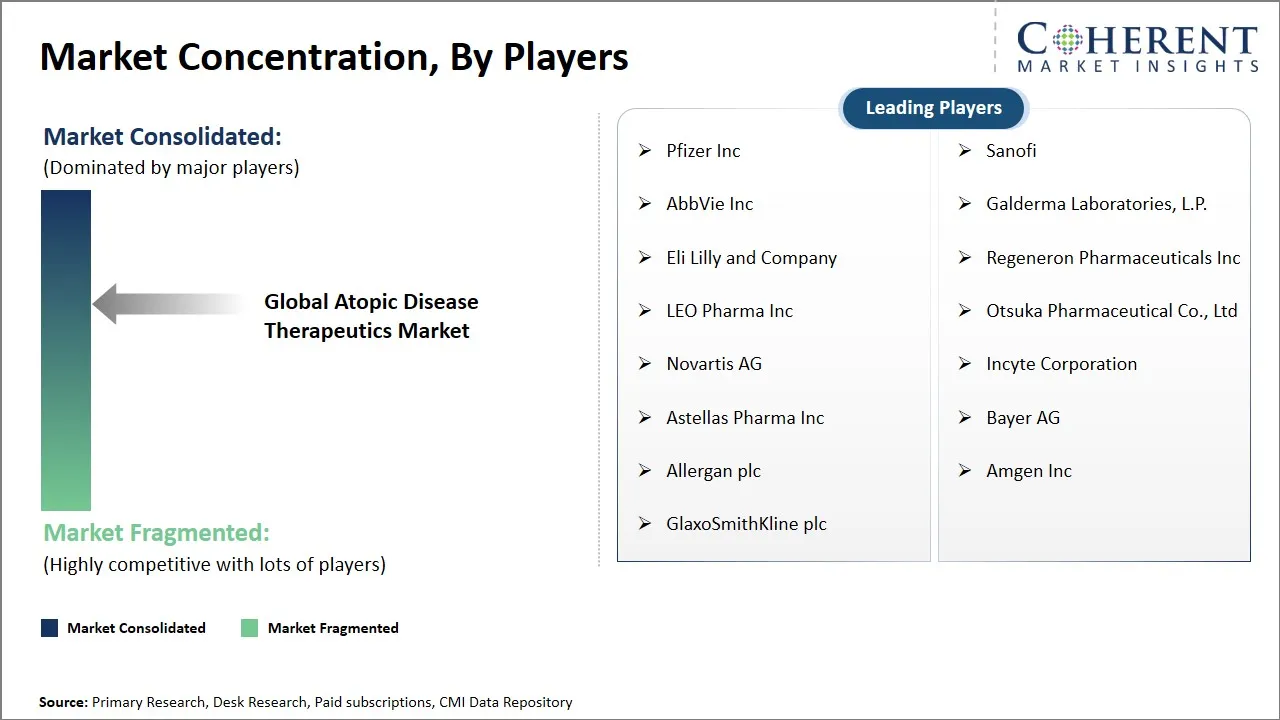
Key Developments
- On 23 January 2026, amlitelimab, an experimental eczema drug (Phase 3) by Sanofi, has shown mixed results, and the company is disheartened by this, and it shows how hard it is to come up with a superior successor to their own blockbuster, Dupixent. Although amlitelimab exhibited great potential in terms of 12-week maintenance therapy and a new, non-T cell depleting mechanism, its first efficacy results in certain studies were not as high as the ones of Dupixent, which caused a drop in share price of Sanofi.
- In October 2025, Arcutis Biotherapeutics got approval to use ZORYVE (roflumilast) cream 0.05% to treat mild-moderate atopic dermatitis (AD) in children 2-5 years old. This is a disease control medication that is steroid-free, steroid-free, PDE4, one-daily pill with no restrictions on duration to achieve long-term control, which is a critical requirement of 1.8 million young American patients.
- In September 2025, the U.S. FDA approved Incyte’sOpzelura (ruxolitinib) cream 1.5% for children aged 2–11 with mild-to-moderate atopic dermatitis, marking a major shift toward steroid-free, non-systemic JAK inhibitor treatment. It presents a critical, long-term management alternative to younger patients, decreasing the use of topical steroids.
Top Strategies Followed by Global Atopic Disease Therapeutics Market Players
Player Type | Strategic Focus | Examples |
Established Market Leaders | Established leaders in the atopic disease therapeutics market strengthen their dominance by investing heavily in R&D to develop advanced therapies like biologics and targeted drugs that deliver better long-term disease control and higher patient compliance. Alongside innovation, they build scale through strategic partnerships and global distribution expansion, especially into emerging regions where diagnosis rates and access to specialty care are improving. | Eli Lilly strengthened its position in atopic dermatitis by securing U.S. FDA approval of EBGLYSS (lebrikizumab) for moderate-to-severe atopic dermatitis in adults and adolescents aged 12+, reflecting strong R&D execution and expansion in high-value biologics-led treatment pathways. |
Mid-Level Players | Mid-level players in the atopic disease therapeutics market mainly compete by offering cost-effective generics and biosimilars, targeting price-sensitive healthcare systems in emerging markets. Their strategy focuses on scaling production through partnerships, licensing deals, and regional distribution tie-ups, which helps them improve reach while maintaining acceptable quality and safety standards. | Alvotech is a strong mid-tier biosimilar player that has expanded its footprint through global partnerships to commercialize biosimilars, including candidates aligned with immunology-driven markets. Its partnership model supports cost-effective biosimilar development and wider access in regions where premium biologics remain restricted by price and reimbursement barriers. |
Small-Scale Players | Small-scale players in the global atopic disease therapeutics market usually grow by focusing on niche innovation rather than volume competition. They target unmet needs such as safer long-term topicals, better delivery formats, or therapies for specific patient subgroups, and they move faster than large pharma in testing new ideas. | Arcutis Biotherapeutics is a focused dermatology player that gained strong traction after the FDA approval of ZORYVE (roflumilast) cream 0.05% for atopic dermatitis in children aged 2–5 years, showing how smaller companies can win by delivering differentiated, steroid-sparing topical options in specific patient segments. |
Market Report Scope
Atopic Disease Therapeutics Market Report Coverage
| Report Coverage | Details | ||
|---|---|---|---|
| Base Year: | 2025 | Market Size in 2026: | USD 13.9 Bn |
| Historical Data for: | 2020 To 2024 | Forecast Period: | 2026 To 2033 |
| Forecast Period 2026 to 2033 CAGR: | 9.5% | 2033 Value Projection: | USD 26.24 Bn |
| Geographies covered: |
| ||
| Segments covered: |
| ||
| Companies covered: | Pfizer Inc, Sanofi, AbbVie Inc, Galderma Laboratories, L.P., Eli Lilly and Company, Regeneron Pharmaceuticals Inc, LEO Pharma Inc, Otsuka Pharmaceutical Co., Ltd, Novartis AG, Incyte Corporation, Astellas Pharma Inc, Bayer AG, Allergan plc, Amgen Inc, and GlaxoSmithKline plc | ||
| Growth Drivers: |
| ||
| Restraints & Challenges: |
| ||
Market Dynamics
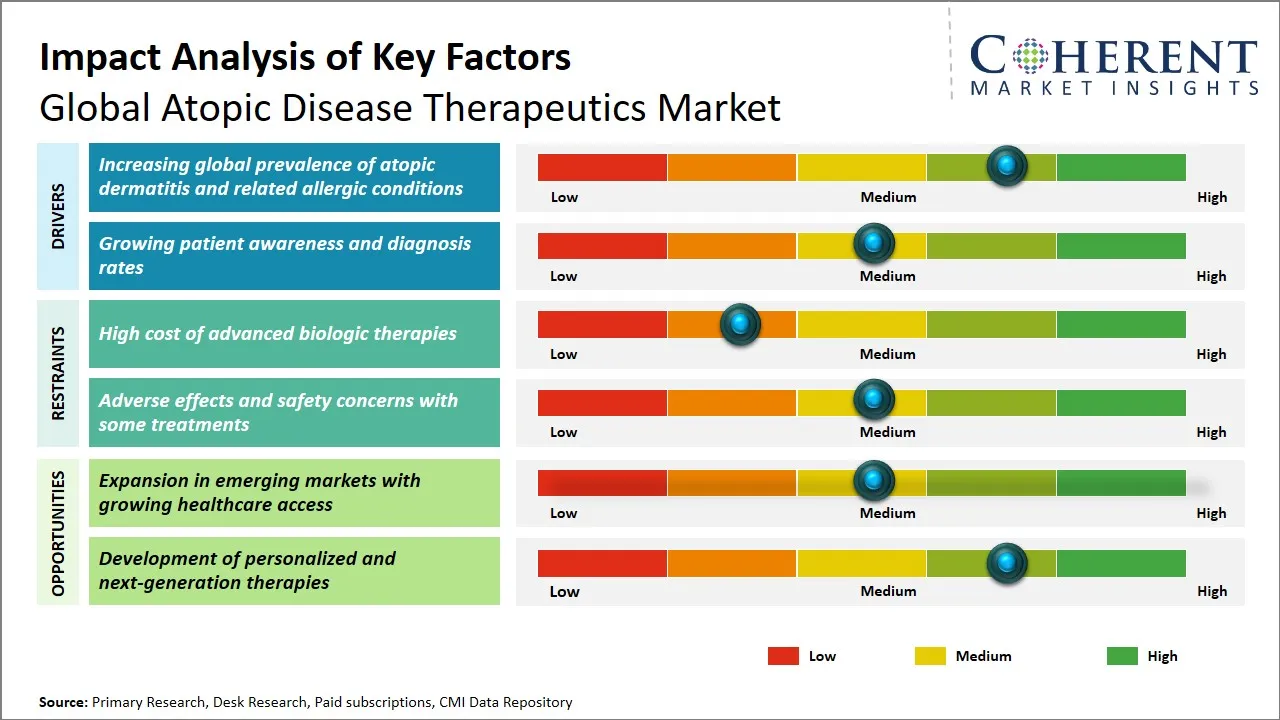
Atopic Disease Therapeutics Market Driver - Increasing Global Prevalence of Atopic Dermatitis and Related Allergic Conditions
The increasing rates of atopic dermatitis and other associated allergic diseases are major factors that have increased the demand for therapeutics in the field across the globe. Lifestyle shifts and urbanization, environmental pollution, and greater exposure to allergens have all been factors that have led to the trend of cases especially in the developed and emerging economies. They are usually chronic and recurring and cause significant discomfort that leads to the quality of life and predisposes the patient to increased awareness and desire to resort to medical intervention.
Moreover, environmental causes and genetic predisposition also increase the frequency and severity of the symptoms, therefore, driving the necessity of more efficient and innovative ways of treatment. With the healthcare systems in the modern world turning more patient-centered towards the management of these immunological and inflammatory diseases, the research and development processes are becoming increasingly more vigorous to meet the unmet patient needs. This has in turn resulted in improved demand in the therapeutic market due to this growing global health burden in relation to atopic diseases.
For instance, a 2025 global epidemiology study reported atopic dermatitis prevalence at 9.6% among adults (16+ years), with the highest rates in Asia, showing the condition is no longer limited to pediatric populations and is expanding as a major chronic disease burden.
(Source- https://onlinelibrary.wiley.com)
Atopic Disease Therapeutics Market Opportunity - Expansion in Emerging Markets with Growing Healthcare Access
The global atopic disease therapeutics market has high opportunity of growth through emerging markets expansion since more people have access to healthcare and the infrastructure is improving. The growing demand ‘foe effective therapeutic solutions is being experienced in countries in regions like Asia Pacific, Latin America and portions of Africa that are rapidly urbanizing, increasing disposable incomes and having increased awareness of atopic diseases. The efforts of government in enhancing healthcare systems and higher population and private investments have increased access and affordability of modern treatments of atopic disorders, such as atopic dermatitis, asthma, and allergic rhinitis.
Furthermore, the increasing trends of these diseases in developing economies such as environmental pollution, lifestyle changes, and the genetic factors all indicate the existence of a rapidly rising number of patients in need of special care. The players in the pharmaceutical industry are moving towards localization of their production and distribution policy, establishing collaborations with the local health care providers, and modifying treatment plans according to a particular demographic and socioeconomic requirements.
For instance, government updates show 32,574 hospitals empaneled under AB PM-JAY (as of December 1, 2025), expanding cashless treatment access across India, which improves reach for chronic disease management and specialist referrals.
(Source-https://www.pib.gov.in/PressReleaseIframePage.aspx?PRID=2210432®=3&lang=2)
Analyst Opinion (Expert Opinion)
- The atopic disease therapeutics market is entering into an improved growth phase since the market is growing and treatment standards are evolving rapidly. The number of patients who are receiving early diagnosis, particularly in urban areas, is rising, middle-to-severe atopic dermatitis is being treated as a chronic immunology disorder not as a temporary skin outburst. This trend is dragging the market towards targeted therapy, and biologics and newer steroid-sparing topicals are widening the scope of treatment. Recent approvals indicate the rate at which the innovation process is accelerating with Eli Lilly, EBGLYSS lebrikizumab, receiving U.S. FDA approval in moderate-to-severe atopic dermatitis in children aged 12 and above. Meanwhile, there are still issues of high reality, primarily affordability and lack of even distribution. Biologics are still limited by reimbursement in most countries, and JAK options have monitoring issues, compelling a significant portion of patients to continue on repetitive topical therapy even when they are not controlling the disease.
- However, in recent 2-3 years, knowledge sharing and directing has been greatly influenced by large dermatology conferences like the AAD Annual Meeting and biologics and JAK safety sessions, which have a significant impact on specialist prescribing behavior all over the globe. Pediatric expansion and improvements in healthcare access induced by the government are also generating real market momentum. Indicatively, when the FDA approved Opzelura by Incyte for children aged 2 to 11, it expanded steroid-free therapy options in a patient group where caregivers are so concerned about the risks of steroid exposure over time.
Speak to the analyst
Want personalized insights?
Take the findings above to one of our principal consultants, or have the report rebuilt around the segments, geographies and competitors you actually track.
Market Segmentation
- Disease Type Insights (Revenue, USD Bn, 2021 - 2033)
- Atopic Dermatitis
- Allergic Rhinitis
- Asthma
- Food Allergies
- Conjunctivitis
- Others
- Drug Class Insights (Revenue, USD Bn, 2021 - 2033)
- Topical Steroids
- Topical Calcineurin Inhibitors
- Biologics (e.g., Monoclonal Antibodies, JAK Inhibitors)
- Systemic Steroids
- Immunosuppressants
- Others
- Route of Administration Insights (Revenue, USD Bn, 2021 - 2033)
- Topical
- Oral
- Injectable
- End User Insights (Revenue, USD Bn, 2021 - 2033)
- Hospitals
- Dermatology Clinics
- Homecare Settings
- Pharmacies
- Distribution Channel Insights (Revenue, USD Bn, 2021 - 2033)
- Online
- Offline
- Patient Type Insights (Revenue, USD Bn, 2021 - 2033)
- Acute
- Chronic
- Regional Insights (Revenue, USD Bn, 2021 - 2033)
- North America
- U.S.
- Canada
- Latin America
- Brazil
- Argentina
- Mexico
- Rest of Latin America
- Europe
- Germany
- U.K.
- Spain
- France
- Italy
- Russia
- Rest of Europe
- Asia Pacific
- China
- India
- Japan
- Australia
- South Korea
- ASEAN
- Rest of Asia Pacific
- Middle East
- GCC Countries
- Israel
- Rest of Middle East
- Africa
- South Africa
- North Africa
- Central Africa
- North America
- Key Players Insights
- Pfizer Inc
- Sanofi
- AbbVie Inc
- Galderma Laboratories, L.P.
- Eli Lilly and Company
- Regeneron Pharmaceuticals Inc
- LEO Pharma Inc
- Otsuka Pharmaceutical Co., Ltd
- Novartis AG
- Incyte Corporation
- Astellas Pharma Inc
- Bayer AG
- Allergan plc
- Amgen Inc
- GlaxoSmithKline plc
Source
Primary Research Interviews
Industry Stakeholders list
- Dermatologists
- Allergists and Immunologists
- Pulmonologists
- Hospital Pharmacy Heads
- Payer and Reimbursement Officers
- Regulatory Affairs Experts
End-users list
- Atopic Dermatitis Patients
- Caregivers of Pediatric Patients
- Hospital Dermatology Departments
- Specialty Clinics
- Retail Pharmacists
- Public Health Program Managers
Government and International Databases
- World Health Organization
- S. Food and Drug Administration
- European Medicines Agency
- Centers for Disease Control and Prevention
- National Institutes of Health
- UK Medicines and Healthcare products Regulatory Agency
Trade Publications
- Dermatology Times
- Pharmacy Times
- The Pharmaceutical Journal
- Drug Discovery Today
- Nature Reviews Drug Discovery
- Clinical Leader
Academic Journals
- Journal of Allergy and Clinical Immunology
- Allergy
- British Journal of Dermatology
- Journal of Investigative Dermatology
- The Lancet
- JAMA Dermatology
Reputable Newspapers
- Reuters
- Financial Times
- The New York Times
- The Guardian
- BBC News
- The Washington Post
Industry Associations
- World Allergy Organization
- American Academy of Dermatology
- European Academy of Dermatology and Venereology
- European Respiratory Society
- International Eczema Council
- International Society of Allergy and Clinical Immunology
Public Domain Resources
- ClinicalTrials.gov
- WHO Global Health Observatory
- OpenFDA
- Cochrane Library
Proprietary Elements
- CMI Data Analytics Tool: Proprietary analytics tool to analyze real-time market trends, consumer behavior, and technology adoption in market
- Proprietary CMI Existing Repository of Information for Last 8 Years
Get access to 250+ pages report
Every segment, forecast, competitor profile and data table behind the analysis above — available for instant download.
- ESOMAR Member
- ISO 9001:2015 Certified
- D-U-N-S Registered
- GDPR & CCPA Compliant
Missing comfort of reading report in your local language? Find your preferred language:
Transform your Strategy with Exclusive Trending Reports
Frequently Asked Questions
The global atopic disease therapeutics market is estimated to be valued at USD 13.9 billion in 2026 and is expected to reach USD 26.24 billion by 2033.
The CAGR of global atopic disease therapeutics market is projected to be 9.5% from 2026 to 2033.
Increasing global prevalence of atopic dermatitis and related allergic conditions and growing patient awareness and diagnosis rates are the major factors driving the growth of the global atopic disease therapeutics market.
FDA approval expansion of Opzelura ruxolitinib cream for children aged 2 to 11 is improving steroid-free treatment adoption in pediatric care.
Because biologics like IL-13 inhibitors are delivering stronger long-term control and pushing treatment beyond repeated topical cycles especially after recent FDA approvals
High cost of advanced biologic therapies and adverse effects and safety concerns with some treatments are the major factors hampering the growth of the global atopic disease therapeutics market.
In terms of disease type, atopic dermatitis is estimated to dominate the market revenue share in 2026.