

Baby Cribs Market Size And Share Analysis - Growth Trends And Forecasts (2026-2033)
The baby cribs market is estimated to be valued at USD 2.00 Bn in 2026 and is expected to reach USD 2.73 Bn by 2033, exhibiting a compound annual growth rate (CAGR) of 4.9% from 2026 to 2033.
Key Takeaways
- By Product Type, the Traditional cribs segment is projected to dominate the baby cribs market with a substantial 46.0% share in 2026.
- By Material, the Wood cribs division is expected to command a 40.3% share of the global market in 2026.
- By Distribution Channel, the Specialty baby stores are anticipated to lead the distribution channel segment with a 43.7% market share in 2026.
- North America is expected to maintain its leadership in the baby cribs market with a 39.2% share in 2026.
Market Overview
The global baby cribs market is witnessing steady growth, fuelled by rising birth rates, increasing awareness of infant safety, and a growing preference for high-quality nursery furniture. Parents are prioritizing durable, non-toxic, and aesthetically pleasing cribs, driving demand for wooden and traditional designs. Specialty baby stores remain key distribution hubs, offering expert guidance and hands-on product experience.
Current Events and its Impact on the Baby Cribs Market
Current Event | Description and its impact |
Sustainable and Non-Toxic Product Trends |
|
Retail Expansion in Emerging Economies |
|
Stricter Safety Regulations |
|
Pricing Analysis: Baby Cribs Market
The pricing of baby cribs varies widely based on material, design, safety features, brand reputation, and additional functionalities such as convertibility. Entry-level cribs made from engineered wood or lightweight materials typically range from $100 to $200, appealing to budget-conscious consumers.
Mid-range cribs, priced between $200 and $500, often feature durable hardwood construction, modern aesthetics, and convertible options, making them popular among urban, middle-income families. Premium cribs, which can exceed $800, are crafted from high-quality, sustainably sourced wood and offer advanced safety certifications, ergonomic designs, and multi-functional use (e.g., crib-to-bed conversions).
The market is witnessing growing consumer preference for value-driven purchases that balance safety, longevity, and eco-friendliness. Specialty retailers and online platforms frequently offer bundled pricing with mattresses or nursery sets, influencing purchase decisions. Furthermore, increased awareness of product safety and health standards is prompting consumers to invest in higher-priced, certified cribs, especially in developed markets like the U.S., Canada, and parts of Europe.
- Current Industry Events of 2026
- Market Size Estimation
- Regional Breakdown
- Competitive Landscape
- Customer Intelligence
- Segmental Analysis
- Pricing Analysis
- Key Market Drivers, Challenges & Future Trends
- Customized Insights Section
Role of Advanced Technology in the Baby Cribs Market
Advanced technology is playing a transformative role in the baby cribs market, enhancing both product functionality and consumer convenience. Smart cribs equipped with features like automatic rocking, white noise generators, temperature monitoring, and app-controlled settings are gaining popularity among tech-savvy parents seeking modern solutions for infant care. These innovations help improve sleep quality for babies and offer greater peace of mind to caregivers.
Integration of IoT and AI has enabled real-time monitoring of infant movement, breathing patterns, and sleep cycles, which supports early detection of abnormalities and enhances safety. Additionally, augmented reality (AR) tools offered by online retailers are helping consumers visualize crib placement within their nursery space, improving the online shopping experience.
On the manufacturing side, advancements in CNC machining and 3D modelling are streamlining design processes and improving build precision. As technology continues to evolve, it is expected to drive innovation and premiumization across the baby cribs market.
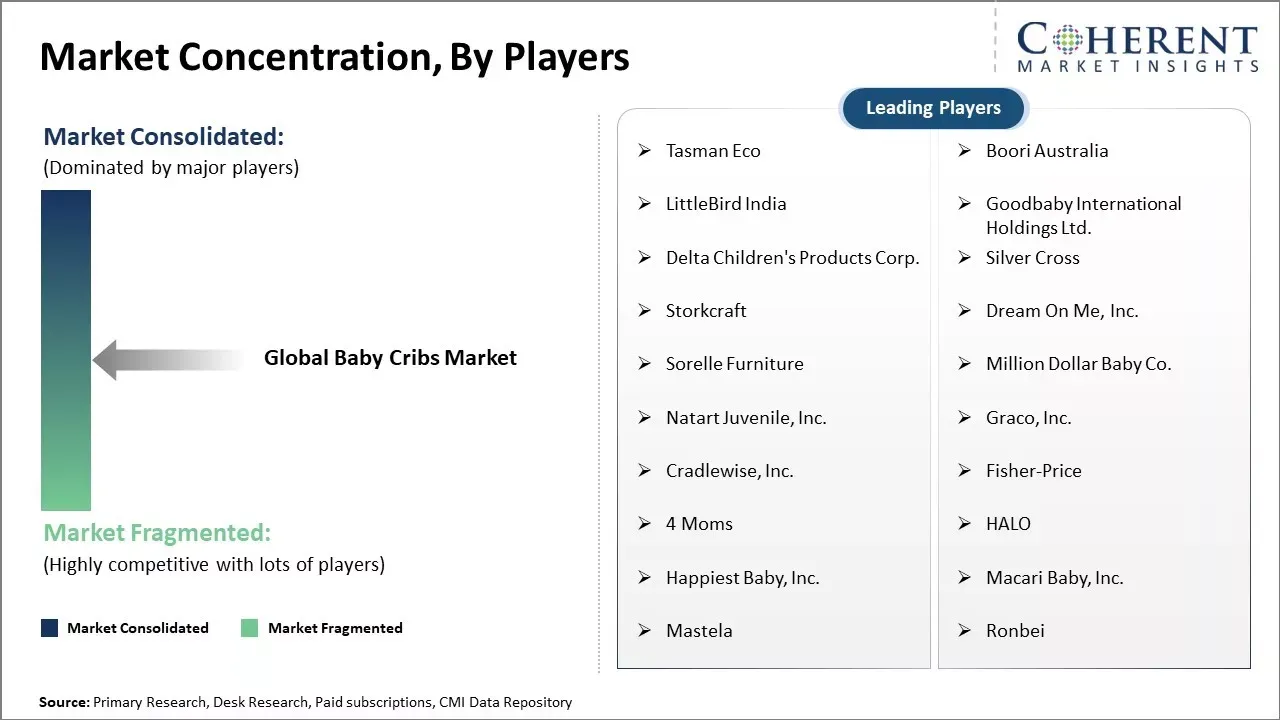
Market Concentration and Competitive Landscape
Baby Cribs Market Trends
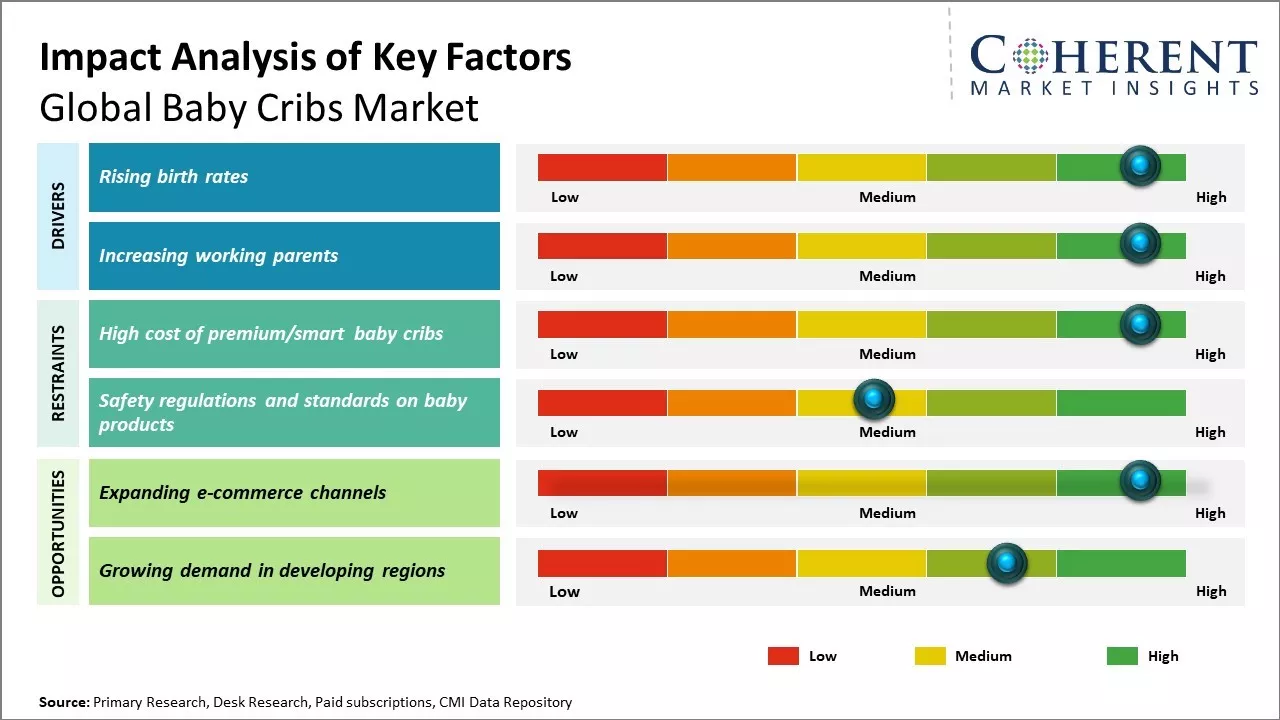
- Rising birth rates
Rising birth rates across the globe are expected to fuel the growth of the baby cribs market in the coming years. According to UNICEF data, around 140 million babies are expected to be born between 2020 and 2025 globally. This steady rise in infant population directly translates to increased demand for baby cribs and related products.
Regions like Asia Pacific and Africa are projected to witness higher birth rates compared to other parts of the world as per the United Nations Population Fund. China alone is likely to see over 15 million births in 2023, making it one of the biggest markets for baby cribs.
India too is poised for strong growth prospects led by growing middle class and their higher spending on infant care products. Increased social acceptance of larger family sizes especially in developing nations is a key driver promoting the baby cribs business globally.
On the supply side, manufacturers are innovating continually to make baby cribs more safe, functional, and affordable for new parents. Features like adjustable mattress height, drawer storage, electronic, or vibration assisted crying lullabies are gaining popularity. Portable travel cribs have also emerged as a new product category suitable for young mobile families.
Sustainability has become an important value proposition with options for organic fabrics, non-toxic finishing, and easy clean designs. Online sales have presented new opportunities for brands to target expectant couples much ahead of their due date through personalized recommendation engines and social media adverts.
In May 2024, The Times of India featured Cradlewise, a Bengaluru‑based startup, launching a smart AI-powered baby crib priced at USD 1,999 (approx. ₹1.5 lakh in India). Equipped with motion detection, adaptive rocking, and sound monitoring, the crib aims to improve infant sleep and parental well-being, targeting tech-savvy urban families.
- Increasing working parents
The number of working parents globally is on the rise driven by economic factors and more women joining the workforce. As per data by the International Labour Organisation, the participation rate of women in the workforce has increased from around 49% in 1990 to current estimate of over 52%, with many countries reporting even higher figures. As both parents are engaged in work, the demand for baby care products that ensure child safety at home has surged substantially over the past decade.
One such product that has witnessed exponential growth in demand is baby cribs. Baby cribs provide a safe sleeping area for infants and allow parents to focus on other tasks knowing that their child is secure. With the lack of extended family support in many dual income households, baby cribs have become a necessity rather than amenity.
Their design features like adjustable sleeping level, baby cribs with rails for teething, and breathable mesh/wood all contribute towards ensuring children do not fall out of bed or get trapped accidentally.
In June 2010, The Times of India reported that upscale parents in Pune were splurging on premium nursery gear including designer cribs, prams, and even flavoured baby toothpaste underscoring a trend toward luxury baby products irrespective of price.
Opportunities In the Baby Cribs Market
- Expanding e-commerce channels
E-commerce provides a huge growth opportunity for baby cribs market. With rising internet and smartphone penetration globally, online shopping has become a preferred mode of shopping for many customers especially young parents.
This allows customers to easily compare various crib models, features, reviews and prices sitting in the comfort of their homes within a few clicks. E-commerce websites give detailed information through images and videos which is very helpful for customers to visualize and select the best fitting and safest crib for their babies.
Segmental Insights
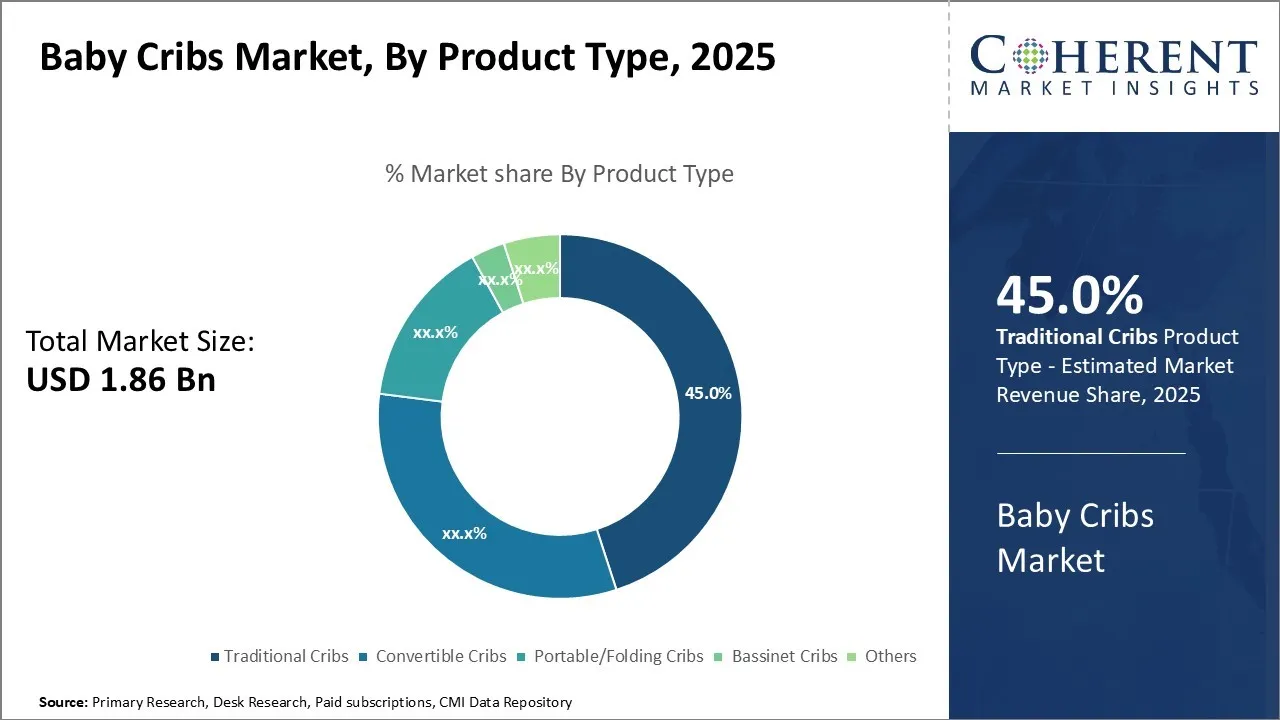
Global Baby Cribs Market Insights, By Product Type
Traditional cribs are projected to dominate the baby cribs market with a substantial 46.0% share in 2026. Their enduring popularity stems from their classic design, long-term usability, and alignment with parental expectations rooted in tradition and safety.
These cribs often feature durable builds, convertible functionality, and enhanced security standards that appeal to both new and experienced parents. As more caregivers seek reliable and aesthetically timeless nursery solutions, traditional cribs continue to remain the preferred choice, especially in middle- to high-income households.
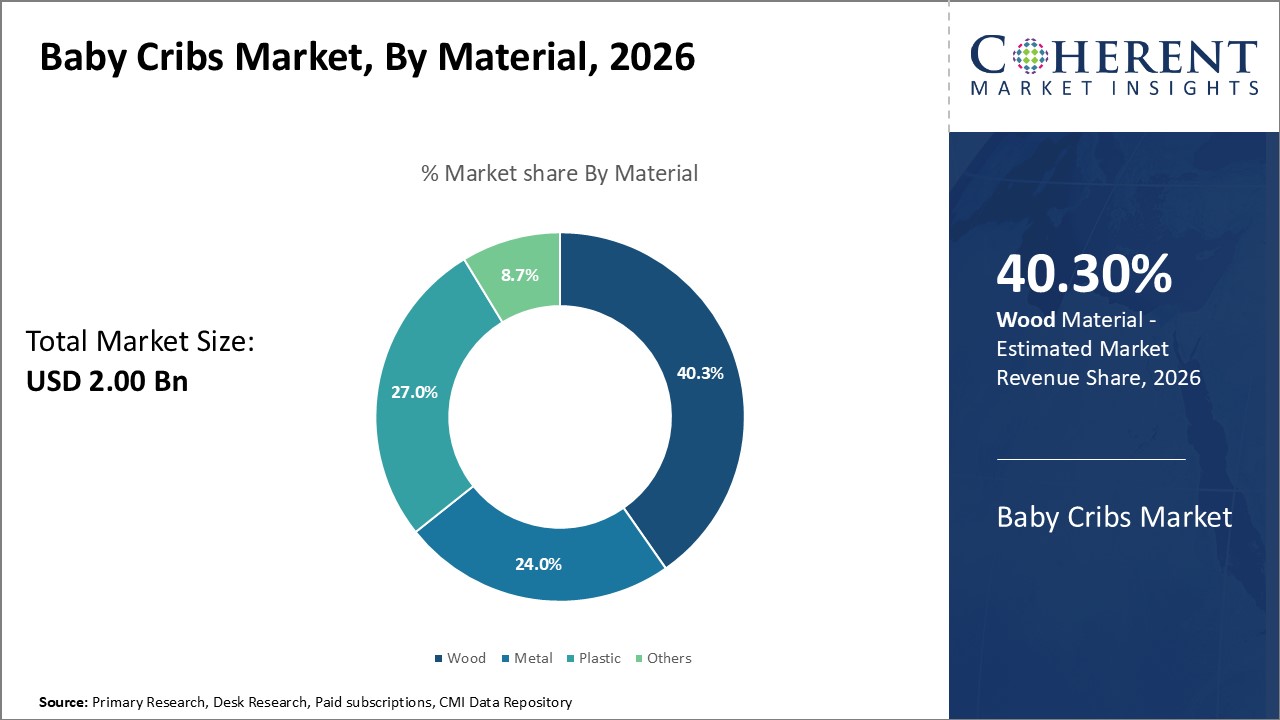
Global Baby Cribs Market Insights, By Material
Wooden cribs are expected to command a 40.3% share of the global baby cribs market in 2026, benefiting from their natural, sturdy, and eco-friendly attributes. Wood offers superior structural integrity and a warm, organic aesthetic that aligns with growing consumer preferences for sustainable and toxin-free baby products.
As health-conscious parents prioritize indoor air quality and material safety, wooden cribs often made from certified hardwoods are gaining traction. Additionally, their long lifespan and reusability further contribute to their growing adoption across global markets, reinforcing their leadership in material choice.
Global Baby Cribs Market Insights, By Distribution Channel
Specialty baby stores are anticipated to lead the distribution channel segment with a 42.7% market share in 2025. This dominance is driven by the personalized shopping experience and expert guidance these stores provide, enabling parents to physically evaluate crib quality, design, and safety features.
Unlike general retail chains or online platforms, specialty stores offer curated selections and in-depth knowledge tailored to new parents. Their in-store demonstrations, product comparisons, and customer support services continue to make them a go-to destination for premium crib purchases.
Global Baby Cribs Market – Regional Insights
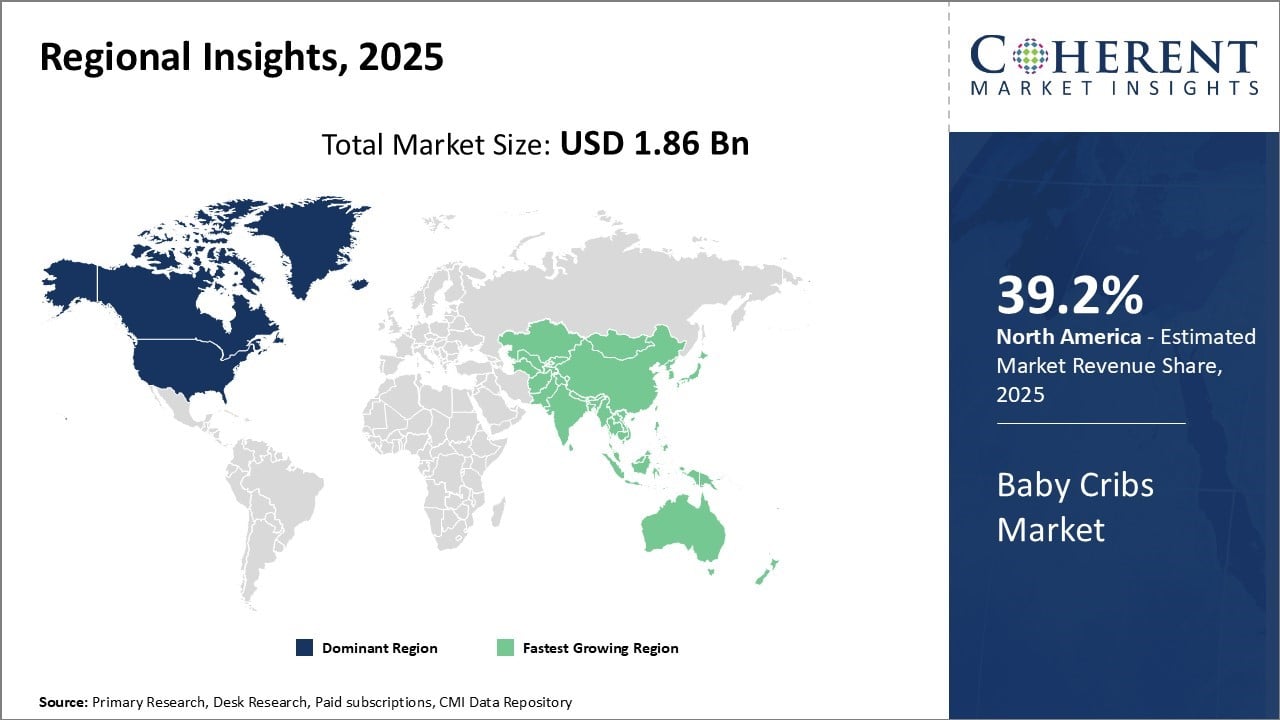
North America Baby Cribs Market Trends and Analysis
North America is expected to maintain its leadership in the global baby cribs market, accounting for an estimated 39.2% share in 2026. This dominance is supported by a well-established nursery furniture industry, high consumer awareness regarding infant safety, and strong demand for certified, premium-quality baby products. The United States and Canada are home to several leading crib manufacturers that prioritize product innovation, ergonomic design, and compliance with stringent safety standards.
Consumers in the region increasingly prefer non-toxic, eco-friendly, and multifunctional cribs, reflecting a shift toward health-conscious and sustainable parenting. Additionally, favourable government regulations on child safety and rising expenditure on infant care contribute to the region’s market strength.
The widespread availability of cribs through specialty baby stores, e-commerce platforms, and large retail chains ensures broad consumer access and convenience. With a continued focus on product quality, child wellbeing, and regulatory compliance, North America remains at the forefront of growth and innovation in the global baby cribs market.
Baby Cribs Market Dominating Countries
United States and Canada
The United States leads the global baby cribs market, supported by a well-developed nursery furniture industry, high consumer spending on infant care, and strict regulatory standards on child safety. American manufacturers continue to set benchmarks in crib design and safety, offering products that are durable, multifunctional, and compliant with CPSC regulations.
Parents in the U.S. increasingly prioritize non-toxic, sustainable, and convertible cribs that align with evolving lifestyle and health-conscious trends. In addition, the growing popularity of digital-commerce platforms like Amazon, along with in-store experiences at specialty baby retailers, ensures extensive market reach and consumer engagement.
Canada complements U.S. leadership with a strong emphasis on product safety, environmental responsibility, and quality assurance in infant products. Canadian consumers show a clear preference for eco-friendly wooden cribs and certified nursery furniture, driving demand for premium, well-tested products.
National policies promoting child health, along with high parental awareness and access to quality retail infrastructure, support market expansion. Canadian crib manufacturers and distributors benefit from collaborative innovation and strict adherence to safety guidelines, positioning the country as a vital contributor to North America’s dominance in the baby cribs market.
Market Report Scope
Baby Cribs Market Report Coverage
| Report Coverage | Details | ||
|---|---|---|---|
| Base Year: | 2025 | Market Size in 2026: | USD 2.00 Bn |
| Historical Data for: | 2020 To 2024 | Forecast Period: | 2026 To 2033 |
| Forecast Period 2026 to 2033 CAGR: | 4.9% | 2033 Value Projection: | USD 2.73 Bn |
| Geographies covered: |
| ||
| Segments covered: |
| ||
| Companies covered: | Tasman Eco, Boori Australia, LittleBird India, Goodbaby International Holdings Ltd., Delta Children's Products Corp., Silver Cross, Storkcraft, Dream On Me, Inc., Sorelle Furniture, Million Dollar Baby Co., Natart Juvenile, Inc., Graco, Inc., Cradlewise, Inc., Fisher-Price, 4 Moms, HALO, Happiest Baby, Inc., Macari Baby, Inc., Mastela, and Ronbei | ||
| Growth Drivers: |
| ||
| Restraints & Challenges: |
| ||
Analyst Viewpoint – Baby Cribs Market
- The global baby cribs market growth is driven by increasing birth rates, rising awareness of infant safety, and growing demand for multifunctional, eco-friendly nursery products. The market is expected to benefit from evolving parenting trends that emphasize both aesthetics and child wellbeing.
- Experts highlight strong consumer preference for traditional and wooden cribs, which combine durability with timeless design. Innovations in smart crib technology, offering features like auto-rocking and sleep tracking, are gradually gaining traction, especially in urban markets with tech-savvy parents.
- North America continues to lead the market, backed by stringent safety standards, high disposable income, and the presence of top crib manufacturers. Meanwhile, emerging economies in Asia and Latin America are experiencing increased demand due to expanding middle-class populations and improved retail access.
- Looking ahead, analysts believe that product innovation, sustainable materials, and omni-channel retail strategies will drive long-term growth and market competitiveness across regions.
Baby Cribs Market: Key Development
- In May 2025, the U.S. government imposed new tariffs on Chinese imports additionally a 125% reciprocal tariff severely impacting baby furniture like cribs, resulting in price hikes of up to 129% and causing supply shortages. American crib manufacturers, especially those like Delta Children and Newell Brands, have halted shipments or raised prices, driving consumers toward U.S.-made or second-hand options. This disruption is pressuring brands to consider relocating production or restructuring supply chains.
- In April 2025, Cradlewise, an AI-powered smart crib endorsed by OpenAI’s CEO Sam Altman in April, officially launched in India at INR 159,900 (~US $1,999). The entry into India paired with Altman’s high-profile endorsement drives global brand recognition and accelerates penetration in emerging markets, marking a significant step in the international expansion of smart crib technology.
- In January 2025, Bosch introduced "Revol" at CES 2025, featuring AI sensors that monitor vitals (heart rate, respiration), detect crib hazards, and provide vertical rocking and air-quality monitoring. Marks a leap in combining comprehensive baby monitoring with automated soothing and safety alerts, indicating increasing sophistication in smart crib offerings and influencing future product development.
- In November 2024, Cradlewise announced that its India-based manufacturing facility is fully operational, enabling immediate shipping without backlogs. An official update on Reddit highlighted relief among expecting parents awaiting their smart cribs. This resolution boosts Cradlewise’s reliability and customer trust, reduces lead times, and enhances its competitive positioning in the premium smart crib segment. Timely deliveries are critical for parenting gear, making consistent fulfillment a key differentiator.
- In June 2024, Market reports 2024 emphasize growing consumer interest in eco-friendly and multifunctional cribs. Manufacturers are now using sustainably sourced wood, organic fabrics, and recyclable materials, while demand increases for convertible designs that evolve with the child. This trend is reshaping production strategies brands are investing in sustainable sourcing and certifications (FSC, Greenguard), reducing waste, and offering longer-lasting products. Parents’ willingness to pay a premium for green, durable nursery furniture is driving long-term sales growth.
Market Segmentation
- By Product Type (Revenue, USD Bn, 2021 - 2033)
- Traditional Cribs
- Convertible Cribs
- Portable/Folding Cribs
- Bassinet Cribs
- Others
- By Material (Revenue, USD Bn, 2021 - 2033)
- Metal
- Plastic
- Wood
- Others
- By Distribution Channel (Revenue, USD Bn, 2021 - 2033)
- Specialty Baby Stores
- Mass Merchandise Stores
- Online Retailers
- Furniture Stores
- By Region (Revenue, USD Bn, 2021 - 2033)
- North America
- U.S.
- Canada
- Latin America
- Brazil
- Argentina
- Mexico
- Rest of Latin America
- Europe
- Germany
- U.K.
- Spain
- France
- Italy
- Russia
- Rest of Europe
- Asia Pacific
- China
- India
- Japan
- Australia
- South Korea
- ASEAN
- Rest of Asia Pacific
- Middle East
- GCC Countries
- Israel
- Rest of Middle East
- Africa
- South Africa
- North Africa
- Central Africa
- North America
- Company Profiles
- Tasman Eco
- Boori Australia
- LittleBird India
- Goodbaby International Holdings Ltd.
- Delta Children's Products Corp.
- Silver Cross
- Storkcraft
- Dream On Me, Inc.
- Sorelle Furniture
- Million Dollar Baby Co.
- Natart Juvenile, Inc.
- Graco, Inc.
- Cradlewise, Inc.
- Fisher-Price
- 4 Moms
- HALO
- Happiest Baby, Inc.
- Macari Baby, Inc.
- Mastela
- Ronbei
Sources
The Stakeholders Consulted
- Manufacturers and suppliers of baby cribs and nursery furniture
- Raw material providers (wood, plastic, metal, textiles)
- Product designers and baby product engineers
- Pediatricians and child safety consultants
- Specialty baby store retailers and distributors
- E-commerce platform managers specializing in baby products
- Safety certification and regulatory compliance bodies
- Parents and caregivers (end-users) from various demographic segments
Databases Opened
- U.S. Consumer Product Safety Commission (CPSC) – Child Product Safety Recalls Database
- National Retail Federation (NRF) – U.S. Baby Products Retail Trends
- India Brand Equity Foundation (IBEF) – Baby Care Market Reports
Magazines & Trade Publications
- Baby & Kids Furniture Today
- Nursery Today Magazine
- Juvenile Products Manufacturers Association (JPMA) Newsletter
- Furniture World
- Retail Dive – Baby & Parenting Products Section
- Toy & Hobby Retailer – Infant Product Reports
Scientific and Industry Journals
- International Journal of Child-Computer Interaction
- Pediatrics (AAP Journal)
- Journal of Consumer Research – Infant Product Purchasing Behavior
- Journal of Industrial Design and Innovation
- Sustainable Production and Consumption
Newspapers & Media Outlets
- The Wall Street Journal – Lifestyle & Retail
- Bloomberg – Consumer Goods and Baby Product Industry
- Reuters – Global Parenting and Retail Trends
- The Economic Times – FMCG & Retail Section
- Business Standard – Childcare Industry Developments
Associations and Regulatory Bodies
- Juvenile Products Manufacturers Association (JPMA)
- U.S. Consumer Product Safety Commission (CPSC)
- ASTM International – Standards for Cribs and Nursery Furniture
- European Committee for Standardization (CEN) – EN 716 Safety Standards
- Bureau of Indian Standards (BIS) – IS 11388 for Infant Cribs
Public Domain Sources
- World Health Organization (WHO) – Child Safety and Development Reports
- Centers for Disease Control and Prevention (CDC) – Infant Injury Prevention
- United Nations Population Division – Global Birth Trends
- OECD Family Database – Child Wellbeing and Product Usage
- National Institute of Standards and Technology (NIST) – Material Safety in Consumer Products
Proprietary Research Elements
- Internal Data Analytics Platform
- Proprietary Repository of Market Intelligence (past 8 years of baby product trends)
- In-depth Interviews with Industry Experts (crib manufacturers, pediatricians, retail buyers)
- Custom Surveys Conducted with Parents and Caregivers (North America, Europe, Asia-Pacific)
- On-ground Observations and Retail Store Visits for Product Benchmarking and Pricing Analysis
Get access to 250+ pages report
Every segment, forecast, competitor profile and data table behind the analysis above — available for instant download.
- ESOMAR Member
- ISO 9001:2015 Certified
- D-U-N-S Registered
- GDPR & CCPA Compliant
Missing comfort of reading report in your local language? Find your preferred language:
Transform your Strategy with Exclusive Trending Reports
Frequently Asked Questions
The Baby Cribs Market size is estimated to be valued at USD 2.00 Bn in 2026, and is expected to reach USD 2.73 Bn by 2033.
The CAGR of the global Market is projected to be 4.9% from 2026 to 2033.
Rising birth rates and increasing working parents are the major factors driving the growth of the global baby cribs industry.
High cost of premium/smart baby cribs and safety regulations and standards on baby products are the major factors hampering the growth of the global market.
In terms of product type, traditional cribs is estimated to dominate the market revenue share in 2026.
Tasman Eco, Boori Australia, LittleBird India, Goodbaby International Holdings Ltd., Delta Children's Products Corp., Silver Cross, Storkcraft, Dream On Me, Inc., Sorelle Furniture, Million Dollar Baby Co., Natart Juvenile, Inc., Graco, Inc., Cradlewise, Inc., Fisher-Price, 4 Moms, HALO, Happiest Baby, Inc., Macari Baby, Inc., Mastela, and Ronbei are the major players.
North America is expected to lead the global baby cribs industry.