

Global Blind Loop Syndrome Market Size and Forecast – 2026 to 2033
According to Coherent Market Insights, the global blind loop syndrome market is estimated to be valued at USD 242.8 Mn in 2026 and is expected to reach USD 488.41 Mn by 2033, exhibiting a compound annual growth rate (CAGR) of 10.5% from 2026 to 2033. This steady growth reflects increasing awareness, improved diagnostic techniques, and advancements in treatment options targeting blind loop syndrome, driving sustained demand across healthcare sectors globally.
Key Takeaways of the Blind Loop Syndrome Market
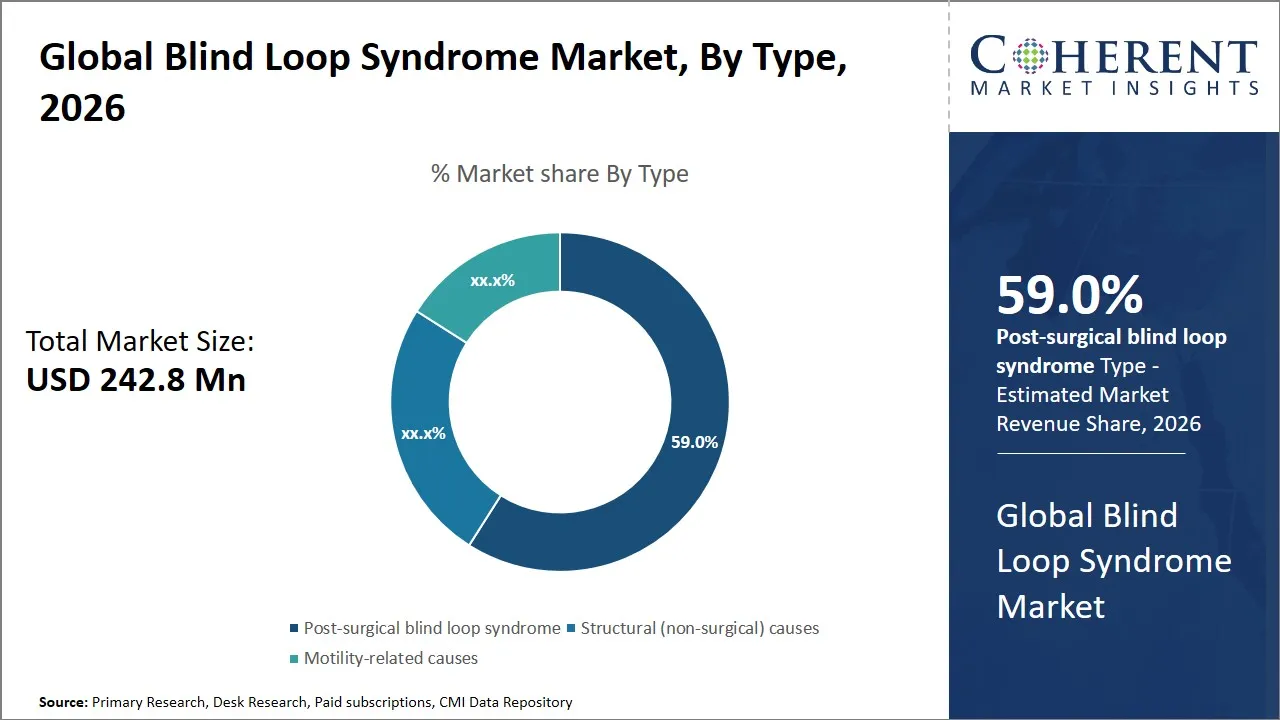
- Post-surgical blind loop syndrome segment is expected to lead the blind loop syndrome market, capturing 59% share in 2026.
- Duodenal/jejunal loop involvement segment is estimated to represent 51.4% of the market share in 2026.
- Mild segment is projected to dominate with 62.3% of the global blind loop syndrome market share in 2026.
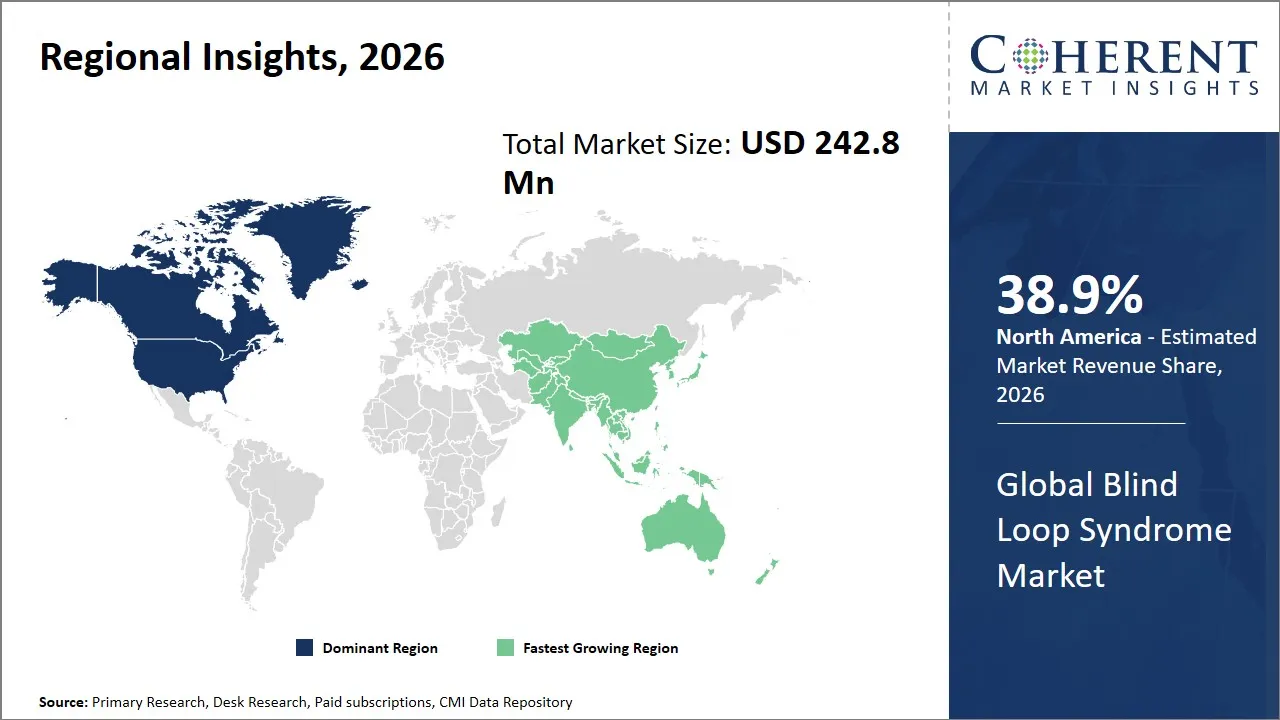
- North America is expected to lead the market, holding a share of 38.9% in 2026. Asia Pacific is anticipated to be the fastest-growing region, with 27% share in 2026.
Market Overview
- Increasing incidence of conditions like Small Intestine Bacterial Overgrowth (SIBO), which is a primary cause of blind loop syndrome, is driving market growth.
- The development of advanced diagnostic technologies, such as non-invasive tests and imaging techniques, is improving early detection and boosting demand for diagnostic tools in the market.
- Growing awareness of gastrointestinal disorders among healthcare professionals and patients is contributing to higher diagnosis rates, driving demand for effective treatments.
- Innovations in antibiotic treatments, probiotics, and dietary management are providing new opportunities to treat and manage blind loop syndrome more effectively, increasing treatment accessibility.
Currents Events and Its Impacts
Current Events | Description and its Impact |
New Diagnostic Approaches for Blind Loop Syndrome |
|
Growing Awareness and Education on Gut Disorders |
|
Segmental Insights
- Current Industry Events of 2026
- Market Size Estimation
- Regional Breakdown
- Competitive Landscape
- Customer Intelligence
- Segmental Analysis
- Pricing Analysis
- Key Market Drivers, Challenges & Future Trends
- Customized Insights Section
Why Does the Post-Surgical Blind Loop Syndrome Segment Dominate the Global Blind Loop Syndrome Market in 2026?
The post-surgical blind loop syndrome segment is expected to hold the largest share of 59% in 2026, due to the increasing prevalence of gastrointestinal surgeries worldwide. Gastrojejunostomy, small bowel resections, as well as bariatric surgeries have increased greatly with the increase in the cases of peptic ulcer disease, obesity, and other gastrointestinal diseases. Since such surgeries change the normal bowel anatomy, they produce unintentionally the conditions in favor of the formation of blind loops that predispose patients to the blind loop syndrome.
For instance, a recently reported clinical case documented a 77‑year‑old man who developed small intestinal obstruction due to large fecalith formation within a blind loop roughly one year after side‑to‑side intestinal anastomosis, highlighting the importance of surgical technique choice and vigilance for blind loop complications after abdominal surgery.
Why Does the Duodenal/Jejunal Loop Involvement Segment Dominate the Global Blind Loop Syndrome Market in 2026?
The duodenal/jejunal loop involvement segment is projected to hold the largest share of 51.4% in 2026, driven by the distinctive anatomical and physiological characteristics of these intestinal segments, which are more prone to developing blind loops post-intervention or due to other pathological processes. Duodenum and jejunum are the upper parts of the small intestines that follow the stomach closely, and they are the areas that are central to digestion and nutrient absorption. Their complicated movement patterns and the relatively small luminal diameter render them highly vulnerable to stasis and bacterial overgrowth in cases when blind loops are established. As a result, the dysfunctional condition and clinical presentation related to the involvement of the duodenum/jejus are more significant, which leads to increased detection and clinical intervention rates.
For instance, a recent clinical case report detailed a rare small intestinal obstruction caused by large fecalith formation within a blind loop one year after a side‑to‑side intestinal anastomosis, emphasizing how stagnant segments of the small intestine, especially in the jejunum and ileum, can lead to bacterial overgrowth and blind loop syndrome following surgical reconstruction. The report highlights the importance of surgical technique and early diagnosis to prevent severe complications associated with blind loops of the small intestine.
Mild Dominates the Global Blind Loop Syndrome Market
Mild segment is expected to capture the highest share of 62.3% in 2026, because of early diagnosis and advances in clinical management that prevent progression to more severe disease states. Mild forms of blind loop syndrome tend to cause some mild gastrointestinal symptoms like intermittent bloating, slight abdominal pain, and slight nutritional deficiencies that prompt patients to consult the medical care before the complications develop. The prevalence of diagnostic measures like the breath tests in order to diagnose bacterial overgrowth, endoscopic examination, and imaging technologies enables clinicians to diagnose the blind loop syndrome at its initial stages.
Advancements in Treatment Options for Blind Loop Syndrome
- It is possible that recent developments in the field of treating blind loop syndrome have greatly benefited the patients. Targeted antibiotics and probiotics have also been essential in the management of small intestine bacterial overgrowth (SIBO), which is a major cause of blind loop syndrome. Those therapies assist in restoring the gut microbiome balance, relieving such symptoms as bloating, malabsorption, and diarrhea. There are also new antibiotics that are more effective against bacteria involving blind loops that are receiving attention and thus auger the overall management of the condition.
- Surgery cures of blind loop syndrome are refined as well along with pharmaceutical developments. In cases of failure of conservative therapy, surgical removal of the blind loop with reanastomosis can be done to clear and recanalize stagnant bowel loops. These are increasingly directed by the sophisticated diagnostic tools, which guarantee a greater degree of specificity of the area of the affected regions. This is a medical and surgical combination that provides improved efficacy of the treatment and reduces complications in the patients of the blind loop syndrome.
Regional Insights
North America Blind Loop Syndrome Market Analysis and Trends
The North America region is projected to lead the market with a 38.9% share in 2026, owing to a well-established healthcare infrastructure, advanced diagnostic and treatment facilities, and significant investments in medical research. The existence of a huge patient group and increased awareness of healthcare professionals about the Blind Loop Syndrome are the factors that will result in the continuous demand.
Moreover, favorable policies by the government on the importance of early diagnosis and treatment of complex digestive disorders encourage growth. The ecosystem includes major institutions and specialized gastrointestinal health centers, which help to increase the market penetration. Huge corporations like Becton Dickinson, Medtronic, and Boston Scientific have been actively involved in terms of innovative diagnostic equipment as well as treatment machines. Easy-importing and exporting trade dynamics to the U.S. promote the dominance of North America in this market.
For instance, a Cedars‑Sinai/Digestive Disease Week 2025 research highlight showed that investigators in the U.S. are advancing understanding of small intestinal bacterial overgrowth (SIBO), commonly associated with blind loop syndrome, by identifying distinct microtypes of bacterial overgrowth and exploring novel treatment combinations such as low‑dose rifaximin with antioxidant supplements to improve gastrointestinal symptoms. This research underscores the evolving clinical landscape in North America and its focus on microbiome‑based diagnostics and therapies for conditions like blind loop syndrome.
Asia Pacific Blind Loop Syndrome Market Analysis and Trends
The Asia Pacific region is expected to exhibit the fastest growth in the blind loop syndrome market contributing 27% share in 2026, due to increasing healthcare spending, expansion of modern medical facilities, and growing awareness about gastrointestinal diseases. There has been increased demand due to rapid urbanization and increased cases of digestive disorders occasioned by lifestyle changes. A number of governments in the region are currently working on healthcare reforms and the deployment of advanced diagnostic technologies to enhance the outcome of patients. The pace of the market is driven by the growing number of patients, as well as, the growing availability of good healthcare in the emerging economies like India and China.
For instance, in October 2024, clinicians and healthcare professionals in Southeast Asia reported increasing clinical evidence and education supporting the use of probiotics in gastrointestinal care, reflecting growing interest in microbiome‑based approaches to manage bacterial overgrowth and related digestive disorders. This trend highlights rising engagement with microbiome support therapies in the region, which is relevant to conditions like blind loop syndrome driven by small intestine bacterial overgrowth.
Blind Loop Syndrome Market Outlook for Key Countries
What are the Current Trends Shaping the U.S. Blind Loop Syndrome Market?
The blind loop syndrome market of the U.S. is marked with the high presence of the major healthcare providers and research institutions specializing in the gastrointestinal illnesses. The availability of sophisticated technological systems in diagnosis, and friendly reimbursement policies, enables the strong market growth. Major manufacturers like Becton Dickinson and Medtronic have introduced innovative diagnostic packages and minimally invasive therapy machines which have enhanced the standard of care to patients.
How is Germany Helping in the Growth of the Blind Loop Syndrome Market?
Germany is still the pioneer in the whole of Europe, with a developed healthcare system and powerful government programs that enhance early detection of diseases. High rates of innovation of medical devices are an advantage to the country. Business organizations such as Siemens Healthineers and B. Braun Melsungen use the benefits of the German workforce and its high-regulation system to provide their customers with effective and quality solutions to the management of the Blind Loop Syndrome threat.
Key Drivers for the Growth of the China Blind Loop Syndrome Market
The China blind loop syndrome market is expanding at a very fast rate and this is attributed to the rising investment in healthcare infrastructure and escalating cases of gastrointestinal diseases caused by changes in lifestyle. Government programs to increase access to healthcare are also a great way to grow the market. Large competitors such as Philips Healthcare and domestic companies strive to provide the Chinese population of low-price and quality diagnostics and treatment equipment that meets the needs of patients in their region, making them more accessible both in cities and in rural regions.
India Blind Loop Syndrome Market Trends
The market of the blind loop syndrome in India is developing with the increased healthcare centers and the increase of patients. The demand on the diagnostic and treatment solutions is aided by government campaigns aimed at creating health awareness and developing infrastructures. The companies like GE Healthcare and local manufacturers offer cost-effective devices and cooperate actively in the collaboration with healthcare providers, which increases the market penetration in tier 2 and tier 3 cities.
Policy Changes Advancing the Management of Blind Loop Syndrome
- New developments in policy-making in the blind loop syndromes are aimed at making diagnosis tests and treatment more affordable and accessible. Increasingly, the concept of advanced microbiome diagnostics and targeted antibiotic therapies is covered by health insurance providers and the government. The purpose of these changes is to lower the financial burden on patients and provide more individuals access to the treatment of such diseases as bacterial overgrowth of the small intestine, which is a major cause of blind loop syndrome.
- Moreover, healthcare systems are becoming more standardized in their clinical pathways of diagnosing and treating blind loop syndrome. These new guidelines focus on early diagnosis and treatment plans with evidences which assist the health professionals in simplifying patient care. Because of this, it has led to an increase in the backing of both non-invasive diagnostic and advanced therapeutic modalities, which eventually benefits the patient.
Market Players, Key Developments, and Competitive Intelligence
Key Developments
- In October 2025, Amgen invested USD 600 million in a new Science and Innovation Center in Thousand Oaks, California, aimed at accelerating next-generation therapeutics and diagnostic tools. This expansion supports the development of advanced diagnostic technologies for early disease detection, including cancer.
- In August 2025, Takeda is exploring global clinical trials in India to accelerate drug launches and improve access to innovative therapies in emerging markets. This strategy targets expanding treatment availability for gastrointestinal and other conditions, addressing growing healthcare demand in these regions.
- In February 2025, Sanofi partnered with Teva to co-develop duvakitug, a monoclonal antibody targeting the TL1A pathway for inflammatory bowel diseases. This collaboration aims to address gut microbiome imbalances, supporting efforts to develop therapies for conditions like small intestine bacterial overgrowth.
Top Strategies Followed by Global Blind Loop Syndrome Market Players
Player Type | Strategic Focus | Examples |
Established Market Leaders | Established players lead the market by investing in R&D to develop advanced diagnostic tools and treatments. They integrate cutting-edge technologies and form strategic partnerships to enhance product efficacy and expand their market presence, particularly in emerging markets with growing healthcare awareness. | Gilead Sciences invests heavily in innovative therapies for gastrointestinal disorders and partners with biotechnology firms to expand its reach into emerging markets. |
Mid-Level Players | Mid-level participants focus on providing affordable, high-quality solutions for Blind Loop Syndrome, targeting price-sensitive consumers in developing regions. They form strategic partnerships with technology providers and manufacturers to enhance production and expand their market reach. | Amgen collaborates with regional manufacturers to deliver cost-effective yet reliable gastrointestinal therapies, increasing accessibility in emerging markets. |
Small-Scale Players | Small-scale players focus on specialization and innovation, leveraging emerging technologies like AI and biosensors to address niche segments of the Blind Loop Syndrome market. They form local alliances with startups and regional manufacturers to enhance market entry and visibility. | Kite Pharma, a smaller player, uses advanced CAR-T cell therapies and collaborates with regional biotech firms to address specific patient needs in gastrointestinal disorders, gaining a foothold in local markets. |
Market Report Scope
Blind Loop Syndrome Market Report Coverage
| Report Coverage | Details | ||
|---|---|---|---|
| Base Year: | 2025 | Market Size in 2026: | USD 242.8 Mn |
| Historical Data for: | 2020 To 2024 | Forecast Period: | 2026 To 2033 |
| Forecast Period 2026 to 2033 CAGR: | 10.5% | 2033 Value Projection: | USD 488.41 Mn |
| Geographies covered: |
| ||
| Segments covered: |
| ||
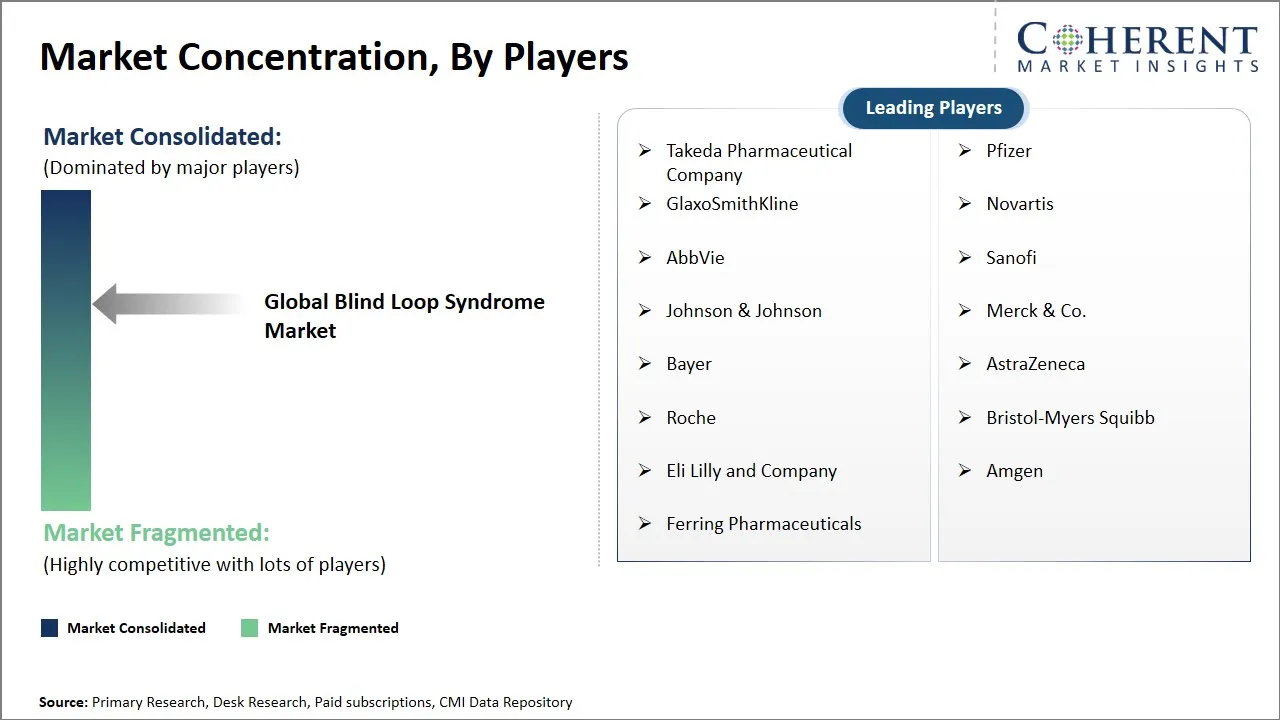
| Companies covered: | Takeda Pharmaceutical Company, Pfizer, GlaxoSmithKline, Novartis, AbbVie, Sanofi, Johnson & Johnson, Merck & Co., Bayer, AstraZeneca, Roche, Bristol‑Myers Squibb, Eli Lilly and Company, Amgen, and Ferring Pharmaceuticals | ||
| Growth Drivers: |
| ||
| Restraints & Challenges: |
| ||
Market Dynamics
Blind Loop Syndrome Market Driver - Increasing Prevalence of Small Intestine Bacterial Overgrowth Associated with Blind Loop Syndrome
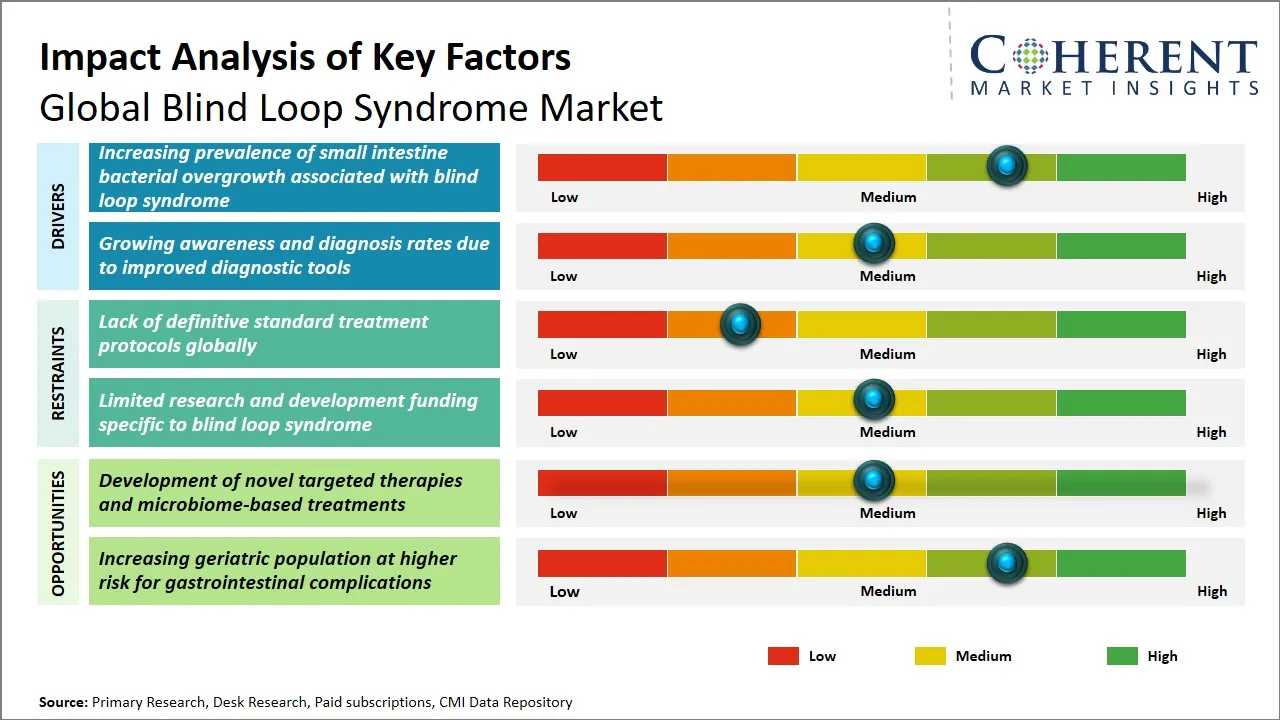
The increasing prevalence of small intestine bacterial overgrowth (SIBO) plays a major role in the increase in popularity of blind loop syndrome in the healthcare sector. A blind loop syndrome may develop as a result of an abnormal anatomy or as a result of surgery on the small intestine, which forms stagnant loops of the innominate loops on which the bacteria develop in excess. The colonization is an abnormal growth of bacteria in the intestines that interferes with normal digestive functions causing malabsorption, nutrient deficiencies and various gastrointestinal symptoms. As the understanding of SIBO and its relationship with blind loop syndrome continues to rise among medical practitioners, there are increased cases of identification and diagnosis of the disease, which is increasing the need to develop better diagnostic procedures and treatment modalities.
For instance, in October 2025, Ferring Pharmaceuticals shared results from the Phase 3b CDI-SCOPE study at the American College of Gastroenterology (ACG) 2025, showcasing the long-term effects of REBYOTA in restoring gut microbiome health. The data suggested its potential for managing gastrointestinal conditions, including small intestine bacterial overgrowth, by promoting microbiome balance.
Blind Loop Syndrome Market Opportunity - Development of Novel Targeted Therapies and Microbiome-Based Treatments
The global market of the blind loop syndrome poses a great opportunity to develop innovative targeted therapies and microbiome-based treatments based on the rising knowledge of the complex pathophysiology of the disease. Blind Loop Syndrome, a condition that is defined by bacterial excess in the small intestine that causes malabsorption, as of old tradition has always been treated by the use of antibiotics and diet changes. Nevertheless, new studies highlight the paramount importance of the gut microbiome in the development of diseases and the display of symptoms. This understanding provides a fruitful space to create microbiome-based therapeutic strategies like probiotics, pre-biotics, and synbiotics to promote microbial equilibrium and limit the increase in bacteria in a sustainable manner.
For instance, in October 2025, Bayer launched a new biotics innovation lab in Darmstadt, Germany, focused on developing microbiome-based treatments for gastrointestinal disorders. This initiative aims to create science-driven solutions that may play a key role in managing conditions like blind loop syndrome.
Analyst Opinion (Expert Opinion)
- Technological changes in the diagnostics and treatment choices, e.g. the introduction of non-invasive microbiome testing and specific treatments of small intestine bacterial overgrowth (SIBO), a major cause of BLS, are the drivers of the blind loop syndrome market. The growing demand of managing blind loop syndrome has also been caused by higher awareness of gastrointestinal disorders coupled with increased healthcare access and in particular in the emerging markets. The market growth has also been improved by regulatory support especially advanced antibiotics and probiotics approval. Nevertheless, the high cost of treatments, lack of awareness in certain areas, and the complexity of diagnosis remain some of the bottlenecks to the growth of the market.
- The new markets in the blind loop syndrome sector are innovations in personalized medicine, where individualized regimens of treatment depending on genetic and microbiome testing can better care of patients. Medical conferences like the European Crohn’s and Colitis Organisation (ECCO) Annual Congress and Digestive Disease Week (DDW) have played a very important role in propelling the debate on gastrointestinal diseases and present a platform on which the current research and technological advancements are shared. Also, it is the cooperation between drug manufacturers and groups manufacturing drugs in a particular area, which is making treatment more affordable in those less developed markets. As an example, in Southeast Asia, recent collaborations are aimed at enhancing diagnostic skills and access to treatment of the blind loop syndrome, which can change the treatment of the disease worldwide.
Speak to the analyst
Want personalized insights?
Take the findings above to one of our principal consultants, or have the report rebuilt around the segments, geographies and competitors you actually track.
Market Segmentation
- Type Insights (Revenue, USD Mn, 2021 - 2033)
- Post-surgical blind loop syndrome
- Structural (non-surgical) causes
- Motility-related causes
- Anatomical Location Insights (Revenue, USD Mn, 2021 - 2033)
- Duodenal/jejunal loop involvement
- Jejunoileal segment involvement
- Ileocecal region involvement
- Others (Length/extent of affected segment, etc.)
- Severity Insights (Revenue, USD Mn, 2021 - 2033)
- Mild
- Moderate
- Severe/complicated
- Treatment Modality Insights (Revenue, USD Mn, 2021 - 2033)
- Pharmacologic therapy
- Antibiotics
- Adjunct GI therapies
- Microbiome-directed adjuncts
- Nutritional & deficiency correction
- Vitamin replacement
- Macronutrient support
- Medical nutrition
- Route of Administration Insights (Revenue, USD Mn, 2021 - 2033)
- Oral
- Injectable
- Enteral tube feeding
- Age Group Insights (Revenue, USD Mn, 2021 - 2033)
- Pediatric
- Adults
- Geriatric
- End User Insights (Revenue, USD Mn, 2021 - 2033)
- Hospitals
- Outpatient Specialty Clinics
- Ambulatory Diagnostic Centers
- Homecare Settings
- Others (Academic and Research Institutes, etc.)
- Distribution Channel Insights (Revenue, USD Mn, 2021 - 2033)
- Hospital pharmacy
- Retail pharmacy
- Online pharmacy
- Regional Insights (Revenue, USD Mn, 2021 - 2033)
- North America
- U.S.
- Canada
- Latin America
- Brazil
- Argentina
- Mexico
- Rest of Latin America
- Europe
- Germany
- U.K.
- Spain
- France
- Italy
- Russia
- Rest of Europe
- Asia Pacific
- China
- India
- Japan
- Australia
- South Korea
- ASEAN
- Rest of Asia Pacific
- Middle East
- GCC Countries
- Israel
- Rest of Middle East
- Africa
- South Africa
- North Africa
- Central Africa
- North America
- Key Players Insights
- Takeda Pharmaceutical Company
- Pfizer
- GlaxoSmithKline
- Novartis
- AbbVie
- Sanofi
- Johnson & Johnson
- Merck & Co.
- Bayer
- AstraZeneca
- Roche
- Bristol‑Myers Squibb
- Eli Lilly and Company
- Amgen
- Ferring Pharmaceuticals
Source
Primary Research Interviews
Industry Stakeholders List
- Gastroenterologists
- Healthcare professionals specializing in gastrointestinal disorders
End-users List
- Patients diagnosed with Blind Loop Syndrome
- Caregivers and family members of patients
Government and International Databases
- U.S. National Library of Medicine
- National Institute of Diabetes and Digestive and Kidney Diseases (NIDDK)
- World Health Organization (WHO)
- U.S. Centers for Disease Control and Prevention (CDC)
- European Medicines Agency (EMA)
- National Institutes of Health (NIH)
Trade Publications
- Gastroenterology & Hepatology Journal
- World Journal of Gastroenterology
- Digestive Diseases and Sciences
- Journal of Clinical Gastroenterology
- Gut and Liver
- The American Journal of Gastroenterology
Academic Journals
- Journal of Gastroenterology
- Clinical Gastroenterology and Hepatology
- The Lancet Gastroenterology & Hepatology
- Journal of Crohn’s and Colitis
- European Journal of Gastroenterology & Hepatology
- Digestive and Liver Disease Journal
Reputable Newspapers
- The New York Times
- The Guardian
- The Washington Post
- USA Today
- The Times
- Financial Times
Industry Associations
- American Gastroenterological Association (AGA)
- European Society of Gastroenterology, Hepatology, and Nutrition (ESGENA)
- American College of Gastroenterology (ACG)
- World Gastroenterology Organisation (WGO)
- International Society for Digestive Surgery (ISDS)
- The British Society of Gastroenterology (BSG)
Public Domain Resources
- National Institute of Health (NIH)
- Data.gov
- World Bank Open Data
- Centers for Medicare & Medicaid Services (CMS)
- European Commission - Health and Food Safety
- U.S. Department of Health and Human Services (HHS)Top of Form
Bottom of Form
Proprietary Elements
- CMI Data Analytics Tool: Proprietary analytics tool to analyze real-time market trends, consumer behavior, and technology adoption in market
- Proprietary CMI Existing Repository of Information for Last 8 Years
Get access to 250+ pages report
Every segment, forecast, competitor profile and data table behind the analysis above — available for instant download.
- ESOMAR Member
- ISO 9001:2015 Certified
- D-U-N-S Registered
- GDPR & CCPA Compliant
Missing comfort of reading report in your local language? Find your preferred language:
Transform your Strategy with Exclusive Trending Reports
Frequently Asked Questions
The global blind loop syndrome market is estimated to be valued at USD 242.8 Mn in 2026 and is expected to reach USD 488.41 Mn by 2033.
The CAGR of global blind loop syndrome market is projected to be 10.5% from 2026 to 2033.
Increasing prevalence of small intestine bacterial overgrowth associated with blind loop syndrome and growing awareness and diagnosis rates due to improved diagnostic tools are the major factors driving the growth of the global blind loop syndrome market.
Lack of definitive standard treatment protocols globally and limited research and development funding specific to blind loop syndrome are the major factors hampering the growth of the global blind loop syndrome market.
Blind Loop Syndrome (BLS) is a gastrointestinal condition that occurs when a section of the small intestine becomes isolated, leading to stagnation of food and bacteria. This creates a blind loop where bacteria overgrow, causing symptoms such as bloating, malabsorption, diarrhea, and weight loss. It is often associated with conditions like surgery, anatomical abnormalities, or gastrointestinal diseases. Treatment typically involves antibiotics, probiotics, and sometimes surgery.
Key trends in the blind loop syndrome market include the rise of advanced non invasive diagnostics and microbiome testing, increased use of targeted antibiotic and probiotic therapies, growing awareness and education on gastrointestinal health, expansion of treatment access in emerging regions, and integration of digital health tools to support early detection and patient monitoring.
In terms of type, post-surgical blind loop syndrome is estimated to dominate the market revenue share in 2026.