

Global Blood Culture Test Market Size and Forecast – 2026 to 2033
The Global Blood Culture Test Market is estimated to be valued at USD 7.29 Bn in 2026 and is expected to reach USD 15.62 Bn by 2033, exhibiting a compound annual growth rate (CAGR) of 11.5% from 2026 to 2033. This robust growth is driven by the increasing incidence of bloodstream infections and sepsis worldwide, alongside advancements in diagnostic technologies and expanding applications of blood culture tests in clinical settings.
Key Takeaways of the Global Blood Culture Test Market
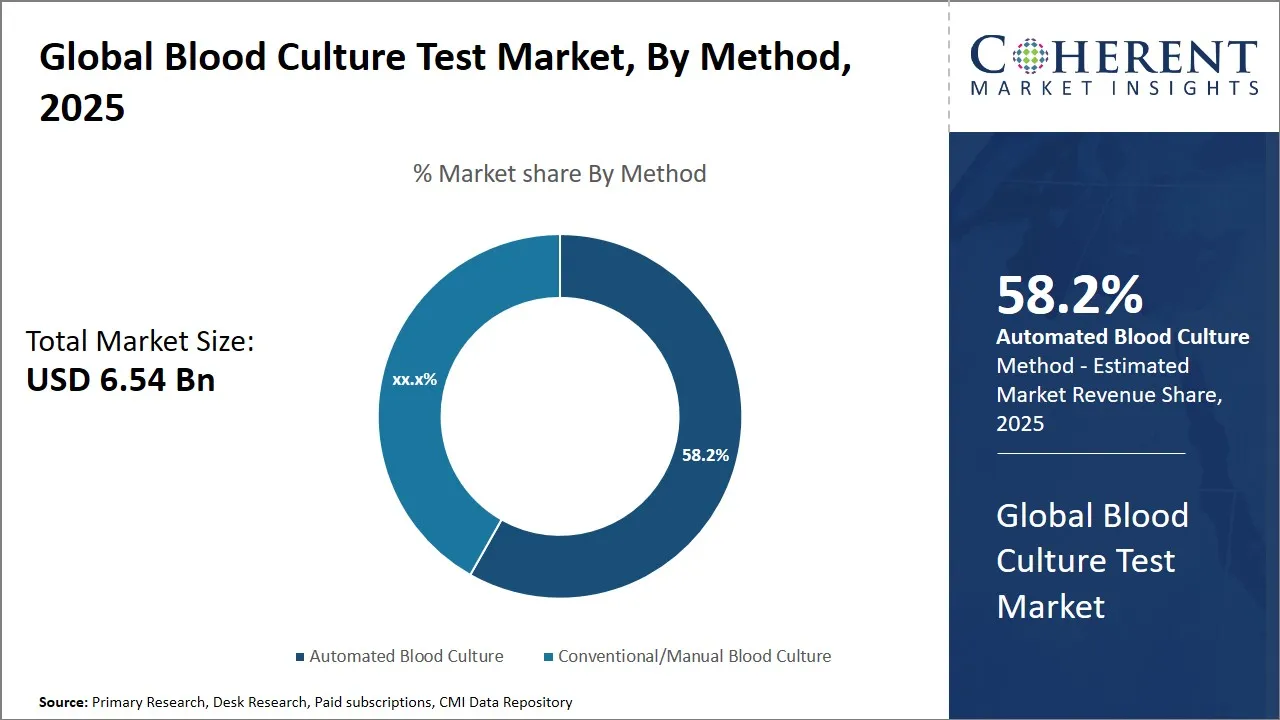
- The global market for blood culture tests in 2026 will be predominantly led by automated blood culture systems, which are expected to capture a 59.2 % market share.
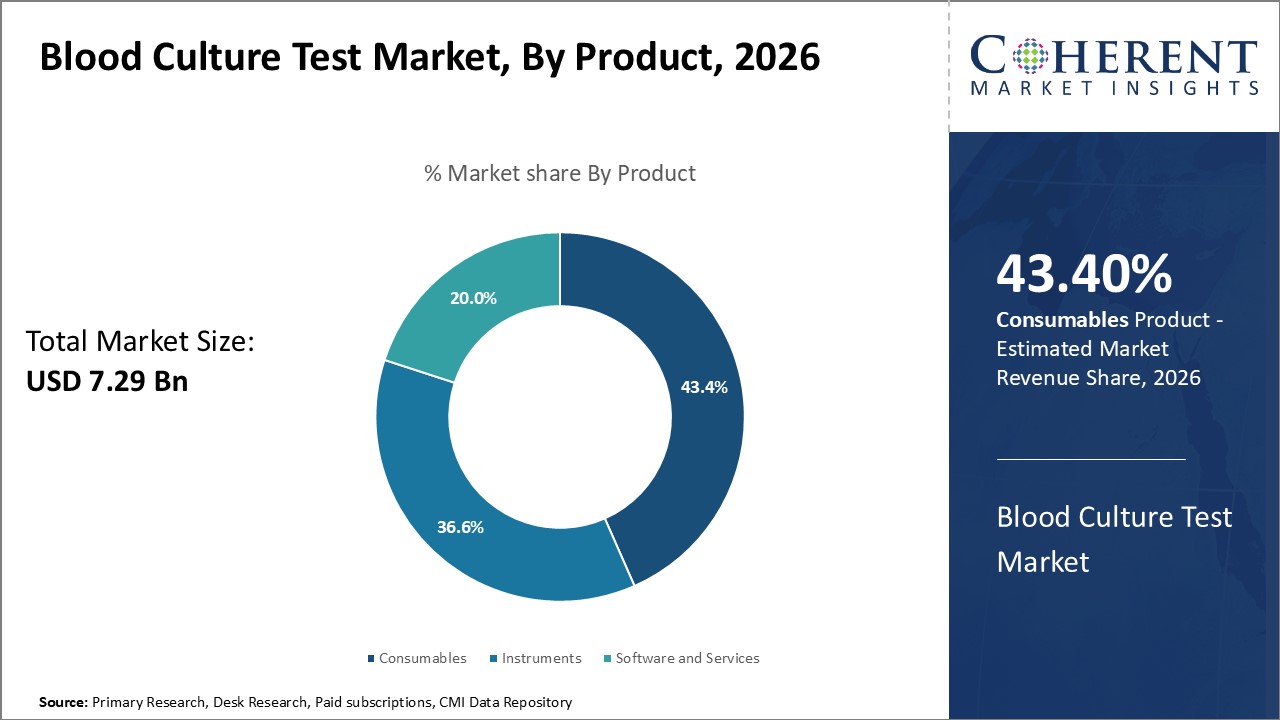
- The consumables segment, which includes culture media, assay kits, reagents, and laboratory accessories, is projected to represent the largest share of 43.4 % in 2026.
- Culture-based technologies, encompassing both conventional and resin-based methods, are set to hold the largest market share of 35.5 % in 2026.
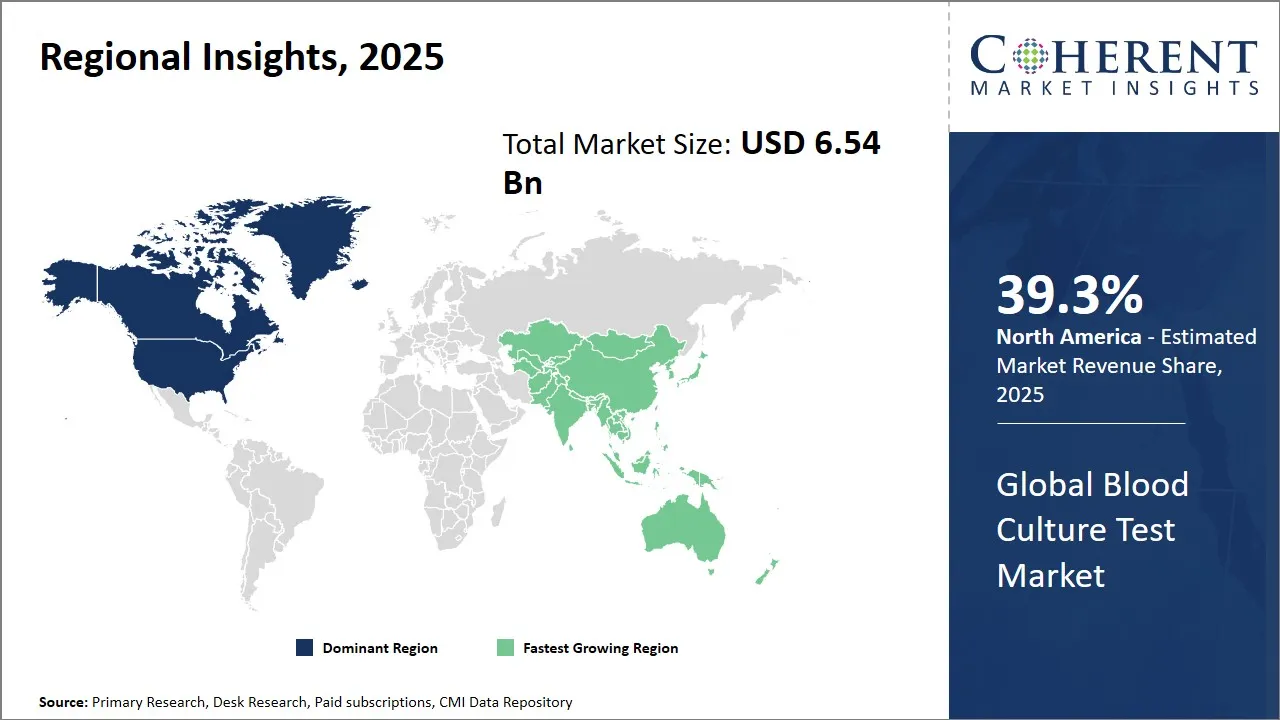
- North America is expected to lead the market, holding a share of 39.3 % in 2026. Asia Pacific is anticipated to be the fastest-growing region, with a market share of 25.3% in 2026.
Market Overview
Current market trends highlight a surge in the adoption of automated and rapid blood culture testing systems that enhance diagnostic accuracy and reduce turnaround times. Additionally, the increasing integration of molecular diagnostics and digital health platforms is facilitating more efficient pathogen detection and data management. Growing healthcare infrastructure in emerging economies and heightened awareness about early infection detection are further propelling the market expansion, making blood culture tests indispensable in modern healthcare diagnostics.
Current Events and Its Impact
Current Events | Description and its impact |
Advancements in AI Integration for Blood Culture Testing |
|
Healthcare Infrastructure Growth in Emerging Markets |
|
Segmental Insights
- Current Industry Events of 2026
- Market Size Estimation
- Regional Breakdown
- Competitive Landscape
- Customer Intelligence
- Segmental Analysis
- Pricing Analysis
- Key Market Drivers, Challenges & Future Trends
- Customized Insights Section
Blood Culture Test Market Insights, By Method - Automated Blood Culture Leads Owing to Advancements in Efficiency and Accuracy
The dominance of automated blood culture systems in the global market with an estimated share of 59.2% in 2026 can be primarily attributed to their enhanced efficiency, reliability, and decreased turnaround time compared to conventional/manual methods. Automated blood culture technology integrates sophisticated detection systems with continuous monitoring, enabling real-time identification of microbial growth. This automation significantly reduces manual labor and human error, leading to improved diagnostic precision.
For instance, in January 2025, Copan Italia S.p.a., a leader in laboratory automation, launched HEMO, an innovative system designed to streamline positive blood culture processing. HEMO automates the transfer and tracking of blood cultures, improving safety by eliminating needle-stick injuries and blood leaks. It enhances workflow efficiency by taking over repetitive tasks, minimizing contamination risks, and ensuring traceability with dual barcode scanning.
Another major factor driving the preference for automated blood culture methods is the increasing demand for rapid diagnosis and decreasing time to result. Automated systems offer continuous agitation and incubation, coupled with sensitive detection mechanisms that promptly indicate positive cultures. Additionally, automated blood culture systems are often compatible with downstream identification technologies such as MALDI-TOF and molecular assays, creating an integrated workflow that enhances laboratory productivity.
Blood Culture Test Market Insights, By Product - Consumables Dominate Driven by Recurrent Need and Specificity of Diagnostic Reagents
Consumables, encompassing culture media, assay kits, reagents, and laboratory accessories, represent the largest segment within the blood culture test market with a projected share of 43.4% in 2026 due to their essential and recurring nature in daily diagnostic workflows. These components are critical for maintaining the efficacy and reliability of blood culture tests, ensuring optimal growth conditions for a broad spectrum of pathogens. The high turnover rate of consumables in clinical laboratories stems from their single-use or limited shelf-life characteristics, necessitating continuous procurement and replenishment.
For example, bioMérieux introduced WORKSAFE Blood Culture Kits, designed to complement the BACT/ALERT automated microbial detection systems. These kits offer a safe and efficient solution to reduce contamination, supporting antimicrobial stewardship by minimizing false positive blood cultures.
One of the primary factors contributing to the substantial share of consumables is the wide variety of specific media and reagent formulations designed to enhance pathogen recovery, especially for fastidious organisms and those present in low concentrations. The growing prevalence of bloodstream infections and sepsis cases globally further increases the volume of consumables required, as more blood culture tests are performed routinely in hospitals and diagnostic centers.
Blood Culture Test Market Insights, By Technology - Culture-Based Technologies Dominate Due to Their Established Reliability and Broad Applicability
Culture-based technologies, including conventional and resin-based approaches, hold the largest share in the blood culture test market with an expected share of 35.5% in 2026 owing to their longstanding acceptance as the gold standard for bloodstream infection diagnosis. These methodologies involve incubating blood samples in nutrient-rich media to promote the growth of viable microorganisms, enabling direct observation and further identification. Despite the rise of molecular and proteomic alternatives, culture-based tests remain preferred for their comprehensive scope, ability to detect a wide range of pathogens, and capability to acquire live isolates for susceptibility testing.
The robust reliability of culture-based methods is a key driver of their market dominance. They produce definitive evidence of live infection, unlike some molecular techniques that may detect non-viable DNA or RNA. This advantage aids clinicians in making more informed treatment decisions, especially in complex or polymicrobial infections.
Role of Artificial Intelligence (AI) in the Global Blood Culture Test Market
- Artificial Intelligence (AI) is revolutionizing the global blood culture test market by enhancing key aspects such as efficiency, cost reduction, and automation. AI technologies, particularly machine learning algorithms, are streamlining data analysis processes, enabling rapid and accurate identification of pathogens in blood cultures. By automating sample processing and result analysis, AI significantly reduces human error, accelerates diagnostic timelines, and lowers operational costs. Additionally, AI-driven predictive analytics play a crucial role in anticipating infection outbreaks and forecasting patient outcomes, providing healthcare providers with valuable insights for proactive decision-making. Personalized treatment plans powered by AI enhance patient care by tailoring therapies based on individual needs, thus improving clinical outcomes and reducing unnecessary treatments.
- The integration of AI within the blood culture testing industry opens up numerous emerging opportunities, including the development of innovative products and services. Companies in this space can leverage AI to create smarter diagnostic tools, such as AI-powered sensors or automated systems capable of analyzing blood cultures without human intervention. This enables healthcare facilities to handle larger volumes of tests with greater accuracy and efficiency, promoting scalability and growth. AI also allows for better resource allocation, improving operational efficiency in laboratories and hospitals. However, while the potential of AI is vast, challenges such as data privacy concerns and the need for highly skilled workforce integration must be considered. Companies in the market must weigh these factors to ensure that the adoption of AI results in tangible, long-term benefits. For example, companies like Copan Italia, with its HEMO system, are already demonstrating the benefits of AI in blood culture automation, setting the stage for further AI adoption in diagnostic settings.
Regional Insights
North America Blood Culture Test Market Analysis and Trends
North America’s dominance in the global blood culture test market, with an estimated share of 39.3% in 2026, is driven by a well-established healthcare infrastructure, advanced diagnostic capabilities, and significant investments in medical research and development. The presence of stringent government regulations and favorable reimbursement policies promote early adoption of innovative blood culture testing technologies.
The robust ecosystem of hospitals, diagnostic laboratories, and research institutes contributes to continuous product development and commercialization. Leading players such as Becton, Dickinson and Company (BD), bioMérieux, and Thermo Fisher Scientific have a strong foothold in the region, offering a diverse portfolio of reliable blood culture systems and diagnostic kits. Their consistent focus on enhancing test accuracy and reducing turnaround times supports the regional market dominance.
Asia Pacific Blood Culture Test Market Analysis and Trends
The Asia Pacific region exhibits the fastest growth in the blood culture test market, with a projected share of 25.3% in 2026, due to the increasing incidence of infectious diseases, expanding healthcare access, and rising awareness about sepsis and bloodstream infections. Rapid urbanization, improving healthcare infrastructure, and growing government initiatives for infectious disease control further propel the market expansion.
Countries such as China, India, Japan, and South Korea are witnessing the increased adoption of automated blood culture instruments, partly driven by foreign direct investment and collaborations with global diagnostic companies.
In December 2024, Strand Life Sciences, a genomics and bioinformatics company and subsidiary of Reliance Industries, launched CancerSpot, a pioneering blood-based test for the early detection of multiple cancers in India. The test uses advanced methylation profiling technology to identify cancer tumor DNA fragments from a simple blood sample. CancerSpot’s DNA signatures, derived from Indian cohorts, have shown broad applicability across global ethnicities, providing an accessible option for proactive cancer screening in India and worldwide.
Blood Culture Test Market Outlook for Key Countries
U.S. Blood Culture Test Market Trends
The U.S. blood culture test market leads globally due to its sophisticated healthcare infrastructure, high healthcare spending, and supportive reimbursement frameworks for diagnostic testing. The U.S. healthcare ecosystem encourages continuous innovation, enabling companies like BD and Thermo Fisher Scientific to launch advanced blood culture testing solutions with improved sensitivity. Regulatory aspects governed by the FDA ensure compliance with high standards, which boosts trust among healthcare providers. The strong presence of research institutions and hospitals promotes the widespread implementation of automated and rapid blood culture tests, enhancing patient outcomes and reinforcing the country’s leadership.
In April 2024, Q-linea AB, a leader in infectious disease diagnostics, received the U.S. FDA 510(k) clearance for its ASTar System. The system, now available in U.S. hospitals and laboratories, provides rapid antibiotic susceptibility testing directly from positive blood cultures in about six hours. It automates the analysis of up to 12 samples, delivering true MIC results and improving the management of bloodstream infections like sepsis, helping to reduce mortality rates in the U.S.
Germany Blood Culture Test Market Trends
Germany's blood culture test market benefits from a robust healthcare system and government policies favoring early detection of infectious diseases. The country has a significant number of diagnostic laboratories equipped with state-of-the-art technologies. Companies such as bioMérieux and Siemens Healthineers have a long-standing presence here, frequently collaborating with local healthcare providers to develop efficient diagnostic workflows. Germany's active participation in European Union healthcare initiatives and stringent quality control standards contribute to steady market growth and adoption of new blood culture platforms.
In June 2024, Siemens Healthineers, in collaboration with Novartis, received the CE mark approval for its Neurofilament Light Chain (NfL) blood test. The test, designed for use on the Atellica IM Analyzer and ADVIA Centaur systems, helped detect early neuronal injury in Relapsing Multiple Sclerosis (RMS) patients, improving disease management and potentially preventing relapses. The test was set to launch in Europe later that year.
China Blood Culture Test Market Trends
China is a pivotal country in Asia Pacific’s market expansion, propelled by increasing healthcare expenditure and government programs aimed at improving diagnostic capabilities in tier 2 and tier 3 cities. The rising prevalence of hospital-acquired infections and sepsis fuels demand for timely and accurate blood culture testing. International companies including BD and bioMérieux are partnering with local manufacturers to enhance supply chain efficiency and affordability. Additionally, China’s regulatory reforms to simplify product approvals have accelerated market entry for new technologies, creating opportunities for advanced automated blood culture systems.
In April 2024, Grifols, a global leader in plasma-derived medicines and diagnostic solutions, launched its fully automated Erytra Eflexis blood-typing system in China. This advanced analyzer, designed to enhance pretransfusion compatibility testing, uses Grifols' proprietary DG gel technology to deliver reliable and timely results. The Erytra Eflexis improves workflow efficiency and is adaptable to various lab needs.
Japan Blood Culture Test Market Trends
Japan maintains a leadership position within the Asia Pacific region owing to advanced healthcare standards, a well-developed hospital network, and early technology adoption. The market is supported by key players such as Sysmex Corporation and Fujirebio, who have introduced cutting-edge blood culture and pathogen identification systems focused on rapid diagnostics. Japan’s stringent regulatory framework and emphasis on quality assurance ensure high reliability of blood culture tests.
In August 2026, Japan began human trials for a synthetic, universally compatible artificial blood, led by Professor Hiromi Sakai’s team at Nara Medical University. The synthetic blood, made from hemoglobin vesicles, offers a two-year shelf life and can be used across all blood types, addressing challenges like blood supply shortages and compatibility issues.
Market Players, Key Developments, and Competitive Intelligence
Key Developments
- On August 21, 2025, NHS Blood and Transplant, in collaboration with NHS England, launched a new personalized "blood-matching" test to help patients with rare conditions like sickle cell disorder and thalassemia. Using genetic information, the test improves blood matching, reducing the risk of severe reactions during transfusions. Initially, about 300 individuals with rare inherited anemias will benefit, alongside patients with sickle cell disorder and thalassemia. The initiative is supported by the family of Woody Mayers, a young boy with a rare anemia who requires monthly blood transfusions.
- In May 2025, Niloufer Hospital in Hyderabad launched "Amruth Swasth Bharath," an AI-based non-invasive blood testing tool developed by Quick Vitals. The tool uses AI and deep learning algorithms with Remote Photoplethysmography (PPG) to deliver health assessments in under a minute via smartphone and tablet cameras. Designed specifically for the Indian population, it offers quick, painless, and accessible testing, making it especially beneficial for children and pregnant women.
- In April 2025, Quest Diagnostics, a leader in diagnostic services, launched a new blood test called AD-Detect to help confirm Alzheimer's disease (AD) in patients with mild cognitive impairment (MCI) or dementia. The test, which combines amyloid beta (AB) 42/40 and p-tau217 blood levels, offers over 90% sensitivity and specificity in assessing AD pathology.
- In April 2025, Veravas, a leader in clinical diagnostics, launched VeraBIND Tau, the first blood test designed to detect Alzheimer's-related tau pathology and other tau-related neurodegenerative disorders. Available as a laboratory-developed test (LDT), the test offers 96% sensitivity and 90% specificity, providing a non-invasive alternative to invasive spinal taps and expensive tau PET imaging. VeraBIND Tau enables earlier diagnosis, empowering both symptomatic and presymptomatic patients to seek intervention before cognitive decline progresses.
Top Strategies Followed by Global Blood Culture Test Market Players
- Established players dominate the landscape with substantial investments in research and development, continuously innovating to deliver high-performance, accurate, and rapid diagnostic solutions. These companies prioritize enhancing the sensitivity and specificity of their blood culture systems through cutting-edge technologies such as automation and artificial intelligence integration. To further consolidate their market presence, these key players actively pursue strategic partnerships and collaborations with original equipment manufacturers (OEMs) and other major industry stakeholders.
- In September 2024, Accelerate Diagnostics, a leader in rapid microbiology diagnostics, announced a collaboration with Bruker, known for its MALDI Biotyper system, to enhance microbial identification. The partnership will integrate Accelerate's Arc system, an automated blood culture sample preparation platform, with Bruker’s MALDI Biotyper and Sepsityper software for faster and more accurate microbial identification directly from positive blood culture samples.
- Mid-level players in the blood culture test market adopt a somewhat different approach, focusing primarily on offering cost-effective solutions that do not compromise quality. Recognizing the price sensitivity of key segments such as clinics, smaller hospitals, and diagnostic labs in developing regions, these companies design products that balance affordability with reliable performance.
- In March 2024, Neurocode Labs, a clinical laboratory specializing in neurological disorder diagnostics, launched ALZpath Dx, a groundbreaking blood test for Alzheimer's disease. This innovative test, the first of its kind in the U.S. for clinical diagnostic use, measures phosphorylated tau (pTau217) levels to enable earlier, more accurate Alzheimer's diagnosis. ALZpath Dx offers the same accuracy as brain imaging or CSF testing but is faster, more accessible, less invasive, and more affordable.
- Small-scale players in the blood culture test market strategically differentiate themselves by focusing on specialized features or highly innovative products tailored to niche market needs. These companies often capitalize on emerging technologies such as microfluidics, rapid molecular diagnostics, or smartphone-enabled platforms to offer unique value propositions that larger competitors may overlook.
- In October 2023, DELFI Diagnostics, a leader in blood-based cancer detection, launched FirstLook Lung, an innovative blood test designed to enhance lung cancer screening. By analyzing fragments of cell-free DNA using whole-genome machine learning, the test offers a 99.7% negative predictive value (NPV) and helps identify individuals at risk for lung cancer, including early-stage disease.
Market Report Scope
Blood Culture Test Market Report Coverage
| Report Coverage | Details | ||
|---|---|---|---|
| Base Year: | 2025 | Market Size in 2026: | USD 7.29 Bn |
| Historical Data for: | 2020 To 2024 | Forecast Period: | 2026 To 2033 |
| Forecast Period 2026 to 2033 CAGR: | 11.5% | 2033 Value Projection: | USD 15.62 Bn |
| Geographies covered: |
| ||
| Segments covered: |
| ||
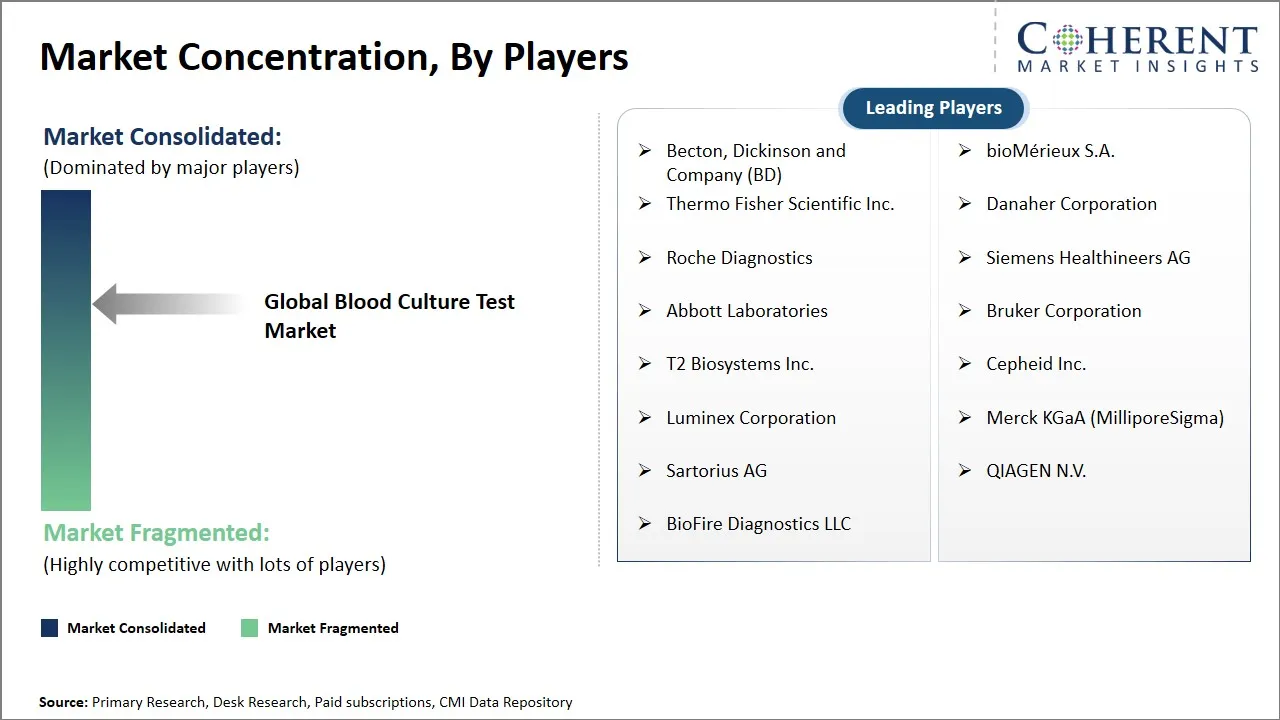
| Companies covered: | Becton, Dickinson and Company (BD), bioMérieux S.A., Thermo Fisher Scientific Inc., Danaher Corporation, Roche Diagnostics, Siemens Healthineers AG, Abbott Laboratories, Bruker Corporation, T2 Biosystems Inc., Cepheid Inc., Luminex Corporation, Merck KGaA (MilliporeSigma), Sartorius AG, QIAGEN N.V., and BioFire Diagnostics LLC | ||
| Growth Drivers: |
| ||
| Restraints & Challenges: |
| ||
Blood Culture Test Market Dynamics
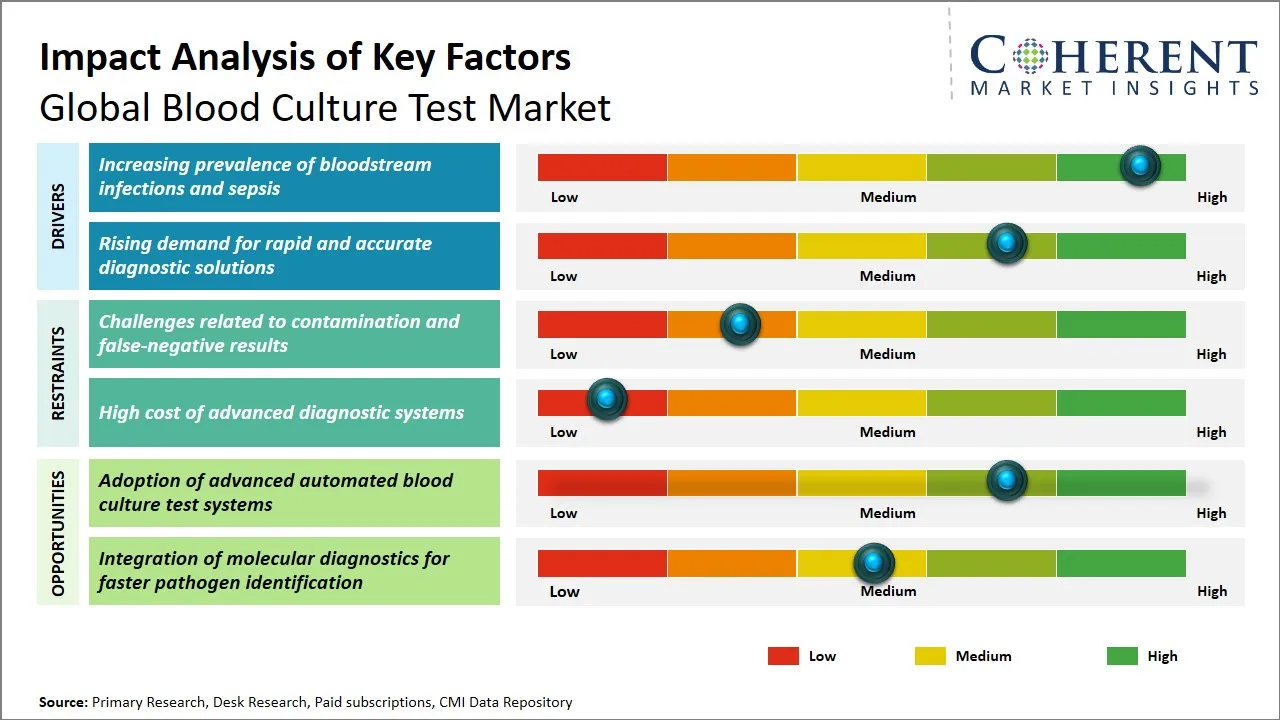
Blood Culture Test Market Driver - Increasing prevalence of bloodstream infections and sepsis
The increasing prevalence of bloodstream infections (BSIs) and sepsis is a critical factor driving the global blood culture test market. Bloodstream infections, often caused by bacteria or fungi entering the bloodstream, can lead to severe complications including septic shock and organ failure if not diagnosed and treated promptly. Sepsis, a life-threatening response to infection, requires the early detection for effective management, making blood culture tests indispensable in clinical settings. With growing awareness among healthcare providers about the severe consequences of delayed diagnosis, there is a heightened emphasis on rapid and accurate identification of causative pathogens. This necessity propels the adoption of advanced blood culture techniques and systems that facilitate timely diagnosis and guide targeted antimicrobial therapy.
In May 2024, according to the WHO data, Sepsis, a life-threatening condition caused by the body's extreme immune response to infections, is responsible for 20% of global deaths, with 48.9 million cases and 11 million deaths in 2020. Children under 5 are particularly vulnerable. The condition can lead to organ failure and septic shock if not treated early. Sepsis is often caused by bacterial infections, including drug-resistant pathogens, and is a major concern in healthcare settings, especially in lower-middle-income countries. The WHO report highlights rising antimicrobial resistance (AMR) in bloodstream infections, showing significant resistance to critical antibiotics, especially in hospital-acquired infections like Klebsiella pneumoniae and Acinetobacter spp., further complicating treatment and survival.
Blood Culture Test Market Opportunity: Adoption of Advanced Automated Blood Culture Test Systems
The global blood culture test market is witnessing significant growth driven by the increasing adoption of advanced automated blood culture test systems. These sophisticated systems offer higher accuracy, faster turnaround times, and enhanced sensitivity compared to traditional manual methods, enabling healthcare providers to rapidly detect bloodstream infections and initiate timely treatment. Automated blood culture instruments integrate advanced technologies such as automated incubation, continuous monitoring, and real-time data analysis, which reduce human error and improve workflow efficiency in clinical laboratories. The rising prevalence of infectious diseases, coupled with growing awareness among healthcare professionals about the benefits of automation, is propelling demand for these systems.
In December 2024, BD (Becton, Dickinson and Company) and Babson Diagnostics launched an innovative fingertip blood testing system using BD’s MiniDraw and Babson's BetterWay technologies. This system requires just six drops of capillary blood, offering a less-invasive alternative to traditional blood draws, making testing more accessible in settings like urgent care and doctor offices without phlebotomy capabilities.
Analyst Opinion (Expert Opinion)
- The blood culture test market is witnessing significant growth driven by technological advancements, increasing awareness about infections, and the rising demand for rapid diagnostics. The shift toward automated blood culture systems is one of the major driving factors, as these systems offer faster, more accurate results compared to manual methods. Regulatory support from organizations like the FDA and advancements in molecular diagnostics are also contributing to the market's expansion. The growing prevalence of bloodstream infections, coupled with the rise of antimicrobial resistance (AMR), is further fueling the need for reliable diagnostic tools. However, the market faces challenges related to high costs of advanced diagnostic equipment and the need for skilled professionals to operate complex systems.
- Emerging opportunities in the blood culture test market include the integration of AI and machine learning in diagnostic platforms, which can enhance the speed and accuracy of pathogen detection. Notable industry events, such as the European Congress of Clinical Microbiology & Infectious Diseases (ECCMID) and the American Society for Microbiology (ASM) Microbe conference, have played pivotal roles in knowledge-sharing and introducing new technologies in the field. Real-world initiatives like the joint collaborations between companies like Accelerate Diagnostics and Bruker Corporation have introduced innovative solutions for rapid microbial identification, showcasing the potential for cost-effective and efficient diagnostic systems. These collaborations, along with regulatory approval processes, are expected to drive the market's future growth.
Speak to the analyst
Want personalized insights?
Take the findings above to one of our principal consultants, or have the report rebuilt around the segments, geographies and competitors you actually track.
Market Segmentation
- Method Insights (Revenue, USD Bn, 2021 - 2033)
- Automated Blood Culture
- Conventional/Manual Blood Culture
- Product Insights (Revenue, USD Bn, 2021 - 2033)
- Consumables (e.g., Media, Assay kits and reagents, accessories, etc.)
- Instruments (Automated blood culture systems, laboratory equipment)
- Software and Services
- Technology Insights (Revenue, USD Bn, 2021 - 2033)
- Culture-Based Technologies (including conventional, resin-based)
- Molecular Technologies (NAAT, PCR-based panels, Microarrays)
- Proteomic Technologies (MALDI-TOF, LC-MS)
- Application Insights (Revenue, USD Bn, 2021 - 2033)
- Bacterial Infections (e.g., bacteremia, septicemia)
- Fungal Infections (e.g., fungemia)
- Mycobacterial Infections
- End User Insights (Revenue, USD Bn, 2021 - 2033)
- Hospital Laboratories
- Diagnostic Laboratories
- Academic and Research Institutes
- Others (Pathology labs, Bacteriological labs, independent research labs, ambulatory surgery centers)
- Regional Insights (Revenue, USD Bn, 2021 - 2033)
- North America
- U.S.
- Canada
- Latin America
- Brazil
- Argentina
- Mexico
- Rest of Latin America
- Europe
- Germany
- U.K.
- Spain
- France
- Italy
- Russia
- Rest of Europe
- Asia Pacific
- China
- India
- Japan
- Australia
- South Korea
- ASEAN
- Rest of Asia Pacific
- Middle East
- GCC Countries
- Israel
- Rest of Middle East
- Africa
- South Africa
- North Africa
- Central Africa
- North America
- Key Players Insights
- Becton, Dickinson and Company (BD)
- bioMérieux S.A.
- Thermo Fisher Scientific Inc.
- Danaher Corporation
- Roche Diagnostics
- Siemens Healthineers AG
- Abbott Laboratories
- Bruker Corporation
- T2 Biosystems Inc.
- Cepheid Inc.
- Luminex Corporation
- Merck KGaA (MilliporeSigma)
- Sartorius AG
- QIAGEN N.V.
- BioFire Diagnostics LLC
Sources
Primary Research Interviews
- Industry Stakeholders List
- Hospitals
- Diagnostic Laboratories
- End Users List
- Healthcare Providers
- Physicians
Government and International Databases
- World Health Organization (WHO)
- U.S. Centers for Disease Control and Prevention (CDC)
- European Centre for Disease Prevention and Control (ECDC)
- National Institutes of Health (NIH)
- U.S. Food and Drug Administration (FDA)
- Public Health Agency of Canada
Trade Publications
- Clinical Microbiology Reviews
- Journal of Clinical Microbiology
- Infection Control & Hospital Epidemiology
- The Lancet Infectious Diseases
- Journal of Hospital Infection
- Microbiology Spectrum
Academic Journals
- Journal of Clinical Microbiology
- Frontiers in Microbiology
- Clinical Infectious Diseases
- Journal of Antimicrobial Chemotherapy
- International Journal of Antimicrobial Agents
- Journal of Infection and Public Health
Reputable Newspapers
- The New York Times
- The Guardian
- The Washington Post
- The Wall Street Journal
- Financial Times
- The Times of India
Industry Associations
- American Society for Microbiology (ASM)
- European Society of Clinical Microbiology and Infectious Diseases (ESCMID)
- Infectious Diseases Society of America (IDSA)
- Clinical and Laboratory Standards Institute (CLSI)
- American Association for Clinical Chemistry (AACC)
- Association for Professionals in Infection Control and Epidemiology (APIC)
Public Domain Resources
- PubMed Central
- U.S. National Library of Medicine
- National Institutes of Health (NIH) Public Access
- European Medicines Agency (EMA)
- Centers for Disease Control and Prevention (CDC) Public Health Resources
- Global Health Observatory (GHO)
Proprietary Elements
- CMI Data Analytics Tool: Proprietary analytics tool to analyze real-time market trends, consumer behavior, and technology adoption in market
- Proprietary CMI Existing Repository of Information for Last 8 Years
Get access to 250+ pages report
Every segment, forecast, competitor profile and data table behind the analysis above — available for instant download.
- ESOMAR Member
- ISO 9001:2015 Certified
- D-U-N-S Registered
- GDPR & CCPA Compliant
Missing comfort of reading report in your local language? Find your preferred language:
Transform your Strategy with Exclusive Trending Reports
Frequently Asked Questions
The global blood culture test market is estimated to be valued at USD 7.29 Bn in 2026 and is expected to reach USD 15.62 Bn by 2033.
The CAGR of global blood culture test market is projected to be 11.5% from 2026 to 2033.
Increasing prevalence of bloodstream infections and sepsis and rising demand for rapid and accurate diagnostic solutions are the major factors driving the growth of global blood culture test market.
Challenges related to contamination and false-negative results and high cost of advanced diagnostic systems are the major factors hampering the growth of global blood culture test market.
In terms of Method, Automated Blood Culture segment is estimated to dominate the market revenue share in 2026.
The market is expected to grow due to innovations in diagnostic technologies, increasing infection rates, and the need for rapid and accurate pathogen identification.
Trends include the increasing adoption of automated blood culture systems, expansion of point-of-care testing, and integration of AI for improved diagnostics.