

Global Calcium Supplement Market Size and Forecast – 2026 To 2033
The global calcium supplement market is expected to grow from USD 8.74 Bn in 2026 to USD 13.42 Bn by 2033, registering a compound annual growth rate (CAGR) of 6.3% from 2026 to 2033. The market for calcium supplements is poised for significant expansion, fueled by the soaring burden of osteoporosis and age-related bone disorders among the elderly population.
According to the International Osteoporosis Foundation (IOF), globally 1 in 3 women over age 50 will experience osteoporosis fractures, as will 1 in 5 men aged over 50, illustrating the growing requirement for calcium supplementation to support bone integrity and reduce fracture risk.
(Source: International Osteoporosis Foundation)
Key Takeaways of the Global Calcium supplement Market
- Calcium carbonate is projected to hold 56.3 % of the global calcium supplement market share in 2026, making it the dominant product type segment across North America due to its high-elemental calcium content, low cost, and inclusion in many calcium supplements for bone health that are advised for preventing osteoporosis. For instance, the U.S. National Institutes of Health (NIH) Office of Dietary Supplements advised calcium supplementation among groups who are unable to meet dietary requirements. Calcium carbonate, in adherence to its high calcium content and affordability, continues to be one of the most common forms of supplement, underlining its widespread adoption across the region. (Source: National Institutes of Health)
- Tablets are projected to hold 61.8 % of the global calcium supplement market share in 2026, making it the dominant form segment across Europe due to stringent standards imposed on supplement quality and the consumer desire for accurately dosed formulations. For instance, the European Food Safety Authority (EFSA) has put in place dietary reference intakes and health claim regulations for calcium, prompting companies to provide standardized tablet formulations to facilitate adherence to dosage guidelines and regulations. (Source: European Food Safety Authority)
- Adults are projected to hold 47.2 % of the global calcium supplement market share in 2026, making it the dominant end user segment across Asia Pacific driven by rising public awareness of nutritional deficiencies, and government driven programmes on nutrition targeting adult health. For instance, India's POSHAN Abhiyaan (National Nutrition Mission) has scaled up programs related to maternal nutrition and micronutrient supplementation among women and adults, resulting in increased awareness of calcium intake and supplementation. Such efforts will be facilitating the transition of calcium supplementation approaches across the region. (Source: Ministry of Women and Child Development)
- North America maintains its dominance with an expected share of 33.4 % in 2026, bolstered by high population awareness about bone health, the widespread use of dietary supplements and strong support from healthcare organizations for osteoporosis prevention as well as existing retail and pharmacy distribution channels. For instance, the U.S. Preventive Services Task Force (USPSTF) has made recommendations around osteoporosis screening among the elderly, further emphasizing the importance of bone health and generating awareness on calcium intake among the at-risk population. (Source: U.S. Preventive Services Task Force)
- Asia Pacific is expected to exhibit the fastest growth with an estimated contribution of 27.9% share in 2026, driven by rising nutritional awareness, growth in middle-class segments and government initiatives to overcome micronutrients deficiency in the region. Significant pace in urbanization and rise in healthcare expenditure continues to further stimulate calcium supplement consumption. For instance, China's “Healthy China 2030” initiative promotes nutrition improvement and chronic disease prevention through enhanced public health and dietary awareness programs, creating a favorable environment for the adoption of calcium and other nutritional supplements. (Source: ScienceDirect)
- Rising Demand for Calcium Supplements in Women's Health Programs: Maternal health and women's nutrition programs instituted by governments provide a myriad of opportunities for calcium supplement manufacturers. As there is a growing emphasis on reducing adverse events during pregnancy, osteopenia, and bone loss post menopause, manufacturers adopting calcium supplements differentiated by the higher use of Vitamin D and other micronutrients are most likely to gain from the rise in supplementation programs globally.
- Development of High-Bioavailability and Functional Calcium Formulations: The increasing consumer demand for more readily absorbed, easier to take supplement forms provides a positive climate for advancements in calcium delivery modes. The market expansion into calcium citrate, microencapsulated calcium, chewable formats, gummy varieties, calcium combined with vitamin D3, magnesium and vitamin K2 is gaining presence to improve the bioavailability and efficiency of the claim. The delivery mode innovation has created differentiation for manufacturers, allowing companies to penetrate into new areas of preventive health.
Segmental Insights
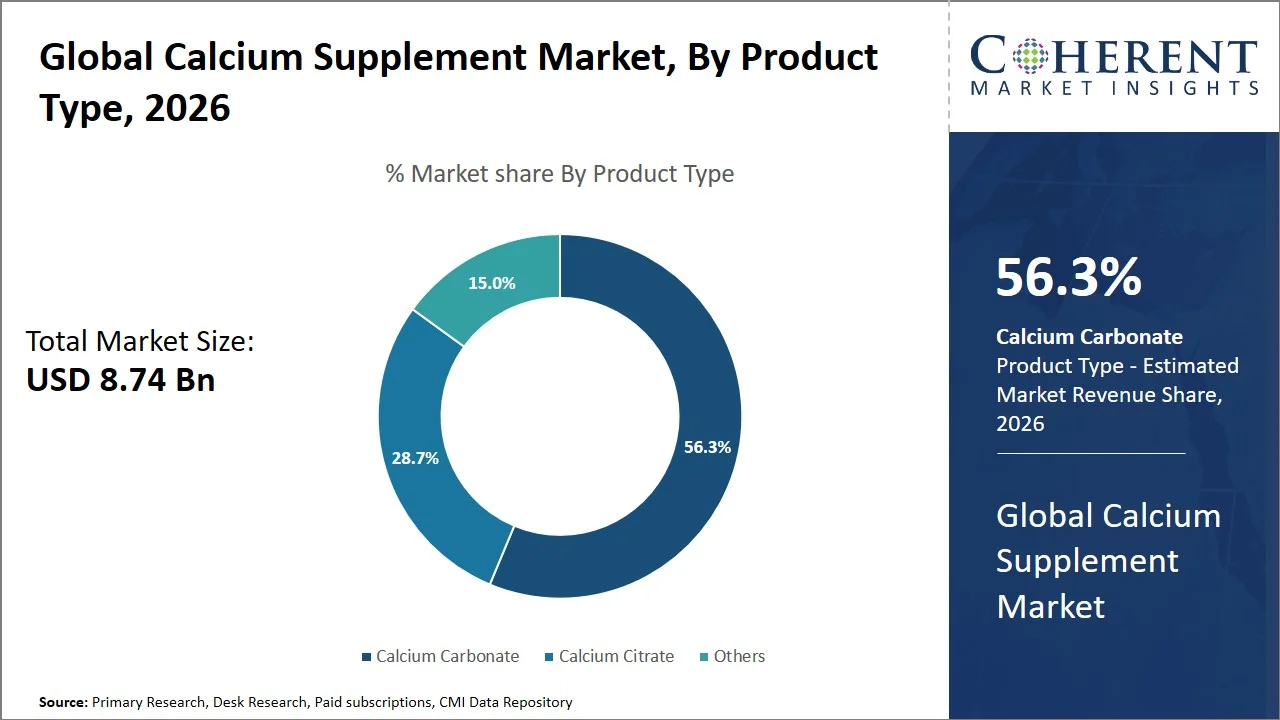
Why Does Calcium Carbonate Dominate the Global Calcium Supplement Market?
Calcium carbonate is projected to hold a market share of 56.3% in 2026, as it possesses the highest content of elemental calcium (40%), has higher availability than other types of calcium compounds and is less expensive as compared to other types. The formulation helps consumers to achieve the recommended calcium intake with less amount of dosage while its proved efficiency in quality bone health and lower calcium deficiencies sustains its demand among various applications. The popularity of calcium carbonate is further enhanced because of its compatibility with a range of supplement formats such as chewable, powders and tablets. For instance, the European Food Safety Authority (EFSA) has authorized health claims associating calcium consumption with the preservation of healthy bones and teeth under Article 14 of Regulation (EC) No. 1924/2006. This has led to the proliferation of calcium-based supplements in the European market and reinforced demand for affordable calcium sources such as calcium carbonate. (Source: European Food Safety Authority)
- Current Industry Events of 2026
- Market Size Estimation
- Regional Breakdown
- Competitive Landscape
- Customer Intelligence
- Segmental Analysis
- Pricing Analysis
- Key Market Drivers, Challenges & Future Trends
- Customized Insights Section
Why Do Tablets Represent the Largest Form Segment in the Calcium Supplement Market?
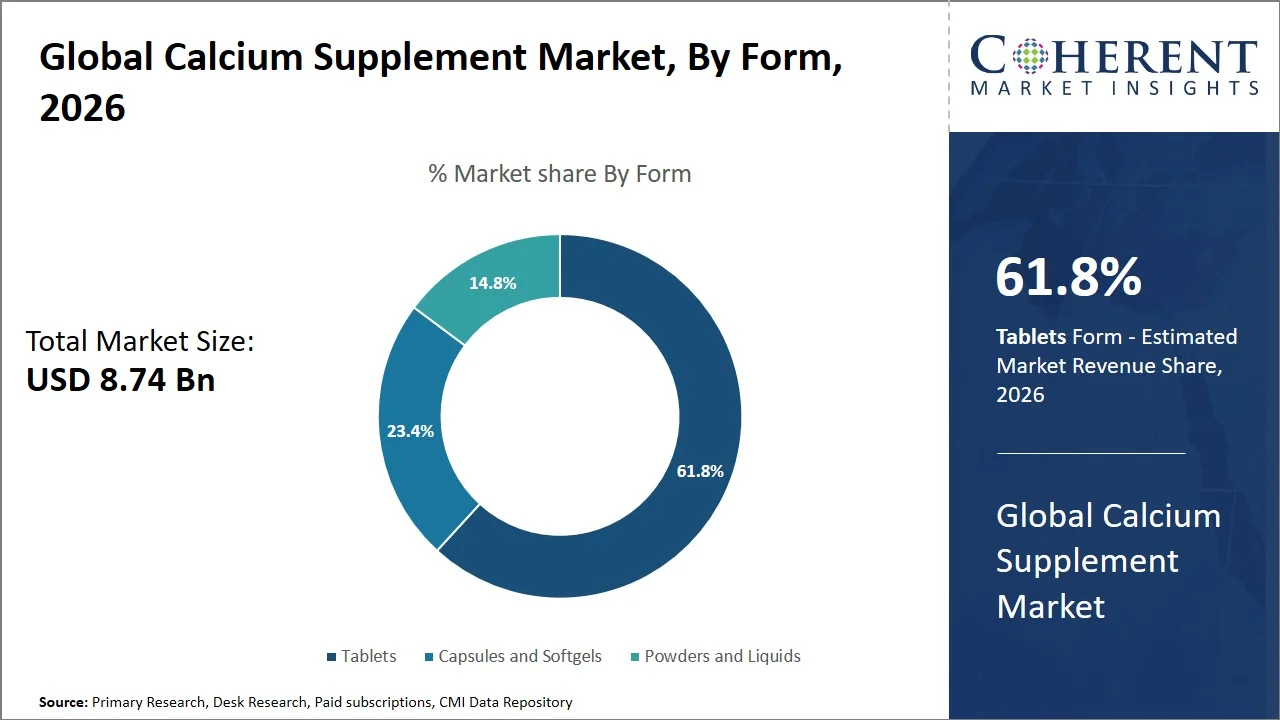
Tablets are projected to hold a market share of 61.8% in 2026, due to ease of administration, portability, accuracy of dosing and high consumer recognition. They also demonstrate enhanced stability, long shelf life and allow co-administration with appropriate supplements like vitamin D and magnesium in a single formulation. Furthermore, their widespread availability via pharmacies, supermarkets, and online stores, as well as a robust physician recommendation of tablet supplementations, have maintained the segment's dominance in the market.
For instance, Caltrate, the world's largest calcium supplement brand distributes its supplements under a brand emphasis on bone health in tablet form, combining the essential calcium and Vitamin D for everyday nutritional needs. The strong and consistent brand commitment to the tablet-formulation highlights a sustained demand and desirability by the market on a reliable, precisely dosed, and easily storable calcium supplement. (Source: Caltrate)
Adults Segment Dominates the Global Calcium supplement Market
The adults segment is projected to hold a market share of 47.2% in 2026, attributed to rising health awareness, widespread preventive health culture and emerging concern about bone health among the population. Due to lack of dietary calcium consumption, sedentary life style, lactose intolerance and increasing trend of vegetarianism in diet, calcium supplements intake is being favored by adult generation for proper bone health and muscle’s function. Furthermore, adults have begun to include calcium supplements in the day-to-day regime for overall healthy lifestyle, particularly to reduce the risk of osteoporosis and hip fractures. For instance, results of the U.K.'s National Diet and Nutrition Survey (NDNS) have indicated low calcium intakes in a proportion of the adult population groups, especially women below recommended dietary levels, illustrating the necessity of using supplementation in achieving daily calcium needs and in the maintenance of bone health in the long-term. (Source: Office for Health Improvement and Disparities)
Currents Events and their Impact
Current Events | Description and its Impact |
U.S. FDA Extends Effective Date of Updated “Healthy” Nutrient Content Claim Rule (February 2025) |
|
U.S. FDA Releases 2025 Human Foods Program Guidance Agenda (June 2025) |
|
(Source: Food and Drug Administration)
Calcium Supplement Market Dynamics
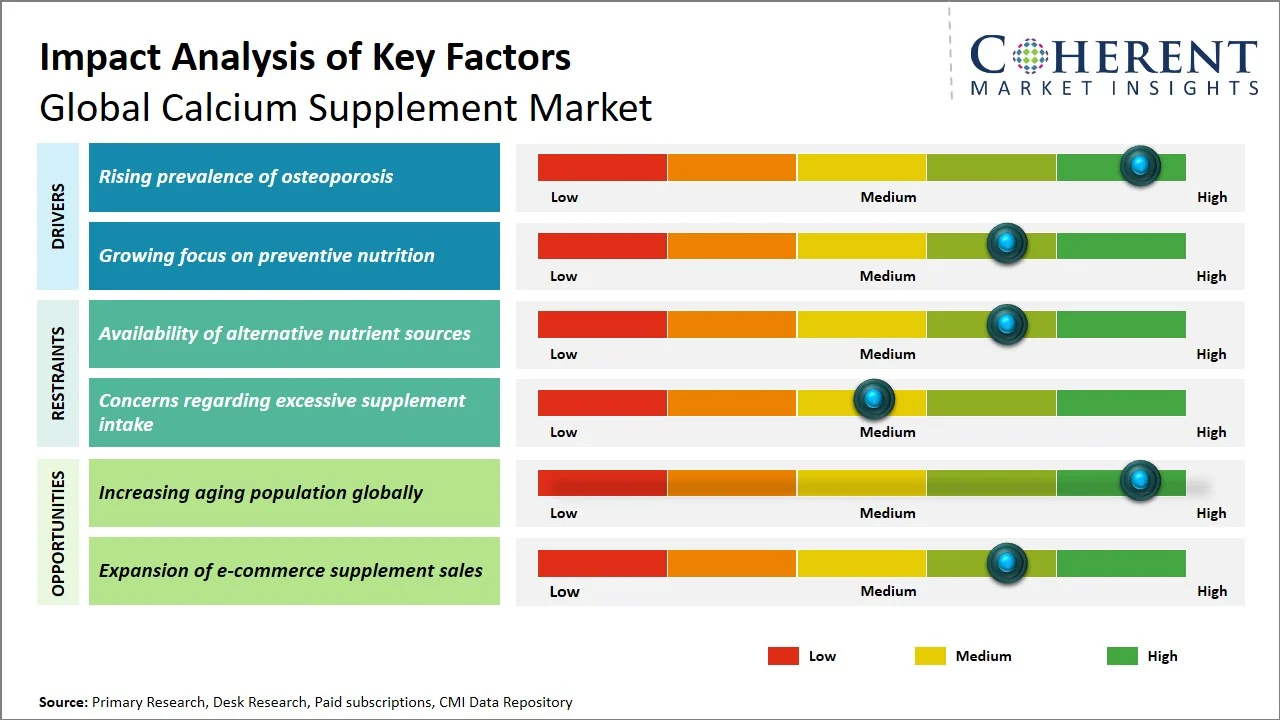
Market Drivers
- Rising prevalence of osteoporosis: Growing instances of osteoporosis, a disease that causes bone weakening, increasing fracture probability among old and post-menopausal females significantly, is one of the primary factors driving the calcium supplement market growth. Increasing emphasis on skeletal well-being and a preventive approach towards health is motivating consumers towards the intake of calcium supplements to improve bone density and prevent complications due to osteoporosis. This trend is also propelled by a greater recommendation from health experts for appropriate calcium intake as part of bone maintenance programs. For instance, according to Centers for Disease Control and Prevention, the prevalence of osteoporosis in adults 50 years or older in the U.S. was 12.6% with respect to femur neck or lumbar spine values, which indicates a large part of the population being exposed to bone-associated diseases and the need of calcium supplementation. (Source: Centers for Disease Control and Prevention)
- Growing focus on preventive nutrition: The strong growth in demand for calcium supplements has arisen with a growing focus on preventive nutrition as people start to realize the benefits of bone health and reduce the risk of age-related disorders before clinical symptoms develop. The increasing awareness about the importance of micronutrients in long term health in adults has led to a continued use of calcium supplements in daily health regimes. The trend is further supported by the rising prevalence of the implementation of healthy aging strategies and the personalization of nutrition protocols targeted at the prevention of nutritional deficiencies. For instance, International Alliance of Dietary/Food Supplement Associations (IADSA) advanced the international dialogue on nutrition and health with a global initiative on preventive health and nutrition, showing a continued focus on nutritional supplementation as a preventive health measure. (Source: International Alliance of Dietary/Food Supplement Associations)
Emerging Trends
- Growth of Combination Bone Health Supplements: In an effort to enhance calcium absorption and optimize overall bone health, manufacturers are offering a variety of calcium supplements that contain added vitamin D3, magnesium, zinc and vitamin K2. These multi-functional formulations are becoming highly acceptable and preferred by adult consumers, particularly for those seeking easily accessible and scientifically substantiated sources of nutrition.
- Expansion of Personalized and Age-Specific Nutrition: Companies are actively focusing on developing specific calcium supplement products targeting different consumer groups such as elderly, postmenopausal women, pregnant women and active adults. Customized formulations are driven by the personalization of nutrition trends which take into consideration different calcium needs at different stages of life and health conditions.
Regional Insights
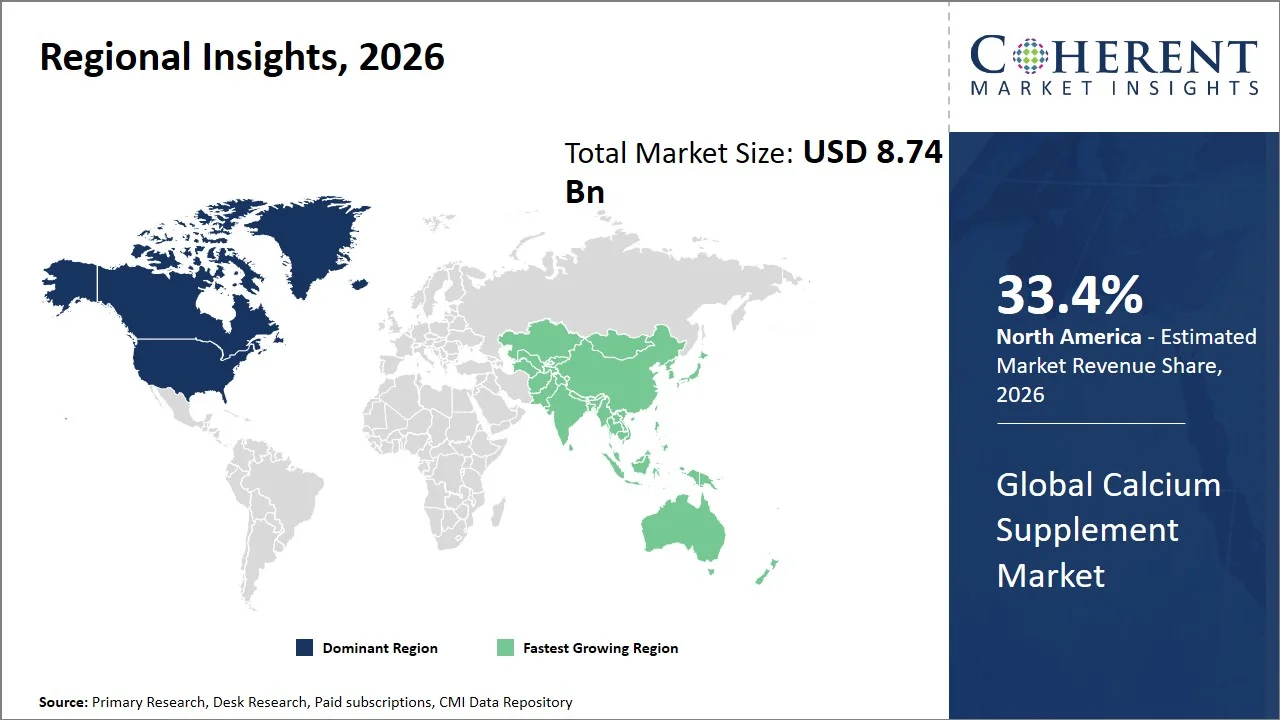
Why is North America a Strong Market for Calcium Supplements?
North America leads the global calcium supplement market, accounting for an estimated 33.4% share in 2026, attributed to the presence of a well-established health and wellness ecosystem, a high awareness among the consumers regarding bone health, prevalence of high number of osteoporosis and other calcium deficiency-based disorders. The strong health infrastructure along with favorable government regulations in the nutrition and health supplements sector is highly promoting the market growth. For instance, the U.S. Food and Drug Administration (FDA) revised its regulation for the calcium and osteoporosis health claim at 21 CFR 101.72. This final rule, with correction, was published in the Federal Register at 73 FR 56477 and at 73 FR 66754, allowing qualified health claims relating sufficient intake of calcium with or without vitamin D to osteoporosis risks. The new regulation offers clear guidance for the calcium supplement market and enhance consumers' trust on bone health products. (Source: Food and Drug Administration) Furthermore, the presence of leading industry participants such as Amway, Pfizer Inc., and Nature's Bounty Co are heavily investing in research & development and marketing ensuring strong product availability and consumer trust.
Why Does the Asia Pacific Calcium Supplement Market Exhibit High Growth?
The Asia pacific calcium supplement market is expected to exhibit the fastest growth with an estimated contribution of 27.9% share to the global market in 2026, attributed to the growing middle-class population and growing consciousness about health along with increasing cases of age-related bone diseases in the region. Growth in urbanization and better health-care provision increase the consumption of calcium supplements among emerging economies including China, India and Southeast Asian countries. Additionally, rising discretionary income and government supported policies concerning nutrition and public health promote the uptake of supplements. For instance, The Consumer Affairs Agency (CAA) in Japan endorses the Foods with Function Claims (FFC) system, a program which permits producers to promote scientifically documented functional foods, nutrients (like bone health products including calcium) to consumer groups and enhance consumer recognition of preventive nutrition products. (Source: RegASK). Moreover, trade liberalization and the growth of a well-established supply chain infrastructure in the region are improving the product availability and offering it at a competitive price.
Global Calcium Supplement Market Outlook for Key Countries
Why is the U.S. Leading Innovation and Adoption in the Calcium Supplement Market?
The U.S. is at the forefront of technological adoption and development in the calcium supplement market, primarily driven by its well-established nutraceutical industry, high penetration of preventive care products and high consumer preference for science-based supplements. The wide availability of these supplements across pharmacies, niche health stores, clinicians and direct-to-consumer avenues ensure rapid acceptance of the product. Furthermore, robust partnerships between nutraceutical companies, clinical research centers, and health care practitioners contribute to the commercialization of scientifically based calcium supplements products.
For instance, in November 2024, FutureCeuticals, Inc. entered into a partnership with Global Calcium Pvt. Ltd. to increase the commercialization and distribution of ingredients for dietary supplements throughout rapidly expanding international markets, illustrating industry concentration in innovation, manufacturing expertise, and worldwide market penetration. (Source: FutureCeuticals, Inc.)
Is Japan a Favorable Market for Calcium Supplements?
Japan is an attractive market for calcium supplements given its emphasis on healthy aging, bone health management and nutritional preventive care. Consumers highly favor scientific nutritional supplements that include calcium supplements for their skeletal well-being and mobility management for lifetime use. The market receives support from easy availability of calcium-fortified food and nutraceutical products and presence of established mineral fortification specialists/age-targeted nutritional providers. Also, product innovation on bio-absorbable forms of calcium and combo calcium products that target the aged category contribute to the overall market growth.
Is China Emerging as a Key Growth Hub for the Calcium Supplement Market?
The calcium supplement market is a key growth hub in China due to the high popularity of preventive nutrition and surging demand for bone health products for middle aged and aged groups. The country reports a remarkable growth rate for functional foods, fortified dairy products and calcium fortified nutritional supplements, and this creates a high potential market for calcium supplements. Furthermore, the Chinese domestic manufacturers of calcium supplements (such as By-Health Co., Ltd., H&H Group, Harbin Pharmaceutical Group, Tomson Health Products, and Joincare Pharmaceutical Group) are continuously developing their product range with advanced formulation, such as calcium combined with vitamin D and other bone health ingredients and extend their networks through the booming of e-commerce and digital health platforms.
Why Does Germany Top the European Calcium Supplement Market?
In the European market, Germany leads the calcium supplement market as a result of its sophisticated nutraceutical and pharmacy sector, enabling excellent access to high-quality bone health supplements. The presence of many traditional mineral supplement manufacturers, functional foods and science-backed health product makers encourages innovation and new products, while German consumers are avid believers in proven nutritional remedies, supporting calcium supplements with added absorption technologies and D3 and magnesium. Additionally, a strong and coordinated distribution network of pharmacies and health stores across the country enables widespread market coverage of calcium-based nutritional products.
Is the Calcium Supplement Market Developing in India?
Calcium supplement demand has been positively influenced in India due to rising awareness regarding bone health, increasing acceptance of preventive nutrition and increasing product penetration through pharmacies, e-commerce websites, health stores. Demand for calcium products has been high from women, adults and elders in the country, fueled by rise in trend of healthy aging and wellness- oriented lifestyle. Calcium supplements fortified with vitamin D3, magnesium and zinc are increasingly launched by domestic nutraceutical manufacturers (such as Tata 1mg offers Calcium & Vitamin D3 Tablets with Zinc, Magnesium, Alfalfa, and Vitamin K2-7, while HK Vitals (HealthKart) markets Calcium Magnesium Zinc with Vitamin D3 supplements) as per change in consumer demands. Rising nutraceutical market and rise in organized retail channels for health and wellness is fueling rapid market growth in India.
Regulatory Landscape Governing the Global Calcium Supplement Market
Region | Authority & Classification | Approval Pathway | Key Regulatory Insight |
North America | U.S. Food and Drug Administration (FDA) – Regulated as a Dietary Supplement under the Dietary Supplement Health and Education Act (DSHEA); Health Canada – Natural Health Product (NHP) | Dietary supplement manufacturers must comply with cGMP requirements, labeling regulations, and submit New Dietary Ingredient (NDI) notifications where applicable. In Canada, products require a Natural Product Number (NPN) before commercialization. | Calcium supplements can be marketed with structure/function claims supporting bone health, provided claims are substantiated and compliant with labeling requirements. |
Europe | European Commission (EC), European Food Safety Authority (EFSA) – Food Supplement | Governed by the Food Supplements Directive (2002/46/EC). Calcium sources used in supplements must be included in approved vitamin and mineral lists, while health claims require EFSA scientific evaluation and EC authorization. | EFSA-approved health claims linking calcium to bone maintenance and normal muscle function support market growth, while harmonized regulations improve consumer confidence. |
Asia Pacific | National Medical Products Administration (NMPA, China), Food Safety and Standards Authority of India (FSSAI), Consumer Affairs Agency (CAA, Japan) | Products are regulated as health foods, nutritional supplements, or functional foods depending on country-specific frameworks. Registration, notification, ingredient approval, and labeling compliance are generally required. | Governments are strengthening nutrition and food supplement regulations, while increasing focus on micronutrient deficiencies and preventive healthcare supports calcium supplement adoption. |
Latin America | ANVISA (Brazil), COFEPRIS (Mexico) – Food Supplement / Nutritional Supplement | Products must comply with ingredient, dosage, safety, and labeling requirements before commercialization. Certain formulations may require registration or notification depending on the country. | Regulatory modernization and increasing harmonization of supplement standards are facilitating market entry while improving product quality and consumer safety. |
Middle East & Africa | Saudi Food and Drug Authority (SFDA), UAE Ministry of Health & Prevention (MOHAP), South African Health Products Regulatory Authority (SAHPRA) | Supplements must undergo product registration, ingredient review, and labeling assessment before approval. Import regulations and halal compliance may apply in several markets. | Governments are increasing oversight of dietary supplements to ensure product quality, safety, and accurate health claims, supporting long-term market development and consumer trust. |
How is the increasing aging population globally creating new growth opportunities in the calcium supplement market?
Rapid growth of the aging population is being attributed to the surging demand within the calcium supplement market; as osteoporosis, bone mineral density loss, and lower rates of calcium absorption are linked to aging. Calcium supplements have become more popular in the elderly as a component of proactive health management, targeting the goals of maintaining bone health, mobility, and life quality. The growth trend is influenced by both increased health awareness among seniors and an increasing emphasis from the medical community on the prevention of age-related bone loss. For instance, according to the World Health Organization, the global population aged 60 years and older is predicted to rise from 1 billion in 2020 to 1.4 billion by 2030, while the population aged 80 years and older is predicted to reach 426 million by 2050, underscoring the widening target population for bone health management and calcium supplementation globally. (Source: World Health Organization)
Market Players, Key Development, and Competitive Intelligence
Key Developments
- In April 2026, ViVi Youth launched a new calcium product formulated specifically for women, with a focus on improving calcium bioavailability and absorption. The new product is tailored to meet women's nutritional needs and illustrates the increasing interest in enhanced calcium delivery to meet these unique needs. The launch is part of ongoing innovation in the bone health and wellness category.
- In September 2025, Bayer launched Supradyn Mom's and Supradyn Naturals Calcium+ as part of an expanded range of preparations aimed to address core nutritional deficiencies in pregnant women. The new preparations were developed to provide pregnancy-specific nutrients such as calcium and aimed to address bone formation and development needs in offsprings.
Competitive Landscape
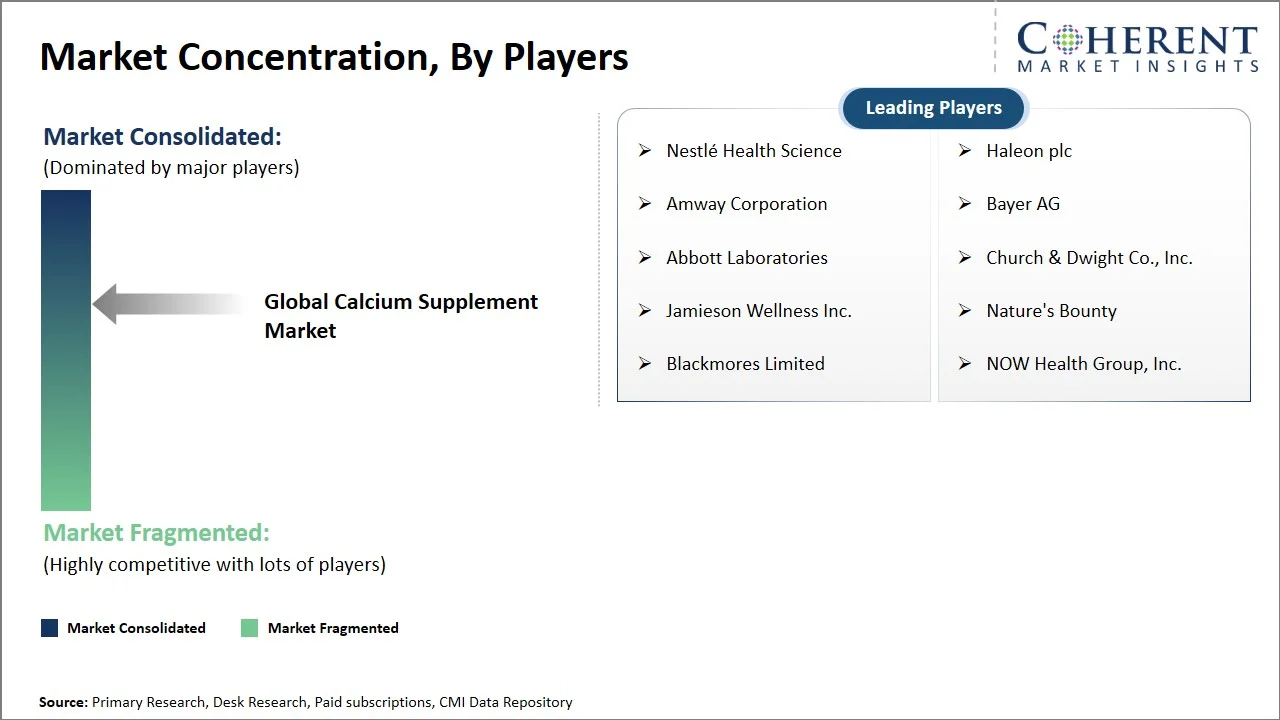
The global calcium supplement market is moderately competitive, where leading manufacturers of pharmaceuticals, nutraceuticals, and dietary supplements compete by introducing innovative products, building strong brands, and broadening their distribution channels. Market players are actively investing in and developing novel, high bioavailability forms of calcium like calcium citrate, calcium carbonate-vitamin D combination products, and calcium supplements enhanced with magnesium and vitamin K2 in order to increase the products’ efficacy and consumer acceptance. Investments in clinical trials, personalized nutrition solutions, and health platforms are helping firms to enhance their market position. Key focus areas include:
- Development of advanced calcium formulations with enhanced absorption and complementary bone health ingredients such as vitamin D3, magnesium, and vitamin K2
- Expansion of personalized nutrition and age-specific bone health supplement portfolios targeting elderly populations, women, and active lifestyle consumers
- Strengthening omnichannel distribution strategies through pharmacies, e-commerce platforms, and direct-to-consumer wellness channels
- Investment in clinical research, regulatory compliance, and science-backed health claims to improve product credibility and consumer trust
Market Report Scope
Calcium Supplement Market Report Coverage
| Report Coverage | Details | ||
|---|---|---|---|
| Base Year: | 2025 | Market Size in 2026: | USD 8.74 Bn |
| Historical Data for: | 2020 To 2024 | Forecast Period: | 2026 To 2033 |
| Forecast Period 2026 to 2033 CAGR: | 6.3% | 2033 Value Projection: | USD 13.42 Bn |
| Geographies covered: |
| ||
| Segments covered: |
| ||
| Companies covered: | Nestlé Health Science, Haleon plc, Amway Corporation, Bayer AG, Abbott Laboratories, Church & Dwight Co., Inc., Jamieson Wellness Inc., Nature's Bounty, Blackmores Limited, and NOW Health Group, Inc. | ||
| Growth Drivers: |
| ||
| Restraints & Challenges: |
| ||
Analyst Opinion (Expert Opinion)
- In the coming years, the calcium supplement market seems optimistic because of the combined influence of demographic, nutritional and preventive healthcare developments. As the population ages and the number of cases of osteoporosis, osteopenia and bone-related diseases is predicted to continue to increase in the future, calcium supplements will likely play a larger role in long-term health care. Consumers' increasing awareness about the importance of bone health, healthy aging and micronutrient deficiencies are leading consumers to shift their attitudes from occasional supplement use toward routine preventive measures. Increased product efficacy and market penetration will likely come from new product formulations, including highly absorbable calcium sources and combination supplements containing vitamin D3, magnesium, and vitamin K2.
- The maximum opportunity for growth is foreseen within calcium carbonate and calcium-vitamin D supplemented products in China and India among the adult and aged groups, owing to rapidly aging population in these countries, coupled with escalating healthcare costs and growing consciousness about the nutritional deficiencies. Government-assisted nutritional awareness and healthy aging campaigns along with burgeoning disposable income and better availability of dietary supplements are contributing to robust market growth. Particularly, adult consumers are expected to demand nutritional supplements for preventative care, while aged consumer's need for supplements for enhancing bone health, mobility, and quality of life is anticipated to witness tremendous demand.
- In order to secure a competitive advantage, the market players should strive for science-based, high-absorption formulations that are intended for use by particular consumers like the elderly, women post-menopause or active adults. Brands should emphasize growth across the e-commerce and retail and direct-to-consumer streams, by exploiting personalization and digital health. However, they also need to strategically invest in clinical studies, regulation and evidence-based claims to establish consumer trust, brand positioning and a unique selling proposition that is sustained throughout time.
Speak to the analyst
Want personalized insights?
Take the findings above to one of our principal consultants, or have the report rebuilt around the segments, geographies and competitors you actually track.
Market Segmentation
- Product Type Insights (Revenue, USD Bn, 2021 - 2033)
- Calcium Carbonate
- Calcium Citrate
- Others
- Form Insights (Revenue, USD Bn, 2021 - 2033)
- Tablets
- Capsules and Softgels
- Powders and Liquids
- End User Insights (Revenue, USD Bn, 2021 - 2033)
- Adults
- Geriatric Population
- Children and Adolescents
- Distribution Channel Insights (Revenue, USD Bn, 2021 - 2033)
- Pharmacies and Drug Stores
- Supermarkets and Hypermarkets
- Online Retail
- Regional Insights (Revenue, USD Bn, 2021 - 2033)
- North America
- U.S.
- Canada
- Latin America
- Brazil
- Argentina
- Mexico
- Rest of Latin America
- Europe
- Germany
- U.K.
- Spain
- France
- Italy
- Russia
- Rest of Europe
- Asia Pacific
- China
- India
- Japan
- Australia
- South Korea
- ASEAN
- Rest of Asia Pacific
- Middle East
- GCC Countries
- Israel
- Rest of Middle East
- Africa
- South Africa
- North Africa
- Central Africa
- North America
- Key Players Insights
- Nestlé Health Science
- Haleon plc
- Amway Corporation
- Bayer AG
- Abbott Laboratories
- Church & Dwight Co., Inc.
- Jamieson Wellness Inc.
- Nature's Bounty
- Blackmores Limited
- NOW Health Group, Inc.
Sources
Primary Research Interviews
- Calcium supplement manufacturers and ingredient suppliers involved in the production of calcium carbonate, calcium citrate, and fortified calcium formulations
- Nutraceutical product developers and formulation specialists focused on bone health and mineral supplementation
- Clinical nutritionists, dietitians, endocrinologists, and osteoporosis specialists evaluating calcium efficacy and supplementation practices
- Dietary supplement distributors, pharmacy retail chains, and e-commerce wellness platform managers
- Regulatory affairs and quality assurance professionals overseeing dietary supplement compliance and labeling standards
Stakeholders
- Calcium supplement manufacturers and raw material suppliers
- End-use Sectors
- Dietary supplements and nutraceuticals
- Functional foods and fortified beverages
- Pharmaceutical and OTC bone health products
- Maternal and infant nutrition products
- Sports nutrition and active lifestyle supplements
- Geriatric and preventive healthcare nutrition
- Regulatory & Health Bodies: U.S. Food and Drug Administration (FDA) – dietary supplement regulations and health claims, European Food Safety Authority (EFSA) – calcium health claims and nutrient reference values, Health Canada – Natural Health Product (NHP) regulations, Food Standards Australia New Zealand (FSANZ) – food supplement and fortification regulations, Food Safety and Standards Authority of India (FSSAI) – nutraceutical and health supplement regulations
Databases
- NIH Office of Dietary Supplements (ODS) Database
- WHO Global Health Observatory (GHO)
- OECD Health Statistics Database
- FAOSTAT Food and Nutrition Database
- Eurostat Health and Nutrition Statistics Database
- UN Comtrade Database – calcium compound and supplement trade statistics
Magazines
- Nutraceutical Business Review
- Nutrition Industry Executive
- Nutritional Outlook
- FoodNavigator
- Natural Products Insider
Journals
- Osteoporosis International
- Journal of Bone and Mineral Research (JBMR)
- The American Journal of Clinical Nutrition
- Journal of Dietary Supplements
Newspapers
- Financial Times – nutrition and healthcare industry developments
- The Wall Street Journal – dietary supplement and consumer health trends
- The New York Times (Health Section) – preventive healthcare and nutrition developments
- The Guardian (Health Section) – nutrition and healthy aging trends
Associations
- Council for Responsible Nutrition (CRN)
- International Alliance of Dietary/Food Supplement Associations (IADSA)
- American Society for Bone and Mineral Research (ASBMR)
- National Osteoporosis Foundation (NOF)
- Consumer Healthcare Products Association (CHPA)
Public Domain Sources
- National Institutes of Health (NIH) Office of Dietary Supplements – calcium research and dietary recommendations
- World Health Organization (WHO) – aging population and nutrition statistics
- U.S. Food and Drug Administration (FDA) – dietary supplement regulations and guidance
- European Food Safety Authority (EFSA) – calcium health claims and nutrient reference values
- Food Safety and Standards Authority of India (FSSAI) – nutraceutical regulations and standards
- Health Canada – Natural Health Products regulatory framework
Proprietary Elements
- CMI Data Analytics Tool, Proprietary CMI Existing Repository of information for last 10 years.
Get access to 250+ pages report
Every segment, forecast, competitor profile and data table behind the analysis above — available for instant download.
- ESOMAR Member
- ISO 9001:2015 Certified
- D-U-N-S Registered
- GDPR & CCPA Compliant
Missing comfort of reading report in your local language? Find your preferred language:
Transform your Strategy with Exclusive Trending Reports
Frequently Asked Questions
The global calcium supplement market is estimated to be valued at USD 8.74 Bn in 2026 and is expected to reach USD 13.42 Bn by 2033.
Calcium carbonate dominates due to its high elemental calcium content, cost-effectiveness, widespread availability, and suitability for mass-market tablet formulations, making it one of the most preferred calcium sources globally.
A calcium supplement is a dietary product formulated to provide calcium and help maintain bone health, muscle function, nerve signaling, and overall mineral balance in the body.
In terms of form, tablets are estimated to dominate the market revenue share in 2026.
Vitamin D enhances calcium absorption in the intestines, improving the effectiveness of calcium supplementation for bone health.
Calcium carbonate contains a higher percentage of elemental calcium and is best taken with food, whereas calcium citrate is absorbed more easily and can be taken with or without food.
The CAGR of the global calcium supplement market is projected to be 6.3% from 2026 to 2033.