

Global Carotenoids Market Size and Forecast: 2026- 2033
The Global Carotenoids Market is estimated to be valued at USD 3.53 Bn in 2026 and is expected to reach USD 5.24 Bn by 2033, exhibiting a compound annual growth rate (CAGR) of 5.8% from 2026 to 2033.
Key Takeaways of the Carotenoids Market
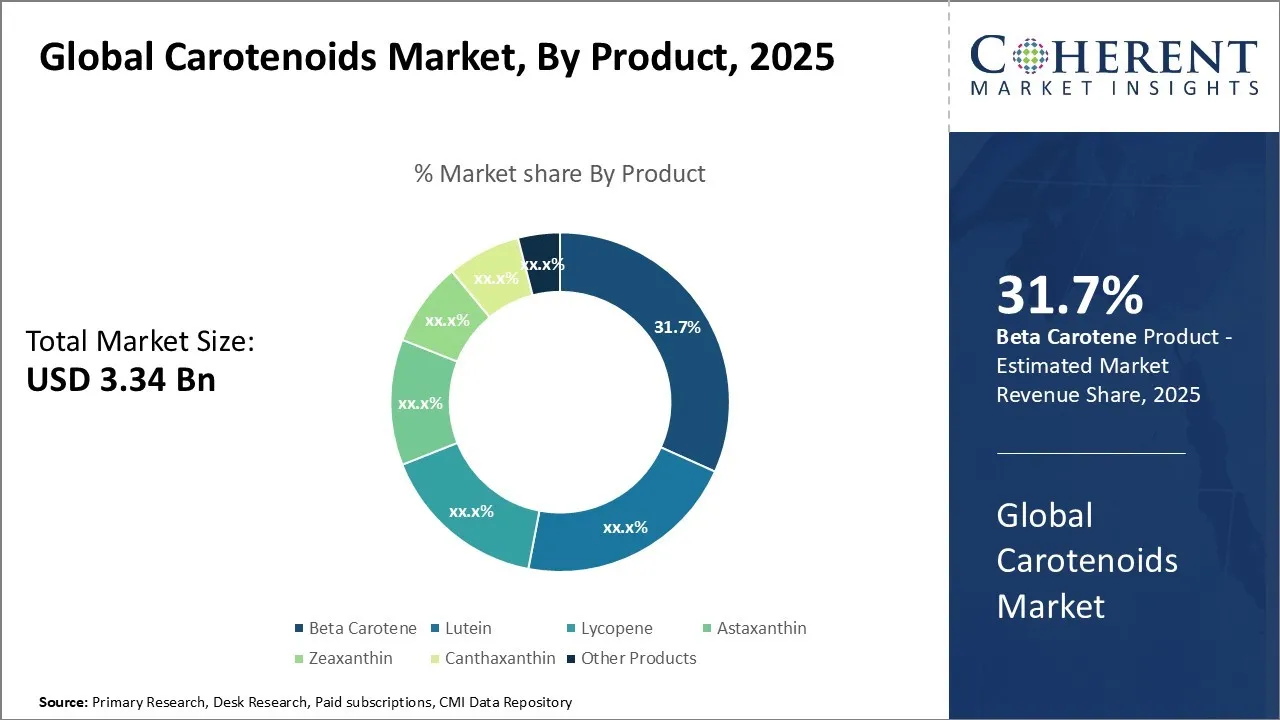
- The beta carotene segment is expected to account for 32.7% of the carotenoids market in 2026.
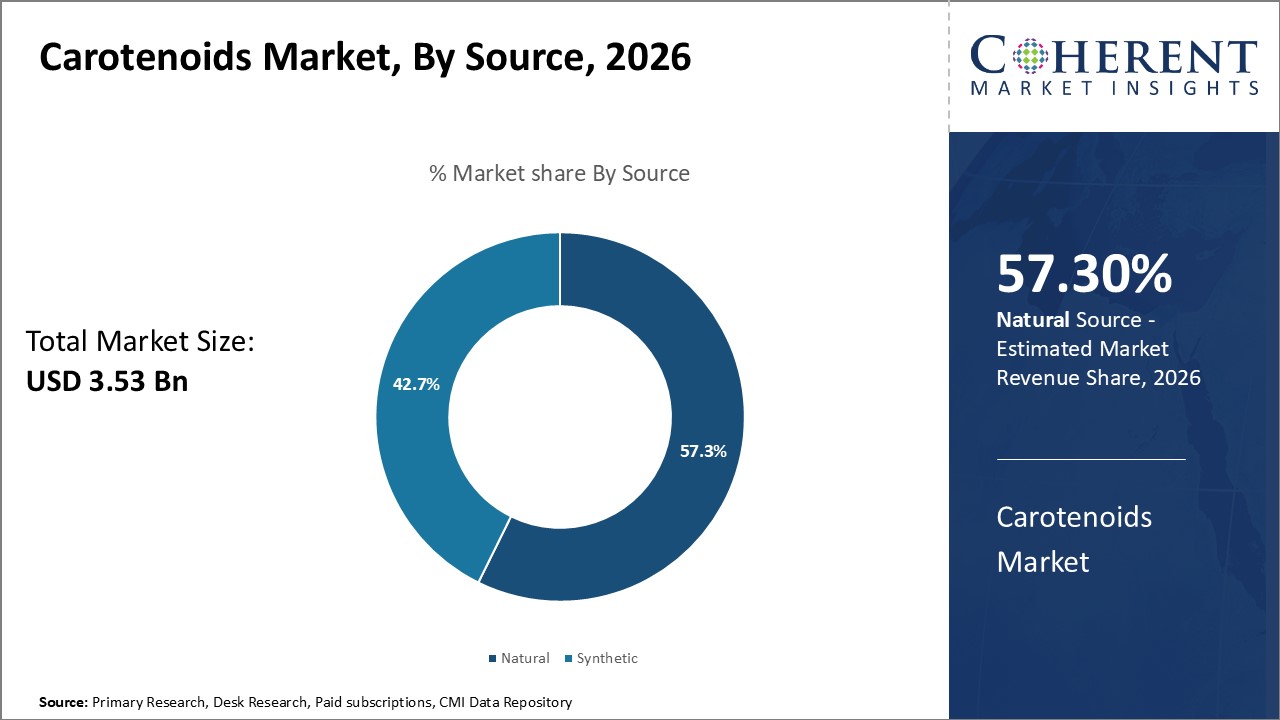
- The natural segment is projected to capture 57.3% of the carotenoids market in 2026.
- The food segment is set to represent 35.8% of the carotenoids market in 2026.
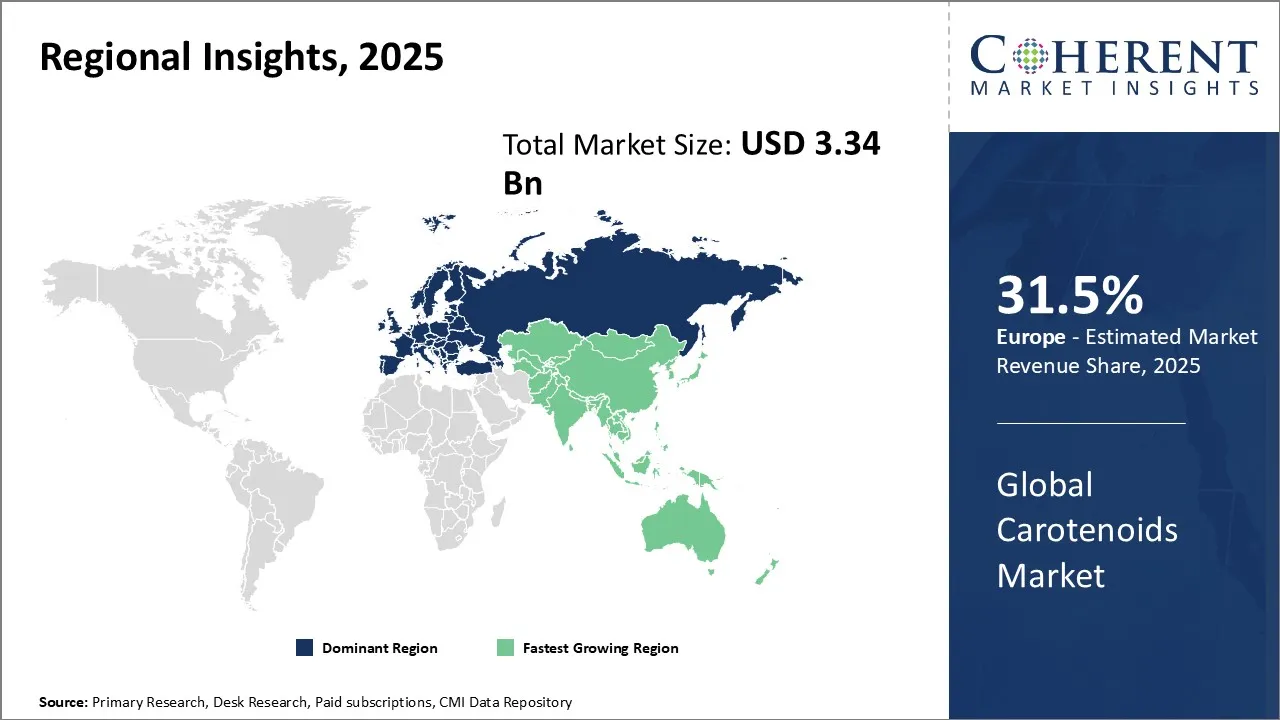
- Europe is expected to dominate the global carotenoids market in 2026 with a 31.5% share. Asia Pacific, holding a 24.5% share, is projected to be the fastest-growing region.
Market Overview
Current market trends indicate a significant shift towards natural and clean-label products, with carotenoids gaining traction as preferred ingredients due to their antioxidant properties and ability to enhance immunity. Additionally, innovations in extraction technologies and increasing adoption in dietary supplements and functional foods are propelling the market expansion. Sustainability and regulatory support for natural additives further reinforce the positive outlook, positioning carotenoids as key growth drivers in the global nutraceutical ingredients and food industry landscape.
Currents Events and their Impact
Current Events | Description and its impact |
Expansion of Clean-Label Ingredient Demand |
|
Rapid Growth in Asia Pacific Region |
|
Segmental Insights
- Current Industry Events of 2026
- Market Size Estimation
- Regional Breakdown
- Competitive Landscape
- Customer Intelligence
- Segmental Analysis
- Pricing Analysis
- Key Market Drivers, Challenges & Future Trends
- Customized Insights Section
Carotenoids Market Insights, By Product - Beta Carotene Segment Dominates Due to its Widespread Applications and Health Benefits
Beta Carotene segment is expected to hold 32.7% share of the carotenoids market in 2026, due to its multifunctional properties and extensive use across multiple industries. It is a naturally occurring pigment responsible for the vibrant orange color in many fruits and vegetables and serves as a precursor to vitamin A, which is essential for human health. One of the key factors driving beta carotene’s dominance is its significant role in nutritional supplementation and food fortification.
For instance, in the nutraceutical sector, beta carotene is widely incorporated into dietary supplements to support immune health, vision, and skin wellness. Companies such as BASF SE and DSM have developed beta carotene-based formulations that are extensively used in fortified foods and beverages, helping to address vitamin A deficiencies in both developed and emerging markets.
Carotenoids Market Insights, By Source – Natural Segment Dominates Driven by Rising Consumer Preference for Clean-Label and Sustainable Ingredients
The natural segment is projected to hold 57.3% share in the carotenoids market in 2026, because of increasing consumer inclination toward natural, organic, and sustainable products. The global shift towards wellness and environmental responsibility has led end users and manufacturers to favor ingredients derived from natural sources such as microalgae, fruits, vegetables, and bacteria over synthetic alternatives. This trend is particularly evident in the food, supplements, and cosmetics sectors where consumer scrutiny on ingredient origin and safety is heightened.
Natural carotenoids are often perceived as safer, healthier, and more environmentally friendly, which encourages brands to adopt them to meet consumer demand for transparency and authenticity. Additionally, regulatory frameworks in many countries are becoming stricter regarding the use of synthetic additives, prompting food and pharmaceutical companies to pivot towards natural carotenoid options to maintain compliance and market acceptance. The regulatory encouragement combined with premium pricing ability creates a positive environment for the growth of the natural segment.
Carotenoids Market Insights, By Application – Food Segment Leads Driven by Increasing Demand for Natural Colorants and Functional Ingredients
The food segment is anticipated to account for 35.8% share in the carotenoids market in 2026, as manufacturers increasingly incorporate carotenoids to enhance both the aesthetic appeal and nutritional profile of food products. A major driver underpinning the prominence of food applications is the rising consumer demand for natural food colorants. As regulations tighten and awareness about synthetic additive concerns surge, natural carotenoids have emerged as preferred alternatives, providing clean-label solutions that preserve or enhance product attractiveness without compromising health.
Carotenoids such as beta carotene, lutein, and lycopene are widely used to impart vibrant colors to beverages, dairy products, confectionery, baked goods, and processed foods. Their application extends beyond visual enhancement; they also serve as functional ingredients by imparting antioxidant benefits and contributing to overall food quality and shelf life. The ability to deliver dual benefits—color and health—strengthens their adoption in diverse food categories.
Regional Insights
Europe Carotenoids Market Analysis and Trends
The Europe region is projected to lead the market with a 31.5% share in 2026, supported by strong consumer preference for natural and sustainable ingredients, coupled with stringent regulatory frameworks such as those set by the European Food Safety Authority (EFSA). The region is at the forefront of innovation, with robust research collaborations between universities, biotech firms, and industry leaders driving advancements in carotenoid applications across nutraceuticals, functional foods, and cosmetics. Government policies promoting healthier lifestyles and clean-label trends further accelerate demand for natural carotenoids over synthetic alternatives.
The presence of prominent players such as BASF SE (Germany), Allied Biotech Corporation (European operations), and Lycored (Israel with strong EU distribution) enhances the competitive landscape, ensuring a steady pipeline of product launches and technological improvements. Additionally, Europe’s highly developed distribution channels and cross-border trade networks enable seamless market access across the continent, consolidating its role as a key hub in the carotenoids value chain.
Asia Pacific Carotenoids Market Analysis and Trends
The Asia Pacific region is expected to exhibit the fastest growth in the market contributing 24.5% share in 2026, propelled by rising consumer awareness regarding health and nutrition, rapid urbanization, and expanding industrial capabilities. Countries like China, India, and Japan are witnessing increased demand for natural antioxidants, coloring agents, and dietary supplements, all contributing to market expansion. This growth is supported by favorable government policies promoting natural product manufacturing and export incentives. Asia Pacific’s rapidly growing food processing and pharmaceutical industries create additional demand for carotenoid compounds. Key regional companies such as Zhejiang NHU Co., Ltd., and Lycored Ltd. are actively investing in capacity enhancement and innovation, positioning the region as a dynamic and fast-evolving market hub. Moreover, improving supply chain infrastructure and increasing foreign direct investment highlight the region’s potential in global trade dynamics.
Global Carotenoids Market Outlook for Key Countries
U.S. Carotenoids Market Trends
The U.S. carotenoids market thrives on cutting-edge research and a high level of consumer demand for natural nutritional products and supplements. The market benefits from the presence of multinational corporations including BASF and DSM, which have extensive production and distribution networks. Additionally, strong regulatory oversight by bodies like the FDA ensures product safety, boosting consumer confidence. The food and beverage sector’s shift towards clean-label products further amplifies carotenoid use as natural colorants and antioxidants.
China Carotenoids Market Trends
China’s carotenoids market is expanding rapidly, supported by a growing middle class seeking health-oriented foods and supplements. Government support for biotechnology innovation and export incentives drives local production capacities. Companies such as Zhejiang NHU Co., Ltd. focus on both domestic consumption and international export, contributing to the country’s market competitiveness. The integration of advanced manufacturing technologies and increasing investments in sustainable production practices are noteworthy trends shaping the market landscape.
Germany Carotenoids Market Trends
Germany remains a pivotal European market with a mature carotenoids industry marked by advanced technological capabilities and strict regulatory frameworks aligned with EU standards. The country hosts influential companies like BASF SE and Symrise AG, which invest heavily in product innovation and quality assurance. The strong pharmaceutical and cosmetics industries in Germany ensure steady demand for carotenoid-based ingredients, while initiatives promoting natural and organic consumer goods support further market penetration.
India Carotenoids Market Trends
India’s carotenoids market is gaining momentum fueled by rising health consciousness and a burgeoning food processing sector. Government initiatives encouraging the adoption of natural additives and support for small to medium enterprises enhance local production. Companies such as Avesthagen Limited and Sahajanand Biotech Ltd. play a critical role in catering to domestic demand and expanding regional outreach. Dynamic demographic trends and an increase in disposable incomes continue to open new growth avenues across supplements and functional foods.
Brazil Carotenoids Market Trends
Brazil’s carotenoids market benefits from its rich agricultural base, providing abundant raw materials essential for carotenoid production. The growing natural food segment and government policies supporting bio-based industries are key drivers. Notable players include Biotron Ltd. and Cargill, which invest in sustainable sourcing and localized manufacturing. The country’s strategic position in Latin America facilitates trade and export, reinforcing its importance in the global carotenoids supply chain.
End User Feedback and Unmet Needs in the Carotenoids Market
- End users of carotenoids across industries such as food & beverages, dietary supplements, cosmetics, animal feed, and pharmaceuticals have provided varied feedback reflecting both satisfaction and challenges. Their perspectives highlight the growing importance of carotenoids not only for nutritional and health benefits but also for functional applications such as natural coloring, antioxidation, and formulation enhancement.
- A notable instance of user satisfaction is reported within the dietary supplements sector. Nutraceutical manufacturers have emphasized the value of beta-carotene and lutein formulations due to their proven bioavailability and strong consumer recognition as safe, naturally derived ingredients.
- For example, dietary supplement brands leveraging microencapsulation technology for carotenoids have reported improved stability and uniform dispersion in liquid formulations, leading to consistent consumer acceptance and positive sales growth.
- Improved Stability: More robust formulations that can withstand processing stresses such as heat, pH variations, and long storage periods.
- Cost-effective Natural Alternatives: Affordable plant- or algae-derived carotenoids that can compete with synthetic variants without compromising quality.
- Customization and Integration: Tailored solutions that align with specific application requirements, such as water-dispersible carotenoids for beverages or fat-soluble variants for dietary oils.
Market Players, Key Development, and Competitive Intelligence
Key Developments
- In October 2024, a landmark NIH-funded clinical study, conducted by the University of Utah’s John A. Moran Eye Center in collaboration with Kemin Industries, highlighted the crucial role of carotenoids—particularly FloraGLO Lutein and OPTISHARP Natural Zeaxanthin—in maternal and infant health. Published in the September 2024 issue of Ophthalmology Science, the L-ZIP trial demonstrated that supplementing with these carotenoids during pregnancy significantly boosts systemic and ocular carotenoid levels in both mothers and newborns. The study further confirmed improvements in infant eye development, especially in foveal maturity, which is strongly associated with long-term visual and cognitive advantages. These results underscore the importance of including lutein and zeaxanthin in prenatal supplements and infant nutrition to help address global dietary deficiencies.
- In July 2024, Lycored, a global pioneer in naturally sourced carotenoids, introduced its latest innovation—ResilientRed™ BF, a lycopene-based colorant—at the IFT FIRST 2024 Expo in Chicago. Extracted from tomatoes, this clean-label solution caters to the rising demand for natural food and beverage colorants. As part of Lycored’s ResilientRed line, the BF variant delivers outstanding stability against pH, heat, and light, making it well-suited for UHT dairy, plant-based beverages, meat substitutes, and surimi seafood. It also features improved viscosity for streamlined processing, is free from sugar esters and palm oil, and complies with clean-ingredient standards set by retailers such as Whole Foods Market.
Top Strategies Followed by Global Carotenoids Market Players
- Established market leaders typically leverage their substantial resources to invest heavily in research and development (R&D), aiming to innovate and produce high-performance carotenoid products that meet ever-evolving consumer and industry demands. Furthermore, their global expansion strategies often involve broadening distribution networks to gain a foothold in emerging markets, where demand for carotenoids is rapidly growing due to heightened health awareness and increasing disposable incomes.
- For instance, DSM has consistently introduced innovative carotenoid-based nutritional supplements targeting eye health and immune support, while BASF has developed sustainable carotenoid solutions for food and feed applications.
- Mid-level players in the carotenoids market adopt different strategic approaches, often focusing on delivering cost-effective solutions that strike a balance between quality and affordability. This approach allows them to appeal to price-sensitive consumers, including small and medium-sized enterprises (SMEs) that prioritize value over premium offerings. To enhance their competitive positioning, mid-level companies commonly engage in collaborations that help boost production efficiencies, unlock new technologies, and expand their market reach.
- For example, Kemin enhances efficiency by leveraging collaborations with research institutions to improve carotenoid bioavailability, making its products more attractive to SMEs and cost-sensitive buyers. Lycored has developed tomato-derived lycopene products with applications in both functional foods and dietary supplements, offering natural, affordable solutions that balance innovation and price.
- Small-scale players in the carotenoids market differentiate themselves by targeting niche segments with specialized or innovative products that larger competitors may overlook. They emphasize the development of unique carotenoid formulations or applications tailored to specific consumer or industry needs, ranging from natural supplements to specialized food additives. To maintain competitiveness and foster innovation, these smaller firms often adopt cutting-edge technologies such as biotechnology advancements or novel extraction methods.
Market Report Scope
Carotenoids Market Report Coverage
| Report Coverage | Details | ||
|---|---|---|---|
| Base Year: | 2025 | Market Size in 2026: | USD 3.53 Bn |
| Historical Data for: | 2020 To 2024 | Forecast Period: | 2026 To 2033 |
| Forecast Period 2026 to 2033 CAGR: | 5.8% | 2033 Value Projection: | USD 5.24 Bn |
| Geographies covered: |
| ||
| Segments covered: |
| ||
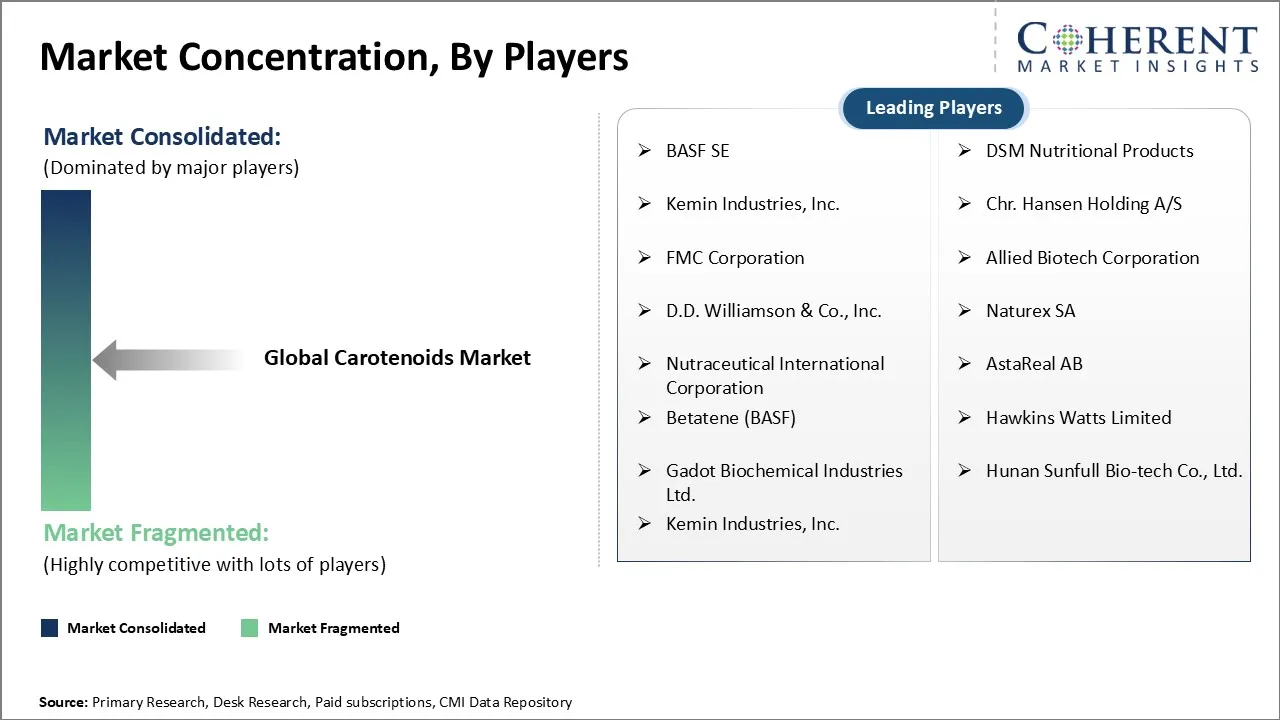
| Companies covered: | BASF SE, DSM Nutritional Products, Kemin Industries, Inc., Chr. Hansen Holding A/S, FMC Corporation, Allied Biotech Corporation, D.D. Williamson & Co., Inc., Naturex SA, Nutraceutical International Corporation, AstaReal AB, Betatene (BASF), Hawkins Watts Limited, Gadot Biochemical Industries Ltd., Hunan Sunfull Bio-tech Co., Ltd., and Kemin Industries, Inc. | ||
| Growth Drivers: |
| ||
| Restraints & Challenges: |
| ||
Carotenoids Market Dynamics
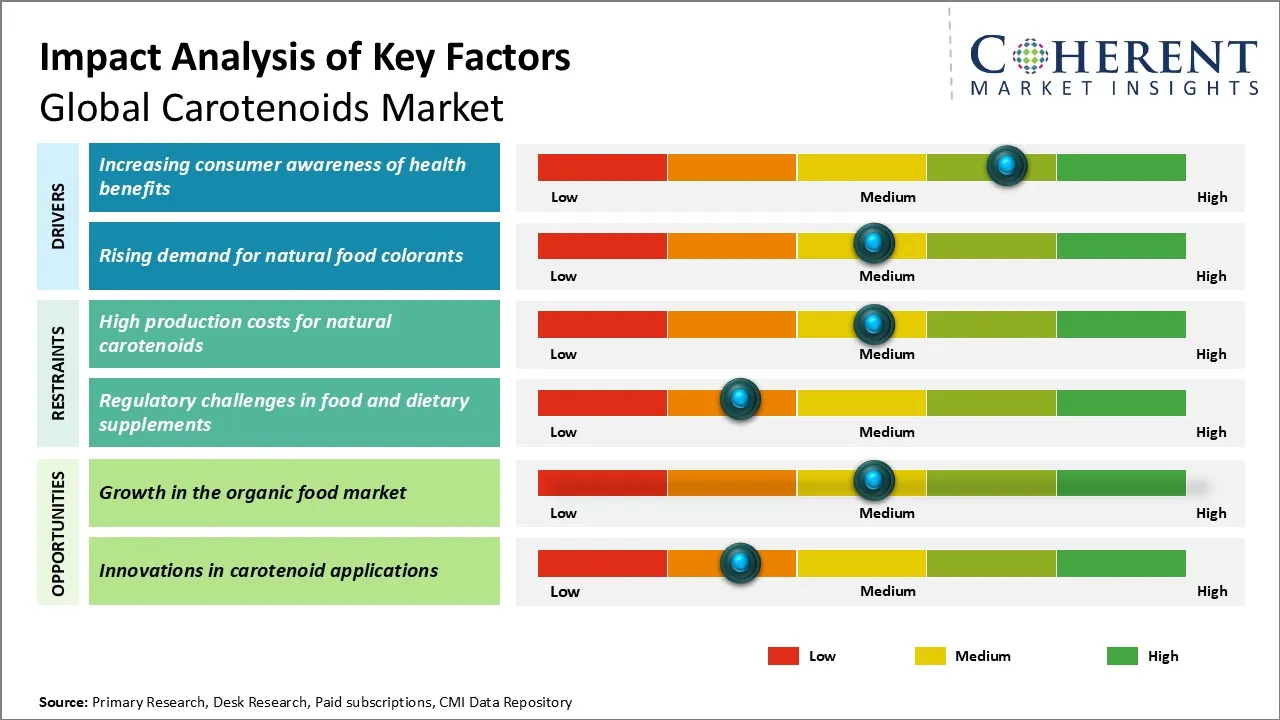
Carotenoids Market Driver - Increasing Consumer Awareness of Health Benefits
The rising awareness among consumers regarding the extensive health benefits associated with carotenoids is a significant driver propelling the global carotenoids market growth. As people become more health-conscious and seek natural ways to enhance their well-being, carotenoids are gaining attention due to their antioxidant properties, their role in boosting immunity, and their potential to reduce the risk of chronic diseases such as cancer, cardiovascular disorders, and eye-related conditions like age-related macular degeneration. Additionally, the growing trend toward preventive healthcare, coupled with the widespread adoption of clean-label and natural ingredients in dietary supplements, functional foods, and beverages, is further accelerating demand.
In October 2024, Kemin Industries, in collaboration with the University of Utah’s John A. Moran Eye Center, supported the NIH-funded L-ZIP trial published in Ophthalmology Science. The study highlighted the role of carotenoids—particularly FloraGLO Lutein and OPTISHARP Natural Zeaxanthin—in maternal and infant health. Results showed that supplementation with these carotenoids could improve visual and cognitive development outcomes.
Carotenoids Market Opportunity - Growth in the Organic Food Market
The expanding organic food market presents a significant opportunity for the global carotenoids market. As consumers worldwide become increasingly health-conscious and environmentally aware, they are shifting their preferences towards natural, organic products that offer enhanced nutritional benefits without synthetic additives. Carotenoids, known for their antioxidant properties and role in promoting eye health, immunity, and skin protection, are naturally found in various fruits and vegetables, making them ideal for incorporation into organic food products. The rising penetration of organic fruits, vegetables, beverages, and dietary supplements enriched with carotenoids is fueling demand for high-quality, naturally derived carotenoid ingredients.
In 2023, BASF expanded its range of naturally derived carotenoids for use in organic-certified foods and beverages, responding to the growing demand for clean-label nutrition. Their portfolio now includes lutein and beta-carotene solutions designed specifically for organic juices, smoothies, and dietary supplements. By targeting the organic segment, BASF addressed the consumer push for products that combine natural origin, sustainability, and proven health benefits, strengthening carotenoids’ presence in premium health and wellness categories.
Analyst Opinion (Expert Opinion)
- The global carotenoids market is set for substantial expansion, driven by the growing awareness of health benefits and increasing applications in food, cosmetics, and pharmaceuticals. Insights from the International Conference on Natural Products (2023) and the Global Nutraceuticals Summit (2022) highlighted key advancements, with companies like DSM Nutritional Products and BASF spearheading innovations in natural carotenoid sources.
- DSM's recent development of a sustainable extraction process from microalgae demonstrates a strategic response to the rising demand for clean-label products. Discussions at these conferences emphasized the trend toward fortification in functional foods, particularly in response to consumer preferences for products that support immune health and vision. However, challenges such as price volatility of raw materials and stringent regulatory frameworks were noted as potential constraints.
- Companies that invest in R&D to enhance bioavailability and explore novel applications in the beauty and wellness sectors will likely secure a competitive edge. Furthermore, strategic collaborations with food manufacturers can facilitate market penetration. Ultimately, the carotenoids market's future will hinge on its ability to innovate while addressing sustainability and regulatory challenges effectively.
Speak to the analyst
Want personalized insights?
Take the findings above to one of our principal consultants, or have the report rebuilt around the segments, geographies and competitors you actually track.
Market Segmentation
- Product Insights (Revenue, USD Bn, 2021 - 2033)
- Beta Carotene
- Lutein
- Lycopene
- Astaxanthin
- Zeaxanthin
- Canthaxanthin
- Other Products
- Source Insights (Revenue, USD Bn, 2021 - 2033)
- Natural
- Synthetic
- Application Insights (Revenue, USD Bn, 2021 - 2033)
- Food
- Supplements
- Feed
- Pharmaceuticals
- Cosmetics
- Regional Insights (Revenue, USD Bn, 2021 - 2033)
- North America
- U.S.
- Canada
- Latin America
- Brazil
- Argentina
- Mexico
- Rest of Latin America
- Europe
- Germany
- U.K.
- Spain
- France
- Italy
- Russia
- Rest of Europe
- Asia Pacific
- China
- India
- Japan
- Australia
- South Korea
- ASEAN
- Rest of Asia Pacific
- Middle East
- GCC Countries
- Israel
- Rest of Middle East
- Africa
- South Africa
- North Africa
- Central Africa
- North America
- Key Players Insights
- BASF SE
- DSM Nutritional Products
- Kemin Industries, Inc.
- Hansen Holding A/S
- FMC Corporation
- Allied Biotech Corporation
- D. Williamson & Co., Inc.
- Naturex SA
- Nutraceutical International Corporation
- AstaReal AB
- Betatene (BASF)
- Hawkins Watts Limited
- Gadot Biochemical Industries Ltd.
- Hunan Sunfull Bio-tech Co., Ltd.
- Kemin Industries, Inc.
Sources
Primary Research Interviews
- R&D Director – Leading Carotenoid Ingredient Manufacturer
- Procurement Manager – Major Nutraceutical Retailer
- Product Development Head – Top Carotenoid Supplement Brand
- Sustainability Manager – Food Colorant Certification Body
Stakeholders
- Manufacturers (food, supplement, cosmetic industries)
- End-use Sectors
- Dietary Supplements (vitamins, minerals, carotenoid drinks)
- Food & Beverage Brands focusing on carotenoid fortification
- Personal Care & Cosmetics firms utilizing carotenoids
- Regulatory & Certification Bodies
- E-commerce Platforms and Retailers
- Technology Integration Players AI-based personalization providers for nutrition/color solutions
Databases
- UN Comtrade Database
- India Import Export (EXIM) Database
Magazines
- Nutrition & Wellness Magazine – Trends in functional food colors and carotenoid supplements
- Health & Nutrition Business – Innovations in carotenoid nutrition and applications
- Global Health Insights – Consumer health trends for antioxidant vitamins
- Colorant Business Journal – Market updates and growth opportunities in carotenoids
- The Supplement Guide – Expanding applications for dietary carotenoids
Journals
- International Journal of Nutrition – Health benefits and absorption of carotenoids
- Journal of Food Science & Technology – Formulation and stability of carotenoid products
- Journal of Dietary Supplements – Impact of carotenoids on human wellness
- Journal of Applied Nutrition – Nutritional value of carotenoid-enriched foods
- Food Research International – Bioavailability of carotenoids in supplements
Newspapers
- The Financial Times – Market growth of carotenoid-based nutritional products
- The Guardian – Consumer trends in natural colorants and antioxidants
- Asia Health Journal – Carotenoid supplement consumption in Asia-Pacific
- European Nutrition News – Regulation of carotenoids and food safety
- The New York Times – Consumer preference shift to functional and antioxidant-rich foods
Associations
- Council for Responsible Nutrition (CRN)
- International Society of Nutraceuticals and Functional Foods (ISNFF)
- American Herbal Products Association (AHPA)
- Natural Products Association
- European Food Safety Authority (EFSA)
- Clean Label Project
Public Domain Sources
- U.S. FDA – Guidelines for dietary supplements, including carotenoids
- European Commission – Food Supplement Regulation and Carotenoid Guidelines
- World Health Organization – Safety standards and health impact studies on carotenoids
Proprietary Elements
- CMI Data Analytics Tool, Proprietary CMI Existing Repository of information for last 8 years.
Get access to 250+ pages report
Every segment, forecast, competitor profile and data table behind the analysis above — available for instant download.
- ESOMAR Member
- ISO 9001:2015 Certified
- D-U-N-S Registered
- GDPR & CCPA Compliant
Missing comfort of reading report in your local language? Find your preferred language:
Transform your Strategy with Exclusive Trending Reports
Frequently Asked Questions
The global carotenoids market is estimated to be valued at USD 3.53 Bn in 2026 and is expected to reach USD 5.24 Bn by 2033.
The five main types of carotenoids are beta-carotene, alpha-carotene, lycopene, lutein, and zeaxanthin.
Carotenoids are used as natural pigments, antioxidants, and precursors of vitamin A, with applications in human health (eye and immune support), food and beverage coloring, animal feed supplementation, cosmetics, and nutraceuticals.
The CAGR of global carotenoids market is projected to be 5.8% from 2026 to 2033.
Increasing consumer awareness of health benefits and rising demand for natural food colorants are the major factors driving the growth of the global carotenoids market.
High production costs for natural carotenoids and regulatory challenges in food and dietary supplements are the major factors hampering the growth of the global carotenoids market.
In terms of product, beta carotene is estimated to dominate the market revenue share in 2026.