

Global Coffee Cherry Market Size and Forecast – 2026 to 2033
According to Coherent Market Insights, the Global Coffee Cherry Market is estimated to be valued at USD 734.5 Mn in 2026 and is expected to reach USD 1,300.1 Mn by 2033, exhibiting a compound annual growth rate (CAGR) of 8.5% from 2026 to 2033.
Key Takeaways of the Coffee Cherry Market
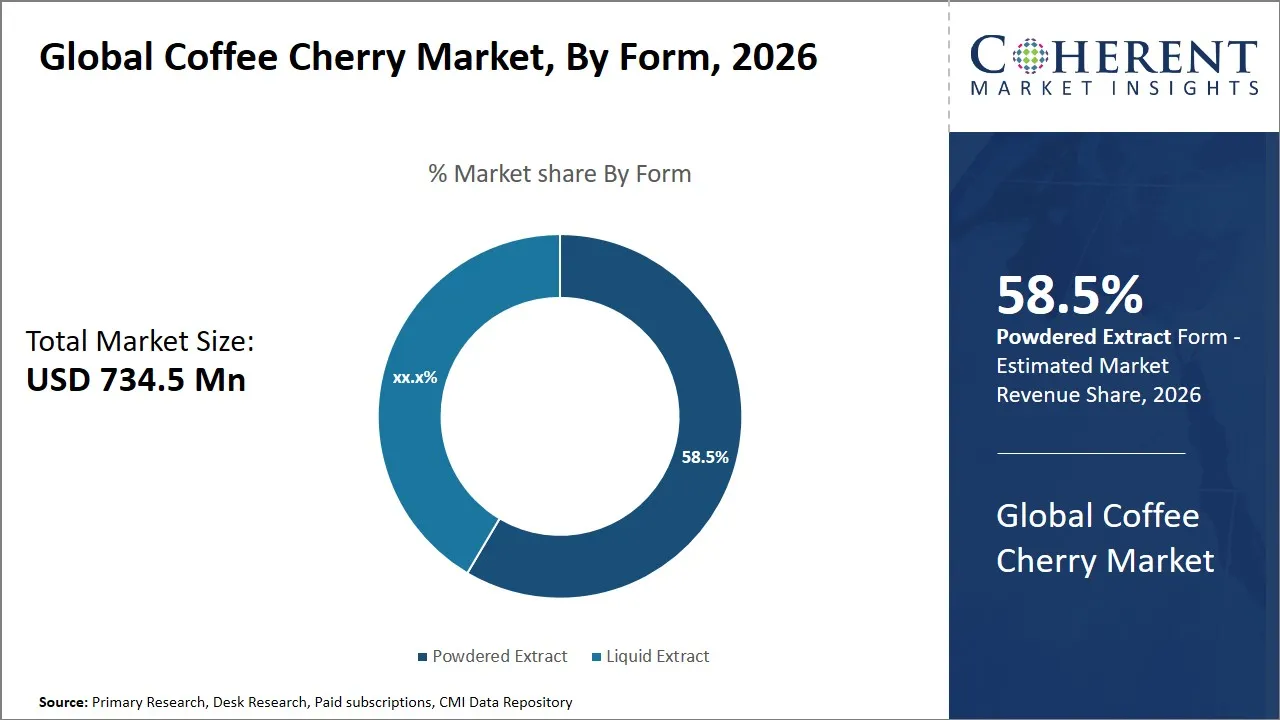
- The powdered extract segment is expected to lead the coffee cherry market in 2026, with a 58.5% share, due to its versatility and longer shelf life.
- The organic segment is projected to hold 63.7% of the global coffee cherry market in 2026, driven by the demand for clean and sustainable products.
- The personal care segment is expected to capture 47.8% of the global coffee cherry market in 2026, driven by the use of natural, antioxidant-rich ingredients.
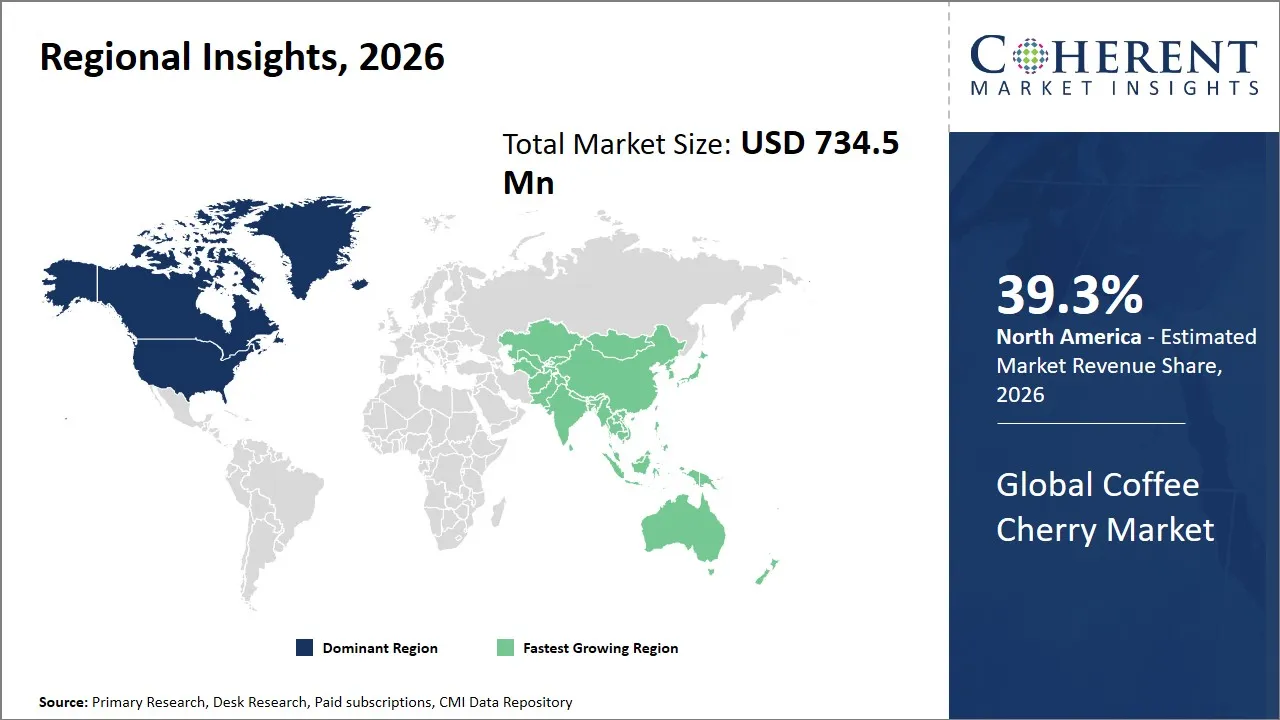
- North America is expected to lead the market with a 39.3% share in 2026, driven by growing demand for sustainable and health-conscious products.
- The Asia Pacific region is expected to experience the fastest growth in 2026, with an 18.3% market share, driven by rising coffee cultivation in Vietnam, Indonesia, and India.
Market Overview
- A key market trend is the growing adoption of coffee cherry as a natural source of antioxidants, vitamins, and minerals, which is boosting its demand in health-conscious consumer segments.
- Additionally, the surge in the popularity of organic and ethically sourced products is encouraging coffee producers to diversify into coffee cherry derivatives.
- Innovations in value-added products, such as coffee cherry teas and supplements, alongside increased investments in sustainable coffee farming practices, are shaping the market landscape and fostering long-term growth opportunities.
Currents Events and Its Impacts
Current Events | Description and its impact |
USDA Forecasts Global Coffee Deficit & Export Declines |
|
Coffee Price Fluctuations & Market Uncertainty |
|
Segmental Insights
- Current Industry Events of 2026
- Market Size Estimation
- Regional Breakdown
- Competitive Landscape
- Customer Intelligence
- Segmental Analysis
- Pricing Analysis
- Key Market Drivers, Challenges & Future Trends
- Customized Insights Section
Why is the Powdered Extract Segment Expected to Dominate the Coffee Cherry Market in 2026?
The powdered extract segment is expected to hold 58.5% share of the coffee cherry market in 2026, due to its versatile application potential and enhanced shelf-life compared to other forms. The extract of coffee cherry powder is considered one of the most popular as it can be easily added to the formulations of different products and is preferred by the manufacturers of different industries.
The powdered format guarantees homogenous strength and concentration of bioactive constituents like antioxidants and polyphenols that are critical to the functional advantage that coffee cherry provides. This uniformity is paramount in keeping the products of desired quality which is a very important factor both to the manufacturers and the consumers in their pursuit of health benefits.
ofi (Olam Food Ingredients) produces soluble cascara (coffee cherry) powder — a ready‑to‑use coffee fruit extract powder for food and beverage applications. Their product retains the bioactive components from coffee cherries and is positioned for use across beverages, bakery, snacks, and supplements, reflecting the broad applicability that drives powdered segment dominance.
Why is the Organic Segment Leading the Global Coffee Cherry Market?
The organic segment is projected to hold 63.7% share of the global coffee cherry market in 2026, driven largely by increasing consumer preference for clean, chemical-free, and sustainably sourced products. There has been an increasing consciousness of food safety and the negative impacts of pesticides in the world that has created demand in organic coffee cherry extracts.
Customers have become more aware of the contents of their personal care products, foods, and supplements, hoping to find products without residues of harmful chemicals and synthetic additives. This consumerism is of great advantage to the organic segment, which focuses on natural farming practices with no use of synthetic fertilizers, pesticides, and genetically engineered organisms.
The issue of sustainability has driven brands and manufacturers to prefer organic coffee cherry sources. Organic agriculture is less harmful to the environment, it enhances the health of the soil and the biodiversity, which fits the corporate social responsibility activity and environmentalism trends among the consumers. The marketing strategies that support this appeal of the environment include the focus on the ethical sourcing that increases brand loyalty and readiness to pay more money to buy organic-certified products.
Personal Care Dominates the Coffee Cherry Market
The personal care segment is projected to account for 47.8% share within the global coffee cherry market in 2026, primarily driven by the rising incorporation of natural and antioxidant-rich ingredients in skincare and cosmetic formulations. The antioxidants are abundant in coffee cherry extracts especially the polyphenols that combat oxidative stress and slow the aging process on skin making them a sought-after ingredient in anti-aging creams, serums and moisturizers. The organic nature of coffee cherry would be of great appeal to people who want clean beauty products with no synthetic chemicals and parabens in them, a trend which is ever-growing all over the world.
The innovation pipeline of the personal care industry is moving more towards multifunctional ingredients and coffee cherry extract will be a good fit with its anti-oxidant, anti-inflammatory and skin-brightening qualities. These properties are what formulators are using to come up with products that are capable not only of defending the skin against environmental degradation but also enhance skin tone and texture. This flexibility in action drives the need of coffee cherry extracts in different forms of products like facial masks, body lotions, and sunscreens.
Regional Insights
North America Coffee Cherry Market Analysis and Trends
The North America region is projected to lead the market with a 39.3% share in 2026, driven by rising consumer interest in sustainability and health-conscious products. Although the U.S. and Canada are traditionally considered coffee product producers of small size, they have come out as the significant coffee cherry consumers and innovators especially in the packaging of the same in functional beverages and nutraceutical products. This is due to the growing demand for coffee cherry-based products like cascara (coffee cherry tea) and coffee cherry extracts as a result of the rising popularity of antioxidants and wellness-oriented products.
In Canada, brands such as Coffea Bona have introduced coffee cherry extract as a key ingredient in their energy drinks and dietary supplements, capitalizing on its antioxidant and anti-inflammatory properties. This reflects the rising consumer interest in natural, plant-based ingredients with proven health benefits.
Asia Pacific Coffee Cherry Market Analysis and Trends
The Asia Pacific region is expected to exhibit the fastest growth in the market contributing 18.3% share in 2026, bolstered by increasing coffee cultivation in countries such as Vietnam, Indonesia, and India. The area enjoys the growth in domestic demand and the increased knowledge about coffee cherry’s health advantages. The governments within this region have also initiated positive policies to encourage agro forestry as well as other agro products that add value thus opening new grounds to introduce innovations in the coffee cherry processing.
Market momentum is also driven by the presence of new brands of coffee, and coffee cherry startups that specialize in specialty products. Market expansion is made possible by trade openness as well as investment in agro-processing infrastructures particularly in urban centers. Among them, one can single out Trung Nguyen Legend in Vietnam and Tata Coffee in India, both of them are including the use of coffee cherry in their sustainability and product diversification strategies, improving both domestic and export market opportunities.
Global Coffee Cherry Market Outlook for Key Countries
Is Brazil Driving Growth in the Global Coffee Cherry Market?
The coffee cherry market of Brazil is also still a formidable force in the coffee cherry market because of its long history of coffee farming, and as the largest coffee producer in the world. The mature market ecosystem of the country helps to innovate coffee cherry by-products, such as cascara and natural antioxidants to be used as nutraceutical products. Large companies such as Nestle Brazil or Ila Coffee actively cooperate with local cooperatives to bring in sustainable harvesting and processing methods to enhance quality and market penetration. Sustainability and rural development efforts by the government also enable the small farmers to join this new value chain.
Vietnam Coffee Cherry Market Trends
The Vietnam coffee cherry market is fast changing, owing to the fact that it is the leading producer of robusta and rising domestic consumer market. The diversification of export and development of agro-industry by the governments is central in introducing innovative coffee cherry products like cascada drinks and dietary supplements. Leading companies like Coffeecherry leverage coffee cherry’s economic potential by investing in R&D and marketing to appeal to health-conscious consumers both locally and abroad. The expansion of cold chain logistics and processing facilities enhances market reach and product quality.
Colombia Coffee Cherry Market Trends
Colombia continues to lead as one of the most recognized specialty coffee origins, with coffee cherry byproducts gaining traction as complementary value streams. Colombian Coffee Growers Federation has been working on research on how to harvest coffee cherries in a sustainable fashion as well as to find alternative uses in order to raise the income of farmers. Juan Valdez Cafe is one of the major organizations that are marketing cascara teas and juices made out of coffee cherries as an element of local consumption and export. Quality certification and traceability schemes are implemented by the government, which is the basis of strong market confidence and brand recognition.
Is India Emerging as a Key Player in the Global Coffee Cherry Market?
India’s coffee cherry market reflects a growing niche driven by increasing production in southern states like Karnataka and Kerala. Tata Coffee is a leading firm that has been on the forefront in the development of coffee cherry products particularly in the health and wellness markets.
Ethiopia Coffee Cherry Market Trends
Ethiopia’s coffee cherry market benefits from its historic status as coffee’s birthplace and the strong cultural connection to coffee cultivation. The increasing popularity of specialty coffee production is spreading to the coffee cherry market with the assistance of cooperative unions and the international development programs which encourage sustainable coffee farming.
Companies like Horizon Coffee and many of the export-oriented cooperatives are striving to convert coffee cherries into high quality cascara products to both the local and the international markets. Infrastructure development and integration of the value chain by the government promotes market development due to the changing trade conditions.
Coffee Cherry Supply Seasonality & Availability Index
Country | Harvest Season | Peak Availability Period | Off-Season Period | Availability Index |
Brazil | May to September | June to August | December to February | 85.6% |
Colombia | October to December | November to December | April to May | 78.3% |
India | November to January | December to January | May to July | 70.4% |
Market Players, Key Development, and Competitive Intelligence
Key Developments
- In November 2025, Kirin Holdings Co., Ltd., through its Institute for Future Beverage, developed a fermented ingredient derived from coffee cherries, converting pulp and skin that are typically discarded into a functional beverage component. This innovation enhances mouthfeel and aroma in non-alcoholic and low-alcohol drinks, supporting the expansion of coffee cherry applications beyond niche wellness products. The development reinforces sustainability-focused sourcing, encourages wider beverage industry adoption, and strengthens the commercial value of coffee cherry-derived ingredients.
- In November 2024, BIKAS COFFEE launched BIKAS COFFEE Cherry Syrup by upcycling coffee cherries that are usually treated as agricultural waste during coffee processing. The product demonstrates how coffee cherry can be transformed into a value-added ingredient for syrups and beverages, supporting circular economy practices within the coffee industry. This launch also increases awareness among consumers and manufacturers about the functional and flavor potential of coffee cherry derivatives.
- In March 2024, Foodflows introduced a refreshment and mixed drink made from refined coffee cherries, positioning coffee cherry as a mainstream beverage ingredient rather than a by-product. The launch validates consumer acceptance of coffee cherry-based drinks and highlights its suitability for ready-to-drink and mixed beverage formats. This development supports market growth by encouraging innovation in functional refreshments and expanding demand from beverage formulators.
Top Strategies Followed by Global Coffee Cherry Market Players
Player Type | Strategic Focus | Example |
Established Market Leaders | Heavy investment in R&D and innovation | For example, Nestle Nescafe Plan with its focus on sustainable sourcing and innovation in coffee production to enhance the quality of coffee cherries, as well as the environmental footprint. In the same fashion, Starbucks has introduced the Cascara line, which is a product made of the husks of coffee cherries, which forces innovation in using the whole coffee fruit. |
Mid-Level Players | Cost-effective solutions with balanced quality | Café de Colombia has been collaborating with local farmers to optimize its production procedures and guarantee affordable coffee cherry products but of high quality. |
Small-Scale Players | Niche specialization & innovative variants | Coffee Cherry Co. and Kauai Coffee tend to use agility and creativity to varying product offerings in a competitive environment. These firms are generally specializing in niche markets by serving certain consumer trends such as organic or sustainably harvested coffee cherries. |
Market Report Scope
Coffee Cherry Market Report Coverage
| Report Coverage | Details | ||
|---|---|---|---|
| Base Year: | 2025 | Market Size in 2026: | USD 734.5 Mn |
| Historical Data for: | 2020 To 2024 | Forecast Period: | 2026 To 2033 |
| Forecast Period 2026 to 2033 CAGR: | 8.5% | 2033 Value Projection: | USD 1,300.1 Mn |
| Geographies covered: |
| ||
| Segments covered: |
| ||
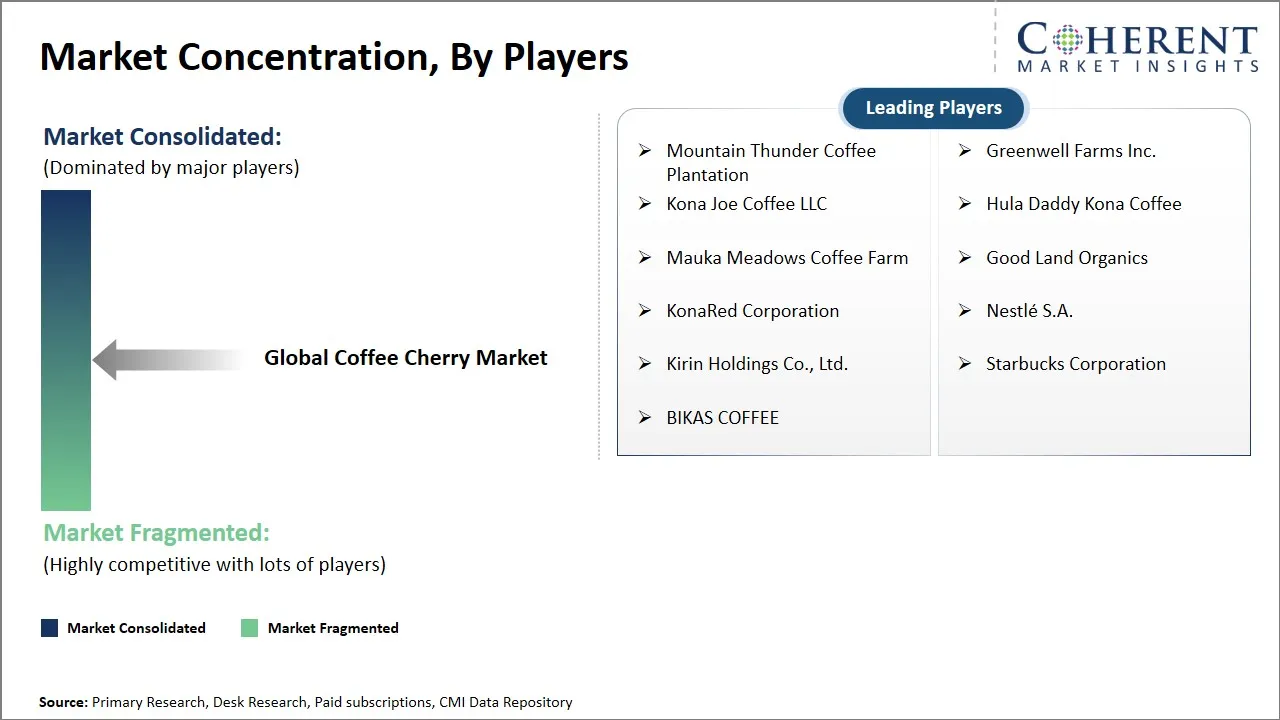
| Companies covered: | Mountain Thunder Coffee Plantation, Greenwell Farms Inc., Kona Joe Coffee LLC, Hula Daddy Kona Coffee, Mauka Meadows Coffee Farm, Good Land Organics, KonaRed Corporation, Nestlé S.A., Kirin Holdings Co., Ltd., Starbucks Corporation, and BIKAS COFFEE | ||
| Growth Drivers: |
| ||
| Restraints & Challenges: |
| ||
Coffee Cherry Market Dynamics
Coffee Cherry Market Driver - Rising Global Coffee Consumption & Cafe Culture Growth
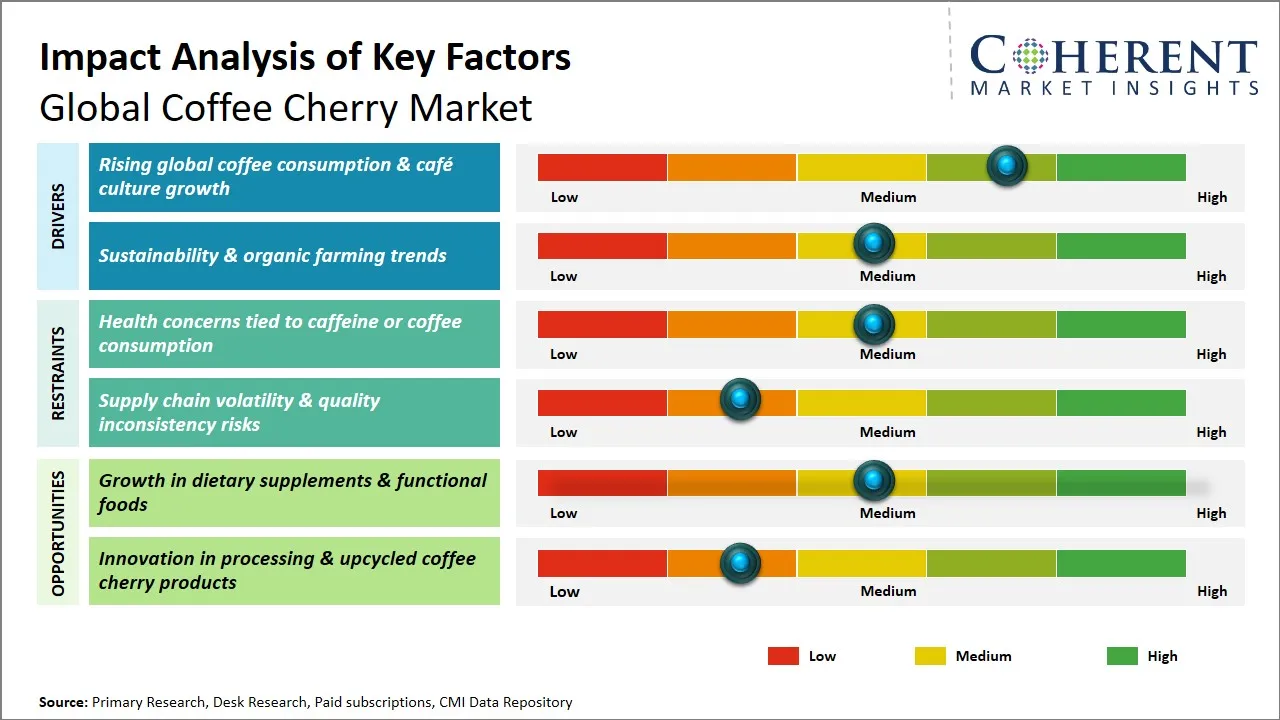
The growing interest of coffee in the world and the fast spread of cafe culture in urban and suburban areas is a key factor that has led to the growth of demand in coffee cherry-based products. As consumers grow more health conscious and environmentally conscious, there is an inclusivity to use the whole coffee fruit such as the coffee cherry which has always been wasted in the processing of the coffee. The increase in specialty coffee stores and third-wave coffee trends is not only focusing on the quality of the coffee that is brewed, but also the sustainability and traceability of coffee production, which prompts the consumption of coffee cherry products like cascara tea and dietary supplements.
For example, one such expansion is Starbucks with over 30,000 outlets worldwide that have made a tremendous impact on the consumption patterns of coffee. Consumers are also shifting towards specialty coffee shops and this has created a change in priorities that have been oriented towards sustainable and traceable sourcing of coffee.
Coffee Cherry Market Opportunity - Rising Demand for Dietary Supplements and Functional Foods
The coffee cherry market in the world market is set to get a boost due to the growing consumer demand in dietary supplements and functional foods which is a huge growth opportunity. Coffee cherry, with its high level of antioxidants activity and the natural presence of bioactive compounds (e.g., polyphenols and chlorogenic acids) that gain growing popularity with regard to health and wellness globally is a promising product to capitalize on.
The demand for coffee cherry extracts as a functional ingredient in supplements and functional food products is increasing because consumers are increasingly conscious about the benefits of natural ingredients that enhance immune health, anti-aging, and cognitive. Also, the clean-label movement and demand toward plant-based and sustainable supply further increase the attractiveness of coffee cherry’s to millennials and Gen Z customers who are health-conscious.
For example, brands such as Cascara and Cafe Bustelo have already launched coffee cherry-based supplements with high antioxidant properties, which are capitalizing on the new popularity of plant-based and clean-label products. An example is the functional beverage of coffee cherry like Cascara tea that is advertised as a high content of polyphenol and chlorogenic acid, which is an attractive factor to the health-conscious consumer.
Analyst Opinion (Expert Opinion)
- Coffee cherry market has been experiencing a tremendous growth rate with the growing awareness of health benefits and culinary of coffee cherries especially among health-conscious consumers. Thoughts on the Global Coffee Expo (2023), and sustainable Coffee Conference (2022) offered insights on key developments that have seen business entities like Cascara, Cafe Imports, and others being in the forefront in promoting coffee cherry products, including cascara tea and functional snacks.
- The recent launch of a ready-to-drink cascara drink by Cascaras is one of the ways the industry has focused on diversifying the value chain of coffee and using the neglected aspects of coffee production. At those forums, sustainability and waste minimization were discussed as a growing trend as brands endeavored to achieve the maximum utility of coffee cherries and minimize environmental impact.
- The barriers to further adoption were often reported, including in the form of consumer acceptance of new products and quality consistency. Firms investing in education about the advantages of coffee cherry products and are geared towards the development of innovative products will probably have huge prospect in this new market. Finally, the coffee cherry market will be exposed to increase as it will rely on its capacity to fit the consumer trends in terms of health, sustainability, and food adventure.
Speak to the analyst
Want personalized insights?
Take the findings above to one of our principal consultants, or have the report rebuilt around the segments, geographies and competitors you actually track.
Market Segmentation
- Form Insights (Revenue, USD Mn, 2021 - 2033)
- Powdered Extract
- Liquid Extract
- Nature Insights (Revenue, USD Mn, 2021 - 2033)
- Organic
- Conventional
- Application Insights (Revenue, USD Mn, 2021 - 2033)
- Personal Care
- Food
- Pharmaceutical
- Others
- Regional Insights (Revenue, USD Mn, 2021 - 2033)
- North America
- U.S.
- Canada
- Latin America
- Brazil
- Argentina
- Mexico
- Rest of Latin America
- Europe
- Germany
- U.K.
- Spain
- France
- Italy
- Russia
- Rest of Europe
- Asia Pacific
- China
- India
- Japan
- Australia
- South Korea
- ASEAN
- Rest of Asia Pacific
- Middle East
- GCC Countries
- Israel
- Rest of Middle East
- Africa
- South Africa
- North Africa
- Central Africa
- North America
- Key Players Insights
- Mountain Thunder Coffee Plantation
- Greenwell Farms Inc.
- Kona Joe Coffee LLC
- Hula Daddy Kona Coffee
- Mauka Meadows Coffee Farm
- Good Land Organics
- KonaRed Corporation
- Nestle S.A.
- Kirin Holdings Co., Ltd.
- Starbucks Corporation
- BIKAS COFFEE
Sources
Primary Research Interviews
- CEO – Leading Coffee Cherry Processor (e.g., Reanin or Future Market Insights equivalent)
- Supply Chain Director – Major Coffee Byproduct Distributor
- Production Lead – Coffee Cherry Drying and Processing Facility
- Sustainability Officer – Coffee Cherry Certification Authority (e.g., Rainforest Alliance for coffee byproducts)
Stakeholders
Producers
- Coffee Cherry Farmers and Cooperatives
- Wet Mills and Parchment Processors
End-use Sectors
- Nutraceutical and Functional Food Manufacturers (e.g., antioxidants from cherry pulp)
- Cosmetics and Personal Care Producers (e.g., coffee cherry extracts)
- Beverage Innovators (e.g., coffee cherry teas, spirits)
- Animal Feed and Fertilizer Producers
Regulatory & Certification Bodies
- FSSAI (India) for coffee mixtures and standards
- EU Novel Food Regulations for coffee cherry pulp
- FDA (US) for food additives from coffee byproducts
E-commerce Platforms and Retailers
- Alibaba, Amazon Industrial Suppliers
- Specialty ingredient suppliers like Sigma-Aldrich equivalents for coffee extracts
Technology Integration Players
- Cascade (coffee fruit innovators), Bioactive compound extractors
Databases
- UN Comtrade Database (HS Code 0901 for coffee, including cherry forms via trade flows)
- India EXIM Database (Robusta Coffee Cherry imports/exports)
- USDA Foreign Agricultural Service (Coffee Annual Reports)
- International Coffee Organization (ICO) Statistics on production and trade
- Volza and Cybex Trade Data for Coffee Cherry shipments
Magazines
- Global Coffee Report – Coffee byproduct trends and market dynamics
- Tea & Coffee Trade Journal – Supply chain for coffee cherries
- STiR Coffee and Tea Magazine – Industry innovations in coffee fruit
- BeanScene Magazine – Emerging uses of coffee cherries
Journals
- Journal of Food Science – Coffee cherry pulp bioactive compounds
- Food Chemistry – Extraction techniques for coffee cherry antioxidants
- Resources Policy – Coffee supply chain sustainability
- Journal of Agricultural and Food Chemistry – Nutritional value of coffee cherries
Newspapers
- Reuters – Coffee price volatility impacting cherry markets
- The Guardian – Sustainability in coffee production waste (cherries)
- Business Standard (India) – Coffee imports and byproduct growth
Associations
- International Coffee Organization (ICO)
- Specialty Coffee Association (SCA) – Sustainability in coffee value chains
- National Coffee Association (NCA) – Supply chain initiatives
- Fairtrade International – Coffee standards including byproducts
- Rainforest Alliance – Coffee cherry sustainability certification
Public Domain Sources
- ICO – Coffee production and trade statistics
- USDA – Coffee cherry processing guidelines
- WHO/FAO – Safety standards for coffee byproducts
- EU Commission – REACH and novel food regs for coffee pulp
- OECD – Agricultural commodity trade reports for coffee
Proprietary Elements
- CMI Data Analytics Tool
- Proprietary CMI Existing Repository of information for last 8 years.
Get access to 250+ pages report
Every segment, forecast, competitor profile and data table behind the analysis above — available for instant download.
- ESOMAR Member
- ISO 9001:2015 Certified
- D-U-N-S Registered
- GDPR & CCPA Compliant
Missing comfort of reading report in your local language? Find your preferred language:
Transform your Strategy with Exclusive Trending Reports
Frequently Asked Questions
The global coffee cherry market is estimated to be valued at USD 734.5 Mn in 2026 and is expected to reach USD 1,300.1 Mn by 2033.
The CAGR of global coffee cherry market is projected to be 8.5% from 2026 to 2033.
Rising global coffee consumption & café culture growth and sustainability & organic farming trends are the major factors driving the growth of the global coffee cherry market.
Health concerns tied to caffeine or coffee consumption and supply chain volatility & quality inconsistency risks are the major factors hampering the growth of the global coffee cherry market.
In terms of form, powdered extract is estimated to dominate the market revenue share in 2026.
Mountain Thunder Coffee Plantation, Greenwell Farms Inc., Kona Joe Coffee LLC, Hula Daddy Kona Coffee, Mauka Meadows Coffee Farm, Good Land Organics, KonaRed Corporation, Nestlé S.A., Kirin Holdings Co., Ltd., Starbucks Corporation, and BIKAS COFFEE are the major players.
Coffee bean prices, seasonal harvests, processing costs, and export logistics influence prices.