

Bubble Tea Market Size and Trends - 2026 to 2033
The bubble tea market is estimated to be valued at USD 3.88 Bn in 2026 and is expected to reach USD 7.18 Bn by 2033, exhibiting a compound annual growth rate (CAGR) of 9.2% from 2026 to 2033.
Key Takeaways
- Based on Product Type, the Fruit-Flavored Bubble Tea segment is expected to lead the market with the largest share in 2026, driven by its refreshing taste and wide consumer appeal.
- Based on Packaging, the To-Go Cups segment is expected to hold 66% share in 2026, favored for their convenience and popularity in quick-service formats.
- Based on Region, North America is set to lead the global bubble tea market in 2026, with 32.7% share. While, Asia Pacific is anticipated to be the fastest growing region.
Market Overview
Bubble tea market demand is rising globally as consumers embrace its unique blend of tea, milk, and chewy tapioca pearls. Its customizable flavors, vibrant presentation, and appeal among younger demographics have fueled widespread popularity. Innovations in ingredients and healthier options continue to attract new audiences, expanding its reach across regions.
Current Events and Their Impacts on the Bubble Tea Market
Current Event | Description and its Impact |
Regulatory Changes and Food Safety Standards |
|
Labor Market Dynamics and Wage Inflation |
|
Technological Innovation
Automated Bubble Tea Machines and Robotics
Automated bubble tea machines and robotics are transforming the beverage industry in 2025 by delivering speed, precision, and customization. These systems, equipped with robotic arms, ingredient dispensers, and digital interfaces, streamline drink preparation while minimizing labor costs. Popular in high-traffic urban areas, they cater to growing demand for quick-service and hygienic options. Brands like Bobacino and Hestia Robotics are leading innovation, offering unmanned kiosks and AI-powered tea stations that produce consistent, personalized drinks in minutes. As consumers embrace tech-driven experiences, automated bubble tea solutions are redefining convenience and scalability, making them a key driver of growth in the global bubble tea market.
For instance, in April 2025, a groundbreaking bubble tea machine designed for convenience stores officially launched, marking a first in the UK retail sector. Developed to offer fresh, customizable drinks in under 90 seconds, the machine aims to boost impulse purchases and expand bubble tea’s accessibility beyond traditional cafés and kiosks.
- Current Industry Events of 2026
- Market Size Estimation
- Regional Breakdown
- Competitive Landscape
- Customer Intelligence
- Segmental Analysis
- Pricing Analysis
- Key Market Drivers, Challenges & Future Trends
- Customized Insights Section
Segmental Insights
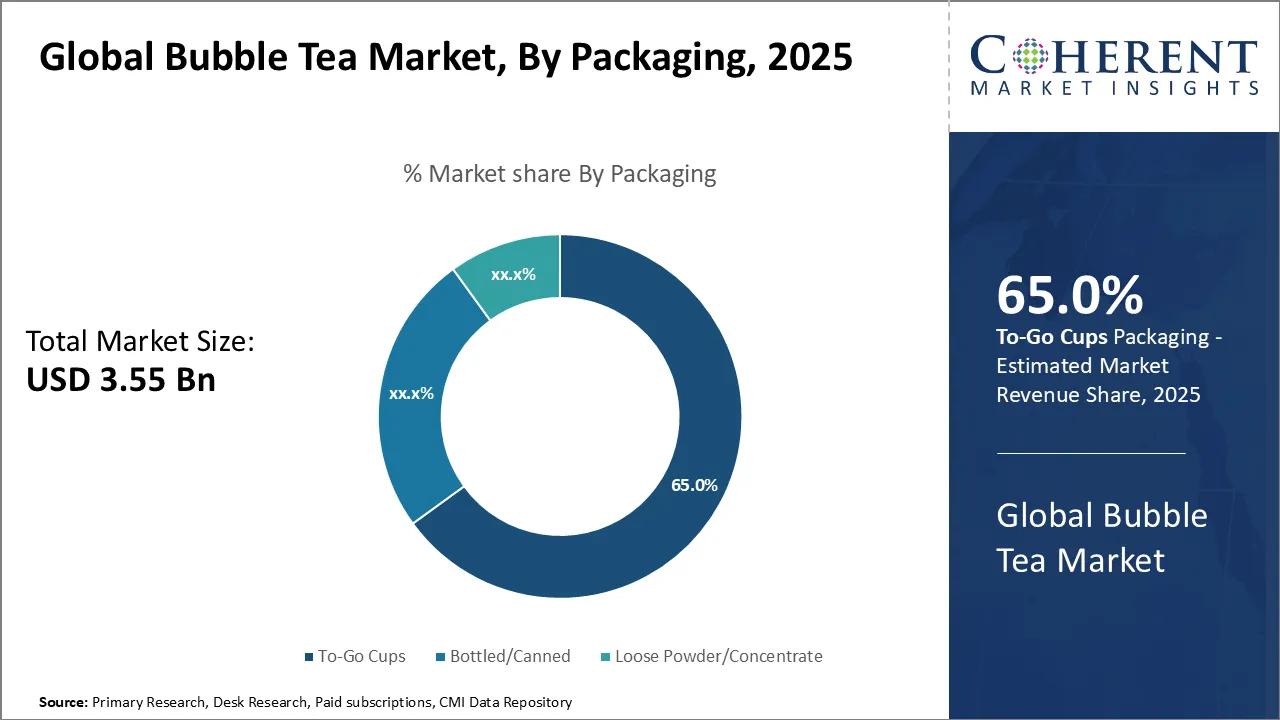
Bubble Tea Market Insights, By Packaging: To-Go Cups Dominance Is Favored for Their Convenience and Popularity in Quick-Service Formats
The to-go cups segment is expected to contribute 66% share of the market in 2026, reflecting the fast-paced lifestyle of modern consumers. These cups are the standard format in bubble tea shops, kiosks, and food courts, offering convenience and portability for on-the-go consumption. Their popularity is especially strong in urban centers where quick service and mobility are key. The rise of delivery apps and takeout culture has further cemented To-Go Cups as the preferred choice, with many brands investing in eco-friendly and customizable cup designs to enhance brand identity and sustainability. While bottled and canned options are growing in retail channels, and loose powder/concentrate appeals to DIY enthusiasts, To-Go Cups remain the most accessible and widely used format.
For instance, in August 2024, Bubbleology launched a new mobile platform offering drinks-to-go, enhancing convenience for bubble tea lovers. The initiative aims to streamline ordering and expand access to its popular beverages, aligning with growing demand for quick-service options and digital engagement in the food and beverage sector.
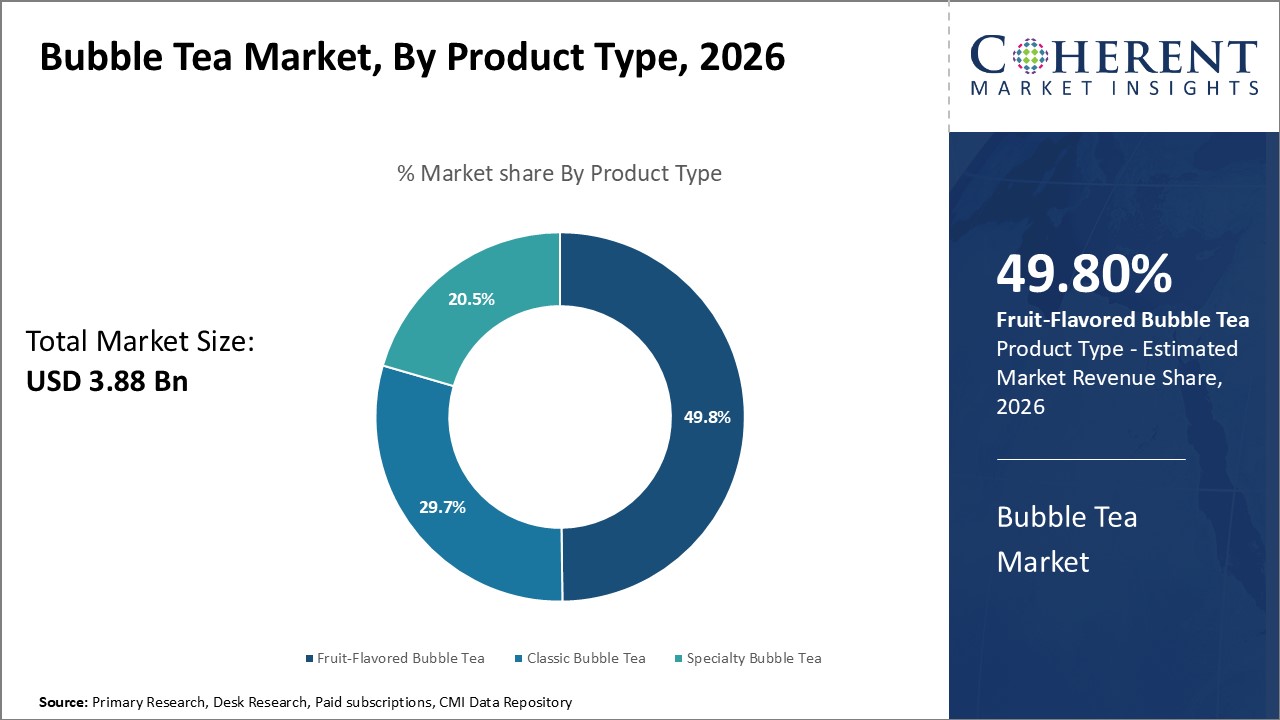
Bubble Tea Market Insights, By Product Type: Fruit-Flavored Bubble Tea Lead is Driven by Its Refreshing Taste and Wide Consumer Appeal
In terms of product type, the Fruit-Flavored Bubble Tea segment is expected to lead the market with the largest share in 2026, capturing the attention of a broad consumer base across age groups and regions. Its dominance is fueled by the growing demand for refreshing, health-conscious beverages that offer a variety of natural and exotic flavors. Consumers are increasingly drawn to options like mango, lychee, passionfruit, and strawberry, which not only taste vibrant but also align with wellness trends. The versatility of fruit flavors allows brands to innovate with seasonal offerings and regional twists, keeping the category fresh and exciting. This segment also benefits from its visual appeal, bright colors and fresh ingredients make it highly shareable on social media, further boosting its popularity.
For instance, in February 2025, Boba Bhai become India’s first homegrown brand to introduce packaged bubble tea via quick commerce platforms. This pioneering move brings ready-to-drink bubble tea directly to consumers through rapid delivery services, marking a significant milestone in the beverage industry’s evolution toward convenience and innovation.
Regional Insights
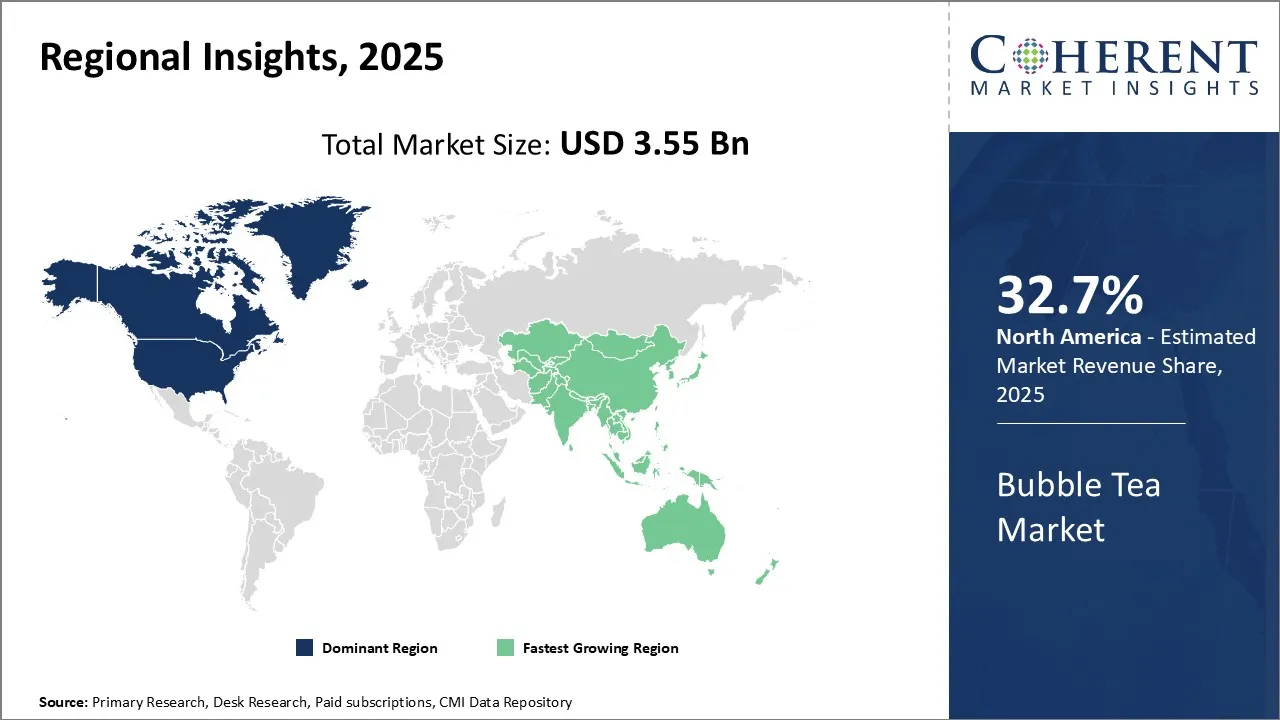
North America Bubble Tea Market Analysis & Trends
North America has emerged as the dominant region in the bubble tea market. The region is expected to account for 32.7% of the market share in 2026, due to rising health-consciousness, demand for low-calorie and plant-based beverages, and the popularity of fruit-flavored and ready-to-drink formats. Urban millennials and Gen Z consumers are driving growth through quick-commerce platforms and social media trends, making bubble tea a mainstream lifestyle beverage.
For instance, in August 2026, CoCo Bubble Tea expanded its footprint across North America with a strategic focus on smaller cities. This move aims to tap into underserved markets and meet rising demand for bubble tea beyond major urban centers, reinforcing the brand’s commitment to accessibility and regional growth.
Asia Pacific Bubble Tea Market Analysis & Trends
The Asia Pacific region, currently the fastest growing region of the global bubble tea due to strong cultural roots, rising disposable incomes, and rapid urbanization. The region’s youth-driven demand for trendy, customizable beverages, especially fruit-flavored and plant-based options which fuels growth. Innovative flavors, vibrant branding, and expanding quick-service outlets make bubble tea a lifestyle staple across major APAC cities.
For instance, in July 2026, Vietnamese brand Luave debuted its ready-to-drink boba milk tea in Asia, focusing on healthier formulations. The launch targets growing consumer demand for nutritious beverage options, blending traditional flavors with modern wellness trends. Luave’s expansion marks a strategic move to capture the region’s evolving taste for functional and convenient drinks.
Bubble Tea Market Outlook Country-Wise
The U.S. Bubble Tea Market Trends
The bubble tea market in the U.S. is thriving in 2026 due to rising demand for flavorful, customizable beverages that blend indulgence with wellness. Consumers, especially millennials and Gen Z, are drawn to fruit-infused and plant-based options, while quick-service formats and ready-to-drink innovations make bubble tea a convenient, trendy choice in urban and suburban settings.
For instance, in June 2026, Orbitel International Group unveiled OS Bubble Mochi Boba 3.0, a next-generation snack combining chewy mochi texture with rich boba flavor. This innovative product aims to redefine the bubble tea experience in a portable format, targeting global markets with a focus on convenience, indulgence, and cross-cultural appeal.
Taiwan Bubble Tea Market Trends
Taiwan’s bubble tea market remains highly demanding in 2026 due to its cultural significance, continuous flavor innovation, and strong domestic consumption. As the birthplace of bubble tea, Taiwan boasts a deeply rooted tea-drinking tradition, with consumers embracing both classic and modern variations. High brand loyalty and tourism-driven interest further fuel its vibrant and competitive market.
For instance, in October 2026, Taiwan-based Boba Chic clinched the Anuga 2026 Innovation Taste Award for its Popping Boba Mocktail Kit. The product impressed judges with its creative fusion of flavor and convenience, offering a playful, ready-to-enjoy bubble tea experience. This win highlights Taiwan’s continued leadership in global beverage innovation.
Market Report Scope
Bubble Tea Market Report Coverage
| Report Coverage | Details | ||
|---|---|---|---|
| Base Year: | 2025 | Market Size in 2026: | USD 3.88 Bn |
| Historical Data for: | 2020 To 2024 | Forecast Period: | 2026 To 2033 |
| Forecast Period 2026 to 2033 CAGR: | 9.2% | 2033 Value Projection: | USD 7.18 Bn |
| Geographies covered: |
| ||
| Segments covered: |
| ||
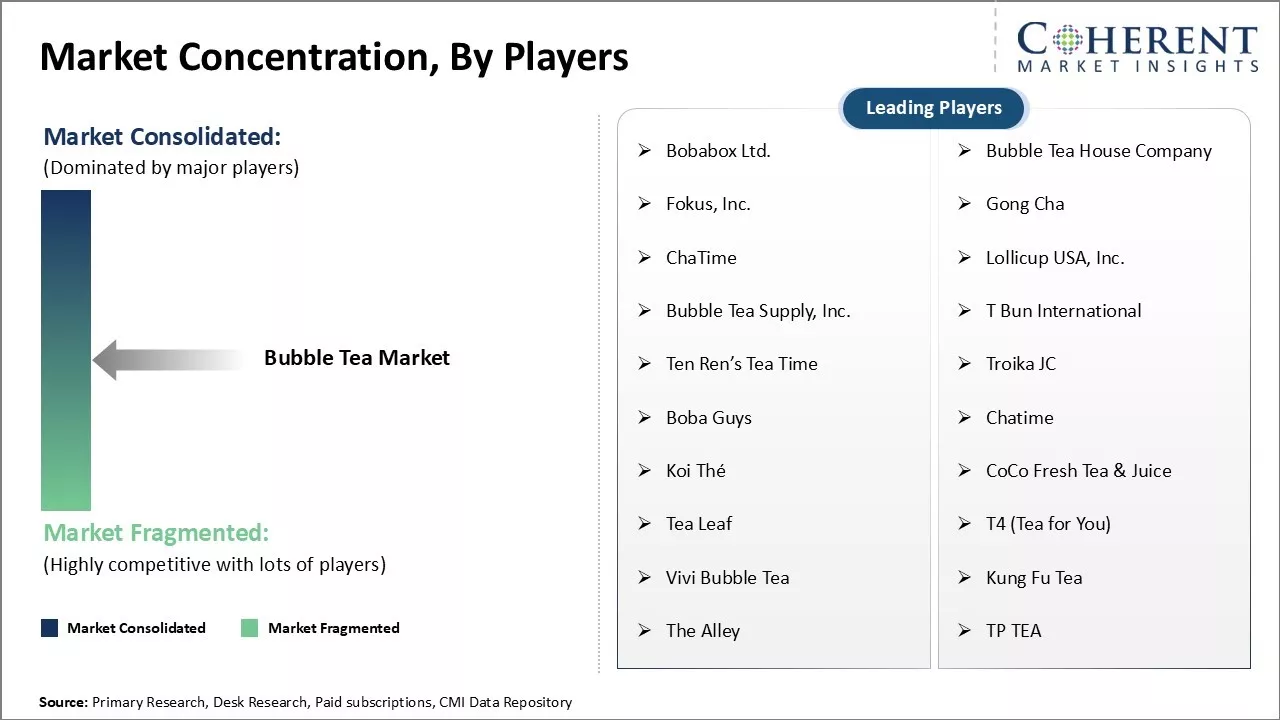
| Companies covered: | Bobabox Ltd., Bubble Tea House Company, Fokus, Inc., Gong Cha, ChaTime, Lollicup USA, Inc., Bubble Tea Supply, Inc., T Bun International, Ten Ren’s Tea Time, Troika JC, Boba Guys, Chatime, Koi Thé, CoCo Fresh Tea & Juice, Tea Leaf, T4 (Tea for You), Vivi Bubble Tea, Kung Fu Tea, The Alley, and TP TEA | ||
| Growth Drivers: |
| ||
| Restraints & Challenges: |
| ||
Bubble Tea Market Driver
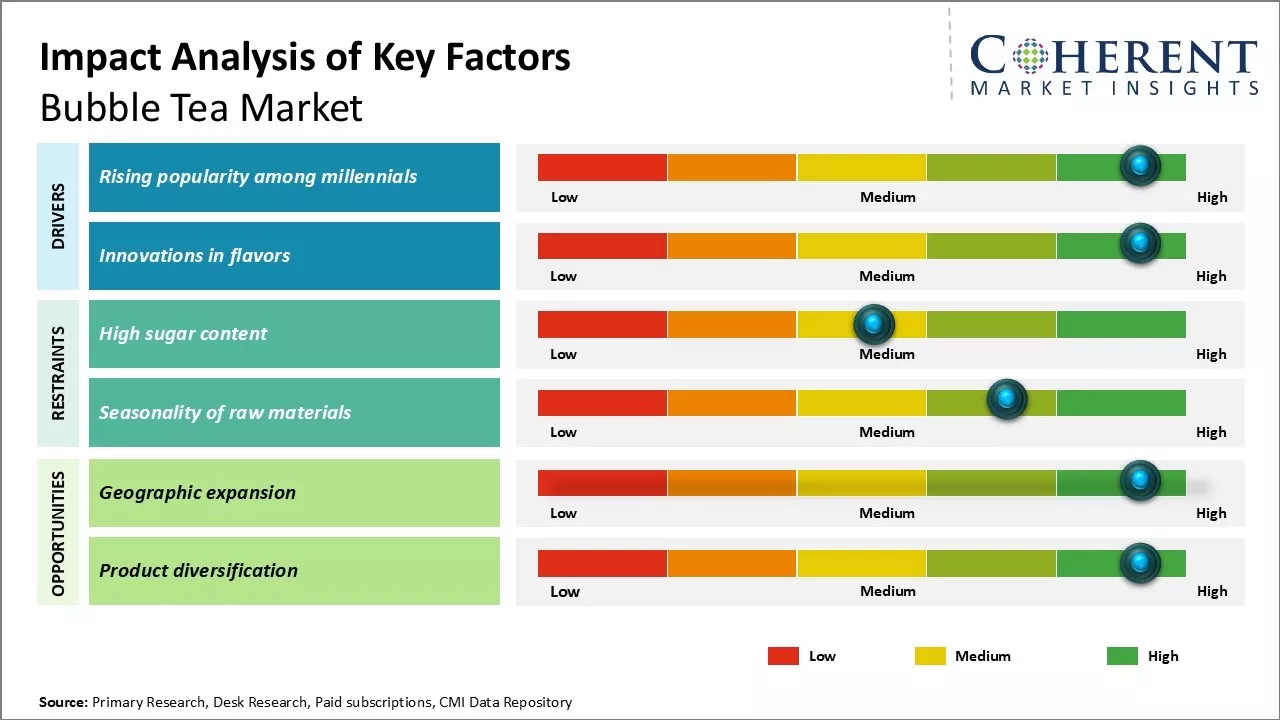
Rising popularity among millennials
Millennials crave new experiences and enjoy experimenting with different tastes and flavors. They are more inclined to try out new beverages and cuisines. Bubble tea has gained immense popularity among the millennial population in recent years as it offers a unique experience. Unlike regular tea or coffee, bubble tea allows one to enjoy tapioca pearls or fruit jelly cubes or puddings along with the refreshing tea beverage. This plays into the millennial's quest for new and Instagram-worthy food and drink options.
Bubble tea shops have proliferated across major metropolitan cities where millennial population is concentrated. The vibrant, colorful drinks make for great food pictures on social media. Millennials enjoy sharing pictures of their bubble tea orders on platforms like Instagram which has further boosted the popularity of this beverage among their peers. The trendy bubble tea culture and customization options appeal greatly to millennials who are seen as the main customer base of bubble tea chains now. They are willing to pay a premium for good quality drinks and novel flavors offered at bubble tea outlets.
Millennials also drive the demand due to their adventurous tastes and preference for healthier beverage alternatives. Unlike sodas or juices, bubble tea contains natural ingredients like fresh fruit extracts or herbs which are considered healthier. Some variants even include probiotic drinks. This growing health-consciousness among younger consumers drives their interest in bubble tea which is seen as a lower calorie indulgence compared to other sweet beverages. As a new generation of tea lovers, millennials are open to experimenting with both international and regional tea flavors in their drinks. Their willingness to try new innovations and customizations in bubble tea will likely further propel the market growth in the coming times.
Market Concentration and Competitive Landscape
Innovations in flavors
Flavor innovation is the biggest buzz and driving force in the bubble tea market. Consumers today expect an exciting variety of taste sensations from their beverage choices. To cater to evolving consumer demand and preferences, bubble tea brands consistently innovate new flavors and launch attractive seasonal flavors. Novel flavors bring consumers back to stores and help build loyal customer bases for brands. Successful innovations also fuel the market by attracting new consumers towards the bubble tea category overall.
Some popular trends seen lately include fresh fruit flavors, herbals blends, exotic flavors inspired by international cuisines as well as local flavors. Mango, lychee, passion fruit flavors are always crowd favorites during summers for their refreshingly sweet-sour taste. Turmeric, ginger, and lemongrass-based innovations provide health benefits while satisfying taste buds. Matcha and hojicha from Japan, Thai tea inspired flavors, Indian masala tea, and South East Asian durian flavors have significantly contributed to the rising global popularity of bubble tea. Local specialties like taro from Taiwan or brown sugar bubble tea are greatly loved by consumers.
Seasonal innovations like pumpkin spice flavor during fall or snow cream inspired winter flavors keep the excitement alive through the year. Brands also tweak ingredients to cater to dietary preferences, for example launching plant-based, vegan, and dairy-free options. Another highly impactful innovation has been the introduction of coffee-tea combos along with tea flavors launched in coffee drinks. Such innovations have helped bubble tea reach a much wider demographic beyond regular and non-coffee drinkers. Constant reinventions ensure there is something new for every palate and season, driving repeat purchases as well as trials among new consumers. Innovation will therefore remain integral for sustaining the bubble tea craze globally.
Bubble Tea Market Opportunity
Geographic Expansion
A major opportunity for the bubble tea market is further geographic expansion into new regional markets. Currently, bubble tea is most popular in Asia Pacific countries but has gained traction in Western countries as well in recent years, driven by the rising popularity of Asian culinary trends. There remains ample scope for market players to expand distribution channels and marketing activities into regions where awareness and consumption is relatively low as of now such as Middle East & Africa, Eastern Europe and South America. With the right marketing strategies and partnerships with local players, global brands can leverage this opportunity to establish a stronger foothold and drive future growth from newer consumer bases outside Asia Pacific. Developing the perfect localized product and pricing strategies will be crucial to success in new international geographies.
Analyst Opinion (Expert Opinion)
The bubble tea market stands at a turning point, balancing between sustained consumer enthusiasm and mounting structural pressures. Asia Pacific retains leadership, accounting for around 43% of global share, while global franchisors such as Chatime (over 2,400 outlets) demonstrate both the reach and risks of saturation. Rapid expansion has led to closures in mature markets, revealing that profitability now hinges on unit-level discipline rather than novelty.
The next growth phase will be defined by product science, health orientation, and operational efficiency. Successful brands are leveraging R&D for consistent pearl texture, non-dairy formulations, and lower-sugar recipes without sacrificing taste. Premium players such as Xing Fu Tang and Tiger Sugar show that craftsmanship and theatre-driven experiences sustain pricing power amid commoditization.
However, rising input costs, regulatory scrutiny on plastics, and consumer pivot toward sustainability necessitate adaptive strategies. Franchisors must enforce tighter quality governance, while suppliers providing stable tapioca bases and compostable packaging will capture margin-sensitive demand.
The market is bifurcating between mass RTD convenience and premium artisanal formats. Operators mastering cost control, quality consistency, and diversified distribution will transform the category’s cultural popularity into enduring profitability, while undisciplined players risk contraction despite strong consumer visibility.
Speak to the analyst
Want personalized insights?
Take the findings above to one of our principal consultants, or have the report rebuilt around the segments, geographies and competitors you actually track.
Bubble Tea Industry News
- In September 2025, CoCo Bubble Tea launched its first store in the Middle East, choosing Jordan as its entry point. The expansion marks a strategic move to tap into the region’s growing demand for trendy, customizable beverages, bringing its globally popular bubble tea experience to a new audience.
- In May 2025, Gong cha introduced a GenAI-powered digital mini world to celebrate its latest bubble tea creation. The immersive experience blends technology and storytelling, allowing fans to explore a virtual universe inspired by the drink’s flavors. This innovative campaign marks a bold step in merging beverage culture with interactive digital engagement.
- In August 2024, Frozen Bottle, a prominent India-based dessert cafe brand under the Curefoods umbrella, announced the launch of Boba Bar. This innovative concept aims to provide customers with an unparalleled Bubble Tea experience, revolutionizing the beverage landscape across India.
- In May 2024, Starbucks made waves in the beverage market with the introduction of a new line of boba tea-style drinks. This innovative offering reflects the growing popularity of bubble tea and aims to cater to a diverse range of customer preferences, combining Starbucks' signature coffeehouse experience with the fun and flavor of boba.
Market Segmentation
- Product Type Insights (Revenue, USD Bn, 2026 - 2033)
- Classic Bubble Tea
- Fruit-Flavored Bubble Tea
- Specialty Bubble Tea
- Packaging Insights (Revenue, USD Bn, 2026 - 2033)
- To-Go Cups
- Bottled/Canned
- Loose Powder/Concentrate
- Regional Insights (Revenue, USD Bn, 2026 - 2033)
- North America
- U.S.
- Canada
- Latin America
- Brazil
- Argentina
- Mexico
- Rest of Latin America
- Europe
- Germany
- U.K.
- Spain
- France
- Italy
- Russia
- Rest of Europe
- Asia Pacific
- China
- India
- Japan
- Australia
- South Korea
- ASEAN
- Rest of Asia Pacific
- Middle East
- GCC Countries
- Israel
- Rest of Middle East
- Africa
- South Africa
- North Africa
- Central Africa
- Key Players Insights (Revenue, USD Bn, 2021 - 2033)
- Bobabox Ltd.
- Bubble Tea House Company
- Fokus, Inc.
- Gong Cha
- ChaTime
- Lollicup USA, Inc.
- Bubble Tea Supply, Inc.
- T Bun International
- Ten Ren’s Tea Time
- Troika JC
- Boba Guys
- Chatime
- Koi Thé
- CoCo Fresh Tea & Juice
- Tea Leaf
- T4 (Tea for You)
- Vivi Bubble Tea
- Kung Fu Tea
- The Alley
- TP TEA
Sources
Primary Research Interviews from the following stakeholders
Stakeholders
- Interviews with bubble tea shop owners, beverage manufacturers, ingredient suppliers, franchise operators, foodservice consultants, and marketing managers across key bubble tea markets (Asia Pacific, North America, Europe, and the Middle East).
Specific Stakeholders
- Product development heads and R&D teams at beverage companies (e.g., new flavor and texture formulation specialists)
- Procurement managers at foodservice chains, cafés, and quick service restaurants (QSRs)
- Franchise development managers and regional operations heads of leading bubble tea brands
- Marketing and brand communication leads at specialty drink and lifestyle café chains
- Supply chain managers at tapioca pearl, tea leaf, milk, and flavoring ingredient suppliers
- Procurement heads at dairy and non-dairy alternative ingredient companies (soy, oat, almond milk producers)
- Distribution channel managers and logistics providers serving café chains and modern trade outlets
- Store concept designers and retail experience consultants in the beverage and foodservice sectors
Databases
- UN Comtrade Database
- World Trade Organization (WTO) Trade Statistics
- FAO (Food and Agriculture Organization) Food Commodity Statistics
- Eurostat – Food and Beverage Segment
- U.S. Department of Agriculture (USDA) Food Data Central
- National Bureau of Statistics of China
- Japan External Trade Organization (JETRO) – Food and Beverage Trade Data
- Directorate General of Commercial Intelligence and Statistics (DGCIS), India
- ASEANstats Database – Beverage and Foodservice Trade Indicators
- China Customs Statistics
- Bureau of Economic Analysis (U.S.) – Food & Beverage Sector Data
Magazines
- Beverage Industry Magazine
- Food Business News
- World Tea News
- Beverage Daily
- Tea & Coffee Trade Journal
- Food Navigator
- QSR Magazine
- Global Franchise Magazine
- Café Culture International
- Restaurant India Magazine
Journals
- Journal of Food Science and Technology
- Food Hydrocolloids (Elsevier)
- Journal of Sensory Studies
- International Journal of Gastronomy and Food Science
- Journal of Consumer Behaviour (Food & Beverage section)
- International Food and Agribusiness Management Review
- Journal of Retailing and Consumer Services
- Trends in Food Science & Technology (Elsevier)
Newspapers
- The Wall Street Journal – Food & Beverage Section
- The Economic Times – Consumer & Retail
- The Hindu Business Line – Foodservice & FMCG
- Financial Times – Lifestyle & Global Retail
- Nikkei Asia – Food & Drink Supply Chain
- South China Morning Post – Food Industry & Lifestyle
- China Daily – Beverage Industry Updates
Associations
- World Tea Association
- Specialty Coffee Association (SCA) – Beverage Trends Reports
- Tea Board of India
- Taiwan Beverage Association
- China Tea Marketing Association
- European Tea Society
- National Restaurant Association (U.S.)
- Confederation of Indian Industry (CII) – Food Processing and Beverage Council
- Food Industry Asia (FIA)
- Asia Food & Beverage Alliance
Public Domain Sources
- Ministry of Commerce (Government of Taiwan) – Beverage Export Statistics
- Ministry of Food Processing Industries (MoFPI), India
- U.S. Food and Drug Administration (FDA) – Food Ingredient Data
- Ministry of Economy, Trade and Industry (METI), Japan – Beverage Industry Reports
- Department of Agriculture, Water and the Environment (Australia) – Beverage Trends
- Reserve Bank of India (RBI) – Food and Beverage Sector Reports
- NITI Aayog – Food Processing and Retail Outlook
- EU Directorate-General for Agriculture and Rural Development
- World Bank – Foodservice Market Insights
- ASEAN Food Industry Reports
Proprietary Elements
- CMI Data Analytics Tool
- Proprietary CMI Existing Repository of information for last 8 years
Definition: The bubble tea market consists of shops and brands that specialize in bubble tea or boba drinks. Bubble tea is a tea-based beverage that originated in Taiwan in the 1980s. It contains tea, flavors like fruit or milk, and chewy tapioca balls or "bubbles" at the bottom. The bubble tea market is growing in popularity worldwide as more consumers seek out unique cold drinks with Asian influences.
Get access to 250+ pages report
Every segment, forecast, competitor profile and data table behind the analysis above — available for instant download.
- ESOMAR Member
- ISO 9001:2015 Certified
- D-U-N-S Registered
- GDPR & CCPA Compliant
Missing comfort of reading report in your local language? Find your preferred language:
Transform your Strategy with Exclusive Trending Reports
Frequently Asked Questions
The Bubble Tea Market is estimated to be valued at USD 3.88 Bn in 2026, and is expected to reach USD 7.18 Bn by 2033.
The CAGR of the Bubble Tea Market is projected to be 9.2% from 2026 to 2033.
Rising popularity among millennials and innovations in flavors are the major factors driving the growth of the bubble tea market.
High sugar content and seasonality of raw materials are the major factors hampering the growth of the bubble tea market.
In terms of product type, the classic bubble tea segment is estimated to dominate the market revenue share in 2026.
Bobabox Ltd., Bubble Tea House Company, Fokus, Inc., Gong Cha, ChaTime, Lollicup USA, Inc., Bubble Tea Supply, Inc., T Bun International, Ten Ren’s Tea Time, Troika JC, Boba Guys, Chatime, Koi Thé, CoCo Fresh Tea & Juice, Tea Leaf, T4 (Tea for You), Vivi Bubble Tea, Kung Fu Tea, The Alley, and TP TEA are the major players.
North America is expected to lead the bubble tea market in 2026.