

Global Computational Pathology Market Size and Forecast – 2026 to 2033
The global computational pathology market is estimated to be valued at USD 798.0 Mn in 2026 and is expected to reach USD 1,487.1 Mn by 2033, exhibiting a compound annual growth rate (CAGR) of 9.3% from 2026 to 2033. This significant growth reflects the increasing adoption of digital pathology solutions, advancements in artificial intelligence, and growing demand for accurate and efficient diagnostic tools in healthcare, driving the market expansion over the forecast period.
Key Takeaways of the Global Computational Pathology Market
- Software segment is expected to account for the largest portion of the global computational pathology market, holding a 43.1% share in 2026.
- Within deployment mode, the on-premise segment is projected to account for 56.4% share in 2026.
- The standalone computational pathology platforms segment is estimated to lead with a 55.2% share in 2026.
- North America is expected to lead the market, holding a share of 39.3% in 2026. Asia Pacific is anticipated to be the fastest-growing region, with an estimated market share of 24.5% in 2026.
Market Overview
Market trends indicate a strong shift towards integrating AI-powered algorithms and machine learning in computational pathology to enhance diagnostic precision and workflow efficiency. Additionally, the rising prevalence of chronic diseases such as cancer is fueling the demand for advanced pathology tools. Increasing investments in research and development, along with growing collaborations between technology firms and healthcare providers, are further propelling innovation and the market penetration in this dynamic sector.
Segmental Insights
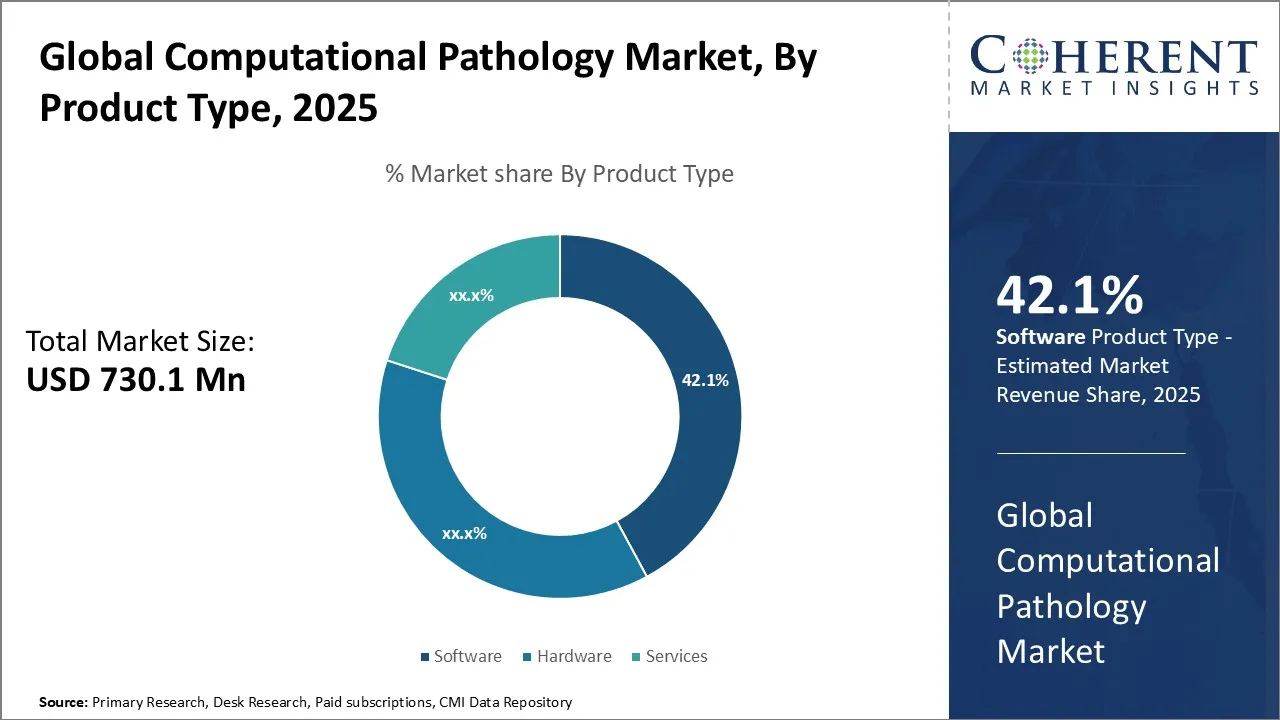
Computational Pathology Market Insights, By Product Type – Advanced Analytical Capabilities Drive Software’s Market Leadership
The software will dominate the computational pathology market with share of 43.1% in 2026, because of its central role of providing accurate, efficient and scalable pathology review. The reason why software solutions are becoming increasingly popular in pathology is that it allows this technology to be used to leverage artificial intelligence (AI), machine learning (ML), and deep learning algorithms to provide accurate diagnostic assistance.
For example, Aiosyn, a Netherlands-based computational pathology software developer, launched its Aiosyn Mitosis Breast solution, which is CE-marked, bolstering its AI-based diagnostics. The company focuses on automated QC of slides, mitosis detection and kidney image analysis to assist the pathologists in enhancing the quality and speed of work.
- Current Industry Events of 2026
- Market Size Estimation
- Regional Breakdown
- Competitive Landscape
- Customer Intelligence
- Segmental Analysis
- Pricing Analysis
- Key Market Drivers, Challenges & Future Trends
- Customized Insights Section
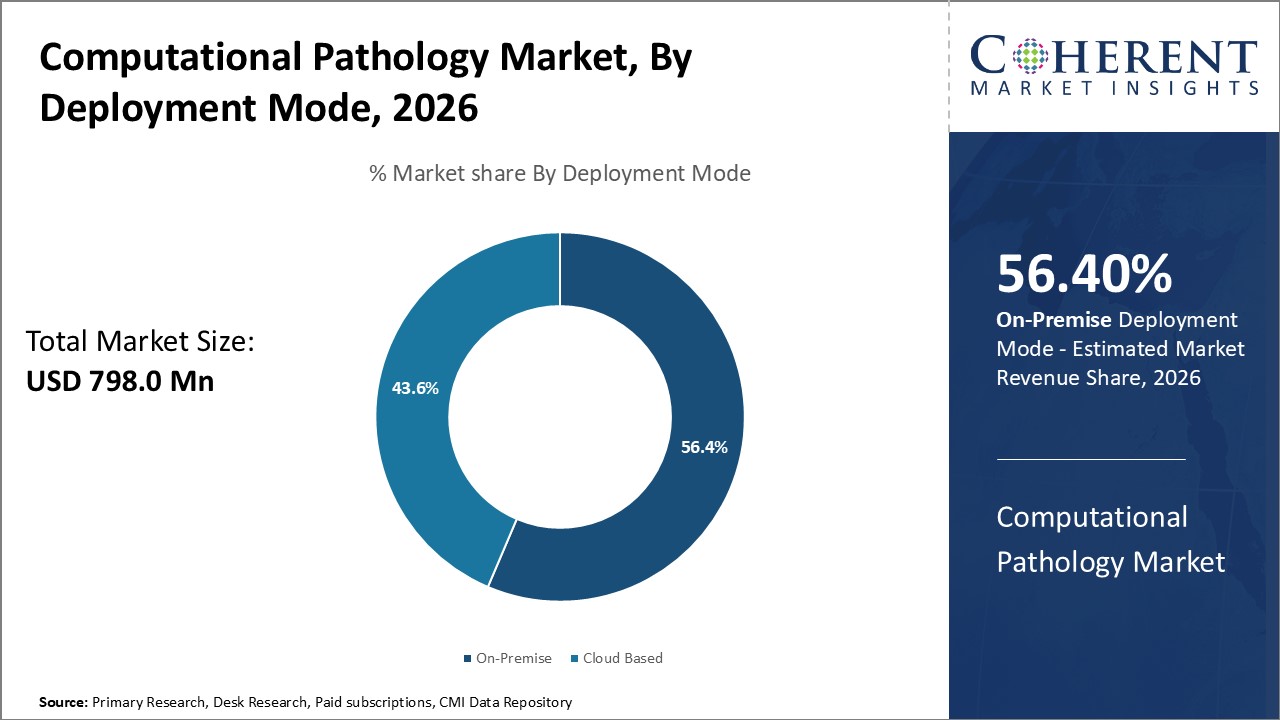
Computational Pathology Market Insights, By Deployment Mode – On-Premise Deployment Maintains Dominance Due to Preference for Data Security and Control
On-premise segment is projected to dominate the market with 56.4% in 2026, due to healthcare providers’ interest in integrated total control of the infrastructure and sensitive patient information. This is because of the dire necessity to store data within instead of depending on cloud systems that are externally owned.
Such deployments also allow institutions to use tailored cybersecurity measures to fit very strict regulations, including HIPAA and GDPR. Such a localized control guarantees increased protection of data, compliance requirements, and increased trust between healthcare systems.
Computational Pathology Market Insights, By Type – Standalone Computational Pathology Software Leads Due to Its Focus on Specialization and Ease of Integration
The standalone computational pathology software is the dominant segment, with an estimated 55.2% share in 2026, due to its specialization and ease of implementation.
Standalone software applications are developed so that they can be used to run a particular pathology task independently without being heavily integrated with other platforms of digital pathology. This facilitates the use of medical specialists and diagnostic laboratories to have specific tools that can be used in discrete applications such as image analysis, pattern recognition, or determining biomarkers.
End User Landscape and Adoption Trends
- Hospitals and diagnostic labs represent the primary clinical end users driving adoption in the computational pathology market. For these entities, the value proposition is direct and operational, enhancing diagnostic accuracy, streamlining workflow efficiency through automation, and facilitating faster second opinions.
- Adoption is growing steadily as these tools integrate with Laboratory Information Systems (LIS) to assist pathologists in tasks like cancer grading and biomarker analysis, moving from early adoption towards mainstream clinical use.
- In contrast, pharmaceutical companies and research institutes are the innovation and discovery engines, operating at a more specialized adoption level. For pharma, computational pathology is crucial in drug development, using AI to analyze tissue biomarkers in clinical trials to predict patient response and accelerate time-to-market.
- Research institutes are at the cutting edge, leveraging these platforms for novel biomarker discovery and understanding disease mechanisms. While their absolute numbers may be smaller, their adoption is deep and foundational, often pushing the technological boundaries that will eventually filter down to clinical practice.
Regional Insights
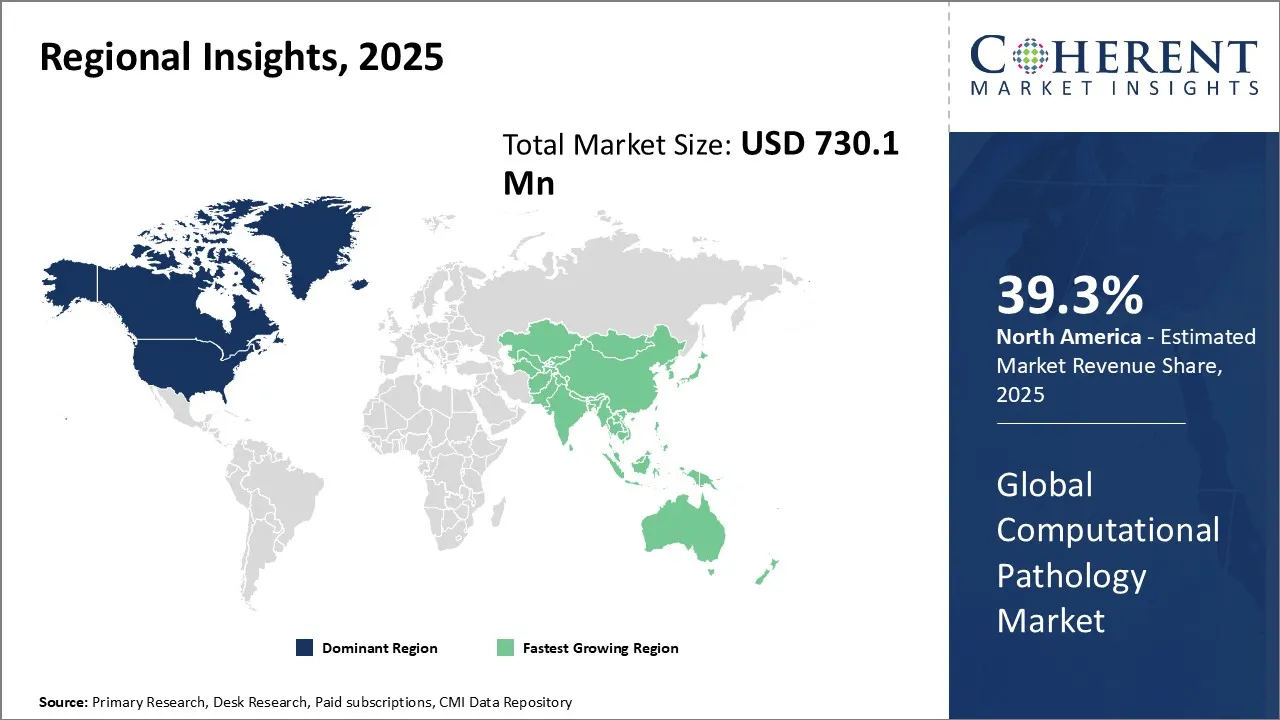
North America Computational Pathology Market Analysis and Trends
North America dominates the global computational pathology market, with a projected share of 39.3% in 2026, since it has a good healthcare system, among the earliest to adopt digital technologies, and is well-supported by the government to modernize health IT. The area enjoys a well-developed ecosystem of leading research institutions, large healthcare organizations and technology innovators which quicken growth and deployment.
In April 2024, the University of Pittsburgh, one of the most prominent research institutions and UPMC, one of the largest American healthcare systems, created the Computational Pathology and AI Center of Excellence to promote early disease detection and personalized care. The center collaborates with experts to spur innovations in computational pathology, and the presentations made by the leadership of the UPMC Enterprises show the role in creating the outlook of diagnostics in the future.
Asia Pacific Computational Pathology Market Analysis and Trends
The Asia Pacific region is expected to exhibit the fastest growth in the market contributing 24.5% share in 2026. This is attributed to the growing digitization of health care, rising rates of cancer incidence, and expanded investments in precision medicine. The governments of various nations including China, Japan, South Korea and India are propagating the smart healthcare systems by using the strategic programs and investments that would allow the use of technology in pathology.
The growing healthcare system, high number of patients, and increased knowledge regarding modern health-diagnostic instruments contribute to the market growth. The area enjoys the local variety of different start-ups and international market entrants in the form of Roche Diagnostics and GE Healthcare who come in on partnerships and joint ventures.
Global Computational Pathology Market Outlook for Key Countries
U.S. Computational Pathology Market Trends
The U.S. computational pathology market is a worldwide leader, accompanied by an effective R&D ecosystem that includes national and academic medical centers like the National Cancer Institute and the Johns Hopkins and MD Anderson.
The fact that major technology firms such as Philips, Roche Diagnostics, and Inspirata allow integration of AI-based tools in the field of pathology into the customary diagnostics.
Germany Computational Pathology Market Trends
Germany market for computational pathology is defined by a high level of government support of the digital healthcare innovation in terms of the national programs like the Digital Healthcare Act. It has the advantage of having an established medical device business, dominated by Leica Biosystems and Carl Zeiss Meditec who have made the development of the much needed and sought after computational pathology solutions with quality and precision. The universal healthcare reimbursement schemes of the country encourage implementation of new diagnostic technologies in healthcare.
In June 2026, FUJIFILM Healthcare Europe, a major medical imaging provider, partnered with Ibex Medical Analytics, a leading AI-driven cancer diagnostics company, to integrate Ibex’s computational pathology platform into the SYNAPSE Pathology system.
China Computational Pathology Market Trends
There is a strong government support of China in the Asia Pacific market with their initiatives such as Healthy China 2030 as they are working to modernize healthcare service. Chinese firms like Hikvision and AI medical imaging startups are actively developing in the field of computational pathology due to incentives in the form of growing healthcare infrastructure and digitalization. Multinational companies such as GE Healthcare and Roche Diagnostics are creating joint ventures and local alliance to provide solutions to the Chinese hospitals.
On November 05, 2026, the Hong Kong University of Science and Technology, a leading research institution, sought regulatory approval in Hong Kong and mainland China for SmartPath, an AI-driven computational pathology system trained on 500,000 slides.
India Computational Pathology Market Trends
The computational pathology market in India is in the initial phases of growth and development and is fueled by the various factors such as the growth in healthcare digitization, the growth in the number of the private healthcare sector, and the increasing prevalence of lifestyle-related diseases. Policies implemented by the government such as the National Digital Health Mission promote the implementation of health IT and AI in the diagnostic services. Organizations like Trivitron Healthcare and Diagnostic Green help in the development of pathology infrastructure at affordable and easily scalable computational solutions.
As an example, Indica Labs is a universal pioneer of AI-based digital pathology, having HALO platforms of analyzing images, diagnostics, and collaborating with others. The firm provides scalable computational pathology solutions, cloud computing, and solutions that are approved by regulatory authorities to major pharma, hospitals, and research centers across the world that enhance the accuracy of the diagnosis and efficiency of the workflow.
Role of Artificial Intelligence in the Global Computational Pathology Market
- AI is reshaping the computational pathology market by speeding up slide analysis, reducing manual workload, and improving diagnostic accuracy. Companies like PathAI, Paige, Ibex, Indica Labs, and Owkin use AI to detect tumors earlier, score biomarkers more consistently, and support data-driven clinical decisions. This leads to faster workflows, lower costs, and new opportunities such as cloud pathology platforms and predictive diagnostic tools.
- For companies, the best way to leverage AI is through strong digital infrastructure, collaborations with algorithm developers, and scalable cloud deployment. Challenges like regulatory approval and data quality still exist, but the benefits far outweigh them. When implemented well, AI becomes a practical growth driver that helps pathology teams deliver quicker, more reliable results and build a long-term competitive edge.
Market Players, Key Developments, and Competitive Intelligence
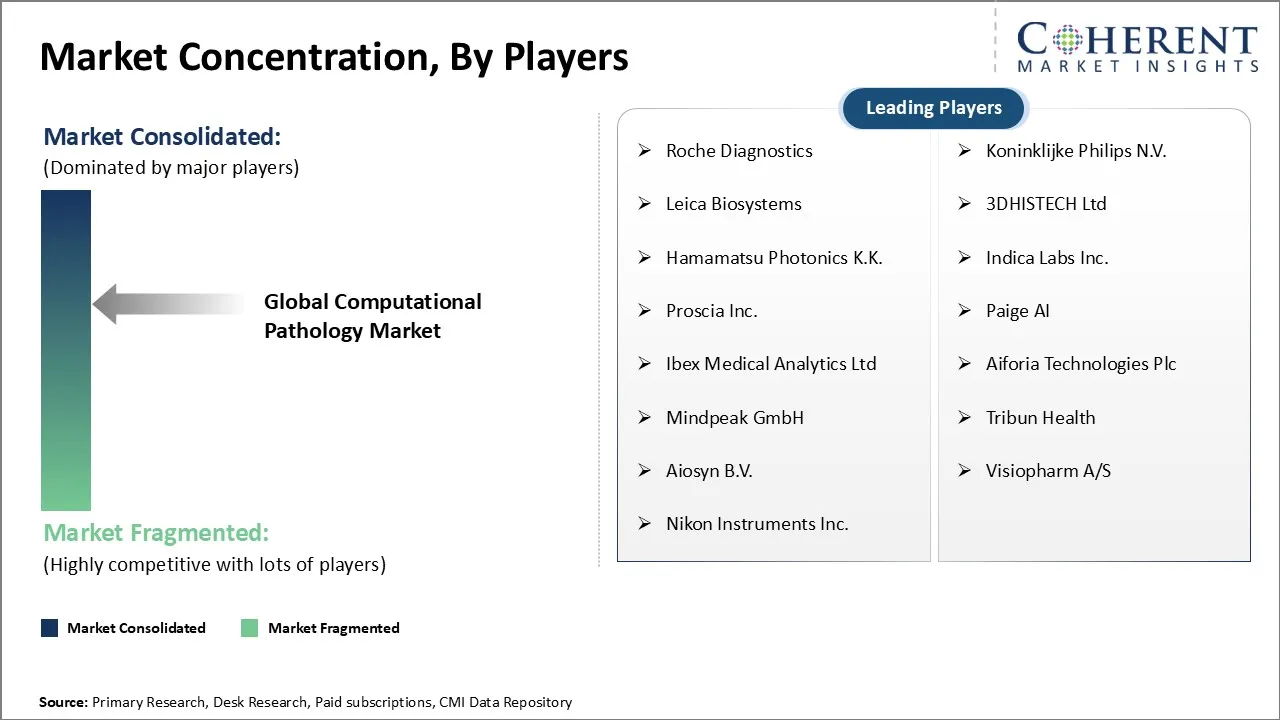
Key Developments
- In September 2025, Leica Biosystems, a global diagnostics company known for pathology solutions, introduced its Aperio HALO AP digital pathology software as part of a new workflow suite on the Aperio AI Store, and the launch highlights rising integration of Robotic Surgery and digital tools to support faster clinical decisions.
- In September 2025 European Society for Medical Oncology, ESMO, a leading global oncology society, launched its first Digital and Computational Pathology Fellowship to advance AI adoption in cancer care and awarded it to Balazs Acs from Karolinska Institutet, a major research university in Sweden. AstraZeneca, a global biopharmaceutical company, is supporting the fellowship which funds a two-year project to convert manual breast cancer pathology into quantitative computational pathology that improves biomarker accuracy and treatment decisions.
- In April 2025 Hoffmann-La Roche Ltd, a global leader in diagnostics and life sciences, received USFDA Breakthrough Device Designation for its VENTANA TROP2 RxDx Device, marking the first computational pathology companion diagnostic for non-small cell lung cancer. Roche uses an AI-driven IHC assay and digital pathology algorithm to deliver higher diagnostic precision. AstraZeneca, a major oncology innovator, supports the device with its Quantitative Continuous Scoring platform that strengthens accurate sample evaluation and treatment decisions.
- In January 2025, Mayo Clinic, a leading global healthcare institution, launched Mayo Clinic Digital Pathology to accelerate breakthroughs using computational pathology and its vast digital slide archive. NVIDIA, a major force in accelerated computing, is providing technical power to scale AI performance, while Aignostics, a specialist in AI for precision medicine, is collaborating to build advanced models that improve diagnostic accuracy and speed.
Top Strategies Followed by Global Computational Pathology Market Players
- The market leaders incur high investment in research and development (R&D) in order to create and offer high performance, next generation products of computational pathology. Such companies are emphasizing the incorporation of artificial intelligence (AI) and machine learning algorithms in the process of combining them with advanced imaging technologies in order to improve diagnostic accuracy and the efficiency of workflow. They also promote expansions by specializing in strategic alliances with large players in the industry and major OEMs.
- In September 2024, AstraZeneca, a global biopharma leader, reported that its computational pathology-based TROP2-QCS biomarker predicted stronger clinical benefit with detumomab deruxtecan in the TROPION-Lung01 Phase III trial. Daiichi Sankyo, a major oncology innovator, co-developed this TROP2-directed ADC that showed greater progression-free survival in biomarker-positive NSCLC patients.
- Cost-effective, but reliable solutions that balance the quality and price are likely to be used by mid-level players in the global computational pathology market. Given the demand elasticity of their target market areas, the companies provide products that appeal to the needs of the health providers who have limited budgets, thereby accessing the untapped market segments.
- Example companies include Proscia, which provides scalable digital pathology platforms suited for mid-budget hospitals, and Deep Bio, which delivers AI-driven pathology tools designed for cost-sensitive markets. Both focus on practical pricing, modular deployment, and accessible technology for laboratories operating under budget constraints.
- Small-scale players competitively cut niches in the computational pathology market by targeting a niche market. By focusing on differentiating an aspect or creating a breakthrough technology, these smaller companies can be able to stand out of the larger more generalized competition. They apply high-technology devices such as deep learning, cloud computing, and automated digital pathology to develop specialized solutions addressing the gaps in the clinical needs and geographical areas.
- Examples include Aiforia Technologies, known for developing customized deep-learning models for specialized diagnostic workflows, and HistoIndex, which offers niche laser-based, label-free imaging systems integrated with AI for fibrosis and tissue analysis. These companies differentiate through narrow clinical specialization and innovation-heavy product development.
Market Report Scope
Computational Pathology Market Report Coverage
| Report Coverage | Details | ||
|---|---|---|---|
| Base Year: | 2025 | Market Size in 2026: | USD 798.0 Mn |
| Historical Data for: | 2020 To 2024 | Forecast Period: | 2026 To 2033 |
| Forecast Period 2026 to 2033 CAGR: | 9.3% | 2033 Value Projection: | USD 1,487.1 Mn |
| Geographies covered: |
| ||
| Segments covered: |
| ||
| Companies covered: | Roche Diagnostics, Koninklijke Philips N.V., Leica Biosystems, 3DHISTECH Ltd, Hamamatsu Photonics K.K., Indica Labs Inc., Proscia Inc., Paige AI, Ibex Medical Analytics Ltd, Aiforia Technologies Plc, Mindpeak GmbH, Tribun Health, Aiosyn B.V., Visiopharm A/S, and Nikon Instruments Inc. | ||
| Growth Drivers: |
| ||
| Restraints & Challenges: |
| ||
Market Dynamics
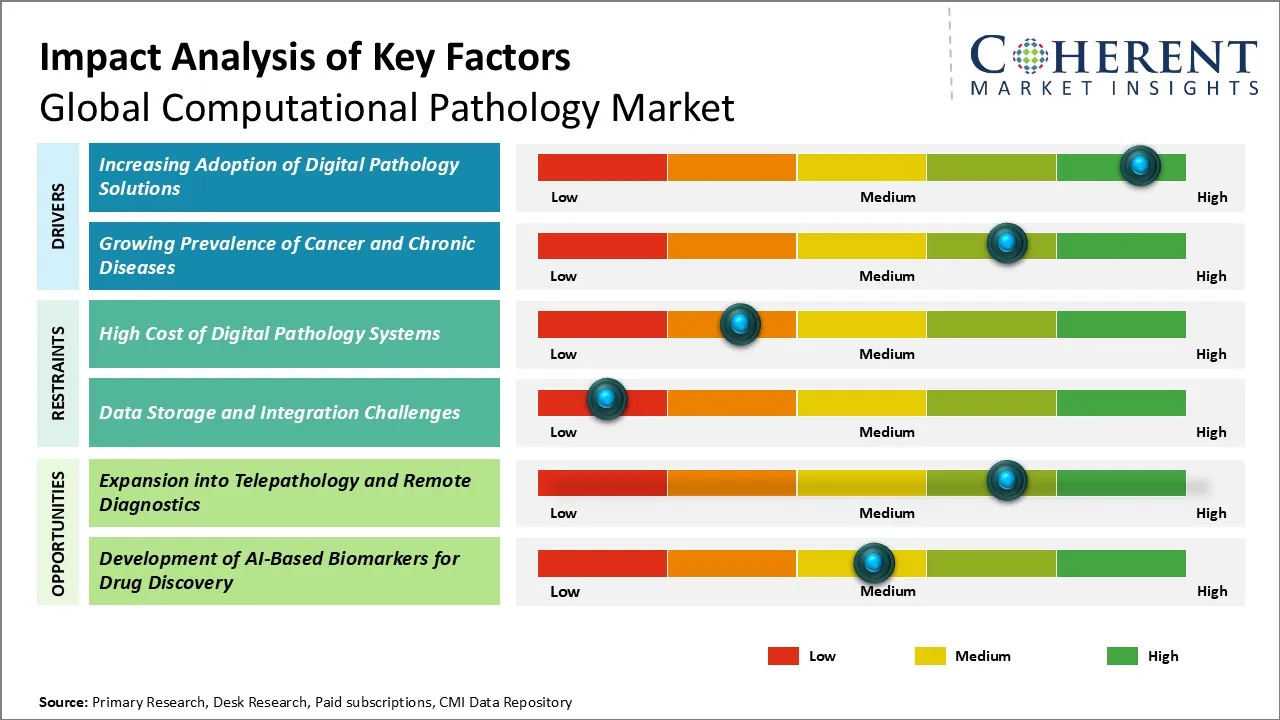
Computational Pathology Market Driver - Increasing Adoption of Digital Pathology Solutions
The increased use of digital pathology solutions is contributing to the demand in the global computational pathology market significantly. There is an ever-growing shift in healthcare providers and research institutions towards digital platforms of microscopy methods, rather than the traditional microscopy, and this approach provides the opportunity to visualize, store, and analyze pathological data more effectively. This change occurs thanks to the benefits that digital pathology has, such as enhanced diagnostic quality, increased turnaround time, and the ability to integrate with artificial intelligence (AI) and machine learning algorithms. The technologies help to perform automated image analysis, which helps the pathologists to detect patterns and abnormalities more effectively.
In June 2025, PathAI, a leading AI pathology company, partnered with Northwestern Medicine, a major U.S. academic health system, to deploy the AISight digital pathology platform and co-develop new computational pathology diagnostics. The multi-year collaboration enhances digital workflows, enables remote case review, and supports joint research to create advanced AI tools that improve diagnostic accuracy and patient outcomes.
Computational Pathology Market Opportunity - Expansion into Telepathology and Remote Diagnostics
The booming growth of telepathology and remote diagnostics in the global computational pathology market will benefit the industry greatly as the demand of diagnostic services accessible and timely across the world grows. Telepathology is a digital imaging and artificial intelligence (AI) used to allow pathologists to investigate tissue samples remotely, removing geographical limits and solving the problem of the lack of skilled pathologists, especially in underserved and rural areas. This growth will enable instant consultations and second opinions, which improves the accuracy of diagnoses and patient outcomes.
In September 2023, Jaramogi Oginga Odinga Teaching and Referral Hospital, a key referral center in Western Kenya, upgraded its telepathology program with advanced Leica diagnostic systems supplied through JICA to strengthen cancer diagnostics.
Market Segmentation
- Product Type Insights (Revenue, USD Mn, 2021 - 2033)
- Software
- Hardware
- Services
- Deployment Mode Insights (Revenue, USD Mn, 2021 - 2033)
- On-Premise
- Cloud Based
- Type Insights (Revenue, USD Mn, 2021 - 2033)
- Standalone Computational Pathology Software
- Integrated Digital Pathology Platforms
- Technology Insights (Revenue, USD Mn, 2021 - 2033)
- Machine Learning (Non-Deep Learning)
- Deep Learning and Neural Networks
- Computer Vision and Image Processing
- Predictive and Prescriptive Analytics
- Cloud Computing and Edge Computing
- Big Data and High-Performance Computing (HPC)
- Application Insights (Revenue, USD Mn, 2021 - 2033)
- Disease Diagnosis
- Drug Discovery and Development
- Clinical Workflow Optimization
- Quantitative Image Analysis
- Predictive and Prognostic Modeling
- Biomarker Quantification
- Workflow Stage Insights (Revenue, USD Mn, 2021 - 2033)
- Pre-Analytical
- Analytical
- Post-Analytical
- End User Insights (Revenue, USD Mn, 2021 - 2033)
- Hospitals
- Diagnostic Laboratories
- Pharmaceutical Companies
- Biotechnology Companies
- Contract Research Organizations
- Academic and Research Institutes
- Image Type Insights (Revenue, USD Mn, 2021 - 2033)
- Whole Slide Images
- Microscopy Images
- Radiology-Pathology Integrated Images
- Multi-Omics Integrated Images
- Regional Insights (Revenue, USD Mn, 2021 - 2033)
- North America
- U.S.
- Canada
- Latin America
- Brazil
- Argentina
- Mexico
- Rest of Latin America
- Europe
- Germany
- U.K.
- Spain
- France
- Italy
- Russia
- Rest of Europe
- Asia Pacific
- China
- India
- Japan
- Australia
- South Korea
- ASEAN
- Rest of Asia Pacific
- Middle East
- GCC Countries
- Israel
- Rest of Middle East
- Africa
- South Africa
- North Africa
- Central Africa
- North America
- Key Players Insights
- Roche Diagnostics
- Koninklijke Philips N.V.
- Leica Biosystems
- 3DHISTECH Ltd
- Hamamatsu Photonics K.K.
- Indica Labs Inc.
- Proscia Inc.
- Paige AI
- Ibex Medical Analytics Ltd
- Aiforia Technologies Plc
- Mindpeak GmbH
- Tribun Health
- Aiosyn B.V.
- Visiopharm A/S
- Nikon Instruments Inc.
Sources
Primary Research Interviews
Industry Stakeholders
- Senior Pathologists
- Laboratory Directors
- Hospital Procurement Managers
- Diagnostic Device Engineers
- AI/ML Algorithm Developers
- IT Directors in Healthcare Systems
End Users
- Clinical Pathologists
- Oncology Specialists
- Digital Pathology Technicians
- Research Scientists
- Academic Medical Centers
- Hospital Administrators
Government and International Databases
- World Health Organization (WHO)
- U.S. Food and Drug Administration (FDA)
- European Medicines Agency (EMA)
- National Institutes of Health (NIH)
- Centers for Medicare & Medicaid Services (CMS)
- OECD Health Statistics
Trade Publications
- CAP Today
- Dark Daily
- Healthcare IT News
- MedTech Insight
- Diagnostics World
- Clinical Lab Products
Academic Journals
- Journal of Pathology
- Modern Pathology
- Nature Medicine
- The Lancet Oncology
- Journal of Biomedical Informatics
- IEEE Transactions on Medical Imaging
Reputable Newspapers
- The New York Times – Health
- The Guardian – Health
- The Washington Post – Health
- Financial Times – Healthcare
- The Wall Street Journal – Health
- The Hindu – Science & Tech
Industry Associations
- College of American Pathologists (CAP)
- Digital Pathology Association (DPA)
- International Academy of Pathology (IAP)
- Association for Molecular Pathology (AMP)
- European Society of Pathology (ESP)
- Health Information and Management Systems Society (HIMSS)
Public Domain Resources
- Google Scholar
- ClinicalTrials.gov
- U.S. National Library of Medicine
- European Commission Public Health Portal
- NIH RePORTER Database
Proprietary Elements
- CMI Data Analytics Tool: Proprietary analytics tool to analyze real-time market trends, consumer behavior, and technology adoption in market
- Proprietary CMI Existing Repository of Information for Last 8 Years
Get access to 250+ pages report
Every segment, forecast, competitor profile and data table behind the analysis above — available for instant download.
- ESOMAR Member
- ISO 9001:2015 Certified
- D-U-N-S Registered
- GDPR & CCPA Compliant
Missing comfort of reading report in your local language? Find your preferred language:
Transform your Strategy with Exclusive Trending Reports
Frequently Asked Questions
The global computational pathology market is estimated to be valued at USD 798.0 Mn in 2026 and is expected to reach USD 1,487.1 Mn by 2033.
The CAGR of the global computational pathology market is projected to be 9.3% from 2026 to 2033.
Increasing adoption of digital pathology solutions and growing prevalence of cancer and chronic diseases are the major factors driving the growth of the global computational pathology market.
High cost of digital pathology systems and data storage and integration challenges are the major factors hampering the growth of the global computational pathology market.
In terms of product type, the software is estimated to dominate the market revenue share in 2026.
Roche Diagnostics, Koninklijke Philips N.V., Leica Biosystems, 3DHISTECH Ltd, Hamamatsu Photonics K.K., Indica Labs Inc., Proscia Inc., Paige AI, Ibex Medical Analytics Ltd, Aiforia Technologies Plc, Mindpeak GmbH, Tribun Health, Aiosyn B.V., Visiopharm A/S, and Nikon Instruments Inc. are the major players.
North America is expected to lead the global computational pathology market in 2026.