

Global Denture Market Size and Forecast – 2026 To 2033
The global denture market is expected to grow from USD 2.72 Bn in 2026 to USD 4.18 Bn by 2033, registering a compound annual growth rate (CAGR) of 6.3% from 2026 to 2033. The global denture market is poised for significant expansion, fueled by the increasing prevalence of tooth loss and edentulism, particularly among the aging population.
According to World Health Organization, the estimated global average prevalence of complete tooth loss is almost 7% among people aged 20 years or older. For people aged 60 years or older, a much higher global prevalence of 23% has been estimated.
(Source: World Health Organization)
Key Takeaways of the Global Denture Market
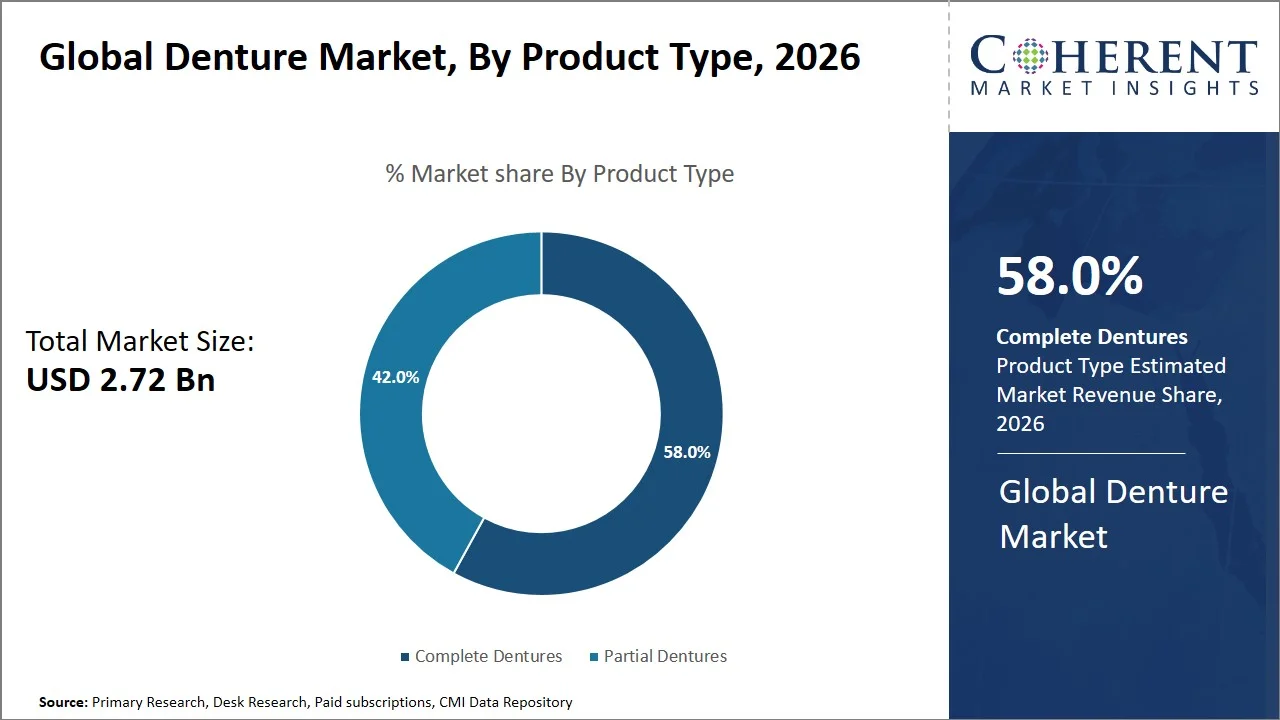
- Complete dentures are projected to hold 58.0 % of the global denture market share in 2026, making it the dominant product type segment, particularly in the Asia Pacific region, where public health care facilities actively facilitate the use of prosthetic rehabilitation. For instance, under the framework of India’s National Oral Health Programme (NOHP), the dental clinics operating in governmental hospitals offer affordable complete denture treatments to senior citizens, particularly in rural areas where the advanced stages of tooth loss prevail among individuals. (Source: National Oral Health Programme)
- Acrylic dentures are projected to hold 52.0 % of the global denture market share in 2026, making it the dominant material type segment, with strong penetration in Southeast Asia and Africa, backed by procurement practices within the public sector. For instance, Indonesia’s government-operated public healthcare system (Puskesmas) focuses on delivering basic and accessible oral healthcare services, particularly in underserved regions. Within such settings, removable dentures commonly made using cost-effective materials like acrylic are widely utilized in practice due to their affordability and ease of fabrication. This aligns with broader global oral health frameworks, including guidance from the World Health Organization, which emphasize equitable access to essential and cost-efficient dental care solutions. (Source: Primary Health Care Performance Initiative)
- Dental clinics are projected to hold 46.0 % of the global denture market share in 2026, making it the dominant end user segment, especially in North America, owing to the proliferation of organized networks of dental services. For instance, Heartland Dental (U.S.) manages over 1,900 affiliated dental offices, where prosthetic treatments, including dentures, are performed as outpatients. The model further emphasizes the role of dental clinics over hospitals as the dominant location for providing dentures. (Source: Heartland Dental)
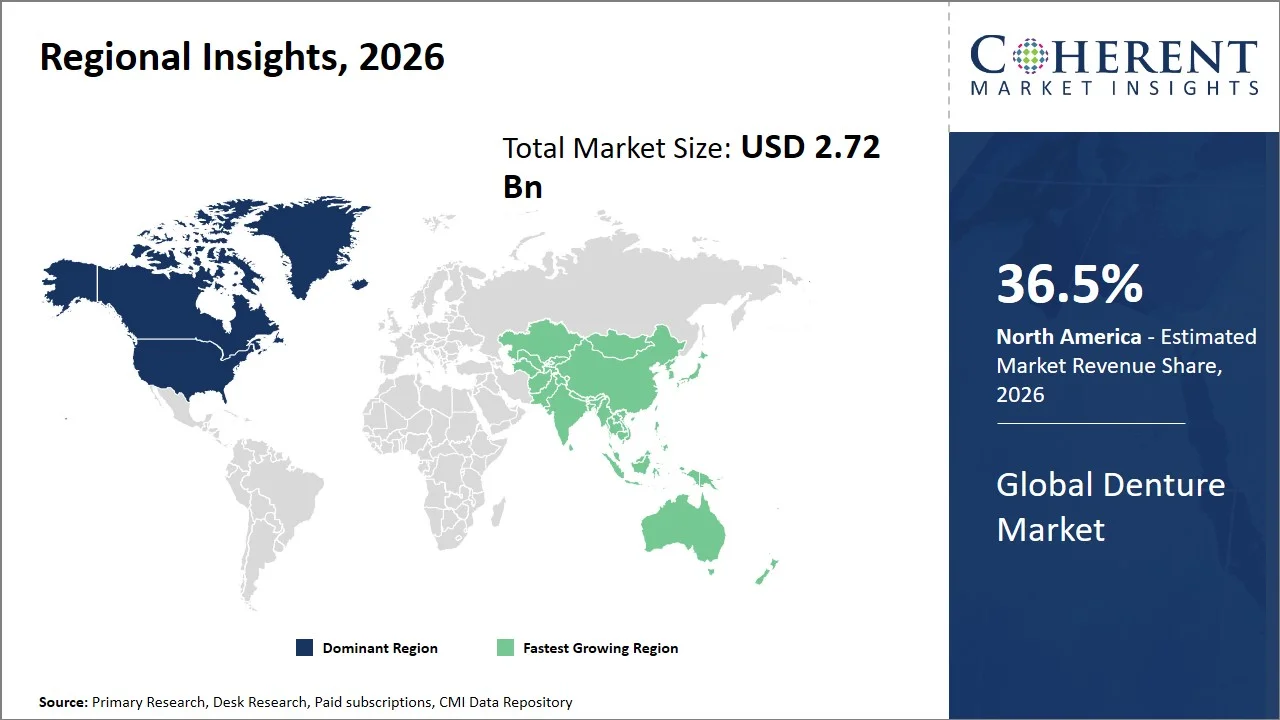
- North America maintains its dominance with an expected share of 36.5 % in 2026, led by the U.S., due to the existence of highly organized dental service providers and healthcare systems that involve insurance-based payment systems for dentures and other forms of treatment procedures. For instance, in the U.S., under the Medicaid scheme, several states, such as California (Medi-Cal Dental Program) and New York, offer comprehensive and partial dentures coverage within the dental care programs for adults, thereby making access to affordable treatment easier. The insurance-based model is beneficial in maintaining consistent volume levels within dental clinics, thus ensuring regional market dominance. (Source: Department of Health)
- Asia Pacific is expected to exhibit the fastest growth with an estimated contribution of 33.0 % share in 2026, supported by expanding public dental infrastructure and rising treatment access in countries such as China and India. For instance, considerable efforts are being made by the launch of Healthy China 2030, towards incorporating oral health care services within primary health care systems and making available prosthodontics to patients. (Source: China Development Brief) Similarly, The Ayushman Bharat-Health and Wellness Centers (HWCs) program in India is helping to improve delivery of basic prosthodontic treatment services at the primary care level, thus increasing the reach of denture patients in semi-urban and rural areas. (Source: Ministry of Health and Family Welfare)
- Expansion of Digital Dentistry and Chairside CAD/CAM Manufacturing: Intra-oral scanning technology together with the computer aided design/computer aided manufacturing methods of dentures fabrication have become one of the key ways of ensuring access to the global denture market. The use of digital technologies leads to higher efficiency, accuracy of fitting and fewer visits from patients to the dentist’s office, making it an attractive solution for dentistry. The trend toward dentures being produced in one visit and the process of 3D printing are also contributing to greater efficiencies.
- Rising Demand for Implant-Supported and Premium Aesthetic Dentures: The current demand for dentures that use implants and better prosthetics has significantly increased due to the patient’s preference for comfort, stability, and high-end prosthetic The benefits of using implants in dentures, including retention and enhanced chewing capability, have already been demonstrated. Moreover, the focus on dental aesthetics and the quality of life leads patients to select better dentures with customized designs. This offers immense opportunities for businesses with high-profit margins for denture producers and suppliers.
Segmental Insights
Why Does the Complete Dentures Segment Dominate the Global Denture Market?
Complete dentures are projected to hold a market share of 58.0% in 2026, because they represent the only standardized and easily scaled-up solution for full mouth rehabilitation when more advanced implant techniques cannot be applied. Their mass adoption has been encouraged through their inclusion in national oral health service delivery systems and comprehensive programs for public provision of oral health services. For instance, the U.K.’s National Health Service (NHS) routinely provides complete dentures as part of Band 3 dental treatments, ensuring standardized access to full-mouth prosthetic care across the population. (Source: National Health Service)
Likewise, in Australia, the Child Dental Benefits Schedule (CDBS) and public dental services assist in providing prosthodontic care pathways that include dentures to certain populations. (Source: Australian Government) Furthermore, global humanitarian initiatives such as Smile Train have helped to advance oral rehabilitation services, which include prosthetic assistance in low-resource regions, helping normalize the adoption of complete dentures. (Source: Smile Train, Inc.) These structured methods for delivery, along with the possibility of treating high patient volumes without surgical dependency continue to make complete dentures as the most widely adopted solution globally.
- Current Industry Events of 2026
- Market Size Estimation
- Regional Breakdown
- Competitive Landscape
- Customer Intelligence
- Segmental Analysis
- Pricing Analysis
- Key Market Drivers, Challenges & Future Trends
- Customized Insights Section
Why are Acrylic Dentures the Most Preferred Material Type?
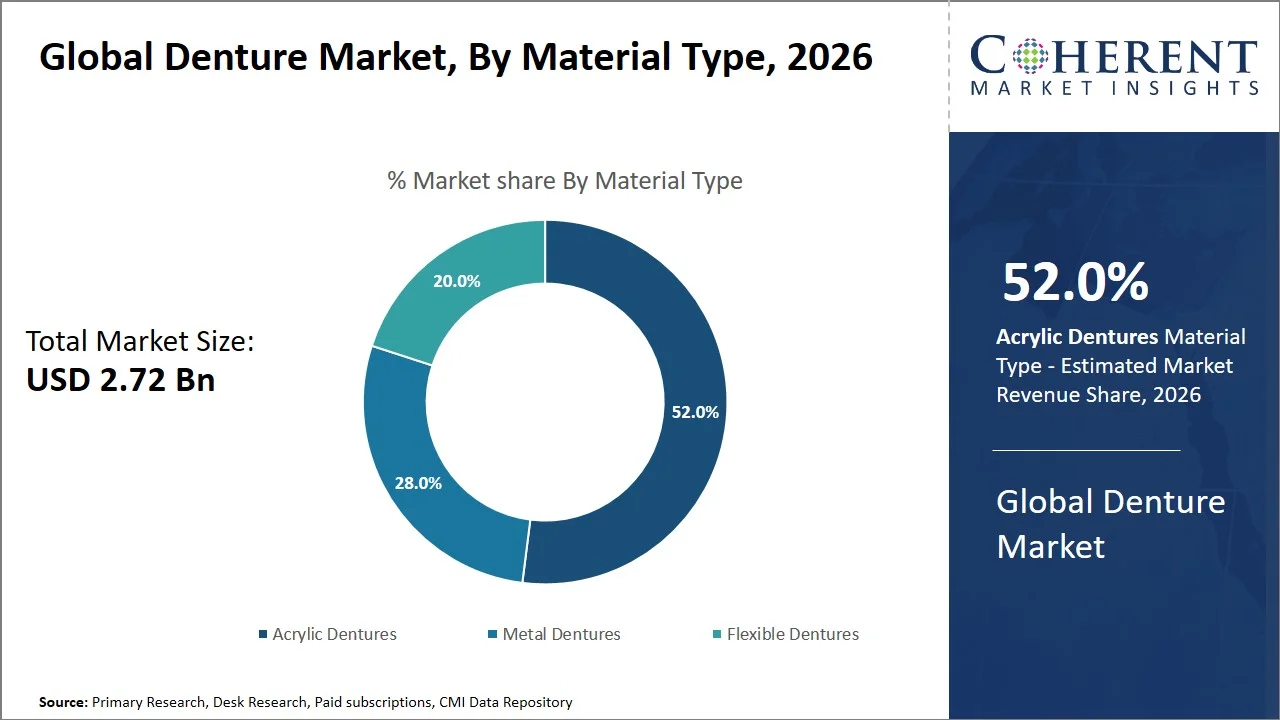
Acrylic dentures are projected to hold a market share of 52.0% in 2026, attributed to their cost-effectiveness, ease of fabrication, and versatility, rendering them suitable for mass production and distribution. Compared to metal or flexible materials, acrylics are the least expensive and fastest to produce, allowing high throughput in manufacturing and clinical settings irrespective of market conditions. A study published by the National Library of Medicine, had shown that full acrylic removable partial dentures remain a common choice because they are economical and easy to fabricate in regular dental clinics. (Source: National Library of Medicine)
Moreover, the material allows easy relining and repair in case of modifications to gum structures, making it particularly appropriate for immediate denture construction and aging patients who require regular adjustments. On a material level, acrylics (PMMA) are favored due to their biocompatibility and capacity to resemble natural tissues, increasing their relevance to dentistry and mass application in clinics. Overall, the combination of cost-effectiveness, ease of use, and compatibility with a wide range of applications continues to make acrylic dentures the most relevant and widely used material type segment.
Dental Clinics Segment Dominates the Global Denture Market
The dental clinics segment is projected to hold a market share of 46.0% in 2026, due to the need for specialized outpatient skill sets and repeated processes for denture procedures such as making impressions, coordination, and adjustments. This trend is supported by the regulatory environment, as it mandates the performance of denture related processes by registered dental practitioners only. For instance, in Canada, provincial laws mandate that the provision of dentures should be done either by registered dentists or denturists who have been properly trained and operate in designated clinical settings under regulatory bodies like the College of Denturists of Ontario. This regulation not only ensures safety and quality of the process, but also makes sure that most procedures for dentures are performed in dental clinics. (Source: College of Denturist of Ontario)
Currents Events and their Impact
Current Events | Description and its Impact |
EU Medical Device Regulation (MDR) Implementation for Custom-Made Dental Prosthetics (December 2025 - Ongoing Enforcement) |
|
U.S. FDA Classification & Oversight of Dental Prosthetic Devices (January 2025 - Ongoing Enforcement) |
|
(Source: European Commission, U.S. Food and Drug Administration)
Global Denture Market Dynamics
Market Drivers
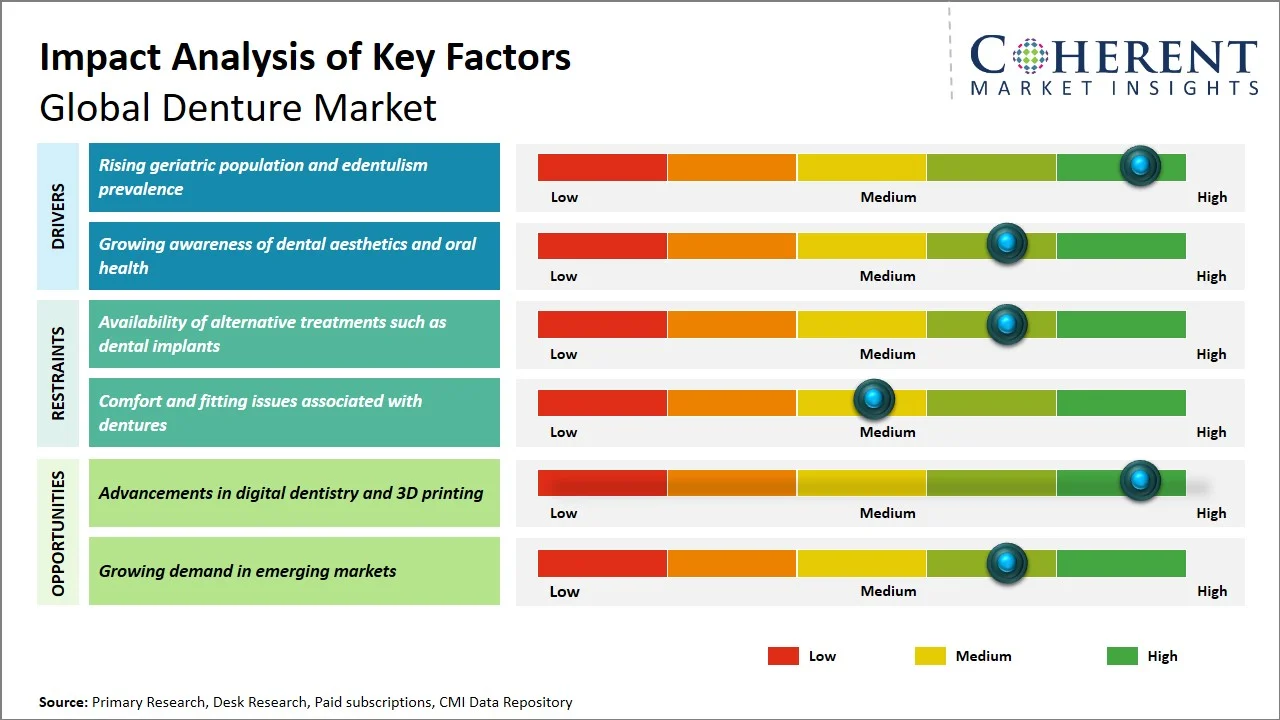
- Rising geriatric population and edentulism prevalence: The rising global geriatric population is a key driver of denture demand, as aging is strongly associated with a higher risk of edentulism due to cumulative dental conditions such as periodontal disease and long-term enamel wear. As per World Health Organization statistics, by 2030, 1 in 6 people globally will be aged 60 or older, with the elderly population rising from 1 billion in 2020 to 1.4 billion, and projected to reach 2.1 billion by 2050. (Source: World Health Organization) This demographic shift is evident in healthcare systems of many countries, such as Japan, which has included prosthodontic dentistry for elderly patients in its universal healthcare coverage system due to the rapid aging rate in the country. (Source: Japan Dental Association). As older adults are more likely to require full or partial tooth replacement, the growing aging population continues to drive sustained demand for denture solutions globally.
- Growing awareness of dental aesthetics and oral health: The growing significance of teeth aesthetics and prevention measures is another critical factor that boosts the demand for dentures since consumers are demanding not only the functionality of their teeth but also aesthetic outcomes. The trend is backed by various public health and government campaigns aimed at enhancing people's knowledge about the maintenance of their teeth. For instance, the “World Oral Health Day” campaign conducted by the FDI World Dental Federation highlights the value of preserving one's oral function and aesthetics, encouraging everyone to resort to professional help, such as dentures. (Source: FDI World Dental Federation) Additionally, countries such as the U.K. have established national programs through the "Delivering Better Oral Health" initiative from Public Health England, which focuses on preventive care and oral rehabilitation, indirectly aiding the need for dental restoration procedures. (Source: Department of Health and Social Care) As awareness around smile aesthetics, facial structure, and oral hygiene continues to rise across both developed and emerging markets, more patients are proactively opting for dentures, contributing to the market growth.
Emerging Trends
- Integration of AI-Driven Denture Design and Predictive Modeling: AI-assisted dentures are an upcoming trend in the realm of dental technology that can revolutionize the process by providing exact designs according to the unique anatomy and biting force of each individual. The simulation technology allows dental laboratories to streamline their process and increase efficiency and precision.
- Growing Adoption of Eco-Friendly and Biocompatible Materials: The sustainability aspect is becoming more common in the denture manufacturing industry as manufacturers seek to develop materials that are easily recyclable, non-toxic, and extremely biocompatible. The growing consumer demand for resin material that is Bisphenol A. (BPA)-free and lighter polymers has contributed to this shift towards sustainability.
Regional Insights
Why is North America a Strong Market for Dentures?
North America leads the global denture market, accounting for an estimated 36.5% share in 2026, due to its highly developed system for delivering dental healthcare services, fast digitalization trends, and increased governmental efforts towards making oral health care accessible to more people. North America’s denture market benefits from a well-established dental care infrastructure, supported by extensive private clinic networks such as Heartland Dental, Aspen Dental, Pacific Dental Services, Smile Brands, and Dental Care Alliance. These organized provider networks enable efficient diagnosis, denture production, and post-treatment care, strengthening regional market growth.
The implementation of innovations in terms of computer-assisted designing and machining, intra-oral scanners, and milling have simplified dentures production, making it faster and more accurate. For instance, the introduction of the Canada Dental Care Plan (CDCP) and its provision of dental insurance coverage for prosthodontics, such as dentures, is improving affordability for a large uninsured population. (Source: Government of Canada) The synergy of a strong clinical infrastructure, fast digitalization, and increasing insurance coverage further ensures the region's dominance and sustained stability within the global denture market.
Why Does the Asia Pacific Denture Market Exhibit High Growth?
The Asia Pacific denture market is expected to exhibit the fastest growth with an estimated contribution of 33.0% to the market in 2026, because of the increasing commercialization of private dentistry and the emergence of clinic-based chains in tier-1 and tier-2 cities. For instance, in India, there has been aggressive expansion of corporate dental chains including Clove Dental and Sabka Dentist, thereby making dental services more standardized in terms of quality and availability in tier-2 cities. (Source: ETHealthworld.com)
Similarly, in the Southeast Asian region, countries such as Vietnam and Indonesia have been experiencing an increase in the number of medium-sized private dental clinics providing same-day denture treatment through their in-house laboratories, thereby minimizing their dependence on central laboratories. For instance, dental centers such as Dr. Hung & Associates in Vietnam operate in-house dental laboratories that fabricate dental prostheses on-site, making easy coordination between dentists and technicians and significantly reducing turnaround time for treatments. (Source: Dr Hung & Associates Dental Centre)
Furthermore, in Japan, the presence of over 68,500 dental clinics reflects high density of its outpatient facilities, ensuring high accessibility for prosthetic treatments. (Source: ScienceDirect) This transition from fragmented and small practice-oriented to scalable and clinic-driven methods of delivering services are actually speeding up the denture adoption, by improving availability, reducing turnaround time, and enhancing patient reach across the region.
Why is the U.S. Leading Innovation and Adoption in the Denture Market?
The U.S. is the leader of innovations and adoption in the market of dentures attributed to its advanced network of dental technology innovations, awareness about regulatory obligations, and quick digitalization procedures at clinics and laboratories. The U.S. is among the leaders in adopting innovations such as CAD/CAM, intraoral scanning, and 3D printing techniques for faster and precise production of dentures. For instance, Ivotion digital denture system by Ivoclar, launched in the U.S. denture market, allows for monolithic milling of complete dentures in a single continuous process, thereby reducing fabrication time and ensuring consistency. (Source: Ivoclar) Furthermore, the presence of dental technology companies (such as, Align Technology, Henry Schein, Envista Holdings, BIOLASE Inc., Carestream Dental, Patterson Companies) and their active participation in research and development, along with early adoption of innovations among clinicians, will help accelerate innovation within the industry.
Is Japan a Favorable Market for Dentures?
Japan represents a prime target market for dentures owing to its large aging population and efficient public healthcare system. It boasts of a relatively large proportion of elderly people in the world; therefore, there is always a high demand for artificial teeth replacement. The universal health care system of Japan covers costs incurred during dental surgery for dental prostheses, such as those that involve the installation of dentures (such as the NHI system). Moreover, the country is highly regarded for its clinical excellence, which incorporates the use of state-of-the-art dental equipment, including the application of precision techniques in denture fabrication.
Is China Emerging as a Key Growth Hub for the Denture Market?
China has emerged as one of the growth centers of the denture market due to the development of dental care institutions and the use of modern technology in dental care. There is a quick growth in the number of privately-held dental clinics and dental laboratories in the country, improving access to prosthodontic treatments across urban and tier-2 cities. For instance, dental laboratories in the country have reached 3,943 facilities, reflecting the growing backend infrastructure for prosthetic solutions such as dentures. (Source: National Library of Medicine). Additionally, among the 1.4 billion people in China, there are 110,000 dentists and 110,000 dental lab technicians. The ratio of dentists to total population now is 1: 12,727. (Source: Dental Tribune) Moreover, health strategies in China, such as the Healthy China 2030 strategy, encourage preventive and reconstructive dental healthcare techniques.
Why Does Germany Top the Europe Denture Market?
Germany is considered the largest denture market across Europe attributed to its comprehensive dental care structure, extensive use of high-tech prosthodontics, and an established reimbursement framework (such as, Gesetzliche Krankenversicherung – GKV, Festzuschuss system for dental prostheses). Moreover, the country’s statutory health care insurance plan covers a proportion of the cost associated with dental prosthetics, including dentures, leading to increased utilization rates. Furthermore, Germany has a number of companies involved in manufacturing dental equipment (such as, Dentsply Sirona, Ivoclar, BEGO, Kulzer GmbH, VITA Zahnfabrik), as well as early adopters of digital dentistry systems such as computer-aided design and manufacturing (CAD/CAM) dentures.
Is the Denture Market Developing in India?
The denture market is rapidly growing in India, driven by expansion of dental infrastructure and education, with an increasing number of dental colleges and clinics increasing service availability. The government initiatives such as Rashtriya Bal Swasthya Karyakram (RBSK) have been enhancing the process of diagnosis and referrals for oral problems, which ultimately contributes to the growing demand for restorative services. (Source: Ministry of Health and Family Welfare) In addition, increased awareness about oral health and cosmetic dentistry is resulting in an increase in the number of people opting for dentures. The India denture market is highly price-sensitive, and therefore, there is great demand for low-cost dentures especially in semi-urban and rural areas.
Regulatory Landscape Governing the Global Denture Market
Region | Authority / Framework | Denture-Specific Regulatory Scope | Impact on Market |
North America | U.S. FDA (Dental Devices) & Canada Dental Care Plan (CDCP) | Dentures regulated as medical devices; increasing insurance-backed coverage expansion (e.g., CDCP includes dentures) | Expanding reimbursement access is increasing patient affordability and procedure volumes, especially among uninsured populations |
Europe | EU Medical Device Regulation (MDR 2017/745) | Dentures classified as custom-made devices with mandatory documentation, traceability, and post-market monitoring | Higher compliance burden on dental labs; accelerating shift toward digitally traceable denture production |
Asia Pacific | India (Medical Device Rules, 2017), China (Healthy China 2030) | Expansion of regulated dental materials and integration of oral care into public health systems | Formalization of denture manufacturing + increased access through public programs, boosting demand in emerging markets |
Latin America | Brazil (ANVISA), Mexico (COFEPRIS) | Strengthening device registration and quality compliance for dental prosthetics | Improves product quality while enabling entry of global denture manufacturers |
Middle East & Africa | Saudi FDA (SFDA), South Africa (SAHPRA) | Adoption of international standards (FDA/EU-aligned approvals) and licensing requirements | Facilitates import-driven market growth while gradually regulating informal denture practices |
How are advancements in digital dentistry and 3D printing creating new growth opportunities in the global denture market?
Advancements in digital dentistry and 3D printing are creating significant opportunities for growth in the denture market enabling rapid, accurate, and scalable manufacturing of personalized implants. Intraoral scanning, computer-aided design and manufacturing (CAD/CAM), and additive manufacturing help dental practices and labs achieve substantial reductions in manufacturing time while increasing the precision of fit, thus requiring fewer patient visits.
For instance, Lucitone Digital Print Denture System by Dentsply Sirona, received U.S. FDA 510(k) clearance in March 2025, enabling the fabrication of fully 3D-printed denture bases and teeth using validated digital workflows, thereby accelerating the shift toward scalable and high-precision digital denture production. This system enables dental laboratories to create dentures that are highly accurate and monolithic in nature with shorter production time and uniform quality. (Source: Dentsply Sirona) Furthermore, the digital storage of files makes it easier to duplicate and replace dentures more quickly, which is especially advantageous for elderly people. This process of automation, increased efficiency, and high-volume production allows firms to increase their business scale and reach new markets by providing them with better profit margins.
Market Players, Key Development, and Competitive Intelligence
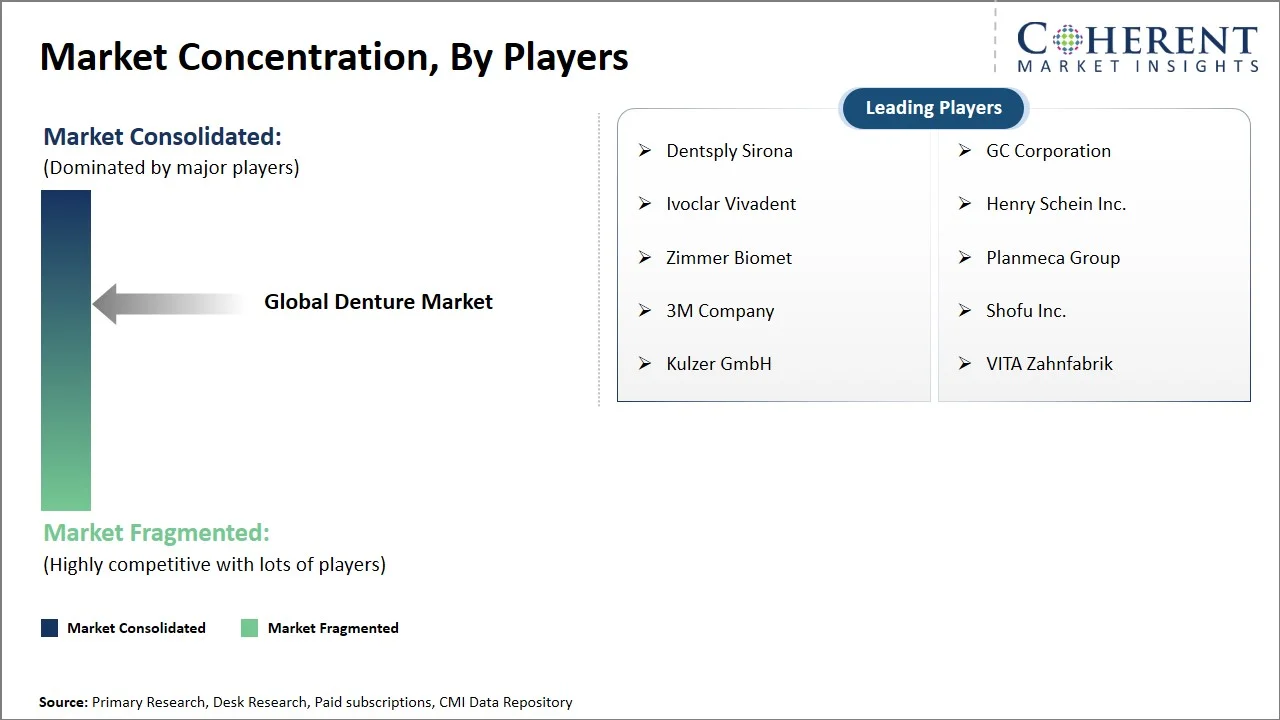
Key Developments
- In February 2026, 3D Systems Corp. released an expansion of its NextDent Jetted Denture offering with the addition of three base shades that increase aesthetic and customizable options for patients. This technology increases the capability of production and allows dental labs to provide customized dentures for patients through the use of digital dentistry.
- In August 2025, Dentalcorp Holdings Ltd. stated that additional dental practices were added within the period of Q2 2025. This is part of the company’s efforts to grow its global presence and provide better access to their dental care services. It is part of the market consolidation taking place in the dental industry, driving the need for restorative procedures like dentures.
Competitive Landscape
The global denture market will likely stay highly competitive due to the presence of an ever-growing elderly population and edentulism cases, especially within developed and developing countries. The rapid development of digital dentistry tools such as CAD/CAM and 3D printing is adding pressure on dental laboratory companies. Moreover, the trend towards custom-made, high-quality, and light dentures is encouraging firms to offer innovative and material denture products. The trend of providing cost-effective products and dental care chains is also contributing to the competitive environment. Key focus areas include:
- Adoption of digital denture workflows (CAD/CAM, 3D printing)
- Development of cost-effective acrylic and hybrid denture solutions
- Strengthening partnerships with dental clinics and lab networks
- Focus on aesthetic customization and improved material quality
- Expansion into regulated markets
Market Report Scope
Denture Market Report Coverage
| Report Coverage | Details | ||
|---|---|---|---|
| Base Year: | 2025 | Market Size in 2026: | USD 2.72 Bn |
| Historical Data for: | 2020 To 2024 | Forecast Period: | 2026 To 2033 |
| Forecast Period 2026 to 2033 CAGR: | 6.3% | 2033 Value Projection: | USD 4.18 Bn |
| Geographies covered: |
| ||
| Segments covered: |
| ||
| Companies covered: | Dentsply Sirona, Ivoclar Vivadent, Zimmer Biomet, 3M Company, Kulzer GmbH, GC Corporation, Henry Schein Inc., Planmeca Group, Shofu Inc., and VITA Zahnfabrik | ||
| Growth Drivers: |
| ||
| Restraints & Challenges: |
| ||
Analyst Opinion (Expert Opinion)
- In the coming years, the prospects of the denture market is expected to experience a shift from traditional removable dentures to modern or advanced forms of dentures using technological advancements. These technologies include computer-aided design/computer-aided manufacturing (CAD/CAM) dentistry, intraoral scanning, and 3D printing that enhance production efficiency, effectiveness, and quality. Additionally, another trend that can influence the denture market can be attributed to the incorporation of dentures within implant-based procedures for enhanced efficacy. Finally, the strict regulations in the developed markets along with proper production systems in the emerging economies will enhance denture production standards.
- The largest opportunities are anticipated to be found in the acrylic dentures category within the dental clinics in India and China, where the large number of patients, enhanced availability of dental facilities from government support, and cost-conscious consumers form an opportunity-rich environment. Both these countries are currently experiencing fast growth in the area of basic dental infrastructure development and government-sponsored oral health campaigns, making dental treatment more accessible even in semi-urban and rural settings. The choice of economical and customizable materials for dentures makes acrylic dentures highly scalable.
- In order to establish a competitive advantage, companies must focus on using digital dentures technology (CAD/CAM and 3D printing), forming alliances with dental clinics, and making their cost structures optimal for serving the emerging nations. Adhering to the regulatory requirements concerning production and material will be necessary owing to increasing regulations. Other than that, they should aim at differentiating themselves on account of customization, rapid delivery, and customer orientation, among others.
Speak to the analyst
Want personalized insights?
Take the findings above to one of our principal consultants, or have the report rebuilt around the segments, geographies and competitors you actually track.
Market Segmentation
- Product Type Insights (Revenue, USD Bn, 2021 - 2033)
- Complete Dentures
- Partial Dentures
- Material Type Insights (Revenue, USD Bn, 2021 - 2033)
- Acrylic Dentures
- Metal Dentures
- Flexible Dentures
- End User Insights (Revenue, USD Bn, 2021 - 2033)
- Dental Clinics
- Hospitals
- Others
- Regional Insights (Revenue, USD Bn, 2021 - 2033)
- North America
- U.S.
- Canada
- Latin America
- Brazil
- Argentina
- Mexico
- Rest of Latin America
- Europe
- Germany
- U.K.
- Spain
- France
- Italy
- Russia
- Rest of Europe
- Asia Pacific
- China
- India
- Japan
- Australia
- South Korea
- ASEAN
- Rest of Asia Pacific
- Middle East
- GCC Countries
- Israel
- Rest of Middle East
- Africa
- South Africa
- North Africa
- Central Africa
- North America
- Key Players Insights
- Dentsply Sirona
- Ivoclar Vivadent
- Zimmer Biomet
- 3M Company
- Kulzer GmbH
- GC Corporation
- Henry Schein Inc.
- Planmeca Group
- Shofu Inc.
- VITA Zahnfabrik
Sources
Primary Research Interviews
- Prosthodontists and dental surgeons specializing in complete and partial denture procedures across hospitals and private dental clinics
- Dental laboratory technicians and CAD/CAM denture fabrication specialists involved in digital dentistry workflows
- Executives from dental device companies (e.g., denture manufacturers, dental material suppliers) focusing on prosthetic innovations
- Consultants and distributors engaged in dental prosthetics supply chains and outsourcing services
Stakeholders
- Denture Solution Providers: (e.g., dental device manufacturers, prosthetic solution providers, CAD/CAM dental system companies, 3D printing firms for dental applications)
- End-use Sectors
- Hospitals & Dental Clinics
- Dental Laboratories
- Academic & Research Institutes (Dental Schools)
- Regulatory & Health Bodies: U.S. Food and Drug Administration (FDA) – dental device approvals and compliance standards, European Medicines Agency (EMA) – regulatory frameworks for medical devices, World Health Organization (WHO) – global oral health initiatives and ageing population data, National Institutes of Health (NIH) – dental and craniofacial research funding
Databases
- ClinicalTrials.gov – clinical studies on dental prosthetics, implants, and denture materials
- World Health Organization (WHO) – oral disease burden and ageing population datasets
- Centers for Disease Control and Prevention (CDC) – oral health surveillance and edentulism statistics
- OECD Health Statistics – healthcare expenditure and dental care utilization
Magazines
- Journal of Prosthodontics – advancements in denture design and maintenance guidelines
- Journal of Dental Research – innovations in dental materials and prosthetic technologies
- Dental Materials Journal – material science developments for dentures
Journals
- The Journal of the American Dental Association (JADA) – clinical guidelines for denture care and usage
- International Journal of Prosthodontics – research on denture performance and patient outcomes
- Gerodontology – ageing population and denture-related oral health studies
Newspapers
- The Times of India (Healthcare & Dental Coverage) – reporting on government-led denture programs (e.g., public oral health schemes improving access to dentures in India)
- The New York Times (Healthcare & Aging Population Coverage) – reports on oral health trends, dental care access, and rising demand for dentures among the elderly
- The Guardian (Public Health & Policy) – covers dental care accessibility, insurance systems, and challenges in prosthetic dentistry
- The Wall Street Journal (Healthcare Industry & Business) – reports on dental service organizations, private clinic expansions, and market trends impacting denture demand
Associations
- American College of Prosthodontists (ACP)
- International Association for Dental Research (IADR)
- European Prosthodontic Association (EPA)
- FDI World Dental Federation
Public Domain Sources
- National Institutes of Health (NIH) – oral health research and denture-related studies
- Centers for Disease Control and Prevention (CDC) – tooth loss and oral health datasets
- World Health Organization (WHO) – global oral health policies and ageing statistics
Proprietary Elements
- CMI Data Analytics Tool, Proprietary CMI Existing Repository of information for last 10 years.
Get access to 250+ pages report
Every segment, forecast, competitor profile and data table behind the analysis above — available for instant download.
- ESOMAR Member
- ISO 9001:2015 Certified
- D-U-N-S Registered
- GDPR & CCPA Compliant
Missing comfort of reading report in your local language? Find your preferred language:
Transform your Strategy with Exclusive Trending Reports
Frequently Asked Questions
The global denture market is estimated to be valued at USD 2.72 Bn in 2026 and is expected to reach USD 4.18 Bn by 2033.
Complete dentures dominate due to the high global prevalence of full edentulism, particularly among the aging population.
A denture is a removable dental prosthesis designed to replace missing teeth and surrounding oral tissues, restoring function and aesthetics.
The CAGR of the global denture market is projected to be 6.3% from 2026 to 2033.
Rising geriatric population and edentulism prevalence and growing awareness of dental aesthetics and oral health are the major factors driving the growth of the global denture market.
Availability of alternative treatments such as dental implants and comfort and fitting issues associated with dentures are the major factors hampering the growth of the global denture market.
Denture bases are typically made from acrylic resins (PMMA), while teeth are fabricated from acrylic or porcelain for durability and aesthetics.