

Global Diabetes Diagnostics Market Size and Forecast – 2026 to 2033
The Global Diabetes Diagnostics Market is estimated to be valued at USD 36.98 Bn in 2026 and is expected to reach USD 63.79 Bn by 2033, exhibiting a compound annual growth rate (CAGR) of 8.1% from 2026 to 2033. This growth is driven by rising diabetes prevalence, increased healthcare expenditure, and growing awareness around early diagnosis and management to prevent complications.
Key Takeaways of the Global Diabetes Diagnostics Market
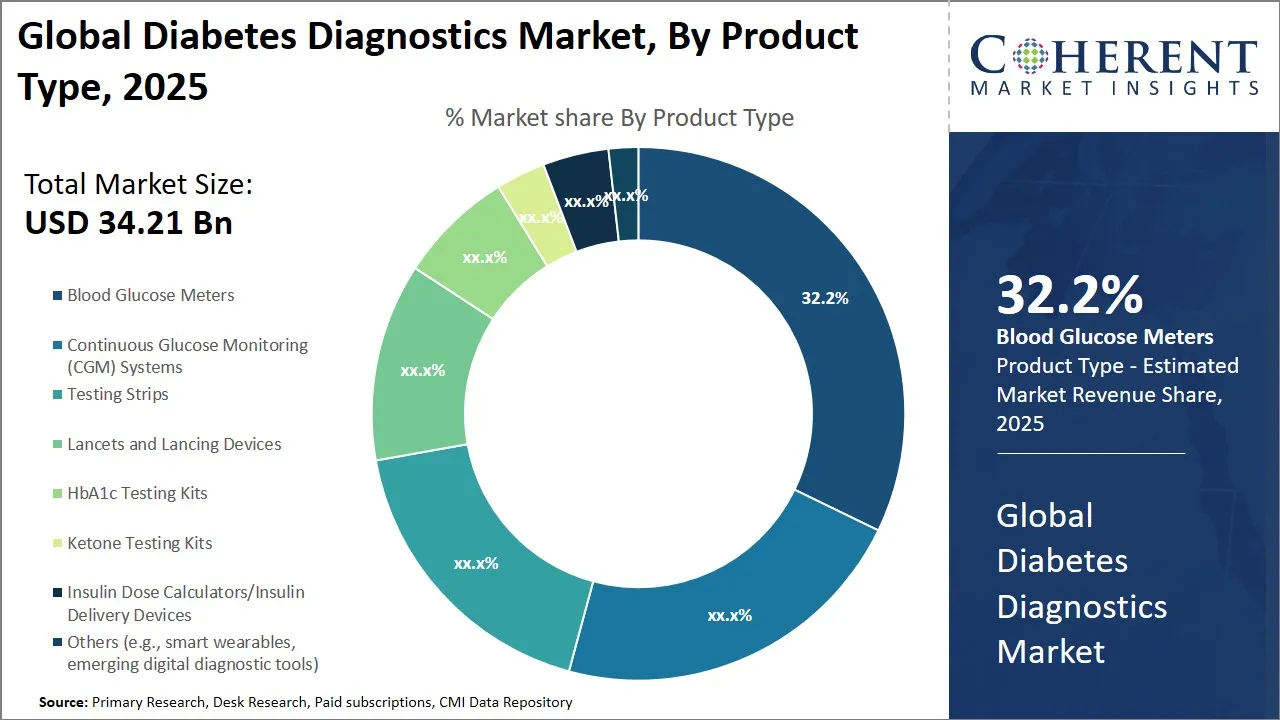
- In the global diabetes diagnostics market, blood glucose meters are expected to account for the largest share among product type at 33.2% in 2026.
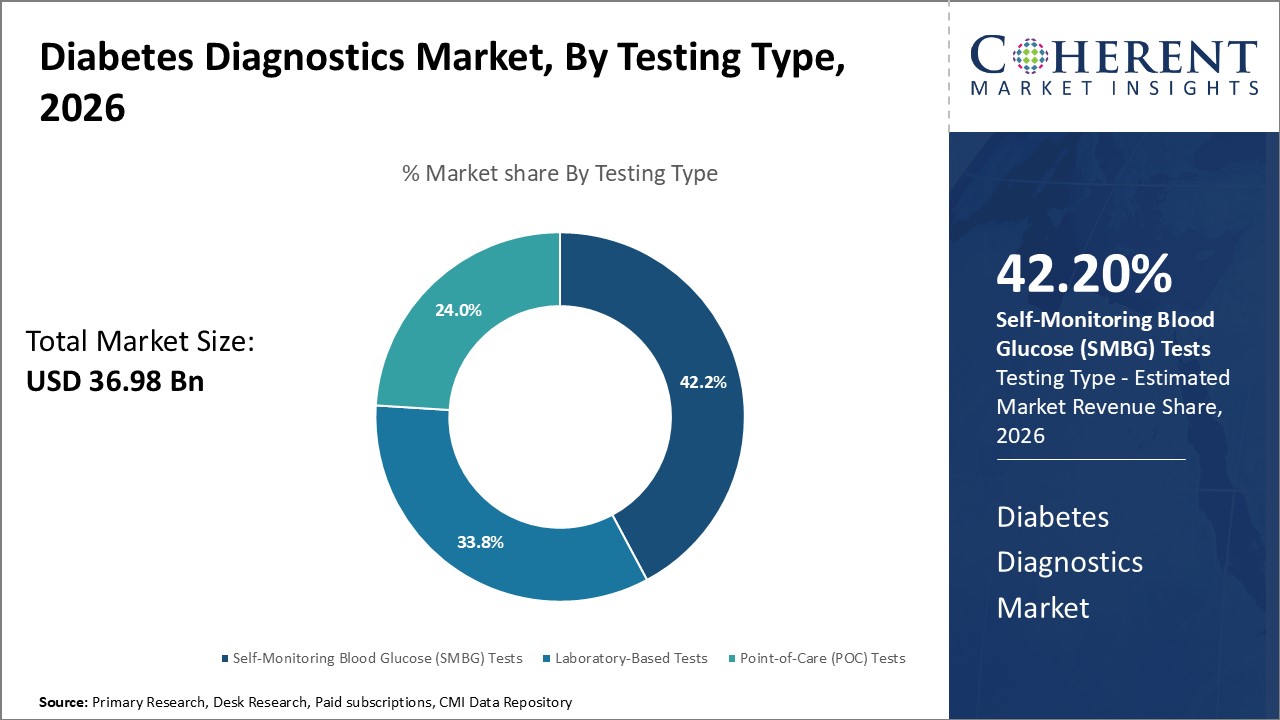
- Within testing types, Self-Monitoring Blood Glucose (SMBG) tests lead the segment, holding an estimated share of 42.2% share in 2026.
- On the technology front, electrochemical biosensors are projected to dominate with 36.2% share in 2026, driven by their high sensitivity and precision in glucose detection.
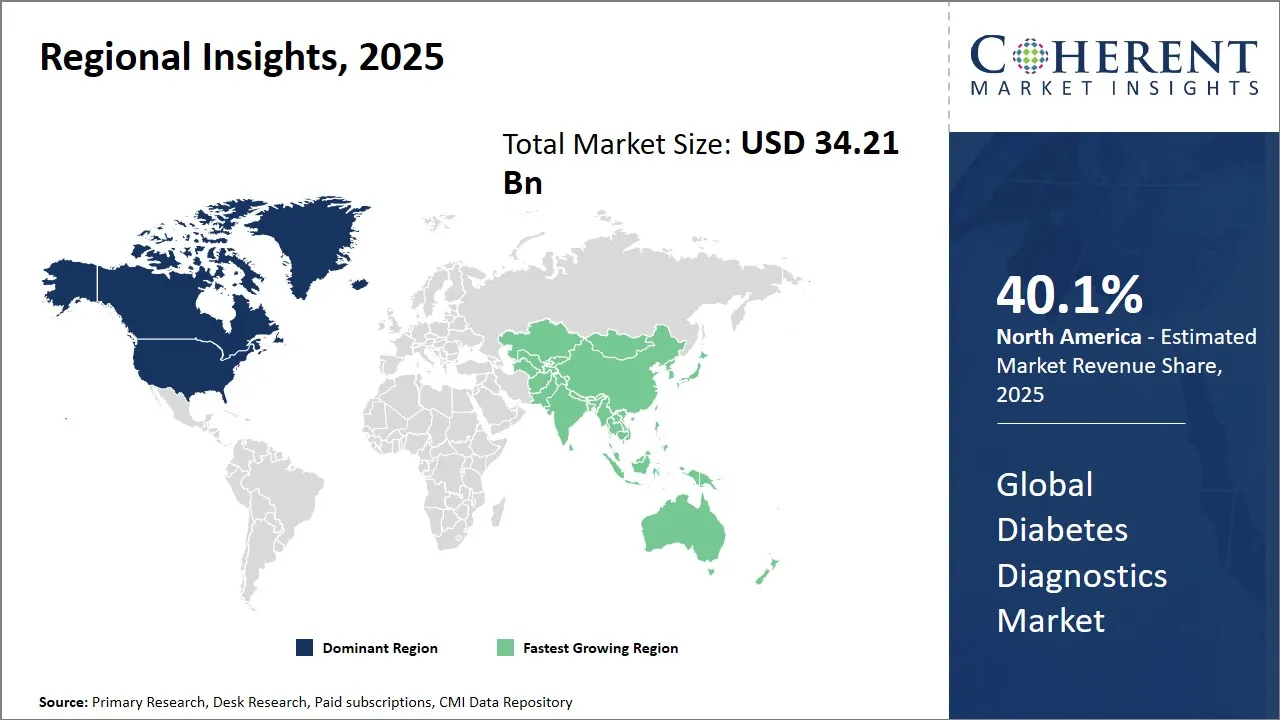
- North America is expected to lead the market, holding a share of 40.1% in 2026. Asia Pacific is anticipated to be the fastest-growing region, with a market share of 23.5% in 2026.
Market Overview
A significant market trend is the integration of advanced technologies such as continuous glucose monitoring systems and AI-driven diagnostic tools, which improve accuracy and patient convenience. Additionally, the shift towards personalized healthcare and increased adoption of point-of-care testing are shaping the diabetes diagnostics landscape, enhancing timely decision-making and patient outcomes globally.
Currents Events and their Impact
Current Events | Description and its impact |
Government Initiatives for Diabetes Awareness |
|
Medtronic Simplera Sync sensor approved for MiniMed 780G |
|
Segmental Insights
- Current Industry Events of 2026
- Market Size Estimation
- Regional Breakdown
- Competitive Landscape
- Customer Intelligence
- Segmental Analysis
- Pricing Analysis
- Key Market Drivers, Challenges & Future Trends
- Customized Insights Section
Diabetes Diagnostics Market Insights, By Product Type - Continuous Glucose Monitoring (CGM) leads due to real-time insights and their ability to track glucose trends for better disease management
In terms of product type, blood glucose meters are expected to hold the highest market share within the global diabetes diagnostics landscape, accounting for 33.2% in 2026. This dominant position is primarily driven by their accessibility and crucial role in enabling timely diabetes management for patients. Blood glucose meters offer a direct and fast way for individuals to monitor their blood sugar levels, which is essential for both type 1 and type 2 diabetes management. Their user-friendly design and ease of operation have significantly empowered patients to engage in regular self-monitoring without needing professional assistance, thereby encouraging proactive disease management.
In April 2025, Sequel Med Tech, a U.S.-based company developing advanced insulin delivery technologies, partnered with Senseonics, a medical technology firm known for its long-term implantable continuous glucose monitoring systems, to launch the first Automated Insulin Delivery system compatible with a one-year CGM.
Another major factor propelling the growth of this segment is technological innovation. Manufacturers continue to improve the accuracy, portability, and connectivity of blood glucose meters, integrating features such as Bluetooth and smartphone compatibility. This integration facilitates real-time data sharing with healthcare providers, enabling better monitoring and tailored treatment adjustments.
Diabetes Diagnostics Market Insights, By Testing Type - Self-monitoring blood glucose tests dominate due to their vital role in empowering patients to actively manage diabetes outside clinical settings
Within the testing type segment, Self-Monitoring Blood Glucose (SMBG) tests are projected to dominate due to their critical role in enabling patients to actively manage their condition outside clinical settings with a share of 42.2% in 2026. SMBG tests empower users by giving immediate feedback on blood glucose levels, which is essential for making real-time lifestyle and medication adjustments. This autonomy supports tighter glycemic control—a key factor in preventing long-term complications associated with diabetes, such as neuropathy, retinopathy, and cardiovascular disease.
The rise in health awareness and education further fuels SMBG test adoption. As patients become more informed about diabetes management, they increasingly prioritize regular self-testing as part of daily routine care. Moreover, healthcare guidelines and recommendations from diabetes associations encourage SMBG as a standard practice, reinforcing its place in personal health regimes. The availability of a broad range of SMBG devices catering to different user needs, including compact meters and less invasive sampling methods, significantly enhances patient compliance with testing protocols.
Diabetes Diagnostics Market Insights, By Diagnostic Technology - Electrochemical biosensors dominate due to high accuracy, affordability, and widespread use in glucose monitoring devices
Electrochemical biosensors are expected to remain the leading technology segment in diabetes diagnostics, holding an estimated 36.2% share in 2026, driven by their high sensitivity, strong accuracy, and versatility in glucose monitoring applications. These biosensors detect changes in electrical signals generated from biochemical interactions with glucose molecules, offering quick and precise quantification of blood glucose levels. Their operational efficiency, combined with low power requirements, makes them ideally suited for portable blood glucose meters and continuous glucose monitoring systems.
The widespread adoption of electrochemical biosensors is driven by ongoing advancements in material science and miniaturization. Innovations such as nanomaterial-enhanced electrodes improve sensor responsiveness and stability, leading to more reliable glucose measurements. These advancements contribute to reduced testing time and minimal sample volume requirements, enhancing patient comfort and compliance. Additionally, the integration of electrochemical biosensors into wearable devices supports trends toward non-invasive and continuous monitoring, which improves the management of glucose fluctuations throughout the day.
Role of Artificial Intelligence (AI) in the Diabetes Diagnostics Market
- Artificial Intelligence (AI) is playing a transformative role in the diabetes diagnostics market by enabling smarter, faster, and more accurate detection and management of the disease. Through predictive analytics, AI can analyze large datasets from glucose monitoring devices, genetic tests, and electronic health records to forecast disease progression and identify at-risk patients earlier than traditional methods. Companies such as Abbott and Dexcom are already leveraging AI-driven continuous glucose monitoring (CGM) systems that integrate with mobile apps to provide real-time insights, while IBM Watson Health has collaborated on AI-based platforms for early detection of diabetes complications. AI-powered personalization also ensures that diagnostic solutions can be tailored to an individual’s unique health profile, improving both patient engagement and clinical outcomes. At the operational level, AI reduces costs by automating repetitive tasks such as image interpretation in retinal scans, optimizing workflows in laboratories, and supporting clinicians with decision-making tools that increase efficiency and accuracy.
- Beyond immediate efficiencies, AI is creating new opportunities for business models and product innovation within the global digital diagnostics market. For example, AI-enabled telehealth platforms are opening up new revenue streams by providing remote diagnostics and real-time consultation, while digital twins and virtual assistants are driving personalized healthcare delivery at scale. Startups like IDx (now Digital Diagnostics) have secured USFDA approval for autonomous AI-based diagnostics in diabetic retinopathy, setting a precedent for future innovations. However, while AI offers competitive advantages in terms of scalability, automation, and enhanced customer experiences, challenges remain around data privacy, algorithm bias, and the need for strong regulatory oversight.
Regional Insights
North America Diabetes Diagnostics Market Analysis and Trends
North America diabetes diagnostics market is projected to account for an estimated 40.1% share in 2026, supported by a strong healthcare infrastructure, substantial R&D investments, and government policies that encourage early diagnosis and effective diabetes management. The presence of major diagnostic companies such as Abbott Laboratories, Roche Diagnostics, and Medtronic has cultivated a robust market ecosystem focused on innovation in glucose monitoring systems and advanced diagnostic tools. Strong awareness campaigns and widespread adoption of technologically advanced diagnostic devices by healthcare providers and patients further bolster the region’s leadership position. Additionally, extensive reimbursement frameworks and regulatory support from agencies like the USFDA facilitate the swift market penetration of novel diabetes diagnostics.
In May 2021, BD, also known as Becton, Dickinson and Company, a leading U.S.-based global medical technology firm, announced plans to spin off its Diabetes Care business into a separate publicly traded company to strengthen its focus on innovation and high-growth markets.
Asia Pacific Diabetes Diagnostics Market Analysis and Trends
The Asia Pacific region is anticipated to witness the fastest growth in the diabetes diagnostics market, holding a projected 23.5% share in 2026, fueled by the rising prevalence of diabetes, higher healthcare spending, and expanding urban populations with increasing health awareness. Emerging economies such as India, China, and Southeast Asian countries have seen rapid modernization of healthcare infrastructure and enhanced government initiatives aimed at combating chronic diseases, including diabetes. The region benefits from a diverse market ecosystem with both multinational and strong local players such as Becton Dickinson, Johnson & Johnson, and domestic companies like Trivitron Healthcare driving market expansion through affordable diagnostic solutions.
In November 2023, Sibionics, a Chinese company, received CE Mark approval for its GS1 continuous glucose monitoring system (CGM). The wearable device uses a small under-the-skin sensor to track glucose levels in real time and sends the data directly to a handset or mobile phone. Offering 14 days of continuous monitoring without frequent calibration, the GS1 allows users to easily share their glucose data with apps or monitoring devices and generate detailed professional reports for better diabetes management.
Global Diabetes Diagnostics Market Outlook for Key Countries
U.S. Diabetes Diagnostics Market Trends
The U.S. diabetes diagnostics market is characterized by widespread accessibility to cutting-edge diabetes diagnostics, supported by a strong healthcare system and highly developed medical technology sector. Major players such as Abbott Laboratories, Roche Diagnostics, and Dexcom dominate by offering continuous glucose monitoring (CGM) systems, point-of-care testing kits, and lab-based assays. Government initiatives focused on preventive healthcare and chronic disease management promote extensive screening and monitoring. The integration of digital health technologies and telemedicine further enhances diabetic care, making the U.S. a crucial market for innovation-driven diagnostic advancements.
In March 2023, Abbott, a U.S.-based global healthcare company, received U.S. FDA clearance for its FreeStyle Libre 2 and FreeStyle Libre 3 integrated continuous glucose monitoring sensors to connect with automated insulin delivery systems. The sensors, already the most prescribed CGMs in the U.S., can now be used by children as young as two, by pregnant women with diabetes, and worn for up to 15 days, offering people an affordable way to pair CGMs with insulin pumps for easier diabetes management.
Germany Diabetes Diagnostics Market Trends
Germany continues to lead Europe’s diabetes diagnostics landscape with a strong emphasis on quality and regulatory compliance. Prominent companies like Siemens Healthineers and Roche Diagnostics have a significant presence, offering sophisticated diagnostic platforms and personalized diabetes management solutions. The country benefits from efficient healthcare policies and reimbursement frameworks that encourage routine diabetes screening. Its strong pharmaceutical and medical devices industry, combined with collaborations between public research institutions and private entities, fosters innovation in non-invasive diagnostics and biomarker discovery.
In June 2020, Diabeloop, a company known for its therapeutic artificial intelligence solutions in diabetes care, expanded into Germany by establishing its subsidiary Diabeloop GmbH in Siegen. The company, which recently pre-launched its DBLG1 system in France, is now preparing to bring its self-learning algorithm for automated and personalized type 1 diabetes management to German patients, while also engaging in discussions with major health insurers on reimbursement options.
India Diabetes Diagnostics Market Trends
India’s diabetes diagnostics market is expanding swiftly due to rising diabetes prevalence, increased healthcare spending, and enhanced government focus on non-communicable diseases. Major international players such as Becton Dickinson and Johnson & Johnson collaborate with local manufacturers like Trivitron Healthcare and Transasia Bio-Medicals to improve affordable access to diagnostic tools. Government programs aimed at rural health outreach and subsidized diagnostics drive higher market penetration. Importantly, rising digital health adoption enables more effective disease monitoring and patient management across diverse population segments.
In December 2024, Roche Diagnostics India, a leading healthcare company, launched a new diabetes awareness campaign featuring actor Mr. Vijay Raaz to mark World Diabetes Day. Centered around the theme “Breakfast Se Pehle Accu-Chek,” the campaign highlights the importance of self-monitoring blood glucose before breakfast and encourages people with diabetes to take charge of their health through simple daily habits
China Diabetes Diagnostics Market Trends
China’s diabetes diagnostics market growth is propelled by a combination of increasing diabetes cases and strong governmental efforts to improve healthcare infrastructure. Companies like Sinocare, Roche Diagnostics, and Johnson & Johnson play pivotal roles, especially with innovations in point-of-care testing and digital monitoring platforms tailored to local needs. Trade improvements and regulatory reforms streamline market entry for both domestic and multinational entities. Moreover, expanding urban healthcare networks and emphasis on early diagnosis contribute to the growing prominence of diabetes diagnostics throughout the country.
In January 2024, Dexcom, a U.S.-based leader in continuous glucose monitoring technology, launched the Dexcom ONE+ CGM in China. The device, powered by the latest G7 sensor, provides real-time glucose monitoring with seamless smartphone and smartwatch connectivity, and is designed for people with insulin-treated type 1 and type 2 diabetes to simplify use while tracking lifestyle-related glucose impacts.
Market Players, Key Developments, and Competitive Intelligence
Key Developments
- In July 2025, Predictmedix Inc, a Canada-based company specializing in artificial intelligence-driven health screening solutions, launched a mobile platform for rapid and non-invasive diabetes screening, with India as the first market. The new solution uses facial and biometric analysis through smartphones to provide instant diabetic risk assessments, eliminating the need for blood draws or clinical visits.
- In July 2025, Kihealth, a U.S.-based molecular diagnostics company, won the Innovation of the Year award at the American Diabetes Association’s 85th Scientific Sessions in Chicago for its groundbreaking liquid-biopsy test that measures pancreatic beta-cell death to enable early diabetes detection. The recognition, often called the “Super Bowl of diabetes innovation,” has boosted Kihealth’s visibility, attracting strong physician interest, new contracts, and funding discussions, while CEO Mrs. Jennifer Anderson highlighted the milestone as validation of the company’s mission to deliver earlier and more actionable insights into disease risk.
- In June 2025, GoPath Diagnostics, a U.S.-based provider of molecular and digital pathology services, introduced DiabetesNow, a comprehensive genetic test panel designed to improve the diagnosis and management of diabetes. The test analyzes 16 genes linked to monogenic diabetes forms such as MODY, neonatal, syndromic, and mitochondrial types, along with polygenic risk scores for type 1 and type 2 diabetes, and includes GenProb-T1D, a model estimating type 1 diabetes likelihood.
- In February 2025, Baylor College of Medicine, a leading U.S. medical school and research center, introduced the ROCKET T1D program (Remote Outreach and Care for Kids’ Empowerment and Technology Use in Type 1 Diabetes), designed to support children recently diagnosed with type 1 diabetes. The initiative helps youth build strong self-management habits by using diabetes technology, reviewing data, and adjusting doses, with early results showing better daily routines like premeal bolusing and improved glycemic outcomes during the three-month launch phase.
Top Strategies Followed by Global Diabetes Diagnostics Market Players
- Established players dominate the sector by heavily investing in research and development (R&D) to innovate high-performance diagnostic products that meet the evolving needs of healthcare providers and patients. These companies often channel substantial resources towards developing next-generation glucose monitoring devices, incorporating advanced technologies such as continuous glucose monitoring (CGM) systems and non-invasive testing methods. Beyond innovation, large corporations strategically forge partnerships and collaborations with original equipment manufacturers (OEMs) and other major industry stakeholders to solidify their market presence.
- In March 2022, Digital Diagnostics, a U.S.-based AI healthcare company, and Baxter International, a global leader in medical products and services, formed a long-term partnership to expand access to diabetic retinopathy detection. The collaboration will integrate Digital Diagnostics’ IDx-DR autonomous AI software with Baxter’s Welch Allyn RetinaVue 700 Imager, allowing primary care providers to deliver point-of-care eye exams more easily.
- Mid-level players in the global diabetes diagnostics market strategically position themselves by focusing on delivering cost-effective solutions that offer a prudent balance between quality and affordability. Recognizing the demand from price-sensitive end users, including healthcare providers and individual consumers in developing economies, these companies tailor their offerings to meet essential diagnostic needs without compromising reliability. Their competitive edge lies in affordability combined with acceptable performance, making diabetes management more accessible to a broader population. To strengthen their capabilities and market presence, mid-tier players often engage in collaborations with technology providers, contract manufacturers, and even competitive market participants.
- In April 2023, FIND, the global non-profit dedicated to strengthening diagnostic access, partnered with Abbott from Ireland, i-SENS Inc from South Korea, and Siemens Healthineers from Germany to make point-of-care HbA1c testing more affordable in low- and middle-income countries. The agreements will allow healthcare providers to procure test kits at reduced prices, supporting better diagnosis and long-term management of diabetes while helping to prevent complications.
- Small-scale players in the diabetes diagnostics market carve out a distinct niche by emphasizing specialized features and innovation-driven products tailored to specific customer segments or clinical needs. These companies frequently adopt cutting-edge technologies such as biosensors, mobile health integration, and artificial intelligence-driven analytics to differentiate themselves from larger competitors. By focusing on innovation, agility, and responsiveness to niche demands, smaller firms can deliver unique value propositions and quickly adapt to changing market dynamics.
- In November 2024, researchers at the University of Tokyo in Japan developed an AI-powered system that uses high-speed video of the face and palm to screen for high blood pressure and Type 1 or Type 2 diabetes in just seconds, without the need for blood tests, cuffs, or wearables.
Market Report Scope
Diabetes Diagnostics Market Report Coverage
| Report Coverage | Details | ||
|---|---|---|---|
| Base Year: | 2025 | Market Size in 2026: | USD 36.98 Bn |
| Historical Data for: | 2020 To 2024 | Forecast Period: | 2026 To 2033 |
| Forecast Period 2026 to 2033 CAGR: | 8.1% | 2033 Value Projection: | USD 63.79 Bn |
| Geographies covered: |
| ||
| Segments covered: |
| ||
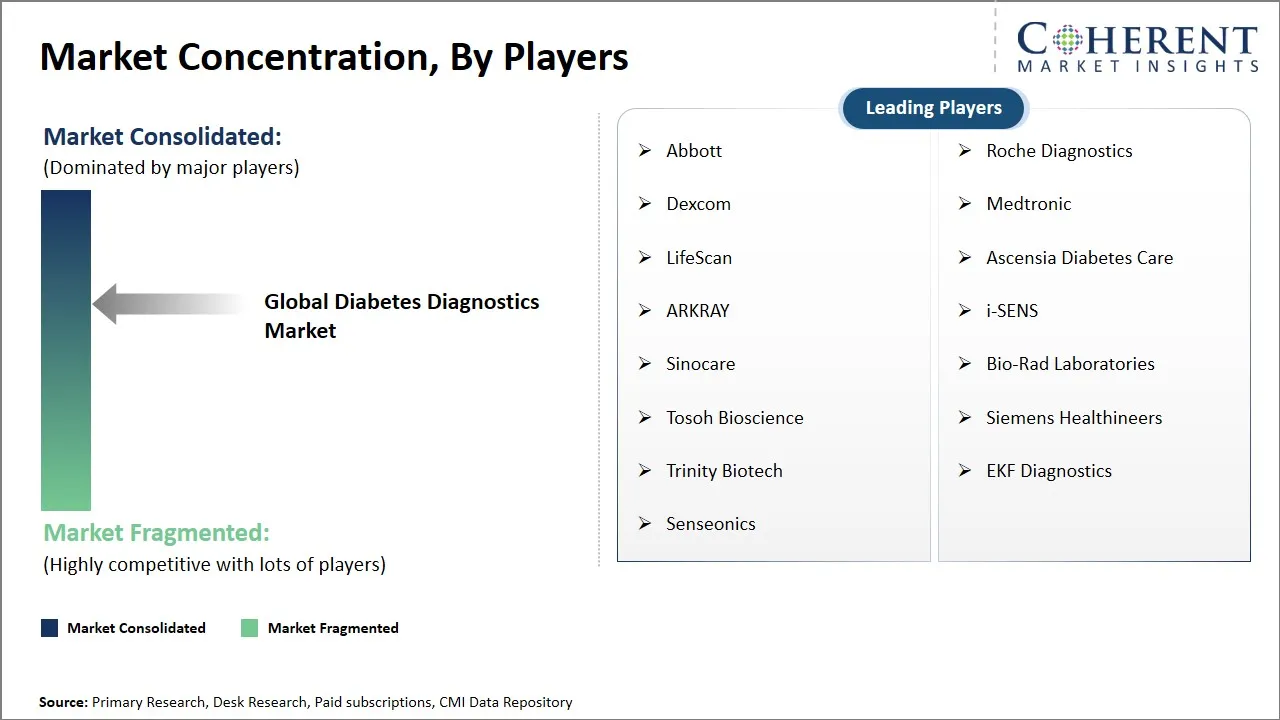
| Companies covered: | Abbott, Roche Diagnostics, Dexcom, Medtronic, LifeScan, Ascensia Diabetes Care, ARKRAY, i-SENS, Sinocare, Bio-Rad Laboratories, Tosoh Bioscience, Siemens Healthineers, Trinity Biotech, EKF Diagnostics, and Senseonics | ||
| Growth Drivers: |
| ||
| Restraints & Challenges: |
| ||
Diabetes Diagnostics Market Dynamics
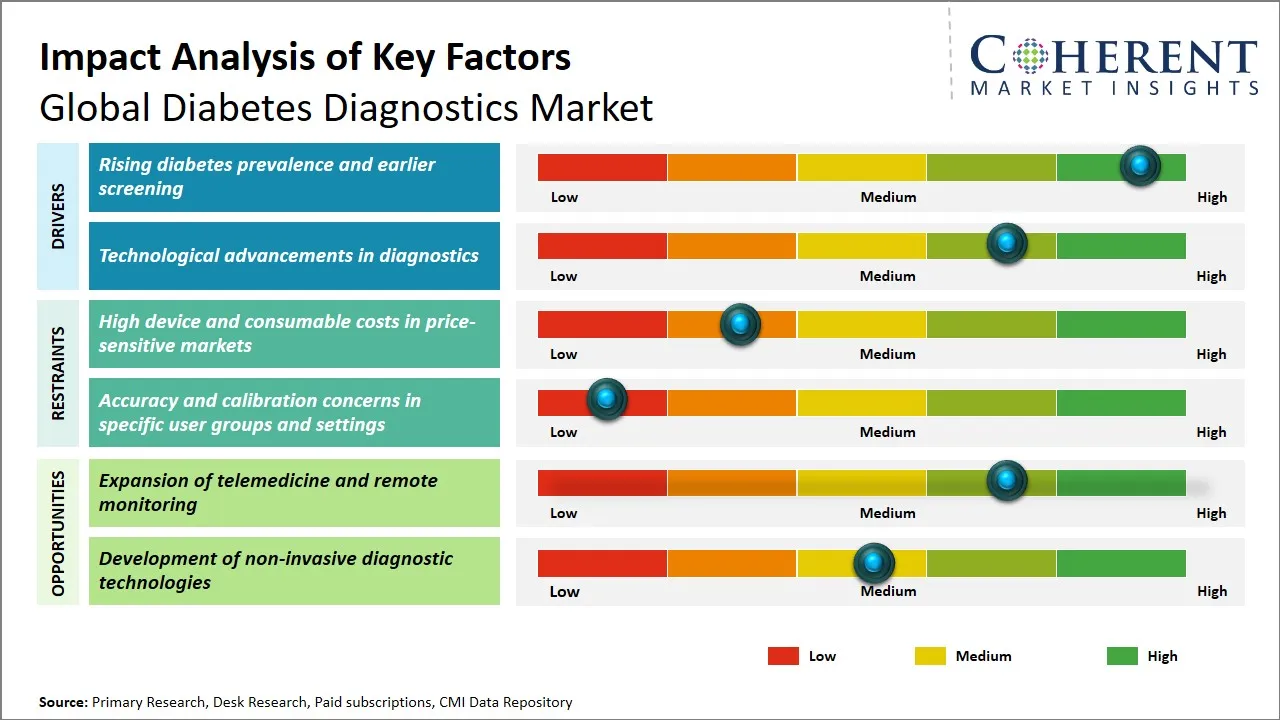
Diabetes Diagnostics Market Driver - Rising Diabetes Prevalence and Earlier Screening
The escalating prevalence of diabetes worldwide is a critical driver fueling the expansion of the diabetes diagnostics market. Increasing urbanization, sedentary lifestyles, unhealthy dietary habits, and aging populations have collectively contributed to a surge in both type 1 and type 2 diabetes cases across diverse demographic segments. As awareness about the complications arising from uncontrolled blood sugar levels grows, healthcare providers and policymakers emphasize early detection as a key intervention strategy to manage disease progression effectively. This shift towards proactive and regular screening facilitates timely diagnosis, enabling patients to initiate treatment sooner and reduce the risk of severe complications such as cardiovascular issues, neuropathy, and kidney failure.
In November 2024, according to WHO, global health data shows a sharp rise in diabetes cases, with the number of people living with the disease increasing from 200 million in 1990 to 830 million in 2022, and prevalence growing faster in low- and middle-income countries. Despite the rising burden, more than half of adults with diabetes were not on medication in 2022, highlighting gaps in treatment coverage. Experts emphasize that earlier screening, healthier lifestyles, and regular monitoring remain critical to delay complications such as blindness, kidney failure, and heart disease, as diabetes now contributes to millions of premature deaths worldwide
Diabetes Diagnostics Market Opportunity - Expansion of Telemedicine and Remote Monitoring
The rapid expansion of telemedicine and remote monitoring technologies presents a significant opportunity for the global diabetes diagnostics market. Increasing adoption of digital health solutions, driven by advancements in mobile technology and internet connectivity, allows for more efficient and continuous monitoring of glucose levels outside traditional clinical settings. This shift is particularly valuable for diabetes patients who require frequent monitoring to manage their condition effectively, helping to reduce hospital visits and improve overall disease management. Integration of telemedicine platforms with diagnostic devices enables real-time data transmission to healthcare providers, facilitating timely interventions and personalized treatment plans. Additionally, the rise of wearable glucose monitoring devices with wireless connectivity further complements remote patient management, enhancing patient engagement and adherence to treatment regimens.
In March 2023, Royal Philips, a Netherlands-based global leader in health technology, launched Philips Virtual Care Management, a new portfolio of telehealth solutions designed to support patients, providers, payers, and employers with more flexible and connected care. The platform aims to improve patient engagement, enhance health outcomes, and lower care costs while also easing pressure on hospital staff by reducing emergency visits and supporting better management of chronic diseases.
Analyst Opinion (Expert Opinion)
- The diabetes diagnostics market is being shaped by a combination of rapid technological progress and rising public health demand. Breakthroughs in genetic testing, AI-driven platforms, and point-of-care solutions are enabling earlier and more precise detection, while supportive regulatory frameworks and growing awareness programs continue to expand accessibility. At the same time, industry players are seeing opportunities in personalized medicine and digital health integration, though they must navigate challenges such as high device costs, limited reimbursement in some regions, and the need for standardized diagnostic protocols. Global conferences such as the International Diabetes Federation Congress (2023) and the American Diabetes Association Scientific Sessions (2022, 2024) have played a pivotal role in knowledge-sharing, helping align scientific innovation with policy agendas and showcasing new technologies that are now entering the market.
- Recent initiatives underline how collaborative efforts are accelerating change. For example, GoPath Diagnostics introduced DiabetesNow in 2025, a genetic test panel designed to clarify complex diabetes diagnoses, while governments in Europe and Asia have been rolling out national screening programs to detect diabetes earlier at the population level. Pilot projects involving AI-based diagnostic apps in the U.S. and mobile screening units in India are further proof that innovation and accessibility are moving hand in hand. Together, these developments signal a market that is not only growing steadily but also responding to unmet needs with practical solutions, making diabetes diagnostics one of the most dynamic areas in healthcare innovation today.
Speak to the analyst
Want personalized insights?
Take the findings above to one of our principal consultants, or have the report rebuilt around the segments, geographies and competitors you actually track.
Market Segmentation
- Product Type Insights (Revenue, USD Bn, 2021 - 2033)
- Blood Glucose Meters
- Continuous Glucose Monitoring (CGM) Systems
- Testing Strips
- Lancets and Lancing Devices
- HbA1c Testing Kits
- Ketone Testing Kits
- Insulin Dose Calculators/Insulin Delivery Devices
- Others (e.g., smart wearables, emerging digital diagnostic tools)
- Testing Type Insights (Revenue, USD Bn, 2021 - 2033)
- Self-Monitoring Blood Glucose (SMBG) Tests
- Laboratory-Based Tests
- Point-of-Care (POC) Tests
- Diagnostic Technology Insights (Revenue, USD Bn, 2021 - 2033)
- Electrochemical Biosensors
- Optical Sensors
- Enzymatic Assays
- Immunoassays
- Microfluidic Technology
- Others (e.g., next-gen nanotechnology-based diagnostics)
- Diabetes Type Insights (Revenue, USD Bn, 2021 - 2033)
- Type 1 Diabetes
- Type 2 Diabetes
- Gestational Diabetes
- Prediabetes/Screening
- End User Insights (Revenue, USD Bn, 2021 - 2033)
- Hospitals and Clinics
- Diagnostic Laboratories
- Home Care Settings
- Ambulatory Surgical Centers (ASCs)
- Others (Research Institutes and Academic Centers)
- Distribution Channel Insights (Revenue, USD Bn, 2021 - 2033)
- Hospital Pharmacies
- Retail Pharmacies
- Online Pharmacies
- Regional Insights (Revenue, USD Bn, 2021 - 2033)
- North America
- U.S.
- Canada
- Latin America
- Brazil
- Argentina
- Mexico
- Rest of Latin America
- Europe
- Germany
- U.K.
- Spain
- France
- Italy
- Russia
- Rest of Europe
- Asia Pacific
- China
- India
- Japan
- Australia
- South Korea
- ASEAN
- Rest of Asia Pacific
- Middle East
- GCC Countries
- Israel
- Rest of Middle East
- Africa
- South Africa
- North Africa
- Central Africa
- North America
- Key Players Insights
- Abbott
- Roche Diagnostics
- Dexcom
- Medtronic
- LifeScan
- Ascensia Diabetes Care
- ARKRAY
- i-SENS
- Sinocare
- Bio-Rad Laboratories
- Tosoh Bioscience
- Siemens Healthineers
- Trinity Biotech
- EKF Diagnostics
- Senseonics
Sources
Primary Research Interviews
- Industry Stakeholders list
- Endocrinologists
- Medical Device Manufacturers
- End Users list
- Hospitals & Clinics
- Diagnostic Laboratories
Government and International Databases
- World Health Organization (WHO)
- International Diabetes Federation (IDF)
- Centers for Disease Control and Prevention (CDC)
- U.S. Food and Drug Administration (FDA)
- National Institutes of Health (NIH)
- European Medicines Agency (EMA)
Trade Publications
- MedTech Dive
- Diagnostics World News
- Clinical Laboratory News
- Healthcare IT News
- Fierce Biotech
- Nature Medicine News & Comment
Academic Journals
- Diabetes Care (American Diabetes Association)
- The Lancet Diabetes & Endocrinology
- Journal of Diabetes Research
- Diabetologia (European Association for the Study of Diabetes)
- Journal of Clinical Endocrinology & Metabolism
- BMJ Open Diabetes Research & Care
Reputable Newspapers
- The New York Times – Health Section
- The Guardian – Health
- The Washington Post – Health & Science
- The Hindu – Health
- Financial Times – Healthcare & Pharma
- BBC News – Health
Industry Associations
- American Diabetes Association (ADA)
- European Association for the Study of Diabetes (EASD)
- International Society for Pediatric and Adolescent Diabetes (ISPAD)
- American Association of Clinical Endocrinology (AACE)
- Diabetes UK
- Endocrine Society
Public Domain Resources
- U.S. National Library of Medicine
- World Bank Health Data
- OECD Health Statistics
- National Health Service (NHS) Digital
- India Ministry of Health & Family Welfare
Proprietary Elements
- CMI Data Analytics Tool: Proprietary analytics tool to analyze real-time market trends, consumer behavior, and technology adoption in market
- Proprietary CMI Existing Repository of Information for Last 8 Years
Get access to 250+ pages report
Every segment, forecast, competitor profile and data table behind the analysis above — available for instant download.
- ESOMAR Member
- ISO 9001:2015 Certified
- D-U-N-S Registered
- GDPR & CCPA Compliant
Missing comfort of reading report in your local language? Find your preferred language:
Transform your Strategy with Exclusive Trending Reports
Frequently Asked Questions
The global diabetes diagnostics market is estimated to be valued at USD 36.98 Bn in 2026 and is expected to reach USD 63.79 Bn by 2033.
The CAGR of the global diabetes diagnostics market is projected to be 8.1% from 2026 to 2033.
Rising diabetes prevalence and earlier screening and technological advancements in diagnostics are the major factors driving the growth of the global diabetes diagnostics market.
High device and consumable costs in price-sensitive markets and accuracy and calibration concerns in specific user groups and settings are the major factors hampering the growth of the global diabetes diagnostics market.
In terms of product type, blood glucose meters are estimated to dominate the market revenue share in 2026.
Abbott, Roche Diagnostics, Dexcom, Medtronic, LifeScan, Ascensia Diabetes Care, ARKRAY, i-SENS, Sinocare, Bio-Rad Laboratories, Tosoh Bioscience, Siemens Healthineers, Trinity Biotech, EKF Diagnostics, and Senseonics are the major players.
North America is expected to lead the global diabetes diagnostics market in 2026.