

Global Disposable Urine Bags Market Size and Forecast – 2026 to 2033
According to Coherent Market Insights, the disposable urine bags market is estimated to be valued at USD 1.80 Bn in 2026 and is expected to reach USD 2.91 Bn by 2033, exhibiting a compound annual growth rate (CAGR) of 7.1% from 2026 to 2033. This growth is driven by increasing healthcare needs, rising prevalence of chronic kidney diseases, and advancements in disposable medical devices that enhance patient convenience and hygiene.
Key Takeaways of the Disposable Urine Bags Market
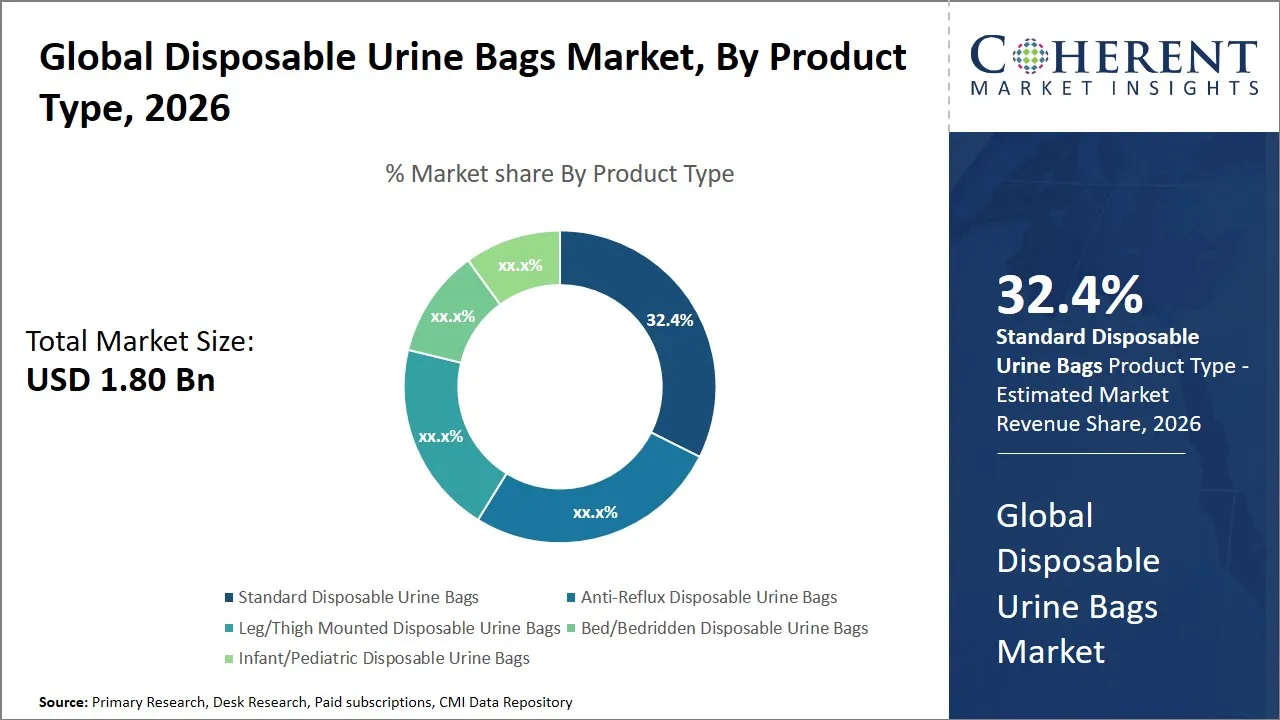
- Standard disposable urine bags segment is expected to lead the global disposable urine bags market, capturing 32.40 % share in 2026.
- Polyethylene (PE) segment is estimated to represent 51% of the global disposable urine bags market share in 2026.
- Up to 500 ml segment is projected to dominate with 40.5 % of the market share in 2026.
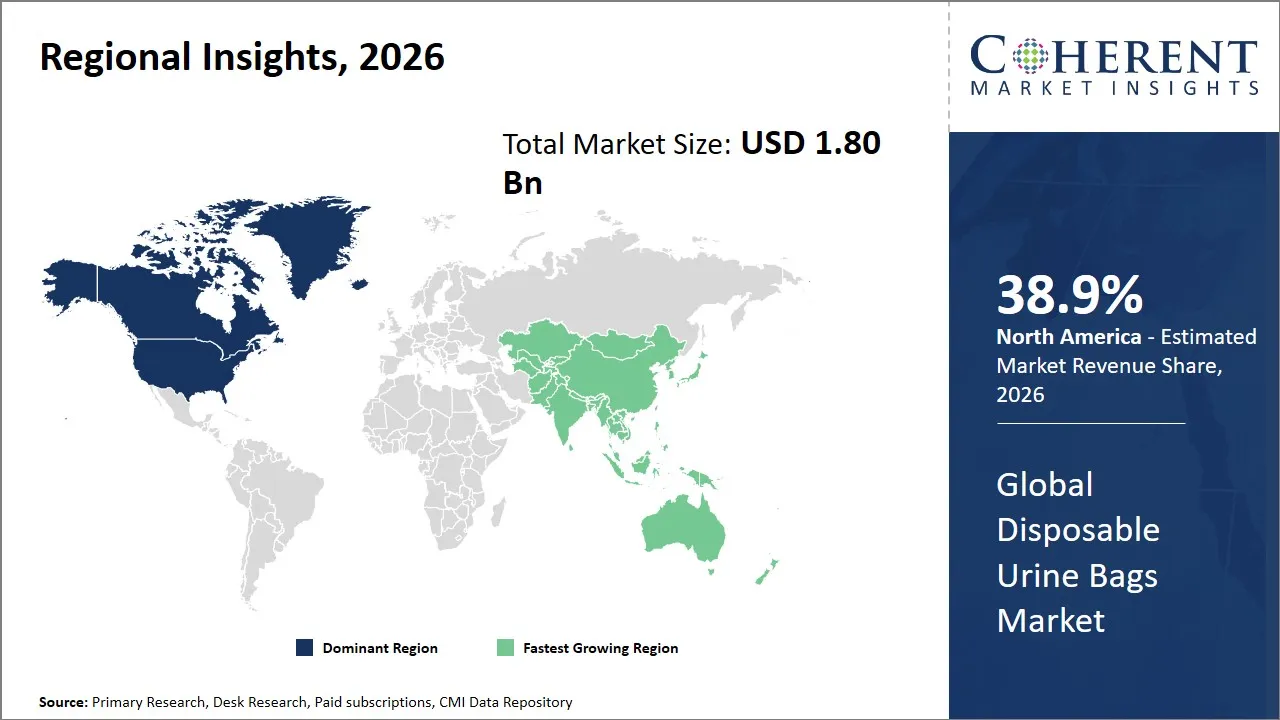
- North America is expected to lead the market, holding a share of 38.90 % in 2026. Asia Pacific is anticipated to be the fastest-growing region, with 27.10% share in 2026.
Market Overview
- The global disposable urine bags market is driven by the growing need for effective and hygienic solutions in hospitals, healthcare facilities, and home care environments.
- Technological advancements have led to the development of specialized products such as anti-reflux and pediatric-specific urine bags, enhancing patient comfort and safety.
- Increasing geriatric population and the rise of chronic illnesses like urinary incontinence are contributing to the higher demand for disposable urine bags across various healthcare settings.
- Eco-friendly and biodegradable materials are gaining traction as consumers and healthcare providers seek sustainable solutions, pushing manufacturers to adopt greener practices in product development.
Current Events and Its Impact
Current Events | Description and its Impact |
Launch of Eco-Friendly Urine Bags by B. Braun |
|
Introduction of Anti-Reflux Disposable Urine Bags |
|
Segmental Insights
- Current Industry Events of 2026
- Market Size Estimation
- Regional Breakdown
- Competitive Landscape
- Customer Intelligence
- Segmental Analysis
- Pricing Analysis
- Key Market Drivers, Challenges & Future Trends
- Customized Insights Section
Why Does the Standard Disposable Urine Bags Segment Dominate the Global Disposable Urine Bags Market in 2026?
The standard disposable urine bags segment is expected to hold the largest share of 32.40% in 2026, owing to their versatility and wide-ranging applicability of standard urine bags across various patient demographics and clinical settings. Despite the use of specialized ones like anti-reflux or leg-mounted bags, standard disposable urine bags are an easy but a very necessary element in urinary drainage systems, which is why they are a universal solution among medical practitioners of the world.
A major force behind the popularity of standard disposable urine bags is the simplicity of design that allows to be easily used and to work with a wide variety of catheters and drainage solutions. This flexibility eliminates the necessity of various versions of a product, which makes procurement and inventory control of hospitals and long-term care institutions easier. Furthermore, they are very economical, and the healthcare institutions that have a limited budget can offer the required urinary monitoring and management without sacrificing the hygiene and the quality of patient care.
For instance, in February 2025, the U.S. Food and Drug Administration (FDA) gave 510(k) clearance to Smiths Medical to a new class of disposable urinary drainage bags. The new bags will be aimed at increasing the comfort of the patient and minimize the chances of complications, including infection and leakage.
(Source- https://www.smiths.com/)
Why the Polyethylene (PE) Segment is Widely Used in the Global Disposable Urine Bags Market?
The polyethylene (PE) segment is projected to dominate the market, accounting for 51% of the market share in 2026, driven by its unique combination of safety, flexibility, and economic viability. The popularity of PE is highly related to its physicochemical characteristics that enable the material to be highly applicable in biomedical applications especially where direct interaction with body fluids is required.
One notable reason behind the desirability of PE is that it has a great chemical inertness and biocompatibility. PE is also stable and non-reactive unlike some materials that would leach toxic plasticizers or deteriorate when exposed to urine, which means that the urine bags will not lose their integrity during the course of use and will not pose a threat to patients. Such property also reduces the risks of all the allergic reactions or skin irritation, which is extremely important among patients who should have a long-term catheterization.
Up to 500 ml Disposable Urine Bags Market
In terms of capacity, the up to 500 ml segment is expected to capture the highest share of 40.5% in 2026, primarily driven by the increasing need for patient mobility, comfort, and discrete usage in outpatient and homecare scenarios. The smaller capacity bags are particularly popular since they strike a balance of sufficient urine storage and at the same time reduce bulk and weight which is crucial to give convenience to the ambulatory patients.
Bags with a capacity as high as 500 ml are also less problematic to monitor urine output during short-term procedures or during the assessment of patients since the caregivers can empirically estimate changes in fluid volumes without extensive handling or huge storage facilities. It is especially useful in rehabilitation facilities, post-surgical units, and pediatric care where the constant and regular check-ups are required.
Regulatory and Sterility Compliance Impact for Global Disposable Urine Bags Market
- Regulatory and sterility compliance is an important factor in maintaining the safety, reliability, and well-being of patients in the market of disposable urine bags. Healthcare providers, especially the end users, recognize the significance of sterility consistency as a means to prevent infections and complications. As an illustration, hospitals have been found to be highly satisfied with the sterilized and individually packaged urine bags that are not only regulatory but also critical care environments where infection control is the main priority. Such products are popular with their convenience, safe lock, and high quality of work in hard conditions. Conversely, homecare users and users in emerging markets have raised concerns on the cost of regulated and quality products, where access to and availability of compliant urine bags is an issue due to affordability.
- The unmet needs that are associated with customization and affordability exist despite positive feedback. The high cost of premium products deprives many healthcare providers and consumers in the budget-sensitive regions of accessing high-quality products, thereby reducing their capacity to comply with the sterility standards. Besides, more customized products are needed, especially among pediatric and geriatric patients, who need customized dimensions and design aspects. Filling these voids using low-cost, tailored solutions and creative, low-cost production methods might not only lead to market expansion but also enhance customer retention and increase product uptake in market segments that lack proper service.
Regional Insights
North America Disposable Urine Bags Market Analysis and Trends
The North America region is projected to lead the market with a 38.9% in 2026 driven by a sophisticated healthcare infrastructure, high healthcare expenditure, and strong industry presence. The region has an advantage of rapid use of innovative medical equipment and high regulatory requirements that guarantee the quality and safety of goods. Strong government policies to improve patient safety, and infection control also increases demand.
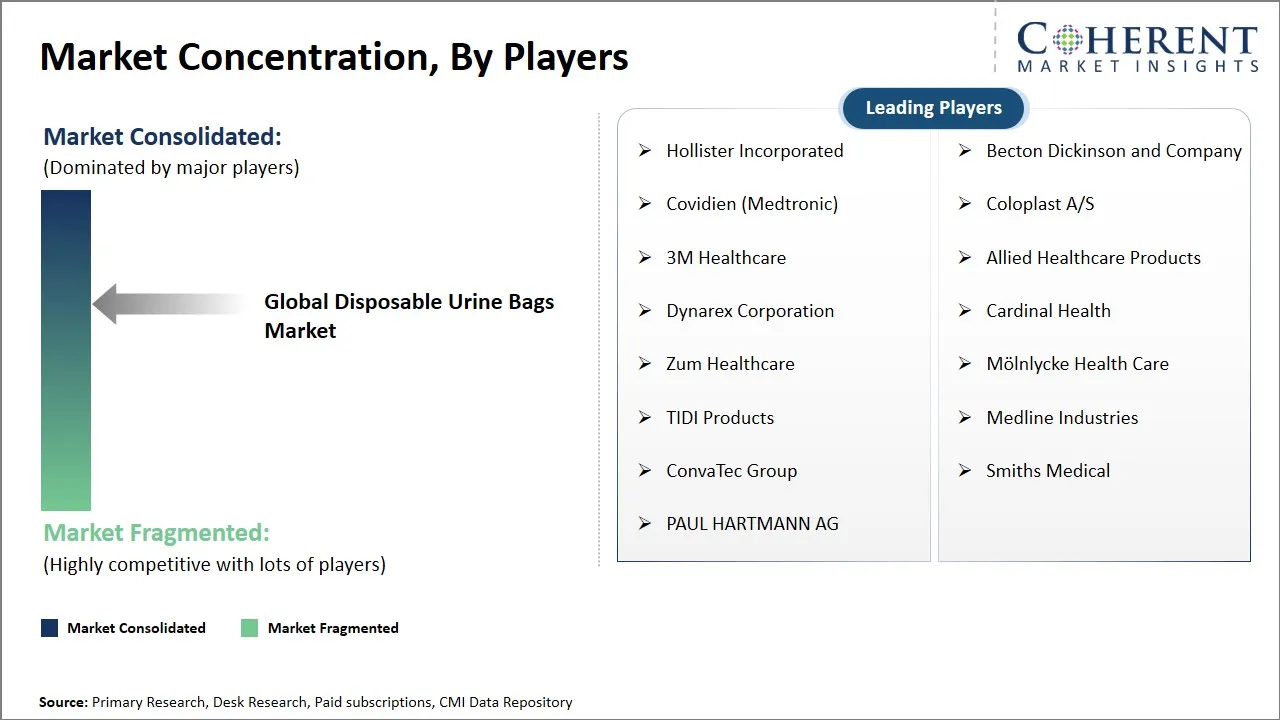
Bard (a BD company), Medline Industries and the existence of other large manufacturers of healthcare products like Hollister Incorporated enhances the market ecosystem. Additionally, a massive distribution network and the awareness of health care providers make a significant contribution to North America dominating this market.
Asia Pacific Disposable Urine Bags Market Analysis and Trends
The Asia Pacific region is expected to exhibit the fastest growth in the market contributing 27.10% share in 2026, fueled by increasing healthcare infrastructure investments, a growing geriatric population, and rising prevalence of chronic diseases such as urinary incontinence. Governments in India, China, Japan, and Southeast Asia are broadening the range of healthcare cover, and its availability, which is driving the growth in the market.
Increased number of hospitals and home care services is also being experienced in the region thereby propelling the demand of disposable medical supplies. Moreover, there are competitive manufacturing centers in China and India that add to the low-cost production and export. Highlighting companies operating in the Asia Pacific, one can mention B. Braun Melsungen AG, Nipro Corporation and Renji Medical Devices, that are investing in the operations in the region and local product development.
Disposable Urine Bags Market Outlook for Key Countries
What are the Current Trends Shaping U.S.’ Disposable Urine Bags Market?
The U.S. disposable urine bags market is an innovative market and a mature healthcare market with good reimbursement systems favoring the disposable medical equipment. The BD (Becton Dickinson), Medline Industries, and Coloplast are the most dominant companies, giving technologically advanced and reliable urine drainage bags.
The U.S. can be proud of strict FDA laws, which guarantee a high level of products and promote mistrust and wide-ranging utilization in the hospitals, long-term care, and home care facilities. The demand is further spurred by government efforts on infection control and augmenting services of home healthcare.
How is Germany Helping in the Growth of Disposable Urine Bags Market?
The market of Germany is conditioned by good healthcare system and effective regulatory control. The national system of social health insurance is a complete social system as it makes medical disposables such as urine bags readily available to the population, creating stable usage. There is a strong presence of local and multinational firms like B. Braun Melsunge AG and Paul Hartmann AG. Quality and sustainability have resulted in the greater use of disposable urine bags that are environmentally friendly. The fact that Germany has a strong medical device production industry and exports is also a benefit to the country being a major player in the Europe disposable urine bags market.
Key Drivers for the Growth of China Disposable Urine Bags Market
China is still on the top of its fast healthcare infrastructure development and reforms in Asia Pacific. The growing population, growth of both government and privately-owned hospitals, the aging population, and growing publicity regarding hygiene in healthcare contribute to demand. Domestic companies like Shandong Weigao Group and Shenzhen Mindray Bio-Medical Electronics Co., Ltd. are capturing market share together with the international companies. Moreover, the financial opportunities created by government policies to make healthcare more accessible and the program of developing a healthy China by 2030 are also catalysts of market development. The favorable trade relations, as well as due to cost-effectiveness, China is becoming a major consumer and exporter of disposable urine bags.
India Disposable Urine Bags Market Trends
The market in India is characterized by increased spending on healthcare and the development of hospital networks in particular, in tier 2 and tier 3 cities. The rising rates of urinary diseases and the growth in affordability of healthcare have provided a great demand base. There are a number of companies like B. Braun India, Poly Medicure, and Hindustan Syringes and Medical Devices Ltd. that are operating in the market of disposable medical supplies. The market has been expanded by government programs on rural health improvement and collaborating with the private healthcare providers. Market penetration is also helped by the fact that products that are produced locally are relatively cheap.
Single-Use vs Reusable Cost Per Day Economics for Disposable Urine Bags Market
Comparing single-use and reusable disposable urine bags, the cost per day economic depends on a number of factors such as the initial investment, maintenance and cost of operation.
- Single-Use Urine Bags: This type of products is usually cheaper in the initial price and is used due to convenience and hygiene. Nevertheless, on a per-day budget basis, the repetitive cost of single-use bags might be substantial in the long-term care scenario. In the case of hospitals where patient turnover is high, the use of single-use bags could result in an increased cost within a short period of time, which is the use of the same bag on multiple patients.
- Reusable Urine Bags: Reusable urine bags are a more expensive but have long-term cost savings which can be seen when used over multiple times. After the product has been bought, the price per day tends to be significantly lower since maintenance (cleaning and sterilization) will be relatively cheap, but in comparison to everyday purchasing of single-use bags. Reusable bags are also popular in institutions such as hospitals and long-time care facilities where they can be washed and reused on several occasions hence provide a more cost-effective solution in the long run.
Finally, single-use bags are better to be used during the short-term or emergency, whereas reusable bags are more affordable to be used in long-term care facilities where the necessity to use the bag continuously is significant, and the cost can be afforded.
Market Players, Key Developments, and Competitive Intelligence
Key Developments
- On June 4, 2025, the George Medical University, King (KMGU) was granted a design registration patent on a newly developed IFT uro bag connector, a device which enables the normal adult uro bags to be attached to infant feeding tubes to improve sterile collection of urine in babies especially where resources are limited.
- In 2025, Genesis Plastics was contracted to make the iBag system, a sensor-based disposable urine bag with wireless monitoring software and the Foley catheter built with a thermistor to monitor the urine and temperature continuously.
- In June 2024, ConvaTec Group was granted a patent for an innovative urine collection bag designed to improve both comfort and efficiency for patients and medical professionals. The new design features a notch on the catheter insertion area to ensure easier attachment, a single valve for more straightforward use, and tear-resistant areas for enhanced durability and reliability. This innovation aims to streamline the urinary care process, reducing the risk of leaks and improving patient comfort during use. The development marks a significant advancement in patient-centered healthcare solutions for those requiring long-term urinary collection.
- In July 2022, Indian startup, Peeschute launched environment‑friendly unisex disposable urine bags that use a special gel to instantly solidify urine for hygienic disposal, addressing sanitation and travel‑related needs. The company also offers waterless urinal solutions aimed at improving hygiene and reducing dependence on traditional restroom facilities, particularly benefiting frequent travelers and regions with limited sanitation infrastructure.
Top Strategies Followed by Global Disposable Urine Bags Market Players
Player Type | Strategic Focus | Examples |
Established Market Leaders | Leading companies in the disposable urine bags market invest heavily in R&D to develop innovative, high-performance products that meet strict safety standards. They often form strategic partnerships with OEMs and stakeholders, improving product quality and expanding their applications. Global expansion is also key, as they strengthen distribution networks to tap into emerging markets in Asia-Pacific, Latin America, and Africa. | B. Braun Melsungen, a global leader in medical devices and healthcare solutions, has strategically expanded its footprint in emerging markets such as Asia Pacific, Latin America, and Africa. The company invests heavily in research and development to create innovative, user-friendly products that adhere to stringent safety and compliance standards. |
Mid-Level Players | Mid-level players in the disposable urine bags market focus on offering cost-effective solutions that balance quality and affordability, catering to price-sensitive consumers in developing regions. These companies often form strategic collaborations with technology providers to enhance production efficiency and expand their market presence without heavy capital investment. | Medline Industries, a mid-level player, provides affordable, reliable disposable urine bags to healthcare facilities in cost-sensitive regions. Through partnerships with technology providers, Medline has improved production efficiency and expanded its global reach while maintaining competitive pricing. |
Small-Scale Players | Small-scale players in the disposable urine bags market focus on specialized products tailored to specific needs, such as antimicrobial coatings or eco-friendly materials. These companies use cutting-edge technologies to stay competitive and invest in local alliances to establish their presence in targeted markets. | Tifara, a small-scale manufacturer, specializes in antimicrobial disposable urine bags, targeting hospitals and clinics with specific hygiene requirements. Through local partnerships with regional suppliers, Tifara has steadily expanded its market presence, offering tailored solutions while keeping production costs low. |
Market Report Scope
Disposable Urine Bags Market Report Coverage
| Report Coverage | Details | ||
|---|---|---|---|
| Base Year: | 2025 | Market Size in 2026: | USD 1.80 Bn |
| Historical Data for: | 2020 To 2024 | Forecast Period: | 2026 To 2033 |
| Forecast Period 2026 to 2033 CAGR: | 7.1% | 2033 Value Projection: | USD 2.91 Bn |
| Geographies covered: |
| ||
| Segments covered: |
| ||
| Companies covered: | Hollister Incorporated, Becton Dickinson and Company, Covidien (Medtronic), Coloplast A/S, 3M Healthcare, Allied Healthcare Products, Dynarex Corporation, Cardinal Health, Zum Healthcare, Mölnlycke Health Care, TIDI Products, Medline Industries, ConvaTec Group, Smiths Medical, and PAUL HARTMANN AG | ||
| Growth Drivers: |
| ||
| Restraints & Challenges: |
| ||
Disposable Urine Bags Market Dynamics
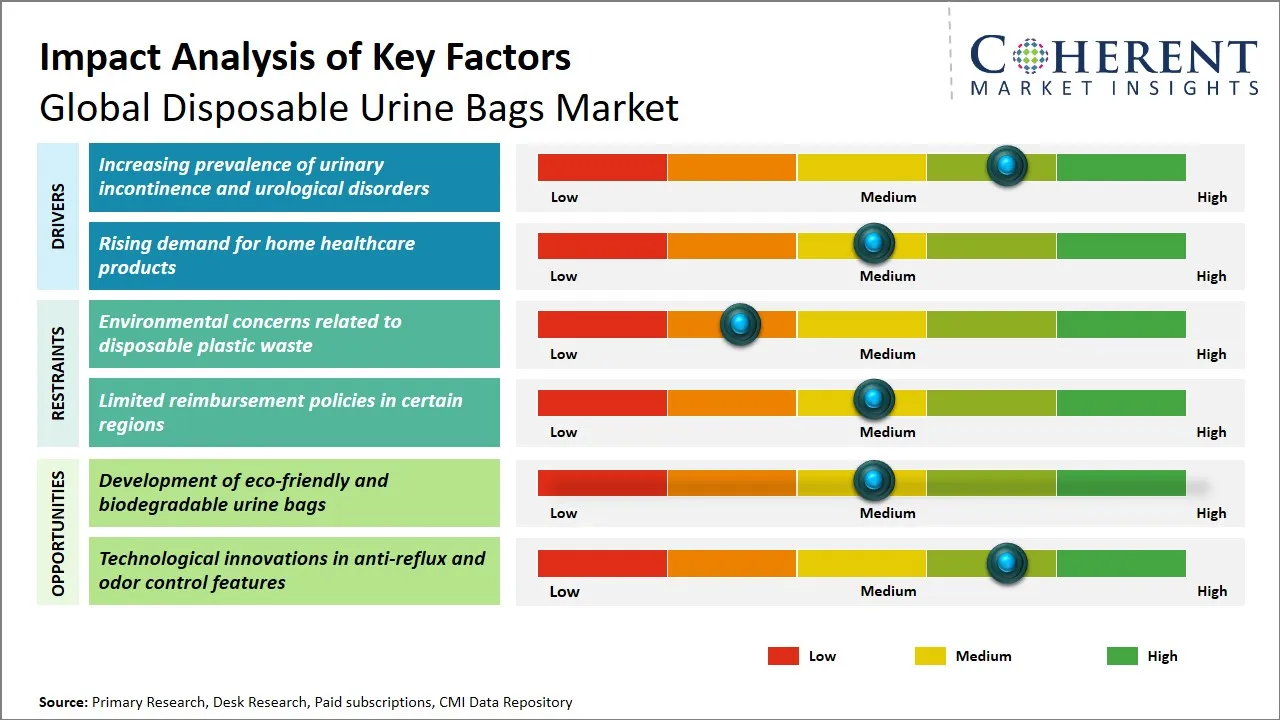
Disposable Urine Bags Market Driver - Increasing Prevalence of Urinary Incontinence and Urological Disorders
Increased cases of urinary incontinence and other urological conditions are remarkable factors that have contributed to the need to demand disposable urine bags in different parts of the world. Developed and emerging economies have a large aging population, leading to an increased number of cases of conditions associated with bladder dysfunction, neurogenic bladder, and post-surgical urinary complications and this necessitates efficient management strategies. Stress incontinence, either mixed or urge incontinence results in constant hygienic and convenient urine collection tools, with the disposable urine bags becoming a necessary medical aid.
Moreover, the situation with healthcare diagnosis has been enhanced, and the rates of identifying urological disorders are increased, which widens the range of patients who need these products. The growing awareness of caregivers and patients in regards to infection control and comfort when it comes to urinary management only contributes to the change in favor of single use and disposable to reusable urinary management choices. Altogether, the growing rates of such health issues provide a long-term need in disposable urine bags and define their high importance in terms of improving patient care and quality of life.
For instance, Urinary incontinence (UI) and urological disorders are on the increase in the whole world. Research findings show over 20% of adult population is infected and the figure goes up to 50-84% in some aged groups. In a 2023 press release, it was pointed out that the economic cost of the problem in the European Union (EU) is estimated to be 69.1 billion, and it is projected to rise by a quarter in 2030 to 86.7 billion.
(Source-https://pmc.ncbi.nlm.nih.gov/articles/PMC5878864/)
Disposable Urine Bags Market Opportunity - Development of Eco-Friendly and Biodegradable Urine Bags
The increasing demand for sustainability and eco-friendliness of the environment globally is a great opportunity in the disposable urine bags market by creating highly friendly and biodegradable products. With the growing awareness of the healthcare institution and consumers about the environmental impact of single-use medical supplies, the demand to find an alternative to reduce plastic waste and environmental pollution is increasing.
Biodegradable polymers and bio-based materials allow manufacturers to create urine bags that do not compromise on functionality, safety and hygiene but still decompose faster once disposed. This innovation is not only consistent with the global regulatory trends that are pushing towards less use of plastics but also in line with the feedbacks of the environmentally conscious healthcare professionals and end-users. There is also introduction of strict policies and incentives of green medical products by governments across the globe, which further supports the use of sustainable disposable urine bags. Those who invest in research and development of such environmentally friendly solutions in the market will be able to distinguish themselves, reach new market segments, minimize ecological footprints and even set high prices.
For instance, according to recent innovations, namely, the one by Indian entrepreneur Mr. Siddhant Tawarawala and his company Peeschute, urine bags are innovative, environmental-friendly, and biodegradable and are produced to resolve the problem of sanitation, hygiene, and waste in the population. The products are supposed to be pocket-sized, unisex, and biodegradable 100%.
(Source- https://yourstory.com/socialstory/2022/07/peeschute-hygiene-sanitation-siddhant-tawarawala)
Analyst Opinion (Expert Opinion)
- The market size of the global disposable urine bags is growing steadily due to the growing healthcare needs, particularly among the geriatric population and the chronically ill population such as the urinary incontinence. The most important driving forces are the technology that has led to creation of green materials and antimicrobial finishes and regulation that has guaranteed product safety and compliance. There is a huge growth potential in the emerging markets with the increase in the demand of hygienic and non-invasive products and affordability of healthcare products. Nevertheless, market penetration could be hampered by issues like sensitivity of price, threat of being sidelined by bigger players, and poor-quality control in certain areas.
- Exhibitions such as the Medica 2023 and Healthplex Asia 2024 have also been filled with exhibitions of innovations in disposable urine bags and other healthcare items. Such gatherings enabled an exchange of knowledge and brought to the fore certain trends including biodegradable materials and produced goods locally. An example of a small-scale market player who took advantage of these trends is Tifara who launched antimicrobial disposable urine bags in hospitals in the area. Tifara has targeted the unmet demand of low-cost healthcare providers by working on the low-cost and specialized products that will contribute to the incremental growth in the new markets.
Speak to the analyst
Want personalized insights?
Take the findings above to one of our principal consultants, or have the report rebuilt around the segments, geographies and competitors you actually track.
Market Segmentation
- Product Type Insights (Revenue, USD Bn, 2021 - 2033)
- Standard Disposable Urine Bags
- Anti-Reflux Disposable Urine Bags
- Leg/Thigh Mounted Disposable Urine Bags
- Bed/Bedridden Disposable Urine Bags
- Infant/Pediatric Disposable Urine Bags
- Material Insights (Revenue, USD Bn, 2021 - 2033)
- Polyethylene (PE)
- Polyvinyl Chloride (PVC)
- Non-woven Fabric
- Other Materials
- Capacity Insights (Revenue, USD Bn, 2021 - 2033)
- Up to 500 ml
- 501–1,000 ml
- Above 1,000 ml
- End User Insights (Revenue, USD Bn, 2021 - 2033)
- Hospitals
- Clinics
- Home Healthcare
- Long-Term Care Facilities
- Ambulatory Surgical Centers
- Gender Insights (Revenue, USD Bn, 2021 - 2033)
- Male
- Female
- Distribution Channel Insights (Revenue, USD Bn, 2021 - 2033)
- Online
- Offline
- Regional Insights (Revenue, USD Bn, 2021 - 2033)
- North America
- U.S.
- Canada
- Latin America
- Brazil
- Argentina
- Mexico
- Rest of Latin America
- Europe
- Germany
- U.K.
- Spain
- France
- Italy
- Russia
- Rest of Europe
- Asia Pacific
- China
- India
- Japan
- Australia
- South Korea
- ASEAN
- Rest of Asia Pacific
- Middle East
- GCC Countries
- Israel
- Rest of Middle East
- Africa
- South Africa
- North Africa
- Central Africa
- North America
- Key Players Insights
- Hollister Incorporated
- Becton Dickinson and Company
- Covidien (Medtronic)
- Coloplast A/S
- 3M Healthcare
- Allied Healthcare Products
- Dynarex Corporation
- Cardinal Health
- Zum Healthcare
- Mölnlycke Health Care
- TIDI Products
- Medline Industries
- ConvaTec Group
- Smiths Medical
- PAUL HARTMANN AG
Sources
Primary Research Interviews
Industry Stakeholders
- Manufacturers of disposable medical supplies
- Healthcare providers and hospitals
- Medical device sterilization service providers
- Packaging and distribution companies
- Original Equipment Manufacturers (OEMs)
- Regulatory compliance experts
End users
- Hospitals and healthcare facilities
- Homecare patients
- Rehabilitation centers
- Long-term care homes
- Elderly care providers
- Clinics specializing in urological care
Government and International Databases
- U.S. Food and Drug Administration (FDA)
- European Medicines Agency (EMA)
- World Health Organization (WHO)
- Health Canada
- National Health Service (NHS)
- Therapeutic Goods Administration (TGA)
Trade Publications
- Medical Device Network
- Healthcare Packaging
- Pain Medicine News
- Medical Product Outsourcing
- Medical Plastics News
- Journal of Medical Devices
Academic Journals
- Journal of Urology
- Journal of Medical Internet Research
- BMC Urology
- International Journal of Medical Sciences
- The Lancet
- Journal of Clinical Urology
Reputable Newspapers
- The Wall Street Journal
- Reuters
- BBC News
- Financial Times
- The Guardian
- New York Times
Industry Associations
- American Urological Association (AUA)
- International Continence Society (ICS)
- World Federation of Urology (WFU)
- National Association for Home Care & Hospice (NAHC)
- International Medical Device Regulators Forum (IMDRF)
- European Association of Urology (EAU)
Public Domain Resources
- ClinicalTrials.gov
- Cochrane Library
- Google Scholar
- WIPO Patentscope
- OpenFDA
Proprietary Elements
- CMI Data Analytics Tool: Proprietary analytics tool to analyze real-time market trends, consumer behavior, and technology adoption in market
- Proprietary CMI Existing Repository of Information for Last 8 Years
Get access to 250+ pages report
Every segment, forecast, competitor profile and data table behind the analysis above — available for instant download.
- ESOMAR Member
- ISO 9001:2015 Certified
- D-U-N-S Registered
- GDPR & CCPA Compliant
Missing comfort of reading report in your local language? Find your preferred language:
Transform your Strategy with Exclusive Trending Reports
Frequently Asked Questions
Growing use in homecare and long‑term care settings, rising prevalence of urinary incontinence, and increased adoption of eco‑friendly and antimicrobial products are driving demand across hospitals and consumer segments.
Stricter sterility and safety compliance requirements are pushing manufacturers to improve material quality and labeling, which enhances patient confidence but increases production costs and development timelines.
The global disposable urine bags market is estimated to be valued at USD 1.80 billion in 2026 and is expected to reach USD 2.91 billion by 2033.
The CAGR of global disposable urine bags market is projected to be 7.1% from 2026 to 2033.
Increasing prevalence of urinary incontinence and urological disorders and rising demand for home healthcare products are the major factors driving the growth of the global disposable urine bags market.
Environmental concerns related to disposable plastic waste and limited reimbursement policies in certain regions are the major factors hampering the growth of the global disposable urine bags market.
In terms of product type, standard disposable urine bags are estimated to dominate the market revenue share in 2026.