

Global Drug Desensitization Market Size and Forecast – 2026 to 2033
The global drug desensitization market is estimated to be valued at USD 724.2 Mn in 2026 and is expected to reach USD 1,265.5 Mn by 2033, exhibiting a compound annual growth rate (CAGR) of 8.3% from 2026 to 2033. This growth underscores the increasing demand for effective treatment options that help mitigate adverse drug reactions and improve patient safety, driven by rising cases of drug allergies and advancements in immunotherapy techniques worldwide.
Key Takeaways of the Global Drug Desensitization Market
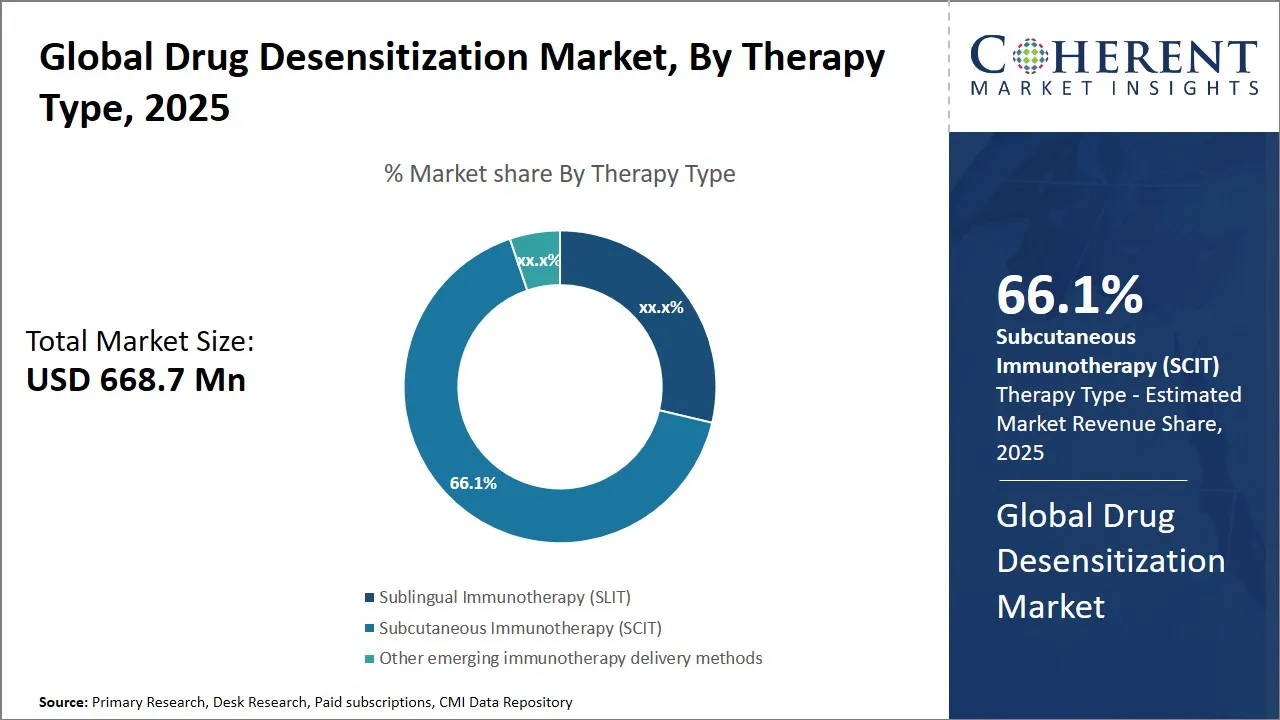
- In 2026, Sublingual Immunotherapy (SLIT) is expected to account for the largest share of the global drug desensitization market, by therapy type, representing 67.1 % share.
- By sales channel, the offline segment is expected to lead the market with a 76.8 % share in 2026
- The hospitals and specialty allergy clinics segment is projected to dominate the end user segment, holding 46.8 % of the market share.
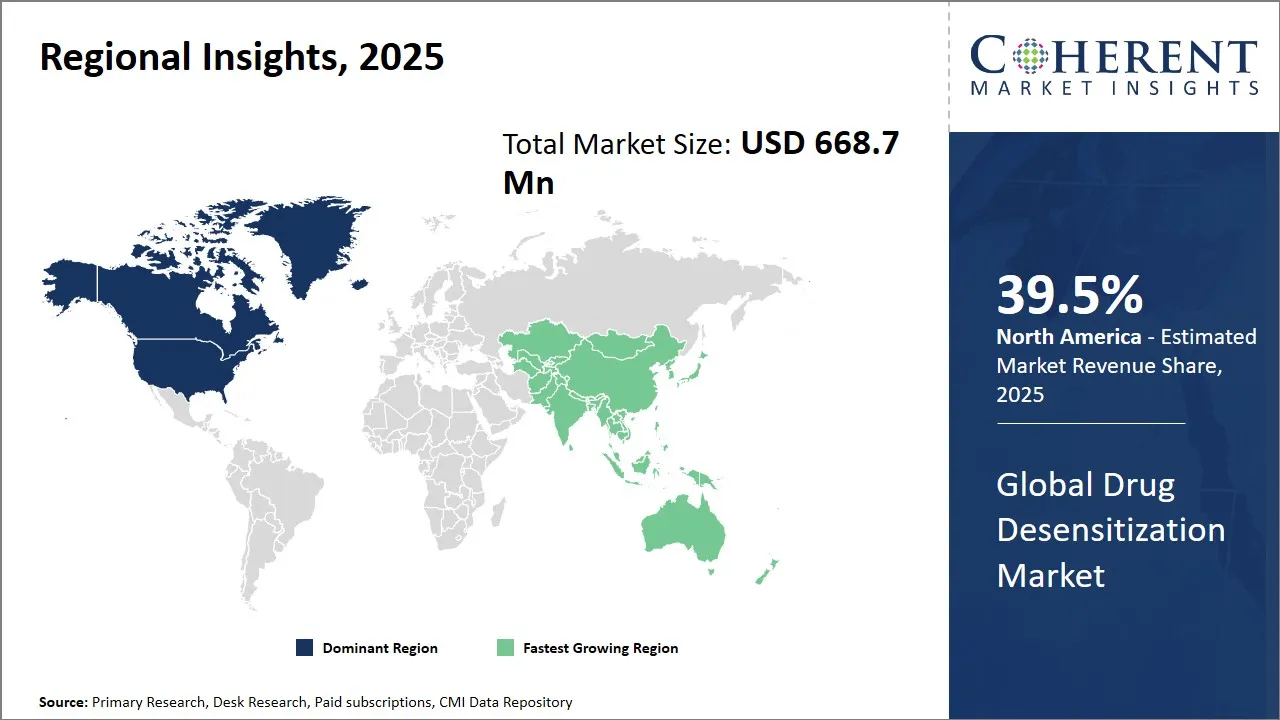
- North America is expected to lead the market, holding a share of 39.5 % in 2026. Asia Pacific is anticipated to be the fastest-growing region, with a market share of 23.8% in 2026.
Market Overview
Current market trends highlight a significant shift towards personalized medicine and biologics in drug desensitization protocols. Technological innovations, such as improved diagnostic methods and targeted drug delivery systems, are enhancing treatment efficacy and patient compliance. Additionally, growing awareness among healthcare providers and patients, coupled with supportive regulatory frameworks, is propelling the adoption of desensitization therapies across both developed and emerging markets, signaling sustained momentum for the market expansion in the coming years.
Current Events and Its Impact
Current Events | Description and its Impact |
Launch of a Rapid Desensitization Device Platform |
|
Technological Advancements in Immunotherapy |
|
Segmental Insights
- Current Industry Events of 2026
- Market Size Estimation
- Regional Breakdown
- Competitive Landscape
- Customer Intelligence
- Segmental Analysis
- Pricing Analysis
- Key Market Drivers, Challenges & Future Trends
- Customized Insights Section
Drug Desensitization Market Insights, By Therapy Type - Dominance of Sublingual Immunotherapy (SLIT) is Driven by Patient Convenience and Safety in Drug Desensitization
In the matter of therapy types, Sublingual Immunotherapy (SLIT), with its vast patient-centered benefits, is now the leader in the global drug desensitization market occupying an estimated share of 67.1% in 2026. The most significant factor in the patient-friendly advantages is the administration of allergenic extracts or therapeutic agents under the tongue which the patients perform themselves, providing an easy and comfortable way of treatment at home and not going through the hassle of the clinic visits regularly.
In October 2023, the American Academy of Allergy, Asthma & Immunology (AAAAI) reported that a notable 60% of peanut-allergic children underwent desensitization and 48% remission through sublingual immunotherapy (SLIT) within a three-year timeframe. The research indicates that early childhood intervention is a critical factor in facilitating Drug Desensitization and sustaining the process of allergy remission in the long run.
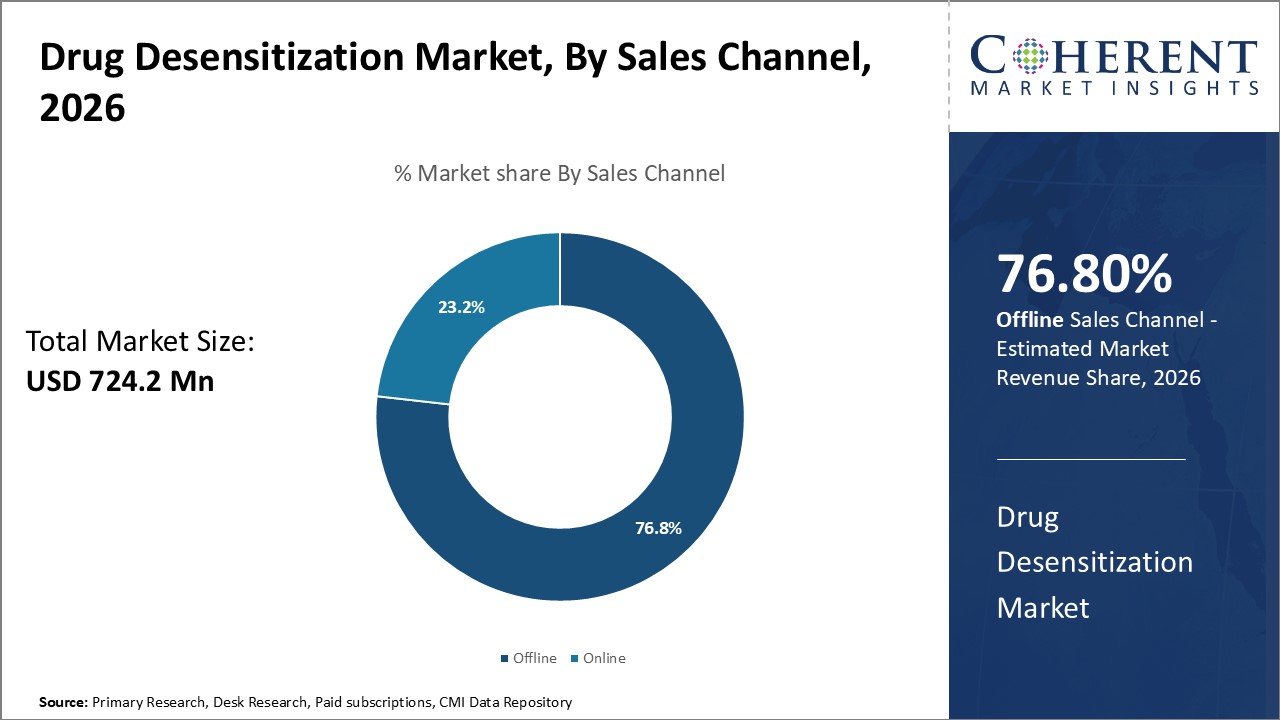
Drug Desensitization Market Insights, By Sales Channel - Offline Sales Channel Commands Market Share Through Trusted Physician Networks and Comprehensive Service Delivery
When it comes to the sales channels in the global drug desensitization market, the offline segment is the only one that will hold the largest market share with 76.8% in 2026. This is mainly due to the extremely important role played by healthcare professionals combined with the direct patient interface in getting through the complex immunotherapy treatments.
The offline channels that are being referred to hospitals, clinics, and pharmacies which are the places where desensitization therapies are given and the whole thing is under medical supervision assuring patient safety, continuous monitoring, and customized treatment adjustments.
Drug Desensitization Market Insights, By End User - Hospitals and Specialty Allergy Clinics Lead End User Segment as Centers of Expertise and Comprehensive Care
Hospitals and specialized allergy clinics are the largest ones in the end user segment of the global drug desensitization market, with an estimated share of 46.8% in 2026, which is because they have become centers where clinical expertise, advanced diagnostics, and multidisciplinary patient management are combined.
These medical institutions are the ones that are able to conduct complex drug desensitization through customized dosing, constant monitoring, and support from the immunology team, thus being able to deliver safe, precise, and evidence-based treatments.
Clinical Outcomes and Efficacy of Drug Desensitization
- According to the National Library of Medicine (NIH), clinical outcomes in February 2022 indicated that drug desensitization achieved over 90% success in restoring tolerance to essential medications. Evidence from the NIH Clinical Center and the Korean Journal of Internal Medicine confirmed that both rapid and slow desensitization protocols safely reintroduced antineoplastic, antibiotic, antituberculosis, and anti-inflammatory agents without loss of efficacy. Treatments such as carboplatin desensitization in ovarian cancer and rituximab in lymphoma enabled uninterrupted first-line therapy, while oxaliplatin and paclitaxel protocols effectively reduced hypersensitivity risks and maintained therapeutic performance.
- Efficacy is driven by immune modulation through controlled mast cell and basophil inhibition, receptor internalization, and enhanced regulatory T-cell response. These mechanisms lower the frequency and severity of breakthrough reactions, confirming that drug desensitization maintains both safety and pharmacologic integrity. With validated protocols like the 3-bag/12-step model, desensitization is now a recognized standard of care in oncology, infectious disease, and respiratory therapy.
Regional Insights
North America Drug Desensitization Market Analysis and Trends
North America is leading the global drug desensitization market with an estimated share of 39.5% in 2026, due to a very advanced healthcare infrastructure, an overwhelming presence of pharmaceutical and biotechnology companies, and government support policies that encourage innovative treatments for allergy management and immune tolerance. The region is a prime beneficiary of the heavy investments in research and development that are being made by both the public and the private sectors.
In September 2026, ARS Pharmaceuticals, a U.S.-based biopharma firm, secured Japanese approval for neff, the first and only needle-free epinephrine nasal spray for emergency treatment of allergic reactions and anaphylaxis. Partnering with Alfresa Holdings, which will market the product in Japan, neffy will be available in Q4 2026 for adults and children over 15 kg.
Asia Pacific Drug Desensitization Market Analysis and Trends
In the Asia Pacific region, the drug desensitization market is most rapidly growing, that is the main reason for the region's market share being an estimated 23.8% in 2026. Allergen diseases and improved medical infrastructures are also factors contributing to this growth. Moreover, the high urbanization, the combination of good health care accessibility and the knowledge about allergy treatments are main demand drivers for the advanced therapies in such countries as China, India, Japan, and South Korea.
For instance, in January 2024, Glenmark Pharmaceuticals partnered with Pfizer to introduce Abrocitinib in India, the country’s first oral advanced treatment for moderate-to-severe atopic dermatitis. Marketed as JABRYUS by Glenmark and CIBINQO by Pfizer, the JAK1 inhibitor offers rapid itch relief and sustained disease control. The collaboration enhances access to advanced dermatology and Drug Desensitization therapies in India.
Global Drug Desensitization Market Outlook for Key Countries
U.S. Drug Desensitization Market Analysis and Trends
The U.S. drug desensitization market is still the biggest one in the world due to high spending on research and development, very good medical facilities, and high patients' sensitivity. The presence of the largest pharmaceutical corporations like Regeneron Pharmaceuticals and Horizon Therapeutics, together with the specialized allergy centers, will fasten the adoption of the new desensitization protocols.
In September 2023, Nestlé sold its peanut allergy drug Palforzia to U.S.-based Stallergenes Greer, a leader in allergen immunotherapy and drug desensitization. Palforzia, the first U.S. FDA-approved oral therapy for peanut allergy, was acquired by Nestlé in 2020 for USD 2.1 billion but saw weak sales. The deal makes Stallergenes the first firm to offer both respiratory and food allergy treatments, while Nestlé shifts focus to gastrointestinal therapies.
China Drug Desensitization Market Analysis and Trends
The drug desensitization market in China is undergoing rapid growth due to more allergic and autoimmune disorders and the government reforms that are aimed at modernizing the healthcare delivery system. A large patient population and better insurance coverage are factors that drive the demand for advanced allergy treatments in the country. Partnership between companies like Astellas Pharma and local companies like Fosun Pharma is a way to speed up the process of development and commercialization of desensitization therapies.
In September 2026, China became the world’s second-largest hub for new drug development, contributing over 20% of global research. Companies like BeiGene, known for its cancer drug Zanubrutinib, and Innovent Biologics, specializing in biologics and Drug Desensitization therapies, are driving innovation.
Germany Drug Desensitization Market Analysis and Trends
Germany is still the main player in the Europe drug desensitization market and the reason for this is its very good health care system, strong regulatory framework and pharmaceutical industry. Market participants such as Bayer AG and BioNTech use Germany’s clinical trial support and focus on precision medicine as a basis for developing new desensitization therapies.
In September 2026, ALK-Abelló, a Danish allergy immunotherapy leader, launched EURneffy, the first intranasal drug for anaphylaxis, in Germany. Originally developed by ARS Pharma, EURneffy received EU approval in August 2024 as the first needle-free epinephrine alternative for life-threatening allergic reactions.
Japan Drug Desensitization Market Analysis and Trends
Japan drug desensitization market is slowly progressing but its growth is supported by the country’s healthcare being technology-savvy and also due to government support for allergy treatment innovation. The large pharmaceutical companies like Takeda Pharmaceutical and Astellas Pharma are backing this trend with their research-oriented portfolios that include desensitization therapies and biologics.
In July 2026, Stallergenes Greer shifted promotional activities for its allergen immunotherapy tablet Actair in Japan from Shionogi & Co. to CEOLIA Pharma. Shionogi will oversee import and distribution during the transition. The move enhances access to allergy and Drug Desensitization treatments for patients with house dust mite induced allergic rhinitis in Japan.
Cost-Benefit Analysis: Drug Desensitization
Aspect | Cost/Benefit Implication | Financial & Clinical Impact |
Cost of Desensitization | Direct cost of the procedure including allergist, nursing, monitoring, and consumables. | US$ 2,000 – 5,000 per episode |
Benefit: Avoiding Alternative Therapy | Enables continuation of first-line drugs; avoids use of less effective, more toxic, or costlier alternatives. | ~US$ 10,000+ savings per patient annually |
Benefit: Avoiding Hospitalization | Prevents admissions due to treatment interruption, hypersensitivity reactions, or disease progression. | ~US$ 15,000+ savings per avoided admission |
Benefit: Preserved Therapeutic Value | Allows completion of curative or disease-controlling regimens, maintaining treatment efficacy. | ~US$ 10,000–50,000 preserved drug value per course |
Net Economic Benefit | Upfront cost is outweighed by avoiding higher downstream medical and hospitalization costs. | Positive ROI (3–10× cost savings) |
Clinical Benefit | Patient continues optimal first-line therapy with reduced risk and improved tolerance. | Improved survival, disease control, and quality of life |
Market Players, Key Developments, and Competitive Intelligence
Key Developments
- In September 2025, Regeneron Pharmaceuticals, a U.S.-based biotechnology firm known for pioneering antibody therapies, announced positive Phase 3 trial results for its first-in-class allergen-blocking antibodies targeting cat and birch allergies marking a major advancement in drug desensitization research. The single-dose treatments, REGN1908/1909 for cat allergy and REGN5713/5715 for birch allergy, significantly reduced ocular itch, redness, and skin reactivity compared with placebo.
- In February 2025, ALK-Abelló A/S, a Denmark-based global specialty pharmaceutical company focused on allergy immunotherapy and allergic asthma, received U.S. FDA approval for its ODACTRA tablet to treat house dust mite induced allergic rhinitis, with or without conjunctivitis, in children aged five to eleven. This marks an expansion of its earlier approval for patients aged twelve to sixty-five and strengthens ALK’s position in drug desensitization therapy.
- In January 2025, Stallergenes Greer, a Swiss biopharmaceutical firm specializing in allergen immunotherapy, gained European Commission approval to extend Palforzia for treating toddlers aged one to three with confirmed peanut allergy. As the first EMA- and U.S. FDA-approved oral drug desensitization therapy for this age group, Palforzia helps build tolerance to peanut allergens and lowers the risk of severe allergic reactions.
- In February 2024, the U.S. Food and Drug Administration approved Xolair, developed by Genentech and Novartis, as the first medication to help reduce allergic reactions to multiple foods after accidental exposure, marking a major step in drug desensitization therapy. Originally approved in 2003 for allergic asthma, Xolair (omalizumab) is now cleared for adults and children aged one year or older with immunoglobulin E (IgE)-mediated food allergies.
Top Strategies Followed by Global Drug Desensitization Market Players
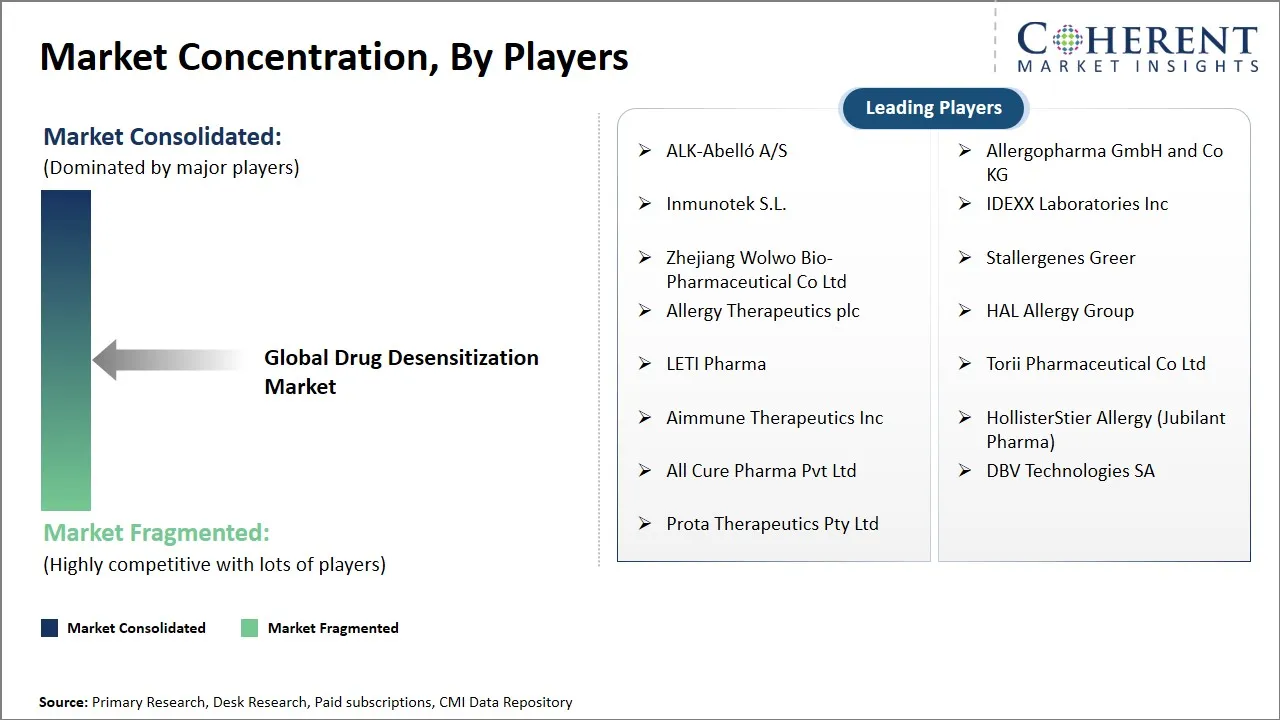
- The top players in the drug desensitization market are heavily investing in R&D to create novel therapies with better safety and efficacy which will be high-performers in the market. Innovation and technology leadership have always been their priorities and they are making it even stronger by forming partnerships with OEMs, pharma, and healthcare institutions, which leads to faster commercialization and now wider portfolios.
- R&D in biologics and sublingual immunotherapy is backed with large amounts of money by ALK-Abelló A/S, Stallergenes Greer, and Thermo Fisher Scientific which makes them the market leaders.
- Mid-level players are putting their money on cost-effective and dependable solutions while focusing on markets where affordability is the main factor for buying decisions. They are boosting their efficiency and competitiveness via partnerships with technology vendors and regional health care companies.
- HAL Allergy Group, Leti Pharma, and Inmunotek S.L. are some of the mid-level players that are able to provide immunotherapy solutions at a lower cost and therefore are more attractive to the patients. They are light in subcutaneous and sublingual allergy treatments, and their main markets are Europe, Latin America, and Asia where the buyers are often price-sensitive.
- Small player’s attentions are riveted to niche innovations where they devise customized products like personalized desensitization protocols and novel delivery systems. They are using advanced technologies like bioinformatics and nanotech and are differentiation through flexibility and local alliances to increase their regional presence.
- AllergoPharma GmbH, Biomed-Lublin, and Adare Pharmaceuticals are smaller players that offer new products like the ones mentioned above. Their flexibility and the use of bioinformatics and nanotech help expand presence in regional markets.
Market Report Scope
Drug Desensitization Market Report Coverage
| Report Coverage | Details | ||
|---|---|---|---|
| Base Year: | 2025 | Market Size in 2026: | USD 724.2 Mn |
| Historical Data for: | 2020 To 2024 | Forecast Period: | 2026 To 2033 |
| Forecast Period 2026 to 2033 CAGR: | 8.3% | 2033 Value Projection: | USD 1,265.5 Mn |
| Geographies covered: |
| ||
| Segments covered: |
| ||
| Companies covered: | ALK-Abelló A/S, Allergopharma GmbH and Co KG, Inmunotek S.L., IDEXX Laboratories Inc, Zhejiang Wolwo Bio-Pharmaceutical Co Ltd, Stallergenes Greer, Allergy Therapeutics plc, HAL Allergy Group, LETI Pharma, Torii Pharmaceutical Co Ltd, Aimmune Therapeutics Inc, HollisterStier Allergy (Jubilant Pharma), All Cure Pharma Pvt Ltd, DBV Technologies SA, and Prota Therapeutics Pty Ltd | ||
| Growth Drivers: |
| ||
| Restraints & Challenges: |
| ||
Drug Desensitization Market Dynamics
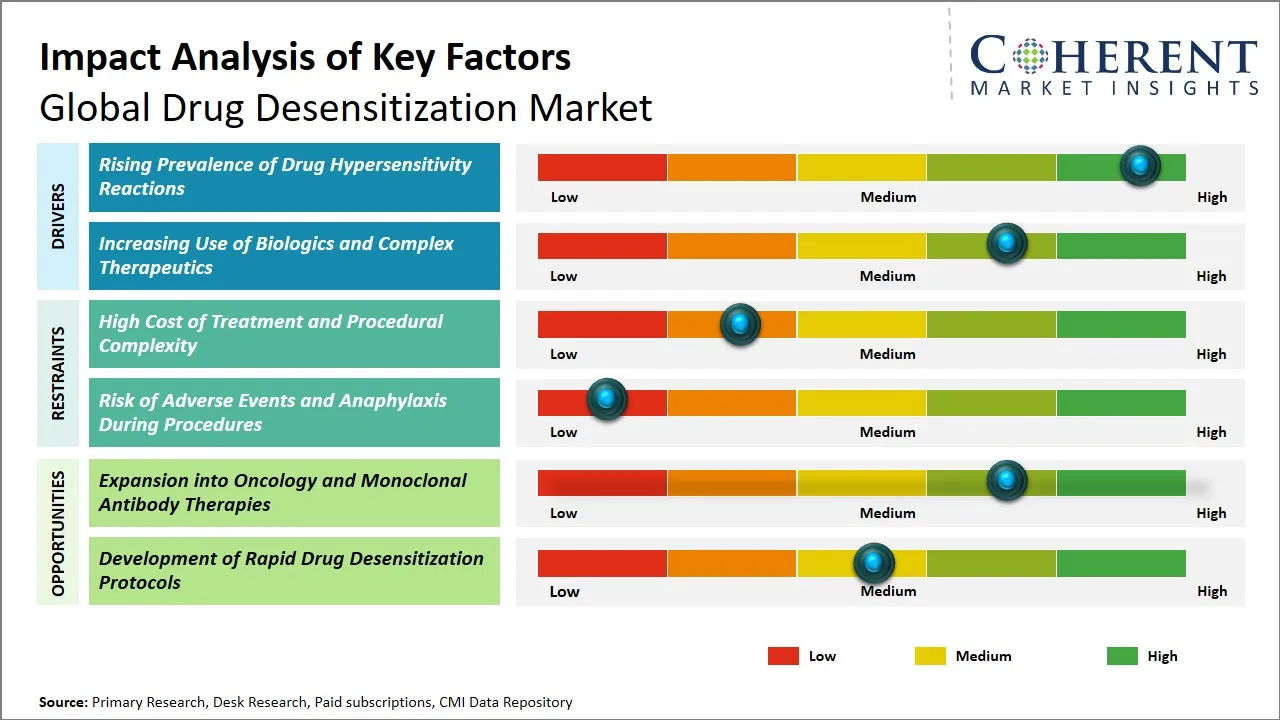
Drug Desensitization Market Driver - Rising Prevalence of Drug Hypersensitivity Reactions
The upswing in the occurrence of drug hypersensitivity reactions is one of the main reasons for the global demand for drug desensitization therapy. The pharmaceutical industry is continuously expanding into new therapeutic areas and as a result more and more patients experience adverse immune responses to essential drugs that include antibiotics, chemotherapeutics, and biologics. Hypersensitivity reactions can be very different from each other, the mildest being a simple rash and the most severe being life-threatening allergy, thus posing a big challenge to effective treatment protocols.
In March 2023, the review article titled “Pathogenesis of allergic diseases and implications for therapeutic interventions” shows that drug hypersensitivity reactions (DHRs) affect about 5–10% of adverse drug reaction cases and around 7–10% of the general population worldwide. Self-reported drug allergies are seen in roughly 8% of people, though confirmed cases are much lower. In children, the prevalence of suspected DHRs is about 1–2%, with confirmed cases near 0.05%. Antibiotics remain the most common triggers, responsible for nearly 30% of severe cases like Stevens–Johnson syndrome.
Drug Desensitization Market Opportunity - Expansion into Oncology and Monoclonal Antibody Therapies
The global drug desensitization market is still in its infancy but has a huge potential for growth especially in the fields of oncology and monoclonal antibody (mAb) therapies. Whenever cancer is diagnosed in a patient it is decided that the patient's treatment will be the use of targeted therapies such as monoclonal antibodies and this has led to a surge of the demand for very specialized treatment protocols. On the flip side, however, these biologic agents are frequently connected to hypersensitivity reactions having the power to either limit their usage or even cause therapy to be discontinued, this, in turn, calls for the development of effective drug desensitization strategies.
In October 2025, BioVaxys Technology Corp., a Canadian biopharma firm developing immunotherapies through its DPX and HapTenix platforms, expanded its LIFE offering to raise up to USD 2 million. The funds will advance cancer research, a DPX peanut allergy vaccine, and other Drug Desensitization programs.
Analyst Opinion (Expert Opinion)
- The current situation in the drug desensitization market is such that it is expanding due to the increasing number of allergy cases, the invention of new drugs at a rapid pace in the biopharma sector, and the government’s support of the adoption of the new, meaning safer, and personalized therapies. Another reason for the broader scope in the R&D of quicker , powerful desensitization protocols is the growing the demand for biologics and immunomodulators, though the lack of affordability and specialist availability in developing regions are still the main hurdles.
- The conferences such as EAACI Congress, AAAAI Annual Meeting and World Allergy Organization Conference have been pivotal in the exchange of research and standardization of clinical practices. Some of the recent achievements that indicate the great progress of the industry and thus the continued growth of global desensitization therapies are the introduction of ALK-Abelló’s EURneffy nasal epinephrine, BioVaxys’ DPX peanut allergy program, and Ionis Pharmaceuticals’ DAWNZERA RNA therapy.
Speak to the analyst
Want personalized insights?
Take the findings above to one of our principal consultants, or have the report rebuilt around the segments, geographies and competitors you actually track.
Market Segmentation
- Therapy Type Insights (Revenue, USD Mn, 2021 - 2033)
- Sublingual Immunotherapy (SLIT)
- Subcutaneous Immunotherapy (SCIT)
- Other emerging immunotherapy delivery methods
- Sales Channel Insights (Revenue, USD Mn, 2021 - 2033)
- Offline
- Online
- End User Insights (Revenue, USD Mn, 2021 - 2033)
- Hospitals and specialty allergy clinics
- Outpatient treatment centers
- Homecare settings
- Others
- Regional Insights (Revenue, USD Mn, 2021 - 2033)
- North America
- U.S.
- Canada
- Latin America
- Brazil
- Argentina
- Mexico
- Rest of Latin America
- Europe
- Germany
- U.K.
- Spain
- France
- Italy
- Russia
- Rest of Europe
- Asia Pacific
- China
- India
- Japan
- Australia
- South Korea
- ASEAN
- Rest of Asia Pacific
- Middle East
- GCC Countries
- Israel
- Rest of Middle East
- Africa
- South Africa
- North Africa
- Central Africa
- North America
- Key Players Insights
- ALK-Abello A/S
- Allergopharma GmbH and Co KG
- Inmunotek S.L.
- IDEXX Laboratories Inc
- Zhejiang Wolwo Bio-Pharmaceutical Co Ltd
- Stallergenes Greer
- Allergy Therapeutics plc
- HAL Allergy Group
- LETI Pharma
- Torii Pharmaceutical Co Ltd
- Aimmune Therapeutics Inc
- HollisterStier Allergy (Jubilant Pharma)
- All Cure Pharma Pvt Ltd
- DBV Technologies SA
- Prota Therapeutics Pty Ltd
Sources
Primary Research Interviews
- Industry Stakeholders List
- Hospital Pharmacology Departments
- Biopharmaceutical Manufacturers
- End Users List
- Allergy and Immunology Clinics
- Oncology Treatment Centers
Government and International Databases
- World Health Organization (WHO)
- U.S. Food and Drug Administration (FDA)
- European Medicines Agency (EMA)
- Centers for Disease Control and Prevention (CDC)
- National Institutes of Health (NIH)
Trade Publications
- Pharmaceutical Technology
- Drug Development & Delivery
- BioPharm International
- PharmaTimes
- Contract Pharma
- The Medicine Maker
Academic Journals
- The Journal of Allergy and Clinical Immunology
- Clinical and Experimental Allergy
- The New England Journal of Medicine
- Frontiers in Pharmacology
- The Lancet Immunology
- Journal of Clinical Immunology
Reputable Newspapers
- The New York Times – Health Section
- The Guardian – Science and Health
- The Wall Street Journal – Pharmaceuticals
- Reuters Health
- Bloomberg Health
- Financial Times – Healthcare
Industry Associations
- American Academy of Allergy, Asthma & Immunology (AAAAI)
- European Academy of Allergy and Clinical Immunology (EAACI)
- International Pharmaceutical Federation (FIP)
- Biotechnology Innovation Organization (BIO)
- International Society for Pharmacoeconomics and Outcomes Research (ISPOR)
- International Council for Harmonisation (ICH)
Public Domain Resources
- ScienceDirect
- National Library of Medicine (NLM)
- Google Scholar
- Open Access Government
- ResearchGate
Proprietary Elements
- CMI Data Analytics Tool: Proprietary analytics tool to analyze real-time market trends, consumer behavior, and technology adoption in market
- Proprietary CMI Existing Repository of Information for Last 8 Years
Get access to 250+ pages report
Every segment, forecast, competitor profile and data table behind the analysis above — available for instant download.
- ESOMAR Member
- ISO 9001:2015 Certified
- D-U-N-S Registered
- GDPR & CCPA Compliant
Missing comfort of reading report in your local language? Find your preferred language:
Transform your Strategy with Exclusive Trending Reports
Frequently Asked Questions
The global drug desensitization market is estimated to be valued at USD 724.2 Mn in 2026 and is expected to reach USD 1,265.5 Mn by 2033.
The CAGR of the global drug desensitization market is projected to be 8.3% from 2026 to 2033.
Rising prevalence of drug hypersensitivity reactions and increasing use of biologics and complex therapeutics are the major factors driving the growth of the global drug desensitization market.
High cost of treatment and procedural complexity and risk of adverse events and anaphylaxis during procedures are the major factors hampering the growth of the global drug desensitization market.
In terms of therapy type, the Subcutaneous Immunotherapy (SCIT) segment is estimated to dominate the market revenue share in 2026.
ALK-Abelló A/S, Allergopharma GmbH and Co KG, Inmunotek S.L., IDEXX Laboratories Inc, Zhejiang Wolwo Bio-Pharmaceutical Co Ltd, Stallergenes Greer, Allergy Therapeutics plc, HAL Allergy Group, LETI Pharma, Torii Pharmaceutical Co Ltd, Aimmune Therapeutics Inc, HollisterStier Allergy (Jubilant Pharma), All Cure Pharma Pvt Ltd, DBV Technologies SA, and Prota Therapeutics Pty Ltd are the major players.
North America is expected to lead the global drug desensitization market in 2026.