

Global Electric Capacitors Market Size and Forecast – 2026 To 2033
The global electric capacitors market is expected to grow from USD 12.50 Bn in 2026 to USD 22.75 Bn by 2033, registering a compound annual growth rate (CAGR) of 7.9% from 2026 to 2033. The global electric capacitors market is driven by growing demand for consumer electronics such as smartphones, wearables, and laptops. On February 24, 2026, Samsung officially launched the Galaxy S26 Ultra. It is available across major retailers and comes packed with industry-first features, upgraded internals, and new Galaxy AI tools. (Source: Samsung)
Key Takeaways of the Global Electric Capacitors Market
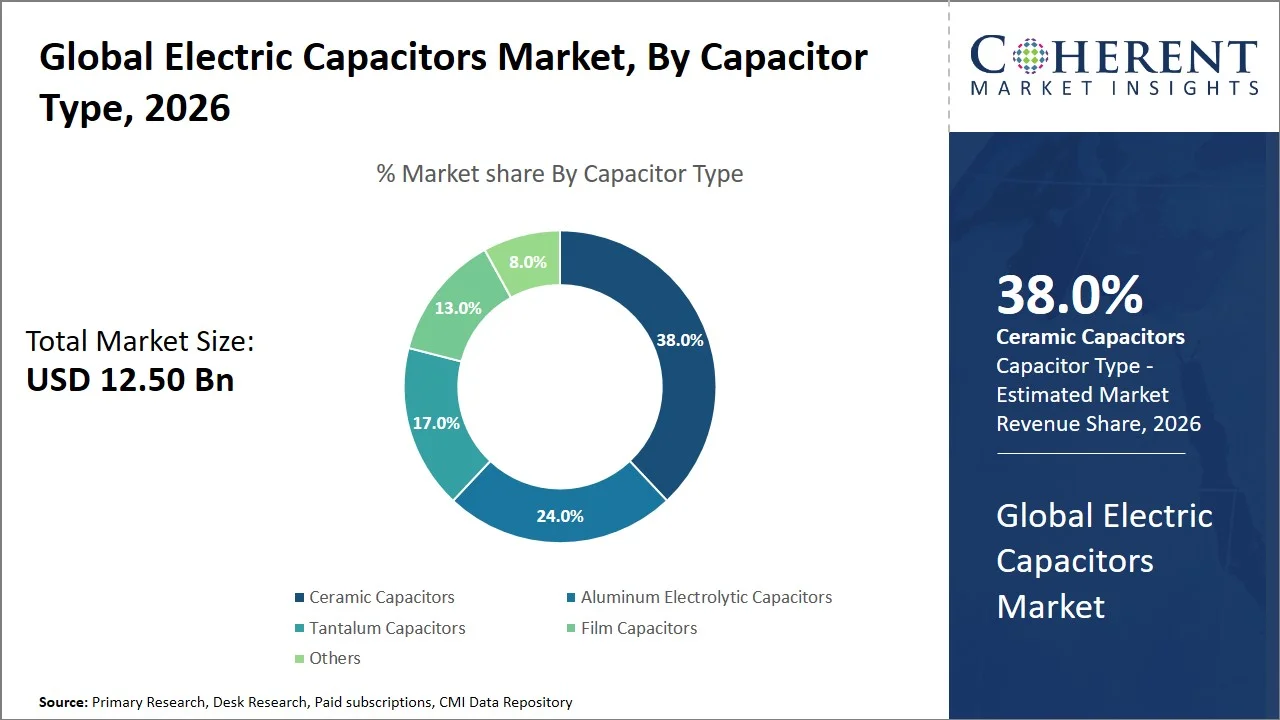
- The Ceramic Capacitors segment is expected to account for 38.0 % of the global electric capacitors market share in 2026. Technological advancements in high-capacitance is primarily driving the growth of the segment. On December 2, 2025, Murata Manufacturing Co., Ltd. announces the launch and mass production of its multilayer ceramic capacitor (MLCC) featuring a capacitance of 15nF, a rated voltage of 1.25kV, and C0G characteristics in the compact 1210-inch (3.2mm x 2.5mm) size. (Source: Murata)
- The Polarized Capacitors segment is estimated to capture 54.0 % of the market share in 2026. The increasing need of high capacitance in compact, cost-effective forms if driving the demand for polarized capacitors. On October 27, 2025, Panasonic Industry expanded the SXV Series OS-CON Conductive Polymer Aluminum Solid Capacitors industry-leading product line. The new options within the SXV Series feature an increased capacitance of 80V in the high-voltage parts. (Source: Panasonic)
- The Consumer Electronics segment is estimated to capture 27.0 % of the market share in 2026. Increasing consumer preference for high-performance premium devices such as high-end gaming smartphones is a major factor driving the growth of the segment. On January 7, 2025, ASUS Republic of Gamers (ROG) announced the new ROG Phone 9 series of stylish and powerful gaming phones, developed to offer the best possible gaming experience in a premium phone design. (Source: ASUS)
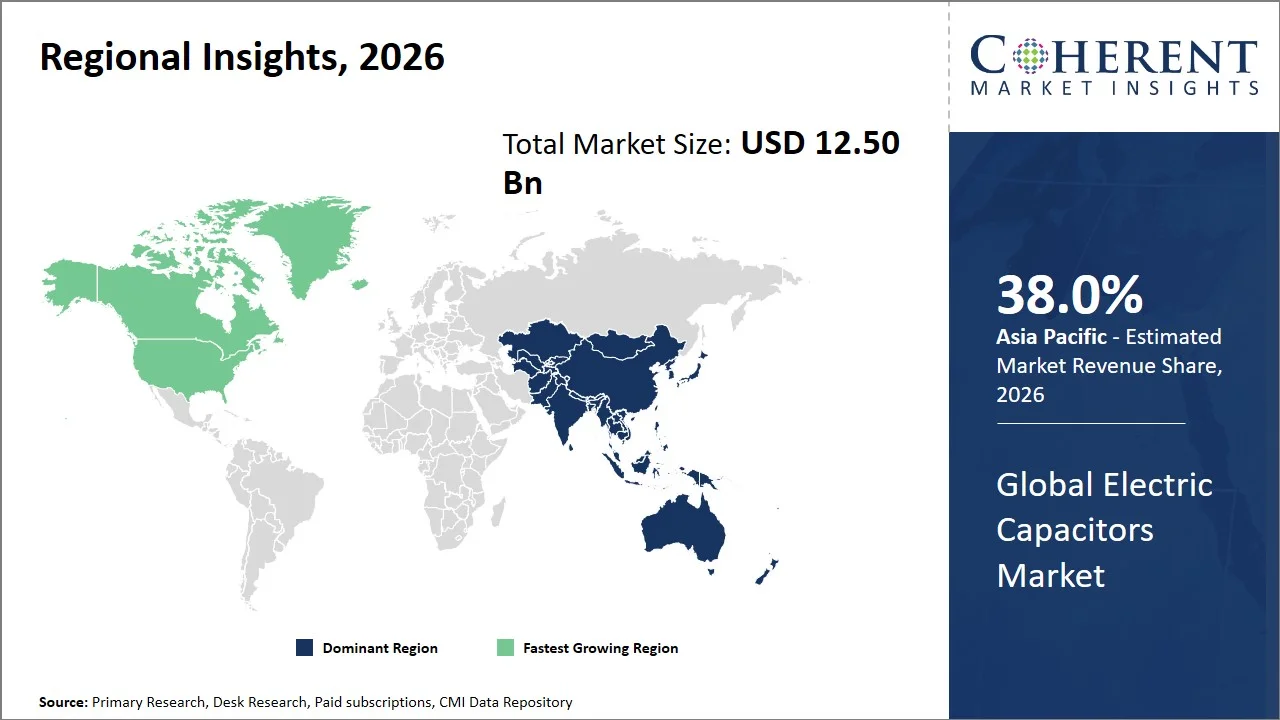
- Asia Pacific is expected to dominate the electric capacitors market in 2026 with a market share of 38.0 %. Rapid development of data centers and cloud computing infrastructure in Asia Pacific is driving the regional market. On June 5, 2026, AirTrunk announed plans to invest more than USD 30 billion in India by 2030 in support of digital infrastructure capacity, positioning the country as a cornerstone of AirTrunk’s global growth strategy and one of the company’s most significant long-term investment markets. (Source: AirTrunk)
- North America is expected to account for 26.0 % share in 2026 and is projected to record the fastest growth over the forecast period. Increasing investments in smart grids and power transmission networks is a key factor driving the growth of the electric capacitors market in North America. On March 3, 2026, FirstEnergy Transmission LLC announced a USD 950 million grid modernization project across Ohio and Pennsylvania to rebuild transmission lines, upgrade substations, and improve grid reliability under PJM approval. (Source: FirstEnergy)
- Rapid Growth of Electric Vehicles (EVs) and Automotive Electronics: The shift to electric vehicles and hybrid vehicles is driving demand for improved capacitors. Capacitors are a key component in battery management systems, onboard chargers, DC-DC converters, inverters, ADAS (Advanced Driver Assistance Systems) and entertainment systems. The increasing electrical content per vehicle is pushing the need for high-reliability and high-temperature capacitor solutions.
- Increasing Adoption of Renewable Energy and Smart Grid Infrastructure: Capacitors have broad application in solar power plants, wind farms, energy storage systems, and smart grids for power conditioning, filtering, voltage control and energy storage. Increasing investments in renewable energy and grid modernization across countries will drive demand for high voltage film capacitors and supercapacitors, creating new growth prospects for manufacturers.
Segmental Insights
Why Does Ceramic Capacitors Dominate the Global Electric Capacitors Market?
The ceramic capacitors segment is expected to account for 38.0% of the global electric capacitors market share in 2026. Ceramic capacitors hold the largest share of the worldwide electric capacitors market owing to its wide application in smartphones, computers, tablets, wearable devices and other electronic items. They are compact, cheap, very reliable and can be designed to accommodate high density circuits which is why they are used in current electronic gadgets. The constant increase in the worldwide output of consumer electronics has therefore ensured the prevailing market share of ceramic capacitors. On May 1, 2025, KYOCERA AVX, has announced the development of the world's first compact, high-capacity multilayer ceramic chip capacitor (MLCC) boasting an industry-leading capacitance value of 47μF in the 0402-inch size (1.0mm x 0.5mm). (Source: KYOCERA)
- Current Industry Events of 2026
- Market Size Estimation
- Regional Breakdown
- Competitive Landscape
- Customer Intelligence
- Segmental Analysis
- Pricing Analysis
- Key Market Drivers, Challenges & Future Trends
- Customized Insights Section
Why are Polarized Capacitors the Most Effective Polarization?
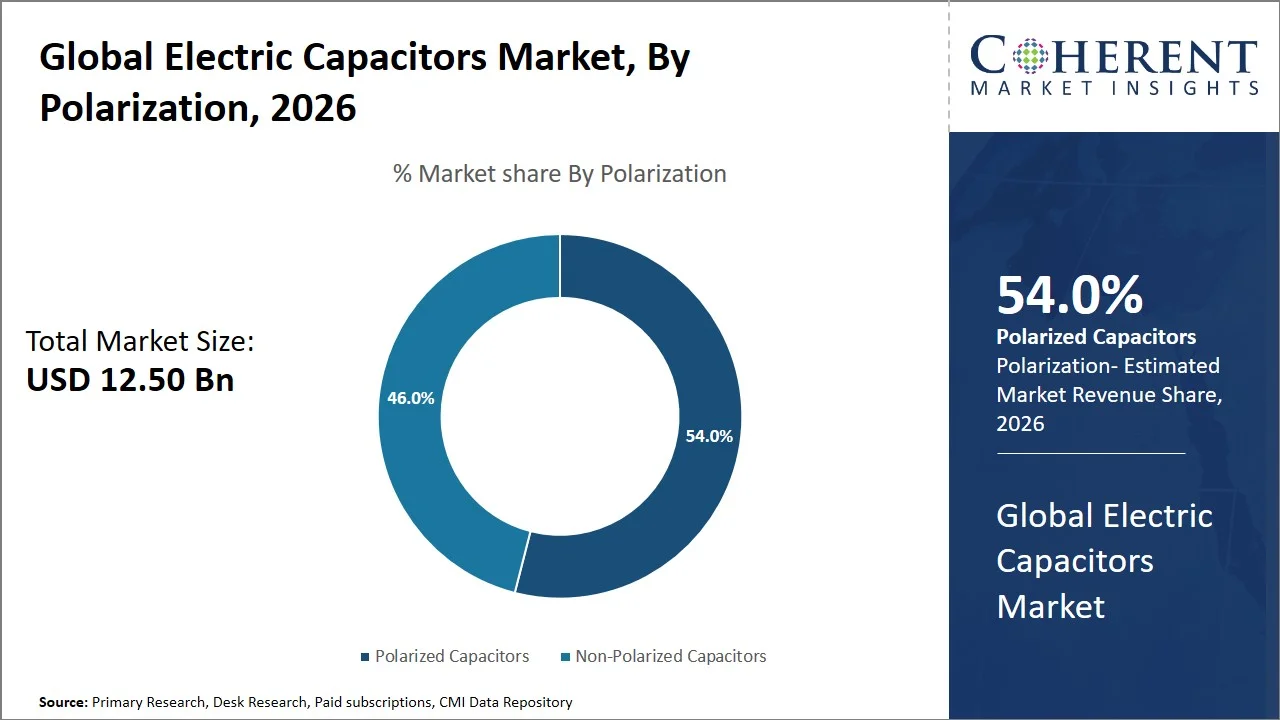
The polarized capacitors segment is expected to account for 54.0% of the global electric capacitors market share in 2026. The most common type of polarization is the polarized capacitor, especially the aluminum electrolytic type and the tantalum type. They are the most common because they can achieve very high values of capacitance in a very small and inexpensive package. This makes them suitable for power supply filtering, energy storage, voltage smoothing and other applications requiring substantial capacitance. Consequently, they have been widely used in consumer electronics, industrial equipment and automotive systems. For example, Nichicon has increased focus on low-impedance aluminum electrolytic capacitors used in consumer electronics and automotive systems, as global demand rises for compact power supply filtering solutions. This reflects increasing capacitor content in smartphones, laptops, and gaming devices requiring stable DC output and ripple suppression. (Source: Nichicon)
Consumer Electronics Dominate the Global Electric Capacitors Market
The consumer electronics segment is expected to account for 27.0% of the global electric capacitors market share in 2026. The global electric capacitors market is dominated by consumer electronics. Almost all electronic devices, including smartphones, laptops, televisions, gaming consoles and wearables, have numerous capacitors for power management, signal filtering, energy storage and circuit stabilization. The huge global production and use of these gadgets leads to a high demand for capacitors. Consumer electronics is the largest end-user group. On May 20, 2026, Samsung Electro-Mechanics signed a silicon capacitor supply contract worth approximately 1.5 trillion KRW with a global large-scale company. The shift from short-term to long-term agreements shows how consumer electronics manufacturers are locking in capacitor supply due to increasing device complexity and capacitor consumption per unit. (Source: Samsung)
Currents Events and their Impact
Current Events | Description and its Impact |
European Union Ecodesign Regulation (EU) |
|
EU RoHS Exemption Updates for Capacitors (Directive 2025/2363) |
|
(Source: European Union, SGS)
Global Electric Capacitors Market - High-Value Capacitor Consumption in EV Charging Systems
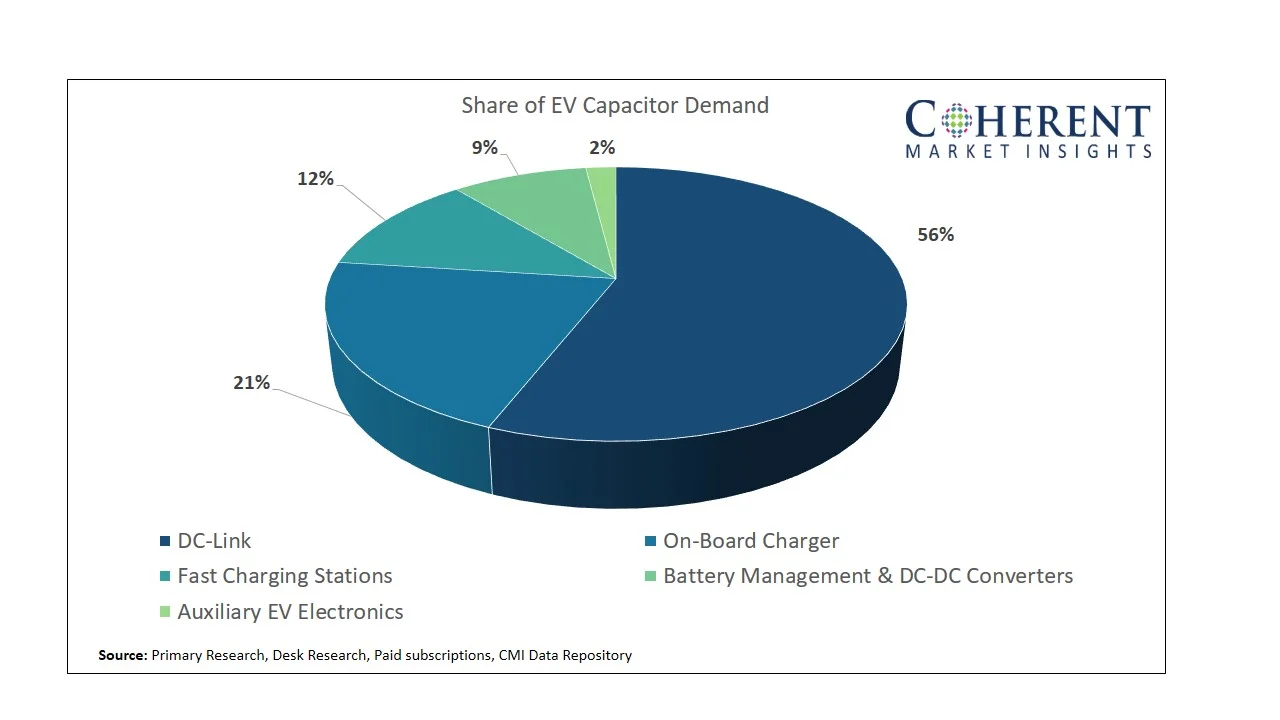
Global Electric Capacitors Market - Large-Volume use of Electrolytic Capacitors
Application Area | Usage Share |
Switched-Mode Power Supplies (SMPS) | 30–35% |
Industrial Motor Drives (VFDs) | 20–25% |
EV Powertrains | 15–20% |
Renewable Energy Systems (Solar/Wind) | 10–15% |
Consumer Electronics | 10–12% |
Global Electric Capacitors Market Large-Volume Applications of Film Capacitors
Application Area | Usage Share |
EV DC-Link Circuits | 35–40% |
Renewable Energy Inverters (Solar/Wind) | 25–30% |
Industrial Automation & Drives | 15–20% |
Railway & Traction Systems | 10–15% |
Power Transmission Equipment | 5–8% |
Electric Capacitors Market Dynamics
Market Drivers
Rising demand for electric vehicles (EVs) and hybrid vehicles
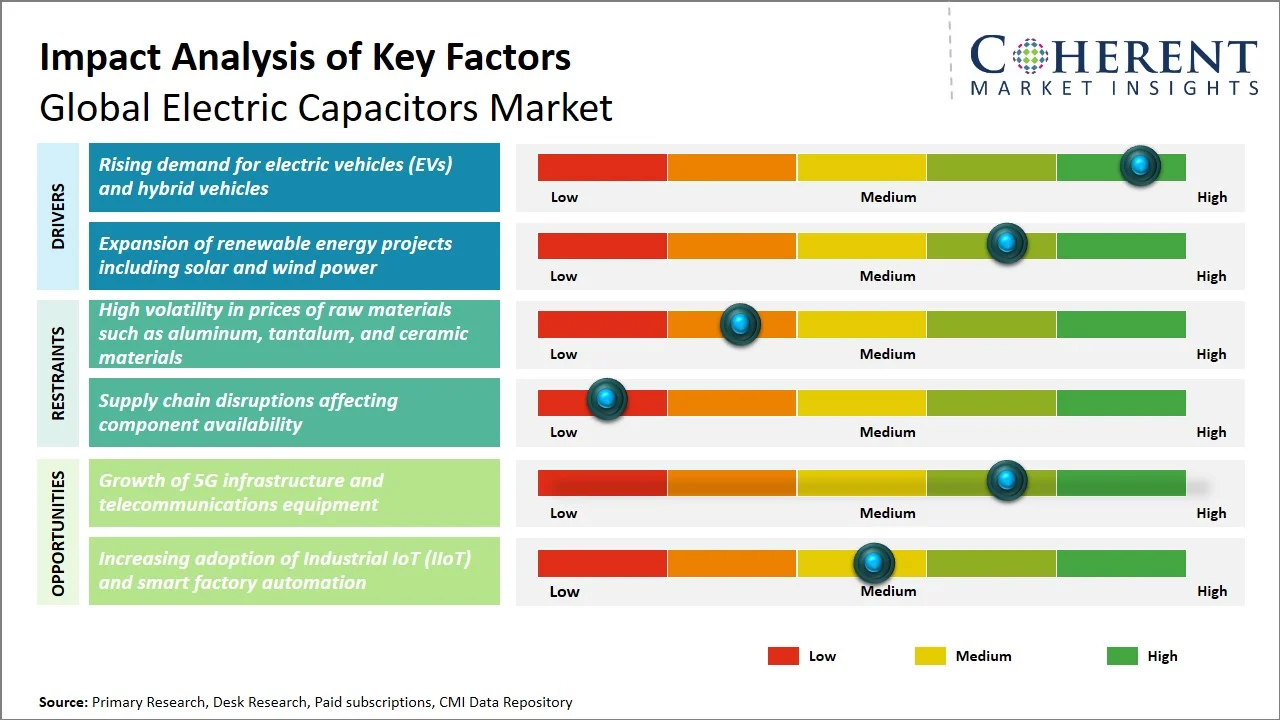
Rising demand for electric vehicles (EVs) and hybrid vehicles is one of the major reasons driving the growth of the worldwide electric capacitors market. Capacitors are essential components of EV powertrains, battery management systems, onboard chargers, DC-DC converters, inverters, regenerative braking systems and advanced electronic control units. With governments around the world pushing for vehicle electrification with incentives and severe pollution rules, and automakers ramping up production of EVs, there is a demand for high-performance capacitors to operate at high voltage, temperature, and power. This trend is mostly down to the adoption of ceramic, film and electrolytic capacitors in the automotive industry. In 2025, the International Energy Agency reported that global electric car sales exceeded 20 million units, accounting for about one in every four new cars sold worldwide, marking a major milestone in mass EV adoption. This confirms EVs are no longer niche and are entering mainstream passenger vehicle demand across major markets. (Source: International Energy Agency)
Expansion of renewable energy projects including solar and wind power
The worldwide electric capacitors market is mainly driven by the growth of renewable energy projects such as solar and wind power installations. Capacitors are an essential aspect of renewable energy systems, including inverters, converters, and grid-connection devices. They are used for power conversion, voltage stability, storage of energy, filtering and power factor adjustment. Countries are spending heavily in renewable energy infrastructure to meet sustainability and carbon-reduction targets, creating demand for reliable and high-performance capacitors. The increased construction of renewable energy plants is driving the need for film capacitors, supercapacitors, and high voltage capacitors for usage in power generation, transmission and energy storage applications.
On December 16, 2025, Sonnedix, a global renewable energy company with 12GW of total capacity, announced that it has secured contracts totalling 805MW of solar capacity in Italy through the FER-X auction, its NZIA-aligned scheme, and the Energy Release mechanism. (Source: Sonnedix)
Emerging Trends
- Miniaturization and Higher Performance Requirements in Electronics: Consumer electronics, IoT devices, wearables, and telecom equipment require smaller, lighter, and more efficient components. This trend is driving the development of miniaturized multilayer ceramic capacitors (MLCCs) with higher capacitance and better performance, helping the makers to overcome space constraints without compromising on function.
- Expansion of 5G Networks and Industrial Automation: The expansion of 5G infrastructure and the arrival of Industry 4.0 are fueling the demand for capacitors that can function at high frequencies and in harsh conditions. Capacitors are essential elements of base stations, data centers, industrial robots, automation systems and communication equipment, which can provide faster data transfer, improved power economy, and greater system reliability.
Regional Insights
Why is Asia Pacific a Strong Market for Electric Capacitors?
Asia Pacific is expected to account for a market share of 38.0% in 2026. The Asia Pacific region remains the primary location for the worldwide electric capacitors business, with more than half of the global MLCC and capacitor revenue coming from the region due to its concentration of electronics manufacturing, EV production, and component suppliers. Murata Manufacturing, TDK Corporation, Samsung Electro-Mechanics, and Yageo Corporation are some of the key players operating in the region. The top five providers accounted for almost 45% of the regional ceramic capacitor market in 2025. Growth in China, Japan, South Korea, and India is being driven by EV power electronics, AI servers, 5G infrastructure and renewable energy installations. On July 16, 2025, Samsung Electro-Mechanics launched the new MLCC with a 1000V rating, 1812-inch (4.5×3.2mm) size, X7R (-55 to 125℃), and 100nF capacitance. This product minimizes EMI in high-voltage battery lines, ensuring power stability and durability. (Source: Samsung)
Why Does North America Electric Capacitors Market Exhibit High Growth?
North America is projected to account for 26.0% of the global electric capacitors market and expected to register the fastest growth. North America’s electric capacitors market is significantly influenced by AI data centers, defense electronics, aerospace systems, and electric vehicle production. The U.S. accounts for around 75% of consumer-electronics high-voltage capacitor demand in North America, driven by investments in domestic semiconductor production, as part of the CHIPS Act, and increased orders for server-grade capacitors from hyperscale data-center operators. Capacitors for industrial, military and power applications are supplied by companies such as KEMET and Cornell Dubilier. Demand is growing fast from AI accelerator servers and grid-energy storage systems. On April 14, 2025, TDK Corporation expanded its CGA series for automotive multilayer ceramic capacitors (MLCCs) to 10 µF at 100 V in 3225 size (3.2 x 2.5 x 2.5 mm – L x W x H), with X7R characteristics (Class Ⅱ dielectric). This is the industry’s highest capacitance for a 100-V rated product in 3225 size and this temperature characteristic. (Source: TDK)
Global Electric Capacitors Market Outlook for Key Countries
Why is China Emerging as a Major Hub in the Electric Capacitors Market?
China is the largest consumer of capacitors in the world, and the biggest producer of electronics and EVs. The country is expected to use 45% of worldwide MLCC output, led by large-scale manufacture of smartphones, consumer electronics, industrial automation equipment, and new-energy vehicles, with NEV sales to top 10 million units in 2025. Domestic producers are increasing their output, but outside suppliers including Murata Manufacturing, TDK Corporation and Yageo Corporation have big plants in the country to support large OEMs and EV makers. On May 4, 2026, Chaozhou Three-Circle Group announced plans to invest USD 1 billion in high-end capacitor and passive component production lines in Hong Kong, targeting AI servers, smartphones, and automotive electronics supply chains.
Is U.S. the Next Growth Engine for the Electric Capacitors Market?
The United States remains the most technologically advanced capacitor market outside Asia, with strong demand from aerospace, defense, medical devices, AI computing infrastructure, and renewable energy systems. U.S. data-center expansion by major cloud operators has increased demand for high-reliability MLCCs and power capacitors used in AI servers, while updated ANSI/UL capacitor standards are driving adoption of higher-performance products in residential and commercial power applications. The country also benefits from growing domestic electronics manufacturing initiatives and increasing EV battery and power-electronics investments.
Taiwan Electric Capacitors Market Analysis and Trends
Taiwan’s electric capacitor market is highly advanced and export-oriented, driven by its strong electronics manufacturing ecosystem and global leadership in semiconductors, 5G infrastructure, EV electronics, and AI server hardware. Growth is being fueled by rising demand for multilayer ceramic capacitors (MLCCs), aluminum electrolytic capacitors, and high-end film and tantalum capacitors used in power management, filtering, and energy storage applications across consumer electronics, telecommunications, and industrial systems. A major trend is rapid miniaturization and performance enhancement, as devices such as smartphones, 5G base stations, and data centers require higher capacitance density and reliability under high-frequency and high-temperature conditions. For example, Walsin Technology’s global consolidated net sales for March totaled USD 3.4 billion, reflecting a 27.3% increase from February. Additionally, monthly YoY sales grew by 11.1%, while the year-to-date cumulative revenue increased by 9.5% compared to the same period in 2025. (Source: Walsin)
Japan Electric Capacitors Market Analysis and Trends
Japan is still the world technology leader in premium and high-reliability capacitors, particularly multilayer ceramic capacitors (MLCCs). Industry giants such as Murata Manufacturing, TDK Corporation, Taiyo Yuden and Nichicon Corporation, which together supply a substantial chunk of the world's sophisticated capacitor needs, are based there. Japanese manufacturers are leading high-end applications in automotive electronics, industrial automation, aerospace, and AI computing and are investing in next-generation miniaturized MLCC technology, including Murata’s mass production of ultra-compact 47uF MLCCs for advanced electronics.
South Korea Electric Capacitors Market Analysis and Trends
South Korea’s electric capacitors industry is mainly driven by automotive electronics, memory semiconductors, cellphones and AI server infrastructure. Samsung Electro-Mechanics has become one of the world’s top MLCC suppliers and has greatly increased its automotive capacitor business with its market share increasing quickly amid the rise of EVs. Major domestic electronics manufacturers and growing expenditures in AI data centers, innovative packaging technologies, and next-generation communication equipment further underpin demand for capacitors.
Global Electric Capacitors Market - Capacitor Content Per AI Server
The global electric capacitors market for AI servers is increasing at a rapid rate owing to the requirement for high-density power delivery in GPU/TPU based data centers. AI servers include lots of capacitors in their power supply, voltage regulation modules (VRMs) and DC filtering circuits. This is especially true for high performance CPUs, such those found in NVIDIA and AMD server platforms. Key points include:
- Capacitor content per AI server (typical range) - 2,000 to 8,000+ capacitors.
- High-performance AI training servers (GPU clusters) - can exceed 10,000 capacitors per rack-level system.
- Main usage areas - VRMs (CPU/GPU power delivery), DC-DC converters, and power filtering.
- Capacitor density increase - 20–30% higher vs traditional cloud servers due to AI workloads.
- High-end AI server boards can contain 1,500–3,000 MLCCs per motherboard alone.
How is Growth of 5G Infrastructure and Telecommunications Equipment Creating New Opportunities in the Electric Capacitors Market?
5G infrastructure and telecommunications equipment are driving considerable growth in the electric capacitors market. 5G networks demand a larger density of electrical components to enable quicker data transmission, lower latency, and higher network capacity. Power management, signal filtering, noise suppression, and voltage stabilization are all functions of capacitors which are crucial components in 5G base stations, small cells, antennas, routers, optical networking equipment, and data centers. Telecom operators are rolling out 5G networks around the world, boosting demand for high-performance multilayer ceramic capacitors (MLCCs) and other innovative capacitor technologies that can operate at high frequencies and in harsh circumstances. Further, the growth of cloud computing, edge computing, and AI-based telecom infrastructure is also driving the use of capacitors, thereby opening new avenues of revenue for producers across the globe.
On February 4, 2025, AT&T announced it is extending its voice core relationship with Nokia in a multi-year expansion deal that will support the U.S. operator in delivering on its vision of securely providing customer-focused networks and automation that drive new services, faster deployment times, and operational efficiencies. (Source: Nokia)
Global Electric Capacitors Market - Capacitor Demand Intensity by Renewable Energy
Renewable Segment | Estimated Capacitor Share in Renewable Power Electronics |
Solar PV Inverters (Utility Scale) | 40–45% |
Wind Turbine Converters (Onshore) | 25–30% |
Wind Turbine Converters (Offshore) | 15–20% |
Battery Energy Storage Systems (BESS) | 10–15% |
Grid-Tied Power Conditioning Units (STATCOM, UPS) | 5–10% |
Market Players, Key Development, and Competitive Intelligence
Key Developments
- On April 20, 2026, KYOCERA AVX launched the new traction-grade FFLK series DC filtering capacitors. The new traction-grade FFLK series DC filtering film capacitors are designed to deliver safe, reliable, and long-lifetime performance in demanding DC filtering applications, including industrial motor control and electric vehicle traction systems exposed to hazards including high power, high temperature, and high shock and vibration.
- On April 15, 2026, Samsung Electro-Mechanics introduced Ultra-High-Voltage MLCCs for xEV High- Voltage Powertrains. Samsung Electro-Mechanics offers customized, temperature-compensating, high-voltage multilayer ceramic capacitors for xEV (BEV, PHEV), achieving 1210-inch (3.2×2.5mm) size, C0G (-55 to 125℃) / X8G (-55 to 150℃), and 1.2㎋~33㎋ capacitance at rated 1000V~1500V.
Competitive Landscape
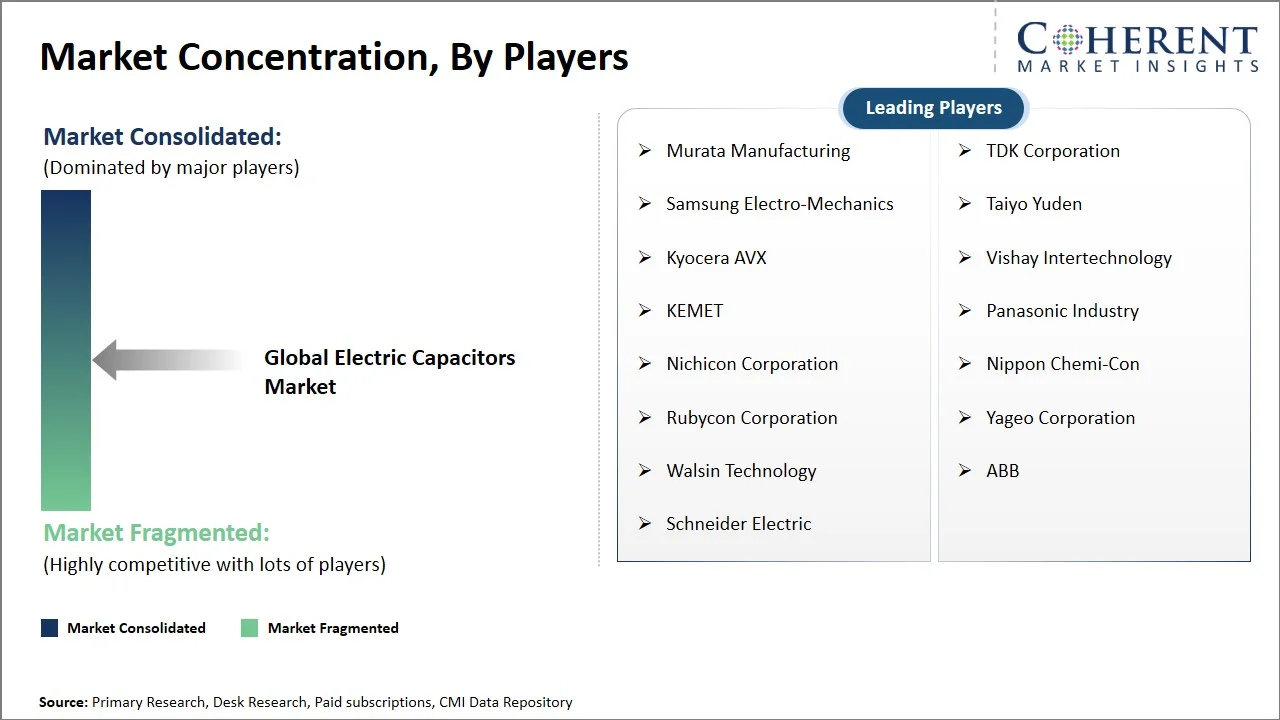
The global electric capacitors market is highly concentrated at the high-end segment with a considerable share owned by few large multinational players such as Murata Manufacturing, TDK Corporation, Samsung Electro-Mechanics, Taiyo Yuden, Yageo Corporation and Vishay Intertechnology. Supply capacity restrictions periodically occur from surge in demand for automotive electronics, 5G infrastructure and data centers, with multilayer ceramic capacitors (MLCCs) being dominant. The race is heating up with technical innovation, miniaturization, and high-capacitance development, and companies are expanding capacity and making strategic acquisitions to improve supply chains and win long-term OEM contracts for automotive and industrial industries.
Market Report Scope
Electric Capacitors Market Report Coverage
| Report Coverage | Details | ||
|---|---|---|---|
| Base Year: | 2025 | Market Size in 2026: | USD 12.50 Bn |
| Historical Data for: | 2020 To 2024 | Forecast Period: | 2026 To 2033 |
| Forecast Period 2026 to 2033 CAGR: | 7.9% | 2033 Value Projection: | USD 22.75 Bn |
| Geographies covered: |
| ||
| Segments covered: |
| ||
| Companies covered: | Murata Manufacturing, TDK Corporation, Samsung Electro-Mechanics, Taiyo Yuden, Kyocera AVX, Vishay Intertechnology, KEMET, Panasonic Industry, Nichicon Corporation, Nippon Chemi-Con, Rubycon Corporation, Yageo Corporation, Walsin Technology, ABB, Schneider Electric | ||
| Growth Drivers: |
| ||
| Restraints & Challenges: |
| ||
Analyst Opinion (Expert Opinion)
- The electric capacitors market is analyzed as a structurally rising segment, driven by the trends of electrification, digitalization and energy change. Strong demand visibility is seen from electric vehicles, renewable energy systems and high-performance computing infrastructure, but supply chain tightness for advanced MLCCs is identified as a recurring concern. Leading manufacturers are looking at the continuous innovation of high temperature, high voltage and miniaturized capacitor technology as a critical differentiator for long-term competitiveness.
- The future prognosis of the electric capacitors market is predicted to be highly positive with demand growth fueled by EV adoption, 5G network densification, AI computing growth and renewable energy deployment. Supercapacitors and improved ceramic capacitors are rapidly adopted in energy storage and automotive markets. Localization of semiconductor and electronics manufacturing rises, reshaping global supply chains. Rising performance requirements particularly in high-reliability industrial and automotive grade applications will drive large capacity additions and material developments by the leading players.
Speak to the analyst
Want personalized insights?
Take the findings above to one of our principal consultants, or have the report rebuilt around the segments, geographies and competitors you actually track.
Market Segmentation
- Capacitor Type Insights (Revenue, USD Billion, 2021 - 2033)
- Ceramic Capacitors
- Aluminum Electrolytic Capacitors
- Tantalum Capacitors
- Film Capacitors
- Others
- Polarization Insights (Revenue, USD Billion, 2021 - 2033)
- Polarized Capacitors
- Non-Polarized Capacitors
- Application Insights (Revenue, USD Billion, 2021 - 2033)
- Consumer Electronics
- Automotive and Electric Vehicles
- Industrial Equipment
- Telecommunications
- Energy and Power Utilities
- Aerospace and Defense
- Voltage Rating Insights (Revenue, USD Billion, 2021 - 2033)
- Low Voltage Capacitors
- Medium Voltage Capacitors
- High Voltage Capacitors
- Dielectric Material Insights (Revenue, USD Billion, 2021 - 2033)
- Ceramic
- Aluminum Oxide
- Plastic Films
- Paper
- Oxide Layers
- Regional Insights (Revenue, USD Billion, 2021 - 2033)
- North America
- U.S.
- Canada
- Latin America
- Brazil
- Argentina
- Mexico
- Rest of Latin America
- Europe
- Germany
- U.K.
- Spain
- France
- Italy
- Russia
- Rest of Europe
- Asia Pacific
- China
- India
- Japan
- Australia
- South Korea
- ASEAN
- Rest of Asia Pacific
- Middle East
- GCC Countries
- Israel
- Rest of Middle East
- Africa
- South Africa
- North Africa
- Central Africa
- North America
- Key Players Insights
- Murata Manufacturing
- TDK Corporation
- Samsung Electro-Mechanics
- Taiyo Yuden
- Kyocera AVX
- Vishay Intertechnology
- KEMET
- Panasonic Industry
- Nichicon Corporation
- Nippon Chemi-Con
- Rubycon Corporation
- Yageo Corporation
- Walsin Technology
- ABB
- Schneider Electric
Sources
Primary Research Interviews
- Electric Capacitor Manufacturers
- Electronic Component Distributors
- Automotive Industry Electronics Managers
- Renewable Energy System Integrators
Magazines
- Electronic Design Magazine
- Power Electronics Magazine
- Electronics Weekly
- EDN Magazine
- IEEE Spectrum Magazine
Journals
- IEEE Transactions on Power Electronics
- Journal of Electronic Materials
- Microelectronics Reliability
Associations
- Electronic Industries Alliance (EIA)
- Institute of Electrical and Electronics Engineers (IEEE)
- International Electrotechnical Commission (IEC)
- Electronic Components Industry Association (ECIA)
Public Domain Sources
- U.S. Securities and Exchange Commission (SEC) Filings
- European Patent Office Database
- World Trade Organization (WTO) Trade
Proprietary Elements
- CMI Data Analytics Tool
- Proprietary CMI Existing Repository of information for last 10 years
Get access to 250+ pages report
Every segment, forecast, competitor profile and data table behind the analysis above — available for instant download.
- ESOMAR Member
- ISO 9001:2015 Certified
- D-U-N-S Registered
- GDPR & CCPA Compliant
Missing comfort of reading report in your local language? Find your preferred language:
Transform your Strategy with Exclusive Trending Reports
Frequently Asked Questions
The global electric capacitors market is expected to stand at USD 12.50 Bn in 2026 and is expected to reach USD 22.75 Bn by 2033.
The CAGR of the global electric capacitors market is projected to be 7.9% from 2026 to 2033.
Rising demand for electric vehicles (EVs) and hybrid vehicles and expansion of renewable energy projects including solar and wind power are the major factors driving the growth of the global electric capacitors market.
In terms of capacitor type, ceramic capacitors segment is estimated to dominate the market revenue share in 2026.
An MLCC (Multilayer Ceramic Capacitor) is a compact capacitor made of stacked ceramic layers that provides high capacitance in a small size.
A supercapacitor is used for rapid energy storage and discharge in applications like backup power and regenerative braking.
High volatility in prices of raw materials such as aluminum, tantalum, and ceramic materials and supply chain disruptions affecting component availability are the major factors hampering the growth of the global electric capacitors market.