

Global Energy Cybersecurity Market Size and Forecast – 2026-2033
The global energy cybersecurity market is estimated to be valued at USD 1.78 Bn in 2026 and is expected to reach USD 3.03 Bn by 2033, exhibiting a compound annual growth rate (CAGR) of 7.9% from 2026 to 2033.
Key Takeaways of the Global Energy Cybersecurity Market
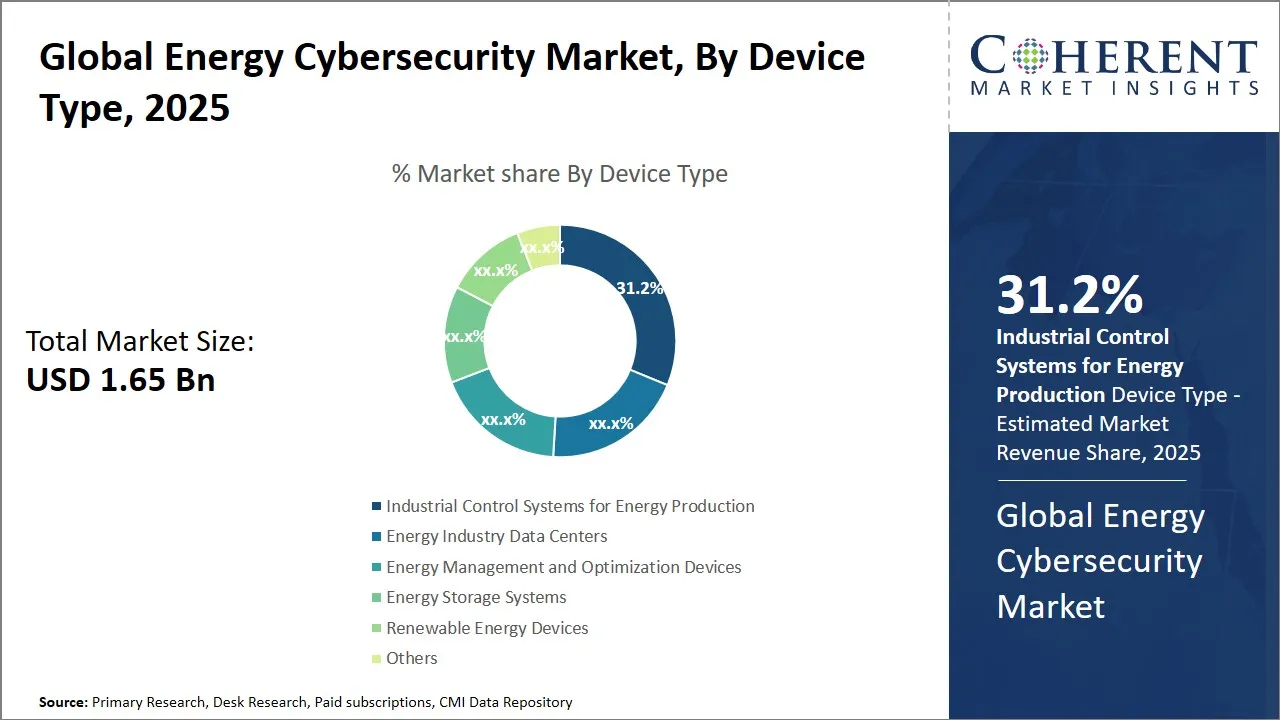
- The industrial control systems for energy production segment leads the market holding an estimated share of 32.2 % in 2026.
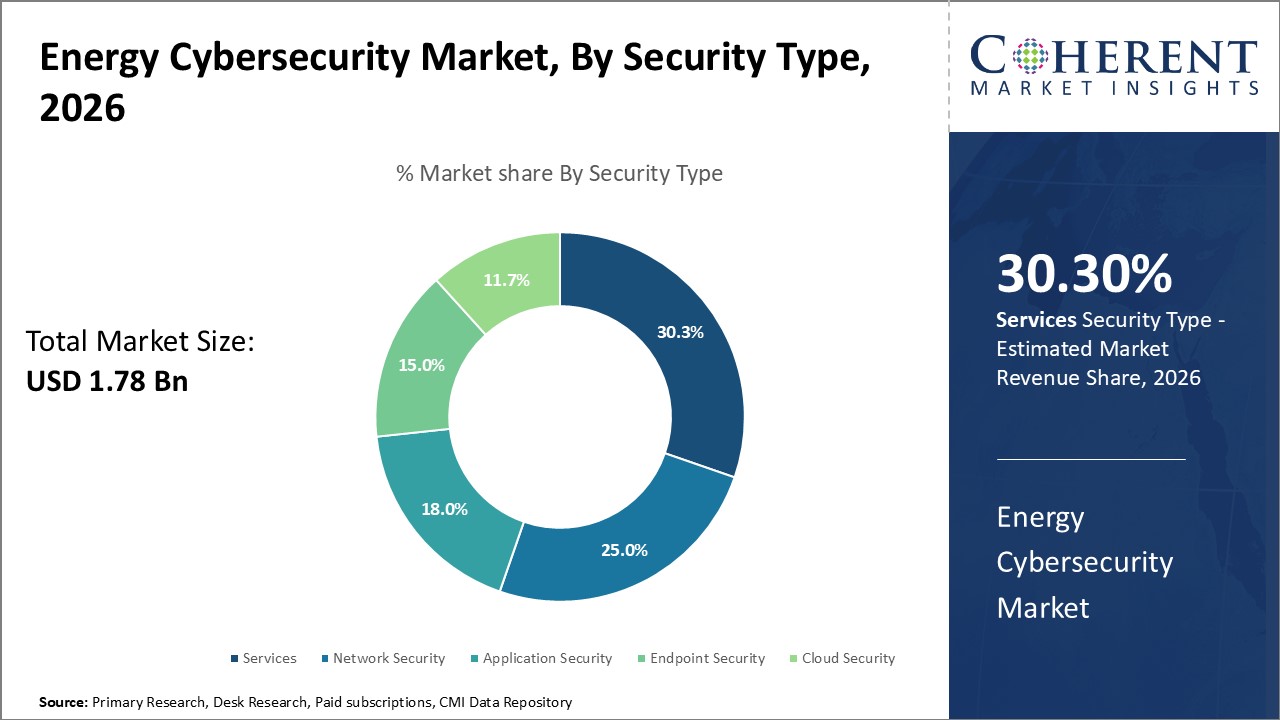
- The services segment is projected to dominate with a share of 30.3 % in 2026.
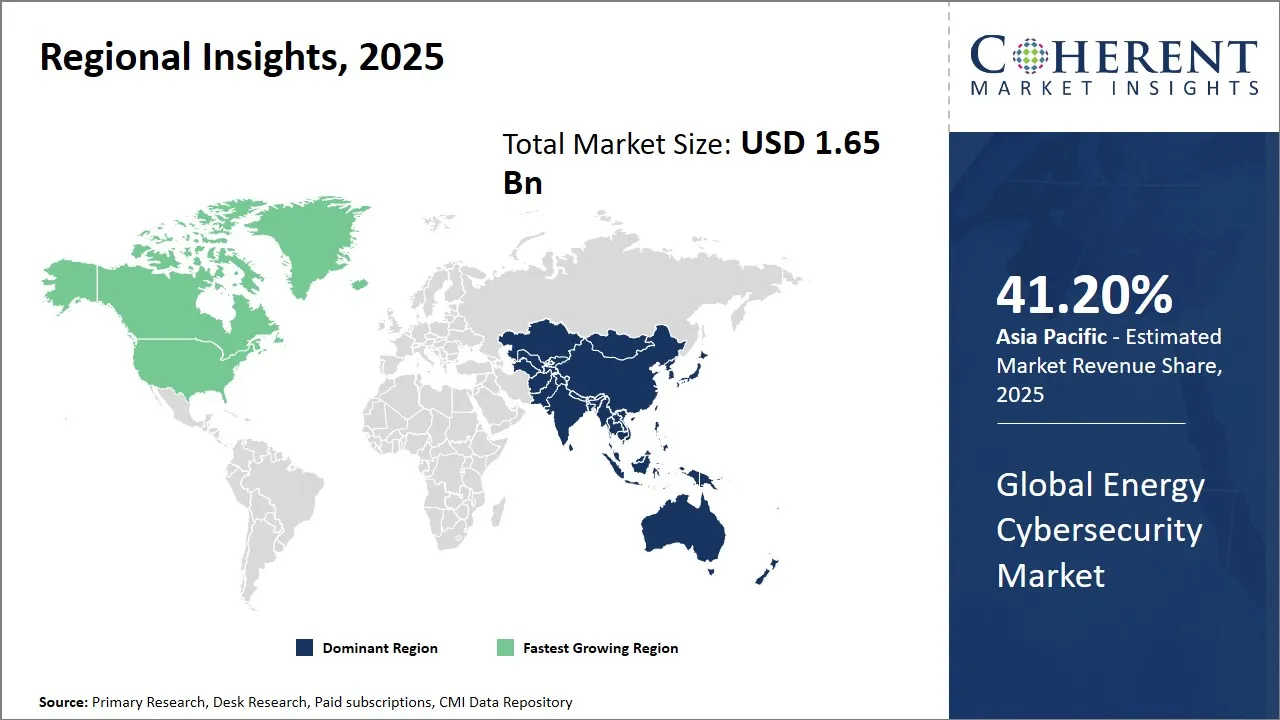
- Asia Pacific is estimated to lead the market with a share of 41.2 % in 2026. North America, holding an estimated share of 19.8% in 2026, is projected to be the fastest growing region.
Market Overview
The market is seeing the use of advanced technologies like artificial intelligence and machine learning to improve threat detection and response capabilities in energy networks. Also, the rise in renewable energy adoption and smart grid deployments makes robust cybersecurity solutions necessary, pushing the demand for comprehensive, scalable security frameworks made for the complexities of energy sector operations
Current Events and Its Impact
Current Events | Description and its Impact |
Dragos — expanded partnership/threat-detection services with Rockwell Automation |
|
Surge in ransomware & targeted attacks on energy/utilities (Medusa warnings, 2024–2025) |
|
U.S. government disruption — impacts to CISA operations (October 2025 news) |
|
Segmental Insights
- Current Industry Events of 2026
- Market Size Estimation
- Regional Breakdown
- Competitive Landscape
- Customer Intelligence
- Segmental Analysis
- Pricing Analysis
- Key Market Drivers, Challenges & Future Trends
- Customized Insights Section
Global Energy Cybersecurity Market Insights, by Device Type – Industrial Control Systems for Energy Production Segment Lead the Market Because of Increasing Digitization and Criticality in Energy Infrastructure
The industrial control systems for energy production segment is projected to account for 32.2% of the global energy cybersecurity market share in 2026 because of the big role these systems play in managing and controlling the core energy production processes. Industrial Control Systems (ICS) are integral to the smooth and efficient functioning of power plants, refineries, and other energy production facilities, and their security is essential to preventing operational disruptions that could lead to catastrophic consequences.
The 2021 Colonial Pipeline ransomware attack in the U.S. disrupted the largest refined fuel pipeline supplying the East Coast.
Furthermore, the growing complexity and integration of energy production systems with corporate IT networks amplify the cybersecurity challenges. Legacy ICS infrastructure often lacks modern security features and is not designed to handle sophisticated cyber-attacks. This creates an urgent demand for continuous security enhancements tailored specifically for these specialized systems to ensure both safety and reliability of energy production.
Regulations and compliance standards are also exerting considerable influence on this segment’s growth. Governments and regulatory authorities worldwide are mandating stricter cybersecurity protocols for critical infrastructure to safeguard national security and ensure uninterrupted energy supply. The enforcement of standards such as NERC CIP (North American Electric Reliability Corporation Critical Infrastructure Protection) compels energy companies to invest heavily in securing their ICS.
Additionally, incidents of cyber-attacks on ICS, including notable sabotage and espionage campaigns targeting energy infrastructures globally, have heightened awareness among stakeholders. These incidents have propelled energy producers to prioritize cybersecurity initiatives and invest in advanced threat detection, incident response, and risk mitigation strategies specifically designed for ICS environments.
Global Energy Cybersecurity Market Insights, by Security Type – Services Segment Dominates Because of Rising Demand for Expert Risk Management and Response Capabilities
The services segment is expected to capture 30.3% share in 2026. Cybersecurity services include a broad spectrum of solutions including consultancy, risk assessment, managed security services, incident response, and threat intelligence, which together provide a comprehensive framework to safeguard energy infrastructure.
Moreover, the increasing sophistication and frequency of cyber-attacks targeting energy infrastructure necessitate proactive and dynamic security measures that go beyond conventional software or hardware solutions. Cybersecurity services such as continuous security monitoring, vulnerability assessments, penetration testing, and incident response are crucial in preempting attacks, reducing response times, and restoring operational normality after breaches.
The regulatory landscape also continues to promote the adoption of cybersecurity services. Many regulations require not just the deployment of security tools but also comprehensive risk management practices that often involve third-party audits, compliance verification, and strategic advisory services. Energy companies thus engage security service providers to achieve and maintain compliance with these stringent industry standards.
Impact of AI on the Global Energy Cybersecurity Market
Artificial Intelligence (AI) is making both opportunities and challenges. One good example is the collaboration between Google and Poland to enhance AI applications in the country's energy and cybersecurity sectors. This partnership looks to push the security and sector efficiency, addressing the increasing cyber threats faced by energy infrastructures. Also, AI's role in predictive maintenance and operational efficiency is highlighted in a Honeywell survey, focusing on its potential to improve energy security as global energy demand rises.
However, the use of AI also introduces complexities. The fast expansion of AI data centers has led to huge spikes in local electricity prices. This rise in demand is straining regional power grids and increasing costs for consumers. Also, the volatility and unpredictability of AI-related power consumption pose threats to the stability of global power supplies. These developments show the need for robust cybersecurity measures to protect critical energy infrastructure from evolving AI-driven threats.
Regional Insights
Asia Pacific Energy Cybersecurity Market Analysis and Trends
The Asia Pacific, holding an estimated share of 41.2% in 2026, dominates the energy cybersecurity market because of fast industrialization, urbanization, and move toward renewable energy sources. Nations in this region are seeing increasing cybersecurity risks because of expanding digitalization in energy systems and smart grid deployments.
Government initiatives in countries like China, India, and South Korea focus on making cybersecurity frameworks stronger and encouraging public-private partnerships to secure critical energy infrastructure. The region’s growing market sees rising investments in emerging technologies like AI-driven security solutions and the Internet of Things (IoT) security. Big players like Huawei, Infosys, and Toshiba add to the evolving landscape through tailored cybersecurity offerings and localized support services. Trade dynamics and increasing cross-border energy projects also make improved cybersecurity measures necessary, adding to market expansion.
North America Energy Cybersecurity Market Analysis and Trends
North America, holding a projected share of 19.8% in 2026, shows the fastest growth in the global energy cybersecurity market because of the advanced digital infrastructure and a well-established energy sector that uses both traditional and renewable energy sources. The region sees strong regulatory frameworks, including strict cybersecurity standards set forth by organizations like the North American Electric Reliability Corporation (NERC) and government bodies like the Department of Energy (DOE) and the Cybersecurity and Infrastructure Security Agency (CISA).
The strong presence of key industry players like Honeywell International Inc., IBM Corporation, and Fortinet, combined with big investments in research and development, also add to North America’s leadership. Also, a diverse market ecosystem including utilities, grid operators, and technology providers make possible a proactive approach toward threat detection, incident response, and resilience, maintaining a secure energy infrastructure amid growing cyber threats.
Global Energy Cybersecurity Market Outlook for Key Countries:
U.S. Energy Cybersecurity Market Analysis and Trends
The U.S. sees use of cutting-edge cybersecurity technologies into a huge and sophisticated energy ecosystem. Strong governmental oversight, particularly through NERC’s Critical Infrastructure Protection (CIP) standards, makes in necessary for energy companies to prioritize cybersecurity strategies. Big industry players like Honeywell, IBM, and Palo Alto Networks have played big roles in developing advanced threat intelligence and real-time monitoring solutions. The U.S. also benefits from a well-developed network of cybersecurity startups focused on energy, adding to innovation and fast response capabilities in the sector.
China Energy Cybersecurity Market Analysis and Trends
China energy cybersecurity market shows its extensive energy infrastructure and its position as a global technology hub. The government’s focus on digital sovereignty has pushed strict cybersecurity regulations and increased funding for national cybersecurity initiatives. Corporations like Huawei and China National Electric Engineering Co. lead the development and use of integrated cybersecurity solutions tailored to advanced energy systems, including smart grids and renewable integration. This environment makes a collaborative ecosystem for government agencies, energy firms, and technology companies to mitigate risks and ensure energy stability.
Germany Energy Cybersecurity Market Analysis and Trends
Germany continues to lead Europe energy cybersecurity market because of its strong focus on Industry 4.0 and the Energiewende transition toward sustainable energy sources. Regulatory support through the Federal Office for Information Security (BSI) makes possible high standards of cybersecurity for energy networks. Siemens AG has contributed a lot to securing energy infrastructure through innovative automation and cybersecurity technologies. The country’s vibrant industrial base and collaborative initiatives between public institutions and private players make possible robust defenses against advanced persistent threats targeting energy assets.
India Energy Cybersecurity Market Analysis and Trends
India energy cybersecurity market is growing fast because of the government’s push for digital transformation and renewable energy adoption. The Ministry of Power and different cybersecurity task forces have put in place frameworks pushing energy companies to improve defensive measures and adopt advanced security solutions. Firms like Infosys and Tata Consultancy Services have made platform-based security solutions that address the unique challenges of India’s diverse power grid and extensive rural electrification programs. The country’s energy goals and digital initiatives make demand for resilient cybersecurity to protect critical infrastructure.
South Korea Energy Cybersecurity Market Analysis and Trends
South Korea energy cybersecurity market grows because of the country's advanced digital infrastructure and government-led cybersecurity strategies. The Korean government pushes cooperation between energy providers and cybersecurity firms to protect important infrastructure. Companies like LG CNS and SK Holdings have made specialized cybersecurity platforms focusing on industrial control systems and smart grid security. The nation’s commitment to adding IoT and AI to its smart energy frameworks shows the importance of cybersecurity, ensuring stable energy delivery between increasing cyber threats.
Market Players, Key Development, and Competitive Intelligence
Key Developments
- On October 1, 2025, Blue Sage Capital, announced its recent investment in the merger of Skid Pro Attachments Inc. and Accessories Unlimited LLC, a vertically integrated provider of attachments for skid steers and compact track loaders.
- In July 2025, U.S. Department of Energy (DOE)'s Office of Cybersecurity, Energy Security, and Emergency Response (CESER) launched the OT Defender Fellowship in 2020 in collaboration with DOE’s Idaho National Laboratory (INL) and with support from the Foundation for Defense of Democracies’ (FDD) Center on Cyber and Technology Innovation (CCTI).
- In February 2025, Claroty was named a Leader in the inaugural 2025 Gartner Magic Quadrant™ for CPS Protection Platforms (CPS PP), positioned highest for Ability to Execute and furthest for Completeness of Vision among 17 vendors evaluated in the report.
- In July 2023, Honeywell agreed to acquire SCADAfence, a leading provider of operational technology (OT) and Internet of Things (IoT) cybersecurity solutions for monitoring large-scale networks.
Top Strategies Followed by the Energy Cybersecurity Market Players
- Established players lead the market because of huge investments in research and development (R&D), looking to innovate high-performance cybersecurity solutions made specifically for the energy sector.
- Honeywell makes huge investment in research and development to advance cybersecurity solutions. The company has made AI-enabled tools designed to improve industrial cybersecurity, looking to improve system efficiency and accelerate the path to autonomy in plant operations.
- Mid-level players in the energy cybersecurity market focus on cost-effective solutions that offer a balance between quality and affordability.
- Claroty offers a modular, SaaS-powered industrial cybersecurity platform named xDome, which scales to protect environments and allows security teams to prioritize risk reduction based on potential business impact
- Small-scale players differentiate themselves in the global energy cybersecurity market by making specialized niches with innovative or unique product features that larger competitors may overlook.
- Dragos focuses on specialized segments in the energy sector, particularly in protecting important infrastructure like oil and gas operations.
Market Report Scope
Energy Cybersecurity Market Report Coverage
| Report Coverage | Details | ||
|---|---|---|---|
| Base Year: | 2025 | Market Size in 2026: | USD 1.78 Bn |
| Historical Data for: | 2020 To 2024 | Forecast Period: | 2026 To 2033 |
| Forecast Period 2026 to 2033 CAGR: | 7.9% | 2033 Value Projection: | USD 3.03 Bn |
| Geographies covered: |
| ||
| Segments covered: |
| ||
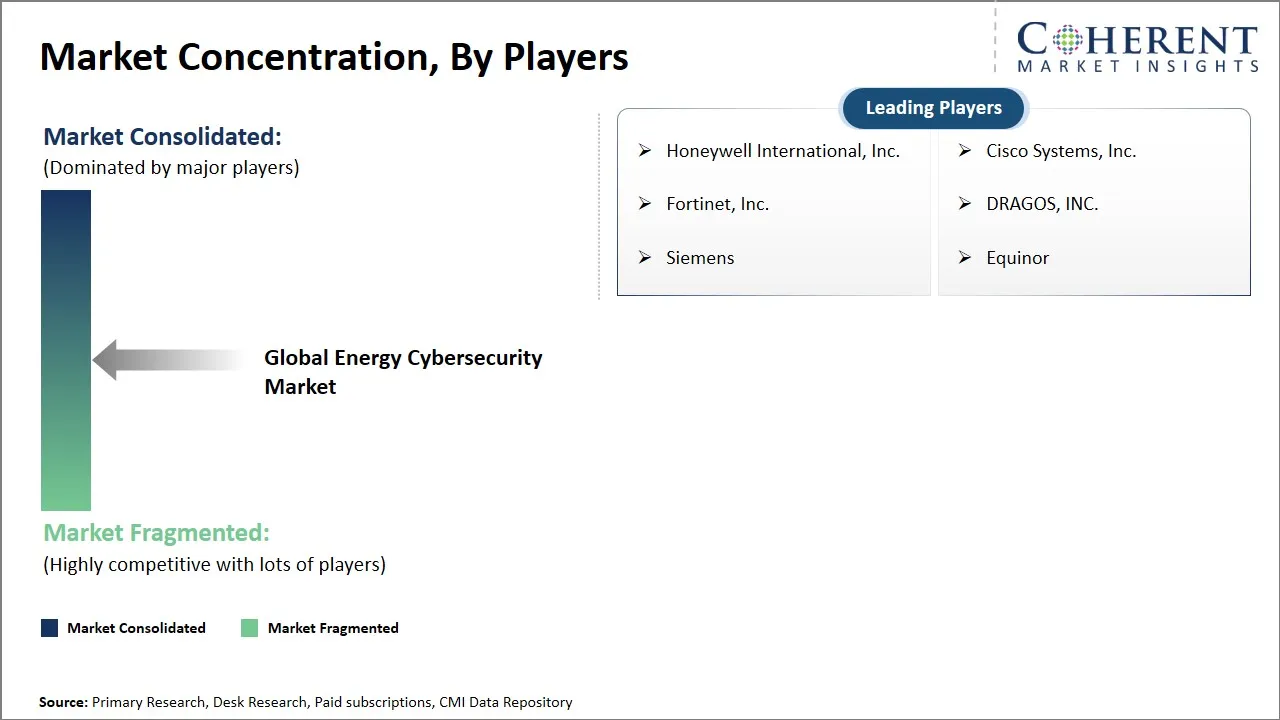
| Companies covered: | Honeywell International, Inc., Cisco Systems, Inc., Fortinet, Inc., DRAGOS, INC., Siemens, and Equinor | ||
| Growth Drivers: |
| ||
| Restraints & Challenges: |
| ||
Market Dynamics
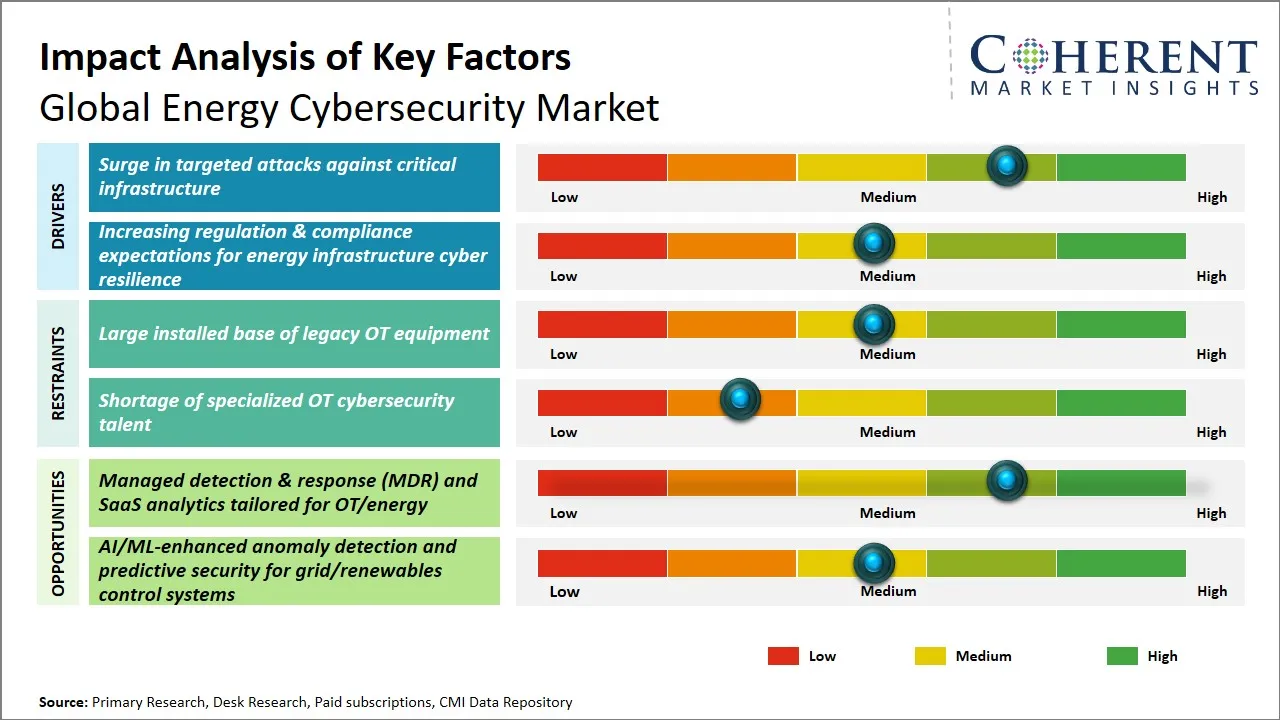
Global Energy Cybersecurity Market Driver – Surge in Targeted Attacks Against Critical Infrastructure
The increasing frequency and sophistication of cyberattacks targeting critical energy infrastructure have become a significant driving force in the global energy cybersecurity market. Energy grids, power plants, and oil and gas facilities are popular targets for cybercriminals and nation-state actors because of their big role in national security and economic stability. These attacks often aim to cause widespread disruption, financial loss, or even physical damage, making energy operators highly vulnerable. The complex and interconnected nature of modern energy systems make these risks bigger, as a breach in one segment can cascade over the entire network.
In response, stakeholders in the energy sector are focusing on advanced cybersecurity solutions made to protect operational technology (OT) along with traditional IT frameworks. This high focus on detecting, preventing, and mitigating targeted cyber threats is making utility companies and energy providers invest a lot in resilient security architectures, threat intelligence, and incident response capabilities, thus making demand in the energy cybersecurity market.
Global Energy Cybersecurity Market Opportunity – Managed Detection & Response (MDR) and SaaS Analytics Tailored for OT/Energy
The global energy cybersecurity market sees an opportunity in the expansion of Managed Detection & Response (MDR) services and Software-as-a-Service (SaaS) analytics specifically made for operational technology (OT) environments in the energy sector. As infrastructure continues to digitize and add IT-OT networks, energy companies see increasingly sophisticated cyber threats that need specialized, real-time security solutions.
Also, SaaS analytics platforms made for the energy sector allow organizations to use advanced data analysis, machine learning, and anomaly detection to proactively find vulnerabilities and potential cyberattacks. Also, regulatory pressures and compliance mandates for infrastructure protection are adding to the adoption of MDR and SaaS cybersecurity frameworks in the energy industry.
Analyst Opinion (Expert Opinion)
- The fast growth of solar farms, wind farms, and distributed energy storage systems makes a more complex, decentralized network. This adds to the potential attack surface for cyber threats, needing energy operators to invest more in OT/IT security solutions specifically made for renewable infrastructure.
- As renewable energy assets often depend on smart grid usage and remote monitoring, trends show that there is a growing adoption of cloud-based cybersecurity platforms and AI-driven anomaly detection. These solutions help manage cybersecurity risks across geographically dispersed and IoT-enabled renewable installations, improving threat detection and operational efficiency.
- Governments and energy regulators are making stricter cybersecurity standards for renewable energy projects, especially in Europe and North America. Compliance with these standards is making utilities and independent power producers adopt comprehensive energy cybersecurity platforms, adding to market growth in renewable-heavy regions.
Speak to the analyst
Want personalized insights?
Take the findings above to one of our principal consultants, or have the report rebuilt around the segments, geographies and competitors you actually track.
Market Segmentation
- Device Type Insights (Revenue, USD Bn, 2021 - 2033)
- Industrial Control Systems for Energy Production
- Energy Industry Data Centers
- Energy Management and Optimization Devices
- Energy Storage Systems
- Renewable Energy Devices
- Others
- Security Type Insights (Revenue, USD Bn, 2021 - 2033)
- Services
- Network Security
- Application Security
- Endpoint Security
- Cloud Security
- Regional Insights (Revenue, USD Bn, 2021 - 2033)
- North America
- U.S.
- Canada
- Latin America
- Brazil
- Argentina
- Mexico
- Rest of Latin America
- Europe
- Germany
- U.K.
- Spain
- France
- Italy
- Russia
- Rest of Europe
- Asia Pacific
- China
- India
- Japan
- Australia
- South Korea
- ASEAN
- Rest of Asia Pacific
- Middle East
- GCC Countries
- Israel
- Rest of Middle East
- Africa
- South Africa
- North Africa
- Central Africa
- North America
- Key Players Insights
- Honeywell International, Inc.
- Cisco Systems, Inc.
- Fortinet, Inc.
- DRAGOS, INC.
- Siemens
- Equinor
Sources
Primary Research Interviews
Stakeholders
- Energy Utilities and Power Grid Operators (e.g., Grid Managers, Security Heads)
- Oil & Gas Companies (e.g., Cybersecurity Officers, IT/OT Managers)
- Renewable Energy Companies (e.g., Solar/Wind Farm Operators, Smart Grid Engineers)
- Industrial Automation and SCADA/ICS Solution Providers
- Independent Power Producers (IPPs) and Energy Service Companies (ESCOs)
- Regulatory Authorities and Energy Compliance Experts
Databases
- International Energy Agency (IEA) Statistics Portal
- U.S. Energy Information Administration (EIA)
- Global Industrial Cybersecurity Observatory (fictional)
- OECD Energy Data Platform
Magazines
- Energy Security Today
- Industrial Cyber Review
- Renewable Energy World
- Critical Infrastructure Protection Magazine
Journals
- Journal of Energy Cybersecurity
- International Journal of Critical Infrastructure Protection
- Journal of Industrial Information Security
- Energy Systems and Cyber-Physical Security Journal
Newspapers
- Energy Intelligence Daily
- Power Grid News
- The Financial Times – Energy Section
- The Economic Times – Energy & Utilities
Associations
- International Society of Automation (ISA)
- North American Electric Reliability Corporation (NERC)
- Global Industrial Cybersecurity Association (fictional)
- American Society of Energy Engineers (ASEE)
- European Energy Security Association (EESA, fictional)
Public Domain Sources
- U.S. Department of Energy (DOE) Publications
- EUROSTAT – Energy Statistics
- United Nations Economic Commission for Europe (UNECE) Energy Reports
- World Bank – Energy and Infrastructure Reports
- ResearchGate – Energy Cybersecurity Articles
Proprietary Elements
- CMI Data Analytics Tool, Proprietary CMI Existing Repository of Energy Cybersecurity Information (Last 8 Years)
Get access to 250+ pages report
Every segment, forecast, competitor profile and data table behind the analysis above — available for instant download.
- ESOMAR Member
- ISO 9001:2015 Certified
- D-U-N-S Registered
- GDPR & CCPA Compliant
Missing comfort of reading report in your local language? Find your preferred language:
Transform your Strategy with Exclusive Trending Reports
Frequently Asked Questions
The global energy cybersecurity market is estimated to be valued at USD 1.78 billion in 2026 and is expected to reach USD 3.03 billion by 2033.
The CAGR of the global energy cybersecurity market is projected to be 7.9% from 2026 to 2033.
Surge in targeted attacks against critical infrastructure and Increasing regulation & compliance expectations for energy infrastructure cyber resilience are the major factor driving the growth of global energy cybersecurity market.
Large installed base of legacy OT equipment and Shortage of specialized OT cybersecurity talent are the major factor hampering the growth of global energy cybersecurity market.
In terms of device type, the industrial control systems for energy production segment is estimated to dominate the market revenue share in 2026.
AI enables predictive threat detection, anomaly monitoring, and faster incident response across distributed energy and smart grid networks.
Distributed energy resources expand the attack surface, driving the demand for cloud-based, AI-driven cybersecurity and compliance-driven solutions.