

Global Ethanol Biofuel Market Size and Forecast: 2026-2033
The Global Ethanol Biofuel Market is estimated to be valued at USD 87.77 Bn in 2026 and is expected to reach USD 176.56 Bn by 2033, exhibiting a compound annual growth rate (CAGR) of 10.5% from 2026 to 2033.
Key Takeaways of the Ethanol Biofuel Market
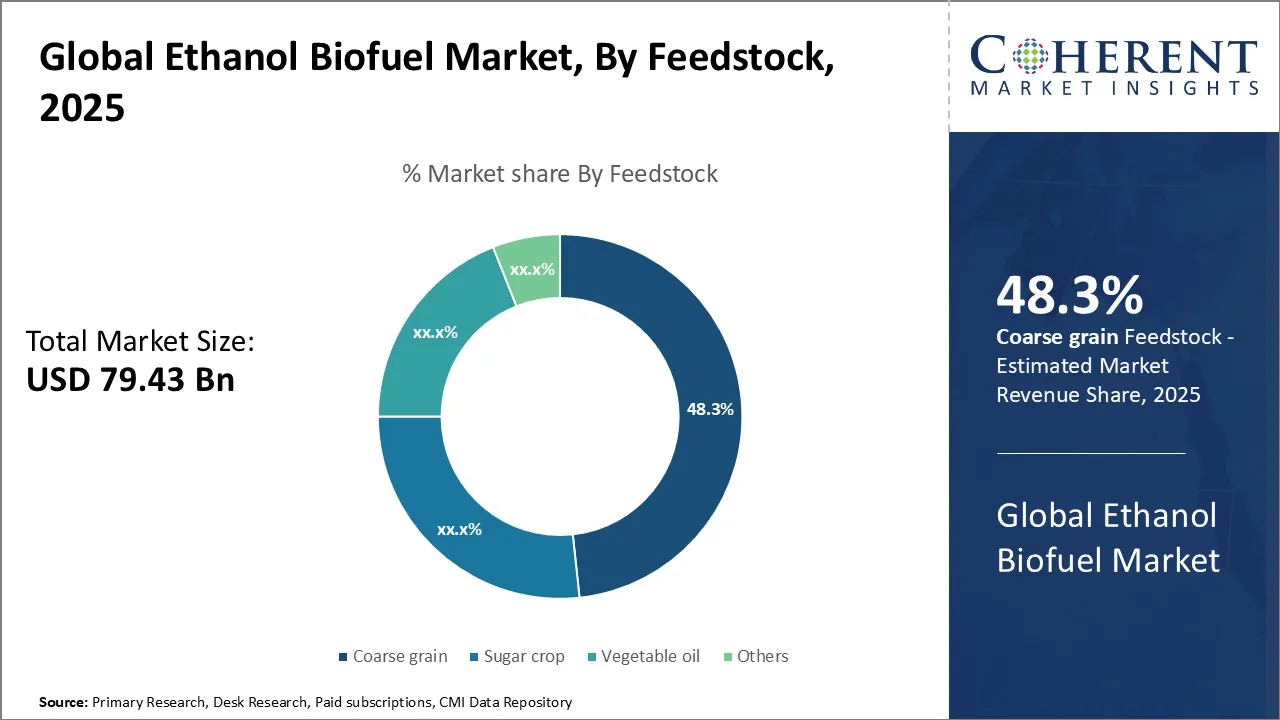
- The coarse grain segment is projected to account for 49.3% of the global ethanol biofuel market in 2026.
- The transportation segment is expected to capture 47.8% of the global ethanol biofuel market in 2026.
- Asia Pacific is set to lead the global ethanol biofuel market in 2026 with a 56. 2% share. North America, with a 25.5% share, will be the fastest-growing region.
Market Overview
A significant market trend is the rising emphasis on reducing carbon emissions and dependence on fossil fuels, which propels ethanol biofuel usage across transportation and industrial sectors. Innovations in feedstock utilization, such as lignocellulosic biomass and agricultural waste, are improving sustainability and production scalability. Additionally, strategic collaborations between energy firms and governments are accelerating infrastructure development, fostering market expansion and diversification of ethanol biofuel applications globally.
Currents Events and their Impact
Current Events | Description and its impact |
ADM and Mitsubishi Corporation Strategic Alliance (March 2025) |
|
Cargill’s Full Acquisition of SJC Bionergia (February 2025) |
|
Segmental Insights
- Current Industry Events of 2026
- Market Size Estimation
- Regional Breakdown
- Competitive Landscape
- Customer Intelligence
- Segmental Analysis
- Pricing Analysis
- Key Market Drivers, Challenges & Future Trends
- Customized Insights Section
Ethanol Biofuel Market Insights, By Feedstock - Coarse Grain Segment Dominates Due to Its Abundance and Cost-Effectiveness
Coarse grain segment is expected to hold 49.3% share of the global ethanol biofuel market in 2026, which can be primarily attributed to its widespread availability and economic advantages. Coarse grains such as corn, barley, and sorghum are cultivated extensively across key biofuel-producing regions, offering a reliable and scalable source for ethanol production. This ample supply chain infrastructure ensures consistent feedstock availability, which is crucial for maintaining steady ethanol output and meeting rising demand in various end-use applications.
For instance, in the U.S., which is the world’s largest ethanol producer, corn a coarse grain account for over 90% of total ethanol feedstock use, according to the U.S. Department of Agriculture (USDA, 2024). States such as Iowa, Illinois, and Nebraska have established large-scale corn farming and integrated ethanol plants, enabling year-round supply and cost-efficient production. On average, U.S. farmers plant about 90 million acres of corn each year, with the majority of the crop grown in the Heartland region.
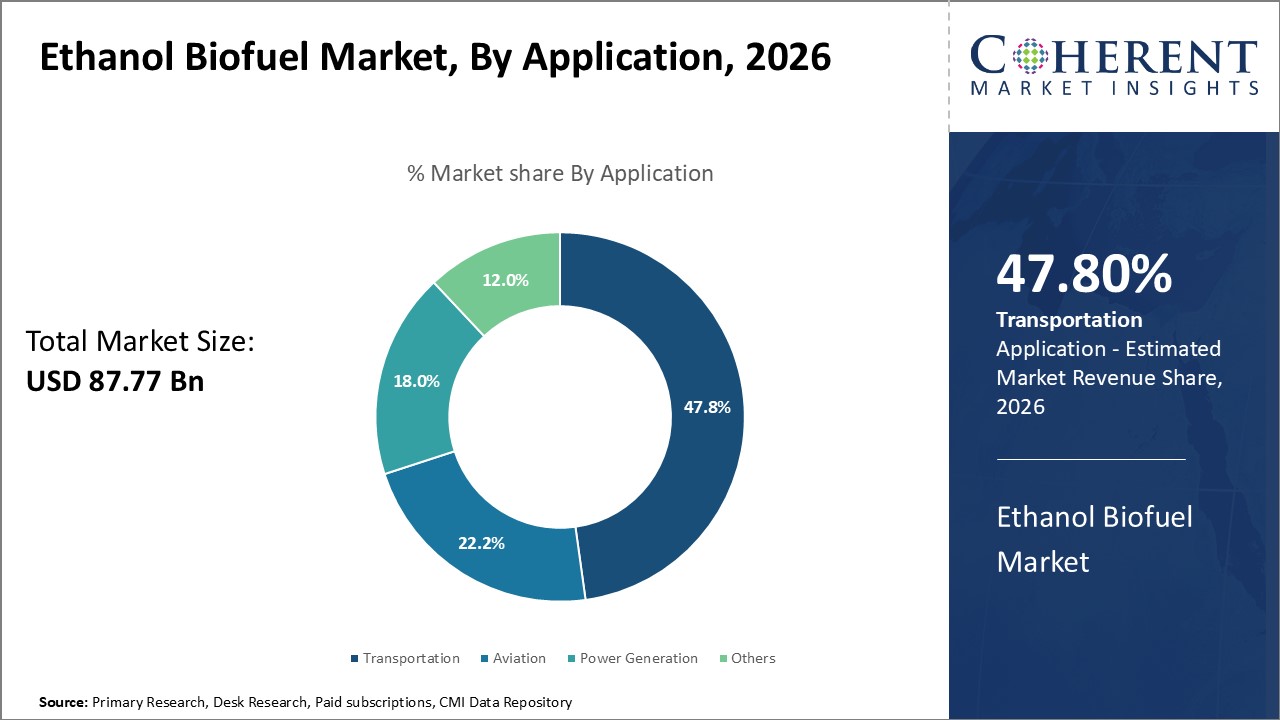
Ethanol Biofuel Market Insights, By Application – Transportation Segment Leads Driven by Growing Demand for Sustainable Mobility
Transportation segment is projected to account for 47.8% share of the global ethanol biofuel market in 2026, due to the increasing pressure to reduce greenhouse gas emissions and dependence on fossil fuels within the mobility sector. Ethanol is widely recognized as an effective renewable fuel that can partially replace gasoline in internal combustion engines without requiring drastic modifications, making it a preferred choice for reducing the carbon footprint of conventional transportation.
A major driver behind ethanol’s strong presence in transportation stems from regulatory mandates and environmental policies that promote cleaner fuels and foster the development of alternative energy sources. Governments worldwide have enacted biofuel blending mandates, such as requiring a minimum percentage of ethanol in petrol, to achieve air quality improvement and carbon reduction targets. These mandates incentivize fuel suppliers to incorporate ethanol into transportation fuel blends, thus driving significant demand growth for ethanol in this segment.
Regional Insights
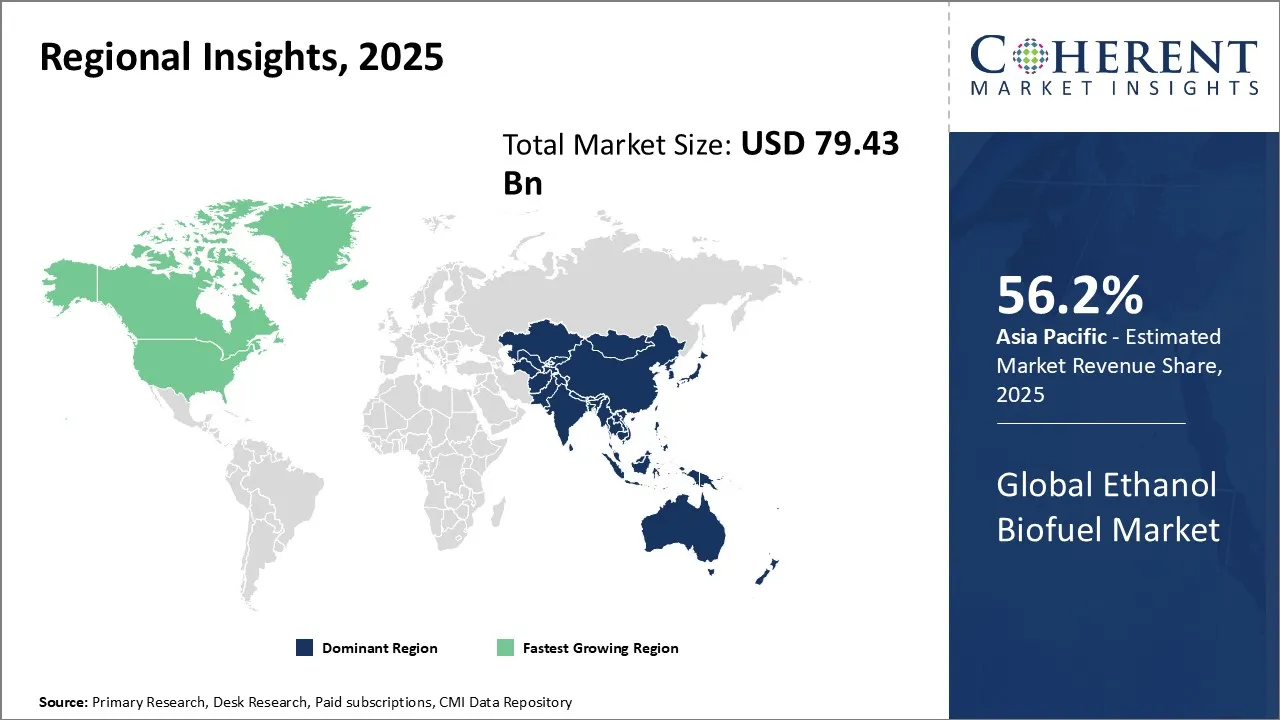
Asia Pacific Ethanol Biofuel Market Analysis and Trends
The Asia Pacific region is projected to lead the market with a 56.2% share in 2026, due to increasing energy demand, expanding automotive sectors, and growing environmental concerns. Emerging economies like India, China, and Southeast Asian countries are adopting ethanol as a strategy to reduce dependency on fossil fuels and cut greenhouse gas emissions.
Government initiatives, such as India’s Ethanol Blending Program and China’s biofuel pilot projects, encourage adoption at both the production and consumption levels. The region's market ecosystem is also evolving with investment from multinational companies including COFCO Corporation, India’s Praj Industries, and China’s Sinopec, facilitating enhanced technological capabilities and scale-up in ethanol production. Trade dynamics are gradually improving as domestic production tries to meet rising internal demand, reducing import reliance.
North America Ethanol Biofuel Market Analysis and Trends
The North America region is expected to exhibit the fastest growth in the market contributing 25.5% share in 2026, driven by a well-established agricultural base, robust government policies, and a mature market ecosystem. The U.S., as a leading ethanol producer, benefits from vast corn production and well-developed bio-refining infrastructure. Federal mandates such as the Renewable Fuel Standard (RFS) promote ethanol blending, encouraging both production and consumption.
Additionally, strong industry presence from companies like Archer Daniels Midland (ADM), POET LLC, and Green Plains Inc. fuels innovation and capacity expansion. The region’s trade dynamics also favor ethanol exports, particularly to Latin America and Asia, strengthening its position. The synergistic effect of supportive policies, technology adoption, and an extensive supply chain underpins North America’s continued leadership.
Global Ethanol Biofuel Market Outlook for Key Countries
U.S. Ethanol Biofuel Market Trends
The U.S. ethanol biofuel market is characterized by its extensive corn farming and advanced ethanol production technologies. Federal policies, particularly the Renewable Fuel Standard (RFS), create a consistent demand for ethanol blending in gasoline. Key players such as Archer Daniels Midland (ADM) and POET LLC significantly contribute through large-scale production and R&D investments. The country also plays a crucial role in ethanol exports, leveraging its infrastructure and market stability to influence global markets.
Brazil Ethanol Biofuel Market Trends
Brazil's ethanol biofuel market is primarily sugarcane-based, which offers cost-effective and highly efficient ethanol production. Government support, including mandates on ethanol blending (notably in the transportation sector), has propelled the industry. Petrobras, Raízen, and Copersucar are notable companies shaping the market with large production capacities and ongoing efforts in innovation. Brazil's well-developed biofuel ecosystem and geographic advantages enable it to be a major supplier domestically and internationally, particularly to global sugar markets and blending demand hubs.
India Ethanol Biofuel Market Trends
India's ethanol biofuel market is rapidly evolving with focused policy initiatives like the Ethanol Blending Program aiming to increase blend percentages substantially. The country leverages abundant agricultural residues and sugarcane to expand production. Companies like Praj Industries and Godavari Biorefineries play critical roles in technology deployment and plant operations. Government incentives and increasing investments in infrastructure are strengthening the production base to meet the demand from the expanding automotive fuel market.
China Ethanol Biofuel Market Trends
China’s ethanol biofuel market continues to lead in terms of policy-driven adoption and investment in biofuel technologies. The government’s strategic plans target energy security and pollution reduction, encouraging bioethanol production and industrial integration. Prominent organizations such as Sinopec and COFCO are actively participating in scaling ethanol production through advanced biorefining projects. Additionally, China is focusing on utilizing non-food feedstocks to address food-energy balance concerns, which influences the technology and production trends significantly.
Thailand Ethanol Biofuel Market Trends
Thailand’s ethanol biofuel market is growing underpinned by government mandates for blended fuel usage and increasing export activities. The country utilizes cassava and sugarcane for ethanol production, benefiting from favorable climate and robust agricultural policies. Major players like Thai Oil and IRPC are expanding capacity and efficiency, supported by public-private partnerships. Thailand is emerging as a regional hub for ethanol exports in Southeast Asia, leveraging its logistical advantages and trade agreements to penetrate neighboring markets.
Macro and Micro Economic Factors Impacting on Ethanol Biofuel Market Growth
Macroeconomic factors
- Government policies and regulations are critical, such as blending mandates (e.g., 10% or higher ethanol blending targets in countries like China, India, and the U.S.), renewable energy directives, and sustainability standards. These policies create demand and incentivize investment in ethanol production.
- Energy security and oil price fluctuations Bioethanol reduces dependence on imported fossil fuels, mitigating the impact of oil price hikes, which can enhance economic stability.
- Economic growth and industrial output Expansion of the ethanol sector contributes to GDP growth, industrial output, and employment opportunities, supporting broader economic development.
- Global market dynamics Export potential, technological advancements in production, and international competition affect market growth prospects.
Microeconomic factors
- Feedstock availability and cost Ethanol production relies heavily on agricultural feedstocks like corn, sugarcane, and cassava. Variability in feedstock supply affects production costs and profitability. Competition between food and fuel demand may impact feedstock prices and supply stability.
- Local economic impacts The presence of ethanol plants can increase farm profitability and land values through heightened local demand for feedstocks, affecting local economies positively.
- Production efficiency and technological innovation Advances in fermentation technologies and process optimization reduce costs and improve ethanol market competitiveness.
Market Players, Key Development, and Competitive Intelligence
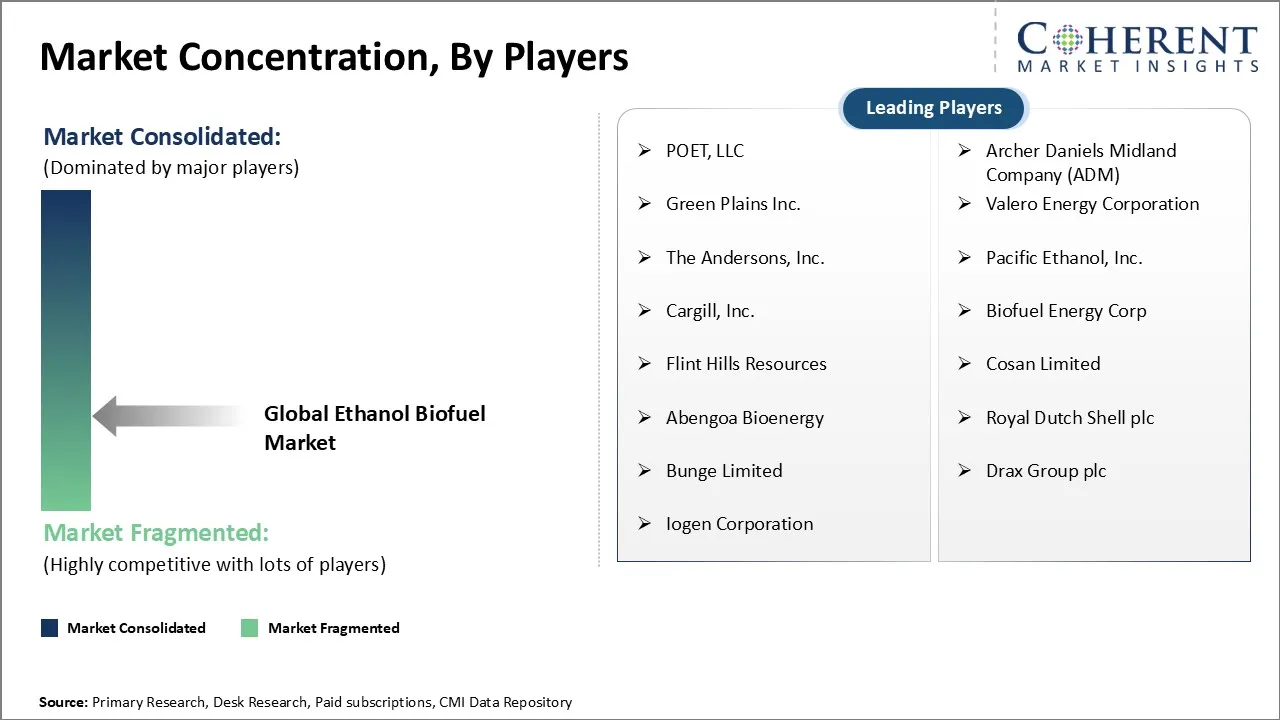
Key Developments
- In March 2025, ADM and Mitsubishi Corporation announced the signing of a non-binding memorandum of understanding, formalizing the establishment of a strategic alliance to explore potential areas of collaboration across the agriculture value chain. This partnership is expected to further strengthen ADM’s global biofuel market portfolio.
- In February 2025, Cargill finalized a sale and purchase agreement to acquire the remaining 50% stake in SJC Bioenergia, adding to the 50% interest it already owned and thereby taking full ownership of the company. SJC Bioenergia operates sugar cane and corn processing facilities to produce raw sugar, hydrated and anhydrous ethanol, corn oil, and high-protein dried distillers’ grains (DDGs). The acquisition is set to reinforce Cargill’s position in the global biofuel market.
- In 2024, Lesaffre completed the acquisition of Biorigin, a business unit of Zilor specializing in yeast derivative products. The acquisition aims to expand the supply of savory ingredient yeast derivatives, while improving production processes and enhancing service capabilities to better serve an international customer base.
Top Strategies Followed by Global Ethanol Biofuel Market Players
- Established market leaders leverage significant investments in research and development (R&D) to drive innovation, continuously creating high-performance ethanol products that meet evolving regulatory standards and consumer demands. Moreover, established companies pursue aggressive global expansion by broadening their distribution networks, targeting emerging regions with growing energy needs and increasing demand for sustainable fuel alternatives.
- For instance, ADM has invested in advanced cellulosic ethanol technologies that use agricultural residues to improve sustainability while meeting tightening low-carbon fuel standards in markets like California and the EU.
- Mid-level players in the ethanol biofuel market adopt a different set of strategies geared toward balancing cost and quality to attract price-sensitive segments. They focus on delivering cost-effective solutions that maintain a reliable performance standard, making ethanol biofuel more accessible to a wider consumer base, especially in developing regions. These players often operate with leaner, more flexible production capabilities and prioritize operational efficiency to keep costs manageable.
- For example, Aemetis has partnered with TotalEnergies to leverage advanced biofuel technologies, thereby expanding both technical capabilities and market reach. By aligning with larger players or technology providers, mid-scale companies can tap into shared resources and penetrate new markets without overextending financially.
- Small-scale players in the global ethanol biofuel market focus on niche differentiation strategies to thrive amid intense competition. These players differentiate themselves by developing specialized products with unique attributes or leveraging cutting-edge technologies, such as advanced fermentation techniques or bioengineering processes, to improve fuel efficiency or environmental performance. Their agility allows them to rapidly innovate and respond to specific market demands or regulatory changes in localized regions.
- For example, including Algenol Biotech LLC and regional producers like Greenbelt Resources Corporation, rely on niche differentiation to compete in a market dominated by giants. These companies often develop specialized ethanol products, such as algae-based ethanol or low-water-footprint biofuels, targeting environmentally conscious consumers and specialized industrial applications.
Market Report Scope
Ethanol Biofuel Market Report Coverage
| Report Coverage | Details | ||
|---|---|---|---|
| Base Year: | 2025 | Market Size in 2026: | USD 87.77 Bn |
| Historical Data for: | 2020 To 2024 | Forecast Period: | 2026 To 2033 |
| Forecast Period 2026 to 2033 CAGR: | 10.5% | 2033 Value Projection: | USD 176.56 Bn |
| Geographies covered: |
| ||
| Segments covered: |
| ||
| Companies covered: | POET, LLC, Archer Daniels Midland Company (ADM), Green Plains Inc., Valero Energy Corporation, The Andersons, Inc., Pacific Ethanol, Inc., Cargill, Inc., Biofuel Energy Corp, Flint Hills Resources, Cosan Limited, Abengoa Bioenergy, Royal Dutch Shell plc, Bunge Limited, Drax Group plc, and Iogen Corporation | ||
| Growth Drivers: |
| ||
| Restraints & Challenges: |
| ||
Ethanol Biofuel Market Dynamics
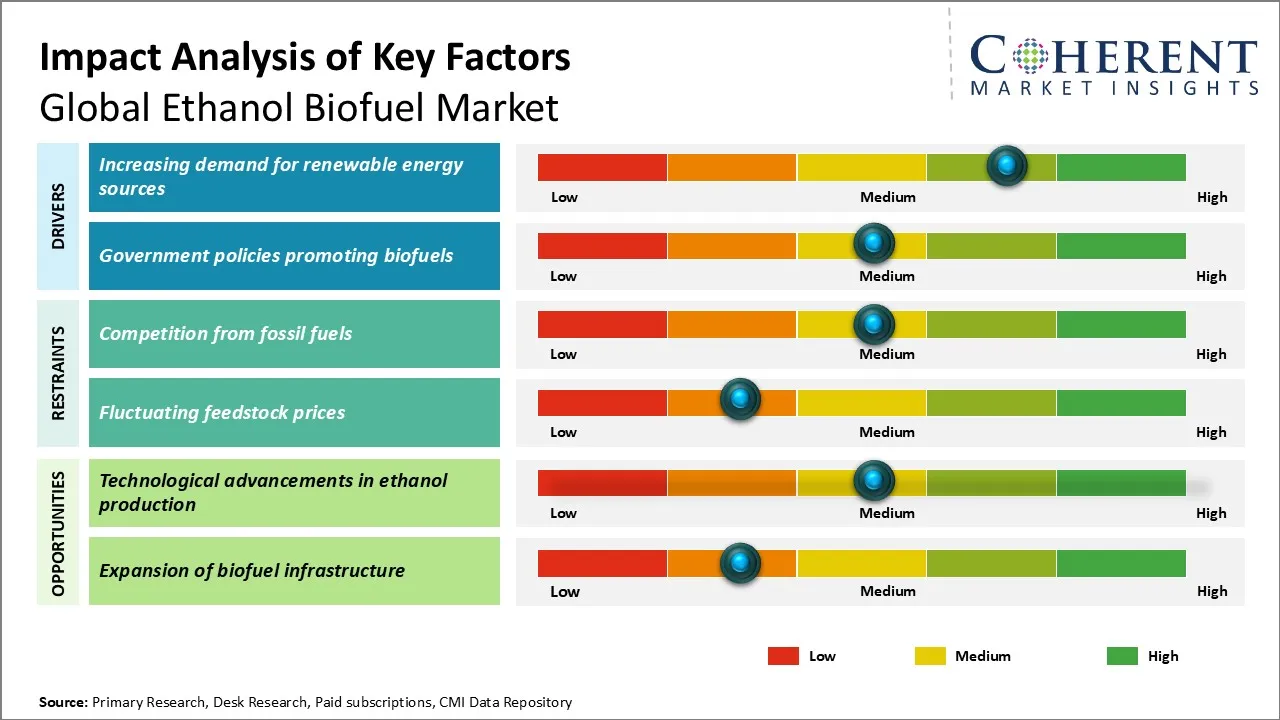
Ethanol Biofuel Market Driver - Increasing demand for renewable energy sources
The global shift towards sustainable and environmentally friendly energy solutions has significantly propelled the demand for renewable energy sources, serving as a critical driver for the ethanol biofuel market. Concerns over climate change, depletion of fossil fuel reserves, and stringent government regulations on carbon emissions have encouraged industries and consumers alike to seek cleaner alternatives such as ethanol. As a biofuel derived from organic materials like corn, sugarcane, and other biomass, ethanol offers a renewable and less polluting option compared to traditional fossil fuels.
In April 2024, the U.S. Environmental Protection Agency (EPA) finalized its Renewable Fuel Standard (RFS) program targets for 2025, mandating an increased blending of ethanol in gasoline to 15 billion gallons annually. This regulatory push aims to reduce greenhouse gas emissions, support rural economies, and boost the adoption of renewable energy sources in the transportation sector. Such initiatives directly contribute to higher ethanol consumption and long-term market growth.
Ethanol Biofuel Market Opportunity - Technological Advancements in Ethanol Production
The global ethanol biofuel market is poised for significant growth driven by continuous technological advancements in ethanol production processes. Innovations such as genetically engineered microbes and enhanced fermentation techniques are substantially increasing ethanol yield and production efficiency, reducing costs and resource consumption. Advances in cellulosic ethanol technology, which utilizes non-food biomass such as agricultural residues and woody materials, are particularly noteworthy, as they address sustainability concerns by minimizing competition with food crops and promoting the utilization of abundant renewable feedstocks.
In February 2024, POET LLC, one of the world’s largest biofuel producers, announced the successful deployment of its proprietary BPX technology across multiple facilities, enabling enzyme-free ethanol production from corn. This process reduces water and energy usage while improving overall ethanol yields. The company also expanded its investment in cellulosic ethanol by integrating corn fiber-to-ethanol conversion at select plants, further enhancing efficiency and sustainability in biofuel production.
Analyst Opinion (Expert Opinion)
- The global ethanol biofuel market is positioned for robust growth, driven by increasing demand for renewable energy sources and stringent emissions regulations. Insights from the International Biofuels Conference (2023) and the Renewable Energy Summit (2022) highlighted the pivotal role of ethanol in achieving sustainability goals.
- Leading producers like POET and Green Plains are innovating with advanced fermentation technologies that enhance yield and reduce production costs. For instance, POET's recent initiative to integrate carbon capture and storage in its production facilities exemplifies a proactive approach to minimizing environmental impact. Furthermore, discussions at these events underscored the importance of government policies and incentives in promoting ethanol use, particularly in the transportation sector.
- As consumers increasingly favor greener alternatives, the market is witnessing a shift towards flex-fuel vehicles and E85 blends, which offer greater efficiency. Companies that focus on sustainability and technological advancement will likely gain a competitive edge. Ultimately, the future of the ethanol biofuel market will depend on continued innovation, effective regulatory frameworks, and the industry's ability to address challenges related to feedstock sourcing and environmental concerns.
Speak to the analyst
Want personalized insights?
Take the findings above to one of our principal consultants, or have the report rebuilt around the segments, geographies and competitors you actually track.
Market Segmentation
- Feedstock Insights (Revenue, USD Bn, 2021 - 2033)
- Coarse grain
- Sugar crop
- Vegetable oil
- Others
- Application Insights (Revenue, USD Bn, 2021 - 2033)
- Transportation
- Aviation
- Power Generation
- Others
- Regional Insights (Revenue, USD Bn, 2021 - 2033)
- North America
- U.S.
- Canada
- Latin America
- Brazil
- Argentina
- Mexico
- Rest of Latin America
- Europe
- Germany
- U.K.
- Spain
- France
- Italy
- Russia
- Rest of Europe
- Asia Pacific
- China
- India
- Japan
- Australia
- South Korea
- ASEAN
- Rest of Asia Pacific
- Middle East
- GCC Countries
- Israel
- Rest of Middle East
- Africa
- South Africa
- North Africa
- Central Africa
- North America
- Key Players Insights
- POET, LLC
- Archer Daniels Midland Company (ADM)
- Green Plains Inc.
- Valero Energy Corporation
- The Andersons, Inc.
- Pacific Ethanol, Inc.
- Cargill, Inc.
- Biofuel Energy Corp.
- Flint Hills Resources
- Cosan Limited
- Abengoa Bioenergy
- Royal Dutch Shell plc
- Bunge Limited
- Drax Group plc
- Iogen Corporation
Sources
Primary Research Interviews
- Mill Director – Integrated sugarcane & ethanol complex (Brazil)
- Head of Biofuels Procurement – National Oil Marketing Company (India)
- Director – Cellulosic/2G ethanol facility (EU/India)
- Trading Manager – Fuel ethanol & anhydrous ethanol (global commodities desk)
- Regulatory Affairs Lead – Renewable fuel standards & compliance (U.S./EU)
Stakeholders
- Producers (corn-based, sugarcane-based, molasses-based, cellulosic/2G)
- Feedstock Suppliers (corn, sugarcane, molasses, agricultural residues like bagasse, corn stover)
- Technology Providers (pretreatment, enzymes, yeasts, fermentation & dehydration systems)
- Blenders/Refiners & Fuel Retailers (E5/E10/E15/E20/E85)
Databases
- IEA (International Energy Agency) – Renewables 2024/2025, Fuel Supply & Transformation, transport biofuels
- U.S. EIA – STEO, Monthly Energy Review, Weekly & Annual Fuel Ethanol statistics
- UN Comtrade – HS 2207 (ethyl alcohol) trade flows
Magazines
- Ethanol Producer Magazine – Plant ops, capacity, projects, policy
- Biofuels Digest – Technology pipelines, investments, policy updates
- Argus & S&P Global Commodity Insights (Platts) – Ethanol price assessments & briefs
- Renewables Now – Project & policy news
- Oilprice/Downstream Today – Refining & blending developments
Journals
- Biotechnology for Biofuels and Bioproducts – Conversion pathways & yields
- Bioresource Technology – Pretreatment, enzymes, process intensification
- Energy Policy – Mandates, lifecycle GHG, market design
- Applied Energy – Tech performance & system modeling
- Biomass & Bioenergy / Renewable & Sustainable Energy Reviews – Feedstock & sustainability analyses
Newspapers
- Financial Times / Bloomberg / Reuters – M&A, policy shifts, price moves
- Valor Econômico (Brazil) – Sugarcane/ethanol policy & market updates
- The Economic Times / Business Standard (India) – Blending targets, OMC tenders, 2G projects
- Nikkei Asia – APAC policy & trade flows
Associations
- Renewable Fuels Association (RFA) – U.S. production & policy resources
- Growth Energy – U.S. market development & blend adoption
- UNICA – Brazilian Sugarcane Industry Association (ethanol, RenovaBio)
- ePURE – European renewable ethanol association
Public Domain Sources
- U.S. EPA – Renewable Fuel Standard (RFS), RINs, pathways
- U.S. DOE (BETO) – Bioenergy technologies & cost curves
- European Commission – RED II/RED III, sustainability criteria, default GHG values
- Brazil ANP / MAPA – Fuel specs, RenovaBio credits (CBIOs), crop/ethanol stats
- India MoPNG/MoC&F/NITI Aayog – National Ethanol Blending Programme (E20 roadmap)
Proprietary Elements
- CMI Data Analytics Tool, Proprietary CMI Existing Repository of information for last 8 years
Get access to 250+ pages report
Every segment, forecast, competitor profile and data table behind the analysis above — available for instant download.
- ESOMAR Member
- ISO 9001:2015 Certified
- D-U-N-S Registered
- GDPR & CCPA Compliant
Missing comfort of reading report in your local language? Find your preferred language:
Transform your Strategy with Exclusive Trending Reports
Frequently Asked Questions
The global ethanol biofuel market is estimated to be valued at USD 87.77 Bn in 2026 and is expected to reach USD 176.56 Bn by 2033.
The CAGR of global ethanol biofuel market is projected to be 10.5% from 2026 to 2033.
Increasing demand for renewable energy sources and government policies promoting biofuels are the major factors driving the growth of the global ethanol biofuel market.
Competition from fossil fuels and fluctuating feedstock prices are the major factors hampering the growth of the global ethanol biofuel market.
In terms of Feedstock, Coarse grain segment is estimated to dominate the market revenue share in 2026.
POET, LLC, Archer Daniels Midland Company (ADM), Green Plains Inc., Valero Energy Corporation, The Andersons, Inc., Pacific Ethanol, Inc., Cargill, Inc., Biofuel Energy Corp, Flint Hills Resources, Cosan Limited, Abengoa Bioenergy, Royal Dutch Shell plc, Bunge Limited, Drax Group plc, and Iogen Corporation are the major players.
Asia Pacific is expected to lead the global ethanol biofuel market in 2026.