

Global Face Masks Market Size and Forecast – 2026-2033
The Global Face Masks Market is estimated to be valued at USD 5.60 Bn in 2026 and is expected to reach USD 7.77 Bn by 2033, exhibiting a compound annual growth rate (CAGR) of 4.8% from 2026 to 2033.
Key Takeaways of the Face Masks Market
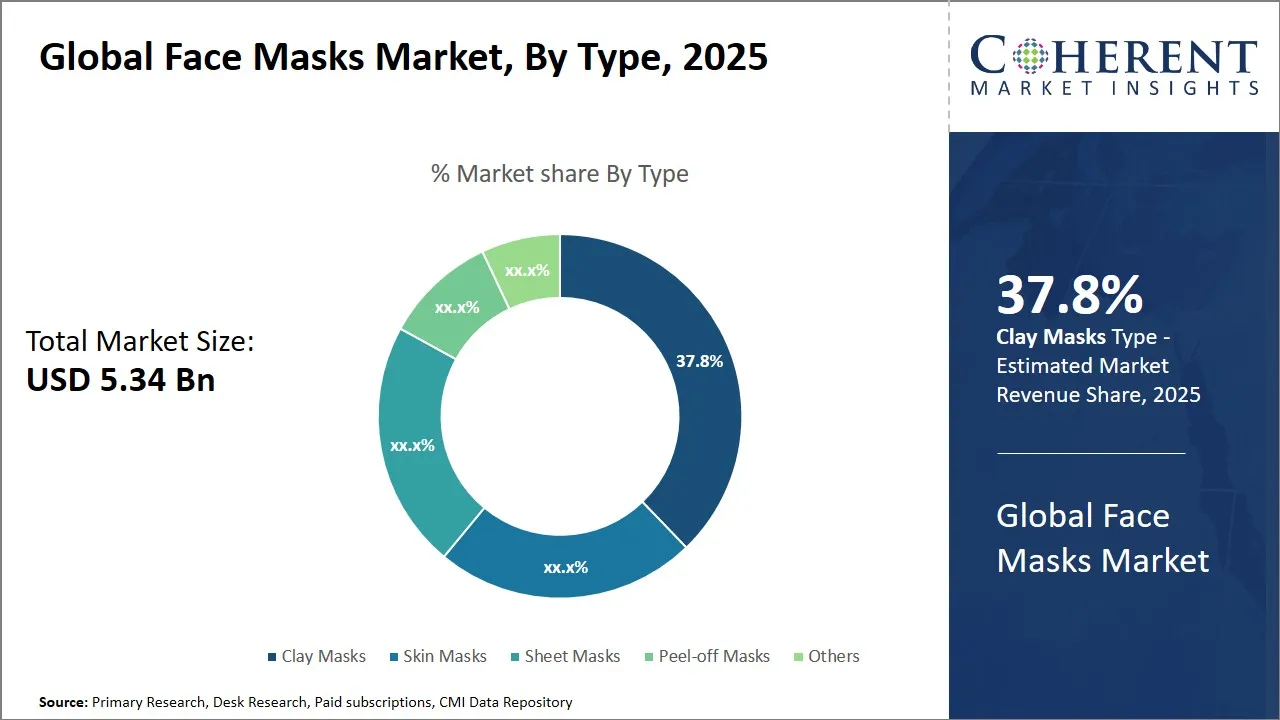
- The clay masks segment is expected to account for 38.8 % of the global face masks market in 2026, driven by its proven skin-enhancing benefits and the wide range of formulations it offers.
- The non-woven fabric segment is projected to capture 35.3 % of the global face masks market in 2026, primarily due to its functional properties that align well with evolving consumer needs.
- The personal usage segment is anticipated to hold 28.7 % share of the global face masks market in 2026, driven by growing consumer emphasis on skincare, self-care, and home-based beauty routines.
- Asia Pacific is expected to lead the global face masks market in 2026 with a 34.3 % share, driven by strong consumer demand for skincare and beauty products, rising disposable incomes, and expanding e-commerce penetration. Europe, with a 21.5% share in 2026, will be the fastest-growing region, supported by increasing focus on sustainable and eco-friendly mask formulations and a growing preference for premium skincare solutions.
Market Overview
Recent market trends indicate a shift toward innovative and sustainable face masks made from environmentally friendly materials, with advancements in filtration technology enhancing both comfort and protection. Moreover, the adoption of intelligent technology, including masks with air quality sensors, is becoming popular among the customers. Market expansion has been further enhanced because of the increased uptake by numerous industries such as healthcare, construction and travel which have been aided by the strict government policies that promote the use of protective, surgical mask in society and workplace.
Current Events and Its Impact
Current Events | Description and its impact |
U.S. federal actions on stockpiles and domestic Personal protective equipment (PPE) |
|
Meltblown Nonwoven Supply Outlook 2024–2025 |
|
Segmental Insights
- Current Industry Events of 2026
- Market Size Estimation
- Regional Breakdown
- Competitive Landscape
- Customer Intelligence
- Segmental Analysis
- Pricing Analysis
- Key Market Drivers, Challenges & Future Trends
- Customized Insights Section
Face Masks Market Insights, By Type - Clay Masks Segment Dominates the Market due to their Deep-Cleansing and Detoxifying Properties
Clay masks segment is expected to hold 38.8% share of the global face masks market in 2026, which is based on the positive impact that clay masks segment has on the human skin. Their high capacity to clean the skin is one of the major motivators of their popularity because of their extreme cleansing capacity that absorbs excess oil, impurities as well as toxins.
This is a detoxifying characteristic which is very attractive to consumers with oily acne prone skin and therefore clay mask would be a favorite remedy as far as keeping the skin clear and balanced. In addition, the availability of various kinds of clays including kaolin, bentonite, French green clay and so on offer different levels of benefits that suit various types of consumers, contributing to this segment customization and interest.
For example, L’Oréal Paris Pure Clay Mask Detox & Brighten — formulated with kaolin, montmorillonite, and Moroccan lava clays blended with charcoal, this mask deeply purifies pores, absorbs excess oil, and eliminates skin impurities, making it ideal for oily and acne-prone skin types.
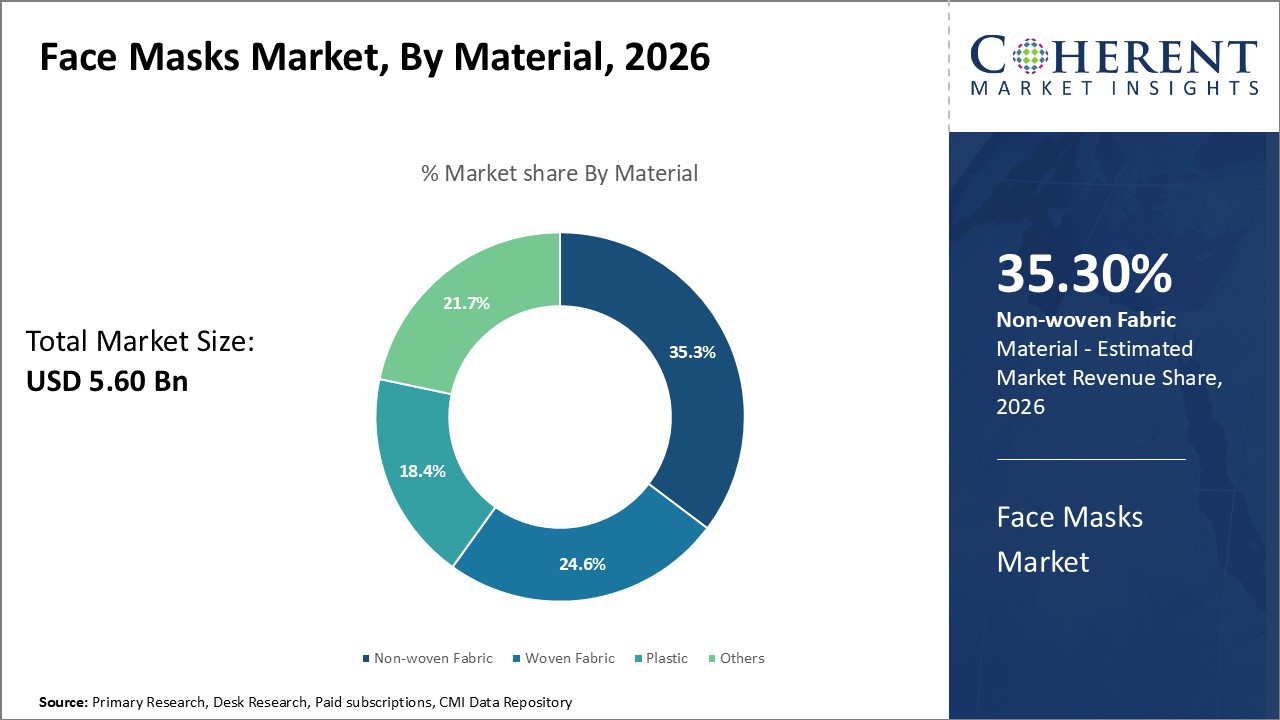
Face Masks Market Insights, By Material - Non-woven Fabric Segment Dominates the Market Due to its Comfort, Cost-effectiveness, and Versatility
Non-woven fabric segment is projected to hold 35.3% share of the global face masks market in 2026, mostly due to its practical features which have found relevance with the demands of the consumers. This is a lightweight, breathable, and soft material that has increased the level of comfort when used over a long period. These features are especially essential in face masks that need to fit the skin lines without irritating its users, and non-woven fabric will be the material of choice of the manufacturer who wants to provide users with the efficacy and avoid irritation.
Another strong argument that makes the non-woven fabric the leader of this material segment is its cost-effectiveness. It is cheaper to manufacture than other types of fabrics such as woven features, as well as the use of plastic products and thus manufacturers are able to offer cheap products to a wide consumer base. This low-cost aspect has played a critical role in increasing the personal usage and the adoption in different geographies especially in the geographies where price sensitivity is a key deciding factor in purchasing decisions.
Face Masks Market Insights, By Application - Personal Usage Segment Dominates the Market Driven by Rising Skincare Awareness and At-home Beauty Practices
The personal usage segment is expected to command 28.7% share in the global face masks market in 2026, owing to various converging consumer values that are centered around skincare self-care and home-based beauty products. The growing awareness about skin health and its effects encouraged by the availability of information on digital sources and social networks has stimulated a larger number of people to wear face masks as a part of their daily or weekly routine. Consumers currently are increasingly educated on how to meet certain needs in skincare like hydration, anti-aging, acne management, and brightening by using specific masks, with the growth of personal usage being driven by this.
Regional Insights
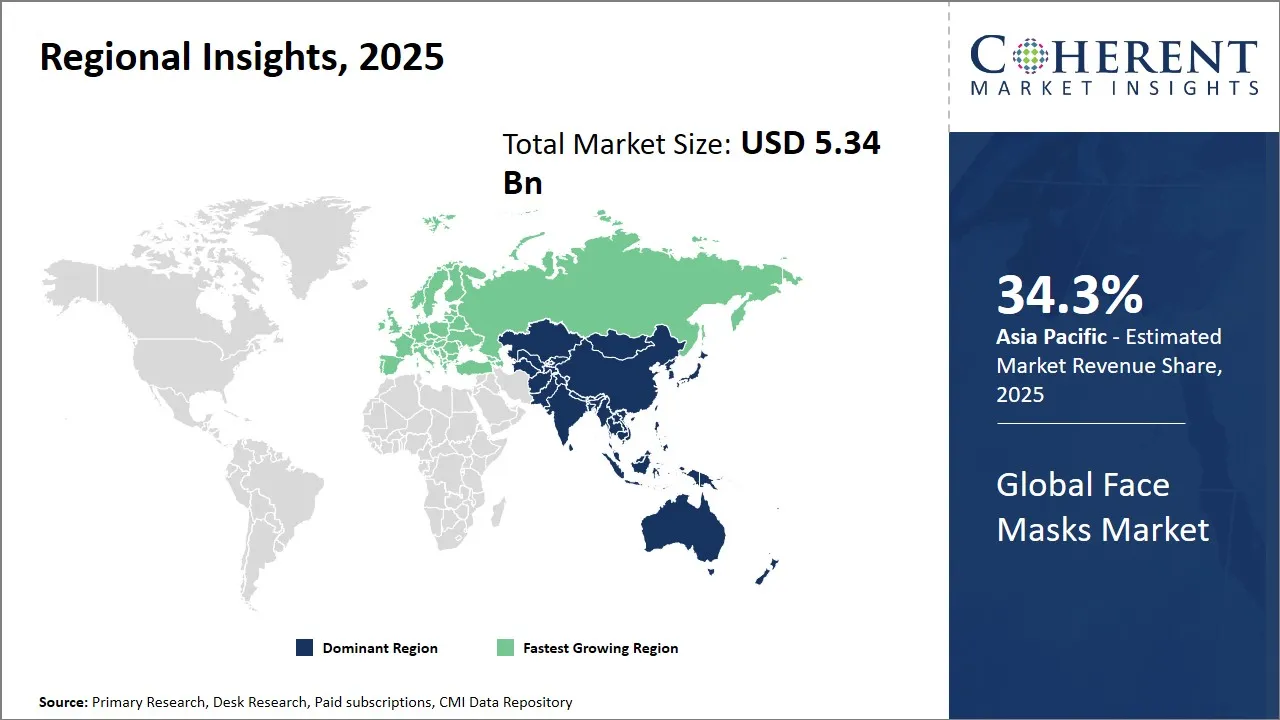
Asia Pacific Face Masks Market Analysis and Trends
The Asia Pacific region is projected to lead the market with a 34.3% share in 2026. The region also enjoys supportive government policies that encourage local manufacturing particularly in countries such as China, Japan, and South Korea where respiratory health consciousness and pollution issues have created long-term demand.
The main market players 3M China, Honeywell Safety Products and local giants like Winner Medical play an important role by taking advantage of the advanced technology and mass production capabilities. The conducive trade policies and export-oriented policies in Asia Pacific have also placed it at the center of face mask manufacturing and distribution actions in the world, which has further enhanced its central position.
Europe Face Masks Market Analysis and Trends
The Europe region is expected to exhibit the fastest growth in the market contributing 21.5% share in 2026, due to the growing focus on occupational safety, modernization of healthcare infrastructure, and long-term awareness about hygiene post-pandemic. The demand has shifted to pandemic-based community usage to uses in the healthcare, industrial, and occupational safety settings.
Disposable masks made of non-woven materials remain the most preferred material in the region, but reusable and eco-friendly masks are rapidly gaining popularity in the category of fast-growing products. Even though the growth in Europe is moderate as compared to emerging markets, the region is mature with regulation-based environment focusing on compliance, innovations and sustainability.
For example, Cambridge Mask Co. has gained strong traction across Europe for its reusable masks that combine military-grade filtration technology with sustainable design. Its PRO Mask Series, featuring three-layer filtration including activated carbon, has become popular among both healthcare professionals and consumers seeking long-term, eco-friendly protection, reflecting Europe’s shift toward regulated, sustainable, and innovation-driven mask adoption.
Global Face Masks Market Outlook for Key Countries
China Face Masks Market Trends
China dominates global face mask manufacturing due to its advanced production ecosystem and extensive raw material availability. The country accounts for over 50% of the world’s mask output, led by major producers such as Winner Medical and BYD Company Ltd. For instance, BYD rapidly converted its automotive lines during the COVID-19 outbreak, producing over 100 million masks per day by mid-2020, showcasing China’s unmatched scalability. The government’s strict implementation of GB 2626-2019 (KN95 standard) and incentives under the “Made in China 2026” initiative further strengthened production quality and global competitiveness.
U.S. Face Masks Market Trends
The U.S. face masks market experiences strong demand driven by stringent regulations from authorities such as the FDA and OSHA, which enforce strict standards on mask quality and usage compliance. Most of the industry players such as 3M, Honeywell, and Kimberly-Clark are the leaders with a diverse product line that focuses on healthcare, industrial, and consumer markets. Innovative mask technology including N95 respirators and smart masks are also underpinned by high levels of R&D investments to the benefit of the U.S. face masks market. Market preparedness and resiliency has also been contributed by trade policies and strategic stockpiling.
Germany Face Masks Market Trends
Germany is still a leader in face masks market of Europe because of the developed healthcare system and the strict adherence to the health and safety regulation known in the EU. German firms like Dragerwerk and B Braun Melsuge are involved in provision of high quality protective masks both within the country and to the European Union. The stability of the market has been boosted by government subsidies on local production and quality control programs; hence Germany is an important manufacturing and consumption center in Europe.
Brazil Face Masks Market Trends
Brazil’s face masks market is marked by rising demand propelled by ongoing public health initiatives and increased investment in protective healthcare equipment. Local companies including Medibras and Siske do Brazil have emerged as notable contributors by manufacturing cost-effective and quality masks suited for broad population coverage. Government mandates on mask usage, especially during health crises, and efforts to improve healthcare logistics have enhanced market penetration. Participation by multinational firms through partnerships has also enriched product offerings and distribution channels within the country.
India Face Masks Market Trends
India’s face masks market is rapidly evolving, supported by a large population base and increasing health safety awareness. Government policies aimed at boosting domestic manufacturing through schemes like Make in India have stimulated production capacity.
Macro and Micro Economic Factors Impacting the Face Masks Market Growth
Macro-Economic Factors
- Environmental Pollution: Severe air pollution, especially across Asian megacities and urban clusters globally, is incentivizing year-round consumer use for both filtration and personal health protection, driving up baseline market demand.
- Healthcare Sector Growth: Expansion in healthcare spending, aging population demographics, chronic disease rates, and rising per capita income in emerging markets like China, India, and Brazil are spurring broad healthcare and public uptake of masks.
- Regulatory Environment: Stricter regulations around medical device certification, occupational safety, and environmental sustainability (e.g., rules for biodegradable mask materials) are reshaping market segmentation and creating opportunities for premium products.
- Supply Chain and Raw Material Volatility: Price spikes—especially in key inputs like polypropylene—plus global logistics issues are affecting margins, output, and the geographic spread of manufacturing operations, creating uncertainty for producers and new entrants.
Micro Economic Factors
- Pricing and Profitability: Fluctuating costs of raw materials, such as PP resin, directly affect the profitability and pricing power of mask manufacturers, especially in price-sensitive disposable segments.
- Consumer Preferences: Lingering consumer behaviors post-pandemic, including continued mask wearing during flu season or in polluted environments, emphasize comfort, breathability, skin-friendliness, and certification for health safety.
- Innovation Adoption: The demand for masks with added value—biodegradable, antimicrobial, and technologically advanced features, including embedded sensors for diagnostics or air filtration monitoring—offers growth for specialty producers.
Market Players, Company Insights, and Competitive Intelligence
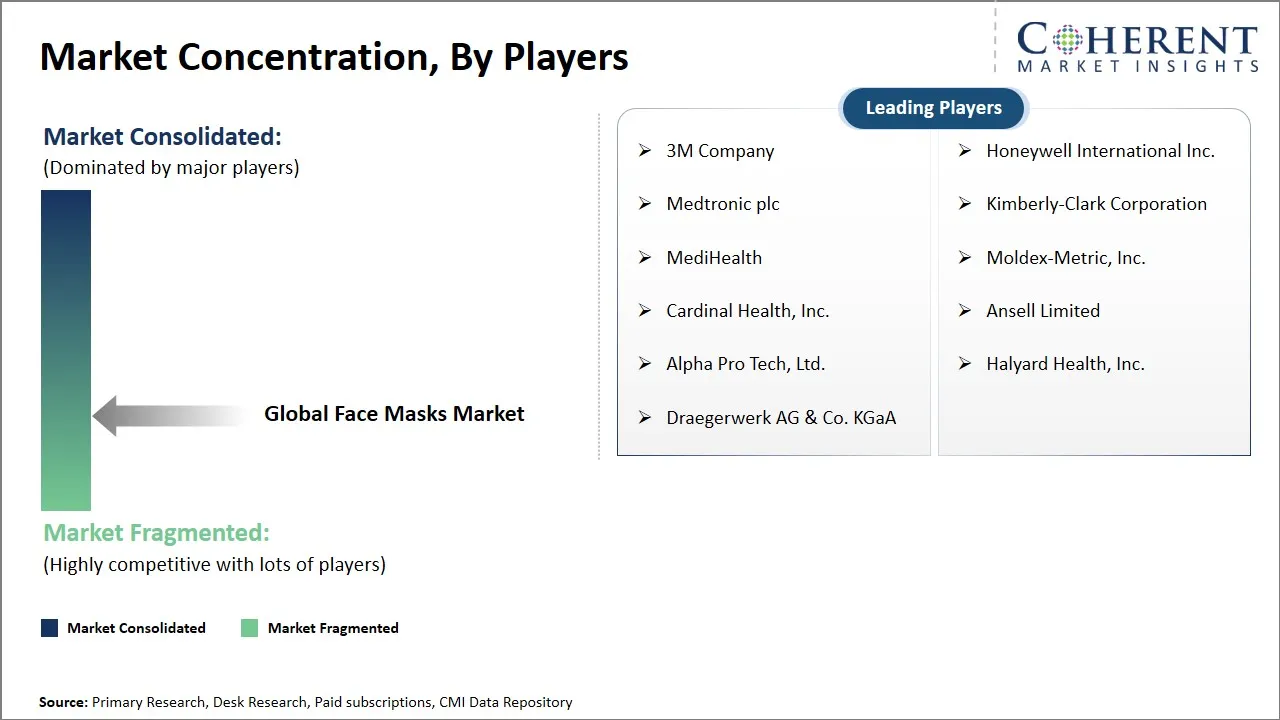
Company Insights
- Medtronic plc produces various types of medical face masks, such as anesthesia masks and oxygen masks, for use in healthcare settings for instance, their “Standard Anesthesia Face Masks” series includes different sizes (neonate to adult) with distinct ring-color coding (e.g., size 5 adult: blue ring) ordered typically in boxes of 10. They also offer inflatable versions of these masks (sterile and non-sterile) for the same anesthesia/ICU use case.
Top Strategies Followed by Global Face Masks Market Players
- Established players, often multinational corporations with deep resources, invest heavily in research and development (R&D) to innovate high-performance face mask products that meet stringent regulatory standards and cater to diverse consumer needs. These companies focus on the emergence of high-quality filtration materials, ergonomic designs and the sustainability of their production systems in order to be superior to their competitors.
- As an example, 3Ms N95 respirators have electrostatic filter media built into the mask, elevating its ability to trap particles alongside being breathable. Honeywell concentrates on ergonomic and reusable masks in the medical and industrial fields and Kimberly-Clark continues developing eco-friendly manufacturing by using recyclable materials in the lines of masks.
- Mid-scale Players: The players in the global market of face masks adopt a much more pragmatic stance of the need to provide effective solutions that are both cost-effective and at the same time offer quality services. This concentration enables middle-level companies to go right into direct marketing of low-end consumers like small health care institutions, retail chains, and individual consumers just looking to have a reliable cover at affordable rates.
- For example, the Moldex-Metric N95 masks have a molded design which lowers the manufacturing complexity and still performs. Medline offers disposable surgical masks that are in bulk and sold at competitive prices to hospitals and retail distributors in developing countries.
- Small-scale players: The companies often focus on niche attributes of the masks, like biodegradable materials, masks designed to serve particular professional purposes, or the integration of smart wearable technology products which set their offerings apart to commoditized products. Small firms embrace the most recent technologies in manufacturing such as 3D printing and progressive nanofiber production to be able to offer quick prototyping and customization to be competitive.
- For example, AirPop has been producing smart masks that have inbuilt sensors to detect air quality and filter performance. Totobobo specializes in reusable transparent masks with customizable filters, that are perfect to be used by jobs that require visibility like teachers and interpreters.
Market Report Scope
Face Masks Market Report Coverage
| Report Coverage | Details | ||
|---|---|---|---|
| Base Year: | 2025 | Market Size in 2026: | USD 5.60 Bn |
| Historical Data for: | 2020 To 2024 | Forecast Period: | 2026 To 2033 |
| Forecast Period 2026 to 2033 CAGR: | 4.8% | 2033 Value Projection: | USD 7.77 Bn |
| Geographies covered: |
| ||
| Segments covered: |
| ||
| Companies covered: | 3M Company, Honeywell International Inc., Medtronic plc, Kimberly-Clark Corporation, MediHealth, Moldex-Metric, Inc., Cardinal Health, Inc., Ansell Limited, Alpha Pro Tech, Ltd., Halyard Health, Inc., and Draegerwerk AG & Co. KGaA | ||
| Growth Drivers: |
| ||
| Restraints & Challenges: |
| ||
Face Masks Market Dynamics
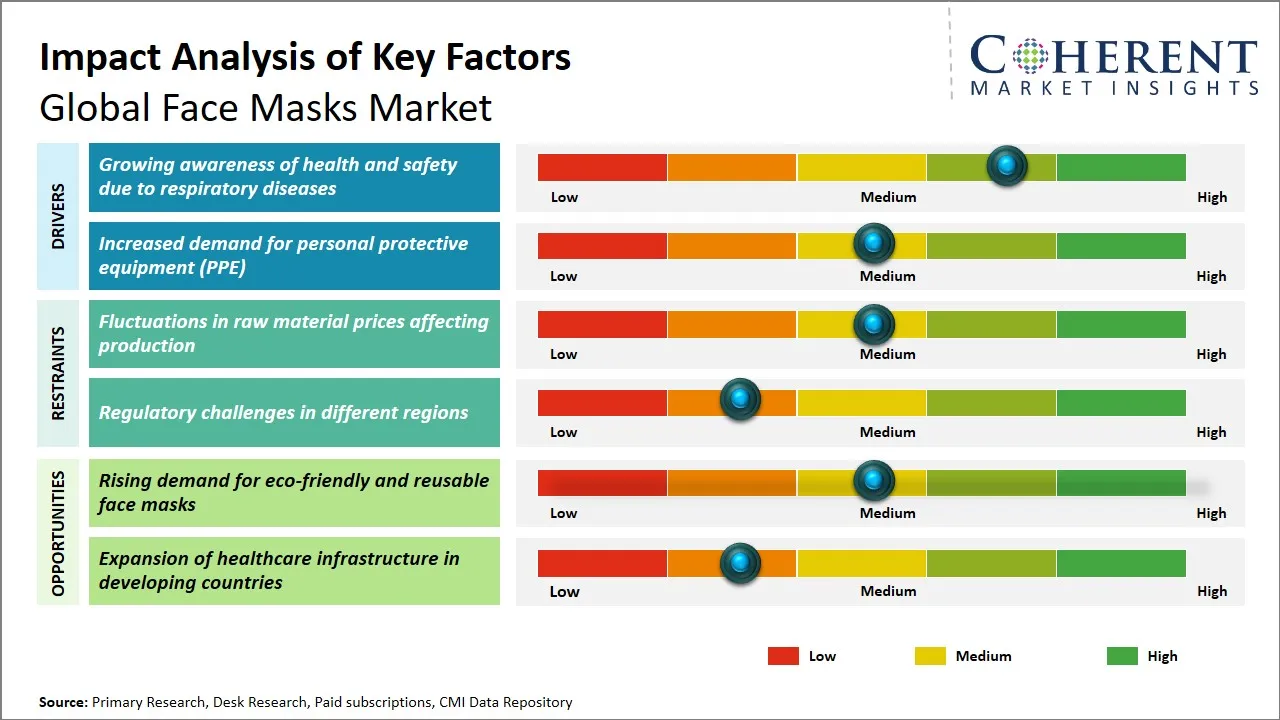
Face Masks Market Driver - Growing Awareness of Health and Safety due to Respiratory Diseases
The rising rate of respiratory diseases has really heightened awareness of the people on issues of health and safety, and this has directly led to the increase in the demand of face masks in the world market. The more people are concerned about the danger of air-borne pathogens, and other pollutants and allergens, the more desire is to adopt preventive measures to reduce exposure. Such awareness is not limited to individual health concerns but also to the occupational safety laws, schools, and other places where the crowding can increase risks of transmission. Moreover, the recent epidemics of contagious diseases further supported the role of protective barriers and governments and organizations promoted wearing masks, as one of the essential measures of public health.
For example, organizations such as 3M Company and Honeywell International Inc. increased production volumes to cope with the rising demand in the population and institutions as a primary element of the community health protection.
Face Masks Market Opportunity - Rising Demand for Eco-Friendly and Reusable Face Masks
The face masks market is already experiencing a massive transformation to greener and reusable face masks with a huge potential both to the manufactures and even to the retailers. Rising environmental consciousness and the rising concerns about the carbon footprint and waste produced by a single-use mask are forcing people into the search of sustainable options. Regulatory agencies and governments in different regions are also promoting the use of the greener products thus pushing the demand further. Reusable face masks that are manufactured using biodegradable substances like organic cotton, bamboo, and hemp fiber also help to minimize the environmental footprint, in addition to attracting health-conscious buyers because of their breathability and comfort.
For example, Airinum AB and Vogmask have created high quality reusable masks made of organic cotton and replaceable filters to reduce waste products.
Analyst Opinion (Expert Opinion)
- The face masks market is undergoing a paradigm shift, due to the continued health consciousness and their preferences that are changing after the pandemic. The observations of the Global Health and Safety Conference (2023), as well as the International Personal protective equipment Expo (2022), have created considerable innovations in this field, with companies such as 3M and Honeywell being at the forefront of the innovations in mask technology. A recent example of the response of the market to the rise in demand of effective personal protective equipment is the introduction of next-generation N95 respirators by 3M, which have stronger filtration and are easier to wear.
- Debates during these conferences underlined the significance of sustainability and most brands concentrated on the use of biodegradable material and reusable products to satisfy the demands of environmentally conscious consumers. Nevertheless, issues like competition in terms of price with cheaper alternatives of lower quality and regulatory issues were also often cited as obstacles to market growth.
- Companies that put money in illuminating consumers about the advantages of high-quality covers and promote product recognition by means of strategic alliances with medical service organizations are likely to gain a competitive advantage. After all, the future expansion of the face masks market will be necessitated by the capacity to keep up with innovations and response to the current necessity of protection and sustainability of personal protective gear.
Speak to the analyst
Want personalized insights?
Take the findings above to one of our principal consultants, or have the report rebuilt around the segments, geographies and competitors you actually track.
Market Segmentation
- Type Insights (Revenue, USD Bn, 2021 - 2033)
- Clay Masks
- Skin Masks
- Sheet Masks
- Peel-off Masks
- Others
- Material Insights (Revenue, USD Bn, 2021 - 2033)
- Non-woven Fabric
- Woven Fabric
- Plastic
- Others
- Application Insights (Revenue, USD Bn, 2021 - 2033)
- Personal Usage
- Beauty Salons
- Spa Centres
- Clinics
- Distribution Channel Insights (Revenue, USD Bn, 2021 - 2033)
- Online
- Offline (Pharmacies, Supermarkets, etc.)
- Regional Insights (Revenue, USD Bn, 2021 - 2033)
- North America
- U.S.
- Canada
- Latin America
- Brazil
- Argentina
- Mexico
- Rest of Latin America
- Europe
- Germany
- U.K.
- Spain
- France
- Italy
- Russia
- Rest of Europe
- Asia Pacific
- China
- India
- Japan
- Australia
- South Korea
- ASEAN
- Rest of Asia Pacific
- Middle East
- GCC Countries
- Israel
- Rest of Middle East
- Africa
- South Africa
- North Africa
- Central Africa
- North America
- Key Players Insights
- 3M Company
- Honeywell International Inc.
- Medtronic plc
- Kimberly-Clark Corporation
- MediHealth
- Moldex-Metric, Inc.
- Cardinal Health, Inc.
- Ansell Limited
- Alpha Pro Tech, Ltd.
- Halyard Health, Inc.
- Draegerwerk AG & Co. KGaA
Sources
Primary Research Interviews
- Production Manager – Leading Surgical Face Mask Manufacturer
- Supply Chain Head – Major PPE Equipment Distributor
- R&D Scientist – Healthcare Filtration Materials Company
- Quality & Compliance Officer – Medical Device Regulatory Body
Stakeholders
- Manufacturers: Medical, cosmetic, and industrial mask producers
- End-use Sectors
- Industrial and occupational safety sectors
- Consumer personal care (cosmetic and fashion masks)
- Regulatory & Certification Bodies: WHO, FDA, CE, ISO, BIS
- Distribution Channels: Pharmacies, supermarkets, e-commerce platforms
- Raw Material Suppliers: Non-woven fabric, melt-blown fiber, activated carbon suppliers
Databases
- UN Comtrade Database
- WHO Global Health Observatory
- India Import Export (EXIM) Database
Magazines
- Medical Device & Technology: Innovations in medical-grade mask production
- Nonwovens Industry Magazine: Material technology trends in nonwoven fabrics
- Health & Hygiene Business: Consumer and institutional PPE adoption trends
Journals
- Journal of Hospital Infection: Effectiveness of medical masks and respirators
- International Journal of Environmental Research and Public Health: Airborne particle control through face coverings
- Textile Research Journal: Advances in antimicrobial and filtration textiles
- Journal of Aerosol Science: Performance testing and efficiency of mask filters
Newspapers
- The Financial Times – PPE trade and market growth outlook
- The Guardian – Consumer behavior in protective mask demand
- The Economic Times – Indian mask manufacturing and export performance
- The New York Times – Trends in post-pandemic mask usage
Associations
- World Health Organization (WHO)
- Centers for Disease Control and Prevention (CDC)
- Occupational Safety and Health Administration (OSHA)
- European Committee for Standardization (CEN)
- International Safety Equipment Association (ISEA)
Public Domain Sources
- U.S. Food and Drug Administration (FDA) – Face mask and respirator guidelines
- European Commission – CE marking for PPE and medical devices
- World Health Organization (WHO) – PPE standards and usage protocols
- Ministry of Health, India – Mask manufacturing and safety standards
Proprietary Elements
- CMI Data Analytics Tool, Proprietary CMI Existing Repository of information for last 8 years.
Get access to 250+ pages report
Every segment, forecast, competitor profile and data table behind the analysis above — available for instant download.
- ESOMAR Member
- ISO 9001:2015 Certified
- D-U-N-S Registered
- GDPR & CCPA Compliant
Missing comfort of reading report in your local language? Find your preferred language:
Transform your Strategy with Exclusive Trending Reports
Frequently Asked Questions
The global face masks market is estimated to be valued at USD 5.60 Bn in 2026 and is expected to reach USD 7.77 Bn by 2033.
Fashion and skincare trends are driving the face masks market by promoting masks as both beauty-enhancing and self-care accessories.
Sustainability concerns are pushing manufacturers to adopt biodegradable materials, reduce plastic waste, and implement eco-friendly production methods in face mask manufacturing.
The CAGR of global face masks market is projected to be 4.8% from 2026 to 2033.
Growing awareness of health and safety due to respiratory diseases and increased demand for personal protective equipment (PPE) are the major factors driving the growth of the global face masks market.
Fluctuations in raw material prices affecting production and regulatory challenges in different regions are the major factors hampering the growth of the global face masks market.
In terms of type, clay masks are estimated to dominate the market revenue share in 2026.