

Global Fibrin Sealant Market Size and Forecast – 2026 to 2033
The fibrin sealant market is projected to be valued at USD 1.84 Bn in 2026 and is projected to reach USD 3.34 Bn in the year 2033, exhibiting a compound annual growth rate of 8.9% between the years 2026 and 2033. Such a high growth trend is fueled by the rising demand for advanced wound care solutions and surgical advancements that reduce blood losses and increase healing. Increase in healthcare facilities and an increase in implementation in different surgical operations also enhance market expansion.
Key Takeaways of the Global Fibrin Sealant Market
- By product type, two-component fibrin sealants are expected to lead with a 66.3 % share in 2026.
- By source, the autologous (patient-derived) segment is projected to dominate with a 61.8 % share in 2026 owing to their safety benefits.
- By application, general surgery is anticipated to account for 35.5 % of the market share, supported by the strong demand for rapid and effective bleeding control.
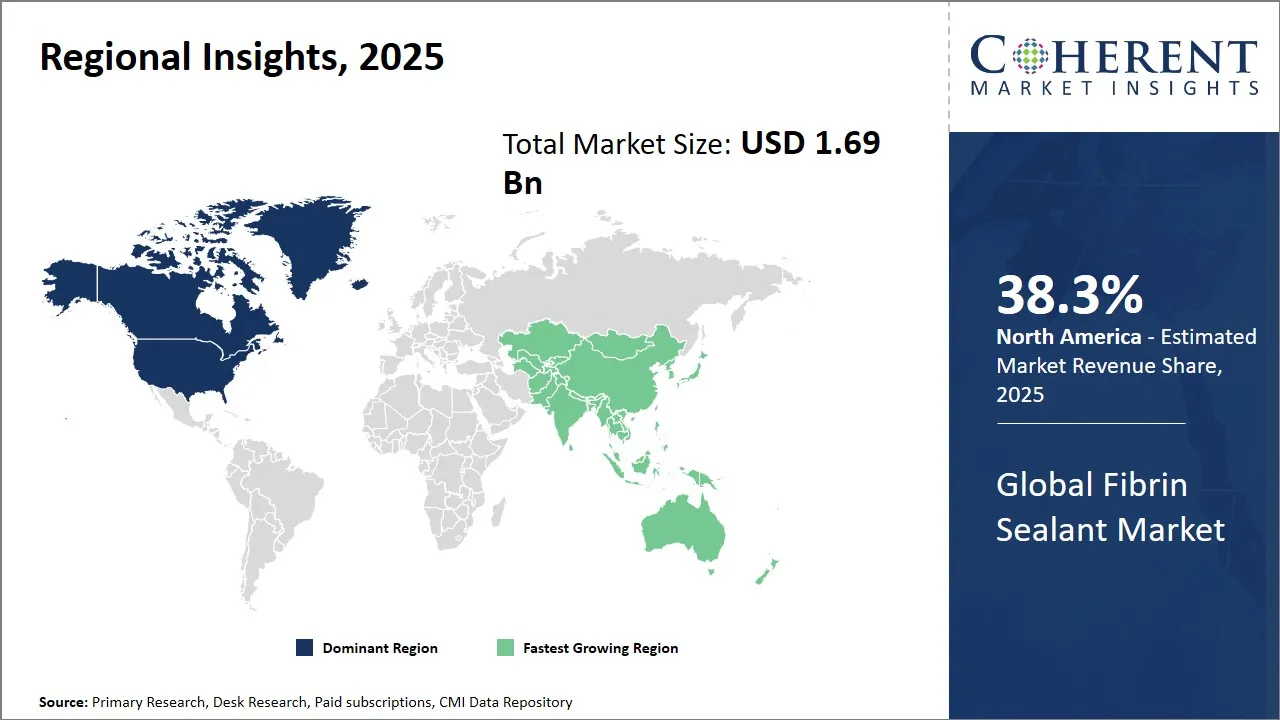
- North America is expected to lead the market, holding a share of 38.3 % in 2026. Asia Pacific is anticipated to be the fastest-growing region, with a market share of 24.6% in 2026.
Market Overview
A prevailing trend in the fibrin sealant market is the growing integration of biotechnology advancements to develop next-generation sealants with improved efficacy and safety profiles. Additionally, there is a notable shift towards minimally invasive surgeries, increasing the reliance on effective hemostatic agents such as fibrin sealants. Market players are also focusing on product innovations, including combination therapies and synthetic alternatives, to cater to diverse clinical needs. Moreover, rising awareness about post-surgical complications is encouraging wider acceptance among clinicians and patients globally.
Current Events and Its Impact
Current Events | Description and its Impact |
Rapid Adoption of Advanced Surgical Techniques |
|
Technological Innovation: Biomaterials & Advanced Hydrogels |
|
Segmental Insights
- Current Industry Events of 2026
- Market Size Estimation
- Regional Breakdown
- Competitive Landscape
- Customer Intelligence
- Segmental Analysis
- Pricing Analysis
- Key Market Drivers, Challenges & Future Trends
- Customized Insights Section
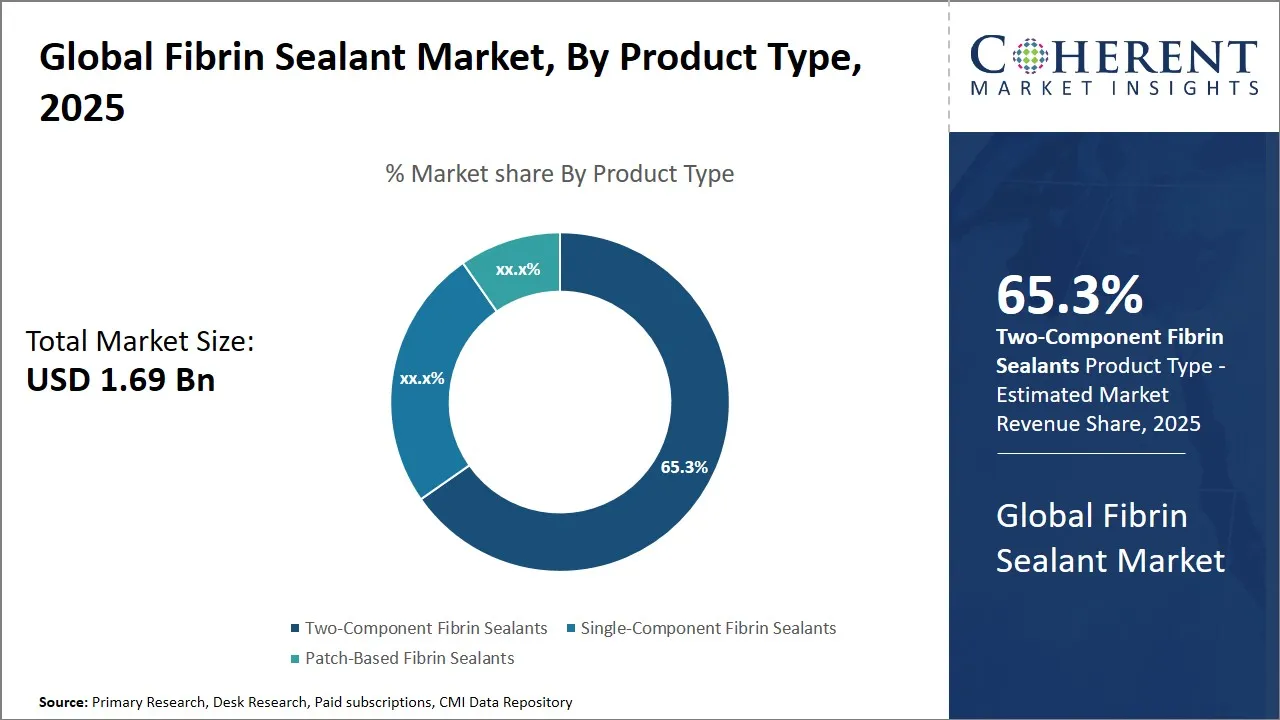
Fibrin Sealant Market Insights, By Product Type - Two-component fibrin sealants contribute the highest share of the market owing to their enhanced efficacy and widespread clinical acceptance
Two-component fibrin sealants are the most popular hemostatic agents among medical professionals whose share is estimated to be 66.3% in 2026 because of their exclusive composition and high-quality work in hemostasis and tissue adhesion. These sealants replicate the natural process of blood clotting by blending fibrinogen and thrombin immediately before use and the rate of clotting is therefore fast at the surgical site. This is an operation that offers immediate sealing and minimizes blood loss more than single-component or patch variants.
There is also the issue of the applicability of two-component sealants to a range of surgical operations, which has greatly contributed to their use. They show high biocompatibility and reduce the chances of an immunogenic response, which is essential in delicate surgeries. The presence of the customizable formulations justifies their use in a wide range of clinical situations, ranging between cardiovascular to orthopedic surgeries, which solidifies their controlling market position.
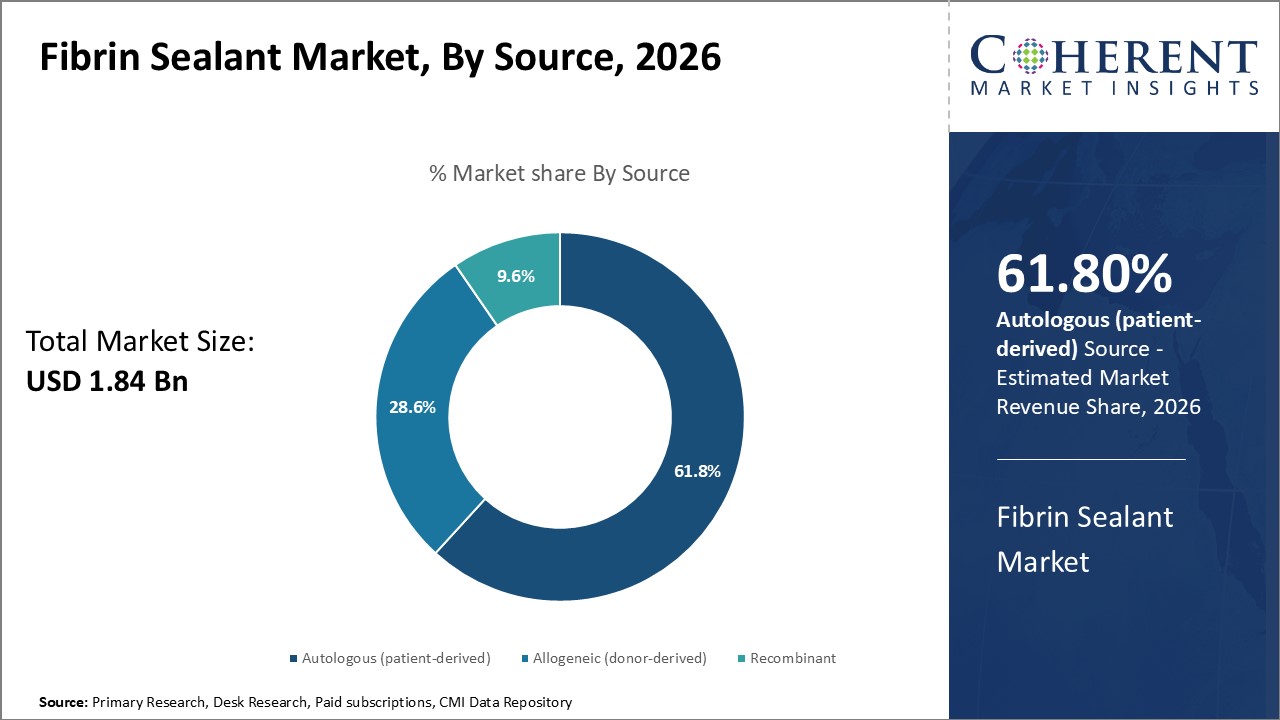
Fibrin Sealant Market Insights, By Source - Autologous (patient-derived) fibrin sealants account for the largest market share due to their unique safety profile and personalized therapeutic advantages
The increasing popularity of the autologous (patient-derived) segment is mainly pre-eminent with an estimated share of 61.8% in 2026 by virtue of the fact that they are composed of the own component of blood, thus significantly reducing the chances of transmitting a disease as well as the chances of immunological responses. It is this innate biocompatibility that renders autologous sealants particularly desirable in highly clinical settings where patient safety is the center of focus.
As an example, Shanghai RAAS Blood Products Co., Ltd. In China, the largest plasma-based biopharmaceutical firm, featured its Fibrin Sealant FIBINGLURAAS Fibrin Sealant (Human) which is a topical hemostatic agent. The product is recommended in the management of bleeding of burn wounds, abdominal incisions brought about by general surgery, hepatic surgery, and vascular surgery.
Fibrin Sealant Market Insights, By Application - General surgery holds the highest market share propelled by its broad procedural volume and critical need for effective hemostatic solutions
General surgery, with a wide scope of procedures including abdominal surgery to minimal invasive procedures, is expected to account for a 35.5% market share in 2026, as the demand is consistent to have quick and effective bleeding control.
Fibrin sealants have now become indispensable supplements in this field since they help in the faster healing of wounds and lead to a decrease in the necessity of blood transfusions, as well as the prevention of postoperative complications, including the development of hematoma and infection.
Regional Insights
North America Fibrin Sealant Market Analysis and Trends
North America is projected to hold a 38.3% share of the global fibrin sealant market in 2026, driven by its well-established healthcare infrastructure, strong focus on advanced research and development, and supportive government policies that encourage medical innovation.
The existence of major medical device manufacturers, including the Baxter International, Johnson and Johnson (through their Ethicon unit) and CryoLife, makes the market strong due to the constant appearance of the high-technological products on the market in terms of fibrin sealants. Also, there is support on reimbursement and the U.S. FDA, which expedites product approvals and adoption.
Asia Pacific Fibrin Sealant Market Analysis and Trends
In the meantime, Asia Pacific has the highest growth in the fibrin sealant market across the world with an estimated share of 24.6% in 2026, and this is mainly due to the rising healthcare infrastructure, rising surgical operations and the rising awareness about superior hemostatic agents. The modernization of the healthcare systems is spreading rapidly in China, India, Japan, and South Korea with the government-driven efforts to enhance the quality of surgical care and invest into medical technologies.
For example, ReliSeal (also spelled Reliseal) is a human plasma-derived fibrin sealant sold by Reliance Life Sciences Pvt. Ltd. which is a large Indian-based biopharmaceutical company that has been involved in its work with plasma proteins and associated therapies. The product is a biological glue and hemostatic agent designed to be used in all types of surgery to prevent bleeding and seal tissues and also to aid healing of wounds.
Global Fibrin Sealant Market Outlook for Key Countries
U.S. Fibrin Sealant Market Trends
The fibrin sealant market of the U.S. is very competitive and highly developed, with high healthcare expenditures and the regulatory environment that facilitates innovation. The market is dominated by leading players such as Ethicon (a subsidiary of Johnson & Johnson) and Baxter International, both of which consistently introduce more advanced and effective fibrin sealant formulations. The U.S. is an advantageous country in that it has a huge pool of surgeries in cardiovascular, orthopedic, and plastic surgery, where fibrin sealants are frequently used. R&Ds and co-operations with hospitals and research companies only strengthen the leading position in the U.S. fibrin sealant market.
For example, indicatively, ARTISS, which is the first and the only fibrin sealant developed with the aspect of designing tissue adhesion in plastic, reconstructive and burn surgery, provides surgeons with sophisticated control in attaching autologous skin grafts and tissue flaps. The product is a mixture of human thrombin, fibrinogen and an antifibrinolytic inhibitor to delay breakdown of clots to create a fibrin matrix that provides good graft-to-wound bed adhesion.
Germany Fibrin Sealant Market Trends
The fibrin sealant market in Germany enjoys a high concentration of both international and local innovators, which have an active role in the development of sealants. As an example, Baxter International Inc. represents a strong base of surgical advanced production in Germany, as its TISSEEL fibrin sealant line has a strong presence in the country, being extensively used in all hospitals in case of cardiovascular, thoracic, and reconstructive surgeries. In the same vein, Ethicon (Johnson & Johnson) promotes its VISTASEAL fibrin sealant in Germany, providing high-tech solutions in hemostatic and is backed up by its cooperation with Grifols. The two firms use the developed healthcare facilities and regulatory transparency within Germany to increase their presence and launch next-generation hemostasis solutions.
China Fibrin Sealant Market Trends
The fibrin sealant market is rapidly expanding in China, where substantial investments in healthcare infrastructure and rising demand for advanced surgical care are positioning the country to become a dominant player in the industry. The increased rate of chronic diseases and trauma cases has catalyzed the use of fibrin sealants. It is increasingly getting significant with domestic firms such as Beijing Beitong Bio and Medical Technology as well as with major international firms going global. The government efforts to modernize the healthcare system, as well as to expand the insurance coverage, contribute to the wider availability of fibrin sealant products in both the urban and rural hospitals.
For example, China Biological Products Holdings, Inc. through its majority owned subsidiary, Shandong Taibang Biological Products Co. Ltd., had been granted permission by the China Food and Drug Administration (CFDA) to conduct human clinical trials on their Human Fibrin Sealant. Human plasma is used to produce the product, which helps prevent bleeding in surgical operations in which the traditional techniques of sutures or cauterization are not effective.
Japan Fibrin Sealant Market Trends
Japan remains a technologically-advanced market which has a huge population of elderly that is fueling the demand of surgical procedures that need the use of fibrin sealants. The healthcare policies in this country focus on quality and safety, and Nipro Corporation and Terumo Corporation offer high-quality products of fibrin sealants fitted to the specific healthcare setting. The regulatory structure in Japan is very robust and partnerships between the medical devices engineering companies and research facilities help in the development and the infiltration of the markets.
As an example, in January 2020, Terumo Corporation, a Japanese-based global medical technology company, released its new surgical sealant AQUABRID to the Europe fibrin sealant market. The product, which was first launched in Japan in 2014 as Hydrofit, is aimed at preventing bleeding in complex aortic surgery operations and is triggered by blood to create a rigid elastic layer that clings to wet tissue surfaces, even at high pressure.
End User Feedback and Unmet Needs - Global Fibrin Sealant Market
- End user reactions in the international market of fibrin sealants indicate a high regard of the clinical usefulness of these products, as well as continuing concerns relating to their price, affordability, and role in the mainstream surgical practice. It is common that hospitals and surgical teams emphasize fibrin sealants greatly decrease operative period and post-surgery complications, especially in high bleeding risk procedures. Indicatively, a number of surgeons have noted that the speedy development of blots and tissue binding provided by fibrin sealants enable them to limit their utilization of mechanical sutures or cauterization, which results in faster healing and lesser use of transfusion. This type of success has led to better adoption in cardiovascular and pediatric surgery procedures where speed and accuracy in hemostasis is paramount.
- However, similar issues have been raised over time like the affordability and access problems particularly in developing healthcare systems where the budgets are limited. Part of the government hospitals and mid-sized surgical centers report that although the fibrin sealants are effective, their cost of purchase is high and therefore they cannot be used uniformly across all procedures. Moreover, clinicians have expressed concerns regarding product storage and preparation, some formulations need special care or applicators that delay the working process. These forces leave gap needs in the market. The end users want more affordable alternatives, better delivery services, which would combine with the current surgical devices and expand their availability via regional distribution channels. Sealing these gaps may not only simplify adoption in cost-restrained environments, but may also enable manufacturers to tap into new demand, nurture loyalty among surgeons, and induce product innovations that would enable fibrin sealants to become more flexible to different surgical conditions.
Market Players, Key Developments, and Competitive Intelligence
Key Developments
- In October 2024, the U.S. FDA approved fibrin sealant VISTASEAL from Grifols, a global healthcare company specializing in plasma-derived medicines, to control surgical bleeding in pediatric patients. The product is marketed in the U.S. by Johnson & Johnson, a leading medtech and pharmaceutical firm, and applied using its airless spray technology to promote hemostasis and tissue sealing. Clinical trials across 18 centers with 178 patients showed over 95% efficacy within 4 minutes, with a good safety profile.
- In October 2024, private health insurers confirmed they will continue funding fibrin sealant medicines in private hospitals, dispelling media claims that coverage would end from November 1. The announcement followed changes by Australia’s Department of Health and Aged Care to the Prescribed List of Medical Devices and Human Tissue Products. Insurers emphasized that patients can remain assured of access to these medicines, which play a key role in controlling bleeding and supporting wound healing.
- In January 2023, Grifols, a global leader in plasma medicines with over a century of expertise, reported positive topline results from a phase 3b study of its fibrin sealant for pediatric surgical bleeding. The trial, involving 178 patients across 18 centers, met all primary and secondary endpoints, showing a 95% efficacy rate with hemostasis achieved within four minutes and a strong safety profile. Marketed as VISTASEAL in the U.S. and VERASEAL in Europe by Ethicon, a Johnson & Johnson MedTech company, the product combines fibrinogen and thrombin and is applied with Ethicon’s spray technology.
Top Strategies Followed by Global Fibrin Sealant Market Players
- The market leaders also focus on high investments in research and development (R&D) to be able to innovate and bring high performance fibrin sealant products addressing emerging clinical demands. Such companies never stop improving product efficacy, safety, and ease of application hence they keep at pace with technological excellence. Moreover, they enter into strategic alliance and business relations with large players in the industry, original equipment manufacturers (OEMs), and healthcare providers to consolidate their market.
- For instance, global players like Baxter International Inc and the Ethicon of Johnson and Johnson have all been spending heavily in R&D in an attempt to increase the effectiveness, safety and convenience of the fibrin sealant products. Similarly, the Denmark-based medtech company Vivostat A/S, that makes fibrin sealants announced the new developments in its Vivostat System that streamline the preparation of the fibrin sealant in the absence of the cryoprecipitation, bovine components.
- Mid-level players in the fibrin sealant market adopt a slightly different approach, focusing on delivering cost-effective yet reliable solutions that strike a balance between quality and affordability. By targeting price-sensitive consumer segments, such as smaller healthcare providers or regions with budget constraints, these companies capitalize on unmet demands for accessible wound care technologies.
- For instance, Kaketsuken (Japan) has developed competitively priced fibrin sealants for Asian and Latin American healthcare markets. Similarly, CSL Behring tailors fibrinogen and thrombin-based sealants for mid-tier hospitals, while Shanghai RAAS supplies plasma derivatives including fibrin-based products to regional hospitals in China at accessible price points.
- Small-scale players in the fibrin sealant market carve out niche positions by concentrating on specialized product features or innovative formulations that differentiate them from mainstream offerings. Their agility allows them to rapidly incorporate cutting-edge technologies, such as bioengineered sealants or novel delivery mechanisms, to stay competitive and attract attention in specific medical applications or regional markets.
- For instance, BioGlue was developed as a surgical adhesive and has gained wide adoption in cardiovascular procedures, carving out a specialized niche within surgical applications. Haemostatix (U.K.), later acquired by Ergomed, initially built recognition through its novel peptide-based clotting agents, offering an innovative alternative to traditional fibrin sealants. Similarly, Bioresource Europe (Germany) provides specialized biological adhesives and sealants, primarily serving smaller hospitals and clinics across Europe.
Market Report Scope
Fibrin Sealant Market Report Coverage
| Report Coverage | Details | ||
|---|---|---|---|
| Base Year: | 2025 | Market Size in 2026: | USD 1.84 Bn |
| Historical Data for: | 2020 To 2024 | Forecast Period: | 2026 To 2033 |
| Forecast Period 2026 to 2033 CAGR: | 8.9% | 2033 Value Projection: | USD 3.34 Bn |
| Geographies covered: |
| ||
| Segments covered: |
| ||
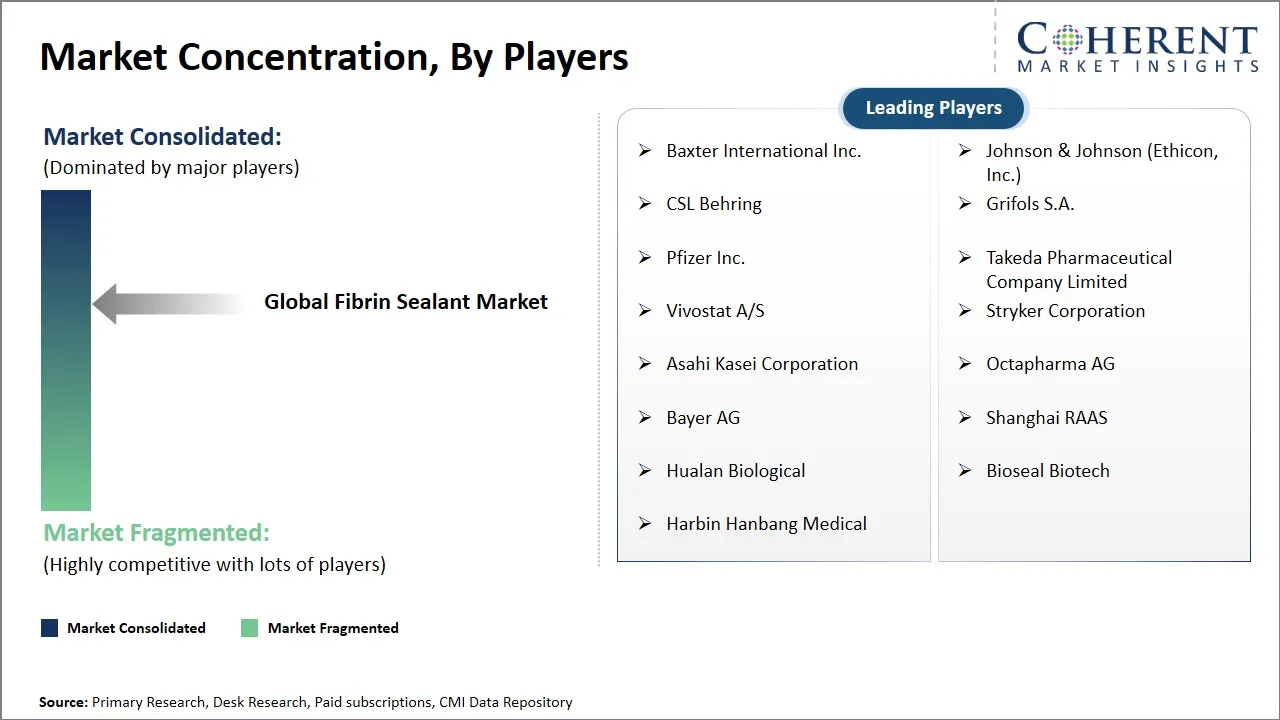
| Companies covered: | Baxter International Inc., Johnson & Johnson (Ethicon, Inc.), CSL Behring, Grifols S.A., Pfizer Inc., Takeda Pharmaceutical Company Limited, Vivostat A/S, Stryker Corporation, Asahi Kasei Corporation, Octapharma AG, Bayer AG, Shanghai RAAS, Hualan Biological, Bioseal Biotech, and Harbin Hanbang Medical | ||
| Growth Drivers: |
| ||
| Restraints & Challenges: |
| ||
Fibrin Sealant Market Dynamics
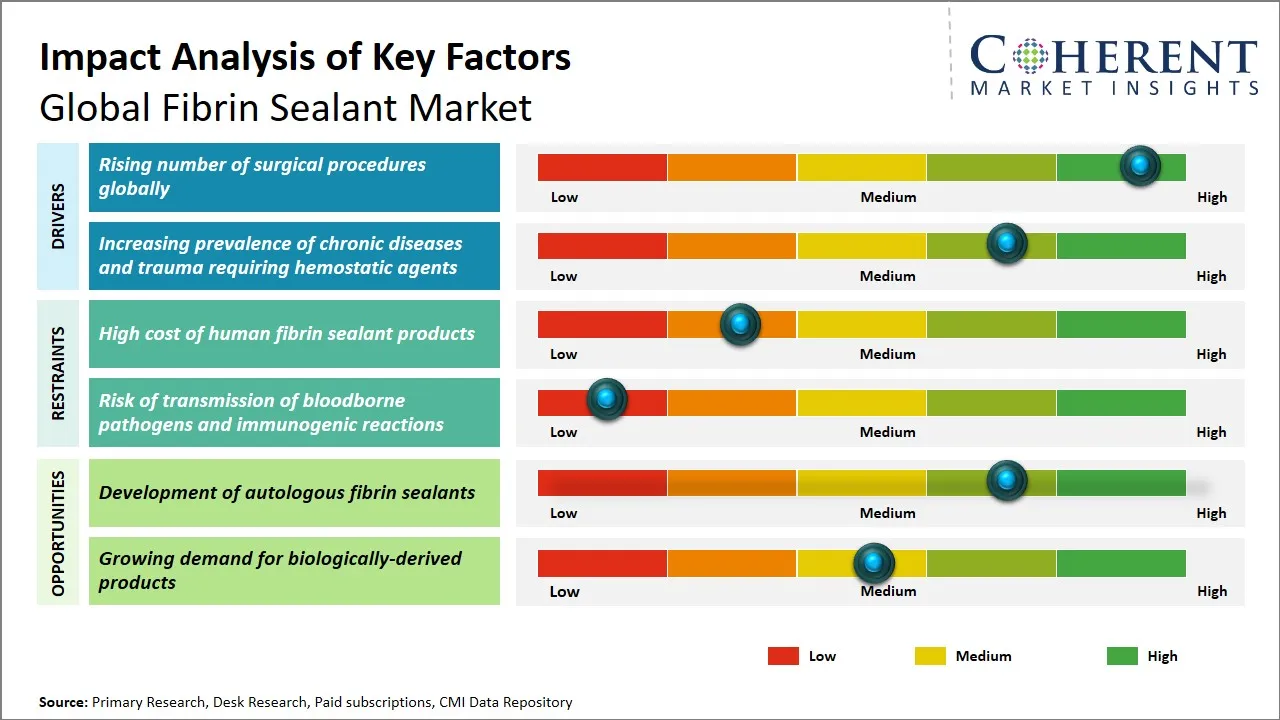
Fibrin Sealant Market Driver - Rising Number of Surgical Procedures Globally
This increased rate of surgical procedures conducted around the world contributes greatly to the surge of the fibrin sealants demand. With the emergence of better healthcare infrastructure and increased access to highly specialized methods of treatment, elective and emergency surgeries are on the increase, in domains like orthopedic, cardiovascular, and general surgery. Fibrin sealants- an effective hemostatic agent and a bleeding reduction measure in the operative room- are now obligatory supplements in current operative rooms. Their capability to minimize the complication of blood loss, and decrease the necessity of blood transfusion, and the wound healing, is in direct proportion to the current focus on patient safety and better after-operation outcomes.
In May 2022, Johnson & Johnson, a global healthcare company active in pharmaceuticals, medical devices, and prescription drugs, launched a Global Surgery initiative at the 75th World Health Assembly to address the rising number of surgical procedures worldwide and the persistent lack of access in low- and middle-income countries. Starting in Kenya and Malawi, the program focuses on conditions such as obstetric fistula and long bone fractures, aiming to bridge the gap by streamlining supply chains, reducing costs, and providing surgeons with affordable technologies suited for resource-limited settings. This effort comes at a time when global demand for surgical care is increasing, highlighting the urgency of making safe and essential surgeries more accessible to underserved populations.
Fibrin Sealant Market Opportunity - Development of Autologous Fibrin Sealants for Market Expansion
Autologous fibrin sealants development is also a major growth opportunity in the fibrin sealant market globally. Autologous fibrin sealants are made with its own blood of a patient and they have good biocompatibility and low immunogenicity reactions than allogeneic or pooled plasma-based sealants. The trend in the need to have safer and more effective hemostatic agents is in line with this personalized approach to surgical and wound care use. The point-of-care technologies have facilitated the preparation of autologous sealants by simplifying the process of making them and have also made them more convenient to use in various clinical environments.
In April 2024, Medtronic, a global medtech leader, introduced remote live streaming within its Touch Surgery Ecosystem to enhance surgical training by enabling real-time observation of procedures in operating rooms across more than 20 countries and giving trainees the ability to attend and conduct live broadcasts. In September 2023, Stryker Corporation, a leading medical technology company, unveiled PROstep MIS Lapidus, a minimally invasive internal fixation procedure designed for bunion treatment through surgical reduction of hallux valgus deformity and fusion of the metatarsal cuneiform joint.
Analyst Opinion (Expert Opinion)
- The global fibrin sealant market is steadily gaining momentum as surgical volumes continue to climb and healthcare systems place a stronger emphasis on minimizing blood loss and accelerating recovery. Advancements in biologics manufacturing, coupled with improved delivery formats such as sprays and patches, have made fibrin sealants more accessible across a wider range of procedures from cardiovascular to reconstructive surgeries. Regulatory support in major markets has also encouraged adoption, although high costs and stringent approval pathways remain barriers that manufacturers must navigate. At the same time, emerging opportunities lie in developing room-temperature stable products and expanding into rapidly growing healthcare systems in Asia and Latin America, where demand for advanced hemostatic solutions is rising quickly. The competitive landscape is shaped not only by innovation but also by strategic partnerships and acquisitions, which are helping players strengthen pipelines and extend global reach.
- In recent years, knowledge exchange platforms such as the European Society of Surgery Congress, the American College of Surgeons Clinical Congress, and Asia Pacific Medical Device Summits have spotlighted surgical adhesives and sealants, reinforcing clinical confidence and guiding best practices. Industry initiatives such as Baxter’s expansion of its TISSEEL portfolio and Johnson & Johnson’s introduction of VISTASEAL have directly influenced hospital procurement decisions, while pilot projects supported by regulatory bodies in Europe and the U.S. are testing broader applications of sealants in minimally invasive surgery. Together, these developments illustrate how collaboration between policymakers, healthcare providers, and manufacturers is reshaping the market outlook, making fibrin sealants a critical component of modern surgical care.
Speak to the analyst
Want personalized insights?
Take the findings above to one of our principal consultants, or have the report rebuilt around the segments, geographies and competitors you actually track.
Market Segmentation
- Product Type Insights (Revenue, USD Bn, 2021 - 2033)
- Two-Component Fibrin Sealants
- Single-Component Fibrin Sealants
- Patch-Based Fibrin Sealants
- Source Insights (Revenue, USD Bn, 2021 - 2033)
- Autologous (patient-derived)
- Allogeneic (donor-derived)
- Recombinant
- Application Insights (Revenue, USD Bn, 2021 - 2033)
- General Surgery
- Cardiovascular Surgery
- Orthopedic Surgery
- Neurological Surgery
- Plastic and Reconstructive Surgery
- Other Specialized Surgeries (e.g., urology, thoracic, gynecology)
- Formulation Insights (Revenue, USD Bn, 2021 - 2033)
- Liquid Form
- Powder Form
- Spray/Aerosol Form
- End User Insights (Revenue, USD Bn, 2021 - 2033)
- Hospitals
- Ambulatory Surgical Centers (ASCs)
- Specialty Clinics
- Research and Academic Institutes
- Regional Insights (Revenue, USD Bn, 2021 - 2033)
- North America
- U.S.
- Canada
- Latin America
- Brazil
- Argentina
- Mexico
- Rest of Latin America
- Europe
- Germany
- U.K.
- Spain
- France
- Italy
- Russia
- Rest of Europe
- Asia Pacific
- China
- India
- Japan
- Australia
- South Korea
- ASEAN
- Rest of Asia Pacific
- Middle East
- GCC Countries
- Israel
- Rest of Middle East
- Africa
- South Africa
- North Africa
- Central Africa
- North America
- Key Players Insights
- Baxter International Inc.
- Johnson & Johnson (Ethicon, Inc.)
- CSL Behring
- Grifols S.A.
- Pfizer Inc.
- Takeda Pharmaceutical Company Limited
- Vivostat A/S
- Stryker Corporation
- Asahi Kasei Corporation
- Octapharma AG
- Bayer AG
- Shanghai RAAS
- Hualan Biological
- Bioseal Biotech
- Harbin Hanbang Medical
Sources
Primary Research Interviews
Industry Stakeholders
- Interviews with regulatory affairs experts in biologics manufacturing
- Discussions with R&D heads in surgical adhesives divisions
End Users
- Surveys of surgeons in cardiovascular, neurology, orthopedics
- Interviews with hospital procurement managers
Government and International Databases
- U.S. Food and Drug Administration (FDA) drug and biologics approval database
- Therapeutic Goods Administration (TGA) Australia public assessment reports
- UK Medicines and Healthcare products Regulatory Agency (MHRA) safety bulletins
- ClinicalTrials.gov registry of clinical trials
- European Medicines Agency (EMA) public reports
- World Health Organization (WHO) and International Council for Harmonisation (ICH) guidelines
Trade Publications
- Drug Safety Update (UK MHRA)
- National pharmacovigilance safety bulletins
- Medical device industry newsletters focused on hemostatic agents
- Surgical Endoscopy journal trade pieces
- Frontiers in Surgery applied practice updates
- Annals of Clinical & Laboratory Science applied clinical trade reports
Academic Journals
- Annals of Clinical & Laboratory Science
- Frontiers in Surgery
- MDPI Cancer
- Journal of Materials Science: Biomaterials
- PubMed Central indexed articles on fibrin sealants
- Transfusion journal on hemostatic agents
Reputable Newspapers
- The New York Times health and science section
- The Guardian healthcare coverage
- The Wall Street Journal life sciences and healthcare reports
- The Washington Post medical innovations coverage
- Financial Times biotechnology and healthcare markets section
- BBC News health section
Industry Associations
- American Society of Hematology (ASH)
- International Society on Thrombosis and Haemostasis (ISTH)
- European Society of Surgery (ESS)
- Association of periOperative Registered Nurses (AORN)
- International Federation of Surgical Societies
- International Medical Device Regulators Forum (IMDRF)
Public Domain Resources
- U.K. Government drug safety updates
- ClinicalTrials.gov database
- PubMed and NCBI open access articles
- Open access repositories such as MDPI
Proprietary Elements
- CMI Data Analytics Tool: Proprietary analytics tool to analyze real-time market trends, consumer behavior, and technology adoption in market
- Proprietary CMI Existing Repository of Information for Last 8 Years
Get access to 250+ pages report
Every segment, forecast, competitor profile and data table behind the analysis above — available for instant download.
- ESOMAR Member
- ISO 9001:2015 Certified
- D-U-N-S Registered
- GDPR & CCPA Compliant
Missing comfort of reading report in your local language? Find your preferred language:
Transform your Strategy with Exclusive Trending Reports
Frequently Asked Questions
The global fibrin sealant market is estimated to be valued at USD 1.84 Bn in 2026 and is expected to reach USD 3.34 Bn by 2033.
The CAGR of global fibrin sealant market is projected to be 8.9% from 2026 to 2033.
Rising number of surgical procedures globally and increasing prevalence of chronic diseases and trauma requiring hemostatic agents are the major factors driving the growth of the global fibrin sealant market.
High cost of human fibrin sealant products and risk of transmission of bloodborne pathogens and immunogenic reactions are the major factors hampering the growth of the global fibrin sealant market.
In terms of product type, two-component fibrin sealants are estimated to dominate the market revenue share in 2026.
Baxter International Inc., Johnson & Johnson (Ethicon, Inc.), CSL Behring, Grifols S.A., Pfizer Inc., Takeda Pharmaceutical Company Limited, Vivostat A/S, Stryker Corporation, Asahi Kasei Corporation, Octapharma AG, Bayer AG, Shanghai RAAS, Hualan Biological, Bioseal Biotech, and Harbin Hanbang Medical are the major players.
North America is expected to lead the global fibrin sealant market in 2026.