

Global Fluorescent in Situ Hybridization Probe Market Size and Forecast – 2026 to 2033
The Global Fluorescent in Situ Hybridization Probe Market is estimated to be valued at USD 1.45 Bn in 2026 and is expected to reach USD 2.50 Bn by 2033, exhibiting a compound annual growth rate (CAGR) of 8.1% from 2026 to 2033. This steady growth reflects increasing adoption of advanced genetic testing and diagnostics, driven by the rising prevalence of genetic disorders and cancers. Expanding applications in personalized medicine are expected to further propel the market’s expansion over the forecast period.
Key Takeaways of the Global Fluorescent in Situ Hybridization Probe Market
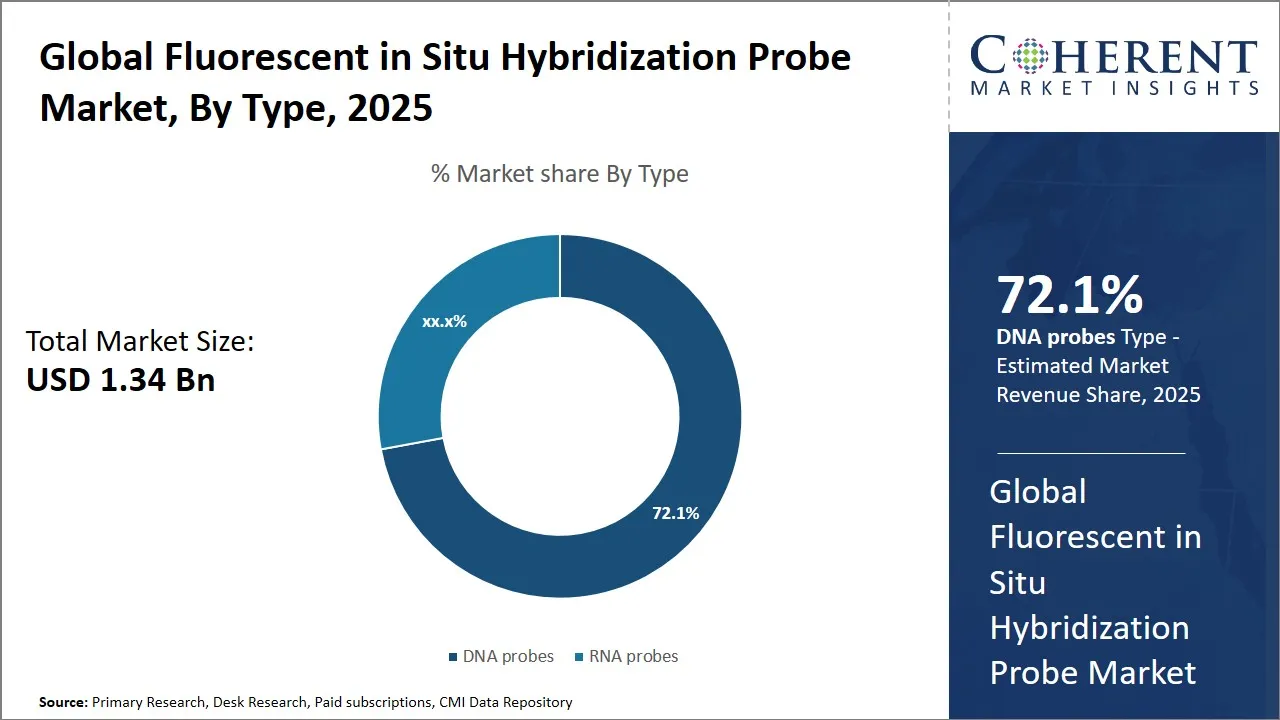
- In 2026, DNA probes are projected to command a dominant 73.1% share of the global fluorescent in situ hybridization probe market.
- The instruments and systems segment is expected to account for the largest portion of the market by product category, holding 43.5% in 2026.
- Among probe formats, locus-specific probes are expected to lead with a 33.5% share in 2026.
- North America is expected to lead the market, holding a share of 41.3% in 2026. Asia Pacific is anticipated to be the fastest-growing region, with a market share of 24.6% in 2026.
Market Overview
Market trends indicate a significant shift towards automation and integration of multiplex fluorescent in situ hybridization (FISH) techniques, enhancing diagnostic accuracy and throughput. Innovations in probe design and fluorescence imaging technologies are improving sensitivity and specificity, facilitating disease diagnosis at earlier stages. Moreover, growing investments in research and development, combined with increasing awareness of genetic testing benefits, are fueling adoption across clinical and research settings, solidifying fluorescent in situ hybridization probes' critical role in precision healthcare advancements.
Current Events and Its Impact
Current Events | Description and its Impact |
Expansion of Genomic Research Funding in Asia Pacific |
|
U.S. FDA Approval of New FISH Assays for Solid Tumors |
|
Segmental Insights
- Current Industry Events of 2026
- Market Size Estimation
- Regional Breakdown
- Competitive Landscape
- Customer Intelligence
- Segmental Analysis
- Pricing Analysis
- Key Market Drivers, Challenges & Future Trends
- Customized Insights Section
Fluorescent in Situ Hybridization Probe Market Insights, By Type - DNA Probes Contribute the Highest Share of the Market Owing to their Versatility and Diagnostic Precision
In the market of global fluorescent in situ hybridization probe, the DNA probes segment will be the dominant player with 73.1% share of 2026 is largely because of its fundamental properties in identifying particular DNA sequences in chromosomes. These probes are also the most specific and sensitive in detecting genetic abnormalities and are therefore essential in research and clinical diagnostics. The scope of application is one of the underlying factors that have led to the eminence of DNA probes.
For example, MetaSystems, a leading developer of microscope imaging and DNA probe solutions, announced the continued rollout of its IVDR-certified XCyting fluorescent in situ hybridization probe DNA probes across Finland, Portugal, Sweden, and Spain. The company also expanded its XCyting On Demand (XOD) program to meet the increasing demand for customized DNA probes, strengthening its position in cytogenetics and molecular diagnostics.
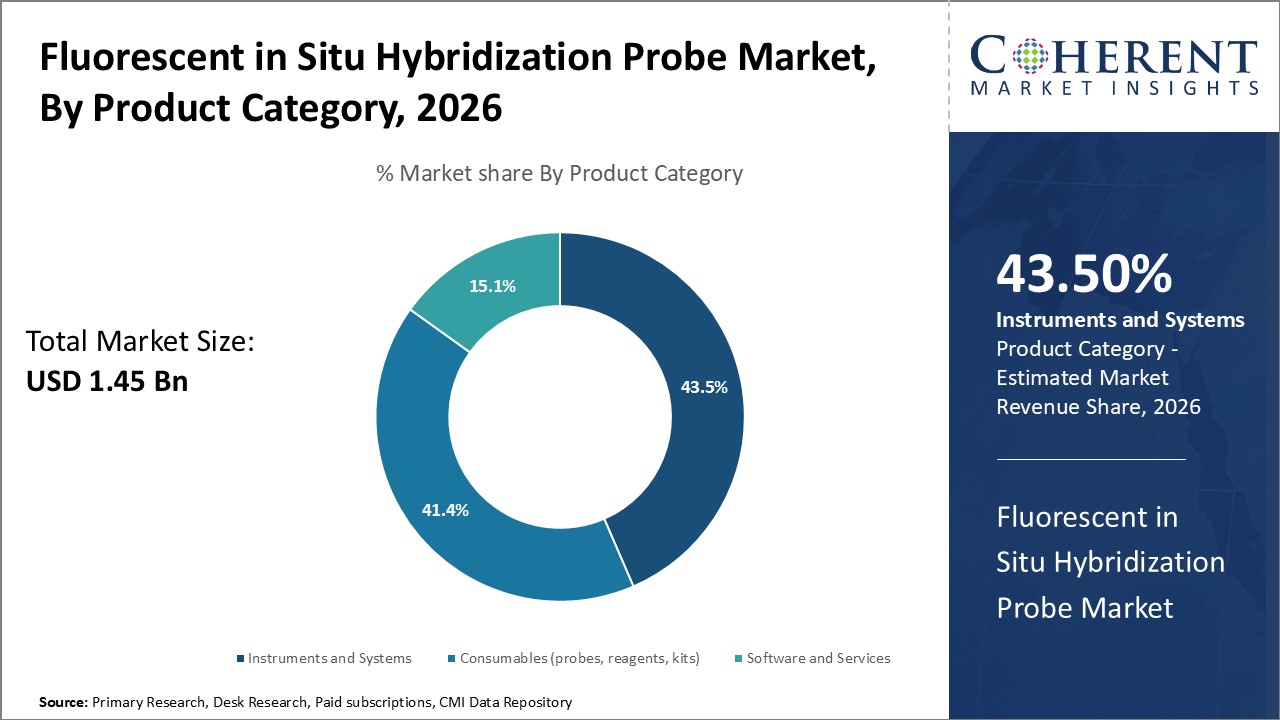
Fluorescent in Situ Hybridization Probe Market Insights, By Product Category - Instruments and Systems Command the Largest Market Share Due to Technological Integration and Diagnostic Efficiency
Instruments and systems category, which constitute the market in fluorescent in situ hybridization probe, is expected to hold the highest share of 43.5% in 2026 due to the nature of the sophisticated instrumentation needed in performing the hybridization procedure accurately. The successful use of FISH techniques depends on high quality microscopes, automated imaging systems, and hybridization platforms and has a direct impact to the accuracy of the diagnostic results and the accuracy of research.
For example, Thermo Fisher Scientific launched enhanced ViewRNA in Situ Hybridization (ISH) DNA and RNA probe assays featuring improved Fast Red and Diaminobenzidine (DAB) staining kits, enabling sharper and more sensitive single-molecule RNA detection for advanced molecular imaging and research applications.
Fluorescent in Situ Hybridization Probe Market Insights, By Probe Format - Locus-Specific Probes Lead the Market Owing to their Precision and Clinical Relevance
Locus-specific probes are the most significant format within the entire fluorescent in situ hybridization probe market with an estimated share of 33.5% in the industry at 2026, considering their essential nature in targeted chromosomal analysis.
These probes have been engineered to hybridize at specific loci on chromosomes enabling the precise detection of microdeletions, duplications and rearrangements involved in different genetic diseases and cancer. Locus-specific probes are especially useful in conditions where it is of great importance to detect changes at the gene or sub-gene level, especially because of their high resolution and specificity.
Regional Insights
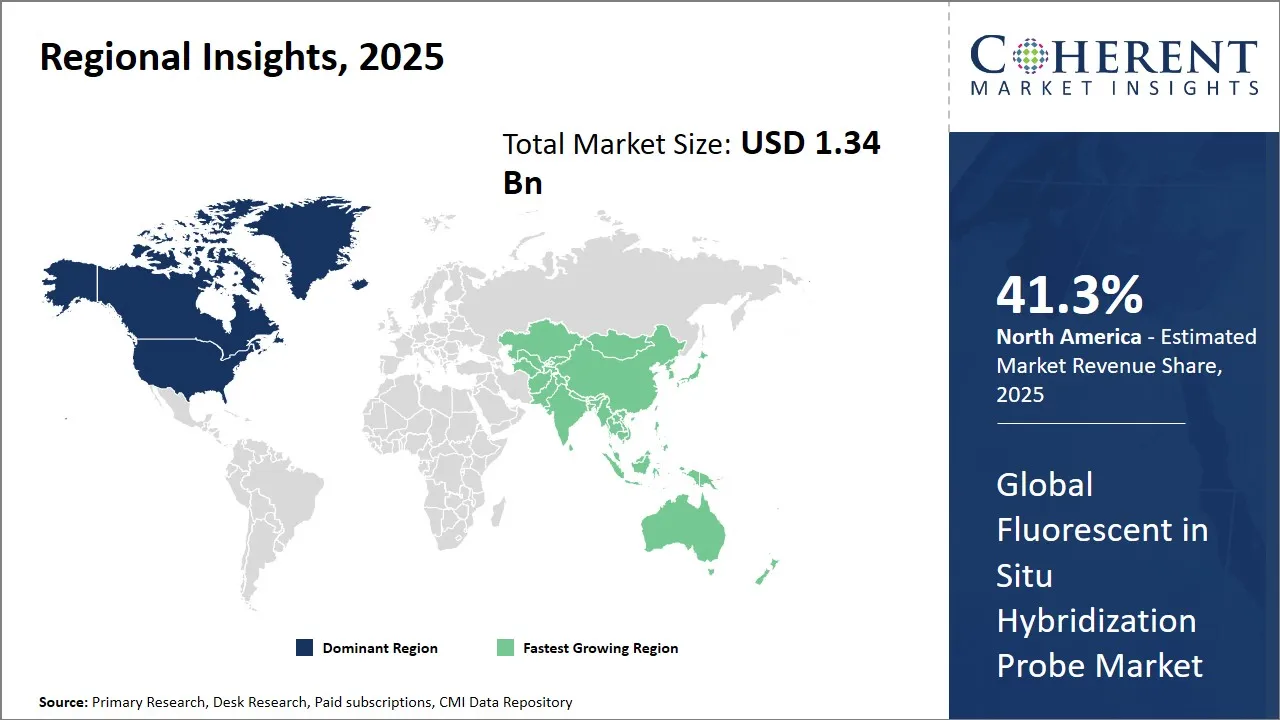
North America Fluorescent in Situ Hybridization Probe Market Analysis and Trends
In North America, the dominance in the global fluorescent in situ hybridization probe market with an estimated share of 41.3% in 2026 is driven by a highly advanced healthcare infrastructure and robust research and development environment. North America dominates as a result of the presence of major biotechnology and pharmaceutical firms, governmental funding of genomic studies and diagnostics of cancer.
For example, PerkinElmer, Inc. is a U.S.-based company that provides analytical instruments, software, and services for the life sciences, diagnostics, and environmental markets. In January 2022, the company announced the launch of its new in-situ hybridization probes, which provide high signal intensity and low background noise for increased sensitivity and accuracy.
Asia Pacific Fluorescent in Situ Hybridization Probe Market Analysis and Trends
Asia Pacific is expected to be the most rapidly growing region as it has the highest share of 24.6% in 2026 in terms of healthcare infrastructure investments, growing diagnostic labs, and rising governmental efforts to stimulate biotechnology development. This region has many countries that are fast adopting precision medicine and customized diagnostics and this increases the demand of FISH probes.
Market penetration has been accelerated by trade dynamics that prefer transfer of technology and partnership with western companies. Key players such as Bioneer Corporation, Myleus Biotechnology, and SBI Life Sciences have played a major role in creating local manufacturing and creating area-specific solutions, which are fueling the market growth.
Fluorescent in Situ Hybridization Probe Market Outlook for Key Countries
U.S. Fluorescent in Situ Hybridization Probe Market Trends
The U.S. fluorescent in situ hybridization probe market is distinguished by the high rate of fluid intake of the newest fluorescent in situ hybridization technologies which is justified by the high level of investment in biotechnological research and clinical diagnostics. Abbott Laboratories and Thermo Fisher scientific have been the major players that dominate due to their continuous innovation and a wide range of products. Government efforts promote the use of cancer genomics and prenatal testing, which further boosts the demand in the market.
In January 2026, Roche, a leading healthcare and diagnostics company, received U.S. FDA approval for its PATHWAY HER2 (4B5) test as the first HER2-ultralow companion diagnostic for metastatic breast cancer, showing strong concordance with HER2 Fluorescent in Situ Hybridization probes and expanding eligibility for trastuzumab deruxtecan therapy.
Germany Fluorescent in Situ Hybridization Probe Market Trends
The fluorescent in situ hybridization probe market of Germany is favorable to fluorescent in situ hybridization probe due to the high presence of pharmaceutical and biotech industry, which is reinforced by intense regulations of its healthcare sector, insisting on accurate diagnostics. Agilent Technologies and QIAGEN are companies that have a large market share and include a wide selection of fluorescent in situ hybridization probes that can be used in oncology and screening genetic disorders. The cooperation between academies and players in the industry leads to a more innovative world which contributes to the need to have more sophisticated diagnostic equipment.
For example, Merck KGaA, a German multinational pharmaceutical, in April 2023, announced the launch of its new RNA- fluorescent in situ hybridization assay, which enables the detection of RNA in tissue samples with high specificity and sensitivity.
China Fluorescent in Situ Hybridization Probe Market Trends
The China had the greatest portion of the Asia Pacific fluorescent in situ hybridization probe market and this was facilitated by its growing R&D efforts and robust government interest in molecular diagnostics.
In April 2023, a study on UroVysion FISH demonstrated a high positive detection rate for carcinomas of non-urothelial origin. The country’s rapid adoption of advanced technologies, rising biotech investments, and growing base of domestic manufacturers continue to drive market expansion.
Japan Fluorescent in Situ Hybridization Probe Market Trends
Japan is still at the forefront in taking high-precision diagnostic technologies in Asia Pacific. It has a vibrant biotech industry with companies, such as Takara Bio and Olympus Corporation, focusing on automation and high-throughput in the development of fluorescent in situ hybridization probes. Favorable legislative regulations and substantial investment in research and development provide the unceasing product development, which serves cancer diagnostics, and genetic disease detection.
In May 2026, researchers from Japan’s National Institute for Basic Biology and collaborating institutions published a safer Fluorescent in Situ Hybridization protocol on bioRxiv, replacing toxic reagents like formalin and methanol with low-toxicity alternatives. The new method maintains high detection sensitivity using Hybridization Chain Reaction (HCR) and Signal Amplification by Exchange Reaction (SABER)-FISH, validated in amphibian and fish cryosections.
End User Feedback and Unmet Needs in the Global Fluorescent in Situ Hybridization Probe Market
- End user comments in the world market of fluorescent in situ hybridization probes indicate that there is a combination of admiration of accuracy and exasperation of the operational limitations. The research institutes and clinics laboratories always emphasize on the high diagnostic accuracy of the technology especially oncology and genetic testing area where speedy and dependable identification of chromosomal anomalies has been invaluable.
- As an example, a large cancer diagnostics laboratory in Europe announced that the turnaround of HER2 gene amplification studies was cut by a wide margin after adopting automated fluorescent in situ hybridization processes that show how increased automation and probe stability are heightening customer satisfaction.
- However, high reagent costs, poor multiplexing and skilled personnel are still experienced by the users. The unusual probe sensitivity gave unequal results in a Southeast Asian hospital and led to delays and additional QC expenditures. This indicates the potential unfulfilled demands of low-priced kits, enhanced automation, and the simplification of workflow.
Market Players, Key Developments, and Competitive Intelligence
Key Developments
- In April 2025, Empire Genomics, a Biocare Medical company known for its molecular diagnostics solutions, partnered with BioDot, a leader in automated dispensing systems, to launch the first pre-optimized hematology fluorescent in situ hybridization probe panels and controls for the CellWriter’s platform.
- In January 2025, Molecular Instruments launched the Hybridization Chain Reaction (HCR) Gold and HCR Pro product lines, expanding its imaging platform for high-resolution RNA and protein visualization through fluorescence and chromogenic in situ hybridization assays.
- In January 2025, Leica Biosystems, a global leader in cancer diagnostics and automated staining systems, partnered with Molecular Instruments, the inventor of Hybridization Chain Reaction (HCR) imaging technology, to integrate the HCR Pro RNA-In Situ Hybridization (RNA-ISH) assay into Leica’s BOND RX and BOND RXm research staining platforms.
- In January 2025, bioMérieux, a global leader in in-vitro diagnostics, acquired SpinChip Diagnostics ASA for USD 130 million to enhance its point-of-care testing portfolio and support integration with Fluorescent In Situ Hybridization probe-based diagnostic platforms, offering rapid immunoassay results from whole blood in just 10 minutes, with CE marking under IVDR expected by the end of 2025.
Top Strategies Followed by Global Fluorescent in Situ Hybridization Probe Market Players
- The leading industry players use huge investments in research and development to develop high-performance fluorescent in situ hybridization probes capable of addressing the changing needs of clinical diagnostics, oncology, and genetic research. These companies make their products more sensitive, specific and multiplexing, which remains in the industry through their heavy emphasis on innovation, standards that keep the products in the industry. Also, big players usually seek strategic alliances and relationships with large biotechnology companies, hospitals, and original equipment manufacturers (OEMs).
- In July 2024, Agilent Technologies, a major player in analytical and life sciences, acquired BioVectra for USD 925 million to expand its gene editing and oligonucleotide production capabilities, supporting future development of fluorescent in situ hybridization probe-related molecular and gene expression technologies for advanced genomic research.
- Mid-level players in the fluorescent in situ hybridization probe market choose a more moderate strategy and are concerned with creating cost-effective solutions without having to sacrifice quality. The customers who are targeted by these companies are mainly those who are price sensitive such as smaller diagnostic laboratories, and academic institutions where budget constraints compel them to seek affordable but quality fluorescent in situ hybridization probe.
- In April 2023, researchers at the University of Montpellier, France introduced High-Throughput Single-Molecule Fluorescent In Situ Hybridization (HT-smFISH), a cost-effective and scalable technique that enables imaging of hundreds to thousands of endogenous RNA molecules in 96-well plates, advancing large-scale RNA analysis with greater precision and efficiency.
- Small-scale players, limited in resources but using a different niche in the global fluorescent in situ hybridization probe market the focus on specialization and innovativeness. Several of these companies specialize in creating probes that are very specialized like custom probes to very rare genetic markers or multiplex panels that have a niche application as this gives them the opportunity to satisfy the exact requirements of a smaller, yet extremely specific market.
- In April 2021, Bio-Techne Corporation, a global leader in life science reagents and diagnostic solutions, announced the commercial launch of DNAscope in situ hybridization assays, expanding its Advanced Cell Diagnostics (ACD) RNAscope technology to DNA detection.
Market Report Scope
Fluorescent in Situ Hybridization Probe Market Report Coverage
| Report Coverage | Details | ||
|---|---|---|---|
| Base Year: | 2025 | Market Size in 2026: | USD 1.45 Bn |
| Historical Data for: | 2020 To 2024 | Forecast Period: | 2026 To 2033 |
| Forecast Period 2026 to 2033 CAGR: | 8.1% | 2033 Value Projection: | USD 2.50 Bn |
| Geographies covered: |
| ||
| Segments covered: |
| ||
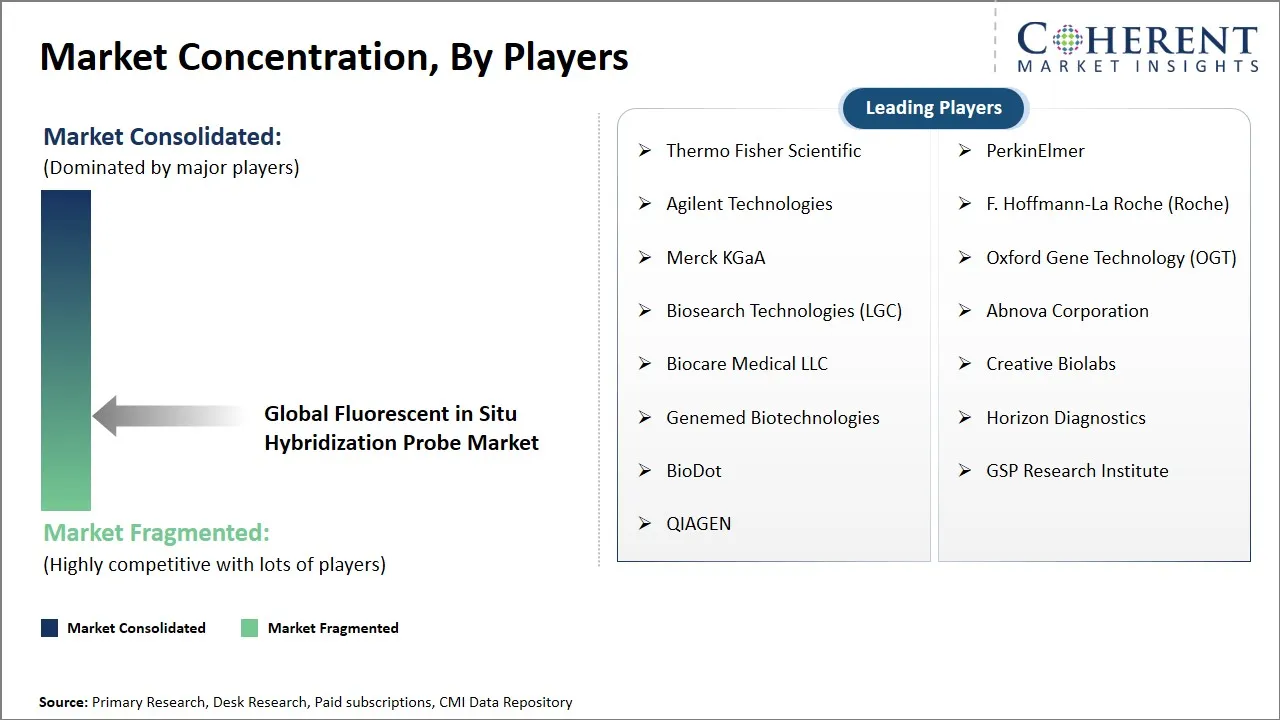
| Companies covered: | Thermo Fisher Scientific, PerkinElmer, Agilent Technologies, F. Hoffmann-La Roche (Roche), Merck KGaA, Oxford Gene Technology (OGT), Biosearch Technologies (LGC), Abnova Corporation, Biocare Medical LLC, Creative Biolabs, Genemed Biotechnologies, Horizon Diagnostics, BioDot, GSP Research Institute, and QIAGEN | ||
| Growth Drivers: |
| ||
| Restraints & Challenges: |
| ||
Fluorescent in Situ Hybridization Probe Market Dynamics
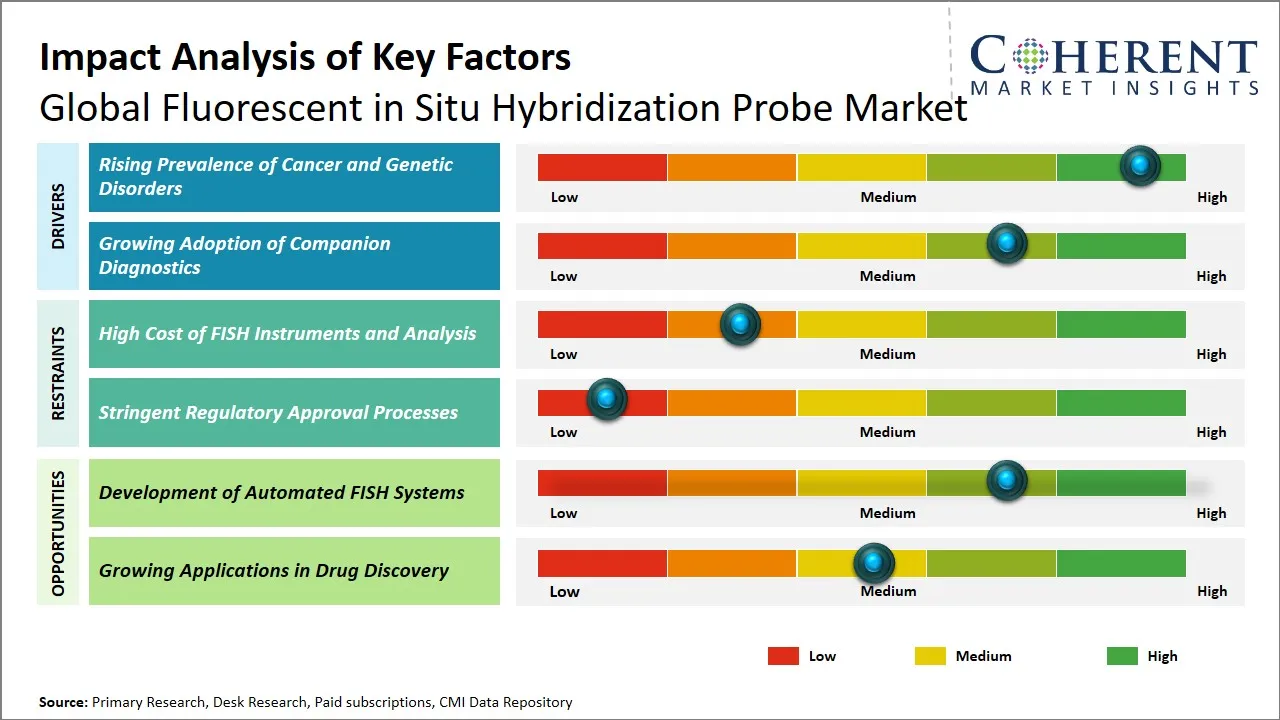
Fluorescent in Situ Hybridization Probe Market Driver - Rising Prevalence of Cancer and Genetic Disorders
Fluorescent in situ hybridization probes are largely being driven by the rising rates of cancer and genetic diseases that are becoming more common throughout the world and these are widely used in the early diagnosis and tailor-made treatment regimes. The fluorescent in situ hybridization technology allows the specific DNA sequences in the chromosomes to be visualized accurately and this is vital in the detection of chromosomal abnormalities in different cancers like leukemia, breast cancer and lung cancer, among others. Moreover, human genetics disorders associated with mutations and structural chromosomal abnormalities are advantageous to the FISH which has the ability to identify micro deletions, duplications and translocations which otherwise cannot be identified using conventional diagnostic methods.
In May 2025, researchers at the National Institutes of Health, a U.S. government agency leading medical research, reported that the incidence of 14 cancer types has increased among people under 50, including breast and colorectal cancers, while 19 other types such as lung and prostate cancers have declined. The analysis, published in Cancer Discovery, used data from the CDC’s U.S. Cancer Statistics and national death records, showing that although cancer incidence has risen in younger adults, overall cancer death rates have not increased.
Fluorescent in Situ Hybridization Probe Market Opportunity - Development of Automated FISH Systems
The fluorescent in situ hybridization probe market has the great opportunity of growth due to the creation and incorporation of the automated fluorescent in situ hybridization systems. Conventional FISH technologies are also labor intensive, time consuming and require the use of skilled technicians, thus making the results variable and limiting throughput. The development of automated FISH systems is intended to simplify the workflow by minimizing the number of people to work with, improving the reproducibility of results, and shortening the time to analyze them. Such systems may include robotics, high-resolution imaging, and predictive software technology that relies on artificial intelligence to ensure that the hybridized probes are accurately hybridized, washed, and detect the signal to reduce human error and enhance diagnostic accuracy.
For example, BioDot, a leading U.S. provider of low-volume dispensing and automation systems for diagnostic development, introduced an automated, non-contact dropping process for Fluorescence in Situ Hybridization (FISH) applications. The innovation automates metaphase spread preparation and probe application using its BioJet dispensing technology, capable of jetting droplets as small as 10 nanoliters.
Analyst Opinion (Expert Opinion)
- The fluorescent in situ hybridization probe market is experiencing the gradual growth due to the growing uses in cancer diagnostics, genetic testing, and precision medicine. The speed and accuracy of diagnostic processes are being improved by constant technological improvements, including automated imaging technologies, multiplex fluorescent in situ hybridization methods and integration with AI-based image analysis. The further increase of adoption in clinical and research environments is enhanced by a strong regulatory support of molecular diagnostics and increased awareness of early disease detection. The cost of instruments, however, is high, skilled personalities are required, and protocol standardization continues to be problems. Companion diagnostic opportunities are being created and increasing need of tailor-made probes, such as in the fields of oncology and infectious disease research.
- The last few years have witnessed impressive industry partnerships and international festivals that have influenced the future of the industry. The Annual Meeting of the American Society of Human Genetics (ASHG), the European Cytogenetics Conference and the Molecular Medicine Tri-Conference have played a critical role in the discussion of new fluorescent in situ hybridization technologies and regulatory harmonization. Efforts such as the collaboration between Leica Biosystems and the Molecular Instruments in incorporating the HCR RNA-ISH integration, the upgrades in ViewRNA ISH assays by Thermo Fisher, and the DNAscope DNA ISH technology by Bio-Techne need to be mentioned as the efforts to move the industry toward the direction of higher sensitivity and automation.
Speak to the analyst
Want personalized insights?
Take the findings above to one of our principal consultants, or have the report rebuilt around the segments, geographies and competitors you actually track.
Market Segmentation
- Type Insights (Revenue, USD Bn, 2021 - 2033)
- DNA probes
- RNA probes
- Product Category Insights (Revenue, USD Bn, 2021 - 2033)
- Instruments and Systems
- Consumables (probes, reagents, kits)
- Software and Services
- Probe Format Insights (Revenue, USD Bn, 2021 - 2033)
- Locus-specific probes
- Centromeric/Alphoid/Repeat probes
- Whole chromosome (painting) probes
- Multiplex/combinatorial probes
- Technology Insights (Revenue, USD Bn, 2021 - 2033)
- Q-FISH (quantitative FISH)
- Flow-FISH
- Single-color FISH
- Multiplex FISH (mFISH/spectral FISH)
- Other hybrid techniques
- Application Insights (Revenue, USD Bn, 2021 - 2033)
- Cancer diagnostics and monitoring
- Genetic disorder detection and cytogenetics
- Prenatal and postnatal screening
- Infectious disease and pathogen detection
- Research (gene expression and cell biology)
- Others
- End User Insights (Revenue, USD Bn, 2021 - 2033)
- Clinical diagnostic laboratories and hospitals
- Academic and research institutions
- Pharmaceutical and biotechnology companies
- Contract Research Organizations (CROs)
- Reference and specialized genetics laboratories
- Regional Insights (Revenue, USD Bn, 2021 - 2033)
- North America
- U.S.
- Canada
- Latin America
- Brazil
- Argentina
- Mexico
- Rest of Latin America
- Europe
- Germany
- U.K.
- Spain
- France
- Italy
- Russia
- Rest of Europe
- Asia Pacific
- China
- India
- Japan
- Australia
- South Korea
- ASEAN
- Rest of Asia Pacific
- Middle East
- GCC Countries
- Israel
- Rest of Middle East
- Africa
- South Africa
- North Africa
- Central Africa
- North America
- Key Players Insights
- Thermo Fisher Scientific
- PerkinElmer
- Agilent Technologies
- Hoffmann-La Roche (Roche)
- Merck KGaA
- Oxford Gene Technology (OGT)
- Biosearch Technologies (LGC)
- Abnova Corporation
- Biocare Medical LLC
- Creative Biolabs
- Genemed Biotechnologies
- Horizon Diagnostics
- BioDot
- GSP Research Institute
- QIAGEN
Sources
Primary Research Interviews
- Industry Stakeholders list
- Clinical diagnostics lab heads
- Probe and reagent development R&D heads
- End-users list
- Pathologists in cytogenetics laboratories
- Academic molecular biology researchers
Government and International Databases
- NCBI
- RefSeq (NCBI)
- Gene Expression Omnibus (GEO)
- EMBL-EBI Databases
- World Health Organization (WHO) Health Genomics Data
- U.S. National Center for Biotechnology Information
Trade Publications
- Nature Methods
- Genome Technology
- Cytogenetics and Genome Research
- The Scientist
- Genetic Engineering & Biotechnology News (GEN)
- LabPulse
Academic Journals
- Genes & Development
- Genome Research
- Cell
- Nature Genetics
- Human Molecular Genetics
- Cytogenetics and Cell Genetics
Reputable Newspapers
- The New York Times (Health/Science)
- The Guardian (Science Section)
- Financial Times (Health & Biotech Coverage)
- The Wall Street Journal (Science/Health Sections)
- Nature News
- Science News
Industry Associations
- American Society of Human Genetics (ASHG)
- European Cytogenetics Association
- International Society for Analytical Cytology
- American Association for Clinical Chemistry (AACC)
- Human Genome Organisation (HUGO)
- European Molecular Biology Organization (EMBO)
Public Domain Resources
- iFISH Public Probe Repository
- GenBank
- UCSC Genome Browser
- bioRxiv/medRxiv
Proprietary Elements
- CMI Data Analytics Tool: Proprietary analytics tool to analyze real-time market trends, consumer behavior, and technology adoption in market
- Proprietary CMI Existing Repository of Information for Last 8 Years
Get access to 250+ pages report
Every segment, forecast, competitor profile and data table behind the analysis above — available for instant download.
- ESOMAR Member
- ISO 9001:2015 Certified
- D-U-N-S Registered
- GDPR & CCPA Compliant
Missing comfort of reading report in your local language? Find your preferred language:
Transform your Strategy with Exclusive Trending Reports
Frequently Asked Questions
The global fluorescent in situ hybridization probe market is estimated to be valued at USD 1.45 Bn in 2026 and is expected to reach USD 2.50 Bn by 2033.
The CAGR of global fluorescent in situ hybridization probe market is projected to be 8.1% from 2026 to 2033.
Rising prevalence of cancer and genetic disorders and growing adoption of companion diagnostics are the major factors driving the growth of the global fluorescent in situ hybridization probe market.
High cost of fish instruments and analysis and stringent regulatory approval processes are the major factors hampering the growth of the global fluorescent in situ hybridization probe market.
In terms of type, DNA probes are estimated to dominate the market revenue share in 2026.
Thermo Fisher Scientific, PerkinElmer, Agilent Technologies, F. Hoffmann-La Roche (Roche), Merck KGaA, Oxford Gene Technology (OGT), Biosearch Technologies (LGC), Abnova Corporation, Biocare Medical LLC, Creative Biolabs, Genemed Biotechnologies, Horizon Diagnostics, BioDot, GSP Research Institute, and QIAGEN are the major players.
North America is expected to lead the global fluorescent in situ hybridization probe market in 2026.