

Global Food Testing Market Size and Forecast – 2026-2033
The global food testing market is estimated to be valued at USD 28.00 Bn in 2026 and is expected to reach USD 48.92 Bn by 2033, exhibiting a compound annual growth rate (CAGR) of 8.3% from 2026 to 2033.
Key Takeaways of the Global Food Testing Market
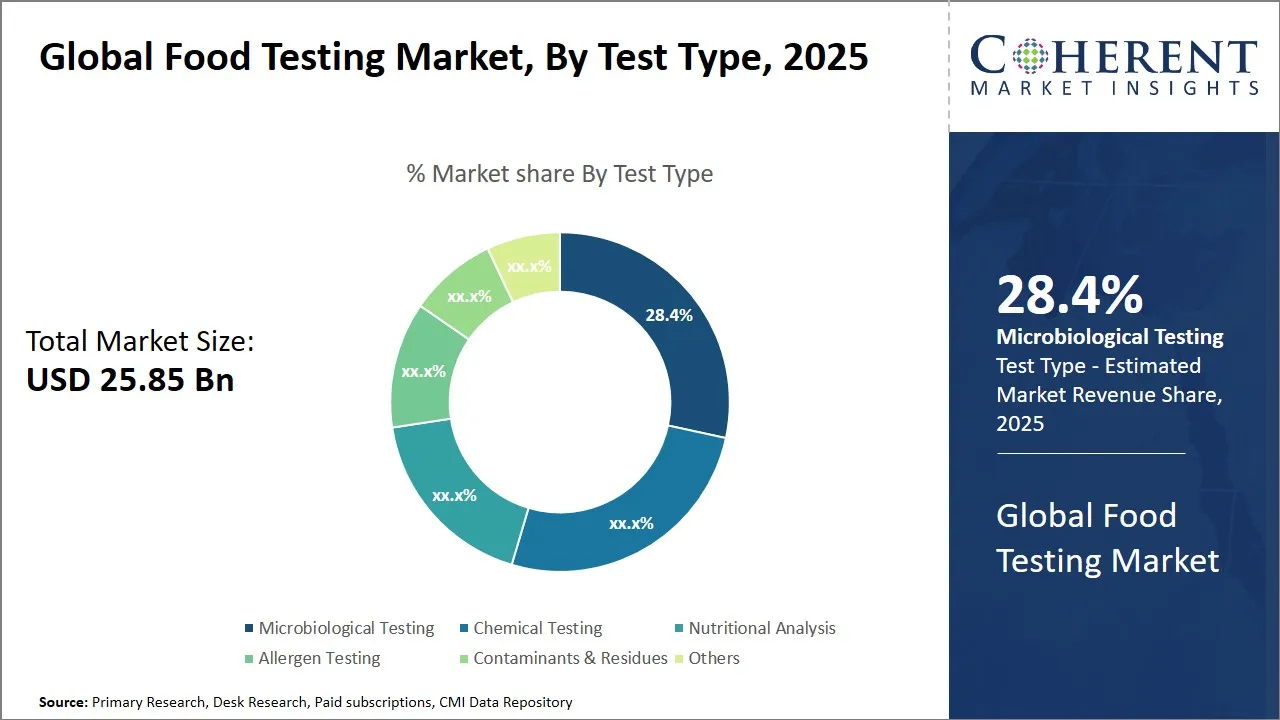
- The microbiological testing segment leads the market holding an estimated share of 29.4 % in 2026.
- The molecular methods segment dominates holding an estimated share of 31.3 % in 2026.
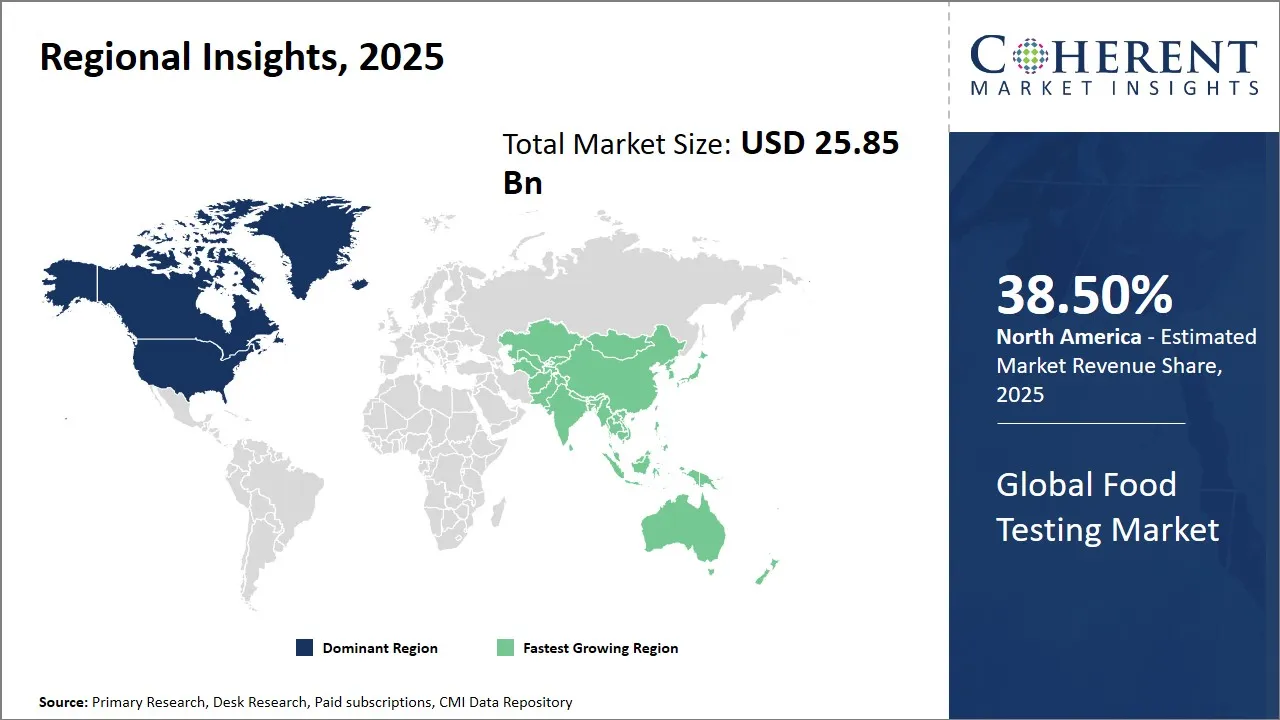
- North America is estimated to lead the market with a share of 38.5 % in 2026.
- Asia Pacific, holding a share of 20.5 % in 2026, is projected to be the fastest growing region.
Market Overview
Market trends indicate a growing adoption of rapid and automated food testing methods, such as biosensors and molecular techniques, enabling faster and more accurate detection of contaminants. Additionally, there is a significant shift towards blockchain integration for traceability and transparency in food safety. Furthermore, the rising focus on organic and clean-label products is prompting manufacturers to enhance testing protocols, bolstering the demand for sophisticated food testing solutions globally.
Current Events and Its Impact
Current Events | Description and its Impact |
Geopolitical and Trade Developments |
|
Economic and Infrastructure Trends |
|
Segmental Insights
- Current Industry Events of 2026
- Market Size Estimation
- Regional Breakdown
- Competitive Landscape
- Customer Intelligence
- Segmental Analysis
- Pricing Analysis
- Key Market Drivers, Challenges & Future Trends
- Customized Insights Section
Global Food Testing Market Insights, by Test Type – Microbiological Testing Segment Lead Due to Rising Food Safety Concerns and Regulatory Mandates
The microbiological testing segment hold the highest share of 29.4% in the global food testing market in 2026. As foodborne illnesses remain a persistent threat, governments and regulatory bodies worldwide have intensified stringent safety regulations that require thorough screening for harmful microorganisms such as Salmonella, E. coli, Listeria, and Campylobacter in food products across the supply chain. This regulatory landscape is a critical driver for microbiological testing adoption, as food manufacturers must comply with national and international standards such as the U.S. FDA's FSMA (Food Safety Modernization Act), EU food safety laws, and Codex Alimentarius guidelines. Also, with the rise of social media and health-conscious lifestyles, consumers are increasingly scrutinizing food quality and pushing food producers to ensure products are free from microbial contamination. This shift in consumer behavior forces companies to adopt more rigorous microbiological testing regimes to maintain brand trust and market reputation.
Technological advancements in microbiological testing methods, including rapid testing kits and automated detection systems, have improved turnaround times and accuracy, further encouraging extensive use of this test category. Moreover, the extension of testing beyond raw materials to finished products and packaging materials enhances food safety management holistically. The growth of the global food industry, characterized by highly complex and extended supply chains involving multiple geographic regions, also reinforces the need for robust microbiological testing. Extended transportation and storage conditions may increase microbial risks, prompting continuous testing at different processing stages.
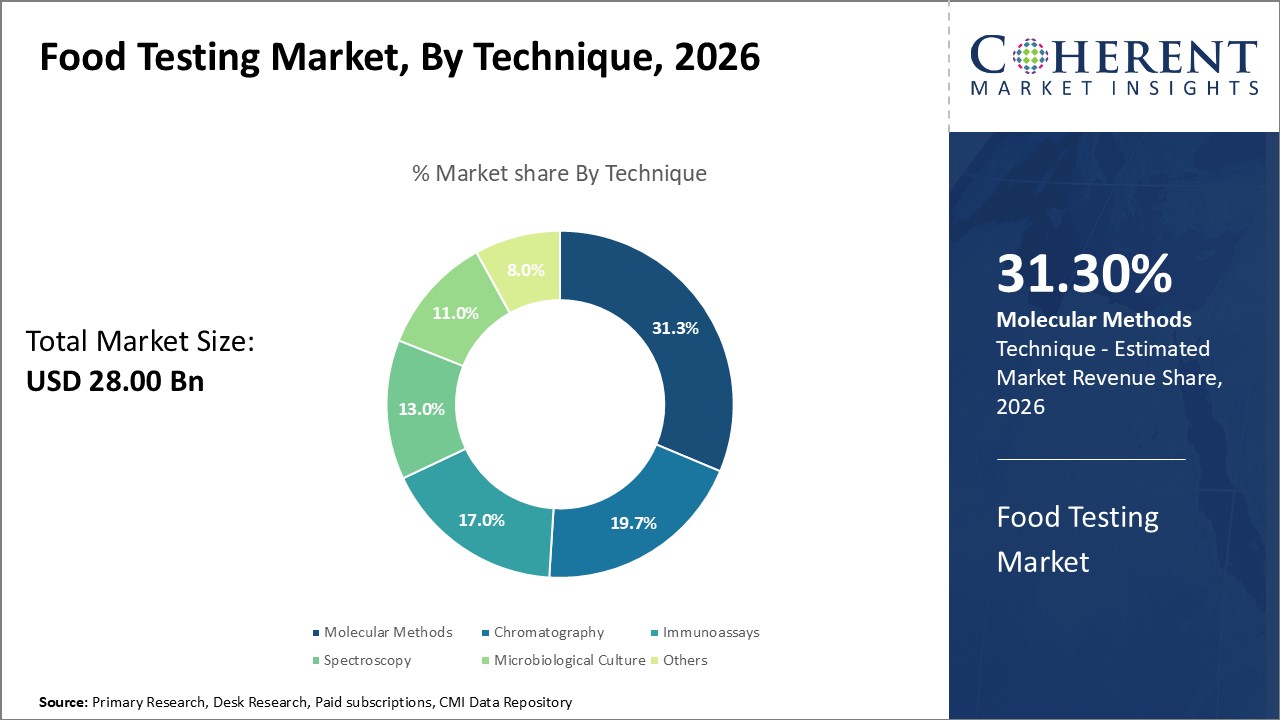
Global Food Testing Market Insights, by Technique – Molecular Methods Segment Dominate the Market Due to their Precision, Speed, and Adaptability in Detecting Foodborne Hazards
The molecular methods segment is projected to account for 31.3% share in 2026. Molecular techniques, which include Polymerase Chain Reaction (PCR), real-time PCR, and Next-Generation Sequencing (NGS), have revolutionized food testing by enabling highly sensitive detection and quantification of pathogens, allergens, and Genetically Modified Organisms (GMOs) even at trace levels. Unlike traditional culture-based methods, which can take several days to provide results, molecular methods can deliver answers within hours, facilitating timely decision-making in food processing and distribution. Moreover, molecular methods offer high specificity, reducing false positives and negatives, which enhances overall testing reliability. The ability to simultaneously detect multiple pathogens or allergens via multiplex PCR assays also contributes to operational efficiency and cost-effectiveness.
The adaptability of molecular techniques to various food matrices—ranging from dairy and meat to processed and fresh produce—renders them highly valuable across diverse sectors within the food industry. Additionally, advances in portable and user-friendly molecular testing devices have expanded their adoption in on-site testing environments, such as farms, manufacturing plants, and distribution centers, enabling more proactive quality control. Regulatory agencies worldwide increasingly recognize and recommend molecular testing methods for compliance, especially in the context of pathogen detection and GMO analysis. Furthermore, the rising trend of personalized nutrition and clean-label products drives the demand for molecular-level testing to verify the authenticity and safety of ingredient claims.
Impact of AI on the Food Testing Market
Artificial Intelligence (AI) is reshaping the global food testing market by enhancing both the speed and accuracy of analyses. Machine-learning algorithms can rapidly interpret complex datasets from PCR, Next-Generation Sequencing (NGS), chromatography, and spectroscopy, identifying contamination patterns that traditional methods might miss. AI-driven predictive analytics also help laboratories anticipate equipment maintenance needs and optimize testing workflows, reducing turnaround time and operational costs. In regulatory environments where timely results are critical—for example, during recalls or outbreak investigations—AI-enabled automation provides a competitive edge by shortening the time from sample receipt to actionable insight.
A notable example is Eurofins Scientific’s deployment of AI-based image recognition and data-processing tools in its microbiological testing laboratories. The system automatically counts colonies and flags anomalies, allowing technicians to focus on validation rather than manual counting, which improves both accuracy and throughput.
Regional Insights
North America Food Testing Market Analysis and Trends
North America region is projected to lead the market with a 38.5% share in 2026, driven by a highly developed food production ecosystem, stringent regulatory frameworks, and advanced technological adoption. The U.S., being a major player, has a robust regulatory environment led by the U.S. Food and Drug Administration (FDA) and the U.S. Department of Agriculture (USDA), which impose rigorous food safety standards. This has created high demand for sophisticated testing solutions including microbiological, chemical, and allergen testing.
Moreover, North America houses several leading food testing service providers and instrumentation manufacturers such as SGS, Eurofins Scientific, and Thermo Fisher Scientific, which continuously innovate to meet evolving market demands. The region’s well-established supply chain, strong collaborations between the government and private sectors, and intensive research & development activities further cement its leading position. Trade dynamics also favor North America with its extensive export of food products requiring compliance with international testing standards.
Asia Pacific Food Testing Market Analysis and Trends
The Asia Pacific region, holding an estimated share of 20.5% in 2026, exhibits the fastest growth in the food testing market, propelled by a rapidly expanding food manufacturing base, rising consumer awareness regarding food safety, and increasing government interventions. Countries like China and India have introduced stringent food safety laws paralleling global standards, stimulating demand for reliable food testing services. The presence of a vast agricultural sector alongside booming processed food industries in the region fuels this growth.
Additionally, rapid urbanization and changing dietary preferences increase the consumption of packaged foods, which require rigorous testing. Key companies including Bureau Veritas, Intertek Group, and SGS have scaled their operations in the region to capitalize on market potential. The Asia Pacific also benefits from evolving trade policies that promote food exports, especially to Western countries, necessitating compliance through comprehensive testing solutions.
Global Food Testing Market Outlook for Key Countries
U.S. Food Testing Market Analysis and Trends
The U.S. food testing market is characterized by advanced infrastructure and wide adoption of cutting-edge technologies like mass spectrometry and PCR-based pathogen detection. The rigorous enforcement of food safety standards by the FDA and USDA compels food manufacturers to invest heavily in testing solutions. Major players such as Eurofins Scientific and Thermo Fisher Scientific maintain substantial operations here, providing comprehensive testing services and analytical instruments. The country’s dominance in food exports also creates sustained the demand for quality control and assurance services.
China Food Testing Market Analysis and Trends
China food testing market is expanding rapidly due to increasing government emphasis on food safety following past health scandals. Regulatory bodies such as the China Food and Drug Administration (CFDA) have strengthened oversight, encouraging widespread implementation of food testing protocols. Large multinational companies including SGS and Bureau Veritas have increased their presence, offering tailored services suitable for local food industries. Additionally, ongoing growth in processed food production necessitates reliable testing for contaminants and adulterants, making China a critical market in Asia Pacific’s growth trajectory.
Germany Food Testing Market Analysis and Trends
Germany continues to lead the Europe food testing market, supported by rigorous food safety laws and a strong regulatory framework under the Federal Ministry of Food and Agriculture. The country’s significant food processing industry relies heavily on advanced testing to comply with EU standards. Companies like Eurofins Scientific, headquartered in Europe, and other local firms contribute to comprehensive testing solutions ranging from microbiological to chemical analyses. Germany's extensive export activities within the EU also reinforce the importance of food testing services here.
India Food Testing Market Analysis and Trends
India is witnessing noteworthy growth driven by increasing consumer focus on food safety, government campaigns, and the implementation of the Food Safety and Standards Authority of India (FSSAI) regulations. The burgeoning processed food industry and rise in packaged food consumption demand reliable testing methods for contaminants and authenticity. Many global firms such as Intertek and SGS have expanded their footprint in India, establishing laboratories and service centers to support local and export-oriented industries. Additionally, government initiatives aiding the formalization of the food sector create new avenues for the market expansion.
Brazil Food Testing Market Analysis and Trends
Brazil food testing market is influenced by its status as one of the world’s largest food exporters, especially in meat and agricultural products. Strict domestic regulations combined with the requirement to meet international standards necessitate intensive food testing throughout the supply chain. Leading food testing and certification companies, including Bureau Veritas and local specialized firms, provide extensive testing services to support both domestic consumption and exports. The country’s growing focus on traceability and sustainability within the food industry further boosts the demand for comprehensive food testing solutions.
Market Players, Key Development, and Competitive Intelligence
Key Developments
- On September 03, 2025, Mérieux NutriSciences, a global leader in food safety, quality, and sustainability, announced the completion of its worldwide acquisition of Bureau Veritas’ food testing activities, marking the successful integration of all countries included in the transaction.
- In June 2025, Intertek, a leading Total Quality Assurance provider to industries worldwide, announced the launch of Intertek AI2, the world’s first independent end-to-end AI assurance program enabling organizations to power ahead with smarter, safer, trusted AI solutions.
- In June 2025, SGS announced its partnership with The PLEDGE on Food Waste, which is the leading global certification program that helps food service providers systematically reduce food waste. As an official certification body for The PLEDGE on Food Waste, the company will deliver independent audits and certification services to hospitality, catering and food service businesses aiming to reduce environmental impact, optimize operations and demonstrate credible sustainability leadership.
- In October 2024, SGS North America (SGS) expanded its food safety and quality assurance testing capacity for the North American food and nutraceutical markets. This expansion is marked by a move into a larger, state-of-the art facility in Fairfield (New Jersey, U.S.) to better serve client needs.
Top Strategies Followed by Food Testing Market Players
- Established market leaders heavily invest in research and development (R&D) to innovate high-performance products that meet the evolving demands of food safety regulations and consumer expectations.
- Thermo Fisher Scientific expanded its SureTect PCR pathogen-detection platform in February 2025, through R&D, adding AI-driven data analytics to shorten result times and improve sensitivity.
- Mid-level players in the food testing market tend to focus on offering cost-effective solutions that balance quality with affordability, catering primarily to price-sensitive customers such as small food manufacturers and regional quality control labs.
- Neogen Corporation introduced its Reveal 3-D allergen test kits in Asia Pacific at a lower price point than comparable Western kits, while maintaining globally recognized certifications. This allowed Neogen to capture business from small and medium food processors seeking affordable but reliable allergen screening.
- Small-scale players, including startups and regional manufacturers, differentiate themselves by specializing in innovative or highly specialized testing products that address unique market needs.
- Romer Labs concentrates on mycotoxin and allergen testing, offering proprietary ELISA kits and on-site rapid tests.
Market Report Scope
Food Testing Market Report Coverage
| Report Coverage | Details | ||
|---|---|---|---|
| Base Year: | 2025 | Market Size in 2026: | USD 28.00 Bn |
| Historical Data for: | 2020 To 2024 | Forecast Period: | 2026 To 2033 |
| Forecast Period 2026 to 2033 CAGR: | 8.3% | 2033 Value Projection: | USD 48.92 Bn |
| Geographies covered: |
| ||
| Segments covered: |
| ||
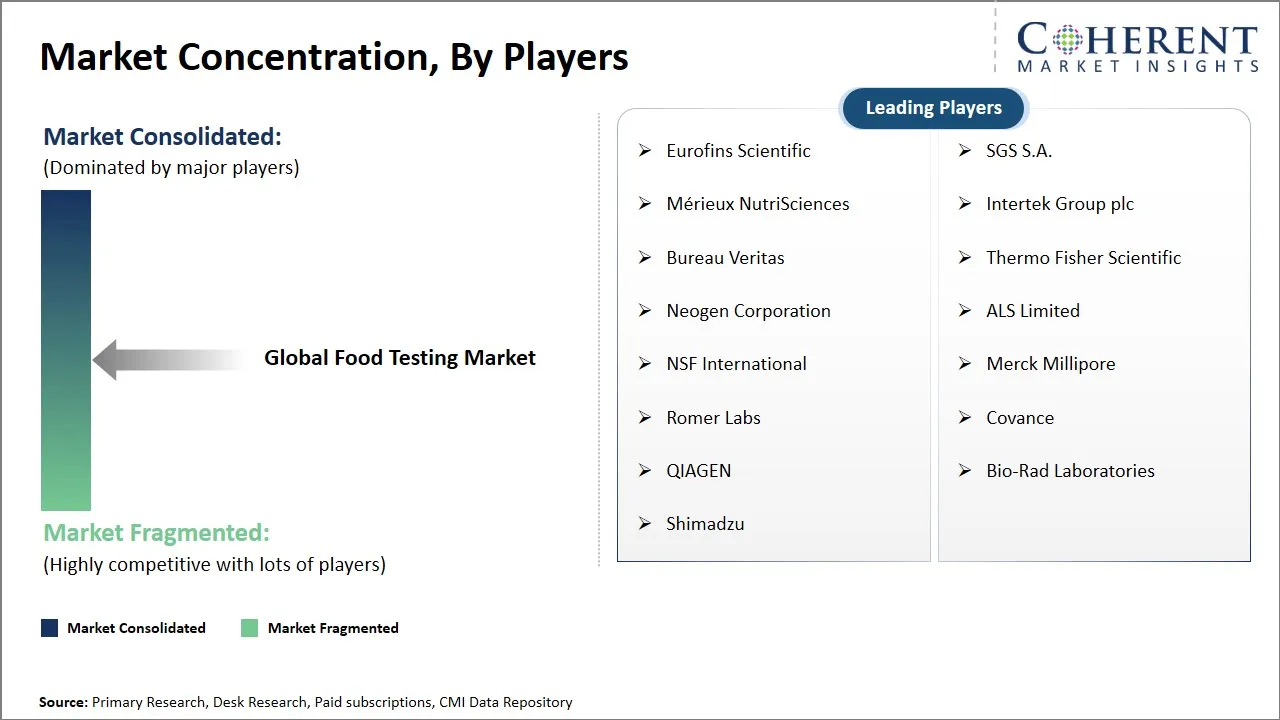
| Companies covered: | Eurofins Scientific, SGS S.A., Mérieux NutriSciences, Intertek Group plc, Bureau Veritas, Thermo Fisher Scientific, Neogen Corporation, ALS Limited, NSF International, Merck Millipore, Romer Labs, Covance, QIAGEN, Bio-Rad Laboratories, and Shimadzu | ||
| Growth Drivers: |
| ||
| Restraints & Challenges: |
| ||
Market Dynamics
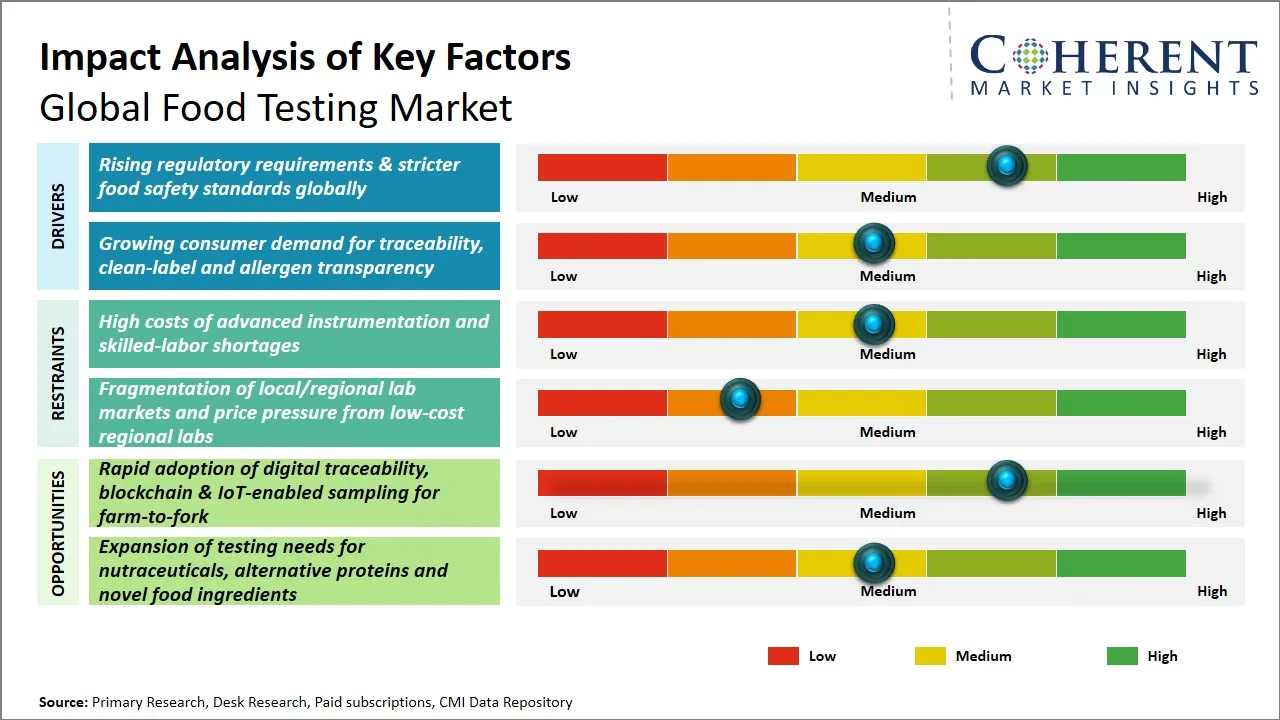
Global Food Testing Market Driver – Rising Regulatory Requirements & Stricter Food Safety Standards Globally
Governments and international agencies are increasingly prioritizing consumer health and safety by implementing rigorous regulations that mandate comprehensive testing and certification of food products at every stage of the supply chain. For instance, the U.S. Food Safety Modernization Act (FSMA) Produce Safety Rule and its recent Traceability Final Rule updates (2023–2024) mandate more frequent and comprehensive testing for pathogens such as Salmonella and E. coli across fresh-produce supply chains. These regulations aim to minimize the risk of contamination, adulteration, and the presence of harmful substances, compelling food manufacturers and suppliers to invest heavily in advanced testing methodologies and technologies. Additionally, the rise in cross-border food trade intensifies the need for compliance with diverse regional standards, pushing companies to adopt robust quality assurance processes.
Global Food Testing Market Opportunity – Rapid Adoption of Digital Traceability, Blockchain, and IoT-Enabled Sampling for Farm-to-Fork Transparency
The global food testing market is poised to benefit significantly from the rapid adoption of advanced digital traceability solutions, blockchain technology, and IoT-enabled sampling systems that enhance farm-to-fork transparency. Increasing consumer demand for food safety and authenticity has driven stakeholders across the supply chain—from farmers and processors to retailers—to integrate these innovative technologies. Digital traceability platforms enable real-time monitoring and detailed record-keeping of food products, providing verifiable data on origin, handling, and quality parameters.
Blockchain’s immutable ledger technology further strengthens trust by securely recording every transaction and movement of food items, reducing risks associated with food fraud and contamination. Meanwhile, IoT-enabled devices facilitate continuous sampling and monitoring of environmental conditions such as temperature, humidity, and microbial levels during production, storage, and transportation. Walmart has partnered with IBM Food Trust Blockchain platform for leafy greens and other high-risk products. Suppliers are required to upload testing and traceability data to the Blockchain, enabling near real-time farm-to-fork visibility. Moreover, the ability to provide transparent information to end consumers aligns with evolving regulatory frameworks and shifting preferences toward sustainable and safe food consumption, underscoring a critical growth avenue within the global food testing ecosystem.
Analyst Opinion (Expert Opinion)
- Large processors of meat, dairy, and packaged foods remain the primary drivers of testing volumes. Their need to comply with evolving regulations—such as the U.S. FSMA Traceability Rule and EU Farm-to-Fork standards—pushes continuous, high-frequency microbiological and chemical analyses. This segment sustains the bulk of recurring laboratory contracts and instrument purchases.
- Supermarkets and global food-service brands are adopting portable PCR kits and lateral-flow devices to screen incoming shipments in real time. Demand here is rising as retailers seek to protect brand reputation and reduce costly recalls by identifying contamination before products reach shelves.
- Companies manufacturing plant-based meats, cultivated proteins, and functional foods require specialized allergen, GMO, and novel-ingredient testing to satisfy regulatory approvals and consumer expectations. This emerging use-case is expanding faster than traditional categories and is prompting laboratories to develop tailored analytical methods and validation protocols.
Speak to the analyst
Want personalized insights?
Take the findings above to one of our principal consultants, or have the report rebuilt around the segments, geographies and competitors you actually track.
Market Segmentation
- Test Type Insights (Revenue, USD Bn, 2021 - 2033)
- Microbiological Testing
- Chemical Testing
- Nutritional Analysis
- Allergen Testing
- Contaminants & Residues
- Others
- Technique Insights (Revenue, USD Bn, 2021 - 2033)
- Molecular Methods
- Chromatography
- Immunoassays
- Spectroscopy
- Microbiological Culture
- Others
- Regional Insights (Revenue, USD Bn, 2021 - 2033)
- North America
- U.S.
- Canada
- Latin America
- Brazil
- Argentina
- Mexico
- Rest of Latin America
- Europe
- Germany
- U.K.
- Spain
- France
- Italy
- Russia
- Rest of Europe
- Asia Pacific
- China
- India
- Japan
- Australia
- South Korea
- ASEAN
- Rest of Asia Pacific
- Middle East
- GCC Countries
- Israel
- Rest of Middle East
- Africa
- South Africa
- North Africa
- Central Africa
- North America
- Key Players Insights
- Eurofins Scientific
- SGS S.A.
- Mérieux NutriSciences
- Intertek Group plc
- Bureau Veritas
- Thermo Fisher Scientific
- Neogen Corporation
- ALS Limited
- NSF International
- Merck Millipore
- Romer Labs
- Covance
- QIAGEN
- Bio-Rad Laboratories
- Shimadzu
Sources
Primary Research Interviews
Stakeholders
- Food & Beverage Manufacturers and Processors
- Independent & Contract Testing Laboratories
- Food Safety Regulatory Authorities and Inspectors
- Suppliers of Food Testing Instruments & Reagents
- Retail & Foodservice Chains
- Cold-Chain Logistics & Traceability Technology Providers
Databases
- Eurostat
- U.S. Food and Drug Administration (FDA) Data Portal
- United Nations Food and Agriculture Organization (FAO) Statistics
- OECD Food Supply Chain Database
Magazines
- Food Quality & Safety
- Food Processing Magazine
- Food Business News
- Food Safety Magazine
Journals
- Journal of Food Protection
- Food Control Journal
- International Journal of Food Microbiology
- Journal of Agricultural and Food Chemistry
- Trends in Food Science & Technology
Newspapers
- The Guardian (UK)
- The Economic Times (India)
- The Wall Street Journal (US)
- Nikkei Asia
Associations
- International Association for Food Protection (IAFP)
- Institute of Food Technologists (IFT)
- Global Food Safety Initiative (GFSI)
- AOAC International
- Codex Alimentarius Commission
Public Domain Sources
- World Health Organization (WHO) Food Safety Portal
- U.S. Department of Agriculture (USDA)
- European Food Safety Authority (EFSA) Public Data
- World Bank Open Data
- ResearchGate
Proprietary Elements
- CMI Data Analytics Tool, Proprietary CMI Existing Repository of information for last 8 years
Get access to 250+ pages report
Every segment, forecast, competitor profile and data table behind the analysis above — available for instant download.
- ESOMAR Member
- ISO 9001:2015 Certified
- D-U-N-S Registered
- GDPR & CCPA Compliant
Missing comfort of reading report in your local language? Find your preferred language:
Transform your Strategy with Exclusive Trending Reports
Frequently Asked Questions
The global food testing market is estimated to be valued at USD 28.00 billion in 2026 and is expected to reach USD 48.92 billion by 2033.
The CAGR of the global food testing market is projected to be 8.3% from 2026 to 2033.
Rising regulatory requirements & stricter food safety standards globally and growing consumer demand for traceability, clean-label and allergen transparency are the major factors driving the growth of the global food testing market.
High costs of advanced instrumentation and skilled-labor shortages and fragmentation of local/regional lab markets and price pressure from low-cost regional labs are the major factors hampering the growth of the global food testing market.
In terms of test type, the microbiological testing segment is estimated to dominate the market revenue share in 2026.
The primary goal of food testing in to detect contaminants, verify nutritional content, and ensure regulatory compliance for food safety.
It enables digital traceability and secure sharing of test results across supply chains.