

Global Food Texture Market Size and Forecast – 2026-2033
The Global Food Texture Market is estimated to be valued at USD 16.58 Bn in 2026 and is expected to reach USD 24.60 Bn by 2033, reflecting a compound annual growth rate (CAGR) of 5.8% from 2026 to 2033.
Key Takeaways of the Food Texture Market
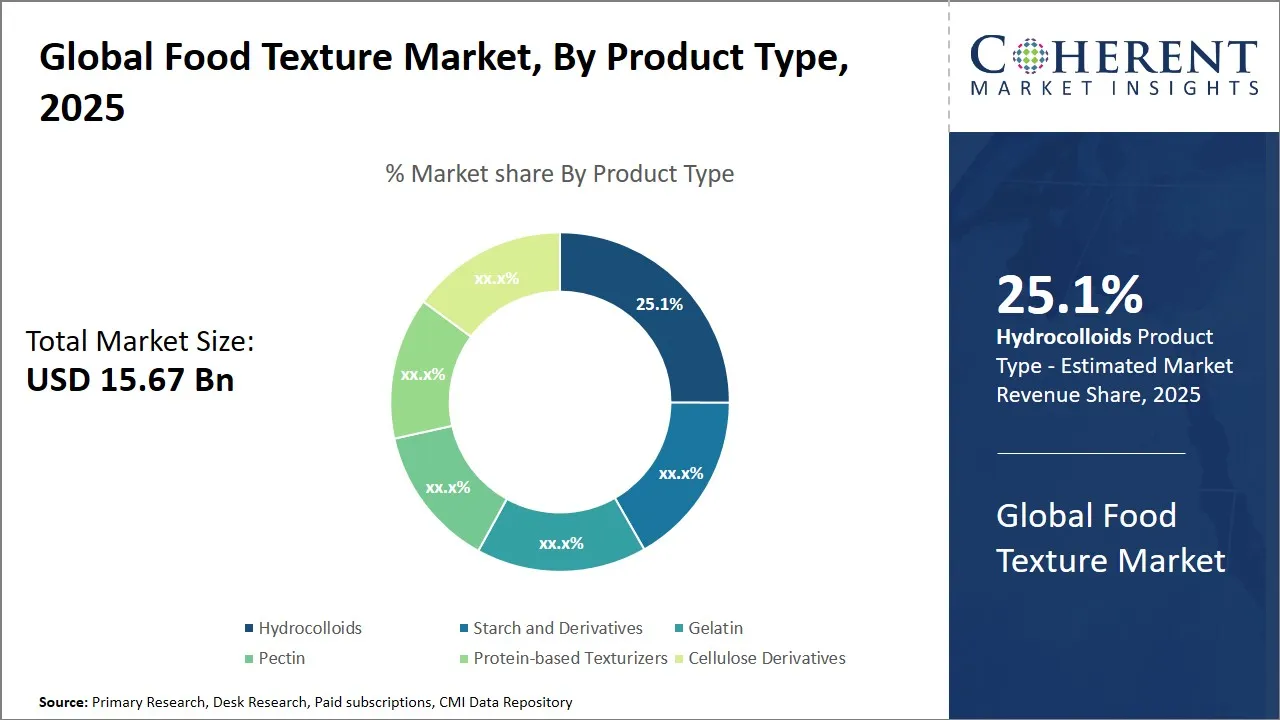
- Hydrocolloids segment is expected to account for 26.1% of the market share in 2026.
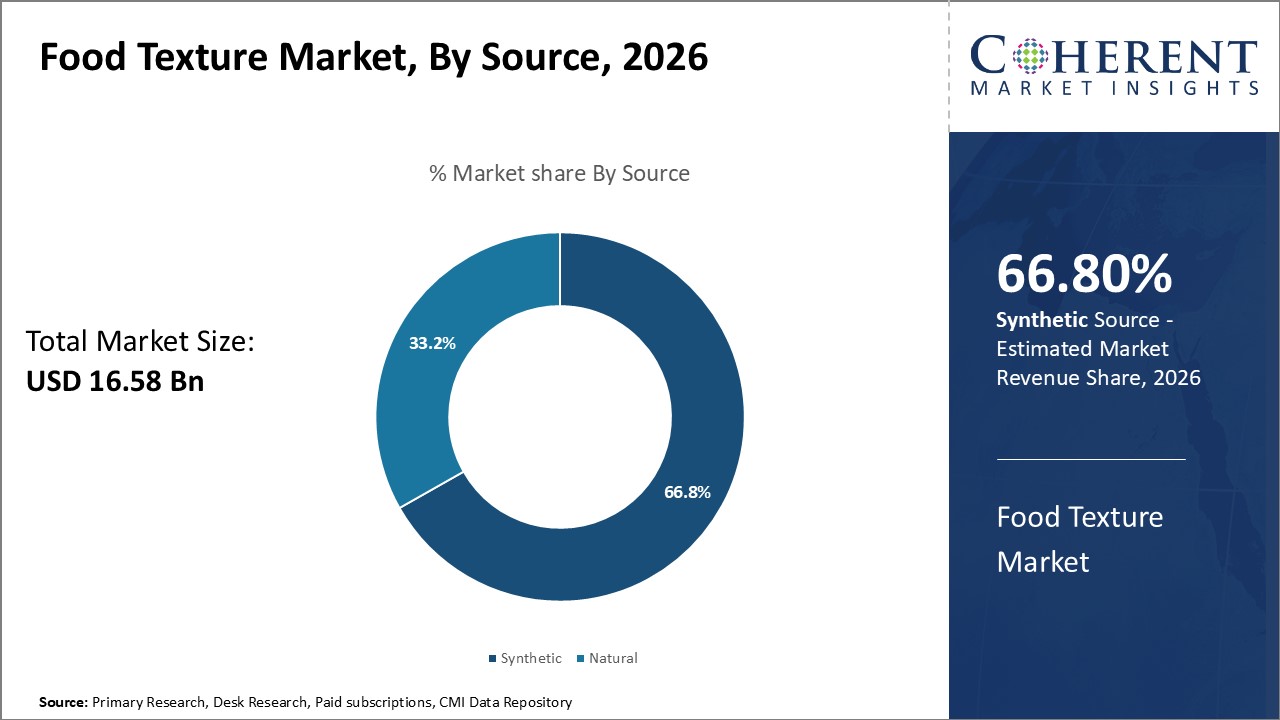
- The synthetic segment is estimated to command 66.8 % of the food texture market share in 2026.
- The dry segment is projected to account for 56.7 % of the global food texture market share in 2026.
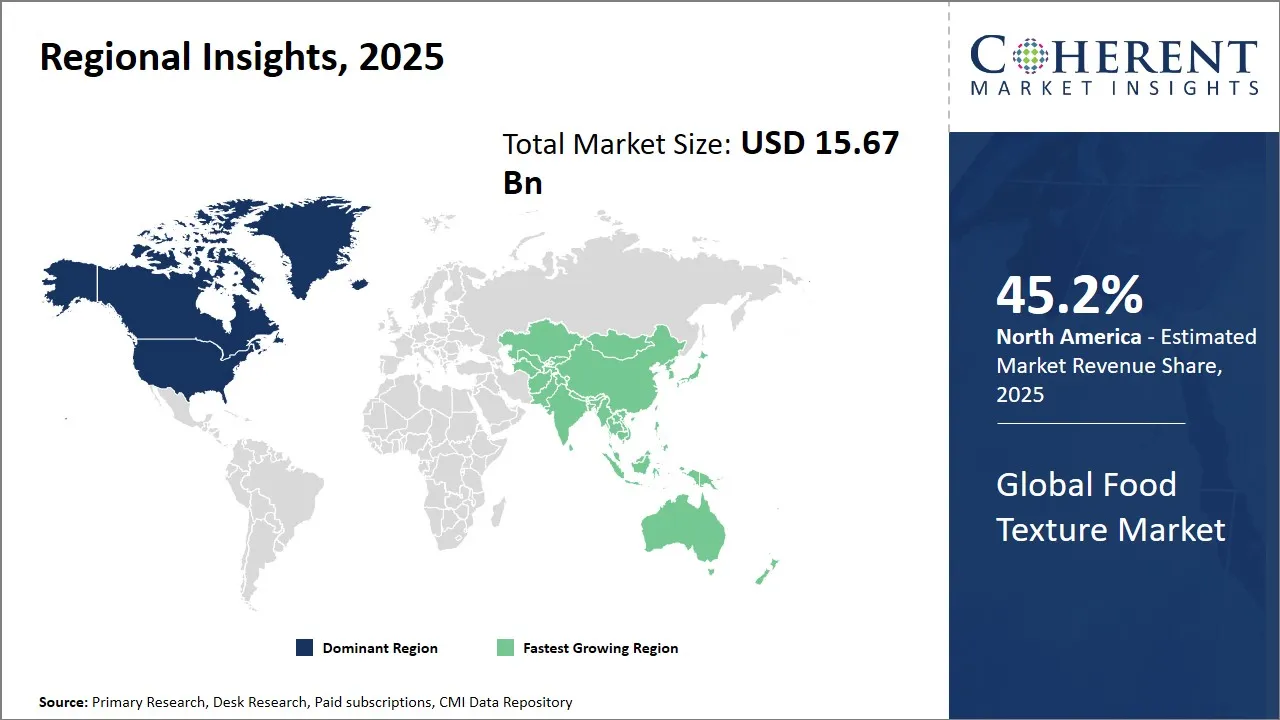
- North America will lead the food texture market in 2026 with an estimated 45.2 % share.
- Asia Pacific will hold 19.6 % share in 2026 and record the fastest growth.
Market Overview
- Current market trends highlight a growing preference for clean-label and natural texture enhancers, reflecting consumers’ inclination towards healthier, minimally processed food.
- Additionally, advancements in plant-based food products and gluten-free alternatives are significantly influencing texture modification technologies.
- The surge in premium and functional food segments, combined with the expansion of the global food and beverage industry, continues to propel the food texture market, fostering new opportunities across developed and emerging economies.
Current Events and Its Impact
Current Events | Description and its Impact |
Cocoa cost volatility continues to reshape confectionery and bakery formulations (2025) |
|
Regulatory and market push intensifies around “ultra-processed foods” (UPF) in the U.S. (2025) |
|
Segmental Insights
- Current Industry Events of 2026
- Market Size Estimation
- Regional Breakdown
- Competitive Landscape
- Customer Intelligence
- Segmental Analysis
- Pricing Analysis
- Key Market Drivers, Challenges & Future Trends
- Customized Insights Section
Why Does Hydrocolloids Dominate the Food Texture Market in 2026?
Hydrocolloids segment is expected to hold 26.1% of the food texture market share in 2026. The advantageous place in the food texture market of the world is, in some large part, due to their versatile application as thickening agents, gelling agents, emulsifiers, and stabilizers. The growing popularity of consumers towards clean label products containing natural ingredients has only increased the demand of plant-based hydrocolloids such as guar gum, xanthan gum and carrageenan.
The flexibility of hydrocolloids in a wide range of food products including dairy, bakery, beverages, meat products and confectionery is also one of the leading factors that contributed to the growth of hydrocolloids. As an example, hydrocolloids enhance mouthfeel and prevent syneresis in dairy products, and retain moisture and stability of dough in bakery products. This wide food processing application makes them essential to food manufacturers who need to improve texture without affecting the nutritional value or shelf life.
For example, in yogurt and flavored milk applications, Cargill uses pectin-based hydrocolloid systems to prevent syneresis and deliver a smooth, creamy mouthfeel in low-fat and clean-label dairy products. This allows brands to reduce fat content while maintaining texture parity with full-fat variants—directly supporting health-driven product positioning without sensory compromise.
Why Does Synthetic Segment Dominate the Global Food Texture Market?
Synthetic segment is projected to hold 66.8% of the market share in 2026, either by using chemical synthesis or fermentation by microorganisms to fit desired textural and functional desires. The gain in the source-based segmentation is mainly because of their capability of providing homogeneous quality, high purity and consistent performance which are key parameters that are needed in large scale food production.
The major reason why synthetic texturizers have been adopted is their scalability, and simple production in comparison to natural sources whose supply may be seasonal and fluctuate as a result of the nature of farming activities. The reliability guarantees manufacturers the ability to maintain continuous production lines as well as achieve the high regulatory standards effectively. In addition, synthetic texturizers tend to be more stable at heat and should have increased shelf life and this is particularly crucial with processed foods that undergo a variety of temperatures through their manufacture and storage.
Dry Form Dominates the Global Food Texture Market
Dry segment is set to hold 56.7% of the global food texture market share in 2026. Its solid and powder-like nature is more stable and has a long shelf life than liquid forms, which can be prone to microbial contamination or may be sensitive to refrigeration. This will provide a logistics advantage by offering dry texturizers an inherent durability when in storage, transportation, and during managing of inventory.
Another important factor that leads to the preference for dry texturizers is ease of handling. They are accurate to measure and can be mixed with other dry components that allow manufacturers to stay in the same tune in terms of texture formulation. The dry texture also gives freedom in the processing of products, since the dry texturizers can be moistened or triggered at a particular point based on the production needs so that the final texture of food products could be controlled more easily.
Regional Insights
North America Food Texture Market Analysis and Trends
The North America region is projected to lead the market with a 45.2% share in 2026, due to the proper established food processing industry and strong research and development facilities. Having developed food technology centers, strict food quality and safety standards are promoting innovation in the texture modifying ingredients like hydrocolloids, emulsifiers, and stabilizers. The presence in the market is made even stronger with government policies that favor clean-label movements and product developments with the health-focused idea.
Major players such as Ingredion Incorporated, Cargill and Tate and Lyle have consolidated their market positions by majoring in investing towards the natural and sustainable texture solutions to meet the consumer preferences in the region. Moreover, the high export and import connectivity in North America will help in integrating new texturizing agents, which are produced in other parts of the world, to improve the entire ecosystem.
Asia Pacific Food Texture Market Analysis and Trends
The Asia Pacific region is expected to exhibit the fastest growth in the market contributing 19.6% share in 2026, due to high rate of urbanization, shifting tastes and preferences when it comes to food and growing levels of awareness about the quality of food by the consumers. The increasing need to have convenience and ready-to-eat food products drives manufacturers to come up with the texture attributes to enhance the mouthfeel and product differentiation.
Government programs to raise the food processing infrastructure and enhance food safety standards further stimulate market growth. The food ingredients industries in such countries as China, India, Japan, and South Korea are growing and draw the interest of multinational companies like Kerry Group, DuPont Nutrition and Health, and ADM that grow their activities and introduce localized products. Dynamics in trade such as good trade agreements in regional blocs also facilitate the availability of ingredients and their uptake in food production.
Global Food Texture Market Outlook for Key Countries
Why is the U.S. Leading the Global Shift Toward Clean-Label and Functional Food Texture Solutions?
The U.S. food texture market is marked by a strong focus on health-driven and clean-label food texture solutions. Leading companies such as Ingredion and Cargill are concentrating on natural texture modifiers which are in line with companies demand to be more transparent and sustainable. The well-developed food processing base and ongoing advancement in ingredient functionality allow manufacturers to have numerous textured food products, including dairy or bakery and confectionary. The further advancement of the texture technology is also backed by active partnerships between industry players and academia.
China Food Texture Market Trends
The emerging food texture market in China is driven by the rising demand of processed and convenience foods by a rising middle-income group. Local governments support domestic companies by giving incentives to modernize their food production, and these companies collaborate with the international ingredient supplier such as Kerry Group and DuPont to localize their texture solutions to suit local tastes and texture requirements. The growth of cold-chain logistics and retail base facilitates the distribution of demand that is pushed in urban and semi-urban hubs.
Why is Germany Emerging as a Strategic Hub for Food Texture Ingredient Innovation?
Germany remains the European leader in the highly developed food manufacturing industry and focus on quality standards and innovation. Companies such as BASF and Cargill Europe are quite active, with the emphasis on the texture ingredients that meet the EU regulations and respond to such trends as vegan and gluten-free products. Well-established government assistance on food technology research and sustainability programs provides a favorable climate of sophisticated texture ingredient designing and use.
India Food Texture Market Trends
The India food texture market can be supported by the fact that urbanization, growth of the income, and diversification of the food industrial complex to ready meals and dairy substitutes allow the market to grow. In response to this dynamic market, multinational companies like ADM and Ingredion are increasing their presence to capture this market by coming up with texturizers that are both cost-efficient and culturally sensitive. Domestic players and the startups can innovate and compete effectively because of the government programs that promote modernization of food processing and the adherence to food safety.
Japan Food Texture Market Trends
The food texture market in Japan commences a complex consumer market that requires unique and high quality of texture in both the conventional as well as innovative foods. Other companies such as Ajinomoto and DuPont Nutrition have important roles to play by concentrating on delicate texture modifiers which add value to products and also, they are able to operate within the rigid regulatory setups. The focus on health and longevity in the country affects the texture ingredient development, incorporating such functional features as the digestive benefits.
Texture Failure Risk Analysis
Stage | Common Texture Failure | Primary Cause | Commercial Impact |
Thermal Processing | Gel collapse, viscosity loss | Overheating, shear stress | Batch rejection, yield loss |
Freezing | Ice crystal damage, syneresis | Slow freezing, poor stabilizers | Grainy texture, moisture leakage |
Shelf Life | Hardening, staling, phase separation | Moisture migration, oxidation | Shorter shelf life, returns |
Market Players, Key Development, and Competitive Intelligence
Key Developments
- In May 2025, at the Frankfurt IFFA trade fair, Sarda Bio Polymers introduced clean-label, plant-based hydrocolloid solutions for meat and alternative protein applications. Their offerings include guar gum, cassia tora gum, konjac, xanthan, carrageenan, tamarind xyloglucan, and CMC, designed to enhance texture with minimal processing while emphasizing sustainability and performance.
- In March 2025, Cargill opened a new corn milling plant in Gwalior, Madhya Pradesh, operated by Indian manufacturer Saatvik Agro Processors, to meet increasing demand from India's confectionery, infant formula, and dairy industries.
- In March 2025, Ingredion partnered with Austrian company Agrana to increase starch production in Romania, expanding its manufacturing presence in Eastern Europe to address the rising regional demand for specialty starches.
Top Strategies Followed by Global Food Texture Market Players
Player Type | Strategic Focus | Example |
Established Market Leaders | Heavy investment in R&D and innovation | Companies such as Ingredion, Cargill, Tate and Lyle and Kerry Group will keep on coming up with high-performance starches, hydrocolloids and texturizing systems that will enhance mouthfeel, stability and shelf life of bakery, dairy, sauces and plant-based foods. |
Mid-Level Players | Cost-effective solutions with balanced quality | Firms such as Roquette and Palsgaard are pricing their offerings based on cost and quality positions as they offer functionality, texture systems with low price and emulsifiers based on fibers and texture in the same quality range. Their plan focuses on effective sourcing, efficient production and focused solutions to price sensitive markets like local dairy, confectionery and convenience foods. |
Small-Scale Players | Niche specialization & innovative variants | Companies like CP Kelco (in niche biopolymer markets) and new clean-label start-ups are specializing in pectin, gellan gum, cellulose derivatives and fermentation-based texturizers. |
Market Report Scope
Food Texture Market Report Coverage
| Report Coverage | Details | ||
|---|---|---|---|
| Base Year: | 2025 | Market Size in 2026: | USD 16.58 Bn |
| Historical Data for: | 2020 To 2024 | Forecast Period: | 2026 To 2033 |
| Forecast Period 2026 to 2033 CAGR: | 5.8% | 2033 Value Projection: | USD 24.60 Bn |
| Geographies covered: |
| ||
| Segments covered: |
| ||
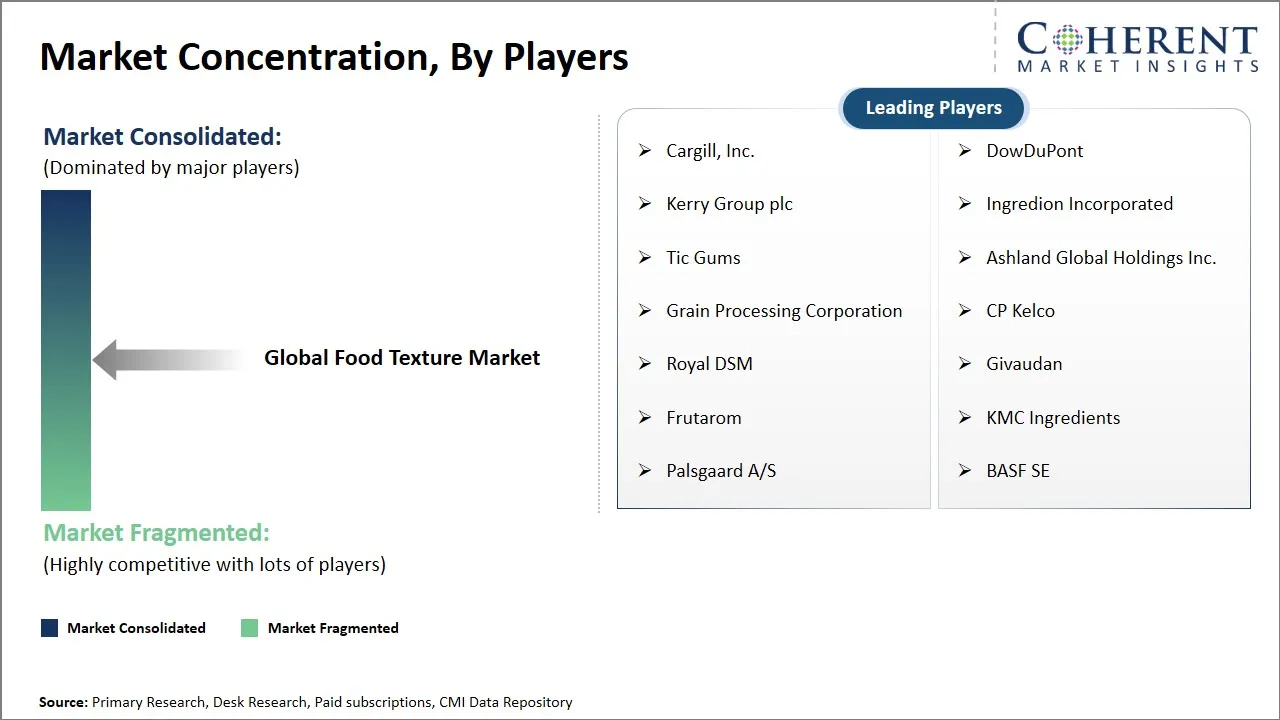
| Companies covered: | Cargill, Inc., DowDuPont, Kerry Group plc, Ingredion Incorporated, Tic Gums, Ashland Global Holdings Inc., Grain Processing Corporation, CP Kelco, Royal DSM, Givaudan, Frutarom, KMC Ingredients, Palsgaard A/S, and BASF SE | ||
| Growth Drivers: |
| ||
| Restraints & Challenges: |
| ||
Food Texture Market Dynamics
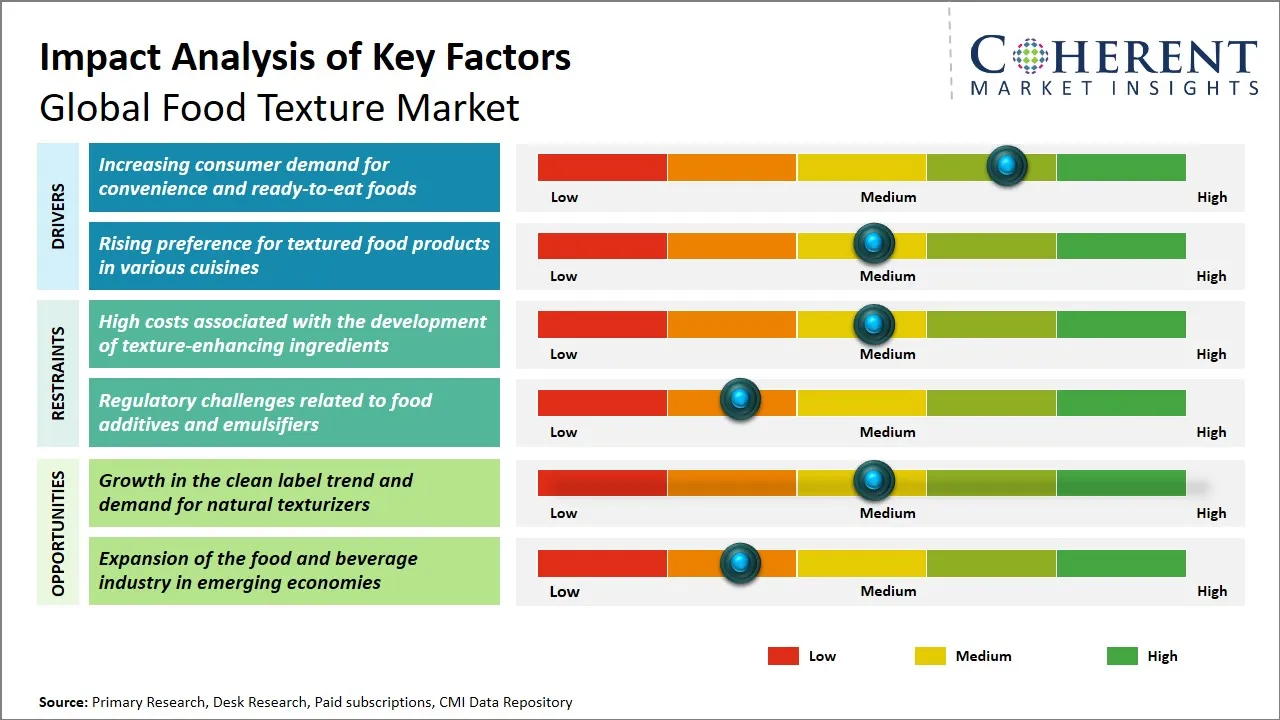
Food Texture Market Driver - Increasing Consumer Demand for Convenience and Ready-To-Eat Foods
The global shift towards busy lifestyles and urbanization has significantly amplified consumer demand for convenience and ready-to-eat food products, which directly influences the food texture market. The current trends in food consumption have been characterized by the trend towards food products that have a minimum preparation time and provide a satisfactory sensory experience, thus, making texture one of the significant factors in the acceptance of food products. To counter this, manufacturers are introducing new texture systems that create better mouthfeel and freshness perception in packaged and processed foods and increased palatability.
For example, global ready-meal manufacturers like Nestle and Conagra (Cargill) put a lot of their eggs on modified starches, hydrocolloid, and protein texturizers to keep the softness, hold the moisture, and consistency even after freezing and re-heating. Directly, repeat purchase is affected by texture stability.
(Source: https://www.cargill.com/doc/1432112902635/hydrocolloids-ebrochure.pdf)
Food Texture Market Opportunity - Growth in the Clean Label Trend and Demand for Natural Texturizers
The increasing consumption trend of clean label products is one of the major opportunities of the global food texture market, since the demand is increasing on natural and minimally processed products, including natural texturizers. The tendencies of clean labels focus on openness, simplicity, and the use of familiar, natural ingredients, which prompts food producers to reformulate the product, substituting synthetic food additives with plant-based and naturally derived texturizing substances. This trend is driven by the rising consumer awareness on health and wellness as well as the urge to lower the levels of artificial chemicals and allergens in food items.
For example, bakery manufacturers are substituting the DATEM, chemical emulsifiers with enzymes, native starches, and oat fibers in order to attain softness and volume with short ingredient lists.
Analyst Opinion (Expert Opinion)
- The food texture market is undergoing transformational development, based on the changing consumer inclination towards increased sensory food product experiences. The perspectives of the International Food Texture Conference (2023) and Food Innovation Summit (2022) demonstrated impressive progress, with such companies as.
- ADM and Tate & Lye in the forefront in creating new texturizing solutions. The recent introduction of a range of plant-based texturizers by ADMs to mimic the feel of dairy products can be seen as an indication of how the industry has been keen to satisfy the increasing demand of vegan products without losing their respective textures. It is noted that there is growing significance of texture in formulating products as the brands strive to produce attractive products that meet a variety of dietary requirements and improve the pleasure of eating.
- The barriers to innovation were often cited, including the difficulty in controlling the cost of the ingredients and making them remain stable during different processing conditions. Food manufacturers that are very close to their suppliers and that develop cost effective solutions through R&D are likely to have a big opportunity. Finally, the expansion of the food texture industry will be pegged on its capacity to be innovative and in tandem with the needs of the consumer in the quality and diversity of food experiences.
Speak to the analyst
Want personalized insights?
Take the findings above to one of our principal consultants, or have the report rebuilt around the segments, geographies and competitors you actually track.
Market Segmentation
- Product Type Insights (Revenue, USD Bn, 2021 - 2033)
- Hydrocolloids
- Starch and Derivatives
- Gelatin
- Pectin
- Protein-based Texturizers
- Cellulose Derivatives
- Source Insights (Revenue, USD Bn, 2021 - 2033)
- Synthetic
- Natural
- Form Insights (Revenue, USD Bn, 2021 - 2033)
- Dry
- Liquid
- Application Insights (Revenue, USD Bn, 2021 - 2033)
- Bakery & Confectionery Products
- Dairy & Frozen Foods
- Meat & Poultry Products
- Beverages
- Snacks & Savory
- Sauces & Dressings
- Others
- Regional Insights (Revenue, USD Bn, 2021 - 2033)
- North America
- U.S.
- Canada
- Latin America
- Brazil
- Argentina
- Mexico
- Rest of Latin America
- Europe
- Germany
- U.K.
- Spain
- France
- Italy
- Russia
- Rest of Europe
- Asia Pacific
- China
- India
- Japan
- Australia
- South Korea
- ASEAN
- Rest of Asia Pacific
- Middle East
- GCC Countries
- Israel
- Rest of Middle East
- Africa
- South Africa
- North Africa
- Central Africa
- North America
- Key Players Insights
- Cargill, Inc.
- DowDuPont
- Kerry Group plc
- Ingredion Incorporated
- Tic Gums
- Ashland Global Holdings Inc.
- Grain Processing Corporation
- CP Kelco
- Royal DSM
- Givaudan
- Frutarom
- KMC Ingredients
- Palsgaard A/S
- BASF SE
Sources
Primary Research Interviews
- CEO – Leading Food Texture Ingredients Producer (e.g., Cargill or Ingredion equivalent)
- Supply Chain Director – Major Hydrocolloids and Stabilizers Distributor
- Production Lead – Specialty Texture Modifiers Manufacturer
- Sustainability Officer – Food Ingredients Certification Authority (e.g., Clean Label Project)
Stakeholders
- Manufacturers
- End-use Sectors
- Dairy and Plant-Based Alternatives
- Baked Goods & Confectionery Producers
- Beverages (Functional Drinks)
- Meat Alternatives & Processed Foods
- Regulatory & Certification Bodies (e.g., FDA for food additives, EFSA for hydrocolloids)
- E-commerce Platforms and Retailers (Alibaba, Industrial Suppliers, Sigma-Aldrich Food Division)
- Technology Integration Players: Advanced food tech firms using texture modifiers in plant-based innovations
Databases
- UN Comtrade Database (food additives and hydrocolloids trade)
- India Import Export (EXIM) Database (texture ingredients imports)
- USGS Mineral Commodity Summaries (related stabilizers if mineral-derived)
- Eurostat Trade Statistics for Food Chemicals
- UNCTAD Food Trade by Processing Category
Magazines
- Food Processing Magazine – Trends in texture modifiers supply
- Food International – Texture innovations in food manufacturing
- Bakery & Snacks – Applications in baked goods texturizers
- Ingredients Network – Market dynamics for hydrocolloids
- Beverage Industry – Stabilizers in functional beverages
Journals
- Food Hydrocolloids – Functional aspects of texture ingredients
- Trends in Food Science & Technology – Hydrocolloids in food formulation
- Journal of Food Engineering – Texture enhancement techniques
- Food Chemistry – Nutritional impacts of stabilizers
- Carbohydrate Polymers – Gums and starches in texturizing
Newspapers
- The Wall Street Journal – Global demand for food texture compounds
- Food Navigator – Sustainability in texture ingredients
- Business Standard (India) – Food additives imports and Asia growth
- Chemical Week – Supply disruptions in food ingredients
- Reuters – Price volatility in hydrocolloids market
Associations
- Institute of Food Technologists (IFT)
- International Food Additives Council
- American Association of Cereal Chemists (AACC)
- European Food Safety Authority (EFSA) Ingredient Committees
- Gum and Stabilizer for Food Industry Group
- Clean Label Project
Public Domain Sources
- FDA – Guidelines for food texturizers and additives
- European Commission – Regulations on hydrocolloids
- World Health Organization – Safety standards for food stabilizers
- USGS – Related commodity statistics (if applicable)
- OECD – Food ingredient trade and sustainability reports
Proprietary Elements
- CMI Data Analytics Tool, Proprietary CMI Existing Repository of information for last 8 years.
Get access to 250+ pages report
Every segment, forecast, competitor profile and data table behind the analysis above — available for instant download.
- ESOMAR Member
- ISO 9001:2015 Certified
- D-U-N-S Registered
- GDPR & CCPA Compliant
Missing comfort of reading report in your local language? Find your preferred language:
Transform your Strategy with Exclusive Trending Reports
Frequently Asked Questions
The global food texture market is estimated to be valued at USD 16.58 Bn in 2026 and is expected to reach USD 24.60 Bn by 2033.
The CAGR of global food texture market is projected to be 5.8% from 2026 to 2033.
Key agents include hydrocolloids, emulsifiers, stabilizers, thickeners, gelling agents, and texturizing fibers.
Plant-based formulations require advanced texture solutions to replicate meat, dairy, and fat mouthfeel.
Increasing consumer demand for convenience and ready-to-eat foods and rising preference for textured food products in various cuisines are the major factors driving the growth of the global food texture market.
High costs associated with the development of texture-enhancing ingredients and regulatory challenges related to food additives and emulsifiers are the major factors hampering the growth of the global food texture market.
In terms of product type, hydrocolloids are estimated to dominate the market revenue share in 2026.