

Global Functional Genomics Market Size and Forecast – 2026 to 2033
The global functional genomics market is estimated to be valued at USD 12.96 Bn in 2026 and is expected to reach USD 33.04 Bn by 2033, exhibiting a compound annual growth rate (CAGR) of 14.3% from 2026 to 2033. This significant growth is driven by increasing investments in genomics research, advancements in sequencing technologies, and the rising demand for personalized medicine. The expanding applications of functional genomics in drug discovery and disease diagnostics are also contributing to the market’s robust expansion.
Key Takeaways of the Global Functional Genomics Market
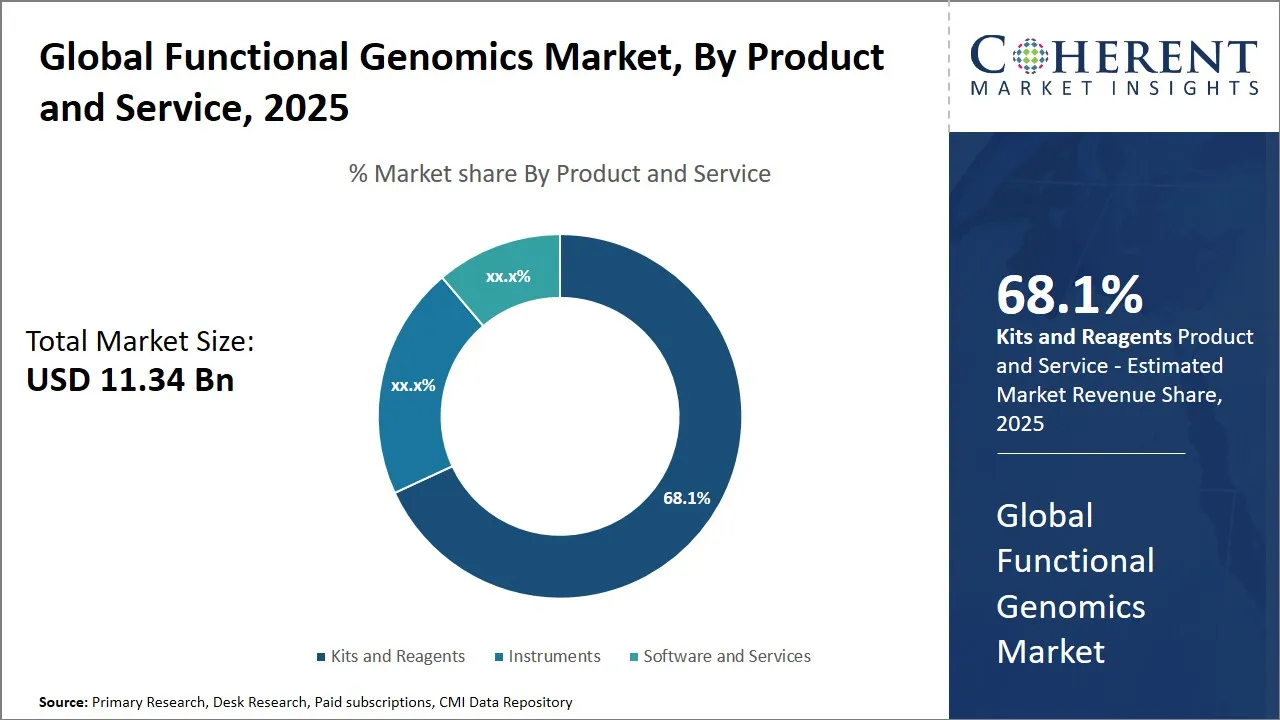
- In 2026, kits and reagents are expected to dominate the global functional genomics market, accounting for 69.1 % of the market share.
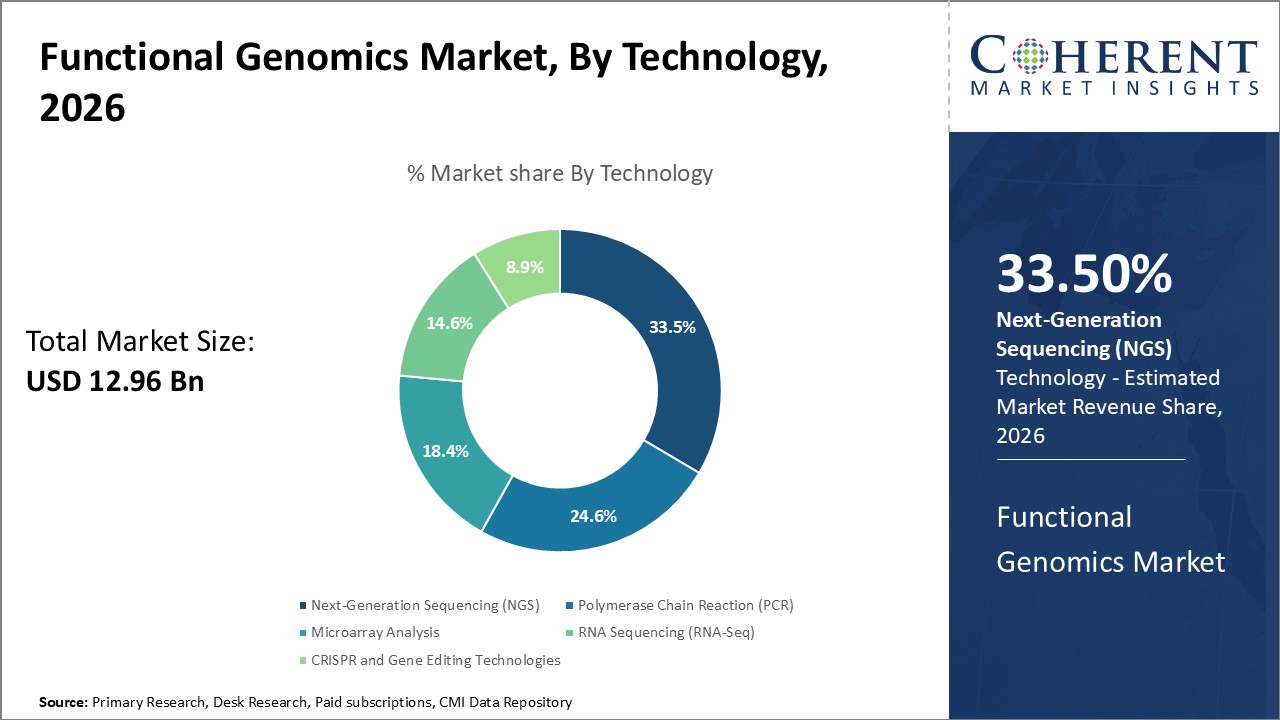
- Within the technology segment, Next-Generation Sequencing (NGS) segment is expected to lead with a share of 33.5 % in 2026.
- In the application segment, transcriptomics is projected to hold 24.4 % share in 2026.
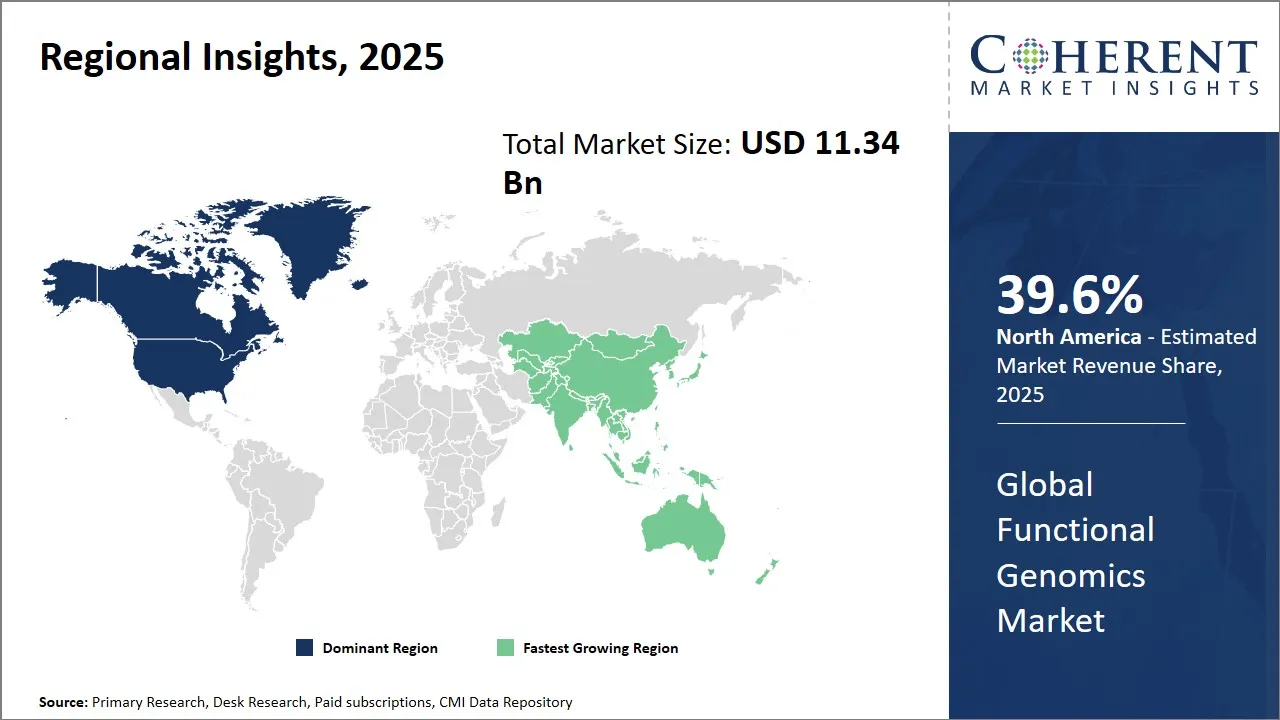
- North America is expected to lead the market, holding a share of 39. 6% in 2026. Asia Pacific is anticipated to be the fastest-growing region, with a market share of 23.5% in 2026.
Market Overview
A current market trends highlight a strong shift towards integrating multi-omics approaches and artificial intelligence to enhance data analysis efficiency and accuracy. Additionally, there is growing adoption of high-throughput and single-cell genome sequencing technologies which enable deeper insights into gene functions. Collaborations between biotech firms and academic research institutions are accelerating innovation, while increasing government initiatives and funding further support the market advancements. These trends collectively position the functional genomics market for sustained growth and technological evolution.
Current Events and Its Impact
Current Events | Description and its Impact |
Advancements in Next-Generation Sequencing (NGS) |
|
Rise in Government Investments for Genomics Research |
|
Segmental Insights
- Current Industry Events of 2026
- Market Size Estimation
- Regional Breakdown
- Competitive Landscape
- Customer Intelligence
- Segmental Analysis
- Pricing Analysis
- Key Market Drivers, Challenges & Future Trends
- Customized Insights Section
Functional Genomics Market Insights, By Product and Service - Dominance of Kits and Reagents Driven by Advancements in Functional Genomics Workflow Efficiency
In the global functional genomics market, the highest share comes from the kits and reagents segment, accounting for an estimated 69.1% share in 2026, due to their indispensable contributions to simplifying complex experimental workflows and providing reliable data. These inputs can be found in many functional genomics applications such as gene expression, cloning, transfection, and preparation of sequencing libraries.
The need for high-quality, ready-to-use kits, and reagents pushes the demand as it is of utmost importance to reduce protocol variability, speed up the timelines of research, and make laboratories more consistent with the quality of work done. For example, sample preparation kits make sure that the extraction and purification of nucleic acids are done uniformly, which is a very important first step directly influencing the accuracy of downstream analyses like PCR and sequencing.
Functional Genomics Market Insights, By Technology - Next-Generation Sequencing (NGS) Leads Due to Comprehensive Genomic Profiling Capabilities
Next-Generation Sequencing (NGS) technology captures the largest share of the global functional genomics market, which is an estimated 33.5% share in 2026, because of its unbeatable genomic analysis in depth, versatility, and scalability. The NGS technologies enable the researchers to get comprehensive insights into the entire genome or specific regions, thus the detailed studies of gene expression, mutation detection, epigenetic modifications, and transcriptome complexity are possible.
In February 2026, Roche introduced its innovative sequencing by expansion (SBX) technology, a major advancement in next-generation sequencing (NGS). SBX uses expanded synthetic molecules and a high-throughput sensor to deliver ultra-rapid, scalable sequencing, reducing the time from sample to genome. This technology is set to accelerate genomic research and clinical applications, particularly for complex diseases like cancer and neurodegenerative disorders.
Functional Genomics Market Insights, By Application - Transcriptomics Dominates Applications Due to Expanding Research on Gene Expression Dynamics
Among the application sectors of the global functional genomics market, where it has been predicted a 24.4% share in 2026, transcriptomics is leading with the highest market share, indicating that it is an indispensable technique for gene expression studies and gene regulation mechanisms under different biological conditions. Transcriptomic analysis is based on the large-scale detection and quantification of all RNA transcripts produced by the genome in a given cell, time, and condition, thus revealing the dynamic changes of gene activity, offering key insights into cellular responses, developmental biology, and disease mechanisms.
By the quantification of messenger RNA (mRNA) and non-coding RNA species, researchers are now able to investigate complex regulatory networks that finally affect the trait expression. One of the key factors for the growing popularity of transcriptomics is the advances in RNA sequencing technologies, which have dramatically altered the classical gene expression profiling by providing high sensitivity, accuracy, and the detection of even the rare transcripts.
Regional Insights
North America Functional Genomics Market Analysis and Trends
North America is expected to hold the leading position in the global functional genomics market in 2026 with a share of 39.6%, due to the presence of a well-established market ecosystem comprising advanced research infrastructure, strong financial support, and the concentration of top biotechnology and medicine companies. The U.S., in particular, gains from extensive governmental support for genomics research through the National Institutes of Health (NIH) and the National Human Genome Research Institute (NHGRI).
For example, in June 2026, Genomics, a leader in functional genomics and precision healthcare, announced the launch of its Health Insights predictive clinical tool across Great Britain. This innovative test, which combines genetic risk and clinical factors, is now available nationwide, helping doctors better assess patient risk for diseases like cardiovascular disease, type 2 diabetes, breast cancer, and prostate cancer. Bupa, Spire Healthcare, and Well Life Clinics are among the providers offering the test.
Asia Pacific Functional Genomics Market Analysis and Trends
The Asia Pacific region is expected to experience the fastest growth in the global functional genomics market, accounting for 23.5% of the market share in 2026. This growth is driven by expanding healthcare infrastructure, increased government investments in genomics research, and a large untapped patient population that supports disease-specific studies. Countries such as China, Japan, India, and South Korea are rapidly developing biotechnology hubs, supported by policy initiatives aimed at promoting innovation in life sciences.
One of the best examples is China’s Made in China 2026 initiative and India’s Biotechnology Vision 2026, which are national strategies aiming to build up genomics research capacity and related industries at home.
Functional Genomics Market Outlook for Key Countries
U.S. Functional Genomics Market Analysis and Trends
The U.S. still dominates the functional genomics market as the main reason is the large amount of investments in research and development, a friendly regulatory atmosphere, and the presence of famous biotech clusters like Boston and San Francisco among others. Companies that are majorly involved include Illumina, Thermo Fisher Scientific, and Pacific Biosciences which all have very innovative sequencing platforms and bioinformatics solutions to offer. One of the government initiatives, the Genome Research Program is taking up and continuing cutting-edge studies with the aim of understanding gene functions in diseases.
In April 2023, Function Oncology, a precision medicine company based in San Diego, U.S launched with a goal to revolutionize cancer treatment. The company has developed a CRISPR-powered personalized functional genomics platform, focusing on measuring gene function at the patient level.
China Functional Genomics Market Analysis and Trends
The genome functional analysis market in China is growing and is backed by large government investments as well as national plans that support biotechnology. Affordable and high-throughput sequencing technologies are being developed by firms such as the Beijing Genomics Institute (BGI) and MGI Tech, which are stimulating the use of these technologies in the medical and agricultural industries.
On October 23, 2026, Chinese biotech firm BGI-Research and Zhejiang Lab, specializing in AI technology, launched the "Genos" AI model, the world's first deployable genomic foundation model with 10 billion parameters. Designed to analyze up to one million base pairs at single-base resolution, Genos aims to accelerate understanding of the human genome.
Japan Functional Genomics Market Analysis and Trends
Japan is one of the leading countries in the functional genomics market, thanks to its heavy spending in healthcare innovation and the progressive adoption of technology. Meanwhile, Akira Bio and Hitachi High-Technologies are among the key players who are spearheading the development of their own gene editing tools and sequencing instruments specifically for clinical research.
In September 2022, MGI Tech Co., Ltd., a global life science leader, celebrated the grand opening of its new demonstration laboratory in Japan. The facility is designed to enhance local customer experience by providing access to cutting-edge genomic technologies and products. MGI Tech Japan Co., Ltd., a subsidiary of MGI, will collaborate with local researchers, partners, and the genomic community to offer technical assessments, product trials, and clinical workflow validation
India Functional Genomics Market Analysis and Trends
The functional genomics market in India is on the fast-track to growing further, thanks to the strong patient base and the rising biotech investments resulting from the government initiatives such as the Biotechnology Industry Research Assistance Council (BIRAC). The Indian companies such as Strand Life Sciences and MedGenome provide genomic sequencing and analytics services catering to the region’s genetic diversity, hence, their contribution to the industry is very noteworthy.
In July 2026, Suraksha Diagnostics, a leading healthcare provider, launched a genomics laboratory in Kolkata, making it one of the largest such facilities in Eastern India. The investment in the lab aims to meet the growing demand for advanced genetic testing, including prenatal, oncology, and rare disease diagnostics. The facility offers services like genetic counselling, chromosomal screening, hereditary cancer panels, and next-generation sequencing (NGS) for precision medicine.
End User Feedback and Unmet Needs in the Global Functional Genomics Market
- Overall, users from research institutions and healthcare organizations in the functional genomics market have been quite vocal about the quality and the extent of insights provided by genomic tools and platforms being very good. For instance, genomic researchers are highly satisfied with NGS technologies deployed for sequencing, thus they report getting more accurate and faster results which eventually leads to speeding up the research activities and progressing the gene therapy projects.
- One of the major positive examples is the clinical trial CRISPR gene editing which is successfully executed and the users are very much pleased with the tool's integration in their workflow and its targeting of certain genetic mutations with almost no off-target effects.
- On the other hand, end-users keep mentioning the same problems over and over again, such as the high costs and the lack of customization in the existing genomic tools. The small research labs and healthcare providers are often cut off from accessing these state-of-the-art technologies because they cannot afford them. A widespread concern is that the solutions cannot be personalized much, particularly in lesser-scale applications or specialized genetic research. These difficulties, combined with inadequate customer support and training, uncover the crucial unmet needs.
Market Players, Key Developments, and Competitive Intelligence
Key Developments
- On October 15, 2025, Illumina, Inc., a leader in genomic sequencing, launched its groundbreaking 5-base solution at the American Society of Human Genetics (ASHG) conference. This innovative solution enables researchers to simultaneously analyze genomic variants and DNA methylation from a single sample, enhancing the study of disease mechanisms, cancer biomarkers, and rare diseases.
- On October 13, 2025, GSA Journals announced the launch of a new "Functional Genomics and Systems Biology" section, led by Brenda Andrews from the University of Toronto and Marian Walhout from UMass Chan Medical School. This section will focus on systems-level studies of genetic networks and pathways, featuring experimental and computational research using genomic, transcriptomic, proteomic, and metabolomic data.
- In August 2025, Imperial College London launched the Excellence in Functional Genomics Network with an event at the Royal Geographic Society. The network aims to address the challenge of translating genomic data into clinical outcomes by accelerating the functional validation of disease-causing variants. Researchers and clinicians from Imperial and its partner institutions gathered to discuss the network's goals, including enhancing collaboration in clinical genetics, computational genetics, genome editing, and the development of patient models.
- In May 2025, Algen Biotechnologies, a pioneer in AI-driven drug discovery and CRISPR gene modulation, announced a multi-target partnership with AstraZeneca to advance immunology therapies. Under the agreement, Algen will use its AlgenBrain functional genomics platform to identify novel cell-type-specific disease targets
- In March 2025, the Milner Therapeutics Institute in Cambridge officially opened its new Functional Genomics Screening Laboratory (FGSL), a state-of-the-art facility aimed at advancing research in the field of functional genomics. The lab is a collaboration between the Medical Research Council (MRC), AstraZeneca, and the University of Cambridge, and is part of the U.K.’s Human Functional Genomics Initiative. It will focus on arrayed CRISPR screening to help identify novel drug targets for chronic diseases, including cardiovascular, respiratory, and metabolic conditions.
Top Strategies Followed by Global Functional Genomics Market Players
- The major players in the market have a stronghold over the market by making huge investments in research and development (R&D) to not only innovate but also bring forth high-performing products that will be able to satisfy the evolving needs of both researchers and pharmaceutical companies. These leaders are dedicated to improving the efficiency, accuracy, and scalability of their genomic tools and platforms which in turn guarantees them the technological superiority.
- In November 2023, AstraZeneca, a global leader in biopharmaceuticals, announced a collaboration with the Medical Research Council (MRC) and the Milner Therapeutics Institute (MTI) at the University of Cambridge to launch a state-of-the-art functional genomics laboratory. Located on the Cambridge Biomedical Campus, the facility will focus on using advanced tools like CRISPR gene editing to accelerate drug discovery for chronic diseases, including cardiovascular, respiratory, and metabolic diseases.
- Mid-tier companies in the functional genomics space operate on a price-sensitive model while maintaining a decent level of quality. They have segmented their market according to price sensitivity with academia and small biotech companies being the most sensitive one. The players in this segment develop products that have good performance for the price and are thus more approachable in terms of pricing.
- Mid-tier enterprises like PacBio and Oxford Nanopore Technologies are oriented towards providing cost-efficient, and at the same time, high-performance solutions. For instance, the Sequel II System of PacBio can handle long-read sequencing at a lower price than the traditional platforms, thus, it is aimed at academic researchers and small biotech labs.
- Small-scale companies still compete with the big ones in the market by concentrating on the niche markets for specialized functional genomics applications. In fact, these companies often emphasize the novelty of their products and their special features tailored to specific research areas or even the latest trends. Their adaptability gives them the advantage of easily incorporating cutting-edge technologies such as sophisticated sequencing techniques or AI-assisted data analytics, which are among the reasons why they can still compete in the market even with the limited resources they have.
- Small-scale firms like RainDance Technologies and GenapSys focus on the small segments in the functional genomics market. RainDance Technologies is known for its microdroplet-based PCR technology that is This allows very sensitive and specific genetic analysis for directed applications such as cancer genomics.
Market Report Scope
Functional Genomics Market Report Coverage
| Report Coverage | Details | ||
|---|---|---|---|
| Base Year: | 2025 | Market Size in 2026: | USD 12.96 Bn |
| Historical Data for: | 2020 To 2024 | Forecast Period: | 2026 To 2033 |
| Forecast Period 2026 to 2033 CAGR: | 14.3% | 2033 Value Projection: | USD 33.04 Bn |
| Geographies covered: |
| ||
| Segments covered: |
| ||
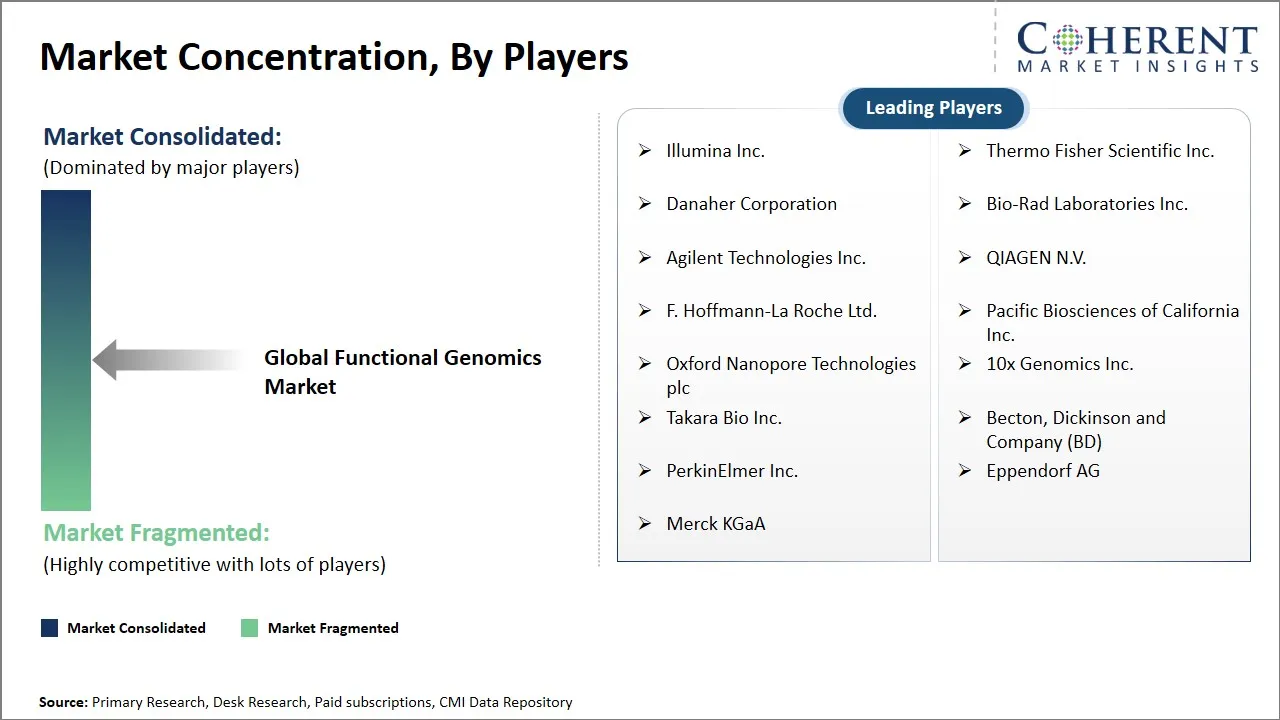
| Companies covered: | Illumina Inc., Thermo Fisher Scientific Inc., Danaher Corporation, Bio-Rad Laboratories Inc., Agilent Technologies Inc., QIAGEN N.V., F. Hoffmann-La Roche Ltd., Pacific Biosciences of California Inc., Oxford Nanopore Technologies plc, 10x Genomics Inc., Takara Bio Inc., Becton, Dickinson and Company (BD), PerkinElmer Inc., Eppendorf AG, and Merck KGaA | ||
| Growth Drivers: |
| ||
| Restraints & Challenges: |
| ||
Functional Genomics Market Dynamics
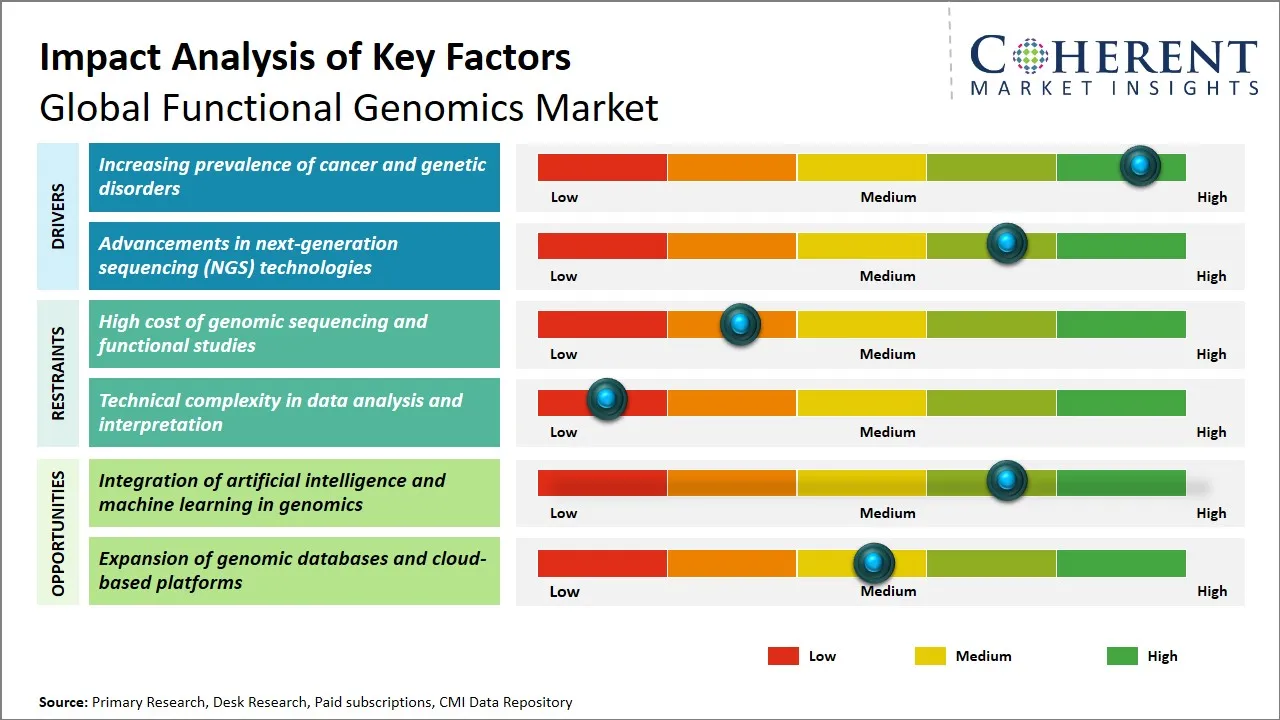
Functional Genomics Market Driver - Increasing Prevalence of Cancer and Genetic Disorders
The functional genomics market is mainly driven by the increasing global incidence of cancer and genetic disorders which is the principal factor causing the market's growth. As these intricate diseases continue to afflict millions around the globe, the demand for genomic tools that are advanced enough to give a better understanding of gene functions, mutations, and their role in disease progression is rising. Functional genomics technologies provide vital information about the molecular mechanisms responsible for both cancerous and hereditary genetic disorders, thus enabling the creation of treatments and drug delivery systems that are targeted and personalized respectively.
For instance, in February 2025, according to WHO, Cancer caused nearly 10 million deaths globally in 2020, with the most common types being breast, lung, colon, prostate, skin, and stomach cancers. Lung cancer led to the highest number of deaths, followed by colon, liver, stomach, and breast cancers. Around 400,000 children are diagnosed with cancer each year, highlighting its widespread impact.
Moreover, in May 2025, researchers from the University of Haifa published a review in Genomic Press, revealing how Prader-Willi syndrome (PWS) offers key insights into the genetic links between autism and psychotic disorders. PWS, caused by a genetic anomaly in the 15q11-q13 region, affects 12-40% of patients with autism traits and 10-30% with psychotic disorders.
Functional Genomics Market Opportunity - Integration of Artificial Intelligence and Machine Learning in Functional Genomics
The functional genomics market will experience a great leap if Artificial Intelligence (AI) and Machine Learning (ML) technologies are integrated, as this would change the data analysis and interpretation processes completely. As the reason of the progress in genomic research, the analysis of gene expression, interactions, and functions generates huge volumes of complex data which traditional methods often fail to decode comprehensively. AI and ML algorithms can efficiently handle and conduct analysis on multi-dimensional genomic data, recognizing complex patterns, forecasting gene functions and disclosing even more complicated biological relationships with greater accuracy and speed than ever before.
In September 2025, BGI Genomics, a leader in genomics, launched its AI-powered health management platform "i99" to improve diagnostics and disease prevention. The platform integrates various health data for proactive care, while GeneT Agent, another AI tool, showed a 98% concordance with expert diagnoses. In alignment with Saudi Arabia’s Vision 2030, BGI also partnered with Tibbiyah Holding to open Genalive, a state-of-the-art genomics lab in Saudi Arabia.
Analyst Opinion (Expert Opinion)
- The rapid growth of the functional genomics market is mainly due to technological progress such as next-generation sequencing and CRISPR, as well as the regulations that support it. The market is also driven by the escalating need for personalized medicine and early detection of diseases. Among the new opportunities are the gene therapy and AI-powered bioinformatics sectors; however, the challenges including concerns around data security and high costs are still there.
- Event like the ASHG Annual Meeting and the International Conference on Genomics have played a crucial role globally by disseminating knowledge and influencing policies. One such instance is the partnership of BGI Genomics and Tibbiyah Holding aimed at the creation of Genalive in Riyadh, Saudi Arabia, which is in tandem with Vision 2030’s health objectives and also helps in making the region’s genomic infrastructure stronger.
Speak to the analyst
Want personalized insights?
Take the findings above to one of our principal consultants, or have the report rebuilt around the segments, geographies and competitors you actually track.
Market Segmentation
- Product and Service Insights (Revenue, USD Bn, 2021 - 2033)
- Kits and Reagents
- Sample Preparation Kits
- PCR Reagents
- Cloning Kits
- Transfection Reagents
- Media and Sera
- Instruments
- Sequencers
- Microarray Scanners
- PCR Instruments
- Automation Systems
- Software and Services
- Kits and Reagents
- Technology Insights (Revenue, USD Bn, 2021 - 2033)
- Next-Generation Sequencing (NGS)
- Polymerase Chain Reaction (PCR)
- Microarray Analysis
- RNA Sequencing (RNA-Seq)
- CRISPR and Gene Editing Technologies
- Application Insights (Revenue, USD Bn, 2021 - 2033)
- Transcriptomics
- Epigenomics
- Proteomics
- Metabolomics
- Drug Discovery and Development
- Clinical Diagnostics
- Agricultural Genomics
- Toxicogenomics
- Biomarker Discovery and Validation
- End User Insights (Revenue, USD Bn, 2021 - 2033)
- Academic and Research Institutes
- Pharmaceutical and Biopharmaceutical Companies
- Contract Research Organizations (CROs)
- Clinical Laboratories
- Agricultural Biotechnology Companies
- Regional Insights (Revenue, USD Bn, 2021 - 2033)
- North America
- U.S.
- Canada
- Latin America
- Brazil
- Argentina
- Mexico
- Rest of Latin America
- Europe
- Germany
- U.K.
- Spain
- France
- Italy
- Russia
- Rest of Europe
- Asia Pacific
- China
- India
- Japan
- Australia
- South Korea
- ASEAN
- Rest of Asia Pacific
- Middle East
- GCC Countries
- Israel
- Rest of Middle East
- Africa
- South Africa
- North Africa
- Central Africa
- North America
- Key Players Insights
- Illumina Inc.
- Thermo Fisher Scientific Inc.
- Danaher Corporation
- Bio-Rad Laboratories Inc.
- Agilent Technologies Inc.
- QIAGEN N.V.
- Hoffmann-La Roche Ltd.
- Pacific Biosciences of California Inc.
- Oxford Nanopore Technologies plc
- 10x Genomics Inc.
- Takara Bio Inc.
- Becton, Dickinson and Company (BD)
- PerkinElmer Inc.
- Eppendorf AG
- Merck KGaA
Sources
Primary Research Interviews
- Industry Stakeholders
- Chief Scientific Officers (CSOs) of biotechnology firms
- Directors of Genomics Research in pharmaceutical companies
- End users
- Principal Investigators in academic research institutions
- Clinical Genomics Lab Managers
Government and International Databases
- Gene Expression Omnibus (GEO) – NCBI
- ArrayExpress – EMBL-EBI
- Data.gov – Genomics Datasets
- National Center for Biotechnology Information (NCBI)
- European Bioinformatics Institute (EBI)
- U.S. Department of Energy’s Genomic Science Program
Trade Publications
- Nature Reviews Genetics
- Trends in Genetics
- Genomics, Proteomics & Bioinformatics
- BioTechniques
- Journal of Functional Genomics
- Genetic Engineering & Biotechnology News (GEN)
Academic Journals
- Functional & Integrative Genomics
- Briefings in Functional Genomics
- Journal of Human Genetics
- BMC Genomics
- Journal of Clinical Investigation
- Cell Reports
Reputable Newspapers
- The New York Times – Health Section
- The Guardian – Science Section
- The Washington Post – Health & Science
- BBC News – Health
- Reuters – Health News
- Associated Press – Science & Technology
Industry Associations
- American Society of Human Genetics (ASHG)
- European Society of Human Genetics (ESHG)
- Genomics England
- International Society for Computational Biology (ISCB)
- BioIndustry Association (BIA)
- Genomic Data Science Alliance (GDSA)
Public Domain Resources
- NCBI Gene Expression Omnibus (GEO)
- ArrayExpress – EMBL-EBI
- Data.gov – Genomics Datasets
- U.S. Department of Energy’s Genomic Science Program
- European Bioinformatics Institute (EBI)
- Genomic Data Commons (GDC)
Proprietary Elements
- CMI Data Analytics Tool: Proprietary analytics tool to analyze real-time market trends, consumer behavior, and technology adoption in market
- Proprietary CMI Existing Repository of Information for Last 8 Years
Get access to 250+ pages report
Every segment, forecast, competitor profile and data table behind the analysis above — available for instant download.
- ESOMAR Member
- ISO 9001:2015 Certified
- D-U-N-S Registered
- GDPR & CCPA Compliant
Missing comfort of reading report in your local language? Find your preferred language:
Transform your Strategy with Exclusive Trending Reports
Frequently Asked Questions
The global functional genomics market is estimated to be valued at USD 12.96 Bn in 2026 and is expected to reach USD 33.04 Bn by 2033.
The CAGR of the global functional genomics market is projected to be 14.3% from 2026 to 2033.
Increasing prevalence of cancer and genetic disorders and advancements in Next-Generation Sequencing (NGS) technologies are the major factor driving the growth of the global functional genomics market.
High cost of genomic sequencing and functional studies and technical complexity in data analysis and interpretation are the major factor hampering the growth of the global functional genomics market.
In terms of product and service, the kits and reagents segment is estimated to dominate the market revenue share in 2026.
Integrating genomics, transcriptomics, proteomics, and metabolomics provides a comprehensive understanding of biological systems.
CRISPR technology facilitates precise gene editing, advancing functional genomics research and therapeutic applications