

Global Generative AI in Clinical Trial Market Size and Forecast – 2026 To 2033
The global generative AI in clinical trial market is expected to grow from USD 685.4 Mn in 2026 to USD 4,276.8 Mn by 2033, registering a compound annual growth rate (CAGR) of 29.9% from 2026 to 2033. The market for global generative AI in clinical trial is poised for significant expansion, fueled by growing adoption of AI technologies to enhance clinical trial efficiency, shorten development times, and improve patient recruitment.
The U.S. FDA's Center for Drug Evaluation and Research (CDER) reported experience with over 500 drug submissions containing AI components between 2016-2023, demonstrating that artificial intelligence tools are being increasingly utilized within drug discovery and clinical trials.
(Source: Food and Drug Administration)
Key Takeaways of the Global Generative AI in Clinical Trial Market
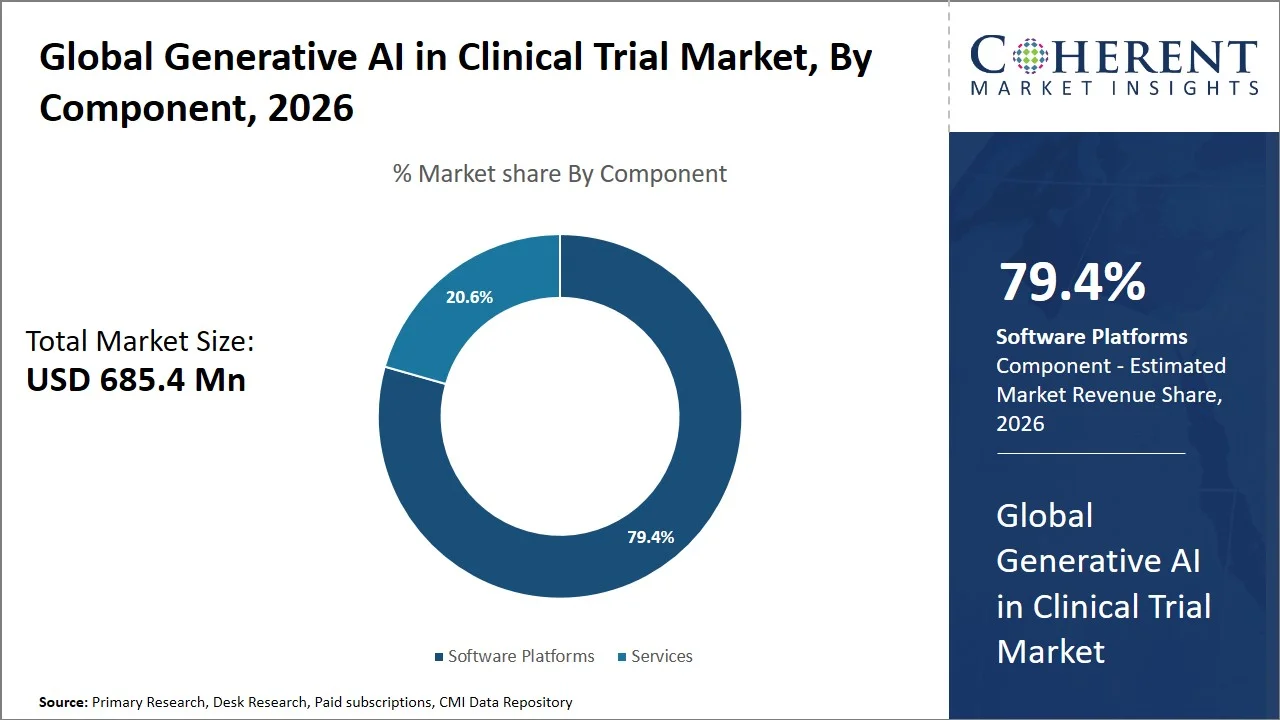
- Software Platforms are projected to hold 79.4 of the global generative AI in clinical trial market share in 2026, making it dominant component segment, across North America due to increasing federal support for artificial intelligence in biomedical research. For instance, the U.S. National Institutes of Health (NIH) initiated a program called Bridge2AI, aimed at fast-tracking the development of ethically sourced biomedical data and AI-based applications, further boosting the clinical research and drug discovery world toward utilizing sophisticated software platforms. (Source: Bridge2AI)
- Cloud-based are projected to hold 84.7 % of the global generative AI in clinical trial market share in 2026, making it dominant component segment, across North America due to sustained demand for scalable computing infrastructure capable of handling large clinical and genomic datasets. For instance, the U.S. National Institutes of Health (NIH) Cloud Platform Interoperability (NCPI) initiative enables researchers to securely access and analyze biomedical data over several cloud platforms, thereby providing impetus to the development of cloud-based clinical research systems. (Source: National Institutes of Health)
- Regulatory documentation and medical writing are projected to hold 27.6 % of the global generative AI in clinical trial market share in 2026, making it dominant application segment, across Europe due to increasing regulatory emphasis on digitalization and AI adoption within the medicine's approval process. For instance, the European Medicines Agency (EMA) and Heads of Medicines Agencies (HMA) jointly developed an AI Workplan with the aim to foster the responsible application of artificial intelligence within the European medicines regulatory network, including supporting AI-driven regulatory documentation and evidence creation. (Source: European Medicines Agency)
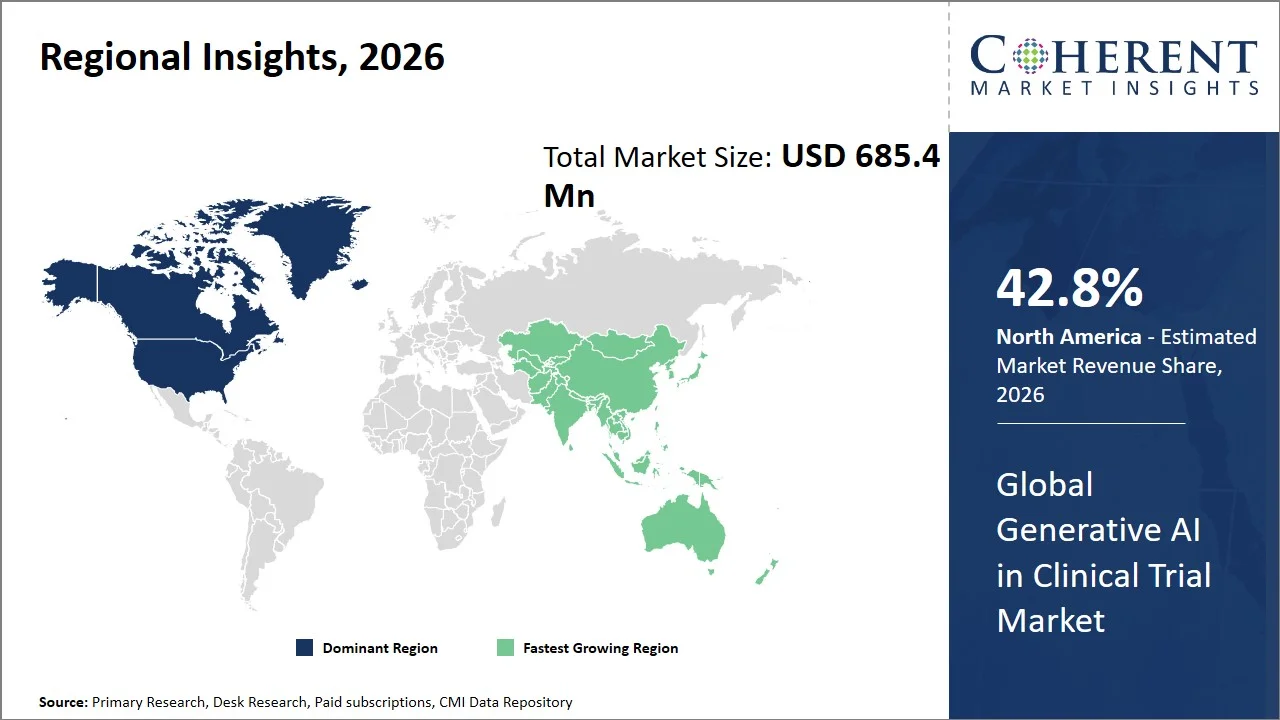
- North America market maintains dominance with an expected share of 42.8 % in 2026, bolstered by developed infrastructure of clinical research, and the higher adoption rate of AI technologies to optimize clinical trial and decision-making. For instance, in the U.S., the National Institute of Standards and Technology (NIST) introduced the AI risk management framework to encourage trustworthy and ethical use of AI across sectors such as life sciences and healthcare and develop an AI-ready environment that helps in building AI solutions in clinical research. (Source: U.S. Department of Commerce)
- Asia Pacific is expected to exhibit the fastest growth with an estimated contribution of 22.4 % share in 2026, propelled by rising investments in healthcare digitalization, expanding pharmaceutical R&D activities, and growing governmental support for AI innovation. For instance, to spur the adoption of AI in critical sectors, the government of Singapore introduced the National AI Strategy (NAIS) 2.0. It facilitates the use of cutting-edge AI technologies in the fields of clinical research, biomedical sciences and drug development. (Source: Government of Singapore)
- Growing Adoption of Synthetic Data Generation for Rare Disease Clinical Trials: Generative AI is becoming increasingly common in the generation of synthetic patient data for rare disease studies due to the difficulty of patient recruitment. Using this kind of AI data can assist in the generation of a patient population and in assessing the viability of trials, along with the design of trials, without compromising patient confidentiality. Due to the accelerating progress being made in the drug discovery and development area, there is an expectation of an enormous surge in the need for generative AI systems to produce such high-quality synthetic data for rare disease research.
- Expansion of AI-Powered Protocol Optimization and Amendment Reduction: Changes to clinical trial protocols are a primary driver of delays and budget overages in drug development. A significant opportunity for generative AI is the potential to leverage its predictive capability to analyze existing trial data, eligibility criteria, and operational characteristics to develop optimized trial protocols from inception, thus increasing enrollment, expediting time to market, and ultimately improving overall trial success by simplifying the protocol and limiting protocol amendments, thus presenting a substantial market growth opportunity.
Segmental Insights
Why Do Software Platforms Dominate the Global Generative AI in Clinical Trial Market?
Software Platforms are projected to hold the market share of 79.4% in 2026, as they automate many aspects of clinical trial, including trial design, patient recruitment, data management and regulatory submissions within one comprehensive environment. They allow real-time analysis, predictive modeling and synthetic data generation enabling sponsors to increase trial efficiency and decrease development timelines, while their scale and interoperability are essential in managing multi-site clinical trials. For instance, the U.S. National Center for Advancing Translational Sciences (NCATS) introduced the Trial Innovation Network (TIN). Using cutting-edge digital platforms and data-driven processes, TIN aims to increase speed and efficiency of clinical trial operations across all participating sites. (Source: National Center for Advancing Translational Sciences)
- Current Industry Events of 2026
- Market Size Estimation
- Regional Breakdown
- Competitive Landscape
- Customer Intelligence
- Segmental Analysis
- Pricing Analysis
- Key Market Drivers, Challenges & Future Trends
- Customized Insights Section
Why Does Cloud-Based Represent the Largest Deployment Segment in the Generative AI in Clinical Trial Market?
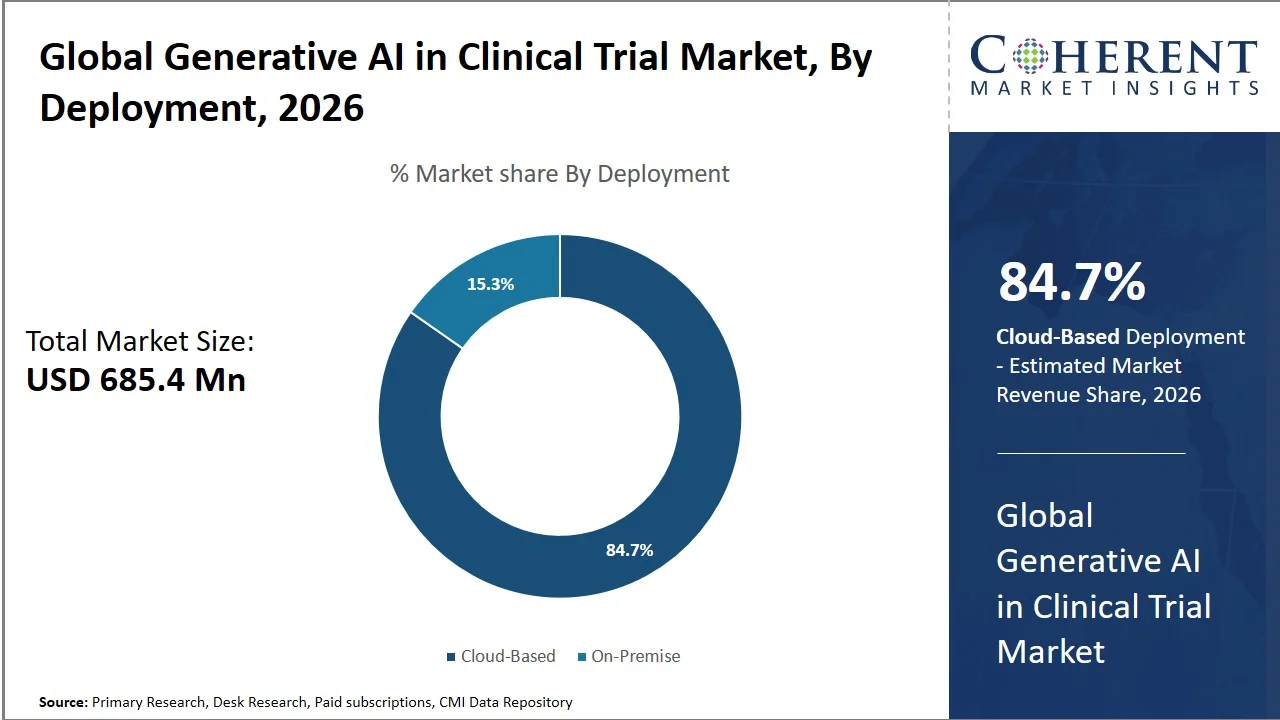
Cloud-based are projected to hold a market share of 84.7% in 2026, because it offers scalable computing resources, centralized data management and efficient collaboration over multiple, remotely distributed clinical trial sites. It is capable of processing huge clinical data quickly, minimizes infrastructure investment and installation difficulties for the pharmaceutical industry and contract research organizations (CROs), and helps with remote decentralized clinical trials through remotely accessible secure data analysis and monitoring. For instance, the European Health Data Space (EHDS) initiative by the European Commission is developing secure cross-border health data sharing, and cloud-enabled healthcare research infrastructure, which will foster AI-enabled clinical research across Europe. (Source: European Commission)
Regulatory Documentation and Medical Writing Segment Dominates the Global Generative AI in Clinical Trial Market
The regulatory documentation and medical writing segment are projected to hold a market share of 27.6% in 2026, as it is in demand to speed up the regulatory submission while retaining the accuracy and compliance required. Generative AI can be leveraged in the automation of preparing clinical study reports, protocols, safety narratives and submission documents reducing manual effort and accelerating review times. Consistency among the multi-country submission can be achieved, along with quick amendments throughout the clinical trial lifecycle. For instance, The Medicines and Healthcare products Regulatory Agency (MHRA) of the UK issued guidance and strategic approaches for AI adoption in health and regulation, grabbing attention towards the increasing use of AI in regulatory science and documentation workflows. (Source: Medicines and Healthcare products Regulatory Agency)
Currents Events and their Impact
Current Events | Description and its Impact |
UK MHRA Regulatory Sandbox for AI Medical Technologies (April 2026) |
|
ICH Releases Final Guideline on Good Clinical Practice (ICH E6(R3)) (January 2025) |
|
(Source: Medicines and Healthcare products Regulatory Agency, European Medicines Agency)
Generative AI in Clinical Trial Market Dynamics
Market Drivers
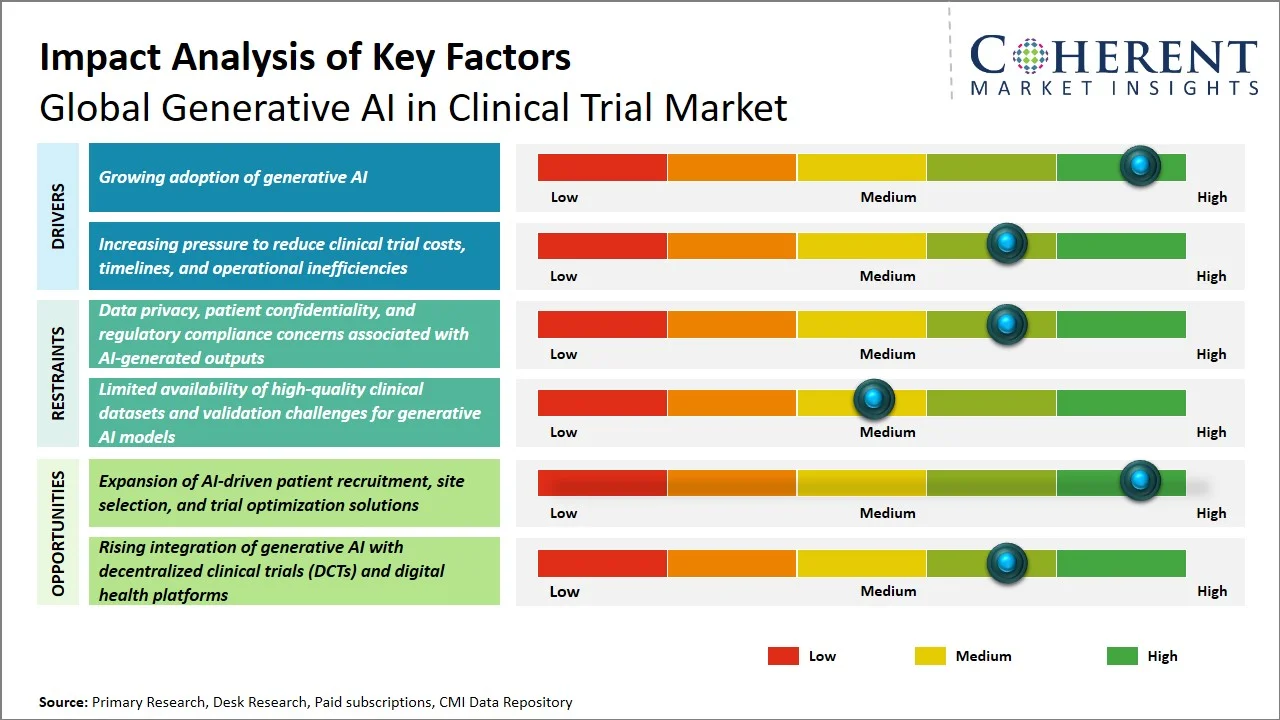
- Growing adoption of generative AI: The rising use of generative AI in clinical trials is driving better protocol design, patient recruitment, prediction analytics, and clinical data management. These tools allow scientists to more readily mine dense biomedical datasets, streamline trial inefficiencies, and allow data informed decisions across the entirety of the drug development life cycle. Moreover, it is helping the synthesis of large data sets, and simulations of virtual trials, aiding in the refinement of designs and the appropriate allocation of resources. For instance, in March 2024, the U.S. Advanced Research Projects Agency for Health (ARPA-H) introduced the ADAPT program with the intention to speed up the development of AI enabled platforms to convert health data into clinical insights to facilitate next generation clinical research and trials. (Source: Advanced Research Projects Agency for Health)
- Increasing pressure to reduce clinical trial costs, timelines, and operational inefficiencies: The growing need to bring down the costs associated with clinical trials, speed up the development processes and make the operational side more efficient, is driving the adoption of generative AI within the pharmaceutical industry. Generative AI provides the ability for automated protocol generation, improved patient enrollment and predictive capabilities and data analysis, resulting in a significant increase in the productivity of trials with fewer resource needs for sponsors. The ability of generative AI to achieve this is becoming ever more significant in light of an ever-increasing number of clinical trials taking place which also become more complex and more expensive to execute. For instance, the National Institutes of Health (NIH) in the U.S. created the Pragmatic and Implementation Studies for the Management of Pain to Reduce Opioid Prescribing (PRISM) initiative that encourages and supports novel, efficient clinical research methods to improve clinical trial implementation and evidence generation. (Source: National Institutes of Health)
Emerging Trends
- Increasing Adoption of Digital Twins in Clinical Trial Design: The concept of digital twin seems to complement effectively the advances being made in generative AI, allowing researchers to build virtual patients, diseases and treatment responses that can be used to fine tune trial design, assess different study possibilities, and aid decision making prior to involving human patients thereby minimizing risk and cost.
- Rising Integration of Multimodal AI for Real-World Evidence Analysis: Pharmaceutical companies are finding generative AI models increasingly capable of processing different sources of data such as electronic health records, imaging data, genetic information, and physician notes. The advancement of multimodal AI is improving real-world evidence generation, leading to deeper patient understanding and more efficient clinical trial design and operations.
Regional Insights
Why is North America a Strong Market for Generative AI in Clinical Trial?
North America leads the global generative AI in clinical trial market, accounting for an estimated 42.8% share in 2026, owing to a mature healthcare infrastructure, advanced technology landscape, and significant government support for innovative healthcare AI applications. Well-established market ecosystem comprises top pharmaceutical organizations, well-known research organizations, and technology leaders in the AI sphere, speeding up the adoption of generative AI within the clinical trial sphere. Leading regulatory bodies such as the U.S. FDA have provided necessary support frameworks in terms of AI driven tools enabling rapid adoption, ensuring patient safety. For instance, the U.S. National Institutes of Health (NIH) announced they are expanding the Artificial Intelligence/Machine Learning Consortium to Advance Health Equity and Researcher Diversity (AIM-AHEAD) program which aims to facilitate the appropriate use of AI and big data in biomedical research by providing networks, data and workforce training and resources.
Why Does Asia Pacific Generative AI in Clinical Trial Market Exhibit High Growth?
The Asia Pacific generative AI in clinical trial market is expected to exhibit the fastest growth with an estimated contribution of 22.4% share to the global market in 2026, driven by growing healthcare digitization, supportive government initiatives on the uptake of AI, and the burgeoning investment on pharmaceutical R&D in the region. Countries like China, Japan, South Korea, and India have started to embrace the benefits derived from the application of AI to clinical studies and is presenting a scope for rapid growth of the market in the region. For instance, the Government of Singapore introduced the National Multimodal Large Language Model (LLM) Programme. This will further enhance AI innovation capabilities, enable data-driven clinical research, foster a conducive environment for generative AI-powered solutions to take shape for design, recruitment and optimisation in clinical trials, and will also apply across health and biomedical sciences to promote development and adoption of AI solutions. (Source: Government of Singapore)
Global Generative AI in Clinical Trial Market Outlook for Key Countries
Why is the U.S. Leading Innovation and Adoption in the Generative AI in Clinical Trial Market?
The U.S. holds the largest market share for innovation and adoption in generative AI in clinical trial market driven by large concentration of major pharmaceutical companies, biotech innovators, CROs, and AI technology providers operating in a densely interwoven R&D network. The U.S has witnessed swift integration of generative AI in protocol designing, patient recruitment, trial monitoring, and regulatory processes and it is poised to boost clinical development efficiency and speed. The strong partnership of life science companies and AI platform providers boosts the commercialization of innovative clinical trial solutions and real-world implementation.
For instance, on June 2, 2026, Mayo Clinic and Microsoft declared a collaboration to create an AI frontier model for healthcare. This initiative joins Mayo Clinic's clinical know-how with the power of Microsoft AI to improve availability of reliable healthcare knowledge, and promote advancement of more sophisticated AI-based applications-showing how tight is the collaboration between the leaders in healthcare and technology, which will foster the widespread adoption of generative AI in clinical research and trial environments. (Source: Microsoft)
Is the U.K. a Favorable Market for Generative AI in Clinical Trial Market?
The U.K. is a promising market for generative AI in clinical trial driven by country's healthy life sciences environment, robust clinical research infrastructure, and the continuous inclusion of AI solutions in its existing clinical research processes, as well as in drug discovery procedures. Academia and clinicians work hand-in-hand with technology companies to implement them. This market is being supported by rapid adoption of digital health solutions, as well as data-centric research approaches. For instance, in January 2025, the U.K. government has introduced the AI Opportunities Action Plan, aiming to speed up the uptake of AI in crucial sectors such as healthcare and life sciences, thus facilitating a more accommodating ecosystem for the growth and application of generative AI in the clinical research domain. (Source: Department for Science, Innovation and Technology)
Is China Emerging as a Key Growth Hub for the Generative AI in Clinical Trial Market?
China is becoming an important growth area in the generative AI in clinical trial market driven by booming AI ecosystem, an increasing trend in pharmaceutical R&D investment, and an acceleration in the application of digital technologies for drug discovery. The country is experiencing increased collaboration between tech companies, healthcare providers, and life science enterprises in order to drive the clinical research innovation. Furthermore, abundance of healthcare data and increasing investments in AI infrastructure is fueling the adoption of generative AI in clinical trials. For instance, China's National Health Commission released the "Artificial Intelligence Application Scenarios Reference Guide," listing medical and medical research as a priority area, paving way for extensive application of cutting-edge AI technology in the clinical development and research processes. (Source: ScienceDirect)
Why Does Germany Top the European Generative AI in Clinical Trial Market?
Germany is the leading generative AI in clinical trial market in Europe primarily because of the presence of vast network of clinical research sites, and its promptness to adopt digital health technologies. The nation is a hub for several multinational drug developers (such as Bayer AG, Boehringer Ingelheim, Merck KGaA) and research institutes (such as German Cancer Research Center (DKFZ), Helmholtz Association, Max Planck Institutes) that are gradually adopting AI in design, patient recruitment, and analysis process of clinical trials. Germany's sophisticated healthcare data infrastructure along with its focus on research-driven advancement contributes to enabling generative AI solutions for the clinical trial sector.
Is Generative AI in Clinical Trial Market Developing in Japan?
The generative AI in clinical trial market in Japan is gradually expanding because of its strong capability in pharmaceutical research, advanced health infrastructure and focus on digitalization for drug development. The large pharmaceutical companies (such as Takeda Pharmaceutical, Astellas Pharma, Daiichi Sankyo, Eisai) in Japan are leveraging the AI technology to optimize clinical trial design, patient recruitment, data analysis. In addition, the growing collaboration between medical institutions and tech companies also accelerates the adoption of generative AI in the whole clinical trial pipeline. For instance, in January 2026, RIKEN partner with Argonne National Laboratory, Fujitsu, and NVIDIA to accelerate the capability of AI and high-performance computing (HPC) for science. The objective of the collaboration is to build the next generation of AI infrastructure and applications, and promote AI-driven scientific research and innovation in Japan. (Source: RIKEN)
AI Use Case Landscape in the Global Generative AI in Clinical Trial Market
Use Case | Primary Function | Market Significance |
Protocol Design & Optimization | Generate and refine study protocols and eligibility criteria | Reduces protocol amendments and shortens trial timelines |
Patient Recruitment & Cohort Selection | Identify and match eligible patients from diverse datasets | Improves enrollment efficiency and reduces recruitment costs |
Regulatory Documentation & Medical Writing | Automate preparation of clinical study reports and regulatory submissions | Accelerates approval processes and enhances compliance |
Synthetic Data Generation | Create realistic patient datasets for modeling and simulation | Supports rare disease research and privacy-preserving analytics |
Clinical Data Analysis & Decision Support | Analyze trial data and predict outcomes using AI models | Enhances trial success rates and improves operational efficiency |
How is the expansion of AI-driven patient recruitment, site selection, and trial optimization solutions creating new growth opportunities in the generative AI in clinical trial market?
The growth of AI-enabled patient recruitment, site selection and trial optimization tools in the generative AI in clinical trial market is expected to provide strong growth opportunities for AI-enabled solutions as they help alleviate some of the most pervasive reasons of trial delays and failures. The ability of generative AI to study various patient populations and determine patient feasibility, predict potential trial site performance and streamline trial execution processes can lead to significantly faster and more economical trials and studies with greater patient diversity, improved operational efficiency, and improved trial success. For instance, The All of Us Research Program, an initiative of the U.S. National Institutes of Health (NIH), has amassed one of the world's largest and most diverse health datasets, generating new possibilities for AI to assist in patient identification, cohort selection, and clinical research. (Source: National Institutes of Health)
Market Players, Key Development, and Competitive Intelligence
Key Developments
- In December 2025, Mass General Brigham revealed that they are introducing a new AI-focused company to facilitate the screening process for clinical trials and patient recruitment by using sophisticated AI technology for better identification of eligible participants and a streamlined enrollment process. The announcement marks the increasing acceptance of AI for improving patient matching, lessening recruitment bottlenecks, and optimizing clinical trials.
- In June 2025, Merck announced the expansion of an internal generative AI suite designed to speed up research and clinical workflows. The company is using generative AI to improve the analysis of data, the creation of scientific materials, and decision-making to accelerate the delivery of medicines. This shows an increased acceptance of generative AI in the pharmaceutical field to facilitate both clinical trial activities and development.
Competitive Landscape
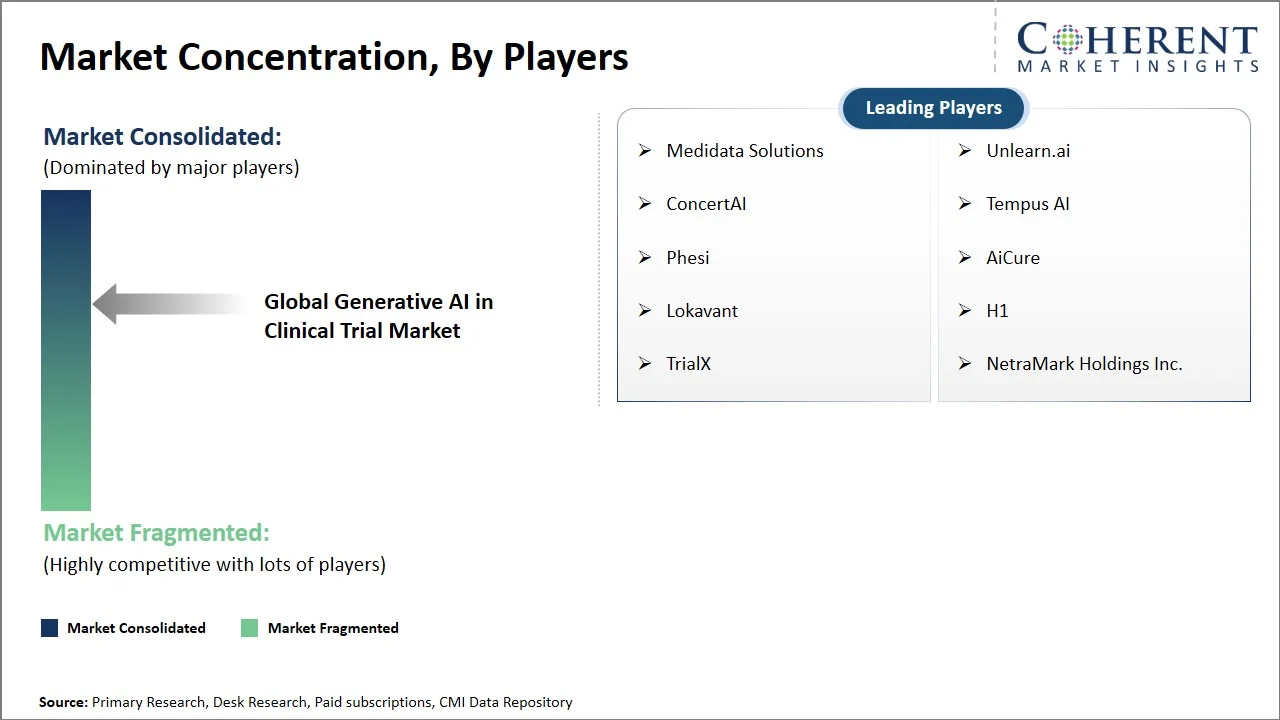
The global generative AI in clinical trial market is highly competitive, which includes providers of AI technology, clinical research organizations (CRO), vendors of cloud platform, pharmaceutical companies. Market participants are mainly concentrating on accelerating clinical trial with artificial intelligence technology (models and automation platform) and a variety of tools for data-based decision making. Partnerships between AI providers, healthcare organizations, and drug developers have boosted innovation and increased commercial application. Key focus areas include:
- Development of AI-powered patient recruitment and cohort identification solutions
- Expansion of generative AI platforms for protocol design and trial optimization
- Integration of AI into regulatory documentation and medical writing workflows
- Investment in cloud-based clinical trial analytics and decentralized trial platforms
- Strategic partnerships, acquisitions, and product launches to strengthen AI capabilities and global market presence
Market Report Scope
Generative AI in Clinical Trial Market Report Coverage
| Report Coverage | Details | ||
|---|---|---|---|
| Base Year: | 2025 | Market Size in 2026: | USD 685.4 Mn |
| Historical Data for: | 2020 To 2024 | Forecast Period: | 2026 To 2033 |
| Forecast Period 2026 to 2033 CAGR: | 29.9% | 2033 Value Projection: | USD 4,276.8 Mn |
| Geographies covered: |
| ||
| Segments covered: |
| ||
| Companies covered: | Medidata Solutions, Unlearn.ai, ConcertAI, Tempus AI, Phesi, AiCure, Lokavant, H1, TrialX, NetraMark Holdings Inc. | ||
| Growth Drivers: |
| ||
| Restraints & Challenges: |
| ||
Analyst Opinion (Expert Opinion)
- The outlook for the generative AI in clinical trial market looks robust, as more pharmaceutical companies begin transitioning towards AI driven, data oriented clinical development models. In time, generative AI is anticipated to be incorporated in trial design, patient recruitment, protocol development and in generating regulatory documents to shorten development times and increase the success of clinical trials. This uptake will only grow as regulatory systems adapt and confidence in AI produced results rises within the clinical research ecosystem.
- The maximum opportunities are foreseen in cloud-based generative AI platform for regulatory documentation and medical writing applications in the U.S. Large clinical trial infrastructure and digital setup and increasing focus on sped-up drug approval are strong drivers to automate regulatory documents and clinical documentation through AI.
- In order to gain a competitive advantage, market players should invest in developing validated and interpretable AI models, deepening relationships with pharmaceutical partners and CROs and increasing capabilities in patient recruitment, protocol optimization and regulatory automation. Investment in secure cloud architecture, regulatory-compliant AI solution and proprietary clinical data sets will also be key to differentiate the offerings and capture the long-term market leadership.
Speak to the analyst
Want personalized insights?
Take the findings above to one of our principal consultants, or have the report rebuilt around the segments, geographies and competitors you actually track.
Market Segmentation
- Component Insights (Revenue, USD Mn, 2021 - 2033)
- Software Platforms
- Services
- Deployment Insights (Revenue, USD Mn, 2021 - 2033)
- Cloud-Based
- On-Premise
- Appication Insights (Revenue, USD Mn, 2021 - 2033)
- Regulatory Documentation and Medical Writing
- Patient Recruitment and Enrollment
- Clinical Data Management and Analytics
- Protocol Design and Trial Planning
- Pharmacovigilance and Safety Monitoring
- Others
- End User Insights (Revenue, USD Mn, 2021 - 2033)
- Pharmaceutical and Biotechnology Companies
- Contract Research Organizations (CROs)
- Academic and Research Institutions
- Healthcare Providers and Clinical Research Centers
- Others
- Regional Insights (Revenue, USD Mn, 2021 - 2033)
- North America
- U.S.
- Canada
- Latin America
- Brazil
- Argentina
- Mexico
- Rest of Latin America
- Europe
- Germany
- U.K.
- Spain
- France
- Italy
- Russia
- Rest of Europe
- Asia Pacific
- China
- India
- Japan
- Australia
- South Korea
- ASEAN
- Rest of Asia Pacific
- Middle East
- GCC Countries
- Israel
- Rest of Middle East
- Africa
- South Africa
- North Africa
- Central Africa
- North America
- Key Players Insights
- Medidata Solutions
- Unlearn.ai
- ConcertAI
- Tempus AI
- Phesi
- AiCure
- Lokavant
- H1
- TrialX
- NetraMark Holdings Inc.
Sources
Primary Research Interviews
- Clinical trial directors and managers from pharmaceutical and biotechnology companies
- Clinical operations professionals involved in protocol design and trial execution
- Regulatory affairs specialists utilizing AI-enabled documentation platforms
- Contract Research Organization (CRO) executives implementing AI-driven clinical solutions
- AI and data science experts specializing in healthcare and clinical research applications
Stakeholders
- Generative AI software and platform providers
- Clinical trial technology vendors
- Contract Research Organizations (CROs)
- Pharmaceutical and biotechnology companies
- Cloud infrastructure and healthcare data platform providers
- End-use Sectors
- Pharmaceutical Companies
- Biotechnology Companies
- Contract Research Organizations (CROs)
- Academic & Research Institutes
- Healthcare Organizations and Clinical Research Networks
- Regulatory & Health Bodies
- U.S. Food and Drug Administration (FDA)
- European Medicines Agency (EMA)
- Medicines and Healthcare products Regulatory Agency (MHRA)
- Pharmaceuticals and Medical Devices Agency (PMDA), Japan
- National Medical Products Administration (NMPA), China
- Central Drugs Standard Control Organization (CDSCO), India
- International Council for Harmonisation (ICH)
Databases
- ClinicalTrials.gov
- FDA Drug Development and Review Database
- EMA Clinical Trials Information System (CTIS)
- NIH RePORTER
- NCBI Biomedical Database
- OECD AI Policy Observatory
- World Health Organization (WHO) Digital Health Atlas
Magazines
- BioPharm International
- Drug Discovery World
- Clinical Leader
- Applied Clinical Trials
- Pharmaceutical Executive
Journals
- Nature Digital Medicine
- NPJ Digital Medicine
- Journal of Clinical Epidemiology
- Journal of Medical Internet Research (JMIR)
- Artificial Intelligence in Medicine
- Contemporary Clinical Trials
Newspapers
- Financial Times – AI, healthcare, and pharmaceutical innovation coverage
- The Wall Street Journal – drug development and healthcare technology trends
- Nikkei Asia – Asia-Pacific pharmaceutical and AI industry developments
- The Economic Times – healthcare technology and life sciences coverage
- China Daily – AI policy and pharmaceutical innovation developments
Associations
- Drug Information Association (DIA)
- Association of Clinical Research Professionals (ACRP)
- Society for Clinical Research Sites (SCRS)
- Biotechnology Innovation Organization (BIO)
- Pharmaceutical Research and Manufacturers of America (PhRMA)
- International Society for Pharmaceutical Engineering (ISPE)
Public Domain Sources
- U.S. Food and Drug Administration (FDA)
- European Medicines Agency (EMA)
- National Institutes of Health (NIH)
- ClinicalTrials.gov
- World Health Organization (WHO)
- OECD AI Policy Observatory
- U.S. National Institute of Standards and Technology (NIST)
- International Council for Harmonisation (ICH)
Proprietary Elements
- CMI Data Analytics Tool, Proprietary CMI Existing Repository of information for last 10 years.
Get access to 250+ pages report
Every segment, forecast, competitor profile and data table behind the analysis above — available for instant download.
- ESOMAR Member
- ISO 9001:2015 Certified
- D-U-N-S Registered
- GDPR & CCPA Compliant
Missing comfort of reading report in your local language? Find your preferred language:
Transform your Strategy with Exclusive Trending Reports
Frequently Asked Questions
The global generative AI in clinical trial market is estimated to be valued at USD 685.4 Mn in 2026 and is expected to reach USD 4,276.8 Mn by 2033.
Software Platforms dominate due to their ability to automate protocol design, patient recruitment, data analysis, regulatory documentation, and trial management within a unified and scalable environment.
Generative AI in clinical trials refers to the use of advanced artificial intelligence models to generate insights, synthetic data, clinical documents, and predictive analyses that improve the efficiency and effectiveness of clinical research.
The CAGR of global generative AI in clinical trial market is projected to be 29.9% from 2026 to 2033.
Synthetic data enables researchers to simulate realistic patient datasets for trial planning, model training, and privacy-preserving analysis without exposing sensitive patient information.
Generative AI analyzes structured and unstructured healthcare data to identify eligible patient populations and optimize recruitment strategies.
In terms of deployment, cloud-based are estimated to dominate the market revenue share in 2026.