

Global Soliris Market Size and Forecast – 2026 to 2033
The Global Soliris Market is estimated to be valued at USD 2,080.2 Million in 2026 and is expected to reach USD 982.6 Million by 2033, exhibiting a compound annual growth rate (CAGR) of -10% from 2026 to 2033. This significant market contraction reflects the challenging competitive landscape facing Soliris, primarily driven by the introduction of biosimilar alternatives and next-generation complement inhibitors that offer improved efficacy profiles and enhanced patient convenience. The declining market trajectory indicates substantial revenue erosion as healthcare systems increasingly adopt cost-effective treatment alternatives while maintaining therapeutic outcomes for rare blood disorders.
Key Takeaways of the Global Soliris Market:
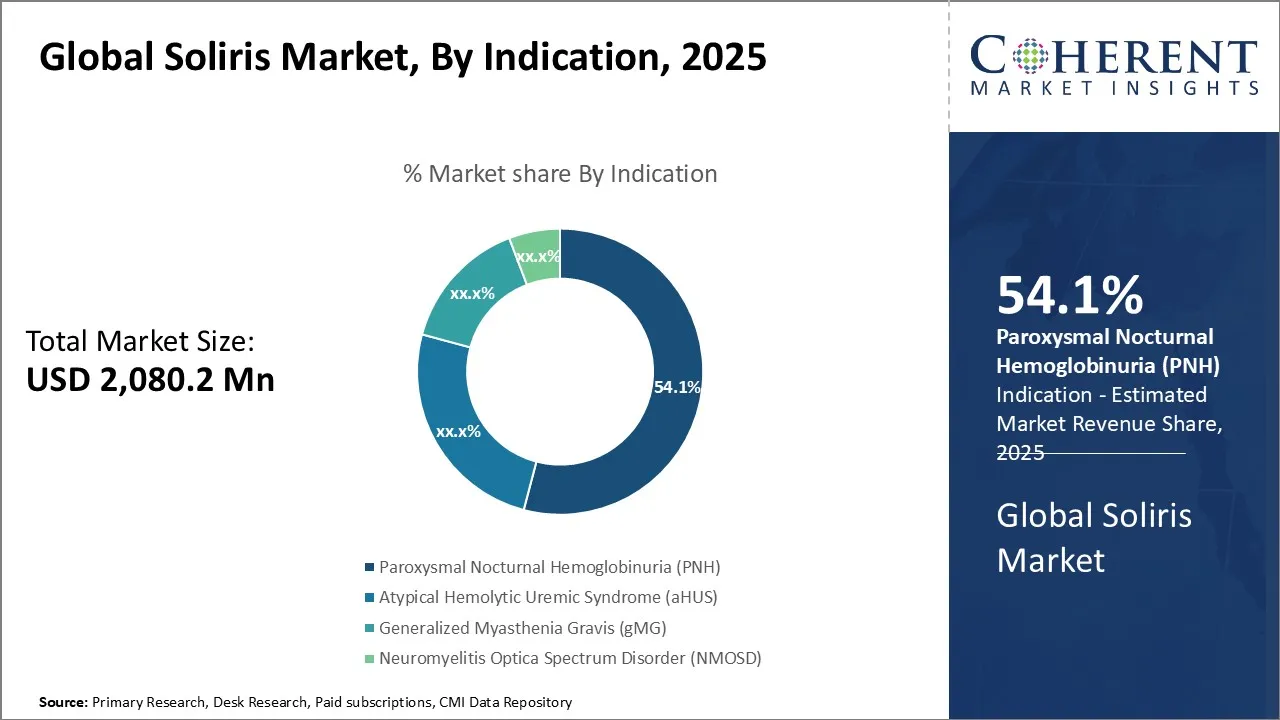
- In 2026, Paroxysmal Nocturnal Hemoglobinuria (PNH) is expected to account for the largest share of the market by indication, contributing 55.1%.
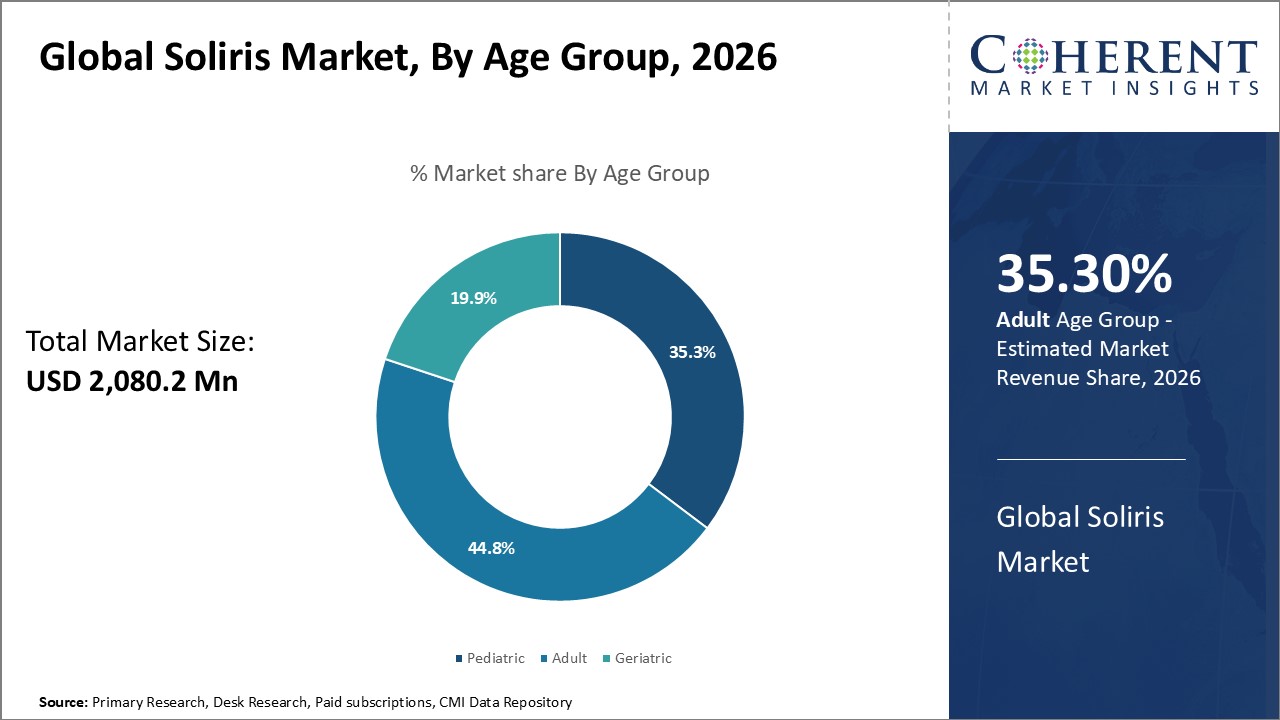
- By age group, the pediatric segment is expected to lead with a 35.3% share in 2026.
- Hospitals remain the primary end user in the global Soliris market, accounting for an estimated 51% to 61% of the overall market share in 2026.
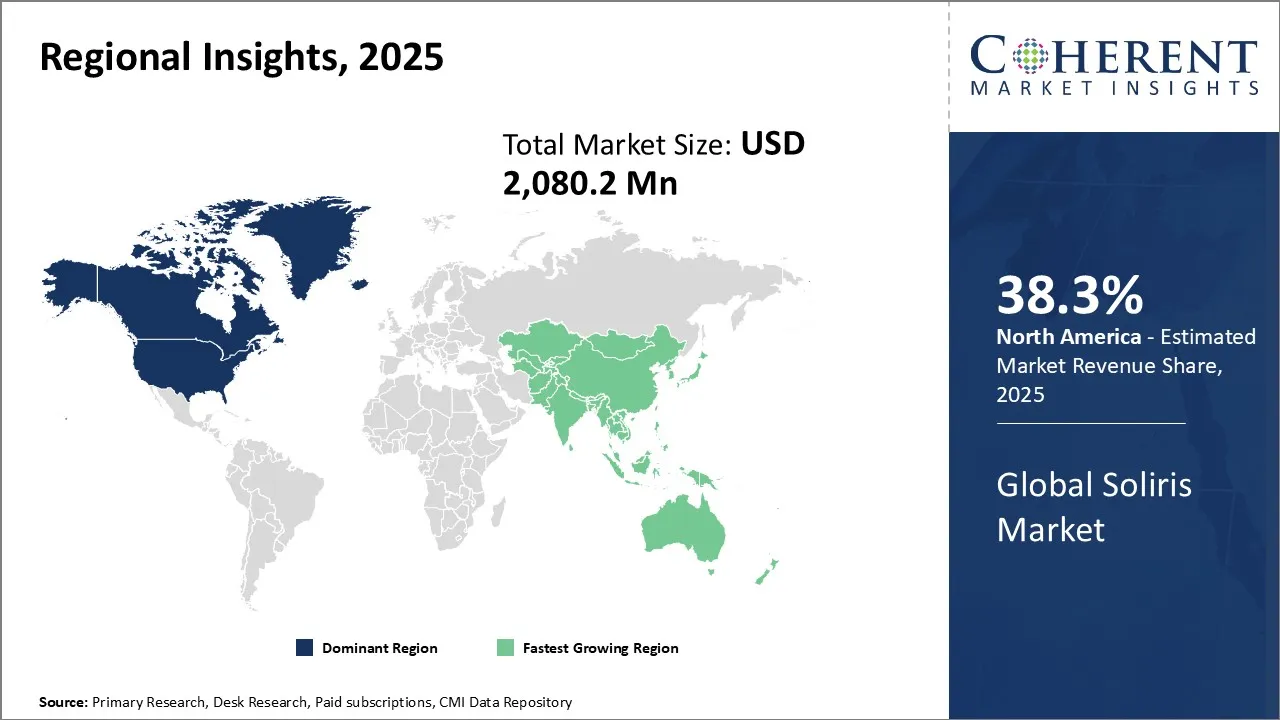
- North America is expected to lead the market, holding a share of 38. 3% in 2026. Asia Pacific is anticipated to be the fastest-growing region, with a market share of 25.3% in 2026.
Market Overview:
The Soliris market is experiencing a downward trend as healthcare systems move away from high-cost biologics toward more affordable and efficient alternatives. Growing biosimilar adoption, regulatory approvals for newer complement inhibitors, and payer-driven cost controls are reshaping treatment preferences leading to reduced demand and slow market growth for Soliris.
Currents Events and their Impact
Current Events | Description and its impact |
Global Health Initiative for Rare Diseases
|
|
Launch of Cost-Effective Biosimilars
|
|
Segmental Analysis
- Current Industry Events of 2026
- Market Size Estimation
- Regional Breakdown
- Competitive Landscape
- Customer Intelligence
- Segmental Analysis
- Pricing Analysis
- Key Market Drivers, Challenges & Future Trends
- Customized Insights Section
Global Soliris Market Insights, By Indication - Paroxysmal Nocturnal Hemoglobinuria (PNH) leads due to High Unmet need and Soliris being standard of care
In terms of indication, Paroxysmal Nocturnal Hemoglobinuria (PNH) is expected to contribute the highest share of the market with 55.1% in 2026 owing to its status as a rare, life-threatening complement-mediated disorder with historically limited treatment options. PNH represents a critical unmet medical need where Soliris serves as a groundbreaking therapeutic intervention, fundamentally transforming patient outcomes and establishing itself as the standard of care.
The dominance of PNH in the Soliris market stems from several interconnected factors that create a compelling value proposition for healthcare stakeholders. First, PNH is characterized by chronic intravascular hemolysis, thrombotic complications, and bone marrow failure, leading to severe morbidity and mortality if left untreated. The devastating nature of these complications creates an urgent medical imperative for effective treatment, positioning Soliris as an essential therapeutic option rather than merely an alternative treatment choice.
Global Soliris Market Insights, By Age Group - Pediatric Segment Drives Owing to Greater Vulnerability and Urgent Treatment Needs
In terms of age group, the pediatric segment is expected to contribute the highest share of the market with 35.3% in 2026 owing to the unique therapeutic vulnerabilities and treatment complexities that characterize rare complement-mediated disorders in children. Pediatric patients with conditions requiring Soliris treatment face distinct physiological, developmental, and clinical challenges that create compelling treatment imperatives and drive sustained market demand within this demographic.
The pediatric dominance in the Soliris market reflects the particular severity and urgency associated with complement-mediated disorders when they manifest in developing children. Conditions such as atypical Hemolytic Uremic Syndrome (aHUS) and PNH, when occurring in pediatric populations, often present with more aggressive disease progression and higher risks of irreversible organ damage. The developing cardiovascular, renal, and hematological systems in children are particularly vulnerable to complement-mediated damage, creating clinical scenarios where immediate and sustained intervention with Soliris becomes medically essential rather than optional.
Global Soliris Market Insights, By End User - Hospitals Account for the Largest Share due to their Infrastructure for Administering Complex Biologics and Managing Rare Disease Patients
Hospitals represent the dominant end user segment in the global Soliris market, capturing approximately 50–61% of total market share in 2026. This leadership is primarily attributed to their ability to manage complex, high-cost biologic therapies like Soliris, which require strict handling protocols, cold-chain logistics, and close patient monitoring. Soliris is administered through intravenous infusion, often necessitating regular dosing schedules and clinical supervision capabilities that hospitals are best equipped to deliver.
Moreover, hospitals house multidisciplinary teams including hematologists, nephrologists, and neurologists who are experienced in treating rare and life-threatening complement-mediated disorders such as paroxysmal nocturnal hemoglobinuria (PNH), atypical hemolytic uremic syndrome (aHUS), generalized myasthenia gravis (gMG), and neuromyelitis optica spectrum disorder (NMOSD).
Pricing Analysis: Global Soliris Market
- As of 2025, the price of Soliris (10 mg/mL IV) shows significant disparity across global markets, primarily driven by local healthcare policies, biosimilar penetration, and reimbursement structures. In the U.S., Soliris remains among the highest-priced treatments at approximately USD 6,523 per 30 mL vial, while markets like India (USD 2,750.1) and China (USD 2,780) reflect considerably lower pricing due to cost containment policies and limited insurance coverage. Countries such as Japan (USD 6,840) and Canada (USD 6,742) maintain premium prices, while European nations like Spain (USD 3,540) and Germany (USD 4,500) benefit from reference pricing and government-negotiated discounts. This variability also reflects the drug’s positioning as a rare disease therapy under tight regulatory scrutiny, and often, subject to restricted access and reimbursement hurdles.
- Looking ahead to 2032, Soliris’s pricing is expected to decline by up to 50% in several regions due to increasing biosimilar competition and a gradual shift in demand toward newer alternatives like Ultomiris. The presence of biosimilars such as Epysqli, coupled with widespread patent expirations and regulatory encouragement for cost-effective biologics, will apply downward pressure on prices. Moreover, countries like South Korea, Mexico, and the U.K. anticipate a 25–30% price reduction, aligning with government price negotiations and reduced clinical uptake. However, production costs for biologics remain high due to complex manufacturing processes, which may prevent dramatic short-term price collapses. Ultimately, market dynamics including policy interventions, reimbursement shifts, and biosimilar access will dictate the pricing trajectory of Soliris in the global pharmaceutical landscape.
Regional Insights
North America Soliris Market Analysis and Trends
North America’s dominance in the global Soliris market with an estimated share of 38.3% in 2026 stems from a sophisticated healthcare infrastructure, robust regulatory framework, and extensive research capabilities. The region benefits from the presence of Alexion Pharmaceuticals' headquarters in the U.S., which has facilitated streamlined market access and distribution networks. The U.S. FDA's established orphan drug designation program has created favorable conditions for rare disease treatments, enabling Soliris to gain significant market penetration.
The region's dominance is reinforced by comprehensive insurance coverage for rare disease treatments, advanced diagnostic capabilities, and a well-developed network of specialized treatment centers. Academic medical centers and research institutions have played crucial roles in conducting clinical trials and generating real-world evidence for Soliris applications. The presence of key opinion leaders and specialized physicians has contributed to increased awareness and adoption of complement inhibitor therapies.
Asia Pacific Soliris Market Analysis and Trends
The Asia Pacific region is expected to exhibit the fastest growth in the Soliris market with a share of 25.3% in 2026, driven by improving healthcare infrastructure, increasing disease awareness, and expanding access to specialized treatments. The region's growth trajectory is supported by rising healthcare expenditure, government initiatives to improve rare disease management, and growing physician expertise in complement-mediated disorders.
For instance, in July 2022, the government of India introduced the National Policy for Rare Diseases (NPRD), 2021 to strengthen rare disease management through specialized Centers of Excellence (CoEs) and Nidan Kendras offering diagnostic and counseling services. The policy encourages local drug development and manufacturing while easing import procedures for rare disease drugs through regulatory exemptions. It also aims to expand research and support access to orphan drugs via targeted incentives.
Several factors contribute to this rapid expansion, including increasing diagnostic capabilities across major markets, establishment of specialized treatment centers, and improved patient access programs. The region benefits from collaborative efforts between international pharmaceutical companies and local healthcare authorities to enhance disease recognition and treatment accessibility.
Soliris Market Outlook for Key Countries
U.S. Soliris Market Trends
The U.S. has historically been the largest market for Soliris, supported by robust treatment infrastructure and insurance coverage for rare diseases. However, market saturation, rising biosimilar competition, and payer pressure to reduce costs are contributing to a decline in growth. AstraZeneca’s patient support programs and partnerships with specialty pharmacies continue, but healthcare providers and insurers are increasingly favoring newer, cost-effective alternatives. As a result, the U.S. Soliris market is transitioning from expansion to gradual contraction, with demand shifting to successor products like Ultomiris.
For instance, on May 29, 2024, Amgen, one of the leading U.S. biopharmaceutical companies known for its strong biosimilar pipeline received U.S. FDA approval for BKEMV, the first interchangeable biosimilar to Soliris (eculizumab), originally developed by Alexion and now owned by AstraZeneca (following its USD 39B acquisition in 2021).
Germany Soliris Market Trends
Germany's strong foundation for rare disease care is now facing economic constraints and cost-containment measures that are impacting high-cost therapies like Soliris. While diagnostic capabilities and treatment protocols remain advanced, government pricing controls and biosimilar availability are eroding Soliris’s market share. Though physician familiarity and clinical research remain assets, the overall trend points toward reduced usage and a declining market contribution.
Japan Soliris Market Trends
Japan's progressive orphan drug policies have supported Soliris adoption, but tightening reimbursement frameworks and the entry of alternative therapies are slowing market momentum. Despite AstraZeneca’s strong institutional collaborations and local operations, the country is witnessing growing scrutiny of high-cost biologics. As payers emphasize cost-effectiveness, Soliris is expected to face a steady decline in new patient uptake, especially with ongoing development of next-generation complement inhibitors.
China Soliris Market Trends
China, once considered a high-growth opportunity for Soliris, is experiencing tempered expectations due to pricing pressures, increasing biosimilar presence, and policy-driven cost evaluations. Although awareness and diagnostic capacity have improved, the market is highly sensitive to affordability, and widespread adoption remains constrained. The government's focus on cost-effective healthcare solutions and growing availability of local alternatives may further limit Soliris penetration over the coming years.
Reimbursement Scenario for Soliris Market
- Alexion Pharmaceuticals, Inc. provides extensive reimbursement and access support for Soliris through its Field Reimbursement Managers (FRMs) and the OneSource program. These services help physicians and healthcare facilities with benefits investigations, prior authorizations (PAs), coding and billing guidance, appeals, and product acquisition. OneSource also assists patients by identifying financial assistance options, understanding insurance coverage, and facilitating enrollment in copay support programs. This support ensures that eligible patients can navigate coverage complexities and access treatment efficiently.
- For Soliris, prior authorizations are typically required by most health plans, especially since it is a high-cost orphan drug. Providers must follow payer-specific processes, including submitting medical necessity documentation and indication-specific checklists. Errors or omissions in PA submissions are common reasons for delays or denials. Alexion emphasizes thorough review and accurate completion of PA forms, and offers educational materials and reauthorization assistance to avoid disruptions in therapy.
Market Players, Key Developments, and Competitive Intelligence:
Key Developments:
- In July 2023, AstraZeneca, one of the global biopharmaceutical companies that acquired Alexion, received EU approval for Soliris (eculizumab) to treat refractory generalized myasthenia gravis (gMG) in children aged 6–17 who are anti-AChR antibody-positive. This marks the first and only targeted therapy approved in the EU for pediatric gMG, backed by positive Phase III trial results and CHMP support.
- In June 2023, AstraZeneca secured its third approval in China for Soliris (eculizumab). The National Medical Products Administration (NMPA) approved Soliris for treating adults with refractory generalized myasthenia gravis (gMG) who are anti-AChR antibody-positive.
Market Report Scope
Soliris Market Report Coverage
| Report Coverage | Details | ||
|---|---|---|---|
| Base Year: | 2025 | Market Size in 2026: | USD 2,080.2 Mn |
| Historical Data for: | 2020 To 2024 | Forecast Period: | 2026 To 2033 |
| Forecast Period 2026 to 2033 CAGR: | -10% | 2033 Value Projection: | USD 982.6 Mn |
| Geographies covered: |
| ||
| Segments covered: |
| ||
| Companies covered: | Alexion Pharmaceuticals, Inc. (Part of AstraZeneca) | ||
| Growth Drivers: |
| ||
| Restraints & Challenges: |
| ||
Soliris Market Dynamics
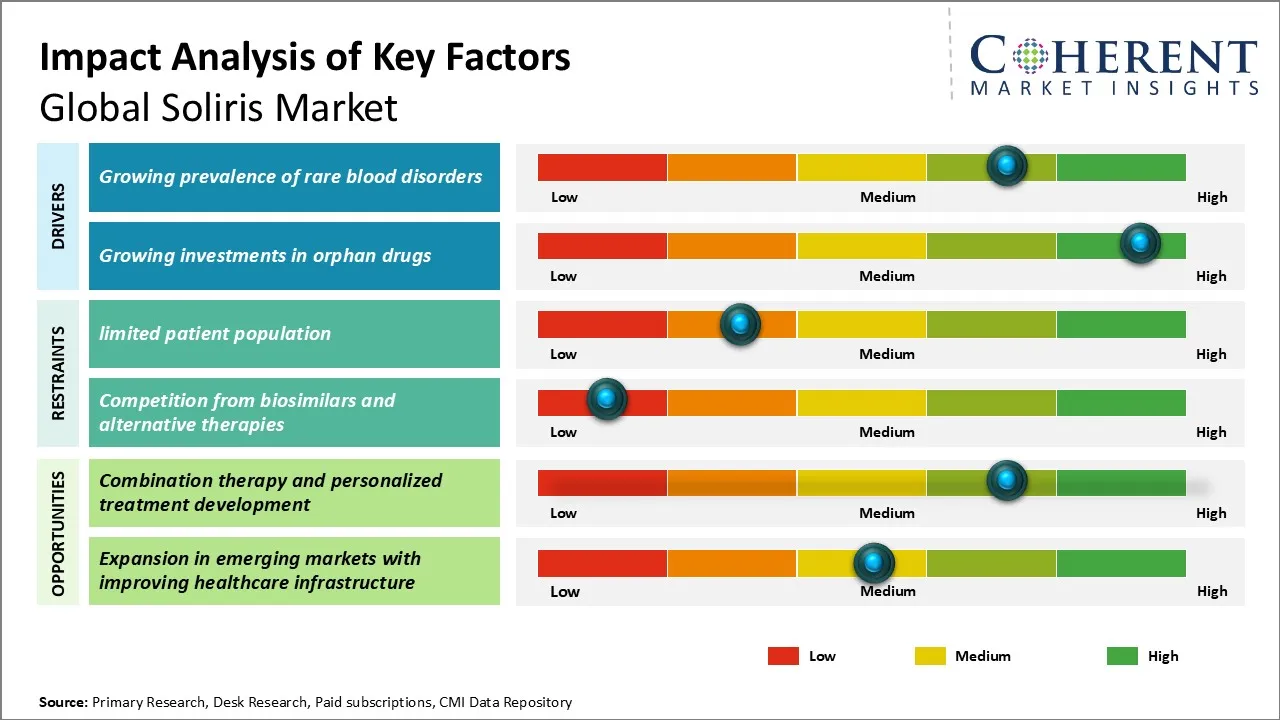
Soliris Market Driver - Growing Prevalence of Rare Blood Disorders
The prevalence of rare blood disorders like paroxysmal nocturnal hemoglobinuria (PNH) and atypical hemolytic uremic syndrome (aHUS) remains a significant clinical concern, their impact on driving Soliris market growth has weakened. Despite advancements in diagnosis and increased disease awareness, the high cost of therapy, limited reimbursement, and rising adoption of biosimilars and newer alternatives are leading to reduced reliance on Soliris. The urgent medical need still exists, but market demand is shifting toward more sustainable and accessible treatments, contributing to the overall slowdown and negative growth outlook for the Soliris market.
In November 2022, according to the National Library of Medicine, paroxysmal nocturnal hemoglobinuria (PNH) is a rare, serious blood disorder where red blood cells break down too early. It affects about 5–6 people per million each year worldwide. In the U.S., there are an estimated 3,000 to 6,000 cases. Most patients are diagnosed in their 30s or 40s, but it can occur at any age. It affects both men and women, though some studies show a slight female edge.
Soliris Market Opportunity - Combination Therapy and Personalized Treatment Development
The development of combination therapies and personalized treatment approaches represents a transformative opportunity for the global Soliris market, potentially expanding therapeutic efficacy and market value significantly. Current research initiatives exploring Soliris in combination with other therapeutic modalities, including immunosuppressants, targeted therapies, and novel biologics, demonstrate promising preliminary results in enhancing patient outcomes and potentially addressing treatment-resistant cases.
This combination approach could expand the addressable patient population by capturing patients who previously showed suboptimal responses to monotherapy, effectively increasing market penetration within existing indications. Personalized medicine strategies, leveraging genetic profiling and biomarker identification, present opportunities to optimize dosing regimens and predict treatment responses, potentially improving cost-effectiveness and clinical outcomes.
In February 2025, according to data published by Northwestern University, a clinical trial funded by Alexion and AstraZeneca shows that adding danicopan to standard C5 inhibitors (eculizumab or ravulizumab) significantly improves outcomes in Paroxysmal Nocturnal Hemoglobinuria (PNH) patients with persistent anemia. The combination therapy led to higher hemoglobin levels, reduced need for transfusions, and better quality of life for nearly two-thirds of patients. Experts emphasize the importance of consulting PNH specialists for tailored care and ongoing evaluation of new treatment options.
Analyst Opinion (Expert Opinion):
- The global Soliris market is currently experiencing a downturn, marked by a slow growth trajectory and a negative CAGR. Despite its status as a breakthrough complement inhibitor for rare diseases such as Paroxysmal Nocturnal Hemoglobinuria (PNH), Atypical Hemolytic Uremic Syndrome (aHUS), and Neuromyelitis Optica Spectrum Disorder (NMOSD), market momentum is waning due to the emergence of biosimilars. pricing pressure, and payer pushback on reimbursement. Additionally, the patent expiry of Soliris in several key markets has significantly reduced its competitive edge, triggering a shift toward more cost-effective alternatives like Ultomiris (ravulizumab). Regulatory scrutiny and limited expansion into broader indications also continue to restrain growth. Nevertheless, the market presents emerging opportunities through expanded access programs in low-income regions and ongoing research collaborations focused on next-generation complement inhibitors.
- Recent international conferences such as the European Hematology Association (EHA) Congress, American Society of Hematology (ASH) Annual Meeting, and Rare Disease Day Conferences have played a vital role in spotlighting the challenges and potential innovations within the complement therapy landscape. These events have facilitated multi-stakeholder discussions on pricing models, clinical trial data, and policy adjustments for rare disease treatments. Real-world developments, including Alexion’s strategic expansion into Latin America via patient access partnerships and Japan’s MHLW support for rare disease treatments through special designation and fast-track approvals, have influenced patient accessibility and market sentiment. However, unless novel therapeutic avenues or regional incentives emerge, the Soliris market is expected to remain under continued commercial pressure.
Speak to the analyst
Want personalized insights?
Take the findings above to one of our principal consultants, or have the report rebuilt around the segments, geographies and competitors you actually track.
Market Segmentation
- Indication Insights (Revenue, USD Mn, 2021 - 2033)
- Paroxysmal Nocturnal Hemoglobinuria (PNH)
- Atypical Hemolytic Uremic Syndrome (aHUS)
- Generalized Myasthenia Gravis (gMG)
- Neuromyelitis Optica Spectrum Disorder (NMOSD)
- Age Group Insights (Revenue, USD Mn, 2021 - 2033)
- Pediatric
- Adult
- Geriatric
- End User Insights (Revenue, USD Mn, 2021 - 2033)
- Hospitals
- Specialty Clinics
- Infusion Centers
- Others (Academic & Research Institutions, etc.)
- Regional Insights (Revenue, USD Mn, 2021 - 2033)
- North America
- U.S.
- Canada
- Latin America
- Brazil
- Argentina
- Mexico
- Rest of Latin America
- Europe
- Germany
- U.K.
- Spain
- France
- Italy
- Russia
- Rest of Europe
- Asia Pacific
- China
- India
- Japan
- Australia
- South Korea
- ASEAN
- Rest of Asia Pacific
- Middle East
- GCC Countries
- Israel
- Rest of Middle East
- Africa
- South Africa
- North Africa
- Central Africa
- North America
- Key Players Insights
- Alexion Pharmaceuticals, Inc. (Part of AstraZeneca)
Sources
Primary Research Interviews
- Key Opinion Leaders (KOLs)
- Hospital Administrators
- Clinical Trial Investigators
- Rare Disease Specialists
- Regulatory Consultants
- Pharmacoeconomic Experts
Government and International Databases
- World Health Organization (WHO)
- U.S. Food and Drug Administration (FDA)
- European Medicines Agency (EMA)
- National Institutes of Health (NIH)
- Centers for Medicare & Medicaid Services (CMS)
- Ministry of Health, Labour and Welfare (Japan)
- Central Drugs Standard Control Organization (CDSCO) – India
Trade Publications
- BioCentury
- FiercePharma
- PharmaVoice
- The Pharma Letter
- Pink Sheet
Academic Journals
- The Lancet
- New England Journal of Medicine (NEJM)
- Journal of the American Medical Association (JAMA)
- Orphanet Journal of Rare Diseases
- Nature Reviews Drug Discovery
- Nephrology Dialysis Transplantation
- Journal of Neurology, Neurosurgery & Psychiatry
Reputable Newspapers
- The New York Times – Health Section
- The Guardian – Global Health
- The Washington Post – Health & Science
- Financial Times – Pharma & Biotech
- The Hindu – Science & Health
- Reuters Health
- BBC News – Health
Industry Associations
- International Society of Nephrology (ISN)
- European Haematology Association (EHA)
- American Society of Hematology (ASH)
- American Society of Nephrology (ASN)
- World Federation of Hemophilia
- International Rare Diseases Research Consortium (IRDiRC)
- International Alliance of Patients' Organizations (IAPO)
Public Domain Resources
- World Bank Health Statistics
- Eurostat – Health Data
- Orpha Codes Directory
Proprietary Elements:
- CMI Data Analytics Tool: Proprietary analytics tool to analyze real-time market trends, consumer behavior, and technology adoption in market
- Proprietary CMI Existing Repository of Information for Last 8 Years
Get access to 250+ pages report
Every segment, forecast, competitor profile and data table behind the analysis above — available for instant download.
- ESOMAR Member
- ISO 9001:2015 Certified
- D-U-N-S Registered
- GDPR & CCPA Compliant
Missing comfort of reading report in your local language? Find your preferred language:
Transform your Strategy with Exclusive Trending Reports
Frequently Asked Questions
The global Soliris market is estimated to be valued at USD 2,080.2 Mn in 2026 and is expected to reach USD 982.6 Mn by 2033.
The CAGR of the global Soliris market is projected to be -10% from 2026 to 2033.
Growing prevalence of rare blood disorders and growing investments in orphan drugs are the major factors driving the growth of the global Soliris market.
limited patient population and competition from biosimilars and alternative therapies are the major factors hampering the growth of the global Soliris market.
In terms of indication, Paroxysmal Nocturnal Hemoglobinuria (PNH) is estimated to dominate the market revenue share in 2026.
Alexion Pharmaceuticals, Inc. (Part of AstraZeneca) is a major player.
North America is expected to lead the global Soliris market in 2026.