

Global Green Cardamom Market Size and Forecast – 2026-2033
The Global Green Cardamom Market is estimated to be valued at USD 1.19 Bn in 2026 and is expected to reach USD 1.75 Bn by 2033, reflecting a compound annual growth rate (CAGR) of 5.6% from 2026 to 2033.
Key Takeaways of the Green Cardamom Market
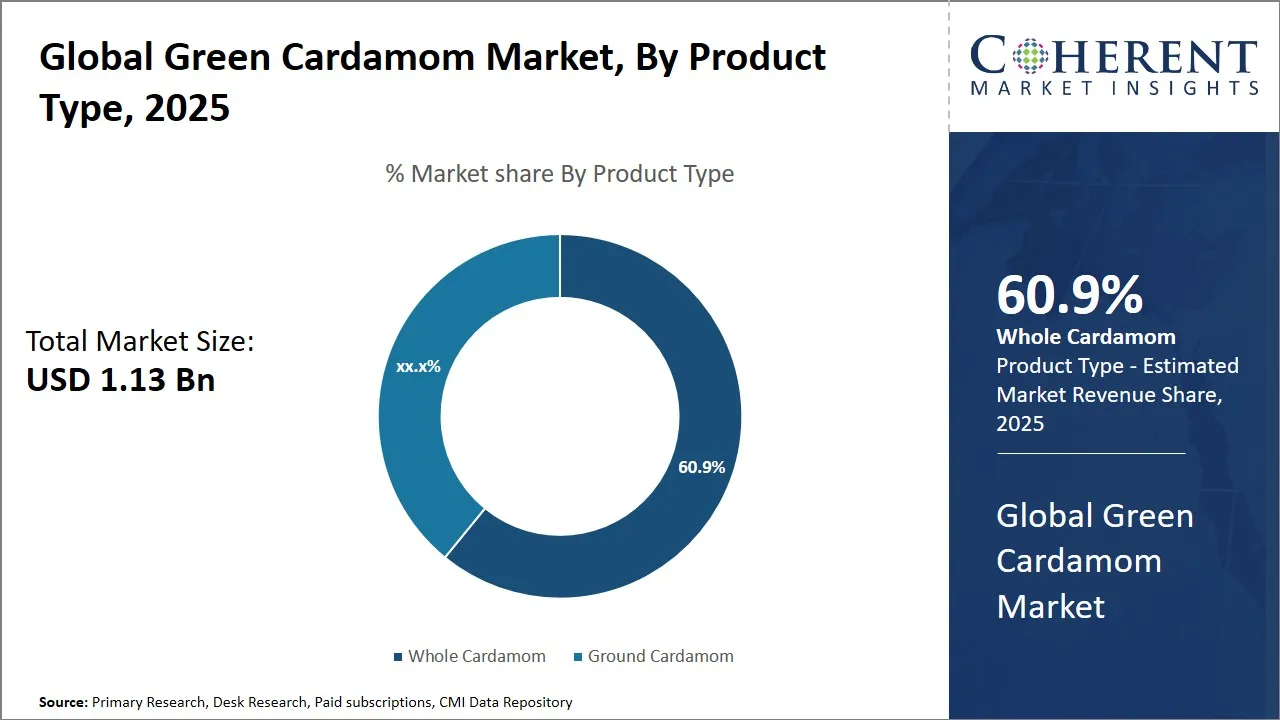
- Whole cardamom segment is expected to lead with 61.9% of the market share in 2026.
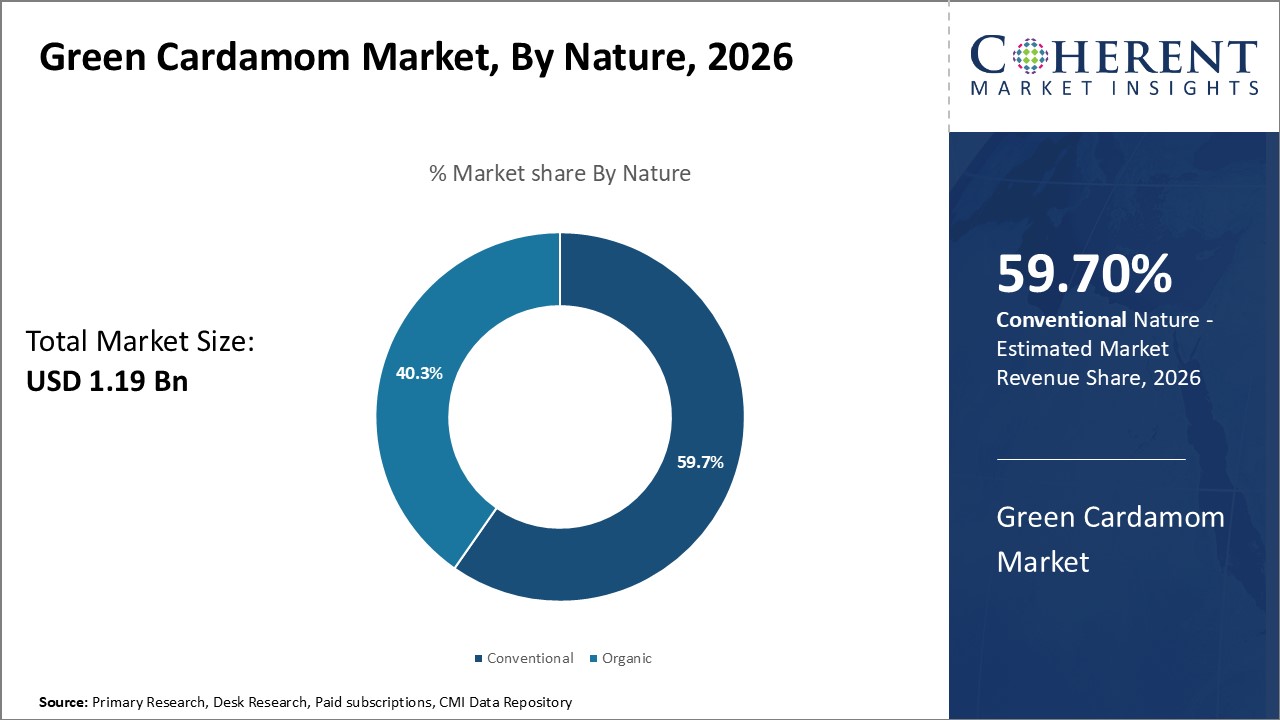
- The conventional segment is projected to lead with a 59.7 % share in 2026.
- The food and beverages segment is estimated to account for 35.7 % of the green cardamom market share in 2026.
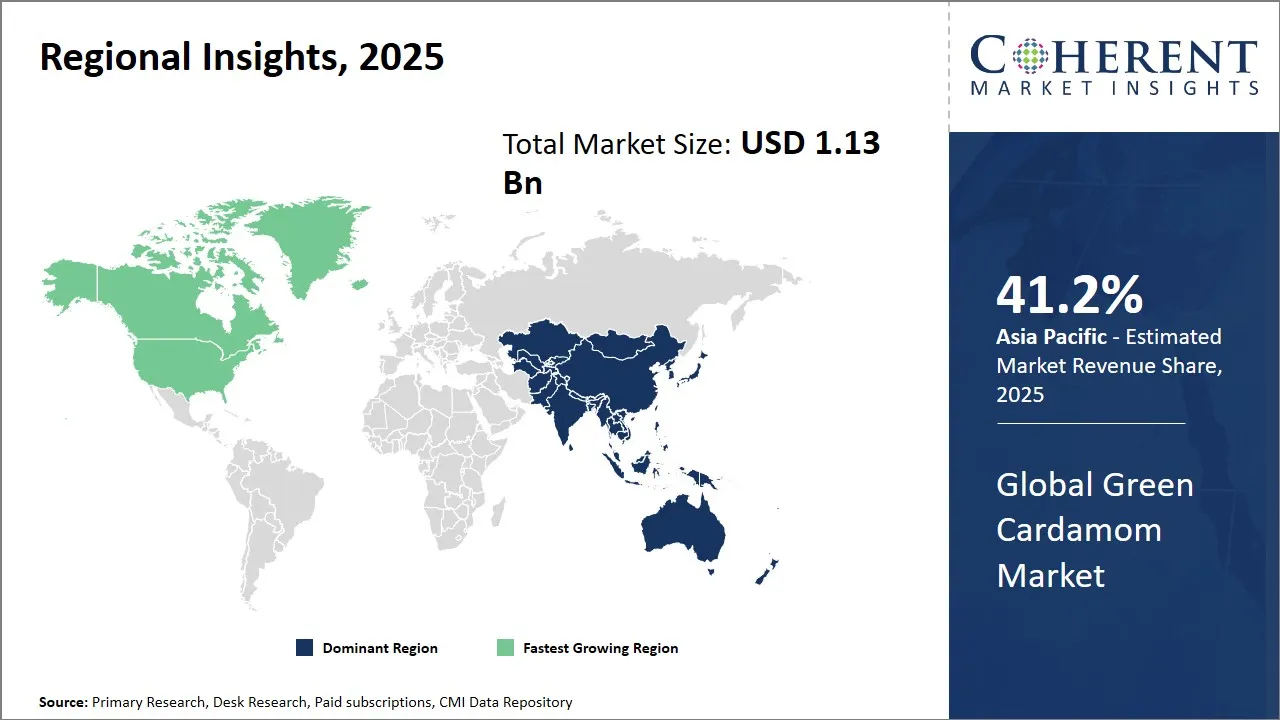
- Asia Pacific will lead the green cardamom market in 2026 with 41.2 % share.
- North America will hold 19.3 % share in 2026 and record the fastest growth.
Market Overview
- A significant market trend in the green cardamom industry is the rising preference for organic and sustainably sourced products, driven by health-conscious consumers.
- Additionally, green cardamom is becoming increasingly popular in the cosmetics and pharmaceutical sectors due to its aromatic and medicinal properties.
- The integration of cardamom in innovative culinary applications and functional food also fuels market growth, while advancements in agricultural practices and supply chain improvements enhance product quality and availability globally.
Current Events and Its Impact
Current Events | Description and its Impact |
Red Sea shipping disruption easing, but routing remains fragile |
|
Guatemala crop recovery and higher exportable volumes |
|
Segmental Insights
- Current Industry Events of 2026
- Market Size Estimation
- Regional Breakdown
- Competitive Landscape
- Customer Intelligence
- Segmental Analysis
- Pricing Analysis
- Key Market Drivers, Challenges & Future Trends
- Customized Insights Section
Why Does Whole Cardamom Dominate the Green Cardamom Market in 2026?
Whole cardamom segment is expected to command 61.9% of the global green cardamom market share in 2026, due to the fact that it preserves the natural aroma, flavor, and essential oils of cardamom as compared to the ground cardamom. The preserved form maintains the volatile substances which give the cardamoms its characteristic smell and this is enabling consumers and manufacturers to make use of the intact form in numerous culinary and medicinal products with the confidence that it will maintain freshness and strength. This quality maintenance is of great essence especially in the areas where cardamom is appreciated as a spice as well as due to its health value.
Complete pods of cardamom are better used in traditional food preparation and high-end food items since they offer a slow and gradual flavor release, thus being best suited to the meals that take more time to cook. Whole green cardamom pods are commonly used in Indian, Middle Eastern and Scandinavian cuisines, particularly in biryanis, pulao, curries, Arabic coffee (Gahwa) and mulled drinks, where gradual infusion of flavor as the dish is cooked for a long time is mandatory.
Why Does the Conventional Segment Dominate the Global Green Cardamom Market?
The conventional segment is projected to hold 59.7% of the green cardamom market share in 2026, due to the established farming production, abundant supply, and low prices, relative to its organic counterpart. The traditional method of growing cardamom enjoys decades of farming experience, in which synthetic fertilizers, pesticide and other chemical additives are used to achieve the maximum harvest as well as minimize vulnerability to pests and diseases. This would lead to a stable and consistent supply that would satisfy the increased demand of cardamom in the world market without major fluctuations in the pricing.
In addition, the traditional segment has greater acceptability and availability particularly in the emerging economies and big business customers like food and beverage producers who are more concerned with volume and cost-effectiveness. The conventional agri farming systems enable the producers to scale up and maximize the use of land, which enables the production to remain affordable to consumers in various regions. This low price is a very effective factor motivating the usage of the conventional green cardamom in mass market food, drinks, and traditional food preparations.
Food and Beverages Dominate the Green Cardamom Market
The food and beverages segment is expected to hold 35.7% share in 2026, because it has been used as a spice, flavoring agent, and natural preservative in the various culinary practices in the world. The flavor profile that is distinctive of cardamoms as aromatic and sweet-spicy is added to a broad range of foodstuffs, such as baked goods and confectionery, desserts, dairy products, sauces, and beverages, such as chai, flavored coffees, and specialty teas. Its capacity to provide a taste and health value, including that which helps in digestion, renders it very much sought after in food preparation to bring together the aspect of taste and functionality.
The rising consumer preference to natural ingredients has compelled food producers to use cardamom in food formulae as a substitute of artificial flavors and additives. The antioxidative properties of green cardamom are also valued since they help products to have a long shelf life and be fresh, thus making it an appealing ingredient to processed food industry.
Regional Insights
Asia Pacific Green Cardamom Market Analysis and Trends
The Asia Pacific region is projected to lead the market with a 41.2% share in 2026. Countries such as India and Sri Lanka, renowned for their ideal climatic conditions, have created a robust agricultural supply chain supported by well-developed farming practices and advanced post-harvest processing techniques.
Government policies in these countries promote sustainable agriculture and provide subsidies and technical support to spice farmers, enhancing quality and yield. The presence of prominent companies like AVT Natural Products and Ecom Agro Industrial Corp in India further strengthens the market by integrating large-scale production with export capabilities. Trade dynamics favor this region owing to its strategic geographic location near major export markets in the Middle East and Europe, enabling efficient distribution and cost-effective logistics.
North America Green Cardamom Market Analysis and Trends
The North America region is likely to show the highest growth in the market with 19.3% share in 2026 due to the increase in demand of high-end natural spices in the foodservice, packaged foods, and nutraceutical utilization. Growing consumer interest in clean-label foods, ethnic foods, and functional foods has increased the use of cardamom in new markets out of traditional segments such as beverages, bakery, flavored dairy, and wellness products. The U.S. and Canada are the main regional markets with the help of the high level of the import infrastructure and good penetration of specialty spice brands via retail and foodservice distribution.
The key international spice suppliers and industry players like McCormick and Company, Olam Food Ingredients and Kerry Group have enhanced sourcing relationships, processing capacity and branded products in the region enhancing quality assurance and supply. Also, an increased consumption of cardamom as a herb in herbal teas, over-the-counter supplements, and digestive preparations makes the North American market a high value, marginal, and not a volume-driven market.
Green Cardamom Market Outlook for Key Countries
Is India the Global Anchor for the Green Cardamom Market?
The green cardamom market of India is still the nerve of the world green cardamom industry as it is a major producer and exporter of green cardamom. Agrono-climatic regions of the country, particularly in Kerala, Karnataka and Tamil Nadu where farmers cooperatives and facilitation of quality control and export of the spices by Spices Board of Indias are dominant give the industry the ideal growing conditions.
Firms such as the AVT Natural Products and Tata Consumer Products are playing a significant role in advancing the technology of cultivating products and marketing them worldwide, making sure that their products are always of the same quality and dependable. The end to end value chain of cultivation and processing to the international distribution of goods keeps being essential in determining the direction the trade flows of the sectors.
Sri Lanka Green Cardamom Market Trends
Sri Lanka is still a leading producer of premium quality green cardamom with the favorable altitude and soil being concentrated within the central highlands. The emphasis on the government in the field of organic farming and spice production in a sustainable environment has made Sri Lankan cardamoms gain prestige in the high-end markets.
Companies such as the Ceylon Spice Corporation and Balangoda Exporters are also keen on sustainable harvesting, certification as well as branding to achieve the global standards. Its competitiveness is boosted by the availability of good export infrastructure and its engagement in international spice fairs, which make the country appeal to the keen customer, particularly the European and North American markets.
U.A.E. Green Cardamom Market Trends
The market in the U.A.E. is primarily driven by its role as a critical trading and re-export hub, linking cardamom producers in Asia Pacific and Africa with demand centers worldwide. Its free trade zones and state-of-the-art logistics infrastructure allow companies such as Al Falah Spices and Gulf Agro Trade to efficiently distribute cardamom to broader markets, including Europe and the Americas.
Additionally, increasing local consumption fueled by a growing expatriate population and rising interest in organic and natural spices underpins the U.A.E.’s expanding market. Proactive government investments in food safety regulation and trade facilitation continue to reinforce the U.A.E.’s strategic importance in the global green cardamom supply chain.
Is Kenya Emerging as a Competitive Export Hub for Green Cardamom?
Kenya’s green cardamom market is on an upward curve due to its growing investment in spice farming within the highland regions and strategic export positioning through Mombasa port. Government efforts to support spice research, capacity-building programs for farmers, and infrastructural improvements have facilitated increased production and export capabilities.
Kenyan companies such as Kenya Health Spices and Avena Trading play key roles in procuring and packaging cardamom for international markets. With its emphasis on quality control and traceability, Kenya is positioning itself as a reliable supplier in the competitive green cardamom space, particularly targeting the Middle East and European markets.
Price Volatility & Crop Risk Forecasting
Price Volatility & Crop Risk Forecasting for green cardamom relies on an integrated dataset combining market, climate, and supply-side variables. It uses historical farm-gate and auction price data, including grade-wise differentials and export parity prices, to establish baseline price behavior and volatility patterns. These price trends are then correlated with weather and climate data such as monsoon onset and deviation, rainfall distribution, temperature, humidity, and the occurrence of extreme events across key cardamom-growing districts. This linkage helps quantify how climatic shocks translate into short-term and seasonal price movements.
To capture downstream price transmission, the model integrates supply-chain and market flow data, including auction arrivals, traded volumes, stock levels with traders and exporters, and processing capacity utilization. Trade and demand signals such as export volumes by destination, shifts in international demand, and currency movements are included to reflect external price pressures. Seasonality indicators, harvest calendars, and historical yield cycles are used to generate seasonal price indices and identify recurring peak and trough periods.
Supply Chain Margins
Supply Chain Margins data maps how value and profitability are distributed across the green cardamom value chain, from farmers through aggregators, auctioneers, processors, exporters, wholesalers, and retailers. It tracks price build-ups at each node, identifying mark-ups applied as the product moves downstream and the extent to which costs such as processing, grading, storage, transportation, financing, and regulatory compliance are absorbed or passed forward. This structure clarifies who captures value under normal market conditions and how margins are structurally allocated across participants.
Market Players, Key Development, and Competitive Intelligence
Key Development
- In August 2024, two new cardamom varieties, IISR Manushree, and IISR Kaveri, were introduced by the Prime Minister of India, Narendra Modi. These two new varieties of cardamom are developed at the Indian Council of Agricultural Research (ICAR).
Top Strategies Followed by Global Green Cardamom Market Players
- Established players have taken over the market with a huge investment in research and development (R&D) with the hope of coming up with high-performance products that comply with the changing consumer needs and the standards of regulation. Such market leaders tend to invest a lot of resources in the creation of cardamom varieties with better flavor, longer shelf life, and resistance to pests and diseases.
- For example, Everest Spices (India) and MDH Spices also invest in the processes of varietal selection, high-level cleaning, grading, and packaging to maintain the aroma, oil content, and shelf life. The global spice giants such as McCormick and company and Olam food ingredients are geared towards supply-chain traceability, food safety compliance, and regular quality sourcing in India and Guatemala.
- The green cardamom market is filled with mid-level players that cut the niche strategically in their way to providing affordable solutions to balance between quality and price, serving price-sensitive buyers and small-to-medium businesses as the major customers. Understanding the price elasticity of most of the developing economies, such players have focused on the simplification of the production expenses without affecting the basic quality parameters required to be used as end uses in food, food, and drug consumption.
- Firms like Synthite Industries and Mane KANCOR compromise between quality and magnitude by using contract farming, third-party processing plants, and local aggregation stations. Such players have progressively partnered with local exporters, packaging partners as well as food ingredient distributors to cater to the B2B consumers in beverages, bakery and nutraceuticals.
- Players in the global green cardamom market who are of small scale have a different approach of strategies to ensure survival and expansion in the highly competitive environment through niches that are specialized. These players tend to specialize in making distinctive or novel cardamom products, which emphasize product specialization (e.g. organic certification, fair trade products, or region-specific varieties with a unique flavor profile).
- For example, Greenfields Ltd., Phalada Pure & Sure, and region specific Kerala cooperatives are examples that focus on organic certification, fair-trade sourcing and single-origin cardamom. Others specialize in the high quality pods of certain micro-climates in Idukki or Wayanad, which sell on quality aroma and oil purification.
Market Report Scope
Green Cardamom Market Report Coverage
| Report Coverage | Details | ||
|---|---|---|---|
| Base Year: | 2025 | Market Size in 2026: | USD 1.19 Bn |
| Historical Data for: | 2020 To 2024 | Forecast Period: | 2026 To 2033 |
| Forecast Period 2026 to 2033 CAGR: | 5.6% | 2033 Value Projection: | USD 1.75 Bn |
| Geographies covered: |
| ||
| Segments covered: |
| ||
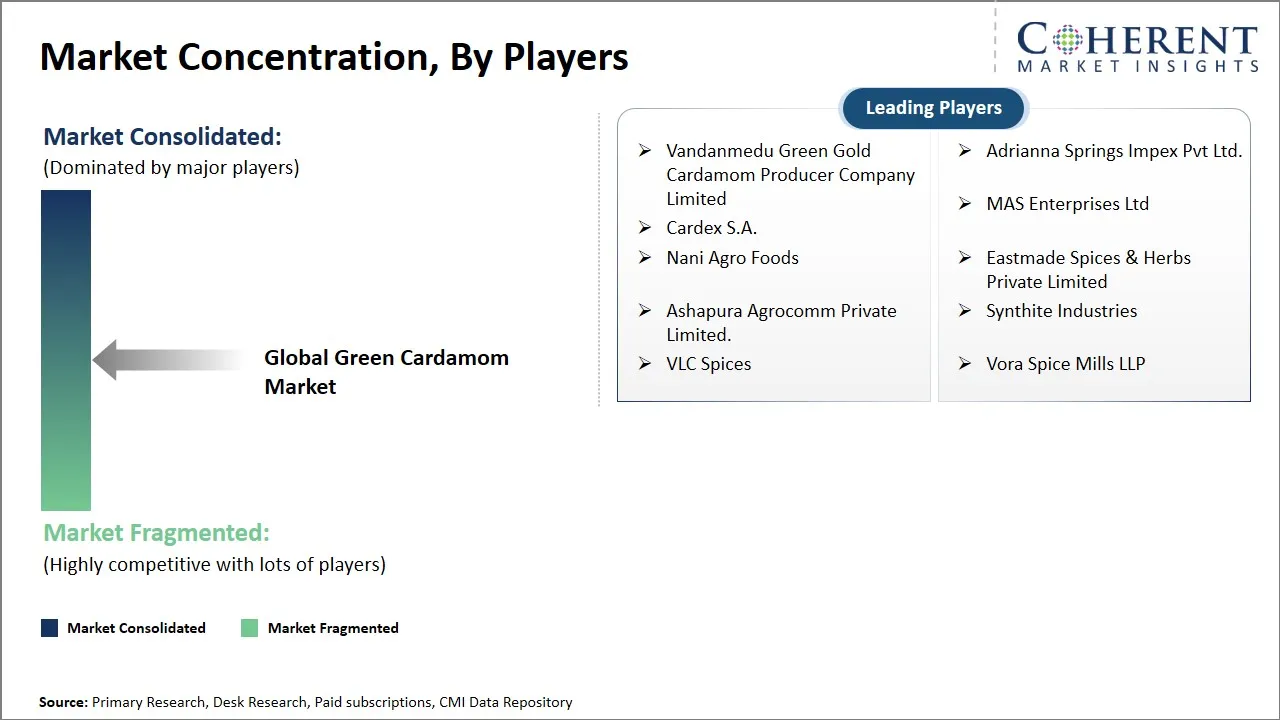
| Companies covered: | Vandanmedu Green Gold Cardamom Producer Company Limited, Adrianna Springs Impex Pvt Ltd., Cardex S.A., MAS Enterprises Ltd, Nani Agro Foods, Eastmade Spices & Herbs Private Limited, Ashapura Agrocomm Private Limited., Synthite Industries, VLC Spices, and Vora Spice Mills LLP | ||
| Growth Drivers: |
| ||
| Restraints & Challenges: |
| ||
Green Cardamom Market Dynamics
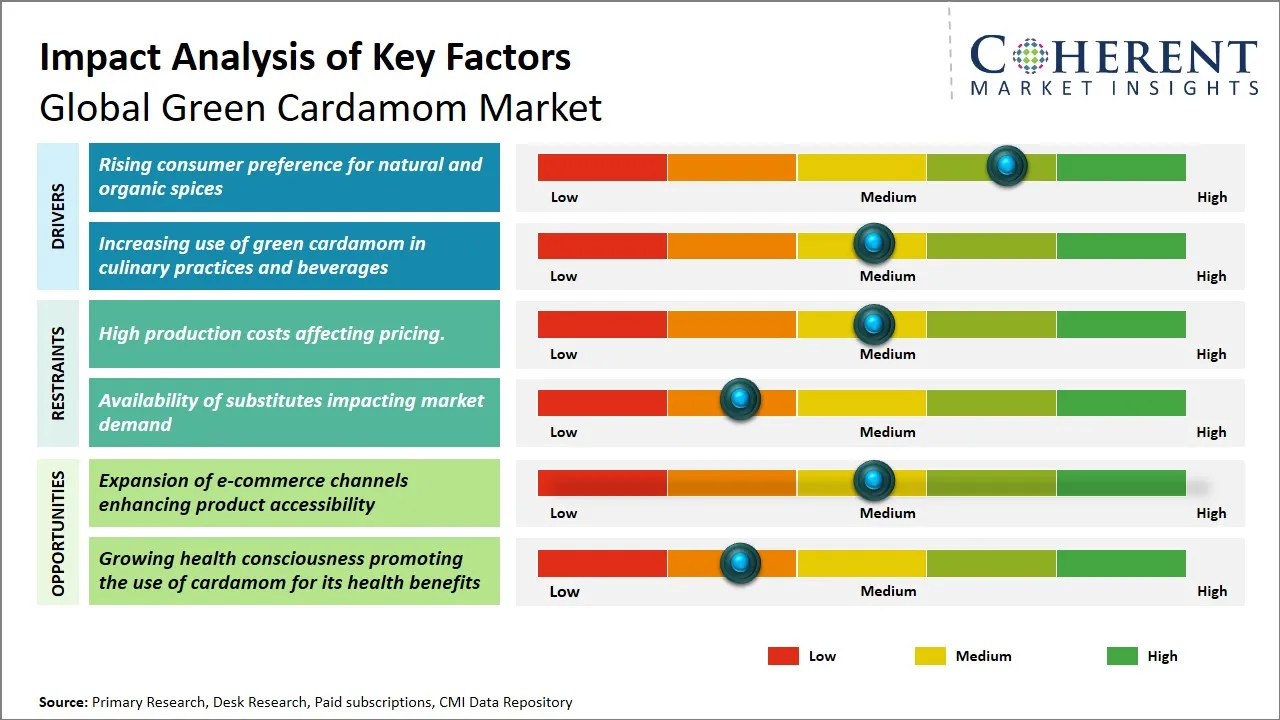
Green Cardamom Market Driver - Rising Consumer Preference for Natural and Organic Spices
The emergence of awareness on health and wellness has contributed to substantial consumer buying behavior, resulting into a growing demand to take natural and organic spices, which include green cardamom. With increasing numbers of people becoming aware of the dangers of synthetic additives and chemical residues that are present in processed spices; it is the natural origin of green cardamoms along with the many health benefits of green cardamoms that have made it a favorite ingredient in cooking and medicine. Its antioxidants attributes, digestive value, and contribution to a better taste without artificial additives appeal more to consumers in a world that is moving to clean labels and responsibly eating foods.
The perception of green cardamom as a health-promoting spice is supported by the active use of the product by Ayurvedic supplement manufacturers and herbal medicine producers in the production of digestion, detox, and oral health preparations.
Green Cardamom Market Opportunity - Expansion of E-commerce Channels Enhancing Product Accessibility
The existing and developing global market of the global green cardamom is bound to gain immensely as the e-commerce platforms rapidly grow more and more important to the overall improvement of accessibility and availability of products as well as reach out to the consumers. Previously, green cardamom was sold mostly in local spice markets and specialty shops, which made it not very exposed to niche buyers. Nevertheless, with the introduction of digital market and online selling platforms, consumer buying behavior has shifted as now a larger audience can now buy high quality green cardamom at the comfort of their shops. The online stores offer the manufacturers and suppliers a chance to access global markets, which would enable them to reach the consumers who might not have physical access to this spice because of geographical or retail structure barriers.
The purchasing of green cardamom by B2B digital procurement, restaurants, bakery, and food manufacturers is increasingly being sourced through B2B e-commerce portals to buy in bulk at a better price, enhance price transparency, and secure supply.
Analyst Opinion (Expert Opinion)
- The market of green cardamom is undergoing a dynamic change in response to the growing demand of spices in the world that improve culinary experiences and meet the demands of health-conscious users. The Report of the International Spice Conference (2023) and the World Spice Symposium (2022) provided information about the most important innovations, and such companies as Elettaria Cardamomum and McCormick were the pioneers in the sphere of sustainable sourcing and product differentiation.
- A recent trend in the industry that shows how McCormick has responded to the increase in consumer demand to purchase high-quality and ethically sourced ingredient is its recent introduction of a premium organic green cardamom line of products. The trend during these conferences was the use of cardamom in many of the food and beverage products not only in the artisanal teas, but also in high end desserts and hence expanded its market use beyond its traditional applications. Difficulties like unstable prices based on changes in the production and the presence of substitutes of lower quality was often mentioned though.
- Firms, which are more concerned about supply chain transparency and are interested in informing their customers about the distinctive taste and health properties of green cardamom, must be able to gain a bigger market share. Finally, expansion of the green cardamom market will determine its capability to innovate and match the developing consumer tastes and preferences of authenticity and quality.
Speak to the analyst
Want personalized insights?
Take the findings above to one of our principal consultants, or have the report rebuilt around the segments, geographies and competitors you actually track.
Market Segmentation
- Product Type Insights (Revenue, USD Bn, 2021 - 2033)
- Whole Cardamom
- Ground Cardamom
- Nature Insights (Revenue, USD Bn, 2021 - 2033)
- Conventional
- Organic
- End-use Application Insights (Revenue, USD Bn, 2021 - 2033)
- Food and Beverages
- Traditional Medicine
- Home Care
- Hair Care
- Others
- Distribution Channel Insights (Revenue, USD Bn, 2021 - 2033)
- Online Retail
- Offline Retail
- Supermarkets
- Specialty Stores
- Grocery Stores
- Regional Insights (Revenue, USD Bn, 2021 - 2033)
- North America
- U.S.
- Canada
- Latin America
- Brazil
- Argentina
- Mexico
- Rest of Latin America
- Europe
- Germany
- U.K.
- Spain
- France
- Italy
- Russia
- Rest of Europe
- Asia Pacific
- China
- India
- Japan
- Australia
- South Korea
- ASEAN
- Rest of Asia Pacific
- Middle East
- GCC Countries
- Israel
- Rest of Middle East
- Africa
- South Africa
- North Africa
- Central Africa
- North America
- Key Players Insights
- Vandanmedu Green Gold Cardamom Producer Company Limited
- Adrianna Springs Impex Pvt Ltd.
- Cardex S.A.
- MAS Enterprises Ltd
- Nani Agro Foods
- Eastmade Spices & Herbs Private Limited
- Ashapura Agrocomm Private Limited.
- Synthite Industries
- VLC Spices
- Vora Spice Mills LLP
Sources
Primary Research Interviews
- CEO – Leading Green Cardamom Producer (e.g., AVT McCormick or Evergreen equivalent)
- Supply Chain Director – Major Spice Distributor (e.g., Olam International)
- Production Lead – Specialty Cardamom Processor
- Sustainability Officer – Spice Certification Authority (e.g., Rainforest Alliance for cardamom)
Stakeholders
- Manufacturers
- End-use Sectors
- Food & Beverage Industry (Culinary, Beverages)
- Pharmaceuticals & Herbal Supplements
- Cosmetics & Perfumery Producers
- Regulatory & Certification Bodies (e.g., Spices Board of India, EU Organic Regulation EC 834/2007, USDA NOP, Halal Certification)
- E-commerce Platforms and Retailers (Alibaba, Amazon, Industrial Suppliers like McCormick)
- Technology Integration Players: Advanced processing and grading tech firms using AI for cardamom quality (e.g., e-nose and CV systems)
Databases
- UN Comtrade Database (Cardamoms HS 090830)
- India Import Export (EXIM) Database
- USITC/ITC Trade Statistics (Spices)
- Eurostat Trade Statistics for Spices
- FAO STAT – Spice Production and Trade
Magazines
- Spice Business Magazine – Trends in cardamom supply
- Food Processing Magazine – Cardamom in food innovations
- Indian Spice News – Market dynamics for green cardamom
- The Spice Journal – Applications in beverages and pharma
Journals
- Journal of Food Science and Technology – Green cardamom quality grading
- Resources Policy – Global cardamom supply chain analysis
- Journal of Agricultural Economics – Production instability in India
- Horticulturae Journal – Cardamom cultivation practices
- Food Chemistry – Volatile compounds in green cardamom
Newspapers
- The Economic Times (India) – Cardamom price volatility and exports
- Business Standard – Green cardamom market growth in Asia
- Reuters – Supply disruptions in spice production
Associations
- Spices Board of India
- International Spice Association
- Guatemala Cardamom Exporters Association (APEXCARVGUA)
- Vandanmedu Cardamom Growers Association
- European Spice Association (ESA)
- Fairtrade International (for certified cardamom)
Public Domain Sources
- FAO – Guidelines for cardamom handling and trade
- European Commission – REACH and pesticide regulations on spices
- World Health Organization – Safety standards for spice consumption
- USDA – Spice import statistics and assessments
Proprietary Elements
- CMI Data Analytics Tool, Proprietary CMI Existing Repository of information for last 8 years.
Get access to 250+ pages report
Every segment, forecast, competitor profile and data table behind the analysis above — available for instant download.
- ESOMAR Member
- ISO 9001:2015 Certified
- D-U-N-S Registered
- GDPR & CCPA Compliant
Missing comfort of reading report in your local language? Find your preferred language:
Transform your Strategy with Exclusive Trending Reports
Frequently Asked Questions
The global green cardamom market is estimated to be valued at USD 1.19 Bn in 2026 and is expected to reach USD 1.75 Bn by 2033.
The CAGR of global green cardamom market is projected to be 5.6% from 2026 to 2033.
Rising consumer preference for natural and organic spices and increasing use of green cardamom in culinary practices and beverages are the major factors driving the growth of the global green cardamom market.
Longer dry spells and temperature variability shrink yields and increase disease risk, pressuring supply in traditional geographies.
High production costs affecting pricing and availability of substitutes impacting market demand are the major factors hampering the growth of the global green cardamom market.
In terms of product type, whole cardamom is estimated to dominate the market revenue share in 2026.
Vandanmedu Green Gold Cardamom Producer Company Limited, Adrianna Springs Impex Pvt Ltd., Cardex S.A., MAS Enterprises Ltd, Nani Agro Foods, Eastmade Spices & Herbs Private Limited, Ashapura Agrocomm Private Limited., Synthite Industries, VLC Spices, and Vora Spice Mills LLP are the major players.