

Global Grouper Market Size and Forecast – 2026-2033
The Global Grouper Market is estimated to be valued at USD 654.6 Mn in 2026 and is expected to reach USD 921.1 Mn by 2033, exhibiting a compound annual growth rate (CAGR) of 5.0% from 2026 to 2033.
Key Takeaways of the Grouper Market
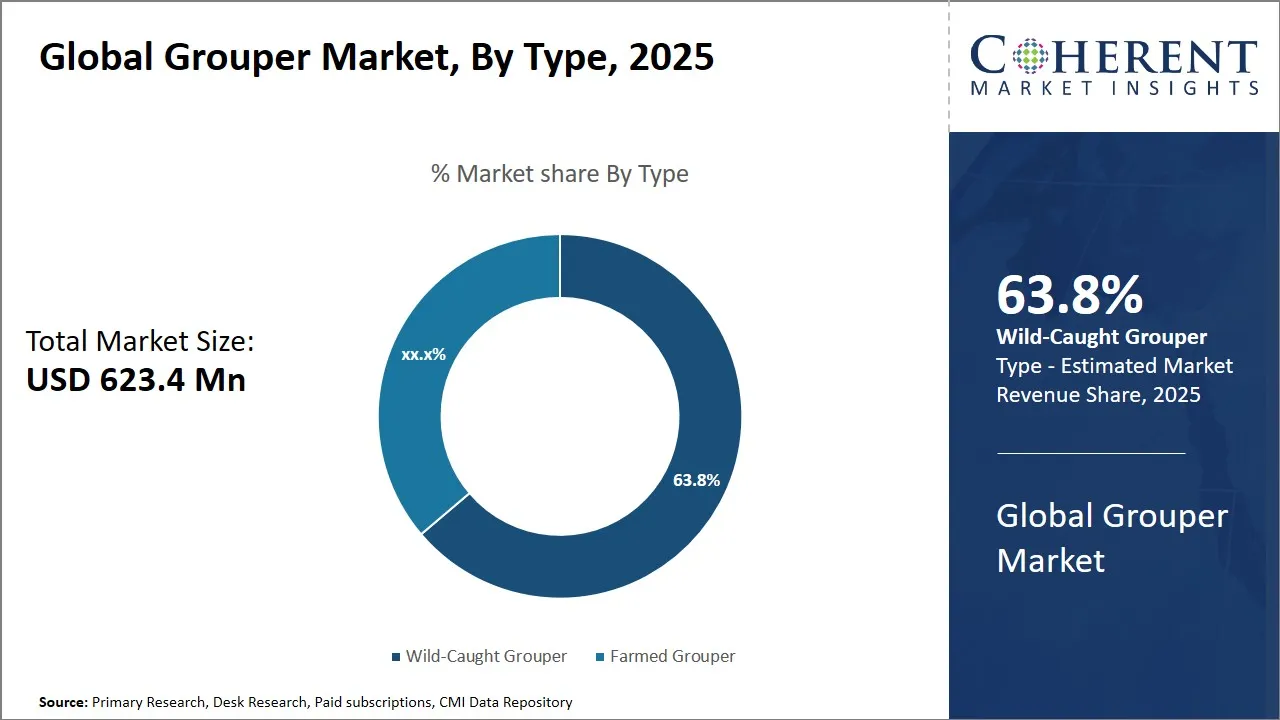
- Wild-caught grouper segment is expected to account for 64.8 % of the market share in 2026, driven by strong consumer demand for seafood sourced directly from natural marine environments.
- The seafood industry segment is projected to hold 28.5 % share of the global grouper market in 2026, primarily due to its central role in processing and distributing grouper products across diverse downstream markets.
- The wild catch segment is anticipated to capture 52.8 % of the market share in 2026, driven by the plentiful availability of grouper species in natural marine environments and the strong global traditions associated with wild fishing practices.
- Asia Pacific is expected to lead the global grouper market in 2026 with a 31.3 % share, driven by strong aquaculture expansion, rising seafood consumption, and supportive government initiatives promoting sustainable fish farming. Latin America, with a 16.5% share in 2026, will be the fastest-growing region, propelled by increasing export demand, coastal aquaculture development, and favorable climatic conditions for grouper cultivation.
Market Overview
One of the key market trends is the increasing focus on sustainable and environmentally friendly methods of fishing, which has seen greater take-up of aquaculture farming of groupers. Furthermore, there has been a growing demand for premium seafood products from consumers, supporting demand for high-grade grouper species. Furthermore, advances in feed and breeding technologies are improving yields and quality, setting the market up for further growth in spite of environmental and regulatory issues.
Current Events and Its Impact
Current Events | Description and its impact |
Fishmeal/fish oil supply crunch and rising feed costs |
|
Sustainability and certification pressures for seafood (eco-labels, responsible sourcing) |
|
Segmental Insights
- Current Industry Events of 2026
- Market Size Estimation
- Regional Breakdown
- Competitive Landscape
- Customer Intelligence
- Segmental Analysis
- Pricing Analysis
- Key Market Drivers, Challenges & Future Trends
- Customized Insights Section
Grouper Market Insights, By Type - Wild-Caught Grouper Segment Dominates the Market Driven by Consumer Preference for Natural and Sustainable Seafood
Wild-caught grouper segment is expected to contribute 64.8% share of the global grouper market in 2026, mainly because of high consumer affinity for naturally caught seafood. Wild-caught grouper is valued as a high-end product and is typically linked to superior taste, texture, and nutritional content over cultivated ones. This stigma drives high demand in markets where consumers value freshness and origin, particularly in fine dining and specialty seafood retailing.
The growing consciousness regarding sustainability and ecological footprint further increases the popularity of wild-caught grouper among eco-conscious consumers. Most seafood consumers and buyers prefer wild-caught species, as they perceive that they are caught in a manner that preserves ecological harmony, particularly when taken with responsible fishing techniques. The claims are usually backed by certifications and traceability requirements, which provide wild-caught offerings a market edge compared to farmed grouper.
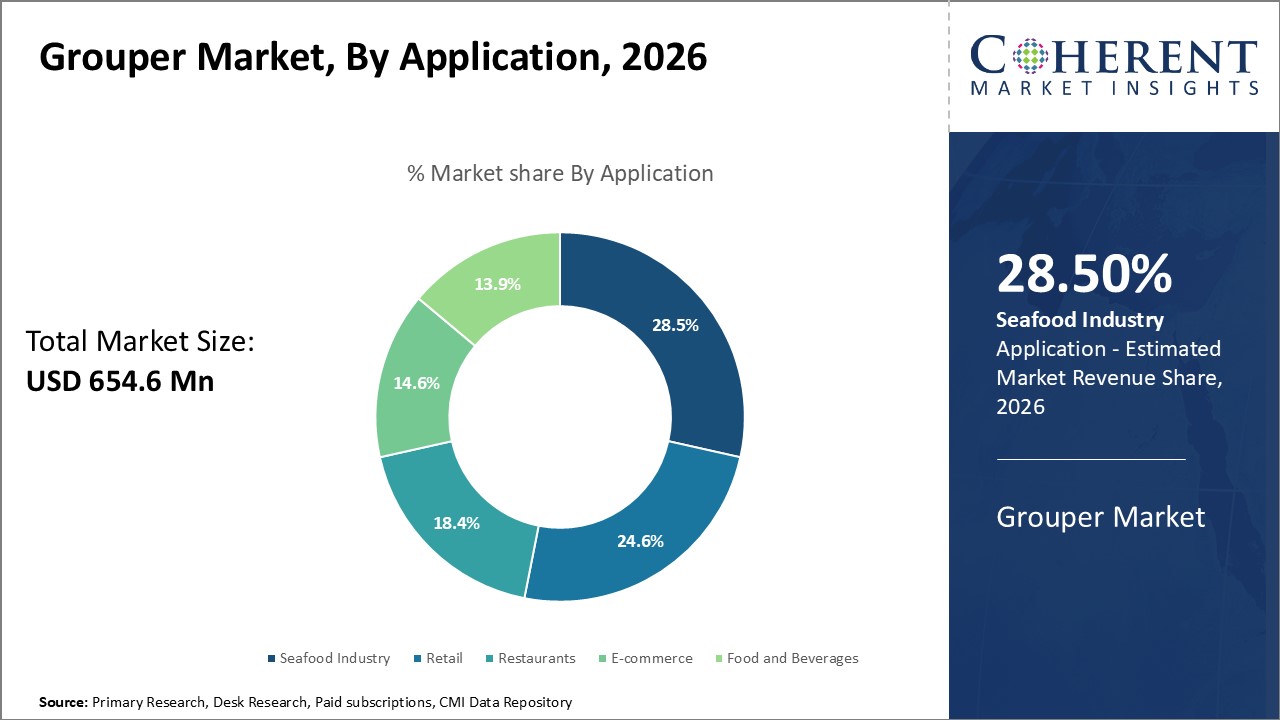
Grouper Market Insights, By Application - Seafood Industry Segment Dominates the Market due to its Robust Supply Chain Integration and Demand for Processed Grouper Products
Seafood Industry segment is projected to contribute 28.5% share of the global grouper market in 2026, largely because of its pivotal role in processing and distributing grouper products to various downstream markets. The seafood industry’s well-established infrastructure facilitates large-scale handling, packaging, and value addition, which appeals to both domestic consumers and international buyers.
The emphasis of the industry on quality assurance, cold chain handling, and adherence to rigid food safety regulations ensures that grouper products, especially wild-caught species, are kept fresh and retain their nutritional integrity right along the supply chain. This reliability drives the industry leadership due to its ability to deliver on the increased demand for clean and ready-to-eat seafood products on a global basis.
Grouper Market Insights, By Capture Method - Wild Catch Capture Method Segment Dominates the Market Fueled by Natural Resource Abundance and Traditional Fishing Techniques
Wild catch segment holds an estimated 52.8% of the market share in 2026 as a result of the abundant availability of grouper species sourced through traditional methods in natural marine environments worldwide. Wild catch practices utilize the natural stocks of grouper in coral reefs, continental shelves, and rocky shores, which are seen to harbor healthy stocks of grouper necessary for sustainable harvesting.
The inclination for wild catch grouper is closely associated with the belief in higher quality of fish reared naturally, with feeding habits for those species that make them more flavorful compared to aquaculture.
Regional Insights
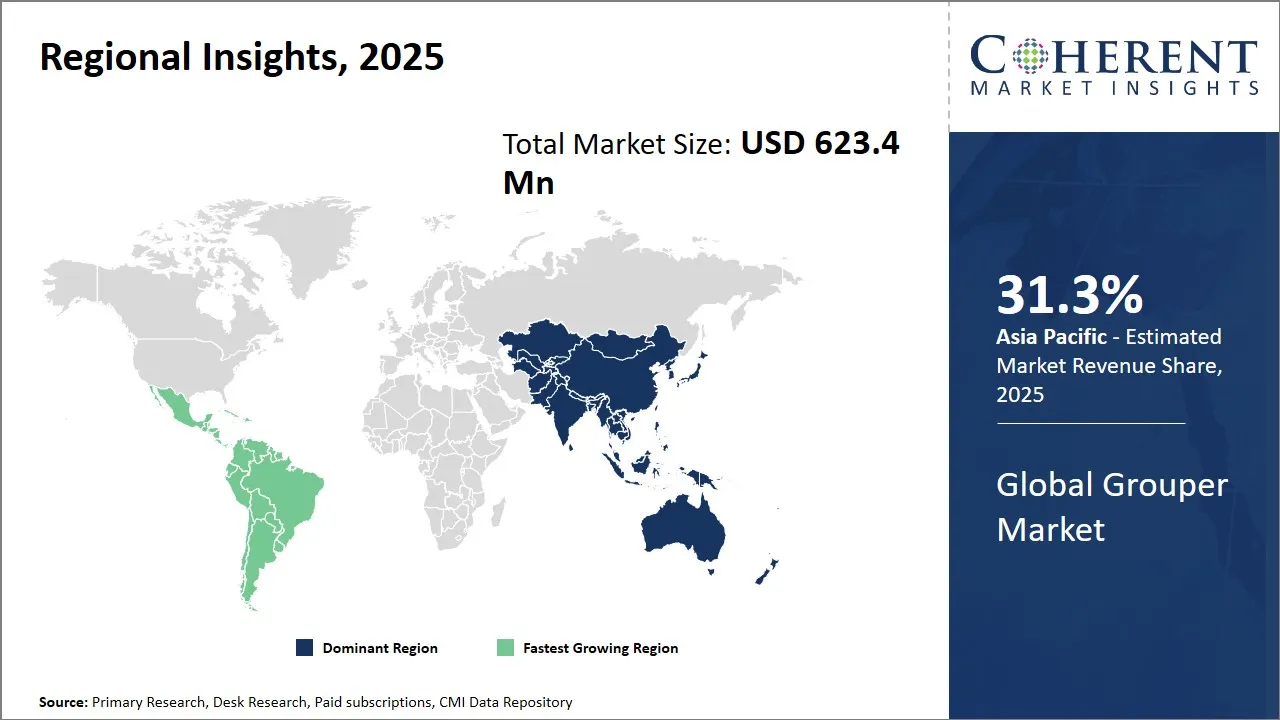
Asia Pacific Grouper Market Analysis and Trends
The Asia Pacific region is projected to lead the market with a 31.3% share in 2026, due to the large aquaculture ecosystem developed here. China, Indonesia, and Vietnam have favorable climatic and marine conditions for grouper culture, with a strong supply chain and sophisticated hatchery technologies. Governmental policies in these nations are firmly encouraging sustainable aquaculture practices, along with economic incentives and simplified export processes.
The existence of long-established players, such as Guangdong Evergreen Group (China), PT Central Proteina Prima (Indonesia), and Minh Hai Seafood Processing Import Export Corporation (Vietnam), strengthens the leadership of the region by ensuring innovation and expansion of production to satisfy both regional and overseas demand. The Asia Pacific region further advantages from inter-regional trade linkages, enabling effective distribution through diverse markets.
Latin America Grouper Market Analysis and Trends
The Latin America region is expected to exhibit the fastest growth in the market, contributing 16.5% share in 2026, due to burgeoning aquatic farm activities along coasts in nations like Brazil, Mexico, and Ecuador. Growing investment in aquaculture facilities, coupled with government policies promoting export-oriented seafood farming, has accelerated growth.
Latin America’s abundant natural water supplies and increased knowledge on seafood farming provide a comparative advantage. The emergence of companies such as Acuinor (Brazil), Grupo La Costeña (Mexico), and Pesquera San Juan (Ecuador) demonstrates that Latin America is gaining a foothold in both grouper production and export. New bilateral trade agreements with Europe and North America also grant further access to drive demand with these new channels of trade.
Global Grouper Market Outlook for Key Countries
China Grouper Market Trends
China’s grouper industry is recognized for its large aquaculture facilities and advanced broodstock breeding technologies, bringing China to the forefront of grouper farming in the world. Leading companies such as Guangdong Evergreen Group have made large capital investments in eco-friendly production technologies as well as genetic improvements to maximize stock quality and improve growth rates. As a result of government programs to modernize fisheries and promote exports, sufficient high-quality grouper fish will be supply for regional programs and international markets which will continue to guarantee China stays as the leader in the world market.
Indonesia Grouper Market Trends
Indonesia has one of the largest grouper farming sectors in Asia Pacific, with its extensive coastlines and supportive environmental conditions. Major players such as PT Central Proteina Prima prioritize merging traditional fishing with advanced aquaculture, improving productivity. The government of Indonesia supports the industry by way of subsidies and export support initiatives, focusing on major global markets, such as China and Southeast Asia. This policy backing and available natural resources continue to support Indonesia's leadership in the grouper market.
Brazil Grouper Market Trends
Based on its vast coastline and increasing capacity for marine aquaculture, Brazil is developing into a principal producer of groupers aquaculture in Latin America. Numerous companies in Brazil, like Acuinor, have driven research and innovations to enhance breeding and disease management, contributing to an increase in productivity efficiencies. Additionally, government policies developed by members of the Brazilian government, also help factor in national and international competitiveness for exports of seafood organizations to produce sustainable seafood.
Mexico Grouper Market Trends
Mexico's growth in the grouper market is supported by purposeful investment in aquaculture technologies and infrastructure. Grupo La Costeña, a leading seafood manufacturer, has been central to the growth of grouper aquaculture operations along the Pacific coast. Government policies facilitating license reductions and encouraging sustainable fishing further drive business development. Proximity to the U.S. grouper market allows Mexico to reap logistical benefits, increasing its position in the North American trade network and improving access to grouper products for key consumer markets.
Vietnam Grouper Market Trends
Vietnam has a dominant position in the grouper market due to a mix of beneficial natural conditions and extensive networks of small to medium-scale fisheries underpinned by export-friendly policies. Minh Hai Seafood is one such company that has benefited from ongoing advancements in hatchery technology and environmentally friendly aquaculture practices. The Vietnamese state actively encourages seafood exports, underpinned by trade ties with Europe and Asia Pacific. Such vibrant marketplace ensures innovation and consistent supply development, further enhancing Vietnam's competitive position in the international grouper supply base.
Macro and Micro Economic Factors Impacting the Grouper Market Growth
Macroeconomic Factors
- Rising Disposable Incomes: Expanding middle class and higher spending power in developing and developed economies are driving increased seafood consumption, especially premium varieties like grouper.
- Global Population Growth and Urbanization: Higher population density and urban lifestyles are boosting demand for convenient, high-protein foods, making grouper an attractive choice.
- International Trade and Export Dynamics: Grouper's popularity as an export commodity supports market growth, particularly for countries with strong coastal resources and international seafood demand.
- Economic Climate and Price Volatility: Global events, trade policies, and currency fluctuations affect supply chains, pricing, and accessibility, with shocks (like disease outbreaks or climate events) causing swings in grouper prices.
Microeconomic Factors
- Consumer Preferences and Health Awareness: Increasing awareness of the health benefits of grouper (high protein, omega-three fats, low fat) is driving demand from health-conscious consumers in both high-end restaurants and mainstream retail grocery shoppers.
- Aquaculture Supply Innovation: As technology improves in aquaculture (higher quality feed products, better disease management, tracking feed supply and demand), supply is increasing along with reduced costs and sustainable growth, offsetting risks associated with the dwindling wild-caught stocks.
- Operational Considerations: Supply (due to seasonal availability, variability in the environment, and high aquaculture feed and operational costs) and potential profit margin (lost operational capability because of disease and mortality) can be impacted greatly impacting smaller producers and not allowing consistent supply of grouper for buyers.
Market Players, Company Insights, and Competitive Intelligence
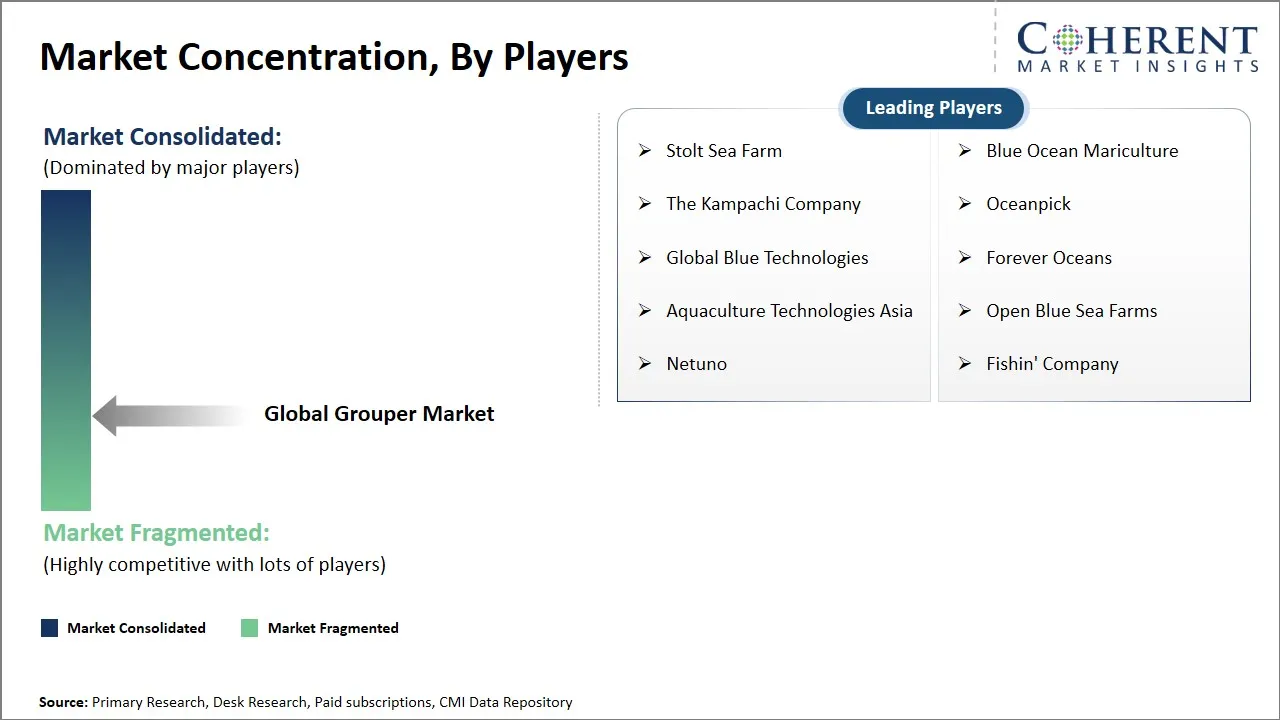
Company Insights
- Blue Ocean Mariculture is a prominent U.S.-based aquaculture business with its core operations in Hawaii, which specializes in open-ocean aquaculture fishing that is sustainable in nature. In the market for groupers, the firm is known to be geared towards responsible marine aquaculture practices as well as producing quality groupers, especially for high-value seafood and hospitality industries. Blue Ocean Mariculture utilizes leading-edge offshore net pen systems that replicate natural ocean conditions, providing best-in-class fish welfare and product consistency. The company combines environmental monitoring, selective breeding, and leading-edge feed management to maximize growth rates and minimize ecological footprint.
Top Strategies Followed by Global Grouper Market Players
- To maintain a competitive edge, established companies tend to dominate the market through high investments in research and development to create products that are innovative and efficient with high-performance and premium quality. These established companies tend to value technological advancements in some manner, frequently being in a leadership role in new product features associated with efficiency and durability.
- For example, Mowi uses recirculating aquaculture systems (RAS) to improve water quality to achieve sustainability and stable grouper yield.
- Mid-market players in the grouper market tend to take a markedly different approach by offering economically favorable solutions that consider a balance between quality and value or cost. Mid-market players usually target price sensitive consumers, especially in developing spaces where demand for a low-cost or economical alternative is increasing. To remain competitively viable, these companies leverage operational efficiency and production processes that achieve cost savings while micromanaging within acceptable quality thresholds.
- For example, companies such as Atlantic Shrimpers Limited (ASL) and Oceanus Group Limited (Singapore), target price sensitive markets with low-cost hatchery techniques in addition to region-based feed optimization.
- Small-players experience distinct obstacles in the global grouper market, yet they effectively navigate these obstacles by targeting and creating unique and specialized niches that uniquely focus on intrinsic features of the product or extremely innovative products for the consumer space. Their flexibility provides them with the capability to quickly react to changes in market trends and to leverage new technology that bigger competitors may miss or adopt more slowly.
Market Report Scope
Grouper Market Report Coverage
| Report Coverage | Details | ||
|---|---|---|---|
| Base Year: | 2025 | Market Size in 2026: | USD 654.6 Mn |
| Historical Data for: | 2020 To 2024 | Forecast Period: | 2026 To 2033 |
| Forecast Period 2026 to 2033 CAGR: | 5.0% | 2033 Value Projection: | USD 921.1 Mn |
| Geographies covered: |
| ||
| Segments covered: |
| ||
| Companies covered: | Stolt Sea Farm, Blue Ocean Mariculture, The Kampachi Company, Oceanpick, Global Blue Technologies, Forever Oceans, Aquaculture Technologies Asia, Open Blue Sea Farms, Netuno, and Fishin' Company | ||
| Growth Drivers: |
| ||
| Restraints & Challenges: |
| ||
Grouper Market Dynamics
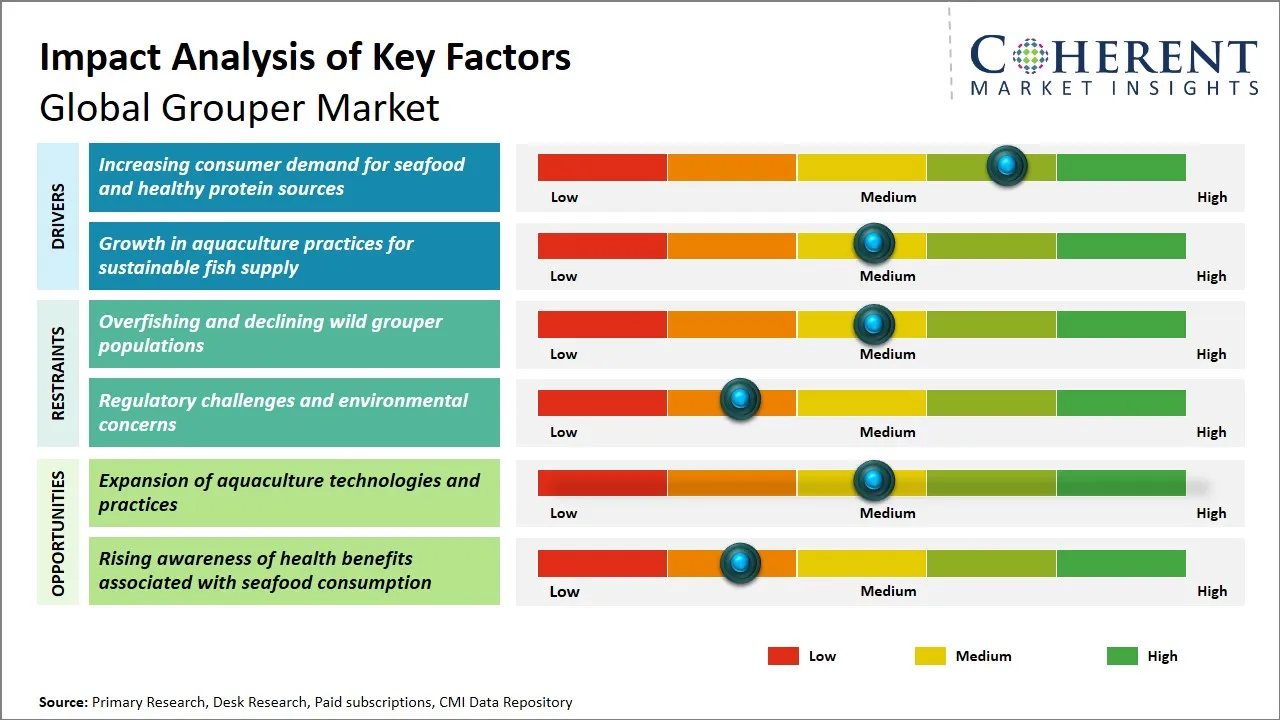
Grouper Market Driver - Increasing Consumer Demand for Seafood and Healthy Protein Sources
The growth of consumer demand for seafood as an alternative source of protein is a major factor driving growth in the global grouper market. As people continue to be more concerned about health and wellness, seen by many consumers using their diets to increase lean functional protein and other nutrients, seafood, including grouper, being a key player in these diets. Groupers are firm in texture and have a mild flavor profile, and a high protein content, which appeals to the health conscious consumer. In addition, factors related to sustainable and healthy diets are leading to a higher consumption of fish, as opposed to red and processed meat, as reflected in broader trends toward heart healthy and low-fat protein options.
Grouper Market Opportunity - Expansion of Aquaculture Technologies and Practices
There will be an opportunity for the global grouper market to grow as aquaculture technologies and practices continue to expand and proliferate. The face global wild catch fisheries face challenges, such as overfishing, environmental degradation, and stock availability, which is driving the move towards more sustainable and efficient aquaculture practices. Advancements and improvements in breeding methods, disease management, and feed optimization, which all affect grouper/yellow grouper farms based on improved survival rates and comparably higher productivity.
For example, according to the Aquaculture Stewardship Council (ASC), more than a dozen grouper species are now cultured via aquaculture (egg-to-plate) in Asia Pacific (China, Taiwan, Indonesia, Malaysia, Vietnam).
Analyst Opinion (Expert Opinion)
- The grouper market is growing considerably, due to consumer preference for seafood and awareness about sustainable fishing practices. Sea to Table and Grouper Galley are two companies championing responsibly sourced grouper and showed up during the Seafood Expo North America (2023) and International Conference on Sustainable Seafood (2022) to share their stories and thoughts on key trends. Sea to Table's partnership with local fishermen for sustainable harvesting practices is one way the market is responding to consumer demands for transparency and traceability.
- Discussion generated at conferences pointed out the merit of certifications like the Marine Stewardship Council (MSC) to build trust in the market. However, the threats of overfishing and farms increasingly competing with grouper were often present as impediments to the grouper market.
- Companies that educate on the benefits of wild-caught grouper and maybe develop their marketing strategy might remain the best-placed companies in the very developing wild-caught grouper market. Teaming up with restaurants and chefs can help gain some traction with visibility. Ultimately, the most promising path forward in the wild-caught grouper market is some degree of innovation while retaining a focus on sustainability and consumers' preconceptions of quality seafood.
Speak to the analyst
Want personalized insights?
Take the findings above to one of our principal consultants, or have the report rebuilt around the segments, geographies and competitors you actually track.
Market Segmentation
- Type Insights (Revenue, USD Mn, 2021 - 2033)
- Wild-Caught Grouper
- Farmed Grouper
- Application Insights (Revenue, USD Mn, 2021 - 2033)
- Seafood Industry
- Retail
- Restaurants
- E-commerce
- Food and Beverages
- Capture Method Insights (Revenue, USD Mn, 2021 - 2033)
- Wild Catch
- Aquaculture
- Regional Insights (Revenue, USD Mn, 2021 - 2033)
- North America
- U.S.
- Canada
- Latin America
- Brazil
- Argentina
- Mexico
- Rest of Latin America
- Europe
- Germany
- U.K.
- Spain
- France
- Italy
- Russia
- Rest of Europe
- Asia Pacific
- China
- India
- Japan
- Australia
- South Korea
- ASEAN
- Rest of Asia Pacific
- Middle East
- GCC Countries
- Israel
- Rest of Middle East
- Africa
- South Africa
- North Africa
- Central Africa
- North America
- Key Players Insights
- Stolt Sea Farm
- Blue Ocean Mariculture
- The Kampachi Company
- Oceanpick
- Global Blue Technologies
- Forever Oceans
- Aquaculture Technologies Asia
- Open Blue Sea Farms
- Netuno
- Fishin' Company
Sources
Primary Research Interviews
- R&D Director – Leading Grouper Aquaculture Company
- Procurement Manager – Major Seafood Retailer
- Product Development Head – Prominent Grouper Seafood Brand
- Sustainability Manager – Fisheries Certification Body
Stakeholders
- Grouper Fish Farmers and Aquaculture Producers
- Seafood Processors and Distributors
- End-use Sectors
- Foodservice (Restaurants, Hotels)
- Retail Seafood Markets and Supermarkets
- Seafood Processing Plants (Ready to Eat, Frozen Grouper Products)
- Regulatory and Certification Bodies (Sustainability and Fishery Authorities)
- E-commerce Platforms and Seafood Retailers
- Technology Integration Players: Aquaculture Technology Providers, Automated Feeding, Monitoring Solutions
Databases
- UN Comtrade Database (Seafood Trade Data)
- National Import Export Databases (China, Indonesia, Southeast Asia, North America, Europe)
- Volza Global Seafood Export-Import Trade Data
Magazines
- Nutrition & Wellness Magazine (Seafood Nutrition Trends)
- SeafoodSource (Aquaculture Industry News and Trends)
- Global Seafood Market Insights
- Fishery Business Journal (Market Updates and Seafood Innovations)
- Marine Finfish Aquaculture Network Magazine
Journals
- Journal of Aquaculture Research & Development
- Journal of Food Science & Technology (Seafood Processing Innovations)
- International Journal of Fisheries and Aquatic Studies
- Food Research International (Nutrient and Safety Studies on Fish)
Newspapers
- The Financial Times (Seafood Market Growth and Trade)
- The Guardian (Sustainable Seafood and Consumer Trends)
- Asia Health Journal (Seafood Consumption Trends in Asia-Pacific)
- European Nutrition News (Seafood Policies and Health Guidelines)
Associations
- Marine Stewardship Council (MSC)
- Aquaculture Stewardship Council (ASC)
- International Seafood Sustainability Foundation (ISSF)
- Global Aquaculture Alliance (GAA)
- Food and Agriculture Organization (FAO)
Public Domain Sources
- Food and Agriculture Organization (FAO) Fisheries Statistics and Regulations
- World Health Organization (WHO) – Seafood Safety and Nutrition Guidelines
- European Commission – Seafood Regulation and Sustainability Policies
- U.S. FDA – Seafood Import and Safety Guidelines
Proprietary Elements
- CMI Data Analytics Tool, Proprietary CMI Existing Repository of information for last 8 years.
Get access to 250+ pages report
Every segment, forecast, competitor profile and data table behind the analysis above — available for instant download.
- ESOMAR Member
- ISO 9001:2015 Certified
- D-U-N-S Registered
- GDPR & CCPA Compliant
Missing comfort of reading report in your local language? Find your preferred language:
Transform your Strategy with Exclusive Trending Reports
Frequently Asked Questions
The global grouper market is estimated to be valued at USD 654.6 Mn in 2026 and is expected to reach USD 921.1 Mn by 2033.
The CAGR of global grouper market is projected to be 5.0% from 2026 to 2033.
The most common grouper types found in markets include red grouper, black grouper, gag grouper, Nassau grouper, and giant grouper.
Grouper is typically grilled, baked, steamed, fried, or used in soups and curries—grilled or blackened in U.S. and Caribbean cuisines, steamed with soy sauce in Chinese cuisine, and cooked in coconut-based curries in Southeast Asian dishes.
Increasing consumer demand for seafood and healthy protein sources and growth in aquaculture practices for sustainable fish supply are the major factors driving the growth of the global grouper market.
Overfishing and declining wild grouper populations and regulatory challenges and environmental concerns are the major factors hampering the growth of the global grouper market.
In terms of type, wild-caught grouper is estimated to dominate the market revenue share in 2026.