

Global High Throughput Screening Market Size and Forecast – 2026 to 2033
The global high throughput screening market is estimated to be valued at USD 28.97 Bn in 2026 and is expected to reach USD 59.76 Bn by 2033, exhibiting a compound annual growth rate (CAGR) of 10.9% from 2026 to 2033. This significant growth reflects increasing adoption of high throughput screening technologies across the pharmaceutical, biotechnology, and chemical industries, driven by the need for faster drug discovery and development processes.
Key Takeaways of the Global High Throughput Screening Market
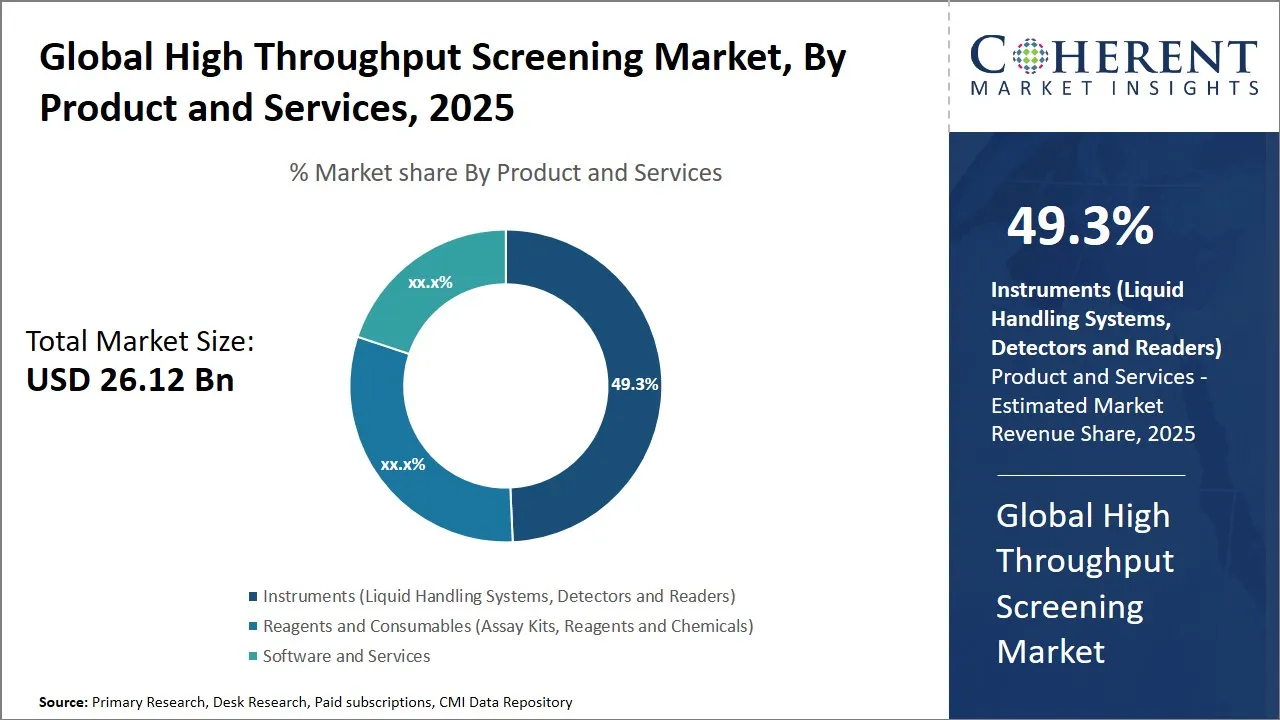
- In 2026, by product and services, the instruments (liquid handling systems, detectors and readers) segment is expected to lead the market with a 50.3 % share.
- By technology, the cell-based assays segment is projected to account for 34.4 % of the market share in 2026.
- The drug discovery segment is expected to capture 46.6 % share in 2026.
- North America is expected to lead the market, holding a share of 39.3 % in 2026. Asia Pacific is anticipated to be the fastest-growing region, with an estimated market share of 24.5% in 2026.
Market Overview
Market trends indicate a strong push towards automation and integration of artificial intelligence and machine learning with high throughput screening platforms. These advances are improving the efficiency and accuracy of screening processes, reducing costs and time-to-market for new therapeutics. Additionally, expansion in emerging markets, increasing investments in R&D, and growing focus on personalized medicine are further propelling the demand for high throughput screening solutions globally.
Current Events and Its Impact
Current Events | Description and its Impact |
U.S. FDA Advances Non-Animal Testing Pathways (April 10, 2025) |
|
University of Tokyo Develops CIBER Platform |
|
Segmental Insights
- Current Industry Events of 2026
- Market Size Estimation
- Regional Breakdown
- Competitive Landscape
- Customer Intelligence
- Segmental Analysis
- Pricing Analysis
- Key Market Drivers, Challenges & Future Trends
- Customized Insights Section
High Throughput Screening Market Insights, by Product and Services - Instruments (Liquid Handling Systems, Detectors and Readers) Segment Contributes the Highest Share of the Market Owing to Advancements in Automation and Precision in Drug Discovery Workflows
The instruments (liquid handling systems, detectors and reader) segment is projected to account for 50.3% share in 2026. This growth is driven by steady improvements in speed, precision, and reliability of assay performance. Liquid handling systems, detectors, and readers are essential for high throughput screening processes. They facilitate efficient sample preparation, detection of biological signals, and streamlined data capture. Liquid handling systems are crucial for automating the precise dispensing and mixing of small sample volumes. This accuracy is vital to maintain consistency across thousands of screening reactions. The increasing demand for miniaturization and integrated workflows promotes the use of advanced liquid handlers that operate at nanoliter scales without losing accuracy.
For instance, in December 2024, Beckman Coulter Life Sciences, a global leader in lab automation and part of Danaher Corporation launched the Cydem VT Automated Clone Screening System, a high-throughput microbioreactor platform for biologic drug discovery. The system reduces manual steps in cell line development by up to 90%, accelerates monoclonal antibody screening, and delivers more reliable clones with cultivation conditions closer to biomanufacturing, significantly cutting time to the market for new therapeutics.
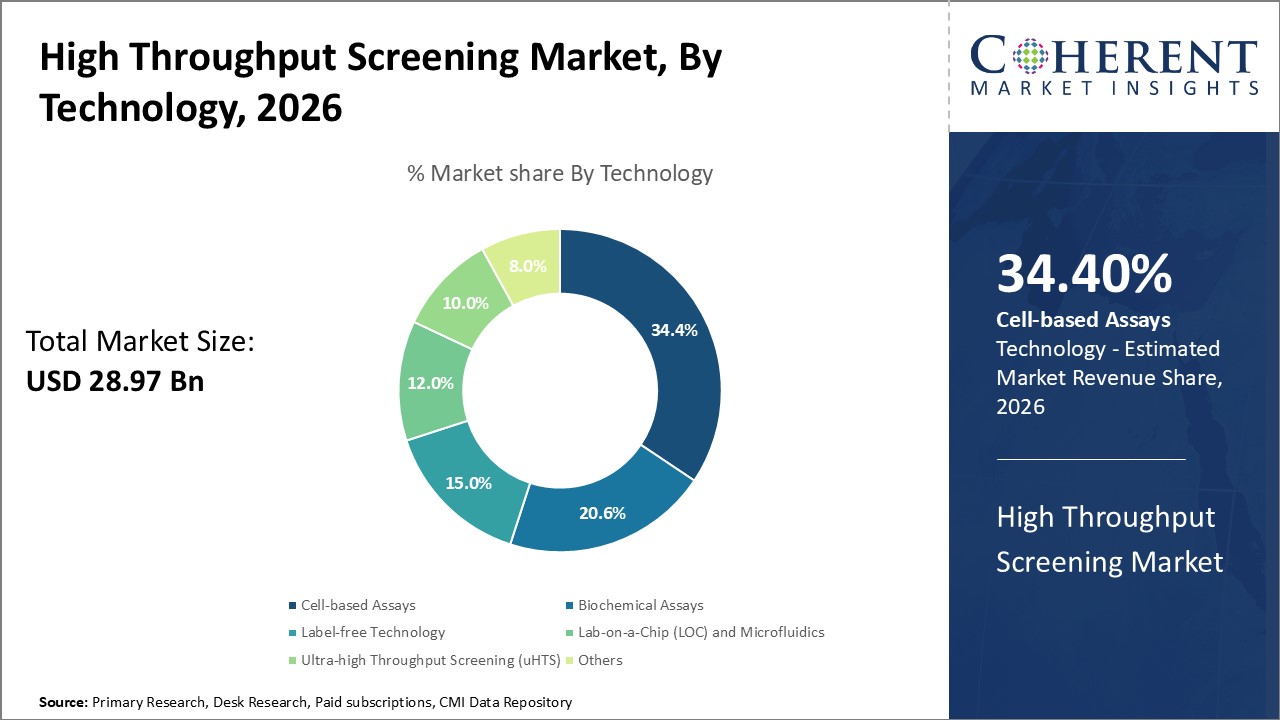
High Throughput Screening Market Insights, by Technology - Cell-based Assays Contribute the Highest Share of the Market Driven by the Growing Focus on Physiologically Relevant Screening Models
The cell-based assays segment is expected to capture 34.4% share in 2026, underscoring their growing importance as they more accurately replicate complex biological systems compared to traditional biochemical methods making them indispensable for both drug discovery and disease research. These assays provide invaluable insights into cellular processes, drug actions, and toxicity profiles, thus offering higher predictive value for clinical outcomes. The growing emphasis on functional genomics and phenotypic screening propels the use of cell-based methodologies that reflect complex cellular responses, such as proliferation, apoptosis, and signaling pathways.
For instance, On 15 September 2025, INDIGO Biosciences, a company specializing in cell-based assay solutions, launched its full Melanocortin Receptor Reporter Assay family covering Melanocortin Receptor (MC1R, MC2R, MC3R, MC4R, and MC5R). The new suite gives researchers a comprehensive toolkit to study receptor biology and advance drug discovery for metabolic, inflammatory, adrenal, and pigmentation-related conditions. By enabling precise evaluation of compound activity across all receptor subtypes, INDIGO aims to accelerate the development of targeted and safer therapies.
High Throughput Screening Market Insights, by Application - Drug Discovery Contributes the Highest Share of the Market Fueled by the Ongoing Need for Rapid, Cost-Effective Identification of Novel Therapeutic Candidates.
The drug discovery segment is projected to hold 46.6% share in 2026. The complexities of identifying viable drug candidates in increasingly competitive and regulated environments necessitate efficient screening methodologies that can process large compound libraries swiftly. High throughput screening enables researchers to expedite the early phases of drug development by identifying hit compounds that modulate specific biological targets, thus reducing time and resource consumption associated with traditional low-throughput methods.
Role of Artificial Intelligence (AI) on the Global High Throughput Screening Market
- Artificial Intelligence (AI) is rapidly reshaping the global high throughput screening market by enhancing efficiency, lowering costs, and driving automation in drug discovery and molecular research. By enabling predictive analytics and advanced pattern recognition, AI allows researchers to analyze massive datasets generated from high throughput screening platforms with unprecedented speed and accuracy, reducing the time needed to identify potential drug candidates. Companies like Schrödinger, Insilico Medicine, and Thermo Fisher Scientific are actively leveraging AI-driven screening to optimize compound libraries, predict molecular interactions, and streamline assay design. Beyond pure analytics, AI supports process automation—minimizing manual intervention in repetitive lab tasks which not only accelerates workflows but also reduces human error and operational costs. This integration empowers data-driven decision-making, supporting pharmaceutical and biotech companies in making more informed R&D investments and accelerating time-to-market for novel therapies.
- Looking ahead, AI is creating new opportunities for high throughput screening players by fostering innovative business models such as AI-driven contract research services, personalized drug discovery solutions, and adaptive screening platforms tailored to specific therapeutic areas like oncology or rare diseases. The ability to integrate AI with robotics and cloud-based platforms offers scalability, real-time monitoring, and enhanced collaboration across global research teams. However, while the benefits are transformative efficiency gains, deeper insights, and competitive differentiation companies must also consider challenges such as algorithmic bias, data privacy concerns, and high upfront integration costs. To remain competitive, market leaders should strategically invest in AI partnerships, talent, and infrastructure while maintaining transparency and compliance in data use. Ultimately, AI offers a powerful growth engine for the high throughput screening market, but its long-term success will depend on balancing innovation with responsible implementation.
Regional Insights
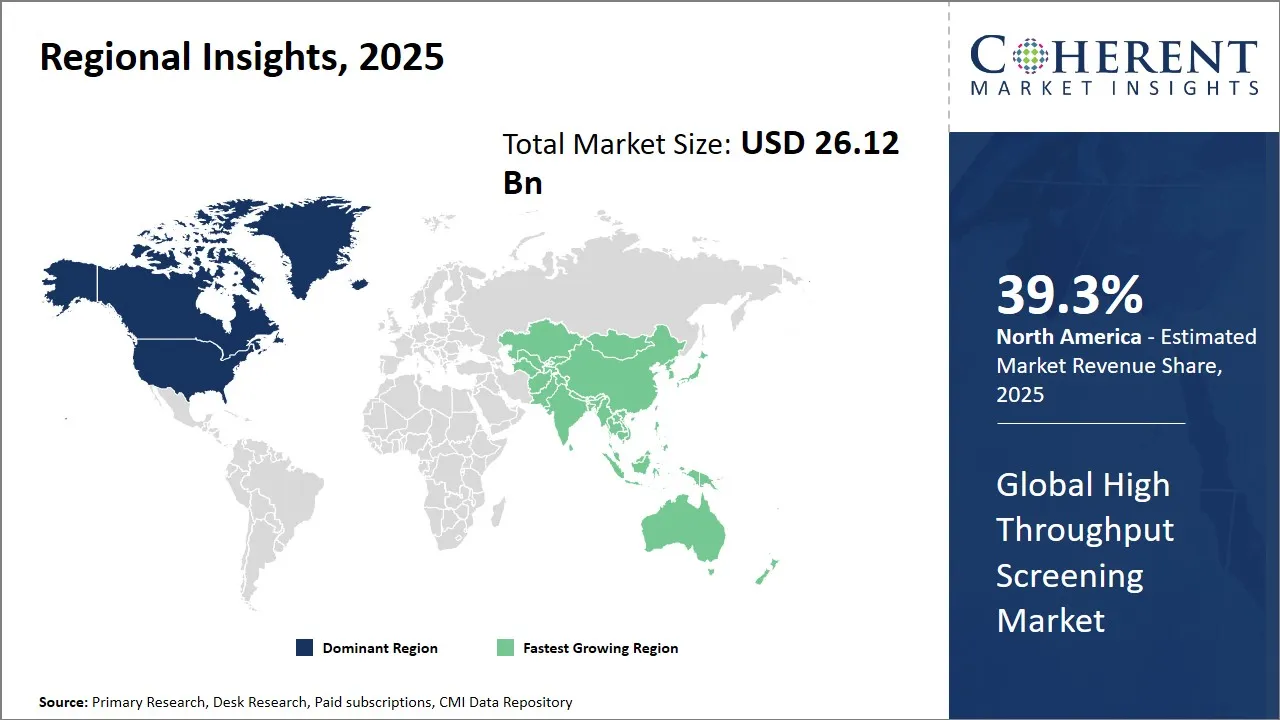
North America High Throughput Screening Market Analysis and Trends
The North America region is projected to lead the market with a 39.3% share in 2026, due to its strong biotechnology and pharmaceutical ecosystem, advanced research infrastructure, and sustained government funding for drug discovery. The presence of major players like Thermo Fisher Scientific, PerkinElmer, and Agilent Technologies has driven innovation in high throughput screening technologies, while academic-industry partnerships and a supportive regulatory framework have accelerated adoption.
A key example underscoring this leadership is BD (Becton, Dickinson and Company), a New Jersey–based medical technology firm, which in August 2021 launched its fully automated BD COR PX/GX System in the U.S. to expand high-throughput molecular diagnostics. By integrating robotics and smart sample management software, BD’s system showcases how North American companies are driving automation and efficiency in laboratory workflows, further reinforcing the region’s leadership in high-throughput screening.
Asia Pacific High Throughput Screening Market Analysis and Trends
The Asia Pacific region is expected to exhibit the fastest growth in the high throughput screening market with 24.5% share in 2026, fueled by expanding pharmaceutical industries, increasing R&D investments, and rising government initiatives to boost biotechnological research. Countries such as China, Japan, South Korea, and India have witnessed increasing adoption of high throughput screening technologies owing to their burgeoning biotech hubs and favorable policies incentivizing innovation. The growing presence of international high throughput screening technology vendors like Beckman Coulter and Labcyte, along with the rise of local companies, is augmenting capacity for drug discovery and personalized medicine.
Global High Throughput Screening Market Outlook for Key Countries
U.S. High Throughput Screening Market Analysis and Trends
The high throughput screening market in the U.S. leads the world due to its strong R&D spending, solid healthcare system, and active biotech industry. Companies like Thermo Fisher Scientific and PerkinElmer have developed automated and miniaturized screening platforms, which help with large-scale drug discovery and toxicology studies. Top academic institutions and a friendly regulatory environment promote innovation and teamwork, solidifying the country’s top position in high throughput screening technologies.
In July 2026, Sartorius, a leading life science group, launched the new iQue 5 High-Throughput Screening Cytometer designed to accelerate drug discovery and cell therapy research. The platform offers unmatched speed with up to 27 channels, continuous 24-hour runtime, intuitive Forecyt software, and an automated clog detection system, enabling scientists to streamline workflows, reduce downtime, and generate high-quality data faster and more efficiently.
China High Throughput Screening Market Analysis and Trends
China high throughput screening market is growing quickly because of significant investments in biotechnology and pharmaceutical research, supported by government policies such as “Made in China 2026.” Multinational corporations and local companies, like MGI Tech, are pushing for the use of advanced high throughput screening equipment. The rise of biopharma clusters and contract research organizations has improved screening capabilities, making China an important center for drug discovery. Moreover, more alignment with global standards is helping to integrate high throughput screening technology into research workflows more easily.
In October 2024, SPT Labtech, a U.K.-based life sciences automation company, and ICE Bioscience, a Beijing-based research organization, opened a joint automated drug screening lab in China. The facility is powered by SPT Labtech’s firefly liquid handling platform, which combines non-contact positive displacement dispensing with high-density pipetting in a compact system, enabling advanced high-throughput screening and assay development to support global drug discovery efforts.
Japan High Throughput Screening Market Analysis and Trends
Japan remains a leader in using sophisticated high throughput screening platforms in drug screening and development, backed by its mature pharmaceutical industry. Companies like Shimadzu Corporation help develop high-precision screening instruments. A focus on precision medicine and aging-related diseases creates a demand for advanced high throughput screening methods.
In April 2026, Exobiosphere, the world’s first contract research organization focused on high-throughput drug discovery in space, announced it will install its Orbital High-Throughput Screening Device on Vast’s Haven-1 Lab, the first commercial crewed space station developed by Vast a U.S.-based space company. Partnering alongside Japan Manned Space Systems Corporation JAMSS a leading provider of space operations services and Interstellar Lab a biotech company building sustainable biomanufacturing systems, Exobiosphere will use microgravity to accelerate cell culture experiments and generate insights that could speed drug discovery and improve healthcare on Earth and in space ahead of Haven-1’s planned deployment in May 2026.
India High Throughput Screening Market Analysis and Trends
India high throughput screening market shows promising potential due to the rapid growth of its pharmaceutical manufacturing sector and new biotech startups focused on drug discovery. Increased foreign direct investment and government incentives aimed at improving life sciences infrastructure have boosted the use of high throughput screening platforms. Companies like TCS and Syngene International are taking advantage of contract screening services that use high throughput screening to accelerate drug discovery processes. Lower operational costs and a large skilled workforce are attracting global vendors to set up or expand their operations locally.
In October 2023, Piramal Pharma Solutions, a leading pharmaceutical contract development and manufacturing organization, expanded its Drug Discovery Services site in Ahmedabad with a new high-throughput screening facility. The multi-million-dollar investment enhances in vitro biology capabilities for primary and secondary screening, integrating chemistry and biology services under one roof and equipping the site with advanced assay platforms such as TR-FRET, HTRF, FP, ECL, AlphaScreen, LanthaScreen, flow cytometry and high-content imaging to support discovery programs targeting GPCRs, kinases and more.
Market Players, Key Developments, and Competitive Intelligence
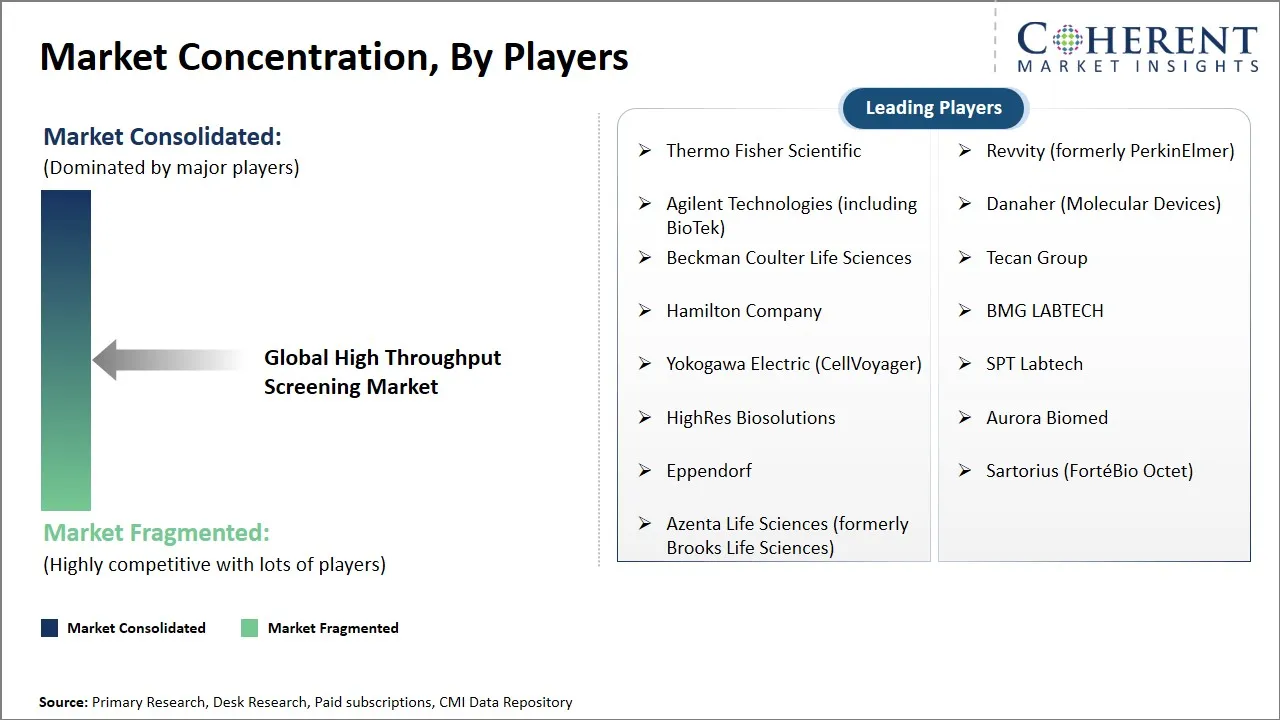
Key Developments
- On September 03, 2025, Peapod Bio Inc, a newly launched contract research organization based in Chicago, introduced its drug discovery services with a focus on small molecule assay development and high-throughput screening. The company brings over 30 years of combined expertise and uses innovative mass spectrometry powered by polymeric enrichment arrays and MALDI instrumentation to deliver flexible, label-free, and optical assay solutions that accelerate early-phase discovery and provide reliable decision-ready data for clients.
- In April 2025, CytoTronics Inc, a Boston-based pioneer in semiconductor-based cell biology platforms, launched its Neural application for the Pixel system to accelerate neurological drug discovery. The innovation allows simultaneous measurement of neural structure and activity in 96- and 384-well plates, enabling large-scale high-throughput screening that provides a full picture of neuron health and function, helping researchers develop more effective treatments for neurodegenerative diseases.
- In April 2025, Metrion Biosciences, a specialist preclinical contract research organization and global leader in ion channel services, announced the launch of its validated high-throughput NaV1.9 screening assay to support the discovery of new pain medicines. The new assay, built on a stable CHO cell line and available in both human and rat clones, expands Metrion’s portfolio of sodium channel assays from NaV1.1 to NaV1.9, enabling more reliable selectivity profiling and faster preclinical programmes in pain research.
- In April 2025, QIAGEN, a global leader in molecular diagnostics and sample technologies, announced progress on launching three new automated sample preparation instruments by 2026. The next-generation QIAsymphony Connect will begin phased rollout in 2025 with enhanced oncology and genomics workflow capabilities, while QIAsprint Connect is set for 2026 as the company’s first high-throughput processing system. QIAmini, also planned for 2026, will expand options for smaller labs, strengthening QIAGEN’s leadership in lab automation and sample preparation.
Top Strategies Followed by Global High Throughput Screening Market Players
- Established players, often multinational corporations with significant financial muscle, predominantly invest heavily in research and development to introduce high-performance, technologically advanced high throughput screening products. These companies focus on continuous innovation to meet the dynamic demands of pharmaceutical, biotechnology, and chemical industries. Beyond product innovation, these leaders form strategic partnerships and alliances with other major industry players, Original Equipment Manufacturers (OEMs), and technology providers to consolidate their market presence.
- In January 2025, Alloy Therapeutics, a biotechnology ecosystem company focused on expanding access to drug discovery technologies introduced a new licensing model for its ATX-Gx antibody discovery platform and launched mAbForge, a high-throughput antibody screening service. The updated licensing eliminates annual access fees and milestones while giving partners full use of ATX-Gx, already adopted by more than 170 organizations, and complements it with mAbForge’s rapid screening workflow that evaluates thousands of recombinant human antibodies within weeks, accelerating therapeutic discovery and development.
- Mid-level companies in the high throughput screening market focus on providing cost-effective screening solutions that balance quality and affordability. Their strategy is centered on serving price-sensitive customers such as small to mid-sized research laboratories and academic institutions. By prioritizing affordability while maintaining dependable performance standards, these players carve out a significant niche within the global high throughput screening market ecosystem and ensure accessibility of advanced screening technologies to a broader range of users.
- A relevant example of this approach was seen in March 2021, when Roche a global leader in diagnostics launched eight new high-throughput configurations for its cobas pro integrated solutions in CE-mark-accepting countries. This upgrade doubled the analyzer’s testing capacity to 4,400 tests per hour, enabling labs to process higher volumes of patient samples across cardiology, oncology, and infectious disease diagnostics.
- Small-scale companies in the global high throughput screening market typically adopt highly specialized strategies to maintain relevance and competitiveness. These players often differentiate themselves by focusing on niche applications or innovative product features that larger competitors may overlook. Emphasizing agility and adaptability, small-scale companies leverage cutting-edge technologies such as AI-driven screening methods, microfluidics, or novel detection systems to develop unique high-throughput solutions. This technological edge often positions them as attractive partners or acquisition targets for larger firms seeking innovation.
- For instance, companies like Berthold Technologies, a Germany-based specialist in life sciences instrumentation, have carved out a space in niche assay detection systems by integrating microplate readers with advanced luminescence and fluorescence technologies. Similarly, Aurora Biomed from Canada has built a reputation for leveraging microfluidics to deliver automated liquid handling solutions tailored for drug discovery and genomics research.
Market Report Scope
High Throughput Screening Market Report Coverage
| Report Coverage | Details | ||
|---|---|---|---|
| Base Year: | 2025 | Market Size in 2026: | USD 28.97 Bn |
| Historical Data for: | 2020 To 2024 | Forecast Period: | 2026 To 2033 |
| Forecast Period 2026 to 2033 CAGR: | 10.9% | 2033 Value Projection: | USD 59.76 Bn |
| Geographies covered: |
| ||
| Segments covered: |
| ||
| Companies covered: | Thermo Fisher Scientific, Revvity (formerly PerkinElmer), Agilent Technologies (including BioTek), Danaher (Molecular Devices), Beckman Coulter Life Sciences, Tecan Group, Hamilton Company, BMG LABTECH, Yokogawa Electric (CellVoyager), SPT Labtech, HighRes Biosolutions, Aurora Biomed, Eppendorf, Sartorius (FortéBio Octet), and Azenta Life Sciences (formerly Brooks Life Sciences) | ||
| Growth Drivers: |
| ||
| Restraints & Challenges: |
| ||
High Throughput Screening Market Dynamics
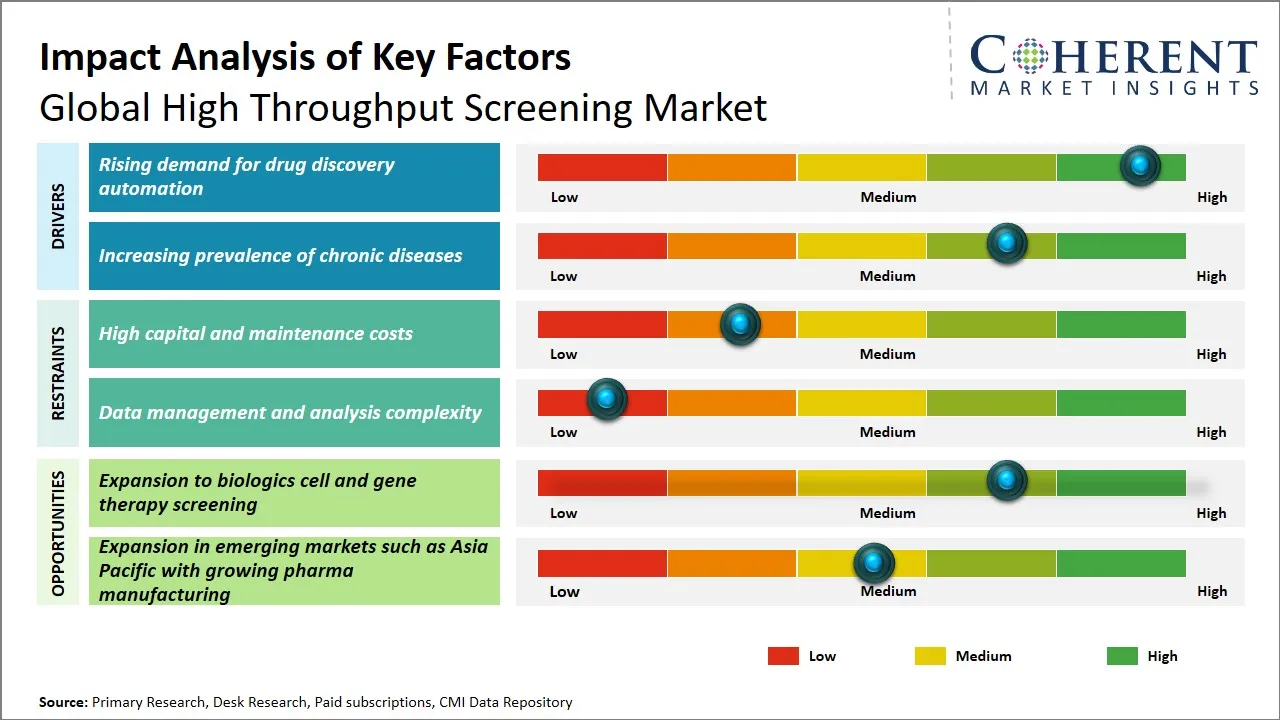
High Throughput Screening Market Driver - Rising Demand for Drug Discovery Automation
The escalating need for automation in drug discovery processes is a significant driver propelling the global high throughput screening market. As pharmaceutical companies and research laboratories face mounting pressure to reduce time-to-market for new therapeutics, automated high throughput screening technologies enable rapid and efficient testing of thousands of compounds simultaneously. This accelerates the identification of potential drug candidates while minimizing human error and operational costs. Furthermore, advancements in robotics, artificial intelligence, and data analytics are enhancing the precision and scalability of high throughput screening systems, making them indispensable in early-stage drug discovery. The integration of automated workflows not only boosts throughput but also ensures consistency and reproducibility in screening assays, which are critical for regulatory compliance and successful drug development.
On September 04, 2025, Revalia Bio Inc., a New Haven–based biotech company developing a Human Data Trial platform using functional human organs, raised USD 14.5 million in a seed round co-led by America’s Frontier Fund, a venture firm focused on breakthrough technologies, and Sierra Ventures, a Silicon Valley investment firm. The funding, which also saw participation from Roger Ferguson, former U.S. Federal Reserve Vice Chair and Alphabet board member, brings Revalia’s total to USD 19.5 million. The company aims to reduce drug development failures by offering on-demand, human-specific preclinical insights amid rising demand for drug discovery automation, and has already partnered with top pharmaceutical firms, launched a human lung cancer model, and advanced organ perfusion breakthroughs.
High Throughput Screening Market Opportunity - Expansion to Biologics, Cell, and Gene Therapy Screening
The increasing focus on biologics, cell, and gene therapies presents a significant growth opportunity for the high throughput screening market. As these advanced therapeutic modalities continue to gain traction in treating complex diseases, there is a rising demand for specialized screening technologies that can handle the unique characteristics of biologics and cellular products. Unlike traditional small molecules, biologics and gene therapies require sophisticated analytical platforms capable of evaluating large libraries of biological molecules, cells, and genetic materials rapidly and accurately. The integration of high throughput screening with cutting-edge techniques, such as CRISPR gene editing and cellular phenotyping, enables researchers to accelerate target identification and validation processes, thereby reducing drug development timelines.
In June 2025, PacBio, a leader in long-read sequencing unveiled its PureTarget roadmap at the European Society of Human Genetics Conference in Milan, adding new repeat expansion and carrier panels, a 96-plex automation kit, and a full software pipeline. The update streamlines assays into a high-throughput workflow while supporting the wider high throughput screening market opportunity of expanding into biologics, cell, and gene therapy screening.
Analyst Opinion (Expert Opinion)
- The high throughput screening market is being shaped by a mix of scientific innovation and expanding demand across pharmaceutical, biotech, and life sciences research. Advances in automation, AI-driven analytics, and miniaturized assay formats are making large-scale screening faster and more cost-efficient, directly supporting drug discovery pipelines. At the same time, regulatory frameworks encouraging faster approvals for breakthrough therapies are creating an environment where high throughput platforms are increasingly essential. Opportunities are also growing in biologics, cell and gene therapy, and precision medicine, though challenges remain in terms of infrastructure costs, skilled workforce availability, and the need to ensure reproducibility across complex assay systems.
- In recent years, several industry events have reinforced the importance of this market. The Society for Laboratory Automation and Screening (SLAS) conferences, BIO International Convention, and the European Society of Human Genetics (ESHG) meeting in 2025 have all provided platforms to showcase automation breakthroughs, genomic screening applications, and cross-industry collaborations. Companies like PacBio unveiling expanded screening kits at ESHG, or ongoing global programs encouraging public-private partnerships in drug discovery, highlight the momentum. These initiatives are not only fostering knowledge exchange but also setting benchmarks for integration of high throughput platforms into mainstream research, suggesting the market will continue evolving rapidly with both opportunity and competition ahead.
Speak to the analyst
Want personalized insights?
Take the findings above to one of our principal consultants, or have the report rebuilt around the segments, geographies and competitors you actually track.
Market Segmentation
- Product And Services Insights (Revenue, USD Bn, 2021 - 2033)
- Instruments (Liquid Handling Systems, Detectors and Readers)
- Reagents and Consumables (Assay Kits, Reagents and Chemicals)
- Software and Services
- Technology Insights (Revenue, USD Bn, 2021 - 2033)
- Cell-based Assays
- Biochemical Assays
- Label-free Technology
- Lab-on-a-Chip (LOC) and Microfluidics
- Ultra-high Throughput Screening (uHTS)
- Others
- Application Insights (Revenue, USD Bn, 2021 - 2033)
- Drug Discovery
- Toxicology Screening
- Genomics and Proteomics Research
- Biochemical Pathway Analysis
- Target Identification and Validation
- End User Insights (Revenue, USD Bn, 2021 - 2033)
- Pharmaceutical and Biotechnology Companies
- Academic and Research Institutes
- Contract Research Organizations (CROs)
- Government and Regulatory Agencies
- Others
- Regional Insights (Revenue, USD Bn, 2021 - 2033)
- North America
- U.S.
- Canada
- Latin America
- Brazil
- Argentina
- Mexico
- Rest of Latin America
- Europe
- Germany
- U.K.
- Spain
- France
- Italy
- Russia
- Rest of Europe
- Asia Pacific
- China
- India
- Japan
- Australia
- South Korea
- ASEAN
- Rest of Asia Pacific
- Middle East
- GCC Countries
- Israel
- Rest of Middle East
- Africa
- South Africa
- North Africa
- Central Africa
- North America
- Key Players Insights
- Thermo Fisher Scientific
- Revvity (formerly PerkinElmer)
- Agilent Technologies (including BioTek)
- Danaher (Molecular Devices)
- Beckman Coulter Life Sciences
- Tecan Group
- Hamilton Company
- BMG LABTECH
- Yokogawa Electric (CellVoyager)
- SPT Labtech
- HighRes Biosolutions
- Aurora Biomed
- Eppendorf
- Sartorius (FortéBio Octet)
- Azenta Life Sciences (formerly Brooks Life Sciences)
Sources
Primary Research Interviews
Industry Stakeholders list
- Heads of high throughput screening at pharmaceutical companies
- R&D directors at biotechnology firms
- Leads of academic screening cores and shared facilities
- CTOs or product managers at lab automation and robotics manufacturers
- Assay development leaders at reagent and consumable suppliers
- Regulatory scientists and reviewers at health authorities
End Users list
- Principal investigators using cell-based and phenotypic assays
- Neuroscience and ion-channel pharmacology researchers
- DMPK and toxicology screening scientists
- Bioprocess and cell line development teams
- Clinical and translational biomarker laboratories
- Computational chemists and data scientists supporting high throughput screening
Government and International Databases
- European Medicines Agency clinical data portal
- World Health Organization Global Health Observatory
Trade Publications
- Genetic Engineering & Biotechnology News
- Drug Discovery World
- Fierce Biotech
- Bio-IT World
- Pharmaceutical Technology
- LCGC North America
Academic Journals
- SLAS Discovery
- SLAS Technology
- Nature Methods
- Analytical Chemistry
- Cell Reports Methods
- Scientific Reports
Reputable Newspapers
- Financial Times
- The Wall Street Journal
- The New York Times
- The Guardian
- The Washington Post
- Nikkei Asia
Industry Associations
- SLAS Society for Laboratory Automation and Screening
- ELRIG European Laboratory Research & Innovation Group
- DIA Drug Information Association
- ISPE International Society for Pharmaceutical Engineering
- PDA Parenteral Drug Association
- ABRF Association of Biomolecular Resource Facilities
Public Domain Resources
- RCSB Protein Data Bank
- UniProt
- NCBI Gene Expression Omnibus (GEO)
- NIST Chemistry WebBook
Proprietary Elements
- CMI Data Analytics Tool: Proprietary analytics tool to analyze real-time market trends, consumer behavior, and technology adoption in market
- Proprietary CMI Existing Repository of Information for Last 8 Years
Get access to 250+ pages report
Every segment, forecast, competitor profile and data table behind the analysis above — available for instant download.
- ESOMAR Member
- ISO 9001:2015 Certified
- D-U-N-S Registered
- GDPR & CCPA Compliant
Missing comfort of reading report in your local language? Find your preferred language:
Transform your Strategy with Exclusive Trending Reports
Frequently Asked Questions
The global high throughput screening market is estimated to be valued at USD 28.97 Bn in 2026 and is expected to reach USD 59.76 Bn by 2033.
The CAGR of the global high throughput screening market is projected to be 10.9% from 2026 to 2033.
Rising demand for drug discovery automation and increasing prevalence of chronic diseases are the major factors driving the growth of the global high throughput screening market.
High capital and maintenance costs and data management and analysis complexity are the major factors hampering the growth of the global high throughput screening market.
In terms of product and services, the instruments (liquid handling systems, detectors and readers) segment is estimated to dominate the market revenue share in 2026.
Thermo Fisher Scientific, Revvity (formerly PerkinElmer), Agilent Technologies (including BioTek), Danaher (Molecular Devices), Beckman Coulter Life Sciences, Tecan Group, Hamilton Company, BMG LABTECH, Yokogawa Electric (CellVoyager), SPT Labtech, HighRes Biosolutions, Aurora Biomed, Eppendorf, Sartorius (FortéBio Octet), and Azenta Life Sciences (formerly Brooks Life Sciences) are the major players.
North America is expected to lead the global high throughput screening market in 2026.